Naval Intelligence

New York Times

The New York Times, October 24, 2020

Conditions of Affairs at the Navy-Yards.

Matters at the different Navy-Yards, notwithstanding the number of vessels ordered for sea, are comparatively dull. This arises from the small appropriations made by Congress for purely yard work. At New-York, (the sum granted for which was $20,000,) there is hardly anything doing except on ships. The launching-ways are receiving a few finishing touches, a sewer is being sunk, and a small shot-rack is building behind the marine barracks. The Vandalia occupies a large gang, and so does the Wabash, which is still in dock. The Roanoke, North Carolina, Perry, Brandywine and Potomac are in statu quo.

At Boston the Mississippi is in hands, and will be reported ready for further orders in a few weeks. The Colorado is in a state of thorough readiness for sea-going preparations; the Minnesota is nearly in the same state; the Franklin takes up her old quarters, waiting the “conversion” process, and the Ohio and Virginia remain as they have been for years. There is little other than ship work going on at the premises. The Boston appropriation was $15,000.

Philadelphia is not remarkably dull, owing to the variety of things to be done for the corvettes Jamestown and Saratoga. There are about 400 men employed in the Yard, and the disbursements for labor do not probably exceed $30,000 monthly. The St. Lawrence frigate, flagship of the Brazil squadron in 1857-8-9; and the steamer Princeton, are the other craft in the stream. Philadelphia got $15,000 also for the year’s yard expenses.

At Norfolk, since the departure of the Richmond, the Pensacola and Germantown afford work for a fair force. The Merrimack steamer, line-of-battle-ships Columbus, New-York, (not launched,) Pennsylvania, Delaware, frigates Raritan and Columbia are in ordinary. The Norfolk yard has $69,000 to dispose of in the twelve months ending next July.

At Portsmouth there is little doing, and little funds to do it with. The corvette Cumberland is in commission, and will leave for New-York in a few days. The Santee is on the stocks. $10,000 was considered a sufficient sum for Portsmouth. The sloops Macedonian and Marion, recently returned from sea, are in the river.

At Washington the machinery of the Pensacola is the chief business going on. The removal of the Naval Monument occupied the hands of the Yard for a short time recently. The $17,000 given for work at the Washington Station would seem too liberal.

The laborers at Pensacola are mostly idle. The Fulton is the only vessel likely to give them anything to do, $10,000 were laid aside for this Yard. At Sackett’s Harbor and Mare Island nothing of interest is going on.

The Washington correspondent of an “enterprising” cotemporary says that our account of the doings of the Naval Board, showing that almost without exception none but line-of-battle ships would be recommended for conversion into steamers, was unfounded. When the official report appears “Jenkins” will find that he is mistaken.

0 comments

I never gave fifty dollars, nor one dollar, nor one cent

Civil War Day-by-Day

Letter To J. C. Lee

(Confidential.)

Springfield, Illinois, October 24, 1860.

Dear Sir: Yours of the 14th was received some days ago, and should have been answered sooner.

I never gave fifty dollars, nor one dollar, nor one cent, for the object you mention, or any such object.

I once subscribed twenty-five dollars, to be paid whenever Judge Logan would decide it was necessary to enable the people of Kansas to defend themselves against any force coming against them from without the Territory, and not by authority of the United States. Logan never made the decision, and I never paid a dollar on the subscription. The whole of this can be seen in the files of the “Illinois Journal,” since the first of June last.

Yours truly,

A. Lincoln

0 comments

Letter to William S. Speer

Civil War Day-by-Day

(Confidential.)

SPRINGFIELD, ILLINOIS, October 23, 1860.

My dear Sir: Yours of the 13th was duly received. I appreciate your motive when you suggest the propriety of my writing for the public something disclaiming all intention to interfere with slaves or slavery in the States; but in my judgment it would do no good. I have already done this many, many times; and it is in print, and open to all who will read. Those who will not read or heed what I have already publicly said would not read or heed a repetition of it. “If they hear not Moses and the prophets, neither will they be persuaded though one rose from the dead.”

Yours truly,

A. LINCOLN.

0 comments

Mayor in North Carolina Requests U.S. Soldiers to Guard U.S. Arsenal

War of the Rebellion: from the Official Records of the Union and Confederate Armies and Navies

FAYETTEVILLE, N. C., October 23, 1860.

A. MCLEAN, Esq., Mayor

SIR : We, the undersigned, having appended our names to a request to you as mayor of our town, to make application to the War Department at Washington for a company of United States soldiers to act as a guard to the U. S. Arsenal located at this place, and having seen the correspondence that took place between Capt. J. A. J. Bradford, the highly worthy officer in command there, and yourself in relation to the matter, we wish most respectfully to add in this paper some of the reasons moving us in the course we have pursued. Captain Bradford mentions in his note to you that the petitioners do not state to him that the works are menaced from any quarter, and further, that beyond that he has never heard of any. We grant all that. We know of no open attack that is meditated upon the arsenal. If we did, we, as citizens of Fayetteville and North Carolina, would know how to meet it. The raid at Harper’s Ferry, and all subsequent events in the South, teach us that all mischief comes (and is to be especially dreaded on that account) without menace. If any attempt is made on lives and property, it will not be made with light of day and with a warning beforehand, but at the dead hour of night, when all are unsuspecting. And when we look about to know what means the assassin has at hand to enable him to carry out his dreadful designs, we find them stored up in immense quantities at our very doors, in the shape of United States muskets. swords, pistols, &c., with, as we are informed, large quantities of powder, with one single man standing as guard. We think our request not an unreasonable one, when we place it purely on the assumption that you place it—where there are arms there should be a guard to protect them, without any reference whatever to any peculiar state of affairs. It is hardly necessary to say in the close that these views of things grow out of the events most especially that had taken place within a year all over the South, and that all these unfortunate untoward events have come at all times without a menace.

Entertaining these views, we respectfully request that you make application to the War Department for a company of soldiers as before suggested.

………..Very respectfully, yours,

W. G. MATTHEWS et al.

0 comments

South Carolina is Arming

News of the Day
1860s newsprint

Daily Advocate  [Baton Rouge, LA], October 22, 1860

We are glad to see the people of our State everywhere preparing for the crisis which is at hand. As an offset to the “Wide-Awakes” of the North, “Minute Men” are organizing in all the principal districts of South Carolina. Their object is to form an armed body of men, and to join in with our fellow citizens, now forming in this and our sister States as “Minute Men,” whose duty is to arm, equip and drill, and be ready for any emergency that may arise in the present perilous position of the Southern States. In Kershaw, Abbeville and Richland Districts the organization is already complete and powerful, embracing the flower of the youth, and led on by the most influential citizens. The badge adopted is a blue rosette, two and a half inches in diameter, with a military button in the centre, to be worn upon the side of the hat. Let the important work go bravely on, and let every son of Carolina prepare to mount the blue cockade.

0 comments

South Carolina is Arming

News of the Day
1860s newsprint

Daily Advocate, Baton Rouge, Louisiana, October 22, 1860

We are glad to see the people of our State everywhere preparing for the crisis which is at hand. As an offset to the “Wide-Awakes” of the North, “Minute Men” are organizing in all the principal districts of South Carolina. Their object is to form an armed body of men, and to join in with our fellow citizens, now forming in this and our sister States as “Minute Men,” whose duty is to arm, equip and drill, and be ready for any emergency that may arise in the present perilous position of the Southern States. In Kershaw, Abbeville and Richland Districts the organization is already complete and powerful, embracing the flower of the youth, and led on by the most influential citizens. The badge adopted is a blue rosette, two and a half inches in diameter, with a military button in the centre, to be worn upon the side of the hat. Let the important work go bravely on, and let every son of Carolina prepare to mount the blue cockade.

0 comments

Troops for the Arsenal not Needed

War of the Rebellion: from the Official Records of the Union and Confederate Armies and Navies

NORTH CAROLINA ARSENAL,
Fayetteville, October 22, 1860.

ARCHIBALD MCLEAN,   Esq., Mayor of the Town of Fayetteville:

SIR: I have the honor to acknowledge your communication, dated the 20th instant, accompanying a request from many citizens of the town that a company of troops might be ordered to this post to guard the public property in deposit here. Neither in the paper of request nor in your communication is there intimation of any menace against my post, nor have I intimation of any. I can see no necessity, therefore, for the presence of troops here at this time.

…….With much respect, I am, sir, your obedient servant,

JAS. A. J. BRADFORD,
Captain, Commanding.

0 comments

Smith and Wesson’s Seven-Shooter

Frank Leslie’s Illustrated Newspaper

1860 ad in Frank Leslie’s Illustrated Newspaper for Smith and Wesson’s Seven-Shooter1860 ad in Frank Leslie’s Illustrated Newspaper for Smith and Wesson’s Seven-Shooter

The Smith & Wesson Model 1 was the first firearm manufactured by Smith & Wesson, with production spanning the years 1857 through 1882. It was the first commercially successful revolver to use rimfire cartridges instead of loose powder, musket ball, and percussion caps. It is a single-action, tip-up revolver holding seven .22 Short black powder cartridges. (Wikipedia)

image by Mikehelms – Own work, CC BY-SA 3.0, https://commons.wikimedia.org/w/index.php?curid=26980450

1 comment

Dear Brother

Miscellaneous document sources

Linton Stephens to his brother, Alexander H. Stephens

JACKSON, TENN., SUNDAY, October 21, 1860.

DEAR BROTHER—You may be surprised to learn that I am in Tennessee, but you have possibly heard already that I had gone to Illinois. I got Judge Wright and Bob Sims both to fill my place in Murray, and started from Atlanta to Centralia last Friday morning. It had rained nearly all the night before, and continued to rain until we got to Chattanooga. Within a half mile of the depot, at Chattanooga, our engine ran off the track. We would have lost the connection but for the Memphis train waiting for us. They had, however, already waited so long that they could not wait for us to get supper; and as I was quite hungry, and didn’t relish the prospect of riding all night without eating, and as I furthermore didn’t like to pass through the region of land-slides and impending rocks in such a wet and dark time, I staid all night in Chattanooga. Yesterday morning, I started again and got to the “Grand Junction” last night about 10 o’clock. There I had to stay all night for a train. This morning, the train came and I took it at 8 o’clock, and arrived here about 11. This place is forty-eight miles from the Grand Junction. It is now about 3 ½ o’clock in the afternoon. I am to leave here at 9:45 tonight, and, with good luck, shall reach Centralia at 9 ½ in the morning, in time for the grand gathering there to-morrow. You will readily conjecture that my present detention at this place is owing to its being Sunday. You will readily imagine that it has been a weary, heavy day to me.

I am an utter stranger here, in face and in name. The landlord at the Junction evidently knew me from reputation, but this one does not. I am all alone here; but I am wearing through the day better than you would imagine.

I think Douglas is strong in this part of Tennessee, but I have no doubt but that Bell will carry the State. Douglas is to speak at this place on Tuesday. [continue reading…]

0 comments

Driven from Texas

News of the Day

Daily Times [Leavenworth, KS], October 20, 1860

Twelve families, numbering some sixty or seventy persons, arrived in town on Wednesday last, directly from Texas, driven away by the terrible destruction of human life which is now being carried forward there by the pro-slavery demons who hold sway in that portion of our country. These persons are from Grayson, Collin, Denton, Tarrant and Johnson Counties, which they represent to be the worst afflicted part of Texas. But they say that there is a complete organization of vigilance committees from the Rio Grande to Arkansas, and in Arkansas. These committees are organized for the purpose of inquiring into the political opinions of the people, and of dealing with all in a summary manner who entertain opinions hostile to slavery.

These men who have just arrived are not—so far as we had an opportunity to observe—a class who are dangerous citizens, but they are moderate, conservative free State men.—The manner in which they told their story, their general appearance, the unity of sentiment which prevailed among them, were proofs sufficient of their sincerity and truthfulness. The accounts which they give of the condition of Texas is deplorable—the slaughters which they recounted are terrible, and if the reports which they hear are to be credited at all, there is a great necessity for prompt and immediate measures from some source, to stay the violence and blind persecution which reigns in that unfortunate country.—Mound City Report.

0 comments

Eagle

News of the Day
1860s newsprint

The Constitutional [Alexandria, LA], October 20, 1860

We are under especial obligation to the proprietors and publisher of the La. Democrat for the loan of their “Eagle” for the purpose of embellishing our posters for the grand Union rally which takes place next Saturday.

The “Eagle” is the grand emblem of American freeman, and, as has been truly said “the British Nation may have their Lions and their Unicorns, but the American Eagle soars high above them all.” May it ever be thus, “and may it never spread its wings “Over the dismembered fragments of a once glorious Union.”

We ordered an “Eagle” some time since, but it has not yet arrived. Our friends of the Democrat will please accept our thanks for the favor.

0 comments

Breckinridge and Lane Torchlight Procession

News of the Day
1860s newsprint

The Constitutional [Alexandria, LA], October 20, 1860

 After a vast outlay of means, the long anticipated procession of the Breckinridge party was made a reality on Saturday evening last. For the past two or three weeks extensive preparations have been going on, and no little labor expended in the way of drumming up recruits to make it a demonstration every way worthy of the “unterrified” Democracy. All ages were brought into requisition to fill up the ranks, but notwithstanding all their efforts, they were only able to display about equal numbers with the late demonstration of The Constitutional Union party.

Well! taken altogether it was certainly a very creditable demonstration. The display of lights and transparencies, of which there was a great superabundance, of course, had a most pleasing effect. The music from the band was very entertaining, and served to enliven the otherwise solemnity of the occasion. There were several rockets thrown off, but unfortunately the whole of them exploded—rather a forewarning for all Union men to separate themselves from the dire schemes of disunion. It is said the caricatures were all taken from the “Rail Splitter,” a Black Republican sheet published in the North. Whether or not true we cannot say; if so, however, it gives great weight to the charge of fusion between Breckinridge and Lincoln.

The great efforts put forth here by the Breckinridge party are truly very commendable, and well worthy a better cause; but we are sorry to say we cannot wish them success, and thereby obey the precept “rejoice with them that do rejoice.”—Doubtless were the success of Mr. Breckinridge dependent upon the parish of Rapides he would be our next President, but unfortunately this parish is but a small speck upon the wide extending plains of Columbia, and we think the gloomy prospects of Mr. Breckinridge elsewhere are rather calling for lamentation than exultation, which indeed draws out our sympathies in the sad duty of condoling with their sorrows. We cannot rejoice over disunion; our only motto is that simple grand and glorious one of John Bell, “The Union is our only safety.”

0 comments

Candidate Breckinridge

Frank Leslie’s Illustrated Newspaper
The Hon. John C. Breckinridge, Democratic Candidate for the Presidency. – from a Photograph by BradyThe Hon. John C. Breckinridge, Democratic Candidate for the Presidency. – from a Photograph by Brady

John C. Breckinridge1

The family of this the youngest and most brilliant of the Presidential candidates is one of the most distinguished in Kentucky. It is originally Scotch, John Knox, the illustrious reformer, being an ancestor on the maternal side. The grandfather of the present candidate was a man of strong mind and Democratic principles. He was the author of the famous resolution of 1788 in the Virginia Legislature. He was elected to the United States Senate in 1801, and was Attorney-General under Jefferson in 1805-6. The two sons of this distinguished statesman also made their mark in the world. One, the Rev. Robert C. Breckinridge, being an eminent divine, and the other, Colonel Breckinridge, the father of the subject of our memoir, was for many years one of the leading members of the Kentucky bar.

John Cabell Breckinridge was born at the family seat, Cabellsville, near Lexington, Fayette county, Kentucky, January 21, 1821. He was educated at Centre College, Danville, Kentucky, from which he graduated with great distinction. He then entered Transylvanin Institute, where he studied law under Chief-Justice Robinson, Judge Woolly and the eloquent Tom Marshall. Upon receiving his licence he emigrated to Burlington, Iowa, where he joined Mr. Bullock, his cousin, and a lawyer of great repute.

Not finding sufficient scope for his talents there, he came Georgetown, Kentucky, where he married Miss Burch, of that city. Soon after his marriage he went to Lexington, where he remained in the practice of his profession till the breaking out of the Mexican war. Being elected Major of the Third Regiment of Kentucky Volunteers, he started with his companions for the seat of war, and was present at the taking of the Halls of the Montezumas. Upon his return to Lexington, he was elected a member of the lower branch of the Legislature of the State of Kentucky.

In 1851 he was elected Member of Congress, beating the veteran General Leslie Combes by six thousand majority. On the expiration of his Congressional term, Mr. Breckinridge returned to his home and profession at Lexington. In 1856 be was one of the delegates to the Convention held in Cincinnati in June. He there received the honor of being nominated for the Vice-Presidency, James Buchanan receiving that for President.

His conduct during these last four years was so pleasing to the Democratic party that he has been selected by the Administration Democrats for their candidate to succeed Mr. Buchanan in the White House.

Breckinridge possesses all those personal traits which endear the man as much to the masses as to his social circle. He is a courtly and a polished gentleman, well representing the chivalry of Kentucky.

His presence is very lordly, and when in full dress he looks more like an English nobleman than an American sovereign.

He is full of bonhommie, and enjoys a joke, even though at his own expense. He was the reporter of General Leslie Combe’s (his old antagonist) retort a few months since. Meeting Breckinridge, Combes, after their usual cordial greetings, began discussing politics. In the course of conversation, Breckinridge said, “General, you have the rare distinction of having done more for your party, and for your party having done less for you, than any man who ever lived.”

Leslie Combes looked at Breckinridge, and said, “Major, there we differ; for you have the rare distinction of having done less for your party, and for your party having done more for you, than any man living!”

Breckinridge laughed, and told his Democratic companions the joke.


  1. Frank Leslie’s Illustrated Newspaper, November 10, 1860 – It’s interesting that this biographical sketch of a presidential candidate was originally published after the election was over.  In this post, it is published “early” in advance of the 160th anniversary of that fateful election.
0 comments

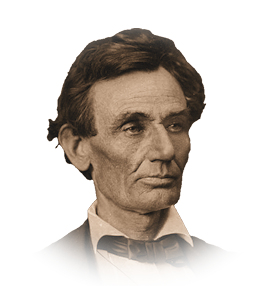
Lincoln’s Front-Page Image in Leslie’s Newspaper, from a photo by Brady

Frank Leslie’s Illustrated Newspaper
Abraham Lincoln, of Illinois, the Presidential Candidate for the Republican Party. - Photographed by BradyAbraham Lincoln, of Illinois,
the Presidential Candidate for the Republican Party. — Photographed by Brady


Frank Leslie’s Illustrated Newspaper, October 20, 1860

ABRAHAM LINCOLN.

The Republican candidate for the Presidency is one of a class which belongs especially to our Republic. No other nation on the face of the globe can boast of men who, by the mere force of individual hardihood and merit, rise through all the gradations of toil to the highest offices in the State. Common labor, which brutalises and degrades man in other lands, in our own country strengthens him mentally as well as physically, and the cabinet-maker and the rail-splitter, after having earned a competency by the honest labor of their hands, ?nally meet face to face as contestants for the highest office in the gift of the people.

Abraham Lincoln was born February 12, 1809, in Hardin county, Kentucky, of poor but honest and industrious parents. After receiving a limited education, he became a laborer, and worked hard for some years.

In 1830 we ?nd him a boatman on the Illinois and Michigan Canal, and ful?lling his humble duties with exemplary ?delity and perseverance. Lincoln’s ?rst trip to New Orleans was made in his nineteenth year from the Ohio River in a ?at boat belonging to Denton Offut. During his trip he had a narrow escape of being murdered by some negroes, who had formed a plot for robbing the vessel. The courage of young Abe and his companion defeated the nefarious attempt, for driving the black robbers off, they got their boat underway, and were soon out of reach.

Early in 1832 the Black Hawk war broke out, and young Lincoln enlisted under Governor Reynolds, who formed four regiments for the defence of the State. To his great surprise, Lincoln was chosen captain of one of them, and conducted himself with great coolness, courage and enterprise during the entire campaign.

Lincoln had no sooner returned than he was urged by his friends to become a candidate for the Legislature, but he was defeated. He was soon afterwards made Postmaster of New Salem, which he retained for a short period.

In 1834 he again became a candidate for the Legislature, and was triumphantly elected. He was re-elected in 1836, again in1838, and again in 1840. During these last six years, Lincoln had, by the advice of the Hon. J. T. Stuart, studied law, and in the autumn of 1836 was admitted to the bar. On 15th of April, 1837, he formed a partnership with Mr. Stuart, and removed to Spring?eld, to enter upon his professional career.

On retiring from the Legislature he devoted himself—exclusively to the labors of Themis, and became one of the ablest jurists in Illinois.

In November, 1842, Lincoln married Miss Mary Todd, daughter of the Hon. Robert Todd, of Lexington, Kentucky. The fruits of this union are three sons living and one dead. The eldest, now a ?ne boy of seventeen, is a student at Exeter Academy. In 1844, Abe Lincoln was chosen Elector at Large, and entered upon the canvass with his usual vigor and address.
In 1846 he received the unanimous nomination for Congress, by the Whig Convention for the Spring?eld district. He was elected, and took his seat in the National House of Representatives on the 7th December, 1847.

In 1852, he was again placed by his Whig friends on the Scott Electoral Ticket, but his legal duties prevented him from taking his usual active part in the canvass.

The Kansas-Nebraska Bill of 1856, however, again roused all the politician in him, and he resumed his labors against the new order of things.

In 1858 he was elected by the people as a candidate for Congress, but the Legislature chose Mr. Trumbull as their Senator.

Our space will not allow us to give any details of the exciting stump campaign between Douglas and Lincoln in Illinois. It might truly be said they both held their own, ?nding in each other foemen worthy of their steel.

The events of the Chicago Convention, which resulted in the nomination of Abraham Lincoln as the Republican Candidate for the Presidency, are too fresh in the recollection of our readers to need any recapitulation.

0 comments

Those Gas Posts

News of the Day
1860s newsprint

Alamo Express  [San Antonio, TX], October 22, 1860

What has become of the twenty-five gas posts the city purchased?  Are they upright or horizontal? do they burn gas or do they generate gas in Aldermen? The facts are these, the posts belong to the city, and have been paid for at the rate of $25 per post, but there is scarcely enough of them to decorate the front door of every city father and dispense light throughout the entire city, and altho’ a petition signed by all the tax payers on Commerce street desiring that the posts should attain an upright posture and give light in that part o the city, for which they were intended, yet the jealous city dads stick to it that they are the exclusive right to do all the gasing for the city, even if no light results, and frown down any attempt on the part of the Regular Gas Co., to infringe on their sacred and inviolable rights.

0 comments

Rev. Wm. Bewley1

News of the Day

Marshall Texas Republican, October 20, 1860

We are in receipt of a letter from our friend Otis G. Welch, of Denton, giving some of the particulars, relative to the termination of Mr. Bewley’s career. He was the man to whom the Bailey letter was addressed. He was arrested near Cassville, Bear county, Mo., by the Fayetteville (Ark.) Vigilance Committee and sent back on the overland stage to Sherman, and from thence taken to Fort Worth, where he was hung on the same pecan tree on which Crawford met his deserts. He expected to be rescued by his clan, but no attempt was made. On being shown the Bailey letter, he confessed that he was the man who lost it, and that it was lost while getting some oats from a stack near where it was found. He refused to make any further disclosure, saying that he knew they were determined to hang him anyway.—Houston Telegraph.


  1. This hanging was one of many during the Texas slave panic of 1860—also referred to as the Texas Troubles—a period that was a result of the worries of southern slave-holders about abolitionists and a potential slave revolt, an exceedingly hot and dry summer, and a series of inflammatory letters by the editor of the Dallas Herald, Charles R. Pryor.  Pryor’s letters were widely reprinted and, by the end of July, counties, and communities throughout North and East Texas had established vigilance committees to root out and punish the alleged abolitionist conspirators.
0 comments

An Excited State of Feeling in the Community

War of the Rebellion: from the Official Records of the Union and Confederate Armies and Navies

TOWN OF FAYETTEVILLE, N. C.,
OCTOBER 20, 1860

J. A. J. BRADFORD, Captain, U. S. Army,

……….Commanding U.S. Arsenal at Fayetteville, N. C.:

DEAR SIR: I inclose a copy of a paper presented to me this morning asking that application be made for a company of United States soldiers to be in charge at the arsenal under your command. The high standing in point of respectability and influence of the parties whose names appear to the paper entitles it to every respect, and induces me to submit the subject to your consideration.

In submitting the application I beg to call your attention to an excited state of feeling in the community, originating, as is alleged, in a sense of insecurity because of the large amount of arms and munition at your post, without adequate force for their protection. This fact strongly suggests that something should be done to allay apprehensions certainly existing, whether with or without sufficient cause. I suppose it is the expectation of the applicants that I communicate directly with the Department at Washington on the subject. I deemed it proper, and certainly respectful, to submit the request to you as the officer in command at the post referred to, for the reason that the Department would most likely consult your judgment as to the necessity of the force asked for, and for the further reason that by so doing it would be most likely to insure a more speedy reply to the application.

Hoping I may be enabled through you to give a satisfactory reply to the applicants as early as the nature of the business will allow,

………. I am, very respectfully, your obedient servant,

ARCHIBALD McLEAN, Mayor.

Inclosure

FAYETTEVILLE, October 20, 1860.

ARCHIBALD. MCLEAN, Esq., Mayor of the Town of Fayetteville:

SIR: The undersigned deem it important that there should be a company of United States soldiers in charge of the United States Arsenal at this place, and desire that you make the necessary application for them as soon as practicable.

S. J. HINSDALE et al.

0 comments

A Female Emissary

News of the Day
1860s newsprint

Semi-Weekly Mississippian [Jackson, MS], October 19, 1860

An examination was held at Charleston, S. C., on Friday morning, by Mayor Macbeth, of one Mrs. Catherine Bottsford, a female or rather prepossessing appearance, charged by several respectable citizens with uttering and disseminating among the slave population seditious sentiments. During the investigation she admitted entertaining the Abolition sentiments attributed to her and of being an admirer of John Brown. She denied, however, any attempt to circulate her opinions. The evidence and affidavits submitted showed to the contrary, and she was required to give bail in the sum of $300 for her good behavior. Failing in this she was turned over to Magistrate Kampaux who committed her to jail.

We learn from the Courier that the accused states that she has resided in the city about nine months, during which time she has followed the occupation of a seamstress. She also states that she hoped to obtain the situation of a teacher. Officer Schoubee, who arrested her, had been watching her movements for some time past. The case will probably undergo investigation at the January term of the Court of General Sessions.

0 comments

Lincoln’s Whiskers

Civil War Day-by-Day


Letter to Miss Grace Bedell

(Private.)

SPRINGFIELD, ILLINOIS, October 19, 1860.

My dear little Miss: Your very agreeable letter of the 15th is received. I regret the necessity of saying I have no daughter. I have three sons–one seventeen, one nine, and one seven years of age. They, with their mother, constitute my whole family. As to the whiskers, having never worn any, do you not think people would call it a piece of silly affectation if I were to begin it now?

Your very sincere well-wisher,

A. LINCOLN.

0 comments

From Samuel Artus to Abraham Lincoln

Library of Congress

Quincy Ill. Oct 17. 1860

Hon A. Lincoln

Sir

Please accept the accompanying fish — a Mississippi River Salmon — the finest one caught at thisplace this season — with the sincere compliments of the undersigned. He confidently believes that the fish which he caught this morning will grace the table of the next President of the United States

Respectfully

Samuel Artus

0 comments

Letter on Advising Lincoln How to Handle Sectional Crisis

The Abraham Lincoln Papers at the Library of Congress

From William L. Hodge to Thomas Corwin

Washington 18th Oct 1860

My dear Sir

I address you on what I consider a very important subject—and beg your careful attention, even at the expense of a little time and trouble in decyphering my hieroglyphics.

There is no shadow of a doubt but the Union is in a critical— a very critical situation, owing to the excitement of general disunion feeling at the South, and particularly in South Carolina & Georgia where the disunionist are completely in full power, having the whole State government in their possession, & perfectly able and willing to precipitate matters by overt acts from which they will not indeed could not undo & which they will carry into effect in case Mr Lincoln is elected & which can only be prevented by some change in public opinion there & by showing to the people the utter absurdity, and injurious effects of such a proceeding

Mr Lincoln was nominated as a conservative man & because he was conservative, & Mr Seward was thrown overboard because he was too ultra Mr L is a perfectly safe man for the South & so they would find him if they would only remain quiet under him, & in three months he would be highly popular at the South. But even were it otherwise how ridiculous would are these pretended fears when it is recollected that the Senate will be in opposition, that the House is already anti-republican, under the recent State elections & will be more so from the elections yet to take place, which will probably give an anti-republican majority,—in the House, of from 20 to 30 The Supreme Court is in opposition to any anti-slavery movement—all the officers at the South—Marshalls—District Attornies, Collectors Post-masters &c will be southern men, & on the top of all, even if Mr Lincoln is elected, he will be chosen against the votes of 2 two thirds of the people of the United States— for two-fifths of the votes are of the South—all of which are against him &, of the three fifths in the free States, one half, or nearly so, are in opposition to him; but by our system of choosing by electoral colleges, with only one third of the votes in of the whole Union in his favor, he will still be elected, as in the case of Mr Fillmore who received 900,000 votes, & yet only had eight electoral votes

Now, even admitting Mr Lincoln was ultra in his slavery views, what harm could he do to the South, under the above state of the case, as he would be in irons & double irons, with the Legislature & Judiciary branches of & two-thirds of the entire population dead opposed to him, & checking every movement. If he was a Garrison or a Wendell Phillips, he could not do any harm, and it is therefore doubly absurd, when Mr L instead of being an ultra is highly conservative & would be a perfectly safe man for the South, even if he had both Houses of Congress and a majority of the whole people in his favor & support—The fact, however, is patent and cannot be denied, that a disunion movement is intended & will be essayed and it will require the utmost discretion & judgment on the part of Mr L in its management & suppression—for a false step on his part, or the shedding of one drop of blood & the whole South would be in flames & beyond all control

With this long preamble, let me now come to the gist of my letter, which is that you will make it a point, to visit Mr Lincoln in person, & without delay & urge upon him the necessity, the moment he ascertains that he is elected, which will be in 48 hours after the day of election, to issue an address to his Southern fellow-citizens, stating his intended course in conducting public affairs—& putting his conservative views in the strongest posible light, disavowing the ultra sentiments which some of his stump speakers & Republican Journals have put forward all of which are being constantly reproduced at the South, & announcing, as he has on former occasions done, that he will enforce the fugitive slave law,—is opposed to the abolition of slavery in the District of Columbia —is not opposed to the sale & migration of slaves between the States—nor to the admission of more States with slavery in their constitutions—that he will, particularly in his Cabinet, give a full share of the appointments to the South & all of them, in Southern States, to Southern men, & put everything as regards slavery on a footing that will be—at least ought to be, satisfactory to the South—which I am convinced he is willing to do, & intends to do.

Now, my dear Sir, you cannot render a more valuable service to your Country, than by taking this matter in hand promptly & zealously, & going at once to Mr L, & urging it on him to prepare the address at once & in proper language. I neither know Mr L nor he me, & probably he has never heard my name. It would be useless therefore for me to address him, but he [armed?] that danger is imminent, & I hear & see more & from various quarters here than you possibly can. I know there is a good deal of the brag game in it at the South but there is also quite too much of the reality. It is beginning to be realized in our large cities, for in New York & Philadelphia it has already paralized real estate, of which no sales can be made, & here it is still worse, where the value of real estate is actually affected 25 to 33 per cent This Union once dissolved by the permanent secession of even one State could no more ever again be re-united—than could a glass vase which had been dashed to pieces on a stone pavement. To the South, a dissolution would be the knell of slavery; but you cannot persuade them to that. But I understand it is already affecting the value of slaves there, & if they only once realize that, it will do more to suppress disunion than the most labored arguments

The enclosed slip gives you a true view of the state of feeling at the South. I have seen similar letters & talked with cool Union loving men from that quarter, all using the same language & expressing their great regret at the state of feeling existing there

All, to whom I have suggested the plan of an address from Mr Lincoln, highly approve of it. It would greatly strengthen the hands of the Union men at the South, & would tend to check any precipitate movement—would calm the timid men there, who think Mr Lincoln intends to liberate all their slaves—& be a check & a curb on the reckless & fool-hardy.

I was recently in New York where I found the moderate & leading Republicans censuring Mr Seward for the ultra speeches he has recently been making, & in reply to my question to one of his personal friends & a very distinguished politician of the Republican party—what was Mr Seward’s motive, he promptly replied “to embarrass & injure Lincoln”—& expressed his high dissatisfaction at Mr Seward’s course. He has done great mischief at the South by those speeches & I have no doubt his friend truly appreciated his motive—

I am pleased to see that you have again consented to run & have been successful

Very truly

(signed) Wm L Hodge
0 comments

A Pendfield to Abraham Lincoln on Ordinance of 1787 and Dred Scott

The Abraham Lincoln Papers at the Library of Congress

Cleveland O. Oct. 17, 1860

Honble Abraham Lincoln

Dr. Sir

I send you the Cleveland Leader of Sep. 28 1859 containing a letter over my signature addressed to S. A Douglas and Judge Ranney, the latter of whom of this city was the Dem. candidate for our Governorship last fall. I considered their quotations made in public speeches from the Constitution that it and the laws passed in pursuance thereof by Congress shall be the Supreme law of the land, in the application of both the Constitution and the act of Congress, relative to the ordinance of 1787. The proprietor and Editor of the Cleveland Plain Dealer a warm advocate of Douglas remarked to a friend of mine soon after reading this letter that Douglas was “demolished.”

I have taken a deep interest in the Ordinance and last winter prepared a lengthy memorial of myself to our Legislature to get laws passed in accordance with that great instrument. In that memorial of 35 pages I recited chronologically and numerically the acts of Congress from 1789 to 1859, thirty five instances, approved by the several administrations, where the ordinance is quoted in organising new Territories, and passing enabling acts and admission of new States. I urged to have the Petition printed that the historical facts touching the ordinance and the Acts of Congress might have wider dissemination, but the committee reported adverse to printing. I recited from the Dred Scott decision some passages of Taney’s opinion fully endorsing the obligations of the ordinance, and in which he recited from the Constitution that “all debts, contracts, and engagements entered into before the adoption of this Constitution shall be as valid” &c I quoted also from Justice Catron in the same decision as to the binding ” engagement” of the Ordinance unter the 6th Art. of the Constitution and the act of Congress Augt. 7. 1789.—

In my investigations I found that the Ordinance by virtue of Acts of Congress is as binding in Dacotah as it ever was here—and this by an unbroken chain of title. In the act annexing to Michigan Territory the country west of the Mississippi embracing Iowa, Minnesota and Dacotah, the remainder of Minnesota Territory, the same rights and laws are granted and imposed as had always prevailed from the beginning in the N. W. Territory. This fact was entirely new to our ablest jurists and leading republicans. When early last session a bill originated in the Senate to organise the Ty. of Dacotah I related these things to some members in my communications in which I suggested to have inserted in the bill the same rights and laws to continue in Dacotah as had prevailed there at the erection of the State of Minnesota—then would we still continue the force of the ordinance there. Douglas evaded any recitations from the Ordinance in the act admitting Minnesota—yet the chain of title is perfect as to Dacotah. But congressional action as to Territories was blocked—

There is another point of great force to my mind which this investigation developed and that was, that Dred Scott should have been declared free by the operation of the Ordinance at Ft. Snelling under several Acts of Congress. This was a point not raised by counsel and not referred to by the court save a short sentence of Justice Curtis in the last paragraph but two of his opinion. The U. S. Supreme Court say that the Supreme Court of Missouri was not bound in comity to regard slave prohibition of Illinois constitution and so Dred’s residence at Rock Island availed nothing—but at Ft. Snelling he was in a Territory of the U. S. where by act of Congress slavery was prohibited—as above detailed, independent of the restrictions in the Louisiana Purchase—

Do I presume too much in presenting these matters to your discriminating mind?

Things are becoming more hopeful—The Republicans in unison with a Wide Awake demonstration here last night were very enthusiastic in a time of rejoicing, speeches, bonfires and illuminations.

May a kind Providence long spare your life.

With great respect

Yr Ob Svt

A. Penfield

P. S. I send also a copy of the Cleveland Herald of Oct. 4th containing “Wm. H. Seward’s tour in the old N. W. Territory”. You see I am full of the ordinance, and I am pleased to observe that the Republican Central Committee of Ohio in their late congratulatory address refer to the ordinance.

A. P.

0 comments

Drought in Kansas

Miscellaneous document sources

Washington D.C.
Octr. 16, 1860

To James Buchanan

President of the U.S.A. Sir: Having just returned from the Territory of Kansas, where I have been an eyewitness to the deplorable and starving condition of that scorched and famine stricken land, I come to implore of the Executive as an act of clemency in behalf of its suffering inhabitants, that all Government lands now offered for sale in that Territory may be witheld from market, and more especially those lands embraced in (proclamation No 669) what is known as the New York Indian Reserve.

You need be informed Sir, of but half the desolations and heart rending scenes I have witnessed among that heroic & industrious but unfortunate people to arouse your utmost sympathies.

Thousands of once thrifty and prosperous American Citizens are now perishing of want. winter is upon them. of clothing they are nearly bereft. food they have not to last them through the cold season that is approaching. of over a hundred thousand people upon Kansas soil six months ago, at least one quarter or a third have left. of the remainder it is safe to say that 40,000 at this moment see nothing but exodus or starvation at the end of the sixty days now just before them. from 10 to 20 thousand look with only despairing eyes upon November. thousands cannot subsist a month longer unaided. other thousands are living upon the little which their neighbors deprive themselves of to give to them; neighbors equally unfortunate, and with whom the starvation is merely a question of but a few days longer. while still other thousands if not at once relieved must perish from hunger or the diseases that follow in its train. Some have already died. others are daily dying.

While the hours grow darker and the days wax longer for the living to whom relief comes not, and whose eyes are aching with watchings for the succor that delays.

In confirmation of these frightful statements I refer your Excellency to the accompanying extracts from my diary while in Kansas recently, and from numerous letters sent to me from various districts of the famine land.

Had the blood of this poor people in 1860 been as valuable for coinage into votes as it was in 1856 your Department would have long since been made aware of their miseries, and it would not have remained for the discharge of a mere mechanical duty to have brought to your notice the sickening fact that the more discharge of the duty was in its terrible workings a practical cruelty, such as no Despotism on Earth would intentionally be guilty of, and such as being once brought to the notice of your Department it cannot but rejoice to have escaped committing.

Commending these facts to your careful consideration, I have the honor Sir, to subscribe myself

Very Respectfully Yours

Thaddeus Hyatt

0 comments

A Great Day in Point Coupee

News of the Day
1860s newsprint

Daily Advocate  [Baton Rouge, LA], October 15, 1860

Saturday last was a proud day for the Democracy of Pointe Coupee. In a beautiful grove of forest oaks, about one mile back of Pointe Coupee Postoffice, there was assembled such an array of beauty and chivalry, such a collection of honest yeomanry, and such a gathering of Southern manhood as probably never before got together on this old Democratic battle ground.

The stars and stripes floated gorgeously over the multitude from the tops of two giant oaks midway between which the flag was suspended. The names of Breckinridge and Lane were garlanded on the speakers stand with odorous evergreens, prepared by the hands of the lovely daughters of Pointe Coupee. A band of music and an iron-throated war-dog in the hands of the large delegation from West Feliciana lent their tones to the scene and added their voices to the wild enthusiasm. There were banners and badges, rosettes and ribbons, and other paraphernalia which go to make up a great political demonstration on a great occasion. On the right hand side of the speakers stand a gigantic stalk of old King Cotton reared its proud head; on the left a large sugar cane waved gracefully in the autumnal breeze and seemed to not approvingly on the efforts of those who were assembled together to consult as to the best means of protecting their native soil. These emblems of Southern power, of Southern prosperity, and, if need be, of Southern independence from the yoke of fanaticism, were peculiarly appropriate to the occasion. . . .

0 comments

Meat

News of the Day
1860s newsprint

Alamo Express  [San Antonio, TX], October 15, 1860

The meat market has been moved to the South side of the Main Plaza. We advise the  butchers to turn their stalls round to the North and prepare for winter—it’s a very good stand;  and we advise the authorities, who in their wisdom selected the sight for new market  house, [and what a sight] to fence in its numerous doors and rent it out as a horse or cattle pen or  bull ring, (as we learn they have licensed a bull fighter,) and let it remain a beautiful monument  to Folly.

0 comments