Civil War Day-By-Day

Civil War Day-by-Day

April 22, 1861

  • The Clarksburg (present-day West Virginia) Convention calls for an anti-secessionist convention to be held in May 1861
  • Maryland Governor Thomas Holliday Hicks calls a session of the Maryland legislature to consider secession
  • Robert E. Lee accepts command of Virginia forces

A Chronological History of the Civil War in America1

  • U. S. Arsenal at Napoleon, Ark., seized by the rebels.
  • New York city appropriated $1,000,000 to equip volunteers, and $500,000 for their families.

  1. A Chronological History of the Civil War in America by Richard Swainson Fisher, New York, Johnson and Ward, 1863
0 comments

Village Life in America

Village Life in America, 1852 – 1872, by Caroline Cowles Richards

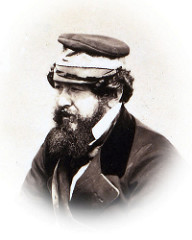
April 30.–Rev. Henry M. Field, editor of the New York Evangelist, and his little French wife are here visiting. She is a wonderful woman. She has written a book and paints beautiful pictures and was teacher of art in Cooper Institute, New York. He is Grandmother’s nephew and he brought her a picture of himself and his five brothers, taken for Grandmother, because she is the only aunt they have in the world. The rest are all dead. The men in the picture are Jonathan and Matthew and David Dudley and Stephen J. and Cyrus W. and Henry M. They are all very nice looking and Grandmother thinks a great deal of the picture.

0 comments

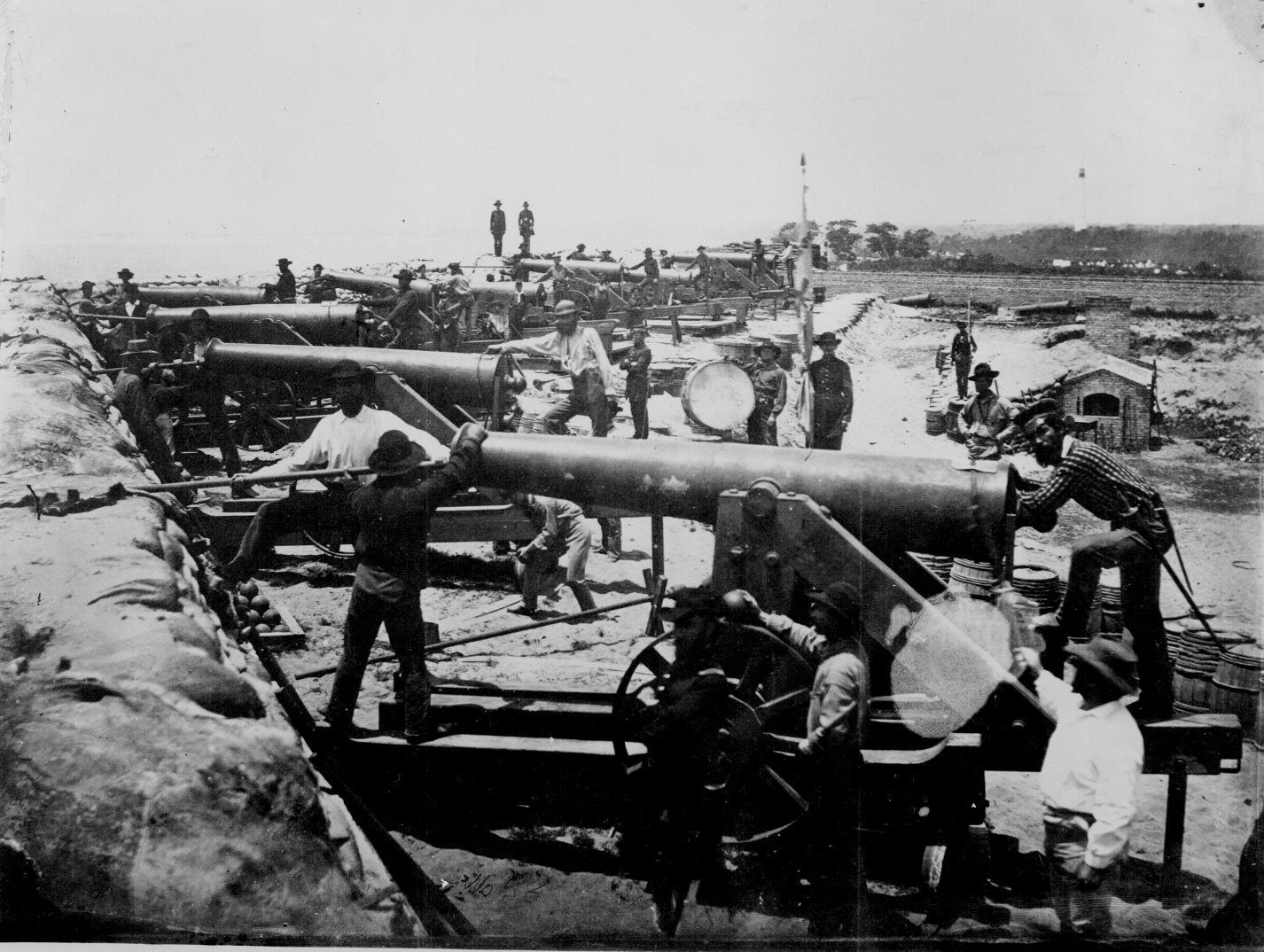
Columbiad guns of the Confederate water battery at Warrington, Fla

Miscellaneous document sources

Columbiad guns of the Confederate water battery at Warrington, FlaColumbiad guns of the Confederate water battery at Warrington, Fla. (entrance to Pensacola Bay), February 1861. Photographed by W. 0. Edwards or J. D. Edwards of New Orleans, La. 77-HL-99-1. National Archives Identifier: 519437

www.archives.gov/files/research/military/civil-war/photos/

0 comments

Virginia Governor John Letcher

Civil War Day-by-Day

Civil War Portraits—Leaders, Influencers, and the Incidentally Important #005

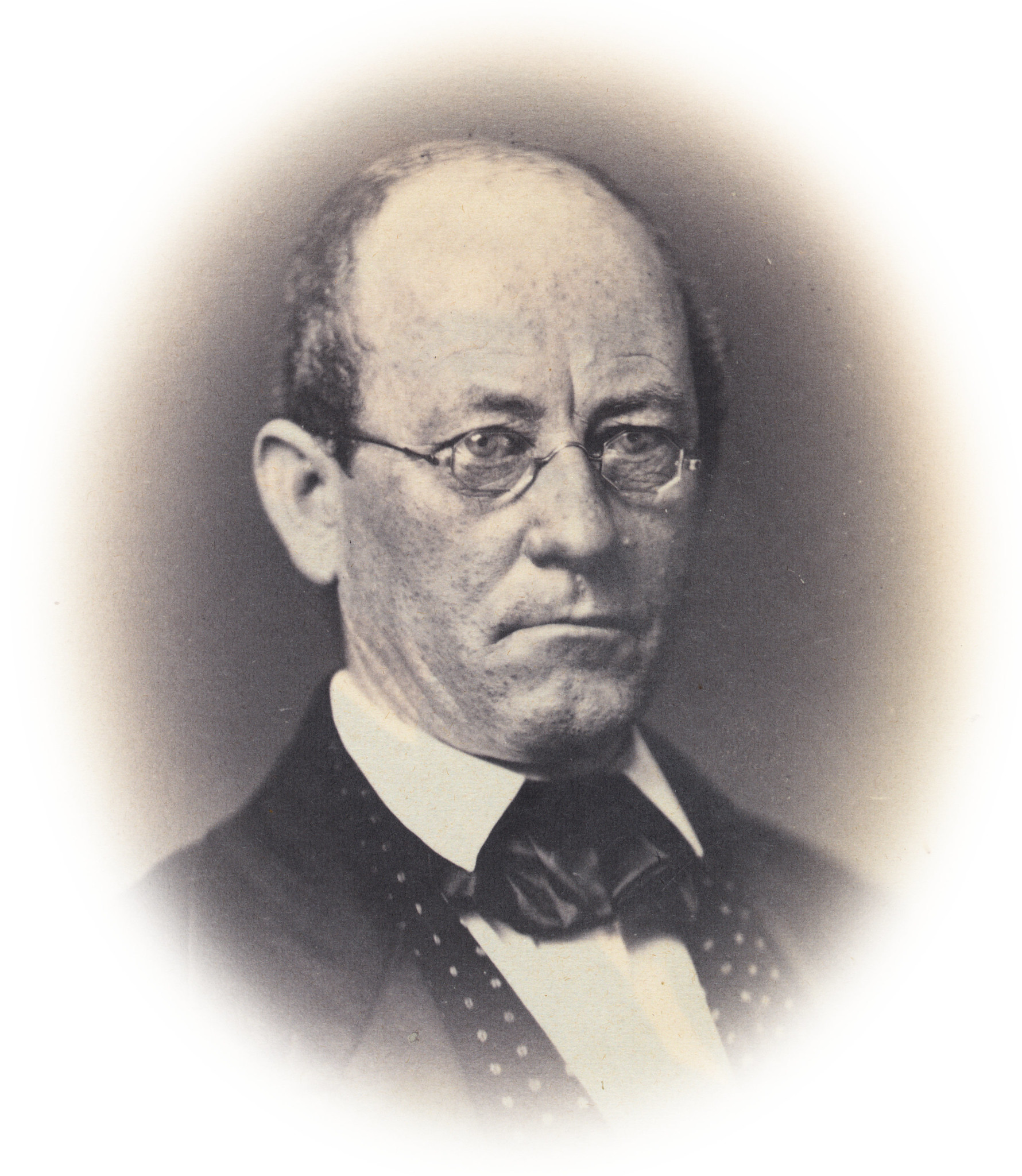
Virginia Governor John Letcher

Virginia Governor John Letcher

John Letcher was an American lawyer, journalist, and politician. He served as a Representative in the United States Congress, was the 34th Governor of Virginia during the American Civil War, and later served in the Virginia General Assembly. He was also active on the Board of Visitors of Virginia Military Institute. Wikipedia

Title: John Letcher, Representative from Virginia, Thirty-fifth Congress, half-length portrait]
Creator(s): Vannerson, Julian, 1827-, photographer
Date Created/Published: [1859]
Medium: 1 photographic print : salted paper ; 19.7 x 14.3 cm.
Reproduction Number: LC-DIG-ppmsca-26673 (digital file from original item)
Rights Advisory: No known restrictions on publication.
Call Number: Illus. in JK1012.M35 1859 (Case X) [P&P]
Repository: Library of Congress Prints and Photographs Division Washington, D.C. 20540 USA
Notes:
…..Illus. in: McClees’ gallery of photographic portraits of the senators, representatives & delegates of the thirty-fifth Congress… Washington: McClees & Beck, [1859], page 134.
…..Each item includes subject’s original signature in ink.
…..Title devised by Library staff based on name provided in book’s index.

www.loc.gov/pictures/item/2010649173/

0 comments

“Famine stares us in the face unless the routes are kept open. Where are the expected troops?”—Horatio Nelson Taft

Diary of US patent clerk Horatio Nelson Taft.

SUNDAY 21

This has been a pleasant but anxious day. We seem to be surrounded by enimies, and enimies in our midst. No troop have yet arrived since the Mass. Regt. How anxiously have we looked for the 7th Regt of NY today. I left the National tonight at 11 o’clock but could get no reliable information. We may be in the midst of bloodshed any hour, and I am looking for an outbreak or attack all the time. Famine stares us in the face unless the routes are kept open. Where are the expected troops?


The three diary manuscript volumes, Washington during the Civil War: The Diary of Horatio Nelson Taft, 1861-1865, are available online at The Library of   Congress.

0 comments

I’ve often longed to see a war, and now I have my wish.—Louisa May Alcott

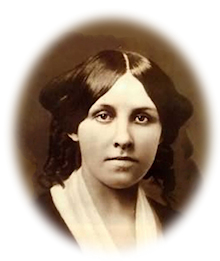
Louisa May Alcott in War Time

April. —War declared with the South, and our Concord company went to Washington. A busy time getting them ready, and a sad day seeing them off; for in a little town like this we all seem like one family in times like these. At the station the scene was very dramatic, as the brave boys went away perhaps never, to come back again.

I’ve often longed to see a war, and now I have my wish. I long to be a man; but as I can’t fight, I will content myself with working for those who can.
Sewed a good deal getting May’s summer things in order, as she sent for me to make and mend and buy and send her outfit.

Stories simmered in my brain, demanding to be writ; but I let them simmer, knowing that the longer the divine afflatus was bottled up the better it would be.

John Brown’s daughters came to board, and upset my plans of rest and writing when the report and the sewing were done. I had my fit of woe up garret on the fat rag-bag, and then put my papers away, and fell to work at housekeeping. I think disappointment must be good for me, I get so much of it; and the constant thumping Fate gives me may be a mellowing process; so I shall be a ripe and sweet old pippin before I die.

0 comments

We wandered through tangled brakes and thick Indian-like jungle, filled with disagreeable insects, down to the edge of a small lagoon.—William Howard Russell

My Diary North and South – William Howard Russell

April 21st.—In the afternoon I went with Mr. Porcher Miles to visit a small farm and plantation, some miles from the city, belonging to Mr. Crafts. Our arrival was unexpected, but the planter’s welcome was warm. Mrs. Crafts showed us round the place, of which the beauties were due to nature rather than to art, and so far the lady was the fitting mistress of the farm.

We wandered through tangled brakes and thick Indian-like jungle, filled with disagreeable insects, down to the edge of a small lagoon. The beach was perforated with small holes, in which Mrs. Crafts said little crabs, called “fiddlers” from their resemblance in petto to a performer on the fiddle make their abode; but neither them nor “spotted snakes” did we see. And so to dinner, for which our hostess made needless excuses. “I am afraid I shall have to ask you to eke out your dinner with potted meats, but I can answer for Mr. Crafts giving you a bottle of good old wine.” “And what better, madam,” quoth Mr. Miles, “what better can you offer a soldier? What do we expect but grape and canister?”

Mr. Miles, who was formerly member of the United States Congress, and who has now migrated to the Confederate States of America, rendered himself conspicuous a few years ago when a dreadful visitation of yellow fever came upon Norfolk and destroyed one-half of the inhabitants. At that terrible time, when all who could move were flying from the plague-stricken spot, Mr. Porcher Miles flew to it, visited the hospitals, tended the sick; and although a weakly, delicate man, gave an example of such energy and courage as materially tended to save those who were left. I never heard him say a word to indicate that he had been at Norfolk at all. [continue reading…]

0 comments

Elisha Franklin Paxton

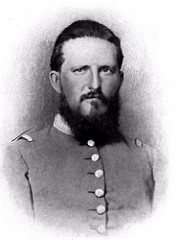
Elisha Franklin Paxton – Letters from camp and field while an officer in the Confederate Army

New Market, April 21,1861.

Reached here this morning in good health and in spirits as good as could he expected, considering the bloody prospect ahead and the sad hearts left at home. It is bad enough. I have no time to think of my business at home. My duties now for my State require every energy of mind and body which I can devote to them. Do just as you please. If you think proper stay in town and leave all matters and keys on the farm in charge of John Fitzgerald.


0 comments

Rebel War Clerk

Civil War Day-by-Day
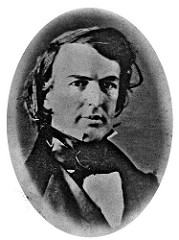
A likeness of Jones when he was editor and majority owner of the Daily Madisonian during President John Tyler’s administration.

April 21st.– Received several letters to-day which had been delayed in their transmission, and were doubtless opened on the way. One was from my wife, informing me of the illness of Custis, my eldest son, and of the equivocal conduct of some of the neighbors. The Rev. Mr. D, son of the late  B_______p, raised the flag of the Union on his church.

The telegraphic wires are still in operation.

0 comments

Room Enough!

Life and Public Services of Abraham Lincoln: Sixteenth President of the United States; and Commander-in-chief of the Army and Navy of the United States

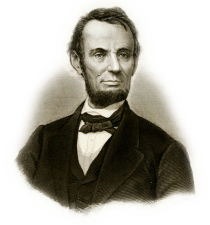
About this same date [April 21] a deputation of sympathizers [from Maryland] visited the President, and demanded a cessation of hostilities until the convening of Congress, accompanying the demand with the assertion that seventy-five thousand Marylanders would contest the passage of troops over their soil. Mr. Lincoln, in refusing to accede to the truce, quietly replied that he presumed there was room enough on her soil to bury seventy-five thousand men.


Williamson, David. Life and Public Services of Abraham Lincoln: Sixteenth President of the United States, and Commander-in-Chief of the Army and Navy of the United States .. Philadelphia: T.B. Peterson, 1864.

0 comments

Military Excitement.

Civil War Day-by-Day

 Daily Times
(Leavenworth, KS)
April 21, 1861

Rumors were current here yesterday, that the Missourians were preparing for an attack on Fort Leavenworth. A letter was received by one of our citizens, from the Delaware Indian agent, which stated that companies were being formed in Parkville and Independence, for a hostile expedition against the Fort, and various other reports and speculations were circulated, which strengthened the impression that some scheme of the kind had been concocted.

Most of our people placed but little confidence in the rumors referred to; yet it was deemed prudent to use every precaution to guard against such an assault being made, either at the present time or in the future.—Accordingly, Mayor McDowell and others visited the Fort and tendered to Capt. Steele the services of one hundred men to assist in its defence. The Captain thought there was no ground for apprehension, and said the regular troops under his command could easily protect the post against a force of 5,000, and were fully prepared to do so. He, however, accepted the offer of the Mayor, and the one hundred men were stationed at the Fort last night. We are informed that Capt. Steele also gave the Mayor a large quantity of arms, to be used in the defence of the city.

A number of military companies were organized yesterday for home protection. Company A selected the following officers: Capt., J. C. Stone; 1st Lieutenant, A. M Clark; 2nd Lieutenant, Thos. Carney. Nearly 100 names were enrolled.

Company B, Home Guards, organized by electing I. G. Locey Captain; Messrs. Haller and Hughes, 1st and 2nd Lieutenants.

There was a French company organized, but we did not learn the names of the officers.

The Union and Shields Guards have increased their numbers. The former company have daily drills.

These movements show that our citizens are determined to be prepared for any emergency that may arise in the present excited state of the country. We believe that if it is thoroughly understood that we are heartily united in resistance to any invasion of our State, and ready to meet it at a moment’s warning, no trouble need be apprehended
 

0 comments

New York Herald

Civil War Day-by-Day

April 21, 1861

Important Military Movements.

Our city is a military camp. The greatest enthusiasm prevails. We are full of brigade, regimental and company orders. But, owing to the length and importance of the proceedings of the overwhelming demonstration in Union square yesterday afternoon, we are compelled to defer the publication of them till tomorrow, when our gallant troops shall have our attention. We shall do our part in this great crisis.

Three to five thousand men will leave this city today for the South. The Sixth, Twelfth and Seventy-first regiments will take their departure at nine o’clock this morning. Several steamers—the Baltic, Marion, Columbia, Monticello, James Adger, Roanoke, Alabama, R.R. Cuyler and Chesapeake—have been chartered by the government. The first three sail this morning. The last three sailed yesterday.

Orders have also been received for the departure of the Eighth and Sixth-ninth regiments on Tuesday, and the Ninth on Wednesday. The Fire Department Zouaves organized last evening at Palace Garden and elected their various officers.

Troops are being rapidly organized all over the North, and in another week the government will have a force sufficient to repel any attack that may be made upon Washington. Obstructed railroads or blown up bridge may slightly delay, but not deter our troops. Advance! is the order.

A great mass meeting in support of the government, [continue reading…]

0 comments

Civil War Day-By-Day

Civil War Day-by-Day

April 21, 1861

A Chronological History of the Civil War in America1

  • Philadelphia, Wilmington, and Baltimore Railroad taken possession of by the U. S. Government.
  • War sermons preached in most of the Northern churches.

  1. A Chronological History of the Civil War in America by Richard Swainson Fisher, New York, Johnson and Ward, 1863
0 comments

The Great Question Decided—Virginia Out of the Union—Our Flag.

Richmond Enquirer

Richmond Enquirer
April 20, 1861

The eighteenth of April, one thousand eight hundred and sixty one, will be noted as the most eventful day in Virginia history. On that day Virginia, through her sovereign Convention, dissolved the political bands by which she has been connected with the United States Government from its formation, seventy four years ago.

The announcement of the withdrawal of the glorious old State from the abolitionized Government of the once United States, will be celebrated with bonfires and illuminations by her true hearted sons from the Chesapeake to the Ohio, and from her Northern to her Southern borders. The friends of free Government throughout the world will give one thousand cheers for old Virginia, the mother of States and of Statesmen.

The Convention still sits with closed doors and the injunctions of secrecy have not been removed from its proceedings, except as to the simple fact announced above. Yesterday morning the flag of the Southern Confederacy with eight stars was displayed over the Capitol in which the Convention sits, and it still there. The understanding is that a straight-out Ordinance of Secession has been passed with but few dissenting voices. Its submission to the people will be a matter of form and not of contest.

0 comments

Interesting from Norfolk.—News by Telegraph.

Richmond Enquirer

Richmond Enquirer
April 20, 1861

Reported for the Richmond Telegraph.

(Special Dispatch to the Richmond Enquirer.)

NORFOLK, April 19—Col. Elzey and Dr. Jones, both from Maryland, and stationed at Old Point, sent in their resignations yesterday. Both of these gentlemen have served in the army with distinction for a number of years, and last in the Mexican war. Dr. Jones has been in the army for 24 years.

An interesting scene occurred when these officers who had resigned reached here with their families from the Navy Yard. Boats with their furniture crossed the Harbor with the officers and their wives and little ones before them.

Every officer in the Navy Yard, except McCauley, has resigned. The finest spirit prevails here. The best houses have been tendered for quarters, when necessary to concentrate troops here. A gallant set of navy officers are eager for duty. The Harbor is obstructed and war vessels can neither enter or depart.

The Baltimore Boat was searched today, by [continue reading…]

0 comments

North Carolina for Immediate Session.

Richmond Enquirer

Richmond Enquirer
April 20, 1861

We feel perfectly safe in making this announcement. Information from all parts of the State is to the effect that the flag of the Southern Confederacy waves triumphantly over the land of Macon. An immense meeting was held at Raleigh, on Tuesday last, at which speeches were made by Hon. D.M. Barringer, Col. Cameron, J.W. Syme, editor of the Register, Ex-Gov. Manly, and a number of others, embracing every shade of opinion, so far as past issues are concerned. But one sentiment was expressed, but one feeling animated the speakers and their auditors. The universal voice was for immediate secession, and for a warm response to Lincoln’s call to arms! The Union sentiment has heretofore been stronger in Raleigh and its immediate vicinity than in any other part of North Carolina.

0 comments

The Illumination and Torchlight Procession.

Richmond Enquirer

Richmond Enquirer
April 20, 1861

The demonstration here last evening in honor of the withdrawal of Virginia from the Abolitionized Union, was grand and enthusiastic. The Main street was brilliantly illuminated for the distance of nearly a mile, nearly every window being lighted up, and bonfires at various points. The procession was extensive and imposing, many of the transparencies beautiful, and most of the mottoes and devices highly appropriate. The side walks and streets were thronged with ladies and gentlemen to the number of thousands, all of whom manifested the liveliest and deepest interest in the scene. The entire city was lighted up, and the whole heart of Richmond was in the demonstration. We shall give details hereafter.

0 comments

The Minor Events of Yesterday.

Richmond Enquirer

Richmond Enquirer
April 20, 1861

The Confederate flag was displayed from the Customs House, Hotels and private residences. Eight stars being generally the number of the flag—one having been added for old Virginia.

The Custom House was taken out of the hands of the United States, and placed under the guard of State troops.

The hurrying to and fro of military men gave the city quite a martial aspect.

The steamships Yorktown and Jamestown, (belonging to the Virginia and New York Steamship Company,) have both been seized and put in charge of Virginia State troops.—The Yorktown was seized at her wharf in this city on Wednesday afternoon, just as she was about to depart for New York with a large amount of merchandize. The Jamestown was seized at City Point, (sixty miles below Richmond.) by troops which had been sent down in a steamer for that purpose. The Jamestown left New York Tuesday afternoon and, we understand, has on board, about $50,000 worth of ordinance and military stores, for Virginia and other Southern States.

A marine vessel was also seized at City Point, called the Argo, by a detachment of volunteers from Richmond. The steam tug William Allison, also arrived at the Richmond wharf last night, with the United States surveying schooner Mason in tow, which had also been levied upon.

These seizures have been made upon the lex talionis, we presume; the vessels being owned chiefly by Northern men.

We have no space for comment. In this week of great events the little incidents here named may be dispatched with Ceasarian brevity.

0 comments

Proclamations of Governor T.H. Hicks of Maryland and Mayor Geo. W. Brown of Baltimore.

Richmond Enquirer

Richmond Enquirer
April 20, 1861

The Governor of the State of Maryland and the Mayor of Baltimore have united in proclamations to the people of that State and City, urging upon them the duties peculiar to the crisis and responsibilities it imposes upon them. Both the Governor and the Mayor refer to the fact that an opportunity will be soon afforded to the people of the State to express at the ballot box their wishes as to the position which Maryland shall assume. Gov. Hicks says:

I assure the people that no troops will be sent from Maryland, unless it may be for the defence of the National Capital.

It is my intention in the future, as it has been my endeavor in the past, to preserve the people of Maryland from civil war, and I invoke the assistance of every true and loyal citizen to aid me to this end.

The people of this State will in a short time have the opportunity afforded them in a special election for members of Congress of the United States to express their devotion to the Union, or their desire to see it broken up.

0 comments

Exciting News from Baltimore.

Richmond Enquirer

Richmond Enquirer
April 20, 1861

Latest by Telegraph.

THE FIRST BLOODSHED.

Resistance to Northern Troops, etc., etc., etc.

BALTIMORE, April 19.—A terrible conflict has occurred this afternoon between the people of this city and a portion of the soldiers of the New York Seventh Regiment.

Several have been killed and wounded.

The whole volunteer military force of the city is under arms, and Governor HICKS has proclaimed martial law.

The city was considerably excited yesterday afternoon by the above rather meager despatch, which appeared upon the bulletin boards. Owing to the wires having been cut or otherwise disarranged, no further particulars of this exciting news was sent to us by the agent of the Associated Press, but from a number of conflicting private despatches, which have been kindly furnished us, we glean the following information:

It appears that such detachments of the New York Seventh Regiment as were willing to become the tools of Coercion (the Regiment, as a whole, being opposed to such a cause) reached Baltimore today. An excited mob met them upon their arrival at the President Street Station, and began throwing stones at the car containing them. The newly arrived companies abstained from resenting the attack, and thanks to their own prudence, combined with the efforts of the police, succeeded in reaching the Camden Station, whence they were to start for Washington.

A Massachusetts Regiment arriving about the same time was also stoned, and in reply fired upon the populace, killing a number of citizens, and among others several highly esteemed in the community. We hear that Mr. DAVIS, of the firm of DAVIS, PAYNTER & CO., was among those killed. At the last accounts the firing was till going on. The number of the killed is variously stated from twenty to two hundred. [continue reading…]

0 comments

The Summons to Surrender.

Harper’s Weekly

Harper’s Weekly
April 20, 1861

A telegraphic correspondence between the Montgomery War Department and General Beauregard, before the commencement of hostilities, has been published. On April 8 General Beauregard telegraphed that a messenger from President Lincoln had brought word that provisions would be sent to Fort Sumter—peaceably if possible, forcibly if necessary. Mr. Walker, the Secretary of War, replied, on April 10, instructing General Beauregard to demand the immediate evacuation of Fort Sumter, and if this was refused, to proceed to attack the fort in the way he thought best. The demand for surrender was accordingly made by General Beauregard, and Major Anderson replied, April 11, “It is a demand with which I regret that my sense of honor and my obligations to my Government prevent my compliance.” He added, also, “I will await the first shot, and if you do not batter us to pieces, we will be starved out in a few days.” His answer being sent to Montgomery, the Secretary of War telegraphed back that if Major Anderson would state the time at which he would evacuate the fort, it should not be bombarded. To this Anderson would not consent, and upon his refusal hostilities began. The latest of those dispatches, that from General Beauregard to the Secretary of War, bears date April 12, and was received in New York a few hours after it was sent to Montgomery.

0 comments

The Latest from Fort Pickens.

Harper’s Weekly

Harper’s Weekly
April 20, 1861

Lieutenant Slemmer has found means of communicating with the Government, in spite of the surveillance exercised by the investing army. He explains why the troops were not landed from the Brooklyn, conformably to the order, issued by the War Department several weeks ago. According to his view, Fort Pickens can withstand any assault which may be made by the force now assembled there, or any which is likely to be collected by Jefferson Davis. He has four months’ provisions, and feels himself fully able to maintain his position and defend himself, without drawing upon the contingent force at his disposal in the ships of war. In case of an attack, which is not feared, notwithstanding all the demonstrative display, the troops could be landed at a signal, just as easily as at this time. The intelligence was received by telegraph.

0 comments

President Davis Going to Charleston.

Harper’s Weekly

Harper’s Weekly
April 20, 1861

Dispatches received from Montgomery state that President Davis was considering the propriety of going to Charleston, being satisfied that Fort Sumter was to be the great strategic point where the issue was to be tried as to the power of the Confederate States Government to maintain itself. He and his friends deemed it his duty to be on the ground.

0 comments

Secession of Arizona.

Harper’s Weekly

Harper’s Weekly
April 20, 1861

Accounts from New Mexico state that the citizens of Arizona, in convention at Mesilla, have voted that Territory out of the Union.

0 comments

Naval Movements.

Harper’s Weekly

Harper’s Weekly
April 20, 1861

The Atlantic was chartered by the Government, and sailed on 6th with troops and munitions of war. The Baltic and Illinois sailed on 8th with similar freight. Orders were issued on same day by the Navy Department to have the Wabash, Vincennes, and Savannah, at Brooklyn, and the Jamestown, at Philadelphia, fitted for active service with dispatch. The United States ship Pawnee sailed from Norfolk at 6 P.M. on Tuesday, bound South, under sealed orders. There is great activity manifested at the Charlestown Navy-yard (at Boston, Massachusetts), over 800 persons being employed. The brig Bainbridge is ready for sea, and waiting for her crew. The steam-frigates Minnesota, Mississippi, and Colorado are also nearly ready. Commodore Stringham is expected to arrive early next week. Business at the Philadelphia Navy-yard is inactive, and there are frequent discharges of men, only two hundred being now employed there. The United States steamer Water Witch has gone into commission, and sails during the week. Her destination is unknown. Her crew consists of 70 sailors and marines.

0 comments