The Troops in Texas.

Harper’s Weekly

Harper’s Weekly
April 20, 1861

Another of the transports sent to Texas to bring away the United States troops—the steamer Coatzacoalcos reached this port on 11th. She left here on the 16th of March, and arrived at Pass Cabello Bar on the 21st. She started on her return on the 31st, and touched at Key West on the 4th inst., where she landed two companies of infantry. Being unable to obtain water at Key West, she then proceeded to Havana, whence she sailed on the 6th. She brings one company of infantry and six of cavalry, some of the latter of which will probably be immediately sent to Washington. The troops left in Texas, numbering about one thousand, are reported to be in good health, and abundantly supplied with provisions; and in view of recent occurrences, it may now be considered doubtful whether they will be removed.

0 comments

The Right of Secession.

Harper’s Weekly

Harper’s Weekly
April 20, 1861

THE State of Virginia has decided not to secede; but has adopted, in Convention, a series of resolutions affirming, among other things, the right of a State to secede from the Union at will. In like manner, the State of Missouri, which is overwhelmingly opposed to secession, and the State of Kentucky, in which no Convention has been called, both declare that in the event of forcible measures being taken by the General Government to resist the dismemberment of the Union, they will take sides with the seceded States.

It seems questionable whether the continued alliance of these States, on these conditions, is an unmixed gain. If this Union of ours is a confederacy of States which is liable to be dissolved at the will of any of the States, and if no power rests with the General Government to enforce its laws, it would seem that we have been laboring under a delusion these eighty years in supposing that we were a nation, and the fact would appear to be that the several States of the Union have really been united by no closer bond than that which connects us with Great Britain and France—a mere treaty stipulation, which any of the parties were at liberty to annul at pleasure.

It is of the essence of nationality that the Government of the whole shall be obeyed by each constituent part, and that the covenants of the [continue reading…]

0 comments

Beginning of the War.

Harper’s Weekly

Harper’s Weekly
April 20, 1861

On Friday, 12th, at 27 minutes past 4 A. M., General Beauregard, in accordance with instructions received on Wednesday from the Secretary of War of the Southern Confederacy, opened fire upon Fort Sumter. Forts Johnson and Moultrie, the iron battery at Cumming’s Point, and the Stevens Floating Battery, kept up an active cannonade during the entire day, and probably during the past night. The damage done to Fort Sumter is stated by the Confederate authorities to have been considerable. Guns had been dismounted, and a part of the parapet swept away.

Major Anderson had replied vigorously to the fire which had been opened upon him, but the Charleston dispatches represent the injury inflicted by him to have been but small. The utmost bravery had been exhibited on both sides, and a large portion of the Charleston population, including five thousand ladies, were assembled upon the Battery to witness the conflict.

Down to our latest advices, the battle had been carried on solely by the batteries of the revolutionists and Fort Sumter. The Harriet Lane, Captain Faunce, the Pawnee, and another United States vessel, were said to be off the harbor, but had taken no part in the conflict. The Harriet Lane is said to have received a shot through her wheel-house.

The opinion prevailed in Charleston that an attempt would be made during the night to reinforce Fort Sumter by means of small boats from the three vessels seen in the offing.

No one had been killed by the fire of Major Anderson, and the casualties among the Confederate troops in the batteries were inconsiderable. There is, of course, no account of the loss, if any, among the garrison of Fort Sumter.

0 comments

Our Editorial Correspondence

Civil War Day-by-Day

The Scientific American
April 20, 1861

WASHINGTON, April 5, 1861.

Whoever visits Washington in these days is pretty sure to be set down as an office seeker. The hotels are well thronged, and the rivalry for a share in the distribution of the spoils of office appears to be sharp, and ofttimes acrimonious. I called yesterday morning, to pay my respects to the President, and I found such an eager crowd clambering about his wearied and jaded Excellency that I beat a retreat instantly, without accomplishing the object of my call. D’Alembert, a French writer, once declared ‘’that the industry of men was so far exhausted in canvassing for places, that none was left to fulfill the duties of them.” The truth of this remark is well verified by the state of things here. The pressure is so great that patent hinges and patent locks are almost unavailing against the patriotic crowd, who are more than willing to enter the service of Uncle Sam. Radical and sweeping changes in the public bureaus, the sudden removal of old, and the installment of new, officers, necessarily confine business, and one might as well seek to compose the winds as to undertake the prosecution of legitimate business in some of the Departments, without being jostled about considerably. Expectants for office are not the only ones who are trembling upon the verge of solicitude; the fact is equally true of those who are now holding office. In imagination, if not in reality, they see the official guillotine standing at the door, and the political handwriting “Mene mene tekel upharsen,” appears on the wall. An instance of this came under my notice. I was conversing with a gentleman, long connected with one of the departments; he expressed solicitude respecting his position, and I had not left him but a few moments before I heard that the ax of the headsman had done its work in his case. This state of things creates confusion, and it will be some time before the official machine can he regulated to a steady motion. In reference to the Patent Office, in which the readers of the SCIENTIFIC AMERICAN feel such a deep interest, such influences are at work more or less, though much less, I think, than in many other bureaus; still, there are many who are seeking to get into this office. Its mysteries attract the curiosity of the curious, and the pressure to pry into them is therefore considerable; and there is a painful anxiety on the part of those who are deeply interested in its successful management, to know what the policy of the office is to be.

Mr. Holloway, the new Commissioner, is in the active discharge of his duties, [continue reading…]

0 comments

City, Weather, &c.—Surrender of Fort Sumter

Civil War Day-by-Day
1860s newsprint

 The Constitutional
(Alexandria, LA)
April 20, 1861

On Sunday night last this place was visited by a severe storm which blowed down the fine Market House lately erected in our city, and otherwise damaging property all over the parish to a considerable amount. On the same night the building in the Pinewoods known as Parker’s Institute, and at the time occupied by J. S. Calhoun, Esq., as a manufactory for negro clothing, was struck by lightning and destroyed by fire. By this disaster we learn that Mr. Calhoun sustains a great loss. The weather since the storm has been characteristic of high winds but at present it is greatly modified and has become quite pleasant.

The news of the surrender of Fort Sumter by Major Anderson was received in this city with intense delight. The old cannon was brought into requisition and seven “blank cartridges” were fired in honor of the event, and the patriotism (!) of the “intense” was more intense than ever.

0 comments

An Unlimited Order.

Civil War Day-by-Day

 Sugar Planter
(West Baton Rouge, LA)
April 20, 1861

Passing through the foundry of Messrs. Hill & Markham, in Baton Rouge a day or two since, we found a number of workmen busily engaged in casting twenty-four pound cannon balls. We were informed that the order from the State was unlimited—in other words, they were to keep on casting until ordered to stop.—The “pills” we saw are beautiful little objects of vertu and will, no doubt, seriously interfere with the gastronomical arrangements of the in-dwellers at Fort Pickens when forced into their company by a reasonable charge of powder.

0 comments

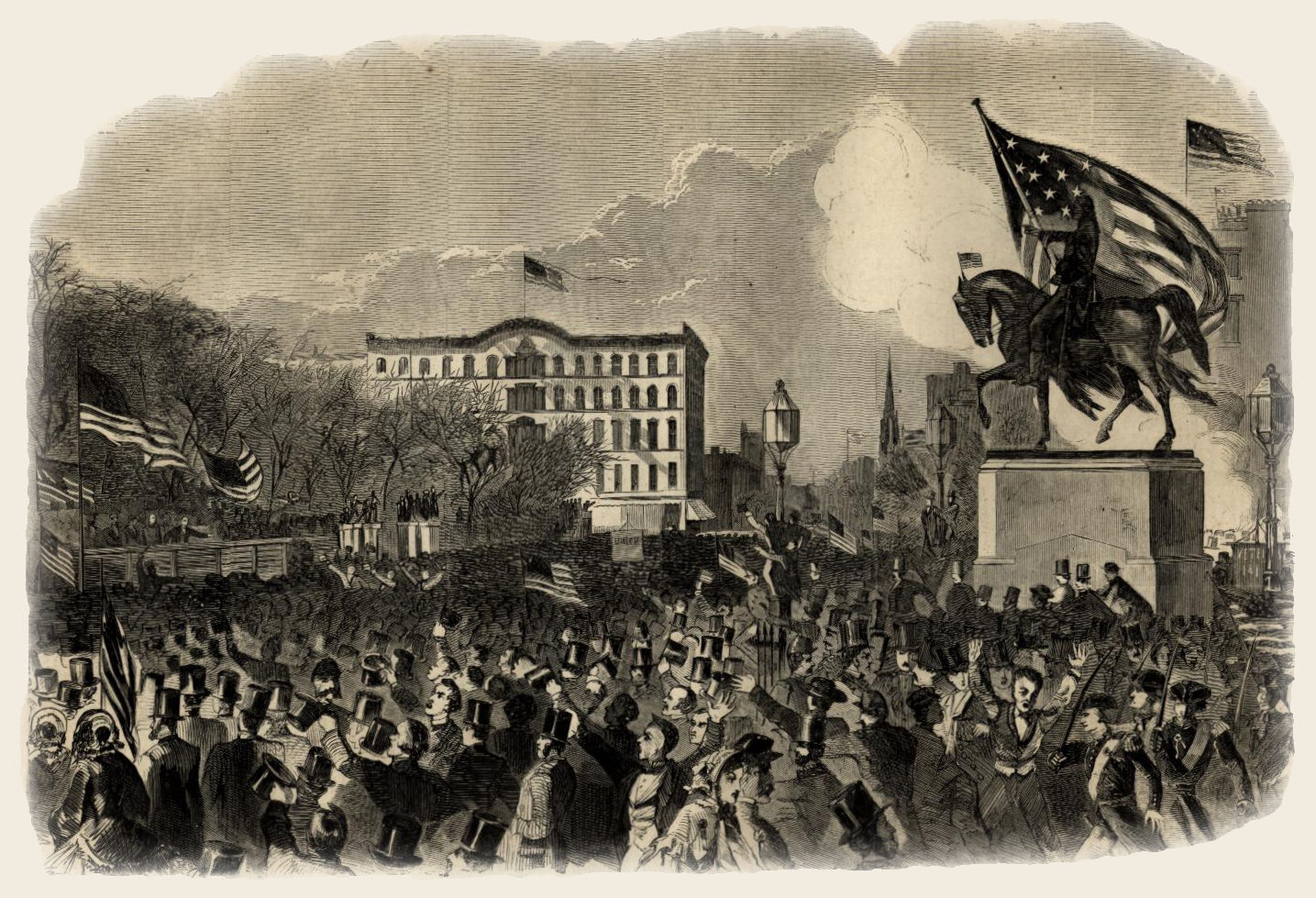
The Great Meeting in Union Square, New York, to Support the Government, April 20, 1861

Harper’s Weekly

The Great Meeting in Union Square, New York, to Support the Government, April 20, 1861Harper’s Weekly, May 4, 1861

0 comments

Interesting Ceremony.

Civil War Day-by-Day

 Texas Republican
(Marshall)
April 20, 1861

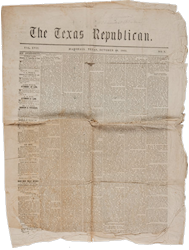
We learn that it is the intention of the ladies of Marshall to present the company of Rangers which leaves town to-day, (Saturday) with a splendid flag, as a mark of their high appreciation of the zeal and patriotism which has prompted them to respond with such alacrity to the call made upon them for their services. One of Marshall’s fairest daughters, and it can boast of many such, will make the presentation. The ladies have thus nobly resolved to offer to the gallant Rangers on their departure, a public expression of their heartfelt sympathies for the arduous but glorious cause in which they have engaged. This is as it should be. The love and beauty of woman have always been intimately associated with the valor of the soldier and the sanctity of his cause. In the days of chivalry, no knight went forth to combat whose proud crest did not gleam with the light of some “fayre ladye’s” gift. So will our gallant Rangers to forth with the smiles, the tears, and the sympathies of woman to animate and inspire their hearts to nobly perform the arduous task which they have voluntarily undertaken.


0 comments

Blockade of the Southern Ports.—Proclamation from President Lincoln.

Civil War Day-by-Day

New York Herald
April 20, 1861

WASHINGTON, April 19, 1861.

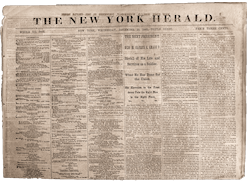
The President has issued a proclamation stating that an insurrection against the government of the United States has broken out in the States of South Carolina, Georgia, Alabama, Florida, Mississippi, Louisiana, and Texas, and the law of the United States for the collection of the revenue cannot be effectually executed therein conformably to that provision of the constitution which requires duties to be uniform throughout the United States, and further that a combination of persons engaged in such insurrection have threatened to grant pretended letters of marque to authorize the bearers thereof to commit assaults on the lives, vessels and property of good citizens of the country lawfully engaged in commerce on the high seas and in the waters of the United States; and whereas, the President says an executive proclamation has already been issued requiring the persons engaged in these disorderly proceedings to desist, therefore calling out a militia force for the purpose of repressing the same and convening Congress in extraordinary session to deliberate and determine thereon. The President with a view to the same purposes before mentioned, and to the protection of the public peace, and the lives and property of its orderly citizens pursing their lawful occupations, until Congress shall have assembled and deliberated on the said unlawful proceedings, or until the same shall have ceased, has further deemed it advisable to set on foot a blockade of the ports within the states aforesaid in pursuance of the laws of the United States and the law of nations in such cases provided. For this purpose a competent force will be posted so as to prevent the entrance and exit of vessels from the ports aforesaid. If, therefore, with a view to violate the blockade, ad vessel shall attempt to leave any of the said ports, she will be duly warned by the commander of one of the said blockading vessels, who will endorse on her register the fact and date of such warning, and if the same vessel still again attempt to enter or leave the blockaded she will be captured and sent to the nearest convenient port for such proceedings against her and her cargo as may be deemed advisable.


0 comments

The War.—Fight in Baltimore Between the Troops and the Mob—Two Soldiers and Seven Citizens Killed.

Civil War Day-by-Day

New York Herald
April 20, 1861

BALTIMORE, April 19, 1861.

A terrible scene is now going on in Pratt street. The track has been torn up. The troops attempted to march through, when they were attacked by a mob with stones and bricks, and then fired upon. The troops returned the fire. Two of the Seventh regiment of Massachusetts were killed. The fight is still going on.

There is intense excitement here. The soldiers are now forcing their way through. They fired on the mob, killing ten.

It is impossible to say what portion of the troops have been attacked. They bore a white flag as they marched up Pratt street, and were greeted with showers of paving stones. The Mayor of the city went ahead of them with the police. An immense crowd blocked up the streets. The soldiers finally turned and fired on the mob. Several of the wounded have just gone up the street in carts.

At the Washington depot an immense crowd assembled. The rioters attacked the soldiers, who fired on the mob. Several were wounded, and some fatally. It is said that four of the military and four rioters are killed. The city is in great excitement. Marital law has been proclaimed. The military are rushing to the armories.

Civil war has commenced. The railroad track is said to be torn up outside of the city.

Parties threaten to destroy the Baltimore street bridge.

As the troops passed along Pratt street a perfect shower of paving stones rained on their heads.

The cars have left for Washington, and were stoned as they left.

It was the Seventh regiment of Massachusetts which broke through the mob. Three of the mob are known to be dead, and three soldiers. Many were wounded. Stores are closing, and the military rapidly forming. The Minute Men are turning out.

BALTIMORE, April 19—2:30 P.M.

Affairs are getting serious. Before all the cars got through great crowds assembled at various points and commenced obstructing the road.

Reports are now arriving that the mob are tearing up the track.

It is understood the principal portion of the troops have got through.

BALTIMORE, April 19—4 P.M.

A town meeting has been called for four o’.

It is said there have been twelve lives lost.

Several are mortally wounded.

Parties of men, half frantic, are roaming the streets, armed with guns, pistols and muskets.

The stores are closed, and business is suspended.

A general state of dread prevails.

Parties, a short time ago, rushed into the telegraph office, armed with hatchets and cut the wires. Not much damage was done.

BALTIMORE, April 19—5 P.M.

  1. W. Davis, of the firm of Pegram, Paynter & Davis, was shot dead during the riot near Camden station.

Four of the Massachusetts troops were killed and several wounded, but it is impossible to learn their names.

It is reported that the Philadelphians are now at the outer depot. The President of the road has ordered the train back at the urgent request of the Mayor and Governor. They are already off.

The citizens who were mortally wounded are John McCan, P. Grifin, G. Needham.

0 comments

The News.

Civil War Day-by-Day

New York Herald
April 20, 1861

President Lincoln has issued a proclamation announcing a blockade of the ports of the revolutionary States. The document is given in another column.

Baltimore was the scene of a bloody fight yesterday. On the arrival of the Massachusetts regiment of troops in that city, their passage through to Washington was opposed by the secessionists, who showered stones upon the soldiers. The troops in return fired upon the mob, and succeeded in forcing their way through the city. In the conflict, two of the Massachusetts volunteers were killed and four wounded. Seven of the citizens were killed and some half dozen wounded. A despatch dated at nine o’clock in the evening states that quiet prevailed. A large meeting of citizens was held in the evening, which, was attended by the Mayor and the Governor of the States.

Captain Jones, the commander of the United States troops at Harper’s Ferry, telegraphed to General Scott yesterday, that at ten o’clock the night previous he destroyed by fire all the arms and the armory building proper at that point. He then withdrew his command, almost in the face of from twenty five hundred to three thousand Virginia secessionists, who were marching upon the armory to seize it. [continue reading…]

0 comments

Destruction of the United States Navy Yard at Norfolk, Virginia, By Fire, By the United States Troops on April 20, 1861

Miscellaneous document sources

Destruction of the United States Navy Yard at Norfolk, Virginia, By Fire, By the United States Troops on April 20, 1861Harper’s Pictorial History of the Civil War by Alfred H. Guernsey and Henry W. Alden; copyrighted 1866 by Harper and Brothers; 1894 by Alfred H. Guernsey and Henry W. Alden; 1894 by McDonnell Bros; pub. The Puritan Press Co.; Chicago, Illinois

0 comments

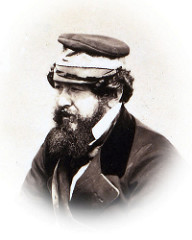
“The Secessionists are in great delight with Governor Letcher’s proclamation, calling out troops and volunteers…”—William Howard Russell

My Diary North and South – William Howard Russell

April 20th.—I visited the editors of the Charleston Mercury and the Charleston Courier to-day at their offices. The Rhett family have been active agitators for secession, and it is said they are not over well pleased with Jefferson Davis for neglecting their claims to office. The elder, a pompous, hard, ambitious man, possesses ability. He is fond of alluding to his English connections and predilections, and is intolerant of New England to the last degree. I received from him, ere I left, a pamphlet on his life, career, and services. In the newspaper offices there was nothing worthy of remark; they were possessed of that obscurity which is such a characteristic of the haunts of journalism–the clouds in which the lightning is hiding. Thence to haunts more dingy still where Plutus lives–to the counting houses of the cotton brokers, up many pairs of stairs into large rooms furnished with hard seats, engravings of celebrated clippers, advertisements of emigrant agencies and of lines of steamers, little flocks of cotton, specimens of rice, grain, and seed in wooden bowls, and clerks living inside railings, with secluded spittoons, and ledgers, and tumblers of water.

I called on several of the leading merchants and bankers, such as Mr. Rose, Mr. Muir, Mr. Trenholm, and others. With all it was the same story. Their young men were off to the wars–no business doing. In one office I saw an announcement of a company for a direct communication by steamers between a southern port and Europe. “When do you expect that line to be opened?” I asked. “The United States’ cruisers will surely interfere with it.” “Why, I expect, sir,” replied the merchant, “that if those miserable Yankees try to blockade us, and keep you from our cotton, you’ll just send their ships to the bottom and acknowledge us. That will be before autumn, I think.” It was in vain I assured him he would be disappointed. “Look out there,” he said, pointing to the wharf, on which were piled some cotton bales; “there’s the key will open all our ports, and put us into John Bull’s strong box as well.”

I dined to-day at the hotel, notwithstanding many hospitable invitations, with Messrs. Manning, Porcher Miles, Reed, and Pringle. Mr. Trescot, who was Under-Secretary-of-State in Mr. Buchanan’s Cabinet, joined us, and I promised to visit his plantation as soon as I have returned from Mr. Pringle’s. We heard much the same conversation as usual, relieved by Mr. Trescot’s sound sense and philosophy. He sees clearly the evils of slavery, but is, like all of us, unable to discover the solution and means of averting them.

The Secessionists are in great delight with Governor Letcher’s proclamation, calling out troops and volunteers, and it is hinted that Washington will be attacked, and the nest of Black Republican vermin which haunt the capital driven out. Agents are to be at once despatched to get up a navy, and every effort made to carry out the policy indicated in Jeff Davis’s issue of letters of marque and reprisal. Norfolk harbor is blocked up to prevent the United States ships getting away; and at the same time we hear that the United States officer commanding at the arsenal of Harper’s Ferry has retired into Pennsylvania, after destroying the place by fire. How “old John Brown” would have wondered and rejoiced had he lived a few months longer!

0 comments

Burning of the Gosport Navy Yard, Norfolk, Va. April 21st, 1861

Miscellaneous document sources

Burning of the Gosport Navy Yard, Norfolk, Va. April 21st, 1861Frank Leslie’s The Soldier in Our Civil War, Vol. I.; The Stanley Bradley Publishing Company, Incorporated.

0 comments

General Pierre Gustave Toutant Beauregard, C.S.A.

Civil War Day-by-Day

Civil War Portraits—Leaders, Influencers, and the Incidentally Important #004

General Pierre Gustave Toutant Beauregard, C.S.A.

General Pierre Gustave Toutant Beauregard

Title: General Pierre Gustave Toutant Beauregard, C.S.A.
Caption: Wearing Confederate uniform.
Catalog #: NH 51926
Owner: National Archives and Records Administration
After this Year: 1861
Before this Year: 1865
Original Medium: BW Photo

Naval History and Heritage Command

0 comments

“The Mass. Regnt marched out and through Pa Ave to 15 st making a fine appearance and being cheered frequently by the people.”—Horatio Nelson Taft

Diary of US patent clerk Horatio Nelson Taft.

SATURDAY 20

A fine pleasant day. No troops today, all stoped beyond Balt. Bridges destroyed, track torn up and the Steam Ferry Boat over the Susquehannah scuttled and sunk. Balt in the hands of the mob. A critical time for Washington. A large body of Rebels at Alexandria and an attack upon the City may be expected any hour. I went to the Depot and to the Capitol again tonight. The Mass. Regnt marched out and through Pa Ave to 15 st making a fine appearance and being cheered frequently by the people. The Hotels are full and all seem agreed that Balt is a doomed City. 12 o’c.


The three diary manuscript volumes, Washington during the Civil War: The Diary of Horatio Nelson Taft, 1861-1865, are available online at The Library of   Congress.

0 comments

The Naval-Yard at Norfolk Virginia, March, 1861

Harper’s Weekly

The Naval-Yard at Norfolk Virginia, March, 1861Harper’s Weekly, March 16, 1861

Hand-tinted offprint; Special handed-tinted offprints were also sold separately from newspapers. Numerous original offprints of various publications are held today by public institutions and in private collections.

0 comments

Jane Stuart Woolsey to Cousin Margaret Hodge.–“The most extraordinary mixture of feeling.”

Woolsey family letters during the War for the Union

April, 1861.

My dear Cousin Margaret: I fancy that you may like to know how we have gone through the dreadful tumoil and excitement of the last few days, and so I send you an incoherent line tonight, though my wits are scarcely under command of my fingers.

The three great local incidents this week have been the arrival of Major Anderson, the leaving of the Seventh Regiment, and the great mass-meeting today in Union Square, or rather whose centre was Union Square, for the huge sea of men overflowed the quadrangle of streets where the speakers’ stands were, and surged down Broadway, up Broadway, through Fourteenth street and along Fourth avenue far beyond the Everett House. We were in a balcony at the corner of Union Square and Broadway and saw the concourse, though we could not distinguish the words of any speaker. We could only tell when the “ points” were made by the thousands of hats lifted and swung in the air and by the roar of the cheering. Every house fronting the square, and up and down the side streets, was decorated with flags and festoons, and the Sumter flag, on its splintered staff, hung over the stand where the gentlemen of the Sumter command were. The Puritan Church had a great banner afloat on its tower. Trinity set the example to the churches yesterday, when a magnificent flag was raised on its tall spire with a salvo of artillery. The sight was a grand one today, and in some of its features peculiar. As the tide rolled up under our balcony we could see scarcely a man who was not earnest-looking, grave, and resolved, and all seemed of the best classes, from well-dressed gentlemen down to hardworking, hard-fisted draymen and hod-carriers, but no lower. There was not a single intoxicated man as far as we could see, or a single one trying to make any disturbance or dissent. You will see by the reports of the meeting who were the officers, speakers, etc., and judge how all colors of opinion were represented and were unanimous. New York, at any rate, is all on one side now– all ready to forget lesser differences, like the household into which grief has entered. Almost every individual, man, woman and child, carried the sacred colors in some shape or other, and the ladies at the windows had knots of ribbon, tricolored bouquets, and flags without number. There was not a policemen to be seen from our outlook, though no doubt there were some about the square, but the crowd kept itself in order and perfect good nature, and whenever the flag appeared at the head of any procession or deputation it fell back instantly and respectfully to let it pass through. The resolutions, Committee for Patriotic Fund, etc., you will see in the papers. [continue reading…]

0 comments

“…an attempt of the seceders to bribe and seduce the garrison from their duty.” Fort Pickens

War of the Rebellion: from the Official Records of the Union and Confederate Armies and Navies

HEADQUARTERS DEPARTMENT OF FLORIDA,
April 20, 1861.

Col. L. THOMAS, Adjutant-General:

COLONEL: I inclose you a report of Lieutenant Slemmer in relation to an attempt of the seceders to bribe and seduce the garrison from their duty. That the attempt was made is fully proved by the fact that the money paid to Private McGarr is now actually in the possession of Lieutenant Slemmer. This noble fidelity should be rewarded, but the kind of reward I am not prepared to yet recommend. The design was to spike the flank casemate howitzer, and then to take the work by escalade. I have no doubt but that other soldiers of Lieutenant Slemmer’s garrison were tampered with, and I fear in one or two cases successfully, but have not yet had time to investigate the affair.

I am, colonel, very respectfully, your obedient servant,

HARVEY BROWN,
Brevet Colonel, Commanding.

[Inclosure.]

FORT PICKENS, FLA., April 18, 1861.

To the ASSISTANT ADJUTANT-GENERAL, Headquarters of the Army:

SIR: Having had my suspicions aroused by letters passing to and from Fort Pickens and the village of Warrington, I issued orders that no letters or packages should be sent from or received at the post except those passing through my hands. Subsequent to this a roll of papers came from Warrington, addressed to Ordnance Sergeant E. H. Broady. Upon opening them a letter fell out, of which the following is a copy:

BROADY: You are without exception the dam’dest fool I have the pleasure of knowing. Bragg will give you a dam’d sight better berth than you have, and besides, you will be on the right side. Don’t be a jackass always. Look at Gardner—see his position. I have authority for offering you a like commission. Answer me. Where can I take you a cocktail? My regards to Flynn. Come over and see me. I can assure you that permission to visit your wife, and in a capacity she will be more than glad to find you in, will be granted you. No humbug. Come over.

Yours,

B.

I kept this letter, determining to watch the sergeant and intercept other letters. The next day another roll of papers came to the same address, out of which the following note was obtained:

What a jackass you are. I again renew my offer of a position with a lieutenant’s commission and all your pay twofold that is due you from the Federal Government. Also to Flynn. If you will help us along to save bloodshed, I can offer any private in the company $500, and any non-commissioned officer $1,000 too, with a guarantee of future provision as high or higher as he now stands. Every man who will take upon themselves to give us the fort without bloodshed, and save the lives of your garrison, will be well paid—all back pay, $500 for the privates, $1,000 for non-commissioned officers, and a commission in the Confederate army. This, Broady, I offer from authority. I would not offer it otherwise. You as a friend I believe will trust me. We must and will have the fort, but ’tis not worth one drop of blood; but if it cost 5,000 lives we must and will have it. Fill it full of Federal troops if you will, yet we must and will have it. Don’t be a dam’d fool. When and where can I see you? I will go over to-night, and will take a cocktail if you say so.

Answer first opportunity.

Yours, &c.,

B.

The same day I received private information that the troops on the opposite side were making preparations, preparing boats, &c., and intended to come over that night or the next. I immediately addressed a note to Captain Adams, commanding the squadron, informing him of the fact, and requested re-enforcements. A storm prevented the Wyandotte from coming out the harbor that night. I kept my men in position, keeping a strict watch on the sergeant. Nothing occurred. The next day I received a letter from Captain Adams, of which the following is a copy:

U. S. FRIGATE SABINE,
Off Pensacola, April 11, 1861.

Lieut. A. J. SLEMMER,
Commanding Fort Pickens, Fla.:

SIR: You have stated in your communication to me of the 10th instant, that from information received through private hands you have reason to believe that the safety of the fort depends on its immediate re-enforcement. Will you be pleased to lay this information in full before me? So many unfounded rumors have been in circulation to this same effect that it is necessary to be cautious, and my orders are positive not to land re-enforcements unless the fort is actually attacked or preparations are making to attack it. Should your information be such as to justify it, I will have re-enforcements landed as soon as practicable when the state of the sea will admit of boats landing outside the harbor and at night, as you recommend.

Very respectfully, your obedient servant,

H. A. ADAMS,
Captain, Senior Officer Present.

A storm prevented the steamer Wyandotte from returning to the squadron that night. On the morning of the 12th I made the following answer:

FORT PICKENS, FLA., April 12, 1861.

Capt. H. A. ADAMS, Commanding Squadron off Pensacola Harbor:

SIR: In reply to your communication of the 11th instant, I have to state the information I received is through varied sources, and all to the same effect, viz, that the troops were preparing to embark for this island, and that boats and material were ready at the navy-yard to start at any moment; that the intention was to land either last night or the night before. The weather having been such these nights that they could scarcely cross unless very determined, they may be expected at the first favorable opportunity. I have deemed my information of such importance that for the last two nights my men have been placed at the guns in readiness to repel an attack. My men and officers are much fatigued, and I deem it absolutely necessary that the fort should be re-enforced immediately. Provisions should also be landed while there is yet time to do so by the Wyandotte.

I am, sir, very respectfully, your obedient servant,

A. J. SLEMMER,
First Lieutenant, First Artillery, Commanding.

On the night of the 12th instant, Captain Adams having received instructions from the Navy Department, Captain Vogdes landed with his company and the marines from the vessels, and relieved me from the command of the post. On the morning of the 11th instant I sent Ordnance Sergeant Broady on board the frigate Sabine, as I deemed it very unsafe to keep him in the fort, even if a good man, subject to the seductive influences I knew to be at work upon him. On the morning of the 13th instant a private of my company, G, First Artillery, Owen McGarr, came to me and made the following statement:

I was on picket guard last night. During the night I saw a small boat approach the beach. I stepped back to see what it was about, when a man came before me. I brought my musket to a charge and ordered him to halt. He said, “Don’t shoot; I am a friend.” He then began to talk to me and ask about the fort. While he was talking three others came up behind me. They asked me many questions, asking me about the number of men, &c., about the flank defense, whether the guns could not be spiked, &c. Said they would give any man plenty of money if he would only spike the flank defense guns. Asked when I would be on picket guard again. I told them on Monday night. They said, “We will be over and ready.” As they were going away one said to me, “How are you off for money in the fort? “‘ I said, ” We have not been paid for six months.” He then put a roll of bills in my hand and said, ” Give that to them.”

He then gave me a roll of bills, in amount sixty dollars. I have it now in my possession. There are evidences that the intention was to bribe my men to spike the flank defense and thus obtain possession of the fort.

I am, sir, very respectfully, your most obedient servant,

A. J. SLEMMER,
First Lieutenant, First Artillery.

0 comments

“I have joined a volunteer home company…”—Rutherford Birchard Hayes

Diary and Letters of Rutherford Birchard Hayes
Rutherford B. Hayes (young)

CINCINNATI, April 20, 1860 [1861].

DEAR UNCLE:—. . . I have joined a volunteer home company to learn drill. It is chiefly composed of the Literary Club. Includes Stephenson, Meline, John Groesbeck, Judge James, McLaughlin, Beard, and most of my cronies. We wish to learn how to “eyes right and left,” if nothing more. A great state of things for Christian people, and then to have old gentlemen say, as you do, “I am glad we have got to fighting at last.” Judge Swan and Mr. Andrews and the whole Methodist clergy all say the same. Shocking! One thing: Don’t spend much on your house or furniture henceforth. Save, save, is the motto now. People who furnish for the war will make money, but others will have a time of it.

Mother thinks it is a judgment on us for our sins. Henry Ward Beecher, who is now here, says it is divine work, that the Almighty is visibly in it.

Sincerely,

R. B. HAYES.

S. BIRCHARD.

0 comments

Intercourse and Martial Law

War of the Rebellion: from the Official Records of the Union and Confederate Armies and Navies
HDQRS. TROOPS CONFEDERATE STATES,
Near Pensacola, Fla., April 20, 1861.

GENERAL ORDERS
NO. 24.

I. All intercourse hereafter with Santa Rosa Island, Fort Pickens, or the United States fleet, is strictly prohibited.

II. Martial law is declared to exist and will be rigidly enforced on all territory within five miles of the lines of this army.

By command of Brigadier-General Bragg:

ROBERT C. WOOD, JR.
Assistant Adjutant-General.

0 comments

“…rowing about the harbor in small boats from fort to fort under the enemy’s guns, with bombs bursting in air.”—Mary Boykin Miller Chesnut.

Civil War Day-by-Day

CAMDEN, S. C, April 20, 1861.—Home again at Mulberry. In those last days of my stay in Charleston I did not find time to write a word. And so we took Fort Sumter, nous autres; we–Mrs. Frank Hampton, and others–in the passageway of the Mills House between the reception-room and the drawing room, for there we held a sofa against all comers. All the agreeable people South seemed to have flocked to Charleston at the first gun. That was after we had found out that bombarding did not kill anybody. Before that, we wept and prayed and took our tea in groups in our rooms, away from the haunts of men.

Captain Ingraham and his kind also took Fort Sumter–from the Battery with field-glasses and figures made with their sticks in the sand to show what ought to be done.

Wigfall, Chesnut, Miles, Manning, took it rowing about the harbor in small boats from fort to fort under the enemy’s guns, with bombs bursting in air.

And then the boys and men who worked those guns so faithfully at the forts–they took it, too, in their own way.

Old Colonel Beaufort Watts told me this story and many more of the jeunesse dorée under fire. They took the fire easily, as they do most things. They had cotton bag bomb-proofs at Fort Moultrie, and when Anderson’s shot knocked them about some one called out “Cotton is falling.” Then down went the kitchen chimney, loaves of bread flew out, and they cheered gaily, shouting, “Breadstuffs are rising.”

Willie Preston fired the shot which broke Anderson’s flag-staff. Mrs. Hampton from Columbia telegraphed him, “Well done, Willie!” She is his grandmother, the wife, or widow, of General Hampton, of the Revolution, and the mildest, sweetest, gentlest of old ladies. This shows how the war spirit is waking us all up.

Colonel Miles (who won his spurs in a boat, so William Gilmore Simms ¹ said) gave us this characteristic anecdote. They met a negro out in the bay rowing toward the city with some plantation supplies, etc. “Are you not afraid of Colonel Anderson’s cannon?” he was asked. “No, sar, Mars Anderson ain’t daresn’t hit me; he know Marster wouldn’t ‘low it.”

I have been sitting idly to-day looking out upon this beautiful lawn, wondering if this can be the same world I was in a few days ago. After the smoke and the din of the battle, a calm.

____

¹ William Gilmore Simms, the Southern novelist, was born in Charleston in 1806. He was the author of a great many volumes dealing with Southern life, and at one time they were widely read.

0 comments

Slave labor and white laborers on Tortuga and Key West

War of the Rebellion: from the Official Records of the Union and Confederate Armies and Navies

HEADQUARTERS TROOPS STATIONED AT KEY WEST,
Fort Taylor, April 20, 1861.

Maj. L G. ARNOLD, Commanding Fort Jefferson, Tortugas :

MAJOR: In order to further the views contained in your letter of the 1st instant, received to-day, I have been with Lieutenant Morton, Engineer Corps, to the town of Key West, for the purpose of giving my personal guarantee that any negroes he may be able to engage for labor at your post will not be removed therefrom for any purpose whatever without the consent of their owners, and I further offered to obtain yours to the same effect should they be allowed to be sent. It is not necessary for me to allude to the reason of this unless its propriety should hereafter be questioned.

In regard to the force employed at Fort Taylor, I have not yet had time to see Captain Hunt, but fear that the lateness of the season, which takes the white laborers north, and the excitement in town regarding the capture of the black force at your post, will be difficulties not readily to be overcome.

You are correct in ascribing to me a general desire to promote the good of the service, which is, as it has always been, the uppermost thought in my action.

I am, major, very respectfully, your most obedient servant,

WM. H. FRENCH,
Brevet Major, U. S. Army, Commanding

0 comments

“I believe that it is impossible to land a force upon this island…”

War of the Rebellion: from the Official Records of the Union and Confederate Armies and Navies

U. S. TROOP-SHIP ATLANTIC,
Off Santa Rosa, April 20, 1861.

Col. H. BROWN, Commanding Department of Florida :

DEAR COLONEL: If my estimate is correct you have now about 690 men inside Fort Pickens. The Illinois is here with two companies, say 168. The Saint Louis has gone to order up two companies of infantry from Key West, say 154. You have then here 858; coming up, 154; total 1,012 The Sabine crew is 450. Powhatan 300; Brooklyn 300; Wyandotte, 75; total, 1,125. Crew of the Saint Louis, 250; Crusader, 100; Minnesota, 600; total, 950. Total force to be concentrated about Fort Pickens subject to your orders, 3,087.

The soldiers will have six months’ supplies as soon as the Illinois is discharged. Now, what to do with them? I agree with you in regard to the great importance of avoiding everything that will bring on a collision as long as possible. The policy of the Government I understand to be to hold, occupy, and possess what we now have, and not to produce collision if it can be avoided; in no case to fire the first hostile gun. The attack upon Fort Pickens must be made by bombardment or cannonade. I believe that it is impossible to land a force upon this island in face of the batteries of the Powhatan, Brooklyn, and Wyandotte, properly placed, without exposing it to sudden and swift destruction. If your men and means are all concentrated in Fort Pickens, every shell which enters the fort will tell its tale of destruction. To concentrate all these appears to me to be like putting the depot of a besieging army in the ricochet and breaching batteries. I think that the true mode of treating is that which regulates the advance batteries of a siege.

The sand hills of Santa Rosa afford good, well-protected bayous or approaches, along which material, men, horses, and artillery can be moved, properly protected from all direct and enfilading fire by works of very small extent, needed only to close a few gaps and to cut through a few ridges. An approach should be constructed across the open space at the foot of the glacis, and I think that a gallery through the glacis into the ditch may be advisable. I think that a gateway might be cut with advantage through the south entrance. I save the hauling of material and the hoisting of gun carriages over the ramparts. This gate, too, not being exposed to the direct fire of the opposing batteries, will not tempt an insubordinate, undisciplined volunteer to fire the shot which will open the war.

The three 10-inch mortars brought from Key West and some other pieces of artillery I think might be well placed in battery outside the fort. The division of these batteries will divide the enemy’s fire, and thus lessen its destructive effect. The mortars, being reserved to throw out light and fire balls from the fort, may be placed behind one of the sand ridges in position to bombard the navy-yard and its batteries. Here the mortar battery would be protected by the guns of Pickens. The light battery and a large portion, say two-thirds, of the garrison I think should be placed in an intrenched camp in the woods where the horses landed. Here they could be without the range of the batteries on the mainland. They would occupy then five miles of the island. A plank road, with natural epaulement on east side, would afford plenty of communication. This communication would be protected by the guns of the fleet, which should be moved in position, and which could destroy any enemy attempting to cut it off.

Vedettes and sentinels upon the ridge could keep up constant communication between the fort and the intrenched camp. Captain Barry will undertake it, as a boat expedition shall land in face of his guns. The working party and guard, detailed for twenty-four hours’ duty, should be kept in the fort to protect the provisions and ammunition there deposited, to work the guns, and repel a sudden assault should the enemy be rash enough to undertake one. The troops in camp and in fort would be healthy, not exposed to fire or too hard worked, and I think that all would be more cheerful, more comfortable, and more safe. The present crowded condition of the fort will, if it continues, bring on disease that in even a not crowded place will be destructive.

I have thrown these ideas, the fruit of much reflection upon this subject, together, colonel, for your consideration, and hope they will prove worthy of your approval and adoption. Upon you rests, of course, the responsibility which accompanies command, and I defer to your greater experience, rank, and responsibility, merely offering that advice which commends itself to my judgment.

I am, very truly, your friend and servant,

M. C. MEIGS,
Captain of Engineers.

You know that tents for 1,000 men should be on the Illinois; that 10,000 yards of canvas afford means to cover the horses from sun and insects, and that ample stores of lumber, ordnance, provisions, &c., are here or on their way.

0 comments

Rebel War Clerk

Civil War Day-by-Day
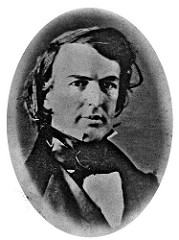
A likeness of Jones when he was editor and majority owner of the Daily Madisonian during President John Tyler’s administration.

April 20th.–The news has been confirmed. It was a brickbat ”Plug Ugly” fight – the result of animal, and not intellectual or patriotic instincts. Baltimore has better men for the strife than bar-room champions. The absence of dignity in this assault will be productive of evil rather than good. Maryland is probably lost – for her fetters will be riveted before the secession of Virginia will be communicated by the senseless form of ratification a month hence. Woe, woe to the politicians of Virginia who have wrought this delay! It is now understood that the very day before the ordinance was passed, the members were gravely splitting hairs over proposed amendments to the Federal Constitution!

Guns are being fired on Capitol Hill in commemoration of secession, and the Confederate flag now floats unmolested from the summit of the capitol. I think they had better save the powder, etc.

At night. We have a gay illumination. This too is wrong. We had better save the candles.

0 comments