New York Herald

Civil War Day-by-Day

April 23, 1861

The News.

A despatch from Washington received yesterday, states that there are now fourteen thousand troops in the city, five thousand of whom are regulars.

Captain Lawry, of the ship Julia E. Tyler, arrived at this port yesterday, reports that he left Hampton Roads on the 21st inst., and was informed by the pilot who took his vessel to sea that the city of Norfolk and the Navy Yard at Gosport were both on fire. Captain L. says he saw the flames distinctly himself, but could tell nothing further.

Several of the clerks in the Post Office and Custom House have gone to the wars. Stringent measures are being adopted by the Surveyor to prevent the egress of privateers. A strong coast guard has also been organized. Eight thousand kegs of powder destined for New Orleans, and shipped four months ago, were prevented reaching their destination by stress of weather, and were brought back to this city.

All accounts from Baltimore represent the condition of affairs in that city as most fearful. Irresponsible mobs, calling themselves Vigilance Committees, exercise a severe espionage over persons entering or leaving the city, and those who incur their suspicion or displeasure are treated in the most harsh and summary manner. Numbers of the people are flying from their homes and seeking safety in the country. The bridges over the roads connecting with Baltimore have all been destroyed, and armed parties are assembled to prevent their repair or reconstruction. Travellers coming North have great difficulty in getting from the city, and on the slightest pretexts are detained and subjected to hardships and indignities.

A special messenger from President Lincoln reached Philadelphia on Sunday night. On his journey from Baltimore he was frequently stopped, but managed to reach Philadelphia safely. He reports the federal capital as safe from any attacks that can be made at present, and that if assailed it can be successfully defended until the reinforcements now on their way reach there. [continue reading…]

0 comments

“The governor is appointing his Union partisans to military positions.”–Rebel War Clerk

Civil War Day-by-Day
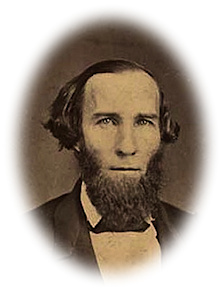
A likeness of Jones when he was editor and majority owner of the Daily Madisonian during President John Tyler’s administration.

April 23.—Several prominent citizens telegraphed President Davis to-day to hasten to Virginia with as many troops as he can catch up, assuring him that his army will grow like a snow-ball as it progresses. I have no doubt it would. I think it would swell to 50,000 before reaching Washington, and that the people on the route would supply the quartermaster’s stores, and improvise an adequate commissariat. I believe he could drive the Abolitionists out of Washington even yet, if he would make a bold dash, and that there would be a universal uprising in all the border States this side of the Susquehanna. But he does not respond. Virginia was too late moving, and North Carolina, Tennessee, Arkansas, Kentucky, and Missouri have not seceded yet – though all of them will soon follow Virginia. Besides, the vote on the ratification in this State is to take place a month hence. It would be an infringement of State rights, and would be construed as an invasion of Virginia! Could the Union men in the Convention, after being forced to pass the ordinance, have dealt a more fatal blow to their country? But that is not all. The governor is appointing his Union partisans to military positions. Nevertheless, as time rolls on, and eternal separation is pronounced by the events that must be developed, they may prove true to the best interests of their native land.

Every hour there are fresh arrivals of organized companies from the country, tendering their services to the governor; and nearly all the young men in the city are drilling. The cadets of the Military Institute are rendering good service now, and Professor Jackson is truly a benefactor. I hope he will take the field himself; and if he does, I predict for him a successful career.

0 comments

“I have now but little apprehension of an attack upon the City at present.”—Horatio Nelson Taft

Diary of US patent clerk Horatio Nelson Taft.

TUESDAY 23

This has been a warm day. M. 83 in shade. Some 800 Marines were landed about noon at the Navy Yard. Nothing can be learned of the northern troops yet. Some say they are coming by water and some that they are fighting their way from Anapolis. Went with Julia to the Capitol to see the Mass. Regt. Was in the Senate Chamber. That seemed to be the Officers quarters. Have been in office all day alone. Doct King has leave of absence. The excitement has been less today. I have now but little apprehension of an attack upon the City at present.


The three diary manuscript volumes, Washington during the Civil War: The Diary of Horatio Nelson Taft, 1861-1865, are available online at The Library of   Congress.

0 comments

I found that their master knew nothing about them.—Regret for the Rebellion of 1776.—William Howard Russell

My Diary North and South – William Howard Russell

April 23rd.—A lovely morning grew into a hot day. After breakfast, I sat in the shade watching the vagaries of some little tortoises, or terrapins, in a vessel of water close at hand, or trying to follow the bee-like flight of the humming-birds. Ah me! one wee brownie, with a purple head and red facings, managed to dash into a small grape or flower conservatory close at hand, and, innocent of the ways of the glassy wall, he or she –I am much puzzled as to the genders of hummingbirds, and Mr. Gould, with his wonderful mastery of Greek prefixes and Latin terminations, has not aided me much–dashed up and down from pane to pane, seeking to perforate each with its bill, and carrying death and destruction among the big spiders and their cobweb-castles which for the time barred the way.

The humming-bird had, as the Yankees say, a bad time of it, for its efforts to escape were incessant, and our host said tenderly, through his moustaches, “Pooty little thing, don’t frighten it!” as if he was quite sure of getting off to Saxony by the next steamer. Encumbered by cobwebs and exhausted, now and then our little friend toppled down among the green shrubs, and lay panting like a living nugget of ore. Again he, she, or it took wing and resumed that mad career; but at last on some happy turn the bright head saw an opening through the door, and out wings, body, and legs dashed, and sought shelter in a creeper, where the little flutterer lay, all but dead, so inanimate, indeed, that I could have taken the lovely thing and put it in the hollow of my hand. What would poets of Greece and Rome have said of the hummingbird? What would Hafiz, or Waller, or Spenser have sung, had they but seen that offspring of the sun and flowers?

Later in the day, when the sun was a little less fierce, we walked out from the belt of trees round the house on the plantation itself. At this time of year there is nothing to recommend to the eye the great breadth of flat fields, surrounded by small canals, which look like the bottoms of dried-up ponds, for the green rice has barely succeeded in forcing its way above the level of the rich dark earth. The river bounds the estate, and when it rises after the rains, its waters, loaded with loam and fertilizing mud, are let in upon the lands through the small canals, which are provided with sluices and banks and floodgates to control and regulate the supply.

The negroes had but little to occupy them now. The children of both sexes, scantily clad, were fishing in the canals and stagnant waters, pulling out horrible-looking little catfish. They were so shy that they generally fled at our approach. The men and women were apathetic, neither seeking nor shunning us, and I found that their master knew nothing about them. It is only the servants engaged in household duties who are at all on familiar terms with their masters.

The bailiff or steward was not to be seen. One big slouching negro, who seemed to be a gangsman or something of the kind, followed us in our walk, and answered any questions we put to him very readily. It was a picture to see his face when one of our party, on returning to the house, gave him a larger sum of money than he had probably ever possessed before in a lump. “What will he do with it?” Buy sweet things,–sugar, tobacco, a penknife, and such things. “They have few luxuries, and all their wants are provided for.” Took a cursory glance at the negro quarters, which are not very enticing or cleanly. They are surrounded by high palings, and the entourage is alive with their poultry.

Very much I doubt whether Mr. Mitchell is satisfied the Southerners are right in their present course, but he and Mr. Petigru are lawyers, and do not take a popular view of the question. After dinner the conversation again turned on the resources and power of the South, and on the determination of the people never to go back into the Union. Then cropped out again the expression of regret for the rebellion of 1776, and the desire that if it came to the worst, England would receive back her erring children, or give them a prince under whom they could secure a monarchical form of government. There is no doubt about the earnestness with which these things are said.

As the “Nina” starts down the river on her return voyage from Georgetown to-night, and Charleston Harbor may be blockaded at any time, thus compelling us to make a long detour by land, I resolve to leave by her, in spite of many invitations and pressure from neighbouring planters. At midnight our carriage came round, and we started in a lovely moonlight to Georgetown, crossing the ferry after some delay, in consequence of the profound sleep of the boatmen in their cabins. One of them said to me, “Musn’t go too near de edge ob de boat, massa.” “Why not? ” “Becas if massa fall ober, he not come up agin likely,–a bad ribber for drowned, massa.” He informed me it was full of alligators, which are always on the look-out for the planters’ and negroes’ dogs, and are hated and hunted accordingly.

The “Nina” was blowing the signal for departure, the only sound we heard all through the night, as we drove through the deserted streets of Georgetown, and soon after three o’clock, a.m., we were on board and in our berths.
0 comments

I have been with them laboring and toiling till I am weary and so warm I can hardly write.—Samuel Ryan Curtis

The Letters of Samuel Ryan Curtis

…the means of travel has been cut off and the people through the Country are hostile and arming.

Annapolis April 23d 1861

My dear wife

We the 7th New York Regiment and a Regiment from Massachusetts under the command of Genl Butler have landed and are encamped in the beautiful grounds of the Navy yard with the Corps of Midshipmen. I say we because I have been with them laboring and toiling till I am weary and so warm I can hardly write. I have been too busy to do much writing, but no opportunity seems to have offered since I embarked on the Boston1 for this place and Washington I do not now much expect to get a letter through, but some opertunity will no doubt offer, and I will give it a trial We had a pleasant Steamboat trip to this place Saving the personal inconveniences that one suffers in a boat so crowded you could not get room to lay down and bread of the hardest kind being the only fare. Last night I had the good fortune to get a nights lodging at the eligant house of Capt. Blake2 who is Comt of the Navy Yard. Genl Bridgeman knows therefore that for one night since I left home I have had comfortable quarters.

I hope we will have sufficient transportation to move on tomorrow. We are within about 35 miles of Washington in a straight line, but the means of travel has been cut off and the people through the Country are hostile and arming. [continue reading…]

0 comments

We are rapidly preparing for war.—Rutherford B. Hayes

Diary and Letters of Rutherford Birchard Hayes
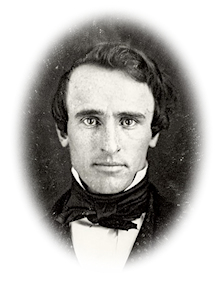
Rutherford B. Hayes (young)

CINCINNATI, April 23, 1861.

DEAR UNCLE:—No doubt the accounts sent abroad as to the danger we are in from Kentucky are much exaggerated. Kentucky is in no condition to go out immediately. If the war goes on, as I think it ought, it is probable that she will leave us, and that we shall be greatly exposed, but she has no arms, and almost no military organization. Even their secession governor is not prepared to precipitate matters under these circumstances. We are rapidly preparing for war, and shall be on a war footing long before Kentucky has decided what to do.

Lucy dislikes to leave here just now. She enjoys the excitement and wishes to be near her mother and the rest of us; but as for camping down in Spiegel Grove and roughing it, she thinks that will be jolly enough, and as soon as we are quiet here, she will be very happy to go into quarters with you. . . .

A great many gentlemen of your years are in for the war. One old fellow was rejected on account of his gray hair and whiskers. He hurried down street and had them colored black, and passed muster in another company.

Sincerely,

R.B. HAYES.

[Later.]–Yours of the 22nd just received. Fremont has done well. We are sending about four thousand [volunteers] from here, if all are accepted, besides [having] eight thousand more stay-at-homes. I am acting captain of our crack rifle company. I shall go into the ranks as a private in a week or two.

S. BIRCHARD.

0 comments

“The good-byes are hard enough even if it is for the country.”—Sarah Chauncey Woolsey to Georgeanna Muirson Woolsey, Letters of a Family During the War

Woolsey family letters during the War for the Union

Our beautiful flags are nearly done and are to be presented to the Second Regiment before they leave. The regimental banner is worked with the arms of the state, which are far more beautiful than those of any other state, with a heavy wreath of palm worked in gold-colored silk around the shield and mounted on a staff headed with a battle-axe and spear plated with gold. Won’t it be beautiful? The other flag is the Union flag and just as handsome in its way. F. B. was here last night with stripes on his trousers, but wisely withholding the full splendors of his “milingtary” attire until we become gradually accustomed to it. He looked very handsome and is as coolly delighted at the chance of a little fighting as anyone I have seen. We are both highly entertained just now by the pertinacity with which our friends here persist in engaging us to each other. I was telling him last night of a lady who called the other day and would not listen to any denials on my part, asseverating that Miss _________ assured her that she knew it to be a fact; whereon Frank, putting himself in an attitude, informed me that “being on the eve of battle and about risking his life in his country’s defence, he could not feel that it was his duty to engage the affections of any young and lovely female and withdraw her from the bosom of her own family,” whereon I begged him not to apologize, and explained that “being on the point of joining the Nightingale Regiment and putting myself in the way of catching a fever, I could not feel justified in allowing my naturally susceptible feelings to run away with me,” etc. I don’t know why I Jell you all this stuff –only it makes you laugh a little. . . .

Later.– Dora and I went up at four o’clock to see our flags given to the Second Regiment, on their way to the “Cahawba,” which waited to carry them off, no one knows where, under sealed orders, –but probably to Washington or Fortress Monroe. The colors were presented on the Green at the foot of the liberty pole, where the Home Guard formed a hollow square enclosing all the ladies who had worked on or were interested in the flags, and when the regiment marched up they took their places inside the square, which widened and kept off the crowd outside. Two pretty girls held the flags, assisted by two gentlemen. Mr. Foster made a short and spirited address to the regiment, and their Colonel replied in a few brave words, and then Dr. Leonard Bacon read the twentieth Psalm, “in the name of our God we will set up our banners,” etc., and made a beautiful prayer, and amid the shouts and cheers of the crowd, the frantic waving of handkerchiefs and flags and the quiet weeping of some who were sending off their dearest ones to all the chances of war, the glittering waving splendors were lifted aloft and the regiment swept on– carrying in its ranks Frank, who found time in the midst of the confusion to ride his horse round to the place where we stood, and hold my hand tenderly for two or three minutes while he whispered some good-bye words, especially his “farewells to Miss Georgy,” greatly to the satisfaction of some old ladies near, who, fondly fancying that I am engaged to him, probably wondered at my comparative composure. Yes! the good-byes are hard enough even if it is for the country, and I have had a heartache all day at the thought that I shall see the dear fellow no more for so long a time, and of how much we shall all miss him. He looked tired, with these last days of hurry. We stood two hours nearly, on the Green. We heard all about the doings in Norwich from Captain Chester and Lieutenant Coit of the “Buckingham Rifles.” They are both pleasant young fellows, and we made their acquaintance while sewing green stripes on the trousers of the company and brass buttons on their coats – the very garments which were made on Sunday by the Norwich ladies. It was funny work, as the men all had to be sent to bed before we could be put in possession of their apparel, and the officers being in the same quandary all were comfortably tucked up in their quarters and their trousers under way when sixteen Norwich gentlemen called to see them, and had to be received by them “lying in state!”

0 comments

Crusader to give aid and protection.

War of the Rebellion: from the Official Records of the Union and Confederate Armies and Navies

HEADQUARTERS DEPARTMENT OF FLORIDA,
Fort Pickens, Fla., April 23, 1861.

Bvt. Maj. W. H. FRENCH,
Commanding Key West, Fla.:

SIR: I am directed by the colonel commanding to say that at his request Captain Adams, commanding the naval forces at this place, has ordered the steamship Crusader to be stationed off your fort in such a manner as to give you necessary aid and protection. Her captain is also required to render you assistance in any manner that you may require consistently with the safety of his vessel.

I am, sir, very respectfully, your obedient servant,

GEO. L. HARTSUFF,
Assistant Adjutant-General.

0 comments

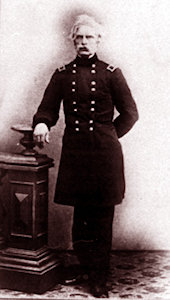
George Lucas Hartsuff

Library of Congress

Civil War Portraits—Leaders, Influencers, and the Incidentally Important #006

Brigadier General George Lucas Hartsuff of Regular Army Infantry Regiment and U.S. Volunteers Infantry Regiment in uniform / From photographic negative by Brady.

George Lucas Hartsuff

George Lucas Hartsuff (May 28, 1830 – May 16, 1874) was an American soldier, born at Tyre, New York. He graduated at West Point in 1852, graduating 19th out of 43 in his class. He served on the frontier and in Florida, where, during a fight with the Seminole Indians near Fort Myers in December 1855, he received a wound which eventually caused his death. Hartsuff survived the wreck of the steamer Lady Elgin on Lake Michigan on September 8, 1860.

On March 22, 1861, Hartsuff was appointed Assistant Adjutant General with the brevet rank of captain, assigned to the Department of Florida on April 13.  (Read more at Wikipedia)

Title: Brigadier General George Lucas Hartsuff of Regular Army Infantry Regiment and U.S. Volunteers Infantry Regiment in uniform / From photographic negative by Brady.
Creator(s): Brady, Mathew B., approximately 1823-1896, photographer
Date Created/Published: New York : E. & H.T. Anthony, 501 Broadway, [between 1861 and 1865]
Medium: 1 photograph : albumen print on card mount ; mount 101 x 61 mm (carte de visite format)
Summary: Photograph shows identified soldier, who was wounded at Antietam, Maryland.
Reproduction Number: LC-DIG-ppmsca-71724 (digital file from original, front) LC-DIG-ppmsca-71725 (digital file from original, back)
Rights Advisory: No known restrictions on publication.
Call Number: LOT 15158-1, no. 130 [P&P]
Repository: Library of Congress Prints and Photographs Division Washington, D.C. 20540 USA https://hdl.loc.gov/loc.pnp/pp.print
Notes:

  • Title devised by Library staff.
  • Notation on recto: “Hartsuff.”
  • Printed on verso: “From photographic negative by Brady.”
  • Deposit; Tom Liljenquist; 2020; (D076)
  • Purchased from: Excelsior Brigade, Inc., Alexandria, Virginia, April 2020.
  • Forms part of: Liljenquist Family Collection of Civil War Photographs (Library of Congress).

Permalink: https://www.loc.gov/pictures/item/2021636787/

0 comments

Talking on improper subjects.—Mary Boykin Miller Chesnut.

Civil War Day-by-Day

April 23d.–Note the glaring inconsistencies of life. Our chatelaine locked up Eugene Sue, and returned even Washington Allston’s novel with thanks and a decided hint that it should be burned; at least it should not remain in her house. Bad books are not allowed house room, except in the library under lock and key, the key in the Master’s pocket; but bad women, if they are not white, or serve in a menial capacity, may swarm the house unmolested; the ostrich game is thought a Christian act. Such women are no more regarded as a dangerous contingent than canary birds would be.

If you show by a chance remark that you see some particular creature, more shameless than the rest, has no end of children, and no beginning of a husband, you are frowned down; you are talking on improper subjects. There are certain subjects pure-minded ladies never touch upon, even in their thoughts. It does not do to be so hard and cruel. It is best to let the sinners alone, poor things. If they are good servants otherwise, do not dismiss them; all that will come straight as they grow older, and it does! They are frantic, one and all, to be members of the church. The Methodist Church is not so pure-minded as to shut its eyes; it takes them up and turns them out with a high hand if they are found going astray as to any of the ten commandments.

0 comments

Fayetteville, North Carolina arsenal surrendered

War of the Rebellion: from the Official Records of the Union and Confederate Armies and Navies

HEADQUARTERS TROOPS NORTH CAROLINA ARSENAL,
Fayetteville, N. C., April 23, 1861.

COLONEL: I have to report that this arsenal was surrendered to the State of North Carolina yesterday, on demand of the governor of the State, which demand was sustained by a force of one thousand and fifty rank and file of State troops, well armed and equipped. The demand for the surrender being made, supported by such an overwhelming force, after consulting with Captain Bradford, the commander of the arsenal, we did not deem it necessary to offer a resistance, which in the end could be of no avail other than the total annihilation of my command (which at the time consisted of only forty-two effective muskets), as there was no probability, or possibility I may say, I could or would be re-enforced. I inclose a certified copy of the terms agreed upon between myself and the governor’s aide-de-camp with regard to the withdrawal of my command.

I have to-day ordered Lieutenant De Lagnel to Wilmington, N. C., for the purpose of procuring transportation for the troops to one of the northern posts. [continue reading…]

0 comments

Robert Toombs to Howell Cobb

Miscellaneous document sources

Montgomery, Ala., Apr. 23, 1861.

Dear Cobb, I recd, your letter by today’s mail. The troops of Geo. were sent to assist in taking Norfolk’s navy yard at the request of the govr. and convention of Va. Since that time the navy yard has been taken. The Govt, succeeded in sinking 8 or 10 public vessels and doing other great injuries to the fixtures and other property of the establishment; but we secured between 1,000 and 2,000 cannon of the best description, a considerable amount of small arms, three thousand barrels of powder, and a vast supply of shot, shell and other munitions of war. The troops were then ordered to Richmd. to await other troops (13 regiments) yesterday ordered to the aid of Va. These thirteen regiments are to come from Geo., S. C, Ala., Miss., Tenn., Ky., and Arkansas. Col. Robt. Lee who is considered the best officer in the army is at the head (Maj. Genl.) of [the] Virginia troops, and our troops will be under his immediate orders and will be used according to the exigencies of the occasion, for the defence of Va. and Md. Maryland is thoroughly with us as far as we can learn, and is calling on us for aid. We are today informed by Stephens who is at Richmd. that the New York 7th Reg. were wholly defeated and cut up yesterday morning between Annapolis and Upper Marlboro in Md. by some Maryland troops. We think it is true, getting it from Norfolk as well as Richmd. God grant it may be true. I would rather such a calamity would happen to that regiment than to any in the North. These boasters threatened to march from N. York to N. Orleans. Washington City is in great consternation. Perhaps anon [we shall be there?] If they could get off I think now they would run. [continue reading…]

0 comments

Civil War Day-By-Day

Civil War Day-by-Day

April 23, 1861

  • Federal troops withdraw from the garrison at Fort Smith, Arkansas.
  • George McClellan appointed Major General of the Ohio militia by Governor William Dennison.
  • Nominated by Governor Letcher of Virginia and approved by the Assembly on the previous day, Robert E. Lee assumes command of Virginia’s militia.
  • Virginia secessionist convention ratifies a temporary union with the Confederacy and accepts the Southern Constitution, subject to approval of the ordnance of secession
  • United State Army Officers in San Antonio, Texas are seized as prisoners of war

A Chronological History of the Civil War in America1

  • First South Carolina regiment started for the Potomac.
  • Legislature of Vermont convened in extra session.

  1. A Chronological History of the Civil War in America by Richard Swainson Fisher, New York, Johnson and Ward, 1863
0 comments

“Was at the office all day, took the ‘strong oath’ required at the department.”—Horatio Nelson Taft

Diary of US patent clerk Horatio Nelson Taft.

MONDAY, APRIL 22, 1861.

Another delightful day, but no troops yet. We are in a beleaguered City with enimies on every side and and [sic] at our doors. The ratling of musquetry and the booming of cannon may startle us any moment. Many have left the City, but all communication with the North is now cut off. No NY mail since friday last. Myself and family are [sic] have concluded to stay and see it out for the present at least. The Govt is now taking very decided measures to protect the City and thwart the designs of the enimy. Was at the office all day, took the “strong oath” required at the department.


The three diary manuscript volumes, Washington during the Civil War: The Diary of Horatio Nelson Taft, 1861-1865, are available online at The Library of   Congress.

0 comments

Charleston Mercury

Civil War Day-by-Day

The War.
It is almost impossible to keep a full record of the war movements and rumors. There seems to be a general beat to arms North and South. The Border Slave States are at last fully aroused, and it is no longer a matter of doubt that, come what may, the South will stand as a unit for the maintenance of her rights and independence.

THE WAR IN VIRGINIA
The Old Dominion is all ablaze with excitement and indignation at the impending invasion. We give the news in detached paragraphs as it reaches us:

THREE VESSELS SEIZED AT CITY POINT.
A brave little band of fifteen men from Petersburg, headed by Col. Brockett, and a company of twenty men from Richmond, commanded by Capt. Albert Aiken, of Henrico county, conceived the daring exploit of proceeding to City Point, and capturing the vessels stationed there that might hail from the North, and accordingly faithfully executed and carried out their concerted plan and of action on Thursday. The first seizure made was that of the fine ship Argo, Capt. Owen, from Bath, now fifteen days at the Point, waiting for a cargo of tobacco. She is a first class ship of 1078 tons, and is capable, with a little alteration and strengthening, of doing valuable service. She was securely fastened to her moorings, and Major Maclin, with a sufficient force, was left in command.
Immediately after the seizure of the Argo, the company proceeded to a revenue cutter, now in the service of the United States government, and took possession of her. She also is capable of doing much service, and when called into action, will prove undoubtedly, that she was a prize worth taking. About three o’clock, the splendid steamship Jamestown, Captain Skinner, hove in sight, with her flags floating gaily in the breeze. At length, when she had been securely fastened, and while she was discharging her Petersburg freight, new hands appeared upon her deck, and in as quick a time as it takes us to relate it, the strength of chains bound her yet more effectually, and now beyond all hazard, she was safely fixed. Col. Brockett then informed Capt. Skinner that he would be relieved of his command, as the Jamestown now belonged to the State of Virginia.

SEIZURE OF THE RICHMOND CUSTOM HOUSE.
The Custom House was seized, on Thursday forenoon by the Verina Troop, and is held in durance by that corps. The descent upon the institution was altogether unexpected, and its officers were, of course, taken as completely by surprise as it is possible to imagine. The intelligence spread with telegraphic rapidity through the city, and [continue reading…]

0 comments

There was a good deal of joking about “old Abe Lincoln’s paper blockade”—William Howard Russell

My Diary North and South – William Howard Russell

April 22nd.—To-day was fixed for the visit to Mr. Pringle’s plantation, which lies above Georgetown near the Peedee River. Our party, which consisted of Mr. Mitchell, an eminent lawyer of Charleston, Colonel Reed, a neighboring planter, Mr. Ward of New York, our host, and myself, were on board the Georgetown steamer at seven o’clock, A.M., and started with a quantity of commissariat stores, ammunition, and the like, for the use of the troops quartered along the coast. There was, of course, a large supply of newspapers also. At that early hour invitations to the “bar” were not uncommon, where the news was discussed by long-legged, grave, sallow men. There was a good deal of joking about “old Abe Lincoln’s paper blockade,” and the report that the Government had ordered their cruisers to treat the crew of Confederate privateers as “pirates” provoked derisive and menacing comments. The full impulses of national life are breathing through the whole of this people. There is their flag flying over Sumter, and the Confederate banner is waving on all the sand-forts and headlands which guard the approaches to Charleston.

A civil war and persecution have already commenced. “Suspected Abolitionists” are ill-treated in the South, and “Suspected Secessionists” are mobbed and beaten in the North. The news of the attack on 6th Massachusetts, and the Pennsylvania regiment, by the mob in Baltimore, has been received with great delight; but some long-headed people see that it will only expose Baltimore and Maryland to the full force of the Northern States. The riot took place on the anniversary of Lexington. [continue reading…]

0 comments

Beaufort Watts; bluest blood—A volunteer maid is told “Let the war end either way and you will be free.”—Mary Boykin Miller Chesnut.

Civil War Day-by-Day

April 22d.—Arranging my photograph book. On the first page, Colonel Watts. Here goes a sketch of his life; romantic enough, surely: Beaufort Watts; bluest blood; gentleman to the tips of his fingers; chivalry incarnate. He was placed in charge of a large amount of money, in bank bills. The money belonged to the State and he was to deposit it in the bank. On the way he was obliged to stay over one night. He put the roll on a table at his bedside, locked himself in, and slept the sleep of the righteous. Lo, next day when he awaked, the money was gone. Well! all who knew him believed him innocent, of course. He searched and they searched, high and low, but to no purpose. The money had vanished. It was a damaging story, in spite of his previous character, and a cloud rested on him.

Years afterward the house in which he had taken that disastrous sleep was pulled down. In the wall, behind the wainscot, was found his pile of money. How the rats got it through so narrow a crack it seemed hard to realize. Like the hole mentioned by Mercutio, it was not as deep as a well nor as wide as a church door, but it did for Beaufort Watts until the money was found. Suppose that house had been burned, or the rats had gnawed up the bills past recognition?

People in power understood how this proud man suffered those many years in silence. Many men looked askance at him. The country tried to repair the work of blasting the man’s character. He was made Secretary of Legation to Russia, and was afterward our Consul at Santa Fe de Bogota. When he was too old to wander far afield, they made him Secretary to all the Governors of South Carolina in regular succession. [continue reading…]

0 comments

“I find myself installed here in command of the defenses of Cape Fear…, but in a babel of confusion…”

War of the Rebellion: from the Official Records of the Union and Confederate Armies and Navies

WILMINGTON, N. C., April 22, 1861.

Brigadier-General REAUREGARD
………………..Commanding Provisional Army, Charleston, S. C.

MY DEAR GENERAL: I find myself installed here in command of the defenses of Cape Fear; to be sure, by commission from the governor, but in a babel of confusion, to which Morris Island and Charleston Harbor were child’s play. Without having had the advantage of you for my exemplar during the past six trying weeks, I would be utterly at a loss. The worst is I have nothing to work with. Can you not cause to be sent me a few hundred fuses for the 8-inch shells? We have shells enough here at the railroad depot; also, some boxes of friction tubes with lanyards. Besides, I desire very much the sponge staves and various implements belonging to the guns you have lent us. This would be a great favor.

I have started all the ladies to making cartridge bags and sand bags, and that keeps their little hearts quiet. I want Gomez to send me drawings of the columbiad platform and carriage, and of the 32 and 24 pounder carriage barbette. Please to examine whether it is possible to spare us one hundred pounds of 24-grape. We have the arsenal to-clay. Would Allston (Ben.) come over here with me? My kindest regards to all.

……………Very truly, yours,

W. H. C. WHITING.

P. S.–I try to be as cool and patient as you are, but it is awful hard work. They are military in South Carolina. Here they are willing enough, but the military has yet to grow.

0 comments

“We are going to land and make temperary fortifications and try to open the way to Washington.”—Samuel Ryan Curtis

The Letters of Samuel Ryan Curtis

With the first shots fired on Fort Sumter, April 12, and the capitulation of that Charleston, South Carolina, post two days later, the long dreaded “irrepressible conflict” burst into flames. No longer doubting, hesitant, and divided, the North leaped to its feat in one spontaneous demonstration of will and a determination to Save the Union!

A vital object of the federal forces in those first days was to secure an imperiled and all but defenceless Washington. The first state able and prepared to furnish troops for this purpose was Massachusetts, under Governor John A. Andrews. The 6th Massachusetts entrained for Washington April 17, arriving in Baltimore two days later. In that hostile southern sympathising town, avoided by Lincoln because of its uncertain temper two months before, the Massachusetts troops were met and attacked by a rioting mob of anti-unionists while marching through the streets to transfer from the Philadelphia to the Washington trains. In the exchange of shots several on both sides were killed. The threat to Washington rose higher and higher, cut off from the North.

Such a state of tension ensued that Union Governor Hicks pleaded with the federal government to send no more troops through his unruly city. The remainder of the Massachusetts troops, the 8th, were ordered not to disembark when they arrived before that town by boat shortly thereafter. Railroad tracks and bridges were torn up to prevent the arrival or departure of additional troops. Washington was completely cut off.

In the meanwhile other troops were already enroute to Washington. The 7th New York entrained from New York City April 19, the day of the Baltimore riots. At Philadelphia they were joined by Samuel R. Curtis, hurrying on his way to Washington from Keokuk at the news of the attack on Sumter. With his military experience and his congressional standing, his aid was eagerly welcomed by Col. Lefferts of the 7th New York. From Philadelphia the regiment traveled by train to Perryville, thence by the Steamship Boston to Annapolis. At this point Curtis picks up the story again in his family correspondence.

Off Annapolis Steamer
Boston Apl 22 1861

My dear wife

I wrote you yesterday1 just as we were entering the mouth of the Chespeak and just as I was called to a Council of War.

The Col it seems had no definite directions as to his route and called us to consult as to whether he had best to up the Potomac direct to Washington or up the Chespeak to this place. From the dispatches which he had it seemed the idea of the department that our route should be this way & the map also showed this would be the best as the bay is so wide we can avoid batteries on the shore. We passed up therefore without any molestation and find Genl Butler2 of Massachusetts with 700 Volunteers who are laying off in another steamer [continue reading…]

0 comments

I have now at this post nine full companies; aggregate about eight hundred and sixty men.

War of the Rebellion: from the Official Records of the Union and Confederate Armies and Navies

 HEADQUARTERS DEPARTMENT OF FLORIDA,
Fort Pickens, April 22, 1861.

Lieut. Col. E. D. KEYES,
…..Secretary to the General-in-Chief, Washington, D.C.:

COLONEL: I wrote you on the 19th, detailing my proceedings to that time. Having sent my dispatches by a sailing vessel, I herewith inclose duplicates.

Since my last the weather has been generally favorable, and we have been busily employed in putting the fort in a condition of defense, and in landing provisions and other stores. I have made quite as good progress as I could have expected. The steamship Atlantic will be discharged to-day, when I shall send her to New York. The Illinois arrived yesterday, and landed Brooks’ and Allen’s companies, Second Artillery, and a detachment of recruits, so that I have now at this post nine full companies; aggregate about eight hundred and sixty men. I have also sent to Key West for the two infantry companies there. My present command is more than sufficient to repel any assault that may be made on the fort, but the holding the western portion of this island and preventing the rebels making a lodgment on it is of vital importance, and to do so effectually a larger force than I now have is required. If the assistance of the ships could always be insured, my present force might perhaps suffice, but they are constantly liable to be blown off, and may be so for several days, of which an enterprising and numerous enemy might and probably would avail himself. The presence of a large force here also prevents the secessionists from weakening their force, and thus prevents diversion to other places where their presence would be more unwelcome. I propose, as soon as I can put the fort in a defensive state, to throw up field works. No. 1, about one and a half miles from the fort, to be garrisoned by Barry’s battery and two foot companies; No. 2, about the same distance in advance, to be defended by two or three foot companies, leaving five or six for the garrison of the fort. I shall then strongly urge on Captain Adams, commanding the naval forces, the necessity of keeping his ships, or at least two of them, so close to the shore as to be able to rake the island. I have already so requested, and it has been in part complied with, but great reluctance is felt in placing sailing ships so near the shore. It gives me pleasure to state that I have received from the Navy very valuable assistance, which has been cheerfully and cordially rendered. [continue reading…]

0 comments

Virginia needs our aid.

War of the Rebellion: from the Official Records of the Union and Confederate Armies and Navies

MONTGOMERY, April 22, 1861.

Gov. J. W. ELLIS, Raleigh, N. C.

SIR : Your patriotic response to the requisition of the President of the United States for troops to coerce the Confederate States justifies the belief that your people are prepared to unite with us in repelling the common enemy of the South.

Virginia needs our aid. I therefore request you to furnish one regiment of infantry without delay to rendezvous at Richmond, Va. It must consist of ten companies, of not less than sixty-four men each.

L. P. WALKER,
Secretary of War.

0 comments

“They cannot be made to believe that the Government at Washington are going to wage war immediately.”–Rebel War Clerk, John Beauchamp Jones.

Civil War Day-by-Day
A likeness of Jones when he was editor and majority owner of the Daily Madisonian during President John Tyler’s administration.

April 22nd.– Early a few mornings since, I called on Gov. Wise, and informed him that Lincoln had called out 70,000 men. He opened his eyes very widely and said, emphatically, “I don’t believe it.” The greatest statesmen of the South have no conception of the real purposes of the men now in power in the United States. They cannot be made to believe that the Government at Washington are going to wage war immediately. But when I placed the President’s proclamation in his hand, he read it with deep emotion, and uttered a fierce “Hah!” Nevertheless, when I told him that these 70,000 were designed to be merely the videttes and outposts of an army of 700,000, he was quite incredulous. He had not witnessed the Wide-Awake gatherings the preceding fall, as I had done, and listened to the pledges they made to subjugate the South, free the negroes, and hang Gov. Wise. I next told him they would blockade our ports, and endeavor to cut off our supplies. To this he uttered a most positive negative. He said it would be contrary to the laws of nations, as had been decided often in the Courts of Admiralty, and would be moreover a violation of the Constitution. Of course I admitted all this; but maintained that such was the intention of the Washington Cabinet. Laws and Courts and Constitutions would not be impediments in the way of Yankees resolved upon our subjugation. Presuming upon their superior numbers, and under the pretext of saving the Union and annihilating slavery, they would invade us like the army-worm, which enters the green fields in countless numbers. The real object was to enjoy our soil and climate by means of confiscation. He poohed me into silence with an indignant frown. He had no idea that the Yankees would dare to enter upon such enterprises in the face of an enlightened world. But I know them better. And it will be found that they will learn how to fight, and will not be afraid to fight.

0 comments

Virginia has seceded and all the border States seem to be coming in

Journal of Meta Morris Grimball
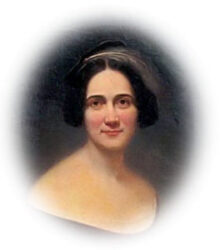
Meta Morris Grimball

22 April.

       Virginia has seceded and all the border States seem to be coming in: the movements of the U.S. Government have been very suicidal every act tells in a way to benefit us. There has been a riot in Philadelphia in which the Black Republican spirit was fully exhibited, all the accounts tend to shewing a determination at the North to sustain the Government and so there is at the South;—I believe this will give peace.

       Arthur was sent up from Morris’s Island to the City to get over an attack of Dysentary . Mr Grimball went down to see after him.—

       Every where there are commotions great and small, in Charleston. Taking Fort Sumpter, up here. Mr Elliott said he would hear the children their chatecism and Harry although he has been learning his for 6 years did not know it so said Mrs Barnwell of her two, Richard & Ella, she said she felt as if she would be humiliated, I told Mr Elliott of Harry’s deficiancy. So last Sunday the children went up, after a most charming sermon addressed to the parents, and said their chatecism very well, H. had learnt his all the week, & Mr Elliott gave them some books which they either are to read & keep, or return.—Mr Elliott is to preach 2 more Sundays, is to recieve 3 hundred dollars, for the 3 Month,—and will come back next winter.—Mr Dixson the Presbyterian Minister has resigned, from ill health,—and gone away.—

       Yesterday Mrs Wayne came late & spent the evening. She took tea, & went away at 1/2 eleven, she gave the history of her Mitchel. She was married at the age of 16 to a young man named Hardenbrook, he had a large fortune, settled it seems on his children. They were divorced, and she took her maiden name, the children are given to the father’s Mother & she is allowed to see them. 2 little boys, 1, 4, the other 7. Mr Hardenbrook this lady says is a very abandoned man. I do not think her manners impress favorably. —Mrs Wayne gave a very amusing account of her ox, & little blue cart getting Mrs Rosalie Mitchel’s heavy baggage to the cars, the ox several times took to the woods & swamp. This animal is large and harnessed with blinds, an old horse fixing. Mr Lewis has hired Russell Middleton’s house on South bay for the summer, this Mrs L. does not like the place, is rather too public. She is shy, & not always attentive to her appearance. I am glad of her being there for I like her.—The Governess they had early in the winter was a very mischief making woman, she wrote notes to Mr Lewis, noticing Annie’s treatment of Julia, her step daughter, trying to excite him against her.—Spoke in a most disorganizing way to the servants.—

       The last visit we paid to Mr Barnwell, Ann spoke in great disgust of Miss Juliet Elliott’s malicious style of remark, she said several things calculated to excite them against Charlotte & Heyward. Ann, & her Mother said this did not have that effect, but disgusted them with Juliet.—Poor old woman, a bitter, spiteful temper is a fearful companion.—

0 comments

Keep your rowdies in Baltimore…

The Collected Works of Abraham Lincoln

Lincoln’s Reply to a Baltimore Committee

April 22, 1861

You, gentlemen, come here to me and ask for peace on any terms, and yet have no word of condemnation for those who are making war on us. You express great horror of bloodshed, and yet would not lay a straw in the way of those who are organizing in Virginia and elsewhere to capture this city. The rebels attack Fort Sumter, and your citizens attack troops sent to the defense of the Government, and the lives and property in Washington, and yet you would have me break my oath and surrender the Government without a blow. There is no Washington in that—no Jackson in that—no manhood nor honor in that. I have no desire to invade the South; but I must have troops to defend this Capital. Geographically it lies surrounded by the soil of Maryland; and mathematically the necessity exists that they should come over her territory. Our men are not moles, and can’t dig under the earth; they are not birds, and can’t fly through the air. There is no way but to march across, and that they must do. But in doing this there is no need of collision. Keep your rowdies in Baltimore, and there will be no bloodshed. Go home and tell your people that if they will not attack us, we will not attack them; but if they do attack us, we will return it, and that severely.

0 comments

New York Herald

Civil War Day-by-Day

April 22, 1861

The News.

There was no direct communication yesterday with the federal capital or Baltimore. There is no doubt of the perfect safety of Washington, and it is not probable that anything of a serious nature transpired in Baltimore yesterday. The communication is understood to be suspended by the desire of the government, in order to prevent its plans of war from falling into the hands of its opponents. It was rumored in Washington on Saturday that the President, in consequence of certain States refusing to furnish their quota of the force called for, would call for additional troops from the States which have proved faithful to the constitution and laws of the country.

We publish today details of the sanguinary fight that took place in Baltimore last Friday between its citizens and the Massachusetts and Pennsylvania troops that were marching to the relief of Washington city; also a report of the mass meeting subsequently held at Monument square, with the speeches of the Mayor and Governor, an account of the burning of the railroad bridges, &c. The burning of the bridges and the cutting of the telegraph wires were done by order of Governor Hicks, and under the protection of a strong military force.

The Seventy-first, Twelfth and Sixth regiments of New York State militia, with full ranks and fully officered, left New York yesterday for Annapolis, in the steamers R. R. Cuyler and Baltic. The regiments were obliged to leave numbers of recruits behind. They numbered; together, more than two thousand five hundred men. Their departure was the occasion of a grand ovation.

The meeting of the citizens of New York in Union Square on Saturday last, was one of the greatest demonstrations of popular feeling the world has ever seen. It was characterized by great unanimity of feeling, and, amidst a crowd of half a million of human beings, but one thought, one idea, seemed to pervade the huge mass, and that was a determination to sustain the government by every means, at all cost and hazard. The resolutions passed, and the speeches pronounced, all breathed the same spirit: and the city of New York, rising as if it were one man on the occasion, determined that the federal government should be sustained and maintained, no matter what the amount of men, material or money should be necessary. [continue reading…]

0 comments