Important from Annapolis.

Civil War Day-by-Day

New York Herald
April 28, 1861

ANNAPOLIS, April 27—6 P.M.

About twelve thousand troops in all have arrived at Annapolis. Three thousand from New York are expected tonight. I learn from good authority that no more troops will be ordered without complete preparation for service.

The continued mild weather only saves great suffering. One thousand slept in the open air last night. There is plenty of provisions, but the Commissariat is badly organized. The supplies by the Kill Von Kull were timely, especially the tent cloth. Teams are in great demand for transport of medical stores.

The brig of war Perry is stationed at the entrance of the harbor, and a fine park of artillery on the right.

The tenth company of the Eighth Massachusetts regiment, Captain Briggs, in a steam tug, last night cut out the receiving ship Allegheny, in Baltimore harbor, and anchored her under Fort McHenry. [continue reading…]

0 comments

Major Robt. Anderson

Civil War Day-by-Day

Charleston Mercury
April 29, 1861

MAJOR ROBT. ANDERSON has made it a point at every stopping place at the North, to complain of our treatment in firing on Sumter after the Barracks were enveloped in flames. Did anybody prevent him pulling down his dirty stripes? And why is it that he has not told Northern people that he had a 10 inch Columniad planted on the Parade Ground at Fort Sumter, at an elevation sufficient to enable him to throw a 10 inch shell into the crowd of unarmed citizens, and helpless women, whom he knew full well would congregate in White Point Garden at the firing of the first gun. This is not a rumor the gun has been seen, the elevation and direction have been noticed, and by his own acknowledgment, and that of his officers, the guns in exposed places could not be worked without the certainty of destruction; so our mothers, wives and sisters have not been slaughtered, because our guns kept him in his casemates. This is the brave man who was supplied with fresh meat, vegetables, &c., &c., and was thought by some to be a friend.

0 comments

Situation of Affairs.

Civil War Day-by-Day

New York Herald
April 28, 1861

Everything appears to go on favorably at the seat of war. The Northern troops in Washington are in good health and spirits. The Fifth regiment of Pennsylvania and Massachusetts regiments attended divine service yesterday in the Hall of Representatives, the bands supplying the sacred music on the occasion. The steamer City of Richmond, plying between Richmond and Philadelphia, was seized at the former port on the 18th, and a force of Virginia troops placed on board; but the captain subsequently obtained her release from Governor Letcher, and she arrived at Philadelphia yesterday, with the crews of the New York steamers Jamestown and Yorktown, 60 men, and 120 passengers.

Large bodies of troops are said by the Richmond papers to be raising in all parts of Virginia and North Carolina, that batteries are being erected at Portsmouth Hospital and Craney Island, mounted with Dahlgren guns, and that five volunteer companies from Georgia had arrived at Portsmouth. The ladies of Virginia, it appears, are following the example of their sisters at the North, in manufacturing uniforms and clothing for the soldiers.

Twelve thousand troops in all had reached Annapolis from the North up to Saturday, and it is stated that no more volunteers will be ordered unless they are fully equipped for service. It would appear that the preparations to receive the troops at Annapolis were very imperfect, and had not the weather been very mild, they would have suffered much. As it was, a thousand of them had to sleep in the open air on Friday night, and although there is abundance of provisions the commisariat was so badly managed that some of the troops were without food for twenty four hours. [continue reading…]

0 comments

Our Montgomery Correspondence.

Civil War Day-by-Day

Charleston Mercury
April 29, 1861

MONTGOMERY, April 25, 1861.

The crew of the steamship Star of the West arrived in this city last night, and will leave in the evening train for New York. They are very communicative, and manifest pleasure at the manner they have been treated during their journey through the Confederate States. Not a single unpleasant thing has occurred, nor a single indignity been offered them. They say the capture was effected on the 17th by a Texan force of ninety men under Capt. VAN BUREN, who came upon the steamer Rusk. After being taken on board their errand was made known to the astonished Captain, who submitted gracefully to a matter of necessity. The Captain of the Rusk then took command, and run the captured vessel into the harbor of Galveston, and from thence to New Orleans. The wages of the seamen, amounting in the aggregate to near $1800, have been paid by our Government, and the amazed but delighted seamen sent on their way rejoicing.

The difficulties in the Second Volunteer Regiment of this State have been adjusted. The companies from Mobile have been added to it, which make the regiment better than before, as the new companies are among the best in the State. One of them (the Mobile Cadets) arrived this evening, and will go into camp here. The whole of the regiment are now prepared to march on Sunday morning for Lynchburg, Virginia.

Gov. MOORE, who has been some days away, has now returned. It is rumored that he has a little matter of reprisal on hand which will attract some attention. Some time ago Gov. MOORE purchased a quantity of muskets in New York, to be paid for on delivery here, which were seized by the authorities North. Although there was no pecuniary loss, the [continue reading…]

0 comments

The News.

Civil War Day-by-Day

New York Herald
April 28, 1861

The Fireman Zouaves, under the command of Col. Ellsworth, did not leave the city yesterday, as announced, in consequence of the men not being fully armed and equipped. Large delegations of the Fire Departments of this city, Brooklyn and Jersey city, assembled to take leave of their comrades, but from the cause above stated were disappointed. It is now positively announced that they will leave for the seat of war today.

Mr. C. J. Ingersoll, of Philadelphia, has suggested that Ex-Presidents Buchanan, Pierce, Fillmore, Tyler and Van Buren, become arbitrators to settle the existing difficulties between the North and South.

By a despatch from Annapolis we learn that on Saturday night the Tenth Company of the Eighth Massachusetts regiment, in a steamtug, cut out the receiving ship Alleghany in Baltimore harbor, and placed her under the guns of Fort McHenry.

The war was the topic discussed in every pulpit of the city yesterday, and the clergy of all denominations, in their prayers, offered up a petition that the horrors of war might be softened, if not averted. In consequence of the pressure upon our columns, we are compelled to exclude all the reports of sermons. Rev. Mathew Hale Smith, Chaplain of the Twelfth regiment, who sent with the regiment, and returned in the Baltic, preached in the chapel Thirty fourth street and Broadway. Impressive religious services were held at the camp, in Castle Garden, yesterday. Among the preachers on the war was the Rev. James Freeman Clarke, of Boston, before the Second Unitarian Congregational Society, at the chapel, corner of Clinton and Congress streets. The Rev. Henry Ward Beecher preached a sermon in favor of sustaining the Union and constitution. In stirring terms he called upon his congregation to uphold the government, and suggested that the Plymouth church volunteers should be effectively armed with revolvers.

0 comments

“The boys were with the two Lincoln boys riding…”—Horatio Nelson Taft

Diary of US patent clerk Horatio Nelson Taft.

MONDAY 29

This has been a pleasant day and quite an exciting one on account of the movements of the Military. The bal. of the RI Regt came today and the whole were reviewed by the Prest, Genl Scott, and the Cabinet officers. Myself and wife, Julia and Willie, were in the East Room. The boys were with the two Lincoln boys riding until the review was nearly over. Self & Julia were introduced to Gov Sprague, Col Burnside, and other officers of the RI Regt by Surgeon Genl Wheaton at the Pat office. Came home about dark from Willards, some weary.


The three diary manuscript volumes, Washington during the Civil War: The Diary of Horatio Nelson Taft, 1861-1865, are available online at The Library of   Congress.

0 comments

Savannah—Terrible accounts of the state of things in Washington—General Robert E. Lee commands Virginia troops—William Howard Russell

My Diary North and South – William Howard Russell

April 29th.—This morning up at six A.M., bade farewell to our hostess and Barnwell Island, and proceeded with Trescot back to the Pocotaligo station, which we reached at 12 ·20. On our way Mr. Heyward and his son rode out of a field, looking very like a couple of English country squires in all but hats and saddles. The young gentleman was good enough to bring over a snake hawk he had shot for me. At the station, to which the Heywards accompanied us, were the Elliotts and others, who had come over with invitations and adieux; and I beguiled the time to Savannah reading the very interesting book by Mr. Elliott, senior, on the Wild Sports of Carolina, which was taken up by some one when I left the carriage for a moment and not returned to me. The country through which we passed was flat and flooded as usual, and the rail passed over dark deep rivers on lofty trestle-work, by pine wood and dogwood tree, by the green plantation clearing, with mud bank, dyke, and tiny canal mile by mile, the train stopping for the usual freight of ladies, and negro nurses, and young planters, all very much of the same class, till at 3 o’clock P.M., the cars rattled up alongside a large shed, and we were told we had arrived at Savannah.

Here was waiting for me Mr. Charles Green, who had already claimed me and my friend as his guests, and I found in his carriage the young American designer, who had preceded me from Charleston, and had informed Mr. Green of my coming.

The drive through such portion of Savannah as lay between the terminus and Mr. Green’s house, soon satisfied my eyes that it had two peculiarities. In the first place, it had the deepest sand in the streets I have ever seen; and next, the streets were composed of the most odd, quaint, green windowed, many colored little houses I ever beheld, with an odd population of lean, sallow, ill-dressed unwholesome-looking whites, lounging about the exchanges and corners, and a busy, well-clad, gaily-attired race of negroes, working their way through piles of children, under the shade of the trees which bordered all the streets. The fringe of green, and the height attained by the live oak, Pride of India, and magnolia, give a delicious freshness and novelty to the streets of Savannah, which is increased by the great number of squares and openings covered with something like sward, fenced round by white rail, and embellished with noble trees to be seen at every few hundred yards. It is difficult to believe you are in the midst of a city, and I was [continue reading…]

0 comments

I experienced for the first time the feeling of coming in contact with the bullets, bayonets, and sabres of our enemies.—Elisha Franklin Paxton

Elisha Franklin Paxton – Letters from camp and field while an officer in the Confederate Army

Harper’s Ferry, April 29, 1861.

I received your letter by Mr. Campbell and was very happy to hear from you. Nothing could be half so interesting as a line from dear wife and little ones at home. Be cheerful and act upon the motive which made me leave you to risk my life in relieving my State from the peril which menaces her. I hope I may see you again, but if never, my last wish is that you will make our little boys honest, truthful, and useful men. Last Thursday night, I experienced for the first time the feeling of coming in contact with the bullets, bayonets, and sabres of our enemies. We were called up suddenly upon the expectation of an engagement which proved a false alarm. Now I know what the feeling is, and know I shall enter the struggle, when it comes, without fear. Next to the honor and safety of my State in her present trial, the happiness of wife and little ones lies nearest my heart. My health was never better. I have spent two nights on duty in the open air without suffering, and feel assured now that my health will not suffer by such exposure.

Kiss the little ones for me and never let them forget “papa gone,” perhaps forever. Accept for yourself every wish which a fond husband could bestow upon a devoted wife.

0 comments

“Georgy would like to go as a nurse, but…”—Jane Stuart Woolsey to the Sisters Abroad.—Letters of a Family During the War.

Woolsey family letters during the War for the Union

Seventh Regiment safe and jolly. No fighting yet,– April 29th, 1861.

Eliza has been making a flag for their church. It was her part to cut out and sew on the stars. She sent for a large number of very small testaments, for knapsacks, for the Fishkill Regiment, and we have found some sheets of flags on paper, like stamps, to paste in them, each with an appropriate verse – “Fight the good fight;” “Endure hardness as a good soldier of Jesus Christ,” etc.

On Thursday evening Charley had a few friends to supper – a substitute for the birthday party – and we decorated the table with flags, bunting, red, white and blue mottoes, etc. They seemed to have a gay time and sang many songs to a squealing accompaniment from Pico. It is by no means unlikely that a Home Guard will be needed with all the militia ordered away and seditious people biding their time in town. Mansfield Davies is with his regiment at Fort Schuyler, drilling. They go south next week. George Betts goes today as Lieutenant-Colonel Second Zouaves. The great barracks in the park are nearly finished – meant as a mere shelter for troops in transit and there is a camp in the Battery– officers’ marquee and a whole fleet of tents. We hear from Norwich that last Sunday was spent by Dr. Bond’s congregation in making red flannel shirts for the regiment who were to leave next day. Mr. Davies asks us for bandages, etc., for their surgeon, which we shall supply with great readiness. Mother has made a great deal of beautiful lint. There is an organization of medical men to train nurses for the camp; lectures are to be given and bands of ten ladies are to walk some wards in the hospitals, as a preparation. Georgy has been to some of the lectures with Mrs. Trotter, and would like to go as a nurse, but would no doubt be rejected, as none but “able-bodied and experienced” women are to be taken. While I write a company goes down Broadway with the eternal Reveille. We had a grand patriotic sermon last Sunday from Dr. Prentiss, and now we have only patriotic prayers and psalms, with the petition for the President borrowed bodily from the Prayer Book.

This morning I got, to my surprise and pleasure, an official document containing a letter from Will Winthrop of the Seventh, written, no doubt, in acknowledgment of the little kindnesses we were able to show him on leaving. I quote, as it’s far too bulky to send: [continue reading…]

0 comments

This afternoon I went with Mrs. Chesnut to call on Mrs. Davis.—Charlotte Wigfall

Louise Wigfall Wright — A Southern Girl in ’61

(excerpts)

  “29th: I have been this morning to witness the opening of Congress, and hear the President’s message. It was an admirable one, worthy of his reputation. It gives such a fair and lucid statement of matters, as they now stand, that I am sure it will do good abroad, if not at home. . . . This afternoon I went with Mrs. Chesnut to call on Mrs. Davis. I am going tomorrow to her reception. . . . You allude to reports given in the Northern papers of the Fort Sumter affair. It is only what might have been expected of them, that they would garble and misrepresent the truth; but I must confess that Major Anderson’s silence, and the disingenuous bulletin he sent to Cameron have surprised me. He takes care not to tell the whole truth, and any one to read his statement would suppose he had only come out on those conditions, whereas, he surrendered unconditionally—the U. S. Flag was lowered without salute while your father was in the fort. This was seen, not only by your father, but by the thousands who were on the watch, and it was only owing to General Beauregard’s generosity (misplaced, it seems, now) that he was allowed to raise it again, and to salute it on coming out of the Fort, and take it with him. . . . And this conduct too, after the kind and generous treatment he met with from the Carolinians. Judge Ochiltree is here and tells me Tom is a private in a company that Capt. Bass has raised in Marshall. . . . The drums are beating here all the time, and it really makes me heartsick when I think about it all.

“I don’t think though that the military enthusiasm can be very high at the North as I see they are offering $20 additional pay to volunteers a month. That fact speaks volumes. I suppose it is to be accounted for in the anxiety to get rid of the mob population who might be troublesome at home.”

0 comments

“At fifty-one, I can hardly follow the pursuit of arms; but I will write and preserve a DIARY of the revolution.”—Rebel War Clerk, John Beauchamp Jones

Civil War Day-by-Day
A likeness of Jones when he was editor and majority owner of the Daily Madisonian during President John Tyler’s administration.

April 29th.–I wrote to my agent on the Eastern Shore to send me the last year’s rent due on the farm. But I learn that the cruisers in the bay are intercepting the communications, and I fear remittances will be impracticable. I hope my family are ready by this to leave Burlington. Women and children have not yet been interfered with. What if they should be compelled to abandon our property there? Mrs. Semple had her plate seized at New York.

At fifty-one, I can hardly follow the pursuit of arms; but I will write and preserve a DIARY of the revolution. I never held or sought office in my life; but now President Tyler and Gov. Wise say I will find employment at Montgomery. The latter will prepare a letter to President Davis, and the former says he will draw up a paper in my behalf, and take it through the Convention himself for signatures. I shall be sufficiently credentialed, at all events – provided old partisan considerations are banished from the new confederacy. To make my DIARY full and complete as possible, is now my business. And,

When the hurly-burly’s done,
When the battle’s lost and won,”

if the South wins it, I shall be content to retire to my farm, provided it falls on the Southern side of the line, and enjoy sweet repose “under my own vine and fig-tree.”

0 comments

Southern Chivalry has been altogether over estimated

Miscellaneous document sources
1860s newsprint

New Haven Daily Palladium, April 29, 1861

The people of the North have heard so much of southern chivalry for many years, that they have been impressed, in a rather indefinite way it is true, with the idea that there is somewhere in the South, a very considerable amount of chivalry which would neither brook a wrong or purposely commit one, and that this chivalry in defense of its honor would as soon walk into a grave as to sit clown to a good dinner with a hungry appetite. While our people have never been in the slightest degree intimidated by their impressions of the existence of this fiery element of our national character, they have always been disposed to look upon it forbearingly, even when severely provoked by it, and to regard it as the result of climate and education, for which the impatient gentlemen under such influences should be very much indulged. Hence they have had pretty much their own way in the government for more than seventy years. Personal apologies and national compromises have been tendered them whenever they required them, except when their demands were too outrageous to be even considered. These concessions have been imputed to wrong motives, and as the North grew more and more forbearing, the chivalry grew more and more arrogant and domineering, until a crisis has been reached in which they are to learn how they are really estimated at the North, and how erroneous have been their ideas of the northern character. [continue reading…]

0 comments

Steamer

The Collected Works of Abraham Lincoln
To Gideon Welles
Executive Mansion,
April 29. 1861
Hon. Secretary of the Navy,
Sir:
You will please to have as strong a War Steamer as you can conveniently put on that duty, to cruise upon the Potomac, and to look in upon, and, if practicable, examine the Bluff and vicinity, at what is called the White House, once or twice per day; and, in case of any attempt to erect a battery there, to drive away the party attempting it, if practicable; and, in every event to report daily to your Department, and to me. Your Obt. Servt.
A. Lincoln
Private note. The above order I make at the suggestion of General Scott,  though the execution of it, I believe is substantially what you are already doing
A. L.
0 comments

A Message from Jefferson Davis to The Provisional Congress of the Confederate States

Miscellaneous document sources

“The declaration of war made against this Confederacy by Abraham Lincoln, the President of the United States, in his proclamation issued on the 15th day of the present month, rendered it necessary, in my judgment, that you should convene at the earliest practicable moment to devise the measures necessary for the defense of the country.” (Journal of the Congress of the Confederate States of America, 1861-1865)

Congress assembled to-day at noon, in compliance with the proclamation of President Davis convening an extra session.  (New York Times)

On the opening day of the “extra” session of the Confederate States Provisional Congress on April 29, 1861, Jefferson Davis sent the legislators a lengthy message—in excess of 7800 words—on the reasons for the called assembly, the unstable conditions that now existed, and the needs of the new nation. Included in the message was a discussion of a primary basis for the split from the Northern states, slavery, with nearly 1300 words—about 17% of the message—devoted to that long-festering dispute between the sections.

Immediately following his discussion on slavery, Davis wrote, “the people of the Confederate States, in their conventions, determined that the wrongs which they had suffered and the evils with which they were menaced required that they should revoke the delegation of powers to the Federal Government which they had ratified in their several conventions. They consequently passed ordinances resuming all their rights as sovereign and Independent States and dissolved their connection with the other States of the Union.”

In his message to the Provisional Congress, Davis thus made a direct connection between slavery and secession.  It is an important work, along with the declarations of causes by South Carolina, Mississippi, Georgia, and Texas,—and Florida’s “Lost” Draft Declaration of Causes that was undated, untitled, and never issued—and other documents, connecting secession directly to the protection of the institution of slavery and the very real power that went with it.

It’s hard to refute the words of the men who made the decisions for what turned out to be futile attempts to leave the Union.

0 comments

Civil War Day-By-Day

Civil War Day-by-Day

April 29, 1861

  • Maryland’s House of Delegates votes not to secede from the Union. The vote is against convening a secessionist convention, dashing the hopes of a sizable pro-South group, but did not vote to end the legislative session.

A Chronological History of the Civil War in America1

  • Legislature of Indiana voted $500,000 to arm the State.
  • Legislature of Maryland repudiated secession—the Senate unanimously and the House by a vote of 53 to 15.
  • C. S. Congress reassembles at Montgomery.

  1. A Chronological History of the Civil War in America by Richard Swainson Fisher, New York, Johnson and Ward, 1863
0 comments

Hinton Rowan Helper

Civil War Day-by-Day
Civil War Portraits—Leaders, Influencers, and the Incidentally Important #010
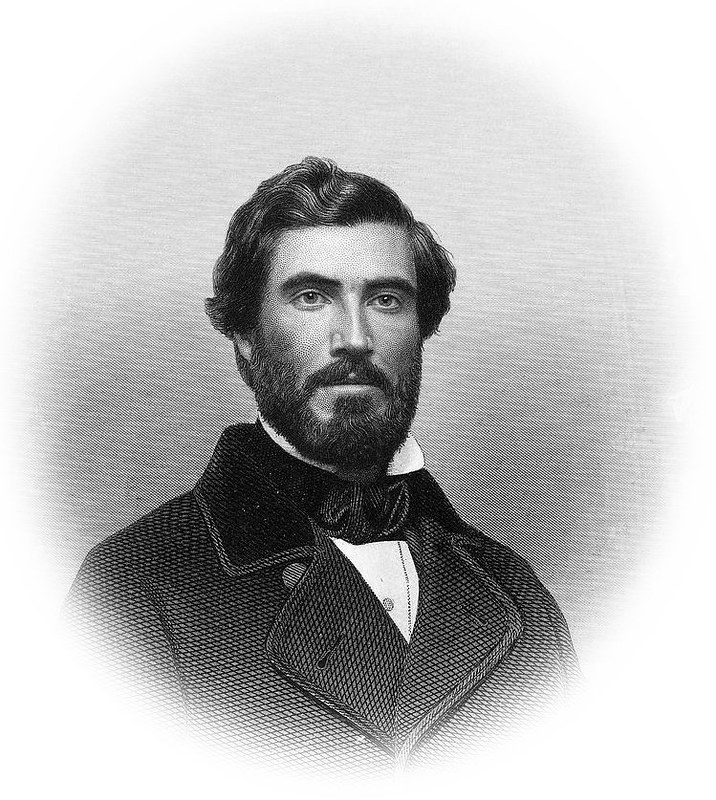
Hinton Rowan Helper (1829-1909), critic of Southern slavery

Hinton Rowan Helper (December 27, 1829 – March 9, 1909) was an American Southern critic of slavery during the 1850s. In 1857, he published a book which he dedicated to the “nonslaveholding whites” of the South. The Impending Crisis of the South, written partly in North Carolina but published when the author was in the North, argued that slavery hurt the economic prospects of non-slaveholders, and was an impediment to the growth of the entire region of the South. Anger over his book due to the belief he was acting as an agent of the North attempting to split Southerners along class lines led to Southern denunciations of ‘Helperism’.

The book, which was a combination of statistical charts and provocative prose, attracted little attention until 1859 when it was widely reprinted in condensed form by Northern opponents of slavery. Helper concluded that slavery hurt the Southern economy overall by preventing economic development and industrialization, and was the main reason why the South had progressed so much less than the North, according to the results of the 1850 census). Helper spoke on behalf of the majority of Southern whites of moderate means—the Plain Folk of the Old South—who he said were oppressed by a small but politically dominant aristocracy of wealthy slave-owners.

The reaction in the South was very negative. John Spencer Bassett studied the issue and observed in 1898 that circulating Helper’s book could be the basis of criminal charges. Politicians often accused each other of having read it, but many of the most successful politicians read it and used its observations of the negative effects of slavery as the basis of their attempts to solve some of the problems Helper pointed out slavery caused.In his 1867 essay, “War of races. By whom it is sought to be brought about. Considered in two letters, with copious extracts from the recent work of Hilton R. Helper,” John Harmer Gilmer calls Helper “a profane miscreant,” one of many insults directed at Helper in that essay.[8]

There are very few references to blacks in the book, and certainly slavery as an economic institution is denounced, not black people. It generated a furor in the South, where authorities banned its possession and distribution and burned copies that could be seized. Between 1857 and 1861, nearly 150,000 copies of the book were circulated, and in 1860, the Republican party distributed it as a campaign document. In December 1859, Democrats returning to Congress reacted with indignation because 68 Republicans had endorsed the book and planned to use it as campaign literature in the presidential election of 1860. Opponents blocked the election of Republican John Sherman as speaker because he had endorsed the book.

https://en.wikipedia.org/wiki/Hinton_Rowan_Helper

0 comments

Memphis Daily Appeal

Civil War Day-by-Day

April 28, 1861

North Carolina.

We are informed that the free colored population of our town are ready and willing to do anything that they may be called upon to do in the present emergency. This is the proper spirit. Let them act up to it and they will be fully protected and provided for.

A number went down to the forts this morning. More will go to-morrow.

We learn that in Newburn the free colored population have also volunteered their services.

We learn that Fayeteville is as much a unit in the cause as Wilmington. We are but one people now. We understand that the same feeling prevails in Raleigh.—Wilmington Journal.

0 comments

The West And The War.

Civil War Day-by-Day

New York Herald
April 28, 1861

MINNESOTA.

At Red Win a company was organized last week; at St. Anthony a full company has been enrolled; at Stillwater, a company is nearly completed, and at St. Paul one company is completed and have elected their officers, and another was to have had the necessary complement by last Monday evening. Other companies are organizing all over the State. The great West is looking up their forces.

MICHIGAN TROOPS.

There are twenty eight companies in this State that have, up to our latest advices, volunteered their services for the war. Five filed their muster rolls with the Adjutant General before Tuesday, viz:—Detroit Light Guard, Scott Guard, Michigan Hussars and Sherlock Guard, of Detroit, and the Coldwater Cadets of Coldwater. The other companies were organizing rapidly and are by this time doubtless ready for service. The Scott guard are ready and very impatient for service, their muster roll being the second filed with the Adjutant. The war spirit in Detroit city and all over the State is very enthusiastic. An immense crowd were present to witness the raising of the national flag over the dome of the City Hall at Detroit on Thursday afternoon. Gen. Lewis Cass presided on the occasion. A notice to form the First regiment was issued at headquarters on the 23rd, and the Adjutant has since issued orders for the organization of the second one.

INDIANA.

This State has been and still is raising a large body of troops, for active service at the seat of war, and for home defence. Mr. Ford, who served under General Twiggs in the Mexican war, is engaged in raising volunteers for the support of the government. Evansville, Warren and other places are doing well. The requisition for sixty companies is filled, and there are fifty one companies more than called for offered. [continue reading…]

0 comments

Special Newspaper Train.

Civil War Day-by-Day

New York Herald
April 28, 1861

Special newspaper trains will start early this morning, and every Sunday morning, during the war, over the Hudson River Railroad to Albany, and over the New Haven road, to New Haven. They will carry the latest news from the seat of war. Mr. Shears runs the Albany train, and Mr. Thompson the New Haven train.

0 comments

The News.

Civil War Day-by-Day

New York Herald
April 28, 1861

The Fifth Regiment leaves this morning for Washington, and will parade eight hundred men, fully armed and equipped. The regimental line is to be formed in the camp on the Battery at nine o’clock, and, after review and inspection, the regiment will march up Broadway to Cortlandt street, and thence to the steamship Kedar. Two hundred recruits, left behind for the present, will be speedily equipped and sent after them.

The Fire Brigade Zouaves had not received there arms at a late hour last night, and probably will not leave today. In the event of their doing so, however, our readers will ascertain the line of march in another column.

British volunteers are being organized in to companies in various parts of this State. Troy is doing her best to get up one of a hundred men, under Capt. Howe.

A daily passenger line is in operation between Philadelphia and Washington, via. Annapolis, leaving Philadelphia at half past one P.M. [continue reading…]

0 comments

Rebel War Clerk

Civil War Day-by-Day
A likeness of Jones when he was editor and majority owner of the Daily Madisonian during President John Tyler’s administration.

April 28th.–Saw Judge Scarburg, who has resigned his seat in the Court of Claims at Washington. I believe he brought his family, and abandoned his furniture, etc. Also Dr. Garnett, who left most of his effects in the hands of the enemy. He was a marked man, being the son-in-law of Gov. Wise.

Many clerks are passing through the city on their way to Montgomery, where they are sure to find employment. Lucky men, some of them! They have eaten Lincoln bread for more than a month, and most of them would have been turned out of offce if there had been no secession. And I observe among them some who have left their wives behind to take care of their homes.

0 comments

“We feel entirely safe from attack now from without. Famine may attack us within.”—Horatio Nelson Taft

Diary of US patent clerk Horatio Nelson Taft.

SUNDAY, APRIL 28, 1861.

Rainy all the forepart of the day. Attended church with wife and the boys. Went and returned in the rain. Mr [Haws?] of Lyons [Iowa?] returned with us and dined with us. Chas also dined with us. Did not go out again till evening. Went down to Willards with Willie for a walk. The Band of the 7th Regt were performing at Willards Hall the National airs. More soldiers came today. We feel entirely safe from attack now from without. Famine may attack us within. Beef 20 cts. pr pound now and all provisions much advanced in price.


The three diary manuscript volumes, Washington during the Civil War: The Diary of Horatio Nelson Taft, 1861-1865, are available online at The Library of   Congress.

0 comments

It is easy now to get volunteers and I wish they could be enlisted “during the war…”—Samuel Ryan Curtis

The Letters of Samuel Ryan Curtis

[Washington] Sunday Apl 28, 1861

My dear wife

Yours of the 20th giving me news of the progress of the volunteering was duly received

The probability is, the required regiment was made up in a few days, and a large reserve remains ready for service if called for. It is easy now to get volunteers and I wish they could be enlisted “during the war” instead of being called out for temporary purposes

Mr. Reside arrived home last night from Arkansas. He says the whole South is united now and fears they will soon attack Washington. He says they have negroes regularly enrolled and mustered in companies and that Jefferson Davis is at Richmond tonight.

Now that we have about 14 thousand troops here and more coming every day we feel rather pleased to hear they are concentrating in this direction where they can be properly met. General Scott is laboring incessantly and his aids also seem busy in keeping pace with the mighty movement surrounding them. A detachment of the N. York regiment which had been left came up the Potomac today; so we now have two routes open, and our regiment (you see I claim kindred) has the right to claim the honor of opening both routes to the Capitol. The 7th is the pet of the City and Country and well it may be, for it is eligently equipped and very perfect in drill. [continue reading…]

0 comments

She had never been outside the plantation in her life.—William Howard Russell

My Diary North and South – William Howard Russell

Note: This particular diary entry–a document written in 1861–includes terms and topics that may be offensive to many today.   No attempt will be made to censor or edit 19th century material to today’s standards.

April 28th.—The church is a long way off, only available by a boat and then a drive in a carriage. In the morning a child brings in my water and boots–an intelligent, curly-headed creature, dressed in a sort of sack, without any particular waist, barefooted. I imagined it was a boy till it told me it was a girl. I asked if she was going to church, which seemed to puzzle her exceedingly; but she told me finally she would hear prayers from “uncle” in one of the cottages. This use of the words “uncle” and “aunt” for old people is very general. Is it because they have no fathers and mothers? In the course of the day, the child, who was fourteen or fifteen years of age, asked me “whether I would not buy her. She could wash and sew very well, and she thought missus wouldn’t want much for her.” The object she had in view leaked out at last. It was a desire to see the glories of Beaufort, of which she had heard from the fishermen; and she seemed quite wonder-struck when she was informed I did not live there, and had never seen it. She had never been outside the plantation in her life.

After breakfast we loitered about the grounds, strolling through the cotton fields, which had as yet put forth no bloom or flower, and coming down others to the thick fringes of wood and sedge bordering the marshy banks of the island. The silence was profound, broken only by the husky mid-day crowing of the cocks in the negro quarters.

In the afternoon I took a short drive “to see a tree,” which was not very remarkable, and looked in at the negro quarters and the cotton mill. The old negroes were mostly indoors, and came shambling out to the doors of their wooden cottages, making clumsy bows at our approach, but not expressing any interest or pleasure at the sight of their master and the strangers. They were shabbily clad; in tattered clothes, bad straw hats and felt bonnets, and broken shoes. The latter are expensive articles, and negroes cannot dig without them. Trescot sighed as he spoke of the increase of price since the troubles broke out.

The huts stand in a row, like a street, each detached, with a poultry house of rude planks behind it. The mutilations which the poultry undergo for the sake of distinction are striking. Some are deprived of a claw, others have the wattles cut, and tails and wings suffer in all ways. No attempt at any drainage or any convenience existed near them, and the same remark applies to very good houses of white people in the south. Heaps of oyster shells, broken crockery, old shoes, rags, and feathers were found near each hut. The huts were all alike windowless, and the apertures, intended to be glazed some fine day, were generally filled up with a deal board.

The roofs were shingle, and the whitewash which had once given the settlement an air of cleanliness, was now only to be traced by patches which had escaped the action of the rain. I observed that many of the doors were fastened by a padlock and chain outside. “Why is that?” “The owners have gone out, and honesty is not a virtue they have towards each other. They would find their things stolen if they did not lock their doors.” Mrs. Trescot, however, insisted on it that nothing could exceed the probity of the slaves in the house, except in regard to sweet things, sugar and the like; but money and jewels were quite safe. It is obvious that some reason must exist for this regard to the distinctions twixt meum and tuum in the case of masters and mistresses, when it does not guide their conduct towards each other, and I think it might easily be found in the fact that the negroes could scarcely take money without detection. Jewels and jewellery would be of little value to them; they could not wear them, could not part with them. The system has made the white population a police against the black race, and the punishment is not only sure but grievous. Such things as they can steal from each other are not to be so readily traced.

One particularly dirty looking little hut was described to me as “the church.” It was about fifteen feet square, begrimed with dirt and smoke, and windowless. A few benches were placed across it, and “the preacher,” a slave from another plantation, was expected next week. These preachings are not encouraged in many plantations. They “do the niggers no good”–”they talk about things that are going on elsewhere, and get their minds unsettled,” and so on.

On our return to the house, I found that Mr. Edmund Rhett, one of the active and influential political family of that name, had called–a very intelligent and agreeable gentleman, but one of the most ultra and violent speakers against the Yankees I have yet heard. He declared there were few persons in South Carolina who would not sooner ask Great Britain to take back the State than submit to the triumph of the Yankees. “We are an agricultural people, pursuing our own system, and working out our own destiny, breeding up women and men with some other purpose than to make them vulgar, fanatical, cheating Yankees–hypocritical, if as women they pretend to real virtue; and lying, if as men they pretend to be honest. We have gentlemen and gentlewomen in your sense of it. We have a system which enables us to reap the fruits of the earth by a race which we save from barbarism in restoring them to their real place in the world as laborers, whilst we are enabled to cultivate the arts, the graces, and accomplishments of life, to develop science, to apply ourselves to the duties of government, and to understand the affairs of the country.”

This is a very common line of remark here. The Southerners also take pride to themselves, and not unjustly, for their wisdom in keeping in Congress those men who have proved themselves useful and capable. “We do not,” they say, “cast able men aside at the caprices of a mob, or in obedience to some low party intrigue, and hence we are sure of the best men, and are served by gentlemen conversant with public affairs, far superior in every way to the ignorant clowns who are sent to Congress by the North. Look at the fellows who are sent out by Lincoln to insult foreign courts by their presence.” I said that I understood Mr. Adams and Mr. Drayton were very respectable gentlemen, but I did not receive any sympathy; in fact, a neutral who attempts to moderate the violence of either side, is very like an ice between two hot plates. Mr. Rhett is also persuaded that the Lord Chancellor sits on a cotton bale. “You must recognize us, sir, before the end of October.” In the evening a distant thunder storm attracted me to the garden, and I remained out watching the broad flashes and sheets of fire worthy of the tropics till it was bed time.
0 comments

Washington Navy Yard, 1861

Miscellaneous document sources

Washington Navy Yard, 1861, Alfred R. WaudTitle: Washington Navy Yard. 1861
Creator(s): Waud, Alfred R. (Alfred Rudolph), 1828-1891, artist
Date Created/Published: 1861.
Medium: 1 drawing on green paper : pencil and Chinese white ; 15.3 x 23.4 cm. (sheet).
Reproduction Number: LC-DIG-ppmsca-21400 (digital file from original item) LC-USZ62-775 (b&w film copy neg.)
Rights Advisory: No known restrictions on publication.
Call Number: DRWG/US – Waud, no. 488 (A size) [P&P]
Repository: Library of Congress Prints and Photographs Division Washington, D.C. 20540 USA
Notes:
….Signed lower left: A.R. Waud.
….Title inscribed lower right.
….Inscribed above image: Pensacola. Albatro[ss].
….Published in: New York Illustrated News, April 13, 1861.
….Gift, J.P. Morgan, 1919 (DLC/PP-1919:R1.2.488)
….Forms part of: Morgan collection of Civil War drawings.

https://www.loc.gov/pictures/item/2004660894/

0 comments