“…it will not seem so grand if we hear they are dead on the battlefield, far from home.”—Village Life in America.

Village Life in America, 1852 – 1872, by Caroline Cowles Richards

May, 1861.–Many of the young men are going from Canandaigua and all the neighboring towns. It seems very patriotic and grand when they are singing, “It is sweet, Oh, ’tis sweet, for one’s country to die,” and we hear the martial music and see the flags flying and see the recruiting tents on the square and meet men in uniform at every turn and see train loads of the boys in blue going to the front, but it will not seem so grand if we hear they are dead on the battlefield, far from home. A lot of us girls went down to the train and took flowers to the soldiers as they were passing through and they cut buttons from their coats and gave to us as souvenirs. We have flags on our paper and envelopes, and have all our stationery bordered with red, white and blue. We wear little flag pins for badges and tie our hair with red, white and blue ribbon and have pins and earrings made of the buttons the soldiers gave us. We are going to sew for them in our society and get the garments all cut from the older ladies society. They work every day in one of the rooms of the court house and cut out garments and make them and scrape lint and roll up bandages. They say they will provide us with all the garments we will make. We are going to write notes and enclose them in the garments to cheer up the soldier boys. It does not seem now as though I could give up any one who belonged to me. The girls in our society say that if any of the members do send a soldier to the war they shall have a flag bed quilt, made by the society, and have the girls’ names on the stars.

0 comments

All Europe is watching with amazement this terrible tragedy.

Diary of George Mifflin Dallas, United States Minister to England 1856 to 1861

At the Court of St. James

1861. May 1.–The America brought me a note from Mr. Adams. He quits Boston to-day. I may, therefore, look for him at farthest on the 15th inst.

The President’s Proclamation against the seceding States as insurrectionary follows quickly upon the fall of Fort Sumter, and firmly accepts the challenge of war involved in that belligerent attack. It calls out seventy-five thousand militia, and will no doubt be enthusiastically responded to in men and money. Thus, then, has sectional hatred achieved its usual consummation,–civil war! Virginia hesitates, but she will join the Confederacy, as will also, finally, Kentucky, North Carolina, Tennessee, and Maryland. My poor country can henceforward know no security or peace until the passions of the two factions have covered her hills and valleys with blood and exhausted the strength of an entire generation of her sons. All Europe is watching with amazement this terrible tragedy.

THE END.

0 comments

Civil War Day-By-Day

Civil War Day-by-Day

May 1, 1861

  • Robert E. Lee orders Stonewall Jackson to remove the weapons and equipment from the arsenal at Harpers Ferry

A Chronological History of the Civil War in America1

  • The legislature of North Carolina passes a State Convention Bill.

  1. A Chronological History of the Civil War in America by Richard Swainson Fisher, New York, Johnson and Ward, 1863
0 comments

There is a melancholy air about the place independently of these emblems of our mortality—

My Diary North and South – William Howard Russell

April 30th.—At 1 ·30 P.M. a small party started from Mr. Green’s to visit the cemetery of Bonaventure, to which every visitor to Savannah must pay his pilgrimage; difficiles aditus primos habet—a deep sandy road which strains the horses and the carriages; but at last “the shell road” is reached—a highway-several miles long, consisting of oyster shells—the pride of Savannah, which eats as many oysters as it can to add to the length of this wonderful road. There is no stone in the whole of the vast alluvial ranges of South Carolina and Maritime Georgia, and the only substance available for making a road is the oyster shell. There is a toll gate at each end to aid the oyster shells. Remember they are three times the size of any European crustacean of the sort.

A pleasant drive through the shady hedgerows and bordering trees lead to a dilapidated porter’s lodge and gateway, within which rose in a towering mass of green one of the finest pieces of forest architecture possible; nothing to be sure like Burnham Beeches, or some of the forest glades of Windsor, but possessed, nevertheless, of a character quite its own. What we gazed upon was, in fact, the ruin of grand avenues of live oak, so well-disposed that their peculiar mode of growth afforded an unusual development of the “Gothic idea,” worked out and elaborated by a superabundant fall from the overlacing arms and intertwined branches of the tillandsia, or Spanish moss, a weeping, drooping, plumaceous parasite, which was to the tree what its animal type, the yellow fever–vomito prieto–does to man–clings to it everlastingly, drying up sap, poisoning blood, killing the principle of life till it dies. The only differ, as they say in Ireland, is, that the tillandsia all the time looks very pretty, and that the process lasts very long. Some there are who praise this tillandsia, hanging like the tresses of a witch’s hair over an invisible face, but to me it is a paltry parasite, destroying the grace and beauty of that it preys upon, and letting fall its dull tendrils over the fresh lovely green, as clouds drop over the face of some beautiful landscape. Despite all this, Bonaventure is a scene of remarkable interest; it seems to have been intended for a place of tombs. The Turks would have filled it with turbaned white pillars, and with warm ghosts at night. The French would have decorated it with interlaced hands of stone, with tears of red and black on white ground, with wreathes of immortelles. I am not sure that we would have done much more than have got up a cemetery company, interested Shillibeer, hired a beadle, and erected an iron paling. The Savannah people not following any of these fashions, all of which are adopted in Northern cities, have left everything to nature and the gatekeeper, and to the owner of one of the hotels, who has got up a grave yard in the ground. [continue reading…]

0 comments

“There is so much confusion. Troops continue to arrive in the City by the thousands every day.”—Horatio Nelson Taft

Diary of US patent clerk Horatio Nelson Taft.

TUESDAY 30

Prest Lincoln was at the Pat office today to see the troops in their quarters. Gov Seward was with him. Julia presented a fine Boquet of flowers to Gov Sprague at his quarters in the Pat office. The office is a greater novelty now than ever before but the soldiers are very orderly and inteligent. There is not much work done now by the examrs. There is so much confusion. Troops continue to arrive in the City by the thousands every day. Regiments are constantly on parade. Wrote to Bro C R today.


The three diary manuscript volumes, Washington during the Civil War: The Diary of Horatio Nelson Taft, 1861-1865, are available online at The Library of   Congress.

0 comments

About five thousand men have left—Rutherford B. Hayes

Diary and Letters of Rutherford Birchard Hayes
Rutherford B. Hayes (young)

CINCINNATI, April 30, 1861.

DEAR UNCLE:—Your frequent letters are very acceptable. I am sorry, however, to be compelled to think that we are indebted to your ill health for the favor. Lucy says, “Why don’t Uncle come down and make us a visit? If the house has a roof and floors, it is finished enough for war times and needs no further attention.” You will find it almost as quiet as your own town. About five thousand men have left, and our streets show that even that number missing is noticeable. If any war news comes, we shall be lively enough soon. The first ten days of the war was as jolly and exciting as you could wish.

Sincerely,

R. B. HAYES.

S. BIRCHARD.

0 comments

Hurrah for the Printers

Civil War Day-by-Day
1860s newsprint

April 30, 1861
Daily Advocate
(Baton Rouge, LA)

Mr. Lowe, the efficient publisher, and talented sub-editor of the Gazette, left our office and has gone to the wars with the Shreveport Grays. Mr. Lucius Gage, an excellent printer, joined the Caddo Rifles and has deserted us also. As much as we regret the loss of such worthy men, still we are proud of the fact that the Gazette office has shown such a patriotic spirit.
—Caddo Gazette.
We venture the assertion that there is scarcely an organized company in the State that has not two or three printers in it. Three hands out of this office have gone with the Pelican Rifles; another goes with the Delta Rifles of West Baton Rouge. There are two other members of the craft in the latter company. One of them, Mr. John McGrath, was in Nicaraugua [sic] with Walker, and was in all Walker’s engagements, including the siege of Rivas.
0 comments

Exchange of Letters

Civil War Day-by-Day

April 30, 1861
Staunton Spectator

BANKING OFFICE OF A. NICHOLAS & CO.,
No. 70 Wall Street,
NEW YORK, 15th April, ’61.
Col. J. M. McCUE,—Mt. Solon,—Dear Sir:—It is a long time since I had the pleasure of writing you of your health. I have been frequently informed by my friend Sibert who has been kind enough to advise me occasinally respecting Mt. Solon and yourself. We have in this city become highly excited by the news that Fort Sumter was fired into and taken by the troops of the Cotton States. The President’s message, calling first for 75,000 troops and then increasing the demand to 175,000, has produced a profound and deep impression that we are about entering into an awful performance, the end of which no man can tell. The only hope now is, that Va. will stand firm by the Union and hold all the border States to the same line of policy—if she does, our misguided South Carolina friends can soon be brought to reason—if she does not, but goes to swell the triumphal car of secession, God knows the end. The universal sentiment here is, that if the Border States do go out, then the war must exterminate the cause which has created this contention. When I heard that South Carolina fired coolly and deliberately and wantonly upon our flag, I cried like a child, that our brothers should fire into us. If the men that did the deed could have seen the eyes that were dimmed, and the stout frames of strong men that shook when the news was received here, they would have wished that the earth had swallowed them up. The newspapers and office seekers have done their best to set the sections against each other. May God forgive them I can’t!—My Dear Sir, will Virginia secede? What is your opinion? Pray let me hear from you soon.
Yours,
A. NICHOLAS.
MT. SOLON, 21st April, ’61.
MR. A. NICHOLAS,—Dear Sir: Yours of the 15th inst., came to hand a few days ago. Circumstances that have occurred since, have more than answered one of the interrogatories you ask with so much apparent feeling, “Has Virginia seceded?” She has not only seceded, but has on this morning, an army in the field, to defend our rights and institutions, that will carry terror to the hearts of those who vauntingly boast that they will “exterminate the cause,” as you are pleased to term it, of all the difficulties between us. Could you, and the myrmidons of abolition, of agrarianism and all that is abominable in a free government, see, as I have had the opportunity within the past few days, the spirit of our people, your craven hearts would collapse within your cowardly carcasses. You who possess means to justify it, will send your hired mercenaries to overpower us, it may be. You may devastate our country, burn our towns, insult and abuse our women, but conquer us you can never do. When our brave and gallant sons are exterminated, if such could be, you will find our wives and daughters more than a match for all the Beechers, and Cheevers and Stowes and that damnable set that you have so long paid Court to, and encouraged, until you have brought this affliction upon the country.
You speak of our “institutions” being the cause of this war, and you will exterminate it forsooth. Let me tell you, sir, that it has been the misguided frenzy and folly and madness of your people, that has been the cause; and that people that has fattened and flourished upon the labor of this institution, and in your pharasaical and puritanical self-righteousness, after hoarding this wealth, would say to us, “stand aside, we are holier than thou,” and cannot live under the same government with you. Let me say to you, sir, that the men of New York and New England who, in the war of 1812, could stand by with folded hands and see the flag of their country trailed and trampled in the dust, and convene themselves into a Hartford convention, and refuse to furnish men and means to defend their country and that flag from an insolent foreign foe, can with a very bad grace now shed tears, as you say you did, when you heard that flag was fired upon at Fort Sumter. Your damnable hypocrisy makes my blood boil, and in spite of myself, makes me pray that we may have the earnestly hoped for opportunity of meeting you in sight of the Potomac, and all those who, like you, have been shedding those crocodile tears, and there testing, in the sight of the ashes of the Father of his Country, your sincerity in defending that flag. But permit me to say, sir, that you will not be there. You, and those who think like you, will send as your personal representatives, the miserable mercenary foreigners, that you can gather up in your cities at $10 per month to do your fighting. Would to God it were otherwise, and we could meet you all in person, and your boasted Seventh Regiment besides, who have warmed at our firesides, slept under our roofs, shared our hospitality, and when it was in your interest to do so, have preached up your conservatism. But enough, sir, I have not patience to say more. In the hope I may meet you at Washington, (what I do not expect,) I am, sir, yours.
J. MARSHALL McCUE.
0 comments

Our Richmond Correspondence

Civil War Day-by-Day

April 30, 1861
The Charleston Mercury

RICHMOND, April 27, 1861.
I observed that THE MERCURY of Thursday, received this morning, contains no letter, and only one of the dispatches sent you. A letter has been written from this point to THE MERCURY every day this week, and why they have not been received passes my comprehension, for the Charleston papers reach here regularly, and as yet Old ABE has been kind enough not to carry out the war programme of the New York Times, which contemplates the capture of Richmond if not sooner.
Mr. RIORDAN, of your office, with whom I had the pleasure of meeting yesterday, tells me that the Richmond mails are exceedingly irregular of late, and, like myself, is at a loss to account for the fact. Mr. R. goes with the Carolina troops wherever [continue reading…]
0 comments

Movements of the Southern Army

Civil War Day-by-Day

April 30, 1861
The Charleston Mercury

From our Special Correspondent.
RICHMOND, VA., April 26.
I have just returned from a visit to the camp of Co. GREGG’S regiment of South Carolina Volunteers. Upon their arrival in the city they were first assigned quarters in a large and commodious though unfinished building, intended to be used as an alms house. Today, however, they marched over to the old State Fair grounds, and having taken possession of the whole enclosure, the area of which may be roughly estimated at ten acres square, they are now busy pitching their tents and otherwise making themselves comfortable. The grounds they occupy are excellently well suited for the purposes of encampment. A close high fence on every side, with but a single gateway, secures that privacy from intrusion which is so desirable. The enclosed space consists of a field of clover, now freshened by the breath [continue reading…]
0 comments

Message of President Davis

Civil War Day-by-Day

April 30, 1861
The Charleston Mercury

LATEST BY TELEGRAPH.
MONTGOMERY, April 29. Congress met at noon today.
President DAVIS’ Message was read, announcing the ratification of the Permanent Constitution by all of the Confederate States, and that it only remained that an election be held for the designation of officers to administer it. He says the declaration of war has been laid against this Confederacy by ABRAHAM LINCOLN, which rendered it necessary for the defence of the country.
The President then reviews at length the relations heretofore existing between the states, and events which have resulted in the present warfare. Referring to the result of the mission of the Commissioners to Washington, he says the crooked paths of diplomacy can scarcely furnish an example so wanting in courtesy, in candor, and in directness, as was the course of the United States’ Government towards our Commissioners.
The President incidentally refers to the prudent caution observed by the fleet off Charleston during the bombardment of Fort Sumter, and pays a high compliment to the [continue reading…]
0 comments

Our Montgomery Correspondence

Civil War Day-by-Day

April 30, 1861
The Charleston Mercury

MONTGOMERY, April 26, 1861.
The blockade of the ports of the Confederate States, proclaimed by President LINCOLN in his late Proclamation, will certainly be followed by a recommendation, by the President of the Confederate States to the Congress to meet Monday next, to acknowledge the existence of the war against the Confederate States, and to enter upon it accordingly. As it might be feared, this war is regularly blundered into. The vacillating counsels of Virginia has produced it. Whereas, had she acted promptly with the Confederate States, she would have prevented it. If you will remember, until the proposal to secede from the Union was rejected in the Convention of Virginia by a vote of two-thirds, the Washington Government was very hesitating and conciliating. The communications to the Commissioners of the Confederate States were of the most peaceful character. But as soon as that vote took place there was an immediate change of policy. They thought Virginia, and with her the Border States, were safe for the cause of the North. Military preparations immediately commenced; and it was determined to assail the seven Confederate States, and reduce them to subjection. Hence reinforcements were sent to Charleston. They never expected the Border States to leave them, much less to turn round their fiercest enemies. If they could they would now retract, but they cannot. Neither the war feeling raised in the North or South will permit it; and thus a mistake as to the feelings and position of Virginia and the other frontier States produces this war. Virginia, however, is nobly atoning for her error. She has moved with great decision in her measures to protect her soil; and having adopted the Permanent Constitution of the Confederate States, she will be represented next week in the Southern Congress. Tennessee and North Carolina will also, in all probability, be represented; and thus, the States which will have, in all probability, the chief brunt of the war to bear, will be parties to its declaration. Kentucky and Missouri are badly armed, and will linger awhile; but the appearance of troops at Cairo will soon awake up the spirit of that martial people. The effort to subdue the fifteen Slave States of the South will, of course, fail; and it will accomplish that most desirable of all results–the formation of a Slaveholding Confederacy. War, it is to be hoped, will raise such an antagonism between the Slave States and the Free States as to end this peril.
0 comments

Steam Craft and Privateers

Civil War Day-by-Day

April 30, 1861;
The Charleston Mercury

The telegraph advises us that LINCOLN is chartering and arming any quantity of steam craft. So much the more urgent necessity for our getting privateers afloat. Any quantity of steam craft can be chartered in Europe, and armed and manned as privateers, those chartering giving insurance. Fifty steam privateers could be fitted out in Great Britain in two or three months, and a portion of them much sooner.

0 comments

The Entire North in Action

Civil War Day-by-Day

April 30, 1861
The New York Herald

History rarely if ever presented such a sublime manifestation of patriotic devotion and military ardor as is displayed in the Northern States at this day. With one common impulse all classes of the people, without regard to political opinion, creed, or nativity, are responding to the country’s call, and falling into the ranks of the volunteers.
In great cities like New York of course military enthusiasm concentrates and intensifies; but it is by no means confined to large communities. Every little town and village all over the North has its band of heroes, going forth to battle for the government and the flag of the republic. From one little village in Ohio the other day, with a total population of sixteen hundred, four hundred soldiers turned out. This must have been nearly half the male adult population of the place; and no doubt like instances are occurring every day in other quarters.
In every possible way devotion to the government in this eventful crisis is manifesting itself. Merchants who were not esteemed very liberal with their means are retaining the situation of their clerks who have volunteered, and are paying their salaries to their families, besides contributing thousands to the general fund. Clerks who cannot leave the city are doing double duty for those who are gone; [continue reading…]
0 comments

The Situation of Affairs

Civil War Day-by-Day

April 30, 1861;
The New York Herald

The course of the administration at the present time appears to be of a vigorous and energetic character. Troops are being rapidly concentrated in the vicinity of Washington in such force as may change the original designs of the Southern leaders upon the federal capital. There can be no doubt, from the fact that all the southern troops actually in motion are observed in every quarter to be advancing toward the North, and from the fact that large bodies of men are quartered in Richmond, Harper’s Ferry and other points on the Southern border, that the intention of the secessionists was to make an attempt upon Washington, and, as preliminary measures, to seize the Navy Yard at Norfolk, the arsenal at Harper’s Ferry, Fortress Monroe, which commands the entrance to the Chesapeake, and Portsmouth, which faces the Norfolk (Gosport) Navy Yard. If they had accomplished all these manoeuvres and succeeded in making Baltimore the basis of operations against the federal capital, Washington would have been completely surrounded by hostile troops and cut off from all commutations with the North.
But the rebels were foiled in this attempt. They were too slow for the prompt action of General Scott, and the capital is now secure with its garrison of 18,000 and the hordes of troops which are organized all over the North, ready to pour into it at the word of command. There are probably not less than a quarter of a million of men in the different Northern States enrolled at present, of whom about 68,000 are qualified for active service in the field. It is not overestimating the number to say that 15,000 troops, from all points of the North, are at this moment ready to march for Washington, independent of the men already there, and those guarding the railroad from Annapolis. That the government is resolved to carry on the war vigorously, and to the bitter end, is evident from the fact that it has just decided to receive out of the 75,000 volunteers called for, 40,000 men to serve for three years, 25,000 for five years, and 13,000 out of the regular army to serve for five years, besides enrolling 18,000 sailors for the navy. An additional call has been made upon Pennsylvania for twenty regiments of infantry and one of cavalry, all of which have already been tendered to the Governor for the service of the United States government. Intelligence received from Harrisburg last night intimates that a prompt movement is about to be made from Pennsylvania at once which may result in the occupation of Baltimore by federal troops within forty eight hours. It is certain that troops are being [continue reading…]
0 comments

“I fear about as much from ill-timed Southern magnanimity as from Northern malignity.”—Rebel War Clerk, John Beauchamp Jones

Civil War Day-by-Day
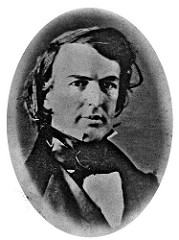
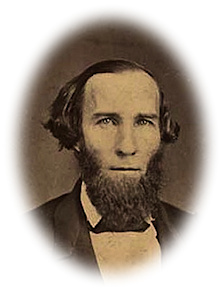
A likeness of Jones when he was editor and majority owner of the Daily Madisonian during President John Tyler’s administration.

April 30th.–Gen. Kearney has been brought here, having been taken on his way to Washington from Missouri. He manifested surprise at his captivity, and says that he is no enemy; being, I believe, Southern born. I learn it is the purpose of the governor to release him. And this may be a blunder. I fear about as much from ill-timed Southern magnanimity as from Northern malignity.

The Pawnee “scare” turned out just as I thought it would. She merely turned her nose up the river, and then put about and steamed away again. It may do good, however, if it stimulates the authorities to due preparation against future assaults from that quarter.

0 comments

The Governors of Maryland and Virginia

Civil War Day-by-Day

April 30, 1861;
The New York Herald

Not the smallest pretext is made, by the people of Maryland and Virginia, that those States are out of the confederacy. The Cotton State secessionists, have gone through certain forms of a declaration of independence, and systematically revolted against the federal government; but such has not been the case in the border States. What language, then, is strong enough to characterized the treason of executive States officers, like Governors Letcher and Hicks, who have, hitherto, professed to be Union men, but who, at the very moment when their loyalty would have been of service to the country, unblushingly make common cause with the enemy. The declarations and acts of Governors Magoffin, of Kentucky, Ellis, of North Carolina, Jackson, of Missouri, and Harris, of Tennessee, have been as unpardonably rebellious and improper, as those of their colleagues in Virginia and Maryland; but the former have always been blatant, savage, fire eating secessionists, without a particle of hypocritical respect for the laws, and nothing was to have been expected of them than that they would [continue reading…]
0 comments

The Families of the Volunteers

Civil War Day-by-Day

April 30, 1861;
The New York Herald

There is a good deal of uncertainty and some anxiety about the mode in which the families of the soldiers of the militia and volunteer companies are to be sustained out of the volunteer funds, during the absence of the men. Money has been, and no doubt will be liberally contributed for this purpose; but some plan should be promulgated by which such of the wives and children of the absent soldiers as may need support, can be regularly supplied with funds. It may be that but a few of our gallant volunteers leave their families wholly unprovided for; but it would be a great consolation to those who have to do so to know that the dear ones they leave behind them will be taken care of, and their wants supplied with absolute certainty and as little inconvenience as possible.
Would it not be well to organize a General Distributing Committee for this purpose, with branch offices located in different districts of the city? The Colonel of every regiment might leave a copy of his roll with this committee before his departure and the families of such soldiers as may need support could thus obtain a regular weekly or monthly allowance upon application at the pay office of their district. Or, in cases where funds have been raised for particular regiments, the same plan might be carried out. But we think it is important that before any more troops leave the city some specific mode of distributing the funds for the maintenance of the families of the volunteers should be decided upon and publicly announced.
0 comments

The New York Troops

Civil War Day-by-Day

Note: This particular news article—a document written in 1861—includes terms and topics that may be offensive to many today.   No attempt will be made to censor or edit 19th-century material to today’s standards.

April 30, 1861; The New York Herald
The following graphic and detailed account of the trip of the Seventh regiment is contained in a letter from a member of the regiment to a friend in this city:-
WASHINGTON, April 26, 1861.
FRIEND LEFERTSON—I suppose you will want to know how we got here. I could write a history about our journey.
Having left New York on Friday morning, it may seem strange to you that it takes, or took us, six days to come here. We had a fine time all along the New Jersey route; at every station crowds were drawn up to receive us by the booming of cannon, the goodbye of the old folks, little remembrances, such as rosettes, cards with red, white and blue ribbon attached, and all sorts of little things. We had a very pleasant trip all through to Philadelphia—we were there stopped.
It was our intention to proceed directly to Washington by rail; but the railroad company would not take us through. We heard of the attack made upon the Massachusetts and Philadelphia troops, and saw [continue reading…]
0 comments

Shaler’s Flexible Roller Skates

Frank Leslie’s Illustrated Newspaper

Frank Leslie’s Illustrated Newspaper, April 30, 1861

Shaler’s Flexible Roller Skates

Other images on the page are also in color.

I haven’t found any information on how these and other images in the Fort Sumter NM/Charles Pinckney NHS Curatorial Storage Facility came to be colored.

0 comments

Facts in Regard to Fortress Monroe

Richmond Enquirer
April 30, 1861;
Richmond Enquirer
We are indebted to the Norfolk Day Book for many of the following facts in regard to Fortress Monroe:
Fortress Monroe is a strongly fortified garrison situated on that point of land formed by the extreme western bank of the Chesapeake, that the extreme eastern bank of Hampton Roads, and at the junction of the two waters. It was discovered during the war of 1813-14, that Chesapeake Bay was the key to all the waters of Virginia and Maryland, and all who are at all familiar with the history of the country, will remember that British vessels came into Hampton Roads and not only took the town of Hampton, but [continue reading…]
0 comments

The Fort Reinforced

Civil War Day-by-Day
April 30, 1861;
Daily Times (Leavenworth, KS)
Companies E and F, Capts. Steele and Sully, arrived at the Fort, yesterday, from Kearney. There are about 170 men in the two companies, and Col. Miles is the commanding officer.
The volunteers from this city, stationed at the Fort, will now probably be relieved from duty there.
0 comments

It is true that this Government considers the early reduction of Fort Pickens as highly important…

War of the Rebellion: from the Official Records of the Union and Confederate Armies and Navies

WAR DEPARTMENT, C. S. A.,
Montgomery, April 30, 1861.

Brig. Gen. BRAXTON BRAGG, Commanding at Pensacola:

GENERAL: Apprehending that you might have construed the suggestions thrown out from this Department as to the erection of batteries on Santa Rosa Island, and as to the attack on Fort Pickens, into orders to proceed first to the occupation of that island, and next to an immediate bombardment and general assault of the fort, I write to say that as to both points I desire you will consult your own judgment and discretion. It is true that this Government considers the early reduction of Fort Pickens as highly important, but it is not desired that you will proceed until you shall feel assured of success through an entire confidence in your own arrangements, and the dispositions must be left with yourself, save when positively instructed.

Very respectfully,

L.P. WALKER.

0 comments

Civil War Day-by-Day

Civil War Day-by-Day

April 30, 1861

  • New York Yacht Club offers its vessels to the Federal government

A Chronological History of the Civil War in America1

  • Legislature of New Jersey convened in extra session; the Governor recommended the appropriation of $2,000,000 for war purposes.
  • Virginia State Convention passed an ordinance establishing the navy of Virginia and authorizing the banks to issue one and two dollar notes.

  1. A Chronological History of the Civil War in America by Richard Swainson Fisher, New York, Johnson and Ward, 1863
0 comments

Morris Island.

Civil War Day-by-Day

Charleston Mercury
April 29, 1861

The general appearance of this now well known and famous island has been greatly changed since the 13th April. The batteries bearing on Sumter have been removed, and many other arrangements warranted by our possession of Fort Sumter, have been completed.

The 17th Regiment, Col. JOHN CUNNINGHAM, will return to the city today, and the remnant of Col. GREGG’S (1st Regiment South Carolina Volunteers) command will be honorably discharged, they having served within a few weeks of their term. We learn that some of the men will proceed to Virginia. Fort Sumter is reported to be in fighting order. For general information, it may be as well to say that it will not cost half a million of dollars to put it in perfect order, as was reported by an officer of the late garrison.

0 comments