Floating Battery Hospital

Frank Leslie’s Illustrated Newspaper

I’ve come across some “new” images of the Charleston floating battery.
Interior of the Hospital Attached to the Floating Battery in Charleston Harbor, S. C.—From a Sketch by Our Special Artist in Charleston

Interior of the Hospital Attached to the Floating Battery in Charleston Harbor, S. C.—From a Sketch by Our Special Artist in Charleston

Frank Leslie’s Illustrated Newspaper, March 30, 1861

The hospital was a one-story wooden structure outfitted with ten beds and medical supplies to treat soldiers wounded aboard the battery.

0 comments

Exciting Scenes on Colin’s Dock

Frank Leslie’s Illustrated Newspaper
The War Movement—Exciting Scenes on Colin's Dock, New York During the Shipping of Munitions of War, &c, on the Steamships Atlantic, Baltic, and Illinois—Frank Leslie's Illustrated Newspaper,  April 20, 1861

The War Movement—Exciting Scenes on Colin’s Dock, New York During the Shipping of Munitions of War, &c, on the Steamships Atlantic, Baltic, and Illinois (April 13, 1861)—Frank Leslie’s Illustrated Newspaper,  April 20, 1861

0 comments

“I did not understand that he was talking to me as it was dark, until he cried Stand, and cocked his Musket.”—Horatio Nelson Taft

Diary of US patent clerk Horatio Nelson Taft.

SUNDAY 5

Went to ch this morning with whole family, some soldiers in the congregation in uniform. Cool day, wore my cloak. Chas was up to dine with us. Doct Eddy called in the afternoon with Mr Cramer. He is on a visit to the City, staid an hour or two. Went down to Willards, saw A B Williams, Mr Pomeroy, the new M.C. from our district, and other gentlemen at his room. On my return home, got challenged by the Sentinel at Franklin Square. I did not understand that he was talking to me as it was dark, until he cried Stand, and cocked his Musket. I was very near the point of his Bayonet then, but backed down and went another way home.


The three diary manuscript volumes, Washington during the Civil War: The Diary of Horatio Nelson Taft, 1861-1865, are available online at The Library of   Congress.

0 comments

This is an awful lazy life we lead here.—Charles Wright Wills, (8th Illinois Infantry)

Civil War Day-by-Day

Cairo, May 5, 1861, Sunday, 11 a.m.

The bells are just ringing for church. I intended going, but it is such hard work getting out of camp that I concluded to postpone it. Anyway, we have service in camp this p.m. This is an awful lazy life we lead here. Lying down on our hay constitutes the principal part of the work. As our routine might be of interest to you, I will give it. At 5 a.m. the reveille is sounded by a drum and fife for each regiment. We arise, fold our blankets in our knapsacks and prepare to march. We then “fall in,” in front of our quarters for roll-call; after which we prepare our breakfast and at the “breakfast call” (taps of the drum at 7) we commence eating; and the way we do eat here would astonish you. At 9 a.m. we fall in for company drill. This lasts one hour. Dinner at 12. Squad drill from 1 to 3 and supper at 5:30. At 6 p.m. the whole regiment is called out for parade. This is merely a review by the colonel, and lasts not more than 30 minutes and often but 15. After 8 p.m. singing and loud noises are stopped; at 9:30 the tattoo is beat when all are required to be in quarters, and at three taps at 10 p.m. all lights are put out, and we leave things to the sentries. Our company of 77 men is divided into six messes for eating. Each mess elects a captain, and he is supreme, as far as cooking and eating are concerned. Our company is considered a crack one here and we have had the post of honor assigned us, the right of the regiment, near the colors. Our commanders, I think, are anticipating some work here, though they keep their own counsels very closely. They have spies out in all directions, down as far as Vicksburg. I think that Bradley’s detective police of Chicago are on duty in this vicinity. We also have two very fleet steamers on duty here to stop boats that refuse to lay to, and to keep a lookout up and down the Mississippi river. Yesterday, p.m., I noticed considerable bustle at headquarters which are in full view of our quarters, and at dark last night 20 cartridges were distributed to each man, and orders given to reload revolvers and to prepare everything for marching at a minute’s notice, and to sleep with our pistols and knives in our belts around us. That’s all we know about it though. We were not aroused except by a shot at about 2 this morning. I heard a little while ago that it was a sentinel shooting at some fellow scouting around. The Rebels have a host of spies in town but I think they are nearly all known and watched. The men confidently expect to be ordered south shortly. Nothing would suit them better. I honestly believe that there is not a man in our company that [continue reading…]

0 comments

“It is no time to stand on ceremony or antecedents. The post of duty is the post of honor.”—Rebel War Clerk

Civil War Day-by-Day
A likeness of Jones when he was editor and majority owner of the Daily Madisonian during President John Tyler’s administration.

MAY 5th. –President Tyler has placed in my hands a memorial to President Davis, signed by himself and many of the members of the Convention, asking appropriate civil employment for me in the new government. I shall be content to obtain the necessary position to make a full and authentic Diary of the transactions of the government. I could not hope for any commission as a civil officer, since the leaders who have secured possession of the government know very well that, as editor, I never advocated the pretensions of any of them for the Presidency of the United States. Some of them I fear are unfit for the positions they occupy. But the cause in which we are embarked will require, to be successful, the efforts of every man. Those capable of performing military duty, must perform it; and those physically incapable of wielding the bayonet and the sword, must wield the pen. It is no time to stand on ceremony or antecedents. The post of duty is the post of honor. In the mighty winnowing we must go through, the wheat will be separated from the chaff. And many a true man who this day stands forth as a private, will end as a general. And the efficient subordinate in the departments may be likewise exalted if he deserves it, provided the people have rule in the new confederacy. If we are to have a monarchy for the sake of economy and stability, I shall submit to it in preference to the domination of the Northern radicals.

0 comments

Key West: The Union man to-day is the disunionist of the morrow.

War of the Rebellion: from the Official Records of the Union and Confederate Armies and Navies

HEADQUARTERS TROOPS AT KEY WEST,
Fort Taylor, May
5, 1861.

Col. L. THOMAS, Adjutant-General U. S. Army:

COLONEL: The Illinois, from Fort Pickens, is in coaling, and knowing the anxiety of the Government with respect to the insulated forts, Taylor and Jefferson, I communicate direct. This key is in an excellent state for defense. The few suggestions given by me to Captain Meigs are all that will be required until winter. The more men the more disease. I have used my general authority to mount a section of Light Company K, and expect acclimated horses from the Havana in a few days, cheap and hardy. With these the island can be patrolled, vedettes kept up, and light guns moved rapidly.

The sentiment on the key is strictly selfish. The Union man to-day is the disunionist of the morrow. My effort has been to make it the interest of the citizens to be loyal, to encourage the Union men, and to lift up the faint-hearted. The judiciary (Federal) have had but little to act upon. I call upon them officially, indirectly. Brought up and resident with the citizens, it might at this time compromise. I have made myself acquainted with the respectable inhabitants under the same rules and formalities which exist elsewhere. The effect has been to open the trial sooner than might have been anticipated. Everything which should have been for sale, after a refusal, when Captain Meigs passed by on the Atlantic North, is now given–coal, water, wharfage. I am opening propositions through Colonel Patterson, naval officer, to buy out for the Government at reduced rates water lines, &c. I have asked from the mayor of Key West lists of the inhabitants, extra mouths, &c., which will have to be fed by the United States. Extraneous people will have to leave. Now there are not ten barrels of flour for sale on the island. Military organizations have been directed to make to me (ex officio) their rolls. No more troops are needed; water is scarce, not doubtful, and the command is equal to every occasion. My position has required me to take responsibility. This I never shrink from. I have the confidence of my officers and the loyalty of the rank and file. Indorse my recommendations, as they are moderate. This place is safe.

I am, colonel, very respectfully, your most obedient servant,

WM. H. FRENCH,
Brevet Major, U. S. Army, Commanding.

0 comments

Montgomery—”I have rarely seen a more dull, lifeless place; it looks like a small Russian town in the interior.”—William Howard Russell

My Diary North and South – William Howard Russell

May 5th.—Very warm, and no cold water, unless one went to the river. The hotel baths were not promising; This hotel is worse than Mill’s House or “Willard’s. The feeding and the flies are intolerable. One of our party comes in to say that he could scarce get down to the hall on account of the crowd, and that all the people who passed him had very hard, sharp bones. He remarks thereupon to the clerk at the bar, who tells him that the particular projections he alludes to are implements of defence or offence, as the case may be, and adds, “I suppose you and your friends are the only people in the house who haven’t a bowie-knife, or a six-shooter, or Derringer about them.” The house is full of Confederate Congress men, politicians, colonels, and placemen with or without places, and a vast number of speculators, contractors, and the like, attracted by the embryo government. Among the visitors are many filibusters, such as Henningsen, Pickett, Tochman, Wheat*. [*Since killed in action.] I hear a good deal about the association called the Knights of the Golden Circle, a Protestant association for securing the Gulf provinces and states, including—which has been largely developed by recent events—them in the Southern Confederacy, and creating them into an independent government.

Montgomery has little claims to be called a capital. The streets are very hot, unpleasant, and uninteresting. I have rarely seen a more dull, lifeless place; it looks like a small Russian town in the interior. The names of the shopkeepers indicate German and French origin. I looked in at one or two of the slave magazines, which are not unlike similar establishments in Cairo and Smyrna. A certain degree of freedom is enjoyed by some of the men, who lounge about the doors, and are careless of escape or liberty, knowing too well the difficulties of either.

It is not in its external aspects generally that slavery is so painful. The observer must go with Sterne, and gaze in on the captives’ dungeons through the bars. The condition of a pig in a sty is not, in an animal sense, anything but good. Well fed, over fed, covered from the winds and storms of heaven, with clothing, food, medicine provided, children taken care of, aged relatives and old age itself succored and guarded—is not this—? [continue reading…]

0 comments

Civil War Day-By-Day

Civil War Day-by-Day

May 5, 1861

A Chronological History of the Civil War in America1

  • Gen. Butler, with a Union force, took possession of the Relay House, near Baltimore.
  • The 20 days of grace allowed by the President’s proclamation expired.

  1. A Chronological History of the Civil War in America by Richard Swainson Fisher, New York, Johnson and Ward, 1863
0 comments

To My Patrons.

Civil War Day-by-Day

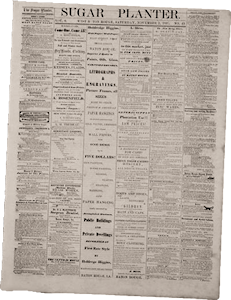
Sugar Planter
(West Baton Rouge, LA)
May 4, 1861

With the Delta Rifles of this parish, I leave for New Orleans, early next week, and, from thence, wherever ordered. The Sugar Planter office will, therefore, be closed until my return. I hope that those who have so liberally bestowed their patronage upon me, heretofore, will make reasonable allowance for the interim that must occur in the publication of my paper. It shall be resumed at the earliest possible moment. Hoping to return again amongst my many warm friends, in this part of the State. I bid them all farewell, trusting that Providence will shower its richest blessings upon the kind-hearted, generous people of East and West Baton Rouge.
Henry J. Hyams.
0 comments

The Nurses for Pensacola.

Civil War Day-by-Day

Savannah Republican
(Georgia)
August 7, 1862,

On Saturday the ladies who are to devote their services to the sick and wounded from the siege of Fort Pickens will take their departure by the Mobile boat. Mrs. Nicholson, whose residence is 210 Lafayette (late Hevis) streets, has a letter from Governor Moore to the commanding General, and will doubtless receive a hearty welcome from both rank and file. We heard that some estimable ladies connected with the Military Fair were raising a small sum of money to defray their expenses over, and only hope that the [illegible] is correct. We reiterate our remark of [illegible] that no more laudable object can [illegible] furthered at this time. (N. O. Crescent.)

0 comments

Why an Irishman Will not Volunteer.

Civil War Day-by-Day
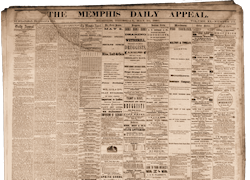
Memphis Daily Appeal
Memphis, Ten
May 4, 1861
 
To the Editor of the New York Daily News:
I am an Irishman. I have been asked why I did not volunteer and march to put down the rebellion in the South. May I give three of my reasons through your columns? They are
I. I was a volunteer in our army in Mexico, and while I was there, men who now control and urge this civil war, were at home, and opposing the war against a foreign foe. Seward, Greeley, Corwin, Lincoln and Beecher, etc., denounced the war and the men who were carrying it on.
II. A few years ago, the Know-Nothing party seemed to be sweeping the whole country before them, and State after State, Massachusetts and New York even joined their ranks.
The Irishman and the German, the Catholic, was threatened with a withdrawal of the rights and equality which the Constitution and the laws secured to them.
Where, then, was the first bold, manly and successful uprising in the States for the foreign born citizens, and the rights of conscience for the Catholic?
It was in Old Virginia!
III. If I deny the right of the Southern people to state their grievances, and to judge when they may set up a Government themselves, how can I hereafter sustain Ireland and Hungary when they shall decide to establish separate governments for themselves, and to stand to their arms in the cause?I will stand on the defensive, against the South, if they attempt to invade us with a view to compel the Northern States to break up their Union, but I ask my Irish and American brethren to excuse me in their civil war, as it appears now.
Will you, in your columns, Mr. Editor, answer and refute my reasons? If I am wrong, show it to me, and I will retract. This is a land of free press and free discussion.
“County Cork.”
New York, April 24, 1861.
0 comments

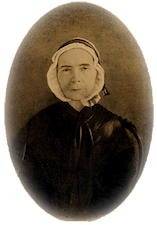
Our friends and neighbors have left us. Every thing is broken up.—Judith White McGuire

Diary of a Southern Refugee During the War by Judith White McGuire

At Home, May 4, 1861.—I am too nervous, too wretched to-day to write in my diary, but that the employment will while away a few moments of this trying time. Our friends and neighbors have left us. Every thing is broken up. The Theological Seminary is closed; the High School dismissed. Scarcely any one is left of the many families which surrounded us. The homes all look desolate; and yet this beautiful country is looking more peaceful, more lovely than ever, as if to rebuke the tumult of passion and the fanaticism of man. We are left lonely indeed; our children are all gone—the girls to Clarke, where they may be safer, and farther from the exciting scenes which may too soon surround us; and the boys, the dear, dear boys, to the camp, to be drilled and prepared to meet any emergency. Can it be that our country is to be carried on and on to the horrors of civil war? I pray, oh how fervently do I pray, that our Heavenly Father may yet avert it. I shut my eyes and hold my breath when the thought of what may come upon us obtrudes itself; and yet I cannot believe it. It will, I know the breach will be healed without the effusion of blood. The taking of Sumter without bloodshed has somewhat soothed my fears, though I am told by those who are wiser than I, that men must fall on both sides by the score, by the hundred, and even by the thousand. But it is not my habit to look on the dark side, so I try hard to employ myself, and hope for the best. To-day our house seems so deserted, that I feel more sad than usual, for on this morning we took leave of our whole household. Mr. _______ and myself are now the sole occupants of the house, which usually teems with life. I go from room to room, looking at first one thing and then another, so full of sad associations. The closed piano, the locked bookcase, the nicely-arranged tables, the formally-placed chairs, ottomans and sofas in the parlor! Oh for some one to put them out of order! And then the dinner-table, which has always been so well surrounded, so social, so cheerful, looked so cheerless to-day, as we seated ourselves one at the head, the other at the foot, with one friend,—but one,—at the side. I could scarcely restrain my tears, and but for the presence of that one friend, I believe I should have cried outright. After dinner, I did not mean to do it, but I could not help going into the girls’ room, and then into C.’s. I heard my own footsteps so plainly, that I was startled by the absence of all other sounds. There the furniture looked so quiet, the beds so fixed and smooth, the wardrobes and bureaux so tightly locked, and the whole so lifeless! But the writing-desks, work-boxes, and the numberless things so familiar to my eyes! Where were they? I paused, to ask myself what it all meant. Why did we think it necessary to send off all that was so dear to us from our own home? I threw open the shutters, and the answer came at once, so mournfully! I heard distinctly the drums beating in Washington. The evening was so still that I seemed to hear nothing else. As I looked at the Capitol in the distance, I could scarcely believe my senses. That Capitol of which I had always been so proud! Can it be possible that it is no longer our Capitol? And are our countrymen, under its very eaves, making mighty preparation to drain our hearts’ blood? And must this Union, which I was taught to revere, be rent asunder? Once I thought such a suggestion sacrilege; but now that it is dismembered, I trust it may never, never be reunited. We must be a separate people—our nationality must be different, to insure lasting peace and good-will. Why cannot we part in peace?

0 comments

Write.

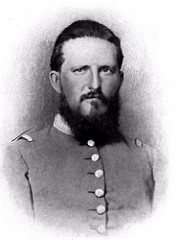
Elisha Franklin Paxton – Letters from camp and field while an officer in the Confederate Army

Harper’s Ferry, May 4, 1861.

Write very often. Nothing can be so interesting to me as your letters. Some of the other wives, you think, get more letters than you do, and you women measure your husband’s love by the number and length of their letters. I will write to you, Love, about once a week and half a page at a time. I cannot with justice to my eyes write longer letters. This will be handed to you by Maj. Preston, who will tell you everything you want to know. Kiss the children for me, and for yourself take my best love.

0 comments

Departure of the Pelicans.

Civil War Day-by-Day

Sugar Planter
(West Baton Rouge, LA)
May 4, 1861

This fine body of volunteers left Baton Rouge on Monday last under command of Capt. W. F. Tunnard, for the wars. We never witnessed a greater turn out than was seen on the levee while the company awaited the arrival of the steamer Cotten, to embark. Their parting from their wives, children, sweethearts and friends was a most affecting scene. Many eyes were moist that day with tears that, perhaps, for years had not felt the outpourings of an overcharged heart. As long as the steamer remained in sight, handkerchiefs were waving them a farewell, while many a “good bye, God bless you,” were given long after they were out of hearing. The Hunter Rifles were on board on their way to New Orleans—a fine, stalwart body of men numbering 160 rank and file. We understand the Creole Guards, and National Guards will leave Baton Rouge next week.

0 comments

The War Movement

Frank Leslie’s Illustrated Newspaper
The War Movement—Unloading of Adam's Mammoth Express Wagon, Containing Munitions of War for the Ships Chartered by the Government at Collins' Dock, Foot of Canal St., N. Y.—Harper's Weekly April 20, 1861

The War Movement—Unloading of Adam’s Mammoth Express Wagon, Containing Munitions of War for the Ships Chartered by the Government at Collins’ Dock, Foot of Canal St., N. Y.—Frank Leslie’s Illustrated Newspaper,  April 20, 1861


0 comments

Attack on Texas.

Civil War Day-by-Day

Standard
Clarksville, Tx
May 4, 1861,

It will be seen by the news from Indianola, that the U. S. troops encamped at Green Lake, took possession of that town on the 22d April, as we presume without opposition, and by surprise. Before this, these intruders have been captured or laid in a heap. No more time was necessary to accomplish their destruction of capture, than the shortest possible time in which our men could converge from the surrounding country.

Troops are volunteering here, in response to Governor Clark’s call, and expect to do service immediately.

0 comments

Letters of Marque

War of the Rebellion: from the Official Records of the Union and Confederate Armies and Navies
New Orleans, May 4, 1861.
Dear Sir: Since my interview with you, I have made arrangements to prosecute the contemplated enterprise on a large scale. And as in the nature of things the Gulf will soon be cleared of Yankee merchantmen, my intention is to cripple Northern commerce on foreign seas.
To do this effectually I must be in a situation to do it with dispatch. I wish therefore some 20 or 30 letters of marque (accompanied with instructions) sent me with the name of the ship and commander left blank.
As soon as received they will be dispatched by intelligent messengers to Europe with instructions to put ships in commission so soon as we are recognized abroad.
It is alike unnecessary and imprudent to go into detail, lest by accident this letter might fall into improper hands. The President knows me well enough to tell you that I am incapable of abusing the trust I ask. And as Mr. Lincoln seems disposed to prosecute his war like a vandal, it is our duty to cripple his resources and impoverish his people by all the means known to honorable warfare. Please telegraph me on receipt of this.
Yours, truly,
W. R. Miles.
Hon . R. Toombs,
Montgomery, Ala.
0 comments

We want to fit out the Nashville…

War of the Rebellion: from the Official Records of the Union and Confederate Armies and Navies
Charleston, May 4 , 1861.
Dear Sir: I enclose a letter which I have addressed to the Secretary of the Navy; if this is the proper department, please forward for me.
We want to fit out the Nashville and can give her an armament that will, with her speed, make her quite formidable, but desire to give it as little publicity as possible.
Yours, respectfully,
C. H. Stevens.
Hon. C. G. Memminger,
Secretary Treasury.
_________
Charleston, May 4, 1861.
Dear Sir: Will you be good enough to give me such information as will enable parties here to take out letters of marque for a steamer of large class, which can be sent out now on short notice with such armament as will make her very effective not only against the commerce but the navy vessels of the United States. Your early attention will greatly oblige.
Respectfully,
C. H. Stevens
Hon. S. R. Mallory,
Secretary Navy, Montgomery.
0 comments

Samuel Ryan Curtis

Library of Congress
Civil War Portraits #011
Samuel Ryan Curtis (February 3, 1805 – December 26, 1866) was an American military officer , and one of the first Republicans elected to Congress. He was most famous for his role as a Union Army general in the Trans-Mississippi Theater of the American Civil War, especially for his victories at the Battles of Pea Ridge in 1862 and Westport in 1864.

Samuel Ryan Curtis (February 3, 1805 – December 26, 1866) was an American military officer, and one of the first Republicans elected to Congress. He was most famous for his role as a Union Army general in the Trans-Mississippi Theater of the American Civil War, especially for his victories at the Battles of Pea Ridge in 1862 and Westport in 1864.

He was a supporter of eventual President Abraham Lincoln, and was considered for a cabinet position in the Lincoln administration. However, after the Civil War broke out, Curtis was appointed colonel of the 2nd Iowa Infantry on June 1, 1861, prompting him to resign his congressional seat on August 4 of that year.  He was subsequently promoted to brigadier general, with the promotion backdated to May 17, 1861.

After organizing the chaos in St. Louis, Missouri, Curtis was given command of the Army of the Southwest on December 25, 1861, by Maj. Gen. Henry W. Halleck. The Army originally consisted of three divisions, the 1st commanded by Brig. Gen. Franz Sigel, the 2nd by Brig. Gen. Alexander Asboth, and the 3rd by Col. Jefferson C. Davis. However, Sigel, a native German who held significant influence amongst the many German immigrants in the army, threatened to resign over having not been appointed to command of the army himself. Curtis subsequently gave him overall command of the first two divisions, consisting mainly of German immigrants, while creating a 4th Division commanded by Col. Eugene A. Carr. (Read more at Wikipedia)

Image information:

Title: Samuel R. Curtis, Representative from Iowa, Thirty-fifth Congress, half-length portrait
Creator(s): Vannerson, Julian, 1827-, photographer
Date Created/Published: 1859
Medium: 1 photographic print : salted paper ; 19.7 x 14.3 cm.
Reproduction Number: LC-DIG-ppmsca-26830 (digital file from original item)
Call Number: Illus. in JK1012.M35 1859 (Case X) [P&P]
Repository: Library of Congress Prints and Photographs Division Washington, D.C. 20540 USA
Notes:
….Illus. in: McClees’ gallery of photographic portraits of the senators, representatives & delegates of the thirty-fifth Congress… Washington: McClees & Beck, [1859], page 291.
….Each item includes subject’s original signature in ink.
….Title devised by Library staff based on name provided in book’s index.

https://www.loc.gov/pictures/item/2010649430/

___________
Mike’s notes:

Note – This image has been digitally adjusted for one or more of the following:
– fade correction,
– color, contrast, and/or saturation enhancement
– selected spot and/or scratch removal
– cropped for composition and/or to accentuate subject

0 comments

Indians Quiet—Men in North Texas against the South Leaving

Civil War Day-by-Day

Austin State Gazette
Texas
May 4, 1861

Capt. H. Harrison and J. H. Earle, Esq., of Waco, were in our city the past week. They report the Indians as quiet at present. We learn from Capt. Harrison that the men in Northern Texas who have been opposing the action of Texas in favor of the South, and who have had secret complicity with the Black Republicans, are now leaving the State. Some one hundred and twenty wagons were seen wending their way to the North.

0 comments

Arms and ammunition will be supplied to troops at the rendezvous’.

War of the Rebellion: from the Official Records of the Union and Confederate Armies and Navies
Confederate States of America,
War Department, Ordnance Office

Montgomery, May 4, 1861.
Honorable Secretary of War:
General: Permit me to suggest that in order to relieve the central Government of the multiplied calls made upon it for arms, ammunition, &c. , the Governors of States be notified that arms and ammunition will be supplied to troops called out at the points where the troops are to rendezvous for active service. Let the troops be notified beforehand by the State authorities to equip themselves with such temporary knapsacks, haversacks, and canteens as each individual can prepare for himself. The central Government will supply these of good quality at the place of rendezvous as fast as they can be made. This will in a great measure prevent the perplexing and mischievous requisitions of Governors of States on the arsenals .
Respectfully, your obedient servant,
J. GORGAS,
Major, &c.


0 comments

Ladies for the Country.

Civil War Day-by-Day

Weekly Arkansas Gazette
Little Rock
May 4, 1861

The patriotic ladies of Little Rock have converted the Theatre Hall into a manufactory of clothes for our citizen soldiery. We dropped in on Thursday evening and saw them engaged in their patriotic work. They had made two hundred round jackets and over seventy-five pairs of pants for soldiers who are getting ready to go to Virginia. As fast as soldiers arrive who need clothing they will be supplied. While this is an evidence of the spirit of loyalty to the South which pervades, it also bears testimony, of such thing were necessary, to the universal patriotism of woman—that she is first to espouse the cause of the country and last to abandon it.

0 comments

The Mary Sharp College and the War.

Civil War Day-by-Day
1860s newsprint

Tennessee Baptist,
May 4, 1861,

 We have just returned from Winchester. On our way there we met with Prof. McCall, and some students of Union University returning home in the South, and learned from them the sorrowful news, that the Union University had been disbanded, and would not resume its studies before next September. While in Winchester, we learned that the Boys’ school in that place had been dismissed till more peaceful times would allow closer attention to the duties of the school room. We heard the question asked again and again, will not Mary Sharp be obliged to suspend? Will not the war destroy our great and unequalled college for the education of our daughters? We answered NO. So far from it, the war will build it up. We say so because we think so, and we think so for the following reasons.
1st. We have been witness of the fact that while other schools in Tennessee and other States have been diminished in numbers, and some of them obliged to suspend altogether, the number of pupils in the Mary Sharp has been regularly increasing even up to the present month, April, 1861. New scholars have been coming in almost every week, and there are more students on the seats to-day than there have ever been since the school was organized.
2d. We have been witness of the fact, that although a few young ladies have been taken home on account of the present excitement, there have a larger number come to take their places, and these from the Confederate States.
3d. We have been witness of the fact, that from the very first, the sympathies of the President and the Faculty of the school, as well as of the citizens of Winchester, have been with the South, with the Confederate States. Here, so far as we know, was the first volunteer company raised for the Confederacy in the State of Tennessee. We think it was the first offered and accepted by President Davis. We saw the flag presented by the young ladies of Mary Sharp. Heard the address full of noble, heart-stirring words, which accompanied its presentation—and a day or two afterwards saw that beautiful banner floating in the College yard, while [continue reading…]
0 comments

The Confederate Flag Waves Over The Globe.

Civil War Day-by-Day

Daily Constitutionalist
Augusta, Georgia,
May 2, 1861

Some lady boarders at the Globe Hotel, in testimony of their appreciation of the exertions of Mr. Mullarkey in behalf of the volunteers, last evening presented to him a beautiful Confederate flag. Of the speeches made on the occasion, we were unable to obtain a correct report, but we can personally testify that the flag was duly saluted with a volley from champaign bottles. The flag is to be displayed this morning. Long may it wave.

0 comments

Party—The stars and stripes were displayed, Union songs sung, and other demonstrations of patriotism made, clearly proving that their youthful hearts beat true to their country.

Civil War Day-by-Day

Daily Times
(Leavenworth, KS)
May 4, 1861

A very pleasant juvenile party came off yesterday at Mr. Heath’s, on the occasion of little Lizzie Heath’s birthday. Quite a number of her young associates were present to extend to her their congratulations and well wishes, and to engage in the juvenile sports of the occasion. The stars and stripes were displayed, Union songs sung, and other demonstrations of patriotism made, clearly proving that their youthful hearts beat true to their country. We gratefully acknowledge their remembrance of the printers.

0 comments