The Trumpet Signal.

News of the Day

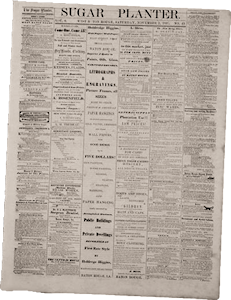
Sugar Planter
West Baton Rouge, Louisiana
May 18, 1861

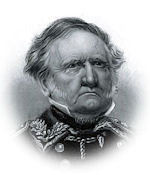
The U. S. government has advised the commanding officers of regular regiments (and the advice applies to all others) to increase battalion and field drill, were the small arms’ exercise to be neglected thereby. “Soldiers must understand the trumpet. Human voices cannot be intelligible on the field of battle. There is probability that in all cases openfighting will be exclusively announced by the brazen trumpet.” Gen. Scott is about to issue a general order on the subject.

0 comments

“…the Mediterranean will be entirely exposed to these marauders.”

War of the Rebellion: from the Official Records of the Union and Confederate Armies and Navies

Report of Flag-Officer Bell, U. S. Navy, commanding U. S. naval forces, Mediterranean Sea, of proposed capture of American merchant ships by Confederate privateers in those waters.

U. S. Flagship Richmond,
Genoa, May 18, 1861.
Sir: A gentleman came on board to see me to day by the name of Augustus Collingbridge, late a captain in the British East India service, who states that a few days since, while at Frankfort on the Main, he was waited on by a Spaniard, agent for the firm of Garcia & Co., bankers of Barcelona, and an offer made to him to furnish commissions for privateers on the part of the Southern Confederate States. He was informed by this agent that, as the United States squadron had been recalled and would soon leave the Mediterranean, there would be a fine opportunity of capturing all the American merchant ships in that sea.
Captain Collingbridge thought, from information that he had received, that the American consul at Cadiz would not object to promote this affair, and that the American consul at Genoa was in the same category. As both these gentlemen come from a section of the country noted for its filibustering propensities, and from what I have seen and heard of them myself, I have no doubt there is some foundation for this suspicion.
In ten days this ship will be on the Atlantic, and then the Mediterranean will be entirely exposed to these marauders. There are now six American vessels in this port. I left several at Leghorn, and there are probably a number at Marseilles and Malaga.
I have the honor to be, very respectfully, yours,
Chas. H. Bell,
Flag-Officer, Commanding U. S. Naval Forces, Mediterranean.
Hon. Gideon Welles,
Secretary of the Navy.
0 comments

Hernando Made Gunpowder.

News of the Day

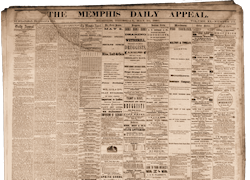
Memphis Daily Appeal
Memphis, Tennessee,
May 18, 1861

We yesterday received a very satisfactory specimen of gunpowder which was made by Mr. W. White in the town of Panola, Miss. We learn from Mr. White that it is his intention to make a hundred pounds a day, if the necessary supply of saltpetre can be had. We see it stated that in East Tennessee this material is being worked, and that in Alabama vigorous efforts are making to work the immense deposit that exists in one portion of the State. Gunpowder will soon be an article of plentiful production and ready use in the South.

0 comments

Rebel War Clerk

Civil War Day-by-Day
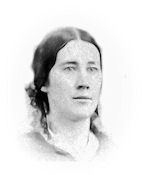
A likeness of Jones when he was editor and majority owner of the Daily Madisonian during President John Tyler’s administration.

MAY 18th. – To-day I had another interview with the President. He advised me to see the Secretary of the Treasury without delay; but the Treasury would not answer so well for my Diary.

0 comments

Husband what we have.

War of the Rebellion: from the Official Records of the Union and Confederate Armies and Navies
Confederate States Of America, Treasury Dept.,
Montgomery, May 18, 1861.
Hon. L. P. Walker,
Secretary of War:
Dear Sir: I receive intimations from New Orleans and other quarters that we can get no more money at present on the Confederate loan. This makes it an urgent necessity to husband what we have. In devising plans to that end one of the most effective would be to instruct your commissaries and quartermasters to make purchases on time and payable in bonds. Sellers constantly accept from the States and from large factors arrangements whereby they render in accounts once in six months and then take pay in time notes. Now, there is no reason that I am aware of why this cannot be done by our Government, unless it arise from large sums or from the expectation of receiving cash from the Government. I am ready to co-operate in any measures to produce the desired result, and would give your officers any benefit which my own reflections or experience could add.
With much respect, your obedient servant,
C. G. MEMMINGER,
Secretary of the Treasury.
0 comments

Diary of Elisha Franklin Paxton

Elisha Franklin Paxton – Letters from camp and field while an officer in the Confederate Army


Harper’s Ferry, May 18,1861.

My wife, I have no sweeter word than this to call the dear little woman at home, with whom my happiest reminiscences of the past and fondest hopes of the future have ever been associated. (You speak of dreams; I had one of you, that we were married again, and thought we had a very nice time of it.) We have moved from our station in the mountain back to town. Here we have very pleasant quarters, in which I think it likely we will remain until we have a battle. When this will be, it is impossible to say, but is not expected immediately. I received the green flannel shirt and put it on for the first time to-day. It is very comfortable and valued the more because made by the hands of my dear wife. Present my kind regards to John (the gardener) and hand him the enclosed order on Wm. White. Present my kindest regards to Jack, Jane, and Phebe (slaves). Kiss the children for me, and for yourself take a husband’s best love.

0 comments

Civil War Day-By-Day

Civil War Day-by-Day

May 18, 1861

A Chronological History of the Civil War in America1

  • Rebel batteries at Sewell’s Point, Va., dislodged. This was the first offensive operation of the Government against the rebels.
  • Arkansas admitted as a State of the Confederate States of America.

  1. A Chronological History of the Civil War in America by Richard Swainson Fisher, New York, Johnson and Ward, 1863
0 comments

“All chance for fight is given up here.”

Civil War Day-by-Day

May 17, 1861.

Sun and dust. Hot as ___ the deuce. Lots of drilling and ditto fun. Suits me to a T. Am going in for three years as quick as I can. All chance for fight is given up here. We are getting sharp. We trade off our extra fodder for pies, milk and good things.

It’s too hot to write. I am going to sleep.

0 comments

“…no occasion for the services of the four regiments of militia…”

War of the Rebellion: from the Official Records of the Union and Confederate Armies and Navies
War Department,
Washington, May 17, 1861.
His Excellency Thomas H. Hicks,
Governor of Maryland:
Dear Sir: I have the honor to acknowledge the receipt of your communications of the 13th and 14th instant, informing this Department that,
In pursuance of the requisition of the President of the United States of the 15th day of April, I (you ) have issued orders to Brig. Gen. John R . Kenly , of the Third Brigade, Maryland Militia (Baltimore ), to take command of the four regiments of Maryland militia which I (you ) have ordered to be called out to be mustered into the service of the United States.
It becomes my duty to inform you in reply that the United States Government has now no occasion for the services of the four regiments of militia for three months service called for by the proclamation of the President of the 15th of April last, and does not desire said regiments to be mustered into service now. It is proper that I should add, for your information, that the President has commissioned the Hon. James Cooper, of Frederick, to accept the services of volunteers to serve for three years, or during the war, to make up the quota assigned to Maryland under his second proclamation, and that in pursuance of said commission he has already accepted a sufficient number of companies to fill that quota, and reported to this Department their readiness to be mustered into the service.
I am, sir, very respectfully,
SIMON CAMERON,
Secretary of War.
0 comments

CSA to admit North Carolina and Tennessee “on a certain condition.”

War of the Rebellion: from the Official Records of the Union and Confederate Armies and Navies

AN ACT to admit the State of North Carolina into the Confederacy on a certain condition.

The State of North Carolina having adopted measures looking to an early withdrawal from the UnitedStates and to becoming in the future a member of this Confederacy, which measures may not be consummated before the approaching recess of Congress: Therefore,
The Congress of the Confederate States of America do enact, That the State of North Carolina shall be admitted a member of the Confederate States of America, upon an equal footing with the other States, under the Constitution for the Provisional Government of the same, upon the condition that the convention of said State soon to assemble shall adopt and ratify said Constitution for the Provisional Government of the Confederate States, and shall transmit to the President of the Confederate States, before the reassembling of Congress, through the Governor of said State, or some other proper organ, an authentic copy of the act or ordinance of said convention so adopting and ratifying said Provisional Constitution; upon the receipt whereof the President, by proclamation, shall announce the fact; whereupon, and without any further proceeding on the part of Congress, the admission of said State into this Confederacy, under said Constitution for the Provisional Government, shall be considered as complete, and the laws of this Confederacy shall thereby be extended over said State as fully and completely as over the other States now composing the same.
Approved May 17, 1861.
__________

AN ACT to admit the State of Tennessee into the Confederacy on a certain condition.

The State of Tennessee having adopted measures looking to an early withdrawal from the United States and to becoming in the future a member of this Confederacy, [continue reading…]
0 comments

“Things are looking to an attack upon Norfolk, but nothing is known to the public.”—Horatio Nelson Taft

Diary of US patent clerk Horatio Nelson Taft.

FRIDAY 17

Another fine day. The Michigan Regt got in last night, Col Wilcox. Young Saml Androus is among them from Coldwater. He called upon me at the office this morning. The Regt is for the Present quartered at Woodwards Building. Attended the Parade of the 12th with Wife and Doct Everitt & Lady. Afterwards I went on to the Av’e, and was at Willards. Hotel full. Things are looking to an attack upon Norfolk, but nothing is known to the public. At “Drum beat” (1/2 past 9.) the soldiers must all be in quarters.


The three diary manuscript volumes, Washington during the Civil War: The Diary of Horatio Nelson Taft, 1861-1865, are available online at The Library of   Congress.

0 comments

Meets President Davis, who tells him that work in the War Department “would be only temporary indeed.”—Rebel War Clerk.

Civil War Day-by-Day
A likeness of Jones when he was editor and majority owner of the Daily Madisonian during President John Tyler’s administration.

MAY 17th. –Was introduced to the President to-day. He was overwhelmed with papers, and retained a number in his left hand, probably of more importance than the rest. He received me with urbanity, and while he read the papers I had given him, as I had never seen him before, I endeavored to scrutinize his features, as one would naturally do, for the purpose of forming a vague estimate of the character and capabilities of the man destined to perform the leading part in a revolution which must occupy a large space in the world’s history. His stature is tall, nearly six feet; his frame is very slight and seemingly frail; but when he throws back his shoulders he is as straight as an Indian chief. The features of his face are distinctly marked with character; and no one gazing at his profile would doubt for a moment that he beheld more than an ordinary man. His face is handsome, and his thin lip often basks a pleasant smile. There is nothing sinister or repulsive in his manners or appearance; and if there are no special indications of great grasp of intellectual power on his forehead and on his sharply defined nose and chin, neither is there any evidence of weakness, or that he could be easily moved from any settled purpose. I think he has a clear perception of matters demanding his cognizance, and a nice discrimination of details. As a politician he attaches the utmost importance to consistency —and here I differ with him. I think that to be consistent as a politician, is to change with the circumstances of the case. When Calhoun and Webster first met in Congress, the first advocated a protective tariff and the last opposed it. This was told me by Mr. Webster himself, in 1842, when he was Secretary of State; and it was confirmed by Mr. Calhoun in 1844, then Secretary of State himself. Statesmen are the physicians of the public weal; and what doctor hesitates to vary his remedies with the new phases of disease?

When the President had completed the reading of my papers, and during the perusal I observed him make several emphatic nods, he asked me what I wanted. I told him I wanted employment with my pen, perhaps only temporary employment. I thought the correspondence of the Secretary of War would increase in volume, and another assistant besides Major Tyler would be required in his office. He smiled and shook his head, saying that such work would be only temporary indeed; which I construed to mean that even he did not then suppose the war was to assume colossal proportions.

0 comments

No use for regrets,

Woolsey family letters during the War for the Union
Abby Howland Woolsey to Eliza Woolsey Howland

Friday, May 17, 1861.

My dear Eliza: Your nice long letter of yesterday from Albany came this morning at breakfast. I say your “nice” letter in the sense of its being long and circumstantial. That anything concerning Joe’s going off is nice, I shall never be brought to say. It seems as if you both had been snatched up and swept away from us by some sudden and awful fate. No time for thought about it and no use for regrets! I hardly think he himself realized all he was pledging himself to–the bothering duties, I mean, of an Adjutant’s office, a great deal of work and no glory; a sort of upper servant to an exacting Colonel; though some people tell us that the Adjutant’s post is a highly military one, requiring fine military education – a knowledge, at least, of theories and laws, etc.   I am glad that Colonel Davies impresses you pleasantly.

Do find out from Joe’s Dr. Crandall what style of garments he thinks best for hospital wear, as we are constantly cutting them out, and may as well make them with reference to his wants. Should the nightshirts be of unbleached or canton flannel, and drawers ditto? Should the shirts be long or short? and are extra flannel shirts necessary for hospital wear? I am going to the Cooper Union today to try and get some simple pattern for calico gowns. They advertise to supply paper patterns of garments to ladies, and their published circular, a copy of which I have seen, is far more particular and satisfactory in its directions than the one we have had.

I went to Astoria day before yesterday and came back yesterday noon. Aunt E. and I spent all the time in Casina library. The women dusted the books and I checked them off on the catalogue to see if they were all right and to leave them in good order for G. G. Howland, who moves up next week. I saw the transport go up to Riders’ Island with George Betts’ Zouaves–the Hawkins’ Zouaves as they are called. We can see the barracks built for them from Casina. I thought if Robert were at home he would be flying about in his sailboat, visiting these points, and could make many a call on Joe if he were to be at Fort Schuyler. I found on coming home from Astoria that Georgy had fairly begun at the hospital – the City Hospital on Broadway–but as she has requested me not to “discuss her” with anybody I had better leave her to tell her own story. She and Mrs. Trotter go down daily at twelve o’clock, and yesterday, Mother tells me, they went before breakfast beside, at 6 a. m. Two such visits a day, when a singing lesson and a German lesson come in between, are rather too much, I think, but this insane war is making men and women insane,– Mr. ___________ of Alexandria, for instance. Mother had a letter from him this morning written in the true Southern style – so highfalutin – with abuse and melancholy, martial ardor and piety, beautifully commingled. Mother wrote the other day to find out something about them, and this letter was to say that her’s had been received and forwarded to his wife and daughters at Lexington, Va., where he had removed them “to be out of the reach of the licensed outrages of our Northern outcasts, who make up the Northern army!”

Today we are going to try and decide on our wedding presents for Jenny Woolsey. Just think of Susan Johnson, too! and now Sarah Winthrop tells us of her engagement to Mr. Weston, a friend of her brother Will’s. It reminds me of the days of Noe when there was marrying and giving in marriage and the flood came and drowned them all. Love to Joe. What is his title now? We cannot call him plain Mister!

0 comments

How to Help the Army.

News of the Day
1860s newsprint

Daily Advocate
Baton Rouge, Louisiana
May 17, 1861

Every man, woman and child within the borders of the Confederate States can do something to damage our enemies and strengthen our friends. This is making war.
We are twelve millions of people, “one-fifth fighting men.” But bearing arms, actual enlistment, is only a part of war making. Soldiers must be fed, armed, clad and transported. If all are soldiers, who will keep in motion the great engines of production by which alone armies are subsisted? Whence will come the sinews of war if our plantations are neglected and our too few manufacturing establishments are suffered to stop?
There will be no lack of men so long as there is plenty of means provided for their subsistence. A Confederate army of two hundred regiments would leave four men capable of bearing arms at home for each one taken away. Such an army must consume a large quantity of provisions and wear out a great quantity of clothing. But subsistence, clothing, equipments, weapons, animals for transportation and all appliances and means of war must be supplied. It will cost more than fifty millions of dollars, although that sum will be only in part lost to us, because the principal part of it will be expended for our own products and within our own borders, thanks to the vindictive policy of our [continue reading…]
0 comments

From Texas

News of the Day

Memphis Daily Appeal
Memphis, Tennessee
May 17, 1861

Starksville, Texas, May 5, 1861.
Editors Appeal: The whole country is in arms, the news having reached us that the northern troops, with Montgomery’s band, are concentrating at Fort Arbuckle. Fort Ouchita has been abandoned by the northern troops, and is now in possession of the Texans. Seven wagons with provisions were captured by us, with a large quantity of corn and oats, and one cannon in the fort. One hundred troops left Paris yesterday for the fort, and a despatch has been received to-day calling on the border counties for one thousand men. Two companies will leave this and Red River county to-morrow. We are a unit in this matter—the talk of union is no longer heard. There are scarcely men enough left at home to take care of the women and children. The Indians are all right.
W. H. H.
0 comments

Rifles versus battle formations

News of the Day

Memphis Daily Appeal
Memphis, Tennessee
May 17, 1861

It has been said, very truly, that “the battles of the American revolution were gained by the rifle.” The assertion is suggestive to a people that have, in nearly every household, one or more of these unerring weapons, and who know how to use them. An article in a late number of the Scientific American, contrasting the effectiveness of companies differently equipped, says: “In olden times the solid columns and the desperate charge generally won the battle; but light, active troops, spread over an extended field, with good rifles, would soon slaughter the best drilled columns in the world armed with muskets and handled in the old fashioned way.”

0 comments

The troops called into service from New Mexico.

War of the Rebellion: from the Official Records of the Union and Confederate Armies and Navies
War Department,
Washington, May 17, 1861.
The Governor of New Mexico:
Sir: I have the honor to forward you, inclosed herewith, the plan of the organization of the volunteers for three years, or during the war. Two regiments are assigned to your Territory. In making up this quota of three-years’ men you will please act in concert with the mastering officers sent to your Territory, who will represent this Department.
Hon. F. P. Stanton has been specially delegated to proceed to Kansas and New Mexico to give attention to the interests of those affected by the present condition of affairs and the consequent movement of troops with whom you will please to confer on the subject. The troops called into service from your Territory are intended for its protection, both against hostile Indians and domestic foes. They will be posted by order of the proper commanding officer with a view to these objects. The regular troops now in service will be mostly withdrawn from your Territory, and it is intended that the troops raised by you shall take their place.
Very respectfully,
SIMON CAMERON
Secretary of War.
0 comments

Stephen Russell Mallory

Library of Congress
Civil War Portraits—Leaders, Influencers, and the Incidentally Important # 012

Stephen R. Mallory, former US Senator from Florida and CSA Secretary of the NavyStephen Russell Mallory (1812 – November 9, 1873) was a Democratic senator from Florida from 1851 to the secession of his home state and the outbreak of the American Civil War. For much of that period, he was chairman of the Committee on Naval Affairs. It was a time of rapid naval reform, and he insisted that the ships of the US Navy should be as capable as those of Britain and France, the foremost navies in the world at that time. He also wrote a bill and guided it through Congress to provide for compulsory retirement of officers who did not meet the standards of the profession.

Although he was not a leader in the secession movement, Mallory followed his state out of the Union. When the Confederate States of America was formed, he was named Secretary of the Navy in the administration of President Jefferson Davis. He held the position throughout the existence of the Confederacy. Because of indifference to naval matters by most others in the Confederacy, Mallory was able to shape the Confederate Navy according to the principles he had learned while serving in the US Senate. Some of his ideas, such as the incorporation of armor into warship construction, were quite successful and became standard in navies around the world. On the other hand, the navy was often handicapped by administrative ineptitude in the Navy Department. During the war, he was weakened politically by a Congressional investigation into the Navy Department for its failure in defense of New Orleans. After months of taking testimony, the investigating committee concluded that it had no evidence of wrongdoing on his part. (Read more on Wikipedia)

Library of Congress Prints & Photographs

Title: [Stephen R. Mallory, Senator from Florida, Thirty-fifth Congress, half-length portrait]
Creator: Vannerson, Julian, 1827-, photographer
Date Created/Published: [1859]
Medium: 1 photographic print : salted paper ; 19.7 x 14.3 cm.
Reproduction Number: LC-DIG-ppmsca-26822 (digital file from original item)
Rights Advisory: No known restrictions on publication.
Call Number: Illus. in JK1012.M35 1859 (Case X) [P&P]
Repository: Library of Congress Prints and Photographs Division Washington, D.C. 20540 USA http://hdl.loc.gov/loc.pnp/pp.print
Notes:
…..Illus. in: McClees’ gallery of photographic portraits of the senators, representatives & delegates of the thirty-fifth Congress… Washington: McClees & Beck, [1859], page 283.
…..Each item includes subject’s original signature in ink.
…..Title devised by Library staff based on name provided in book’s index.

https://www.loc.gov/pictures/item/2010649422/

___________
Mike’s notes:

Note – This image has been digitally adjusted for one or more of the following:
– fade correction,
– color, contrast, and/or saturation enhancement
– selected spot and/or scratch removal
– cropped for composition and/or to accentuate subject

0 comments

An “Ironclad” Mission

War of the Rebellion: from the Official Records of the Union and Confederate Armies and Navies

Orders from Stephen R. Mallory to Lieutenant James H. North1,2,3 for a mission to Europe regarding the acquisition of formidable warships.

Confederate States, Navy Department,
Montgomery, May 17, 1861.
Sir: Upon the receipt of this order you will proceed to Savannah and join the _________ and proceed thence to London.
You will land at some convenient point in Ireland and reach London by the ordinary steam and rail route. At London you will call upon the commissioners of the Confederate States to whom you have a letter from this department, and to whom the department of State has also addressed a communication in relation to your mission.
Herewith I hand you a copy of my recent letter to Congress upon the subject of ironclad ships and a copy also of the bills authorizing the purchase of the most formidable war ships.
In this report you will find a general outline of the French frigate Gloire, which made her first cruise last summer, and which is regarded as the most formidable ship afloat.
The Confederate States require a few ships of this description, ships that can receive without material injury the fire of the heaviest frigates and liners at short distances and whose guns, though few in number, with shell or hot shot, will enable them to destroy the wooden navy of our enemy.
The views and disposition of the French Government are understood to be favorable to our cause, the recognition of our independence at an early day is expected, and it is thought that arrangements might be made with it for the transfer to our Government either directly or through some friendly intermediary of one of the armored frigates of the class of the Gloire.
You will therefore in such manner as upon consultation with our commissioners you may deem most advisable, ascertain whether this great object can be accomplished.
The importance to France of raising the existing blockade of the ports of the cotton States and of preventing their future blockade must be evident to that Government.
France and England must be hereafter connected with us by the strong ties of mutual interests, they as the purchasers of our cotton and other produce, we as the consumers of their manufactures, they have such an immediate and direct interest in preventing this blockade that we look to them with confidence for such aid [as] they may properly render to enable us to maintain the freedom of our ports.
Should the French Government assent to this transfer by a sale of the vessel, [continue reading…]
0 comments

“…spying the enemy as they sailed up and down the river.

Diary of a Southern Refugee During the War by Judith White McGuire

17th.—Still quiet. Mrs. J., Mrs. B., and myself, sat at the Malvern windows yesterday, spying the enemy as they sailed up and down the river. Those going up were heavily laden, carrying provisions, etc., to their troops. I think if all Virginia could see their preparations as we do, her vote would be unanimous for secession.

0 comments

Civil War Day-By-Day

Civil War Day-by-Day

May 17, 1861

A Chronological History of the Civil War in America1

  • C. S. Congress authorized the issue of $50,000,000 8 p. c. 20 years’ bonds.
  • Secession spies arrested in Washington.
  • Rebels fortify Harper’s Ferry.
  • Rebels dispersed at Potosi, Mo.
  • Legislature of Kentucky authorized the suspension of specie payments by the banks.

  1. A Chronological History of the Civil War in America by Richard Swainson Fisher, New York, Johnson and Ward, 1863
0 comments

Rebel War Clerk

Civil War Day-by-Day
A likeness of Jones when he was editor and majority owner of the Daily Madisonian during President John Tyler’s administration.

MAY 16th. –Met John Tyler, Jr., to-day, who, with his native cordiality, proffered his services with zeal and earnestness. He introduced me at once to Hon. L. P. Walker, Secretary of War, and insisted upon presenting me to the President the next day. Major Tyler had recently been commissioned in the army, but is now detailed to assist the Secretary of War in his correspondence. The major is favorably known in the South as the author of several Southern essays of much power that have been published in a Review, signed “Python.”

The principal hotel is the Exchange, as in Richmond; the entrance to the bar, reading-room, etc. is by a flight of stairs from the street to the second story, with stores underneath. Here there is an incessant influx of strangers coming from all directions on business with the new government. But the prevalent belief is that the government itself will soon travel to Richmond. The buildings here will be insufficient in magnitude for the transaction of the rapidly increasing business.

0 comments

The War in Texas.

News of the Day

Albany Patriot,
Georgia
May 16, 1861

[From our Occasional Correspondent]
Military for the War—The Cow Boys—New York Cheap Cash Store—Sam Houston in Danger—Texas Crops, &c., &c.
Bastrop, Texas, April 30th, 1861.
Editor Patriot: We are now in the midst of a revolution, and our citizens are leaving every day, in companies of twenty-five, fifty, and one hundred for the frontier and the gulf. On last Saturday there were four companies made up in Bastrop—three American and one German. They are to organize next Saturday and leave for the seat of war immediately. In Lavaca county, all the county have gone to the war. One company, called the “Cow Boys,” the best horsemen in Texas, who have been raised in the saddle and herding cattle, have gone. I would like to see them and some of the Northern men come in contact. The Texas boys, with their rifles and six-shooters and their long cow whips, that will split a cow’s hide fifteen inches every lick. What fun the cow boys will have after emptying their fire-arms and charge on the enemy and commence whipping them. They can cut a man in two or three licks, and often can kill at the first lick. Oh, how they will make the Yankees hop, and then when they try to make their escape, to see the cow boys drag them down with the lasso. Won’t they have fun?
Gen. Sam Houston has been accused of being appointed by Lincoln to take command of the army that he will send to this State. Houston denies the charge, and says he never saw nor never had any correspondence, either directly or indirectly with Lincoln in his life. I do not know what they will do with him.
Last Saturday was a day of great excitement in Bastrop. One of the merchants, by name Burch, had on his sign “New York Cheap Store.” I was standing on the side walk opposite, looking on, when I saw a ladder raised and placed against the house under the sign, and then a man mounted and with a bucket of red paint, put out the words New York. Some of the crowd halloed out, “blow the house up.” Others said, “take the d___d abolitionist out to Middleton Hill, and hang him on the same tree that the mob hanged Tom Middleton two years ago on. I gave you an account of the affair at the time.
The crops are as fine as ever they were of this season of the year, and rain in abundance, and a good prospect for a continuance of the same blessing.
EMMET.
0 comments

Long-term volunteers

War of the Rebellion: from the Official Records of the Union and Confederate Armies and Navies
Headquarters of the Army,
Washington, May 16, 1861.
His Excellency Governor Morgan,
Albany, N. Y.:
Sir: The President is afraid that the fourteen regiments he agreed to accept from the New York Committee of Safety yesterday, for three years, may be deducted from the long-term volunteers he had before accepted from Your Excellency, and I write, by his desire, to say that the former are not to be deducted, but added to the latter. Five of the fourteen regiments are wanted here at once, and the other nine at Fort Monroe as soon as practicable. Please hold the other long term volunteers, which have not advanced, ready to proceed to the points which I shall designate to-morrow.
WINFIELD SCOTT.
0 comments

Horatio Nelson Taft

Diary of US patent clerk Horatio Nelson Taft.

THURSDAY, MAY 16, 1861.

The weather has been fine today and nothing in particular has occured to vary the past routine in the office. My health is excellent this spring. I have made use of cherry bitters occasionaly and perhaps it has kept off my usual billious attack at this season of the year. Attended the Parade on Franklin Square this evening. Called down to Willards for an hour, bot the NY papers, and came home about 9, read the “Times,” bed at 11.


The three diary manuscript volumes, Washington during the Civil War: The Diary of Horatio Nelson Taft, 1861-1865, are available online at The Library of   Congress.

0 comments