“I have always differed with the preachers in politics and war, except the Southern preachers who are now in arms against the invader.”—Rebel War Clerk.

Civil War Day-by-Day
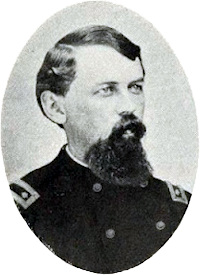
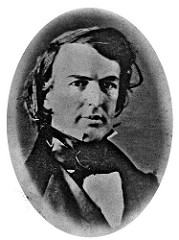
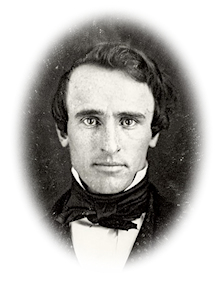
A likeness of Jones when he was editor and majority owner of the Daily Madisonian during President John Tyler’s administration.

MAY 24TH.—Congress passed, in secret session, a resolution to remove the seat of government to Richmond; but I learn it has been vetoed by the President. There is a strong feeling against going thither among some of the secessionists in the Cotton States. Those who do not think there will be a great deal of fighting, have apprehensions that the border States, so tardy in the secession movement, will strive to monopolize the best positions and patronage of the new government. Indeed, if it were quite certain that there is to be no war for existence—as if a nation could be free without itself striking the blow for freedom—I think there would be a party—among the politicians, not the people—opposed to confederating with the border slave States.

Some of his fellow-members tell many jokes on Mr. Hunter. They say every time he passes the marble-yards going up to the capitol, and surveys the tomb-stones, he groans in agony, and predicts that he will get sick and die here. If this be true, I predict that he will get the seat of government moved to Richmond, a more congenial climate. He has a way of moving large bodies, which has rarely failed him; and some of his friends at the hotels, already begin to hint that he is the proper man to be the first President of the permanent government. I think he will be President some day. He would be a safe one. But this whisper at the hotel has produced no little commotion. Some propose making him Secretary of War, as a sure means of killing him off. I know a better way than that, but I wouldn’t suggest it for the world. I like him very much.

To-day the Secretary placed in my hands for examination and report, a very long document, written by a deposed or resigned Roman priest. He urged a plan to avert the horrors of war. He had been to see Lincoln, Gov. Letcher, etc., and finally obtained an interview on “important business” with President Davis. The President, not having leisure even to listen to his exordium, requested him to make his communication briefly in writing. And this was it–about twenty pages of foolscap. It consisted chiefly of evidences of the exceeding wickedness of war, and suggestions that if both belligerents would only forbear to take up arms, the peace might be preserved, and God would mediate between them. Of course I could only indorse on the back “demented.” But the old man hung round the department for a week afterward, and then departed, I know not whither. I forget his name, but his paper is in the archives of the government. I have always differed with the preachers in politics and war, except the Southern preachers who are now in arms against the invader. I think war is one of the providences of God, and certainly no book chronicles so much fighting as the Bible. It may be to the human race what pruning is to vegetation, a necessary process for the general benefit.
0 comments

She should be advised of blockade.

War of the Rebellion: from the Official Records of the Union and Confederate Armies and Navies
Montgomery, May 24, 1861.
Collector F. H. Hatch,
New Orleans:
Ship Windsor Forest cleared from Liverpool on 27th of April, with munitions of war for this Government. Her charter was for Quebec; really, however, for Southern port. Her real course to the Gulf lies by the south side of Cuba. She will be near Cape San Antonio by the 1st of June. She should be advised of blockade. Can you put pilot-boat on this duty?
L. P. WALKER.
0 comments

Events of the week briefly enumerated—William Howard Russell

My Diary North and South – William Howard Russell

May 24th.—A great budget of news to-day, which, with the events of the week may be briefly enumerated. The fighting has actually commenced between the United States steamers off Fortress Monroe, and the Confederate battery erected at Sewall’s point—both sides claim a certain success. The Confederates declare they riddled the steamer, and that they killed and wounded a number of the sailors. The captain of the vessel says he desisted from want of ammunition, but believes he killed a number of the rebels, and knows he had no loss himself. Beriah Magoffin, governor of the sovereign state of Kentucky, has warned off both Federal and Confederate soldiers from his territory. The Confederate congress has passed an act authorizing persons indebted to the United States, except Delaware, Maryland, Kentucky, Missouri and the district of Columbia, to pay the amount of their debts, to the Confederate treasury. The State convention of North Carolina has passed an ordinance of secession. Arkansas has sent its delegates to the Southern congress. Several Southern vessels have been made prizes, by the blockading squadron; but the event which causes the greatest excitement and indignation here, was the seizure, on Monday, by the United States’ marshals, in every large city throughout the Union, of the telegraphic despatches of the last twelve months.

In the course of the day, I went to the St. Charles Hotel, which is an enormous establishment, of the American type, with a Southern character about it. A number of gentlemen were seated in the hall, and front of the office, with their legs up against the wall, and on the backs of chairs, smoking, spitting, and reading the papers. Officers crowded the bar. The bustle and noise of the place would make it anything but an agreeable residence for one fond of quiet; but this hotel is famous for its difficulties. Not the least disgraceful among them, was the assault committed by some of Walker’s filibusters, upon Captain Aldham, of the Royal Navy.

The young artist, who has been living in great seclusion, was fastened up in his room; and when I informed him that Mr. Mure had despatches which he might take, if he liked, that night, he was overjoyed to excess. He started off north in the evening, and I saw him no more.

At half-past four, I went down by train to the terminus on the lake where I had landed, which is the New Orleans Richmond, or rather, Greenwich, and dined with Mr. Eustis, Mr. Johnson an English merchant, Mr. Josephs a New Orleans lawyer, and Mr. Hunt. The dinner was worthy of the reputation of the French cook. The terrapin soup excellent, though not comparable, as Americans assert, to the best turtle.

The creature from which it derives its name, is a small tortoise, the flesh is boiled somewhat in the manner of turtle, but the soup abounds in small bones, and the black paws with the white nail-like stumps projecting from them, found amongst the disjecta membra, are not agreeable to look upon. The bouillabaisse was unexceptionable, the soft crab worthy of every commendation, but the best dish was, unquestionably, the pompinoe, an odd fish, something like an unusually ugly John Dory, but possessing admirable qualities in all that makes fish good. The pleasures of the evening were enhanced by a most glorious sunset, which cast its last rays through a wilderness of laurel roses in full bloom, which thronged the garden. At dusk, the air was perfectly alive with fire flies and strange beetles. Flies and coleopters buzzed in through the open windows, and flopped among the glasses. At half-past nine, we returned home in cars drawn by horses along the rail.

0 comments

“Ellsworths death created intense excitement here.”—Horatio Nelson Taft

Diary of US patent clerk Horatio Nelson Taft.

FRIDAY 24

This has been a day of excitement. 10,000 troops crossed the Potomac this morning early at different points near the City. Col Ellsworth with his Zuaves went to Alexandria on Steamers. . . He was shot dead at the “Marshall House” where he had taken down a “Secession” Flag, by a man named Jackson, who kept the House. There was no opposition in the town. Ellsworths death created intense excitement here. Our troops are throwing up entrenchments opposite. I saw them today with a Glass from top of Pat office.


The three diary manuscript volumes, Washington during the Civil War: The Diary of Horatio Nelson Taft, 1861-1865, are available online at The Library of   Congress.

0 comments

Letter from Mrs. President Davis.

News of the Day
1860s newsprint

Daily Advocate
Baton Rouge
May 24, 1861

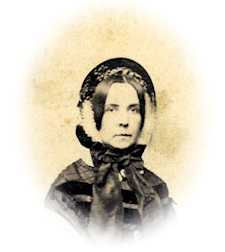
The following letter, from Mrs. Jefferson Davis, was written in acknowledgment of the receipt of a beautiful work-box, manufactured and presented to her by several patriotic misses of this city. Gracefully worded and beautifully written, we present it to our readers and let it speak for itself.—Petersburg, (Va.) Express.
Montgomery, Ala., April 29, 1861.
My Dear Young Ladies.—Permit me, before thanking you for your kind present and wishes for my husband’s welfare, to congratulate you upon the secession of Virginia—the birthplace of my mother, as well as yours.
The elder and honored sister of the Southern States, is received with tearful joy among us, and many hands will fashion stars with which to mark this brilliant accession to our galaxy.
The possession of a work box manufactured by little Southern girls, so industrious, so enthusiastic and so patriotic, will be much prized by me, and I will leave it to my daughter with the note which precedes it, as a precious legacy.
Long ere you reach the responsibility of useful womanhood, may we have united peace to independence in our Southern Confederacy.
Wishing you, my dear young friends, a long, a happy life, I have the honor to be,
Very respectfully and sincerely, your friend,
Varina Davis.
0 comments

Extracts from the journal of Commander Semmes, C.S. Navy, commanding C.S.S. Sumter

War of the Rebellion: from the Official Records of the Union and Confederate Armies and Navies
New Orleans, May 24, [1861]—A month has elapsed since I began the preparation of the Sumter for sea, and yet we are not ready. Leeds & Co. have not given us our tanks, and we only received the carriage for the 8-inch gun to-day. The officers are all present and the crew has been shipped, and all are impatient to be off. The river is not yet blockaded but expected to be to-morrow . It must be a close blockade and by heavy vessels that will keep us in. Troops are being collected in large numbers in the enemy’s States. Marchings and countermarchings are going on and the fleet seems to be kept very busy scouring hither and thither, but nothing accomplished. Whilst penning the last paragraph news reaches us that the Lincoln Government has crossed the Potomac and invaded Virginia. Thus commences a bloody and a bitter war. So be it; we but accept the gauntlet which has been flung in our faces. The future will tell a tale worthy of the South and her noble cause.
0 comments

I write to you, Gen. Scott, as the only man in the country who can arrest the civil war now begun.

News of the Day
1860s newsprint

Daily Advocate
Baton Rouge
May 24, 1861

Mrs. Donelson to Gen. Scott.—The following eloquent appeal to Gen. Scott from the wife of Andrew Jackson Donelson, we find in the Memphis Bulletin:
Memphis, April 29, 1861.
Gen. Scott—Dear Sir: I address you not as a stranger. I was introduced to you in 1834, at the White House, by President Jackson, as “my niece, Miss Martin, of Tennessee.” In 1834 I married Louis Randolph, a grandson of President Jefferson. In 1837 he died, and in 1841 I married Major Andrew J. Donelson, whom you will remember. In 1852 I saw you frequently in Washington.
I write to you, Gen. Scott, as the only man in the country who can arrest the civil war now begun. When it was announced that “Gen. Scott had resigned,1” a thrill of joy ran through the South. Cannon told the glad tidings, and my heart said, “God bless him.” Now it is said “you will never fight under any other than the Star Spangled Banner.” We have loved that banner. We have loved the Union. But the Union is gone, and forever, and I wept as each star left the field of blue and set in night. Now we have another field of blue, and soon our fifteen stars will shine upon our right. The stripes are all that is left of the banner you have borne victorious in many battles.
Of you I may ask it, but not the usurper and his Abolition band, who now desecrate the honored place once filled by our Washington, Jefferson and Jackson—of Gen. Scott I ask it— STOP THIS WAR. Say to the North, you shall not shed your brother’s blood. The sons of Tennessee and the South have buckled on their armor, and are ready for the fight. We will fight this battle, every man, woman and child, to the last cent in our pockets and the last drop of blood in our veins. The North boasts of its strength. If this boast be well founded, it were cowardice to destroy the weak. But “the race is not always to the swift, nor the battle to the strong!” God will defend us when our husbands and sons go forth to repel the invaders of our homes, our rights, and our soil. Then count the cost, Hero of Battles, and let after ages bless you.

  1. Winfield Scott didn’t retire until November 1861.
0 comments

We have been kept moving since we came here.—Elisha Franklin Paxton

Elisha Franklin Paxton – Letters from camp and field while an officer in the Confederate Army


Martinsburg, May 24,1861.

After mentioning it in your letter, you add in a postscript, “Don’t forget to tell me where your books are.” I told you in my last letter, but wish I had not. Really, Love, I do not wish you to be annoyed with my business. I wish you to be very happy, and this I know you cannot be if you undertake to harass yourself with my business. Go out home occasionally and see how matters are going on, but do not trouble yourself any further. So, Love, if any one calls on you about my matters, tell them my instructions to you were to have nothing to do with them. Write no more about business, but about my dear wife and little ones, if you wish to make your letters interesting. We have been kept moving since we came here. We have a hard time, but have gotten used to it. The men were discontented and unmanageable at first, but are now very well satisfied. This section now is in most complete condition for defense, abundantly able, I think, to resist any force which can be made against it. Troops have been lately arriving in large numbers. I have no idea when the battle will be fought. Many of us will fall in it, but I have no doubt of our success. And now, my darling, good-bye until I write again.

0 comments

Civil War Day-By-Day

Civil War Day-by-Day

May 24, 1861

  • Col. Elmer Ephraim Ellsworth of the 11th New York Fire Zouaves is killed in the Marshall House Inn in Alexandria, Virginia, after he and his men removed a Confederate flag. He is generally regarded as the first officer killed while on duty in the American Civil War.
  • Sterling Price refuses to disband his troops.
  • Benjamin Butler uses the term “contraband” to describe slaves who have crossed into the Northern camps

A Chronological History of the Civil War in America1

  • Arlington Heights and the city of Alexandria occupied by federal troops. Col. Ellsworth shot by the rebel Jackson.
  • Southern mails stopped.

  1. A Chronological History of the Civil War in America by Richard Swainson Fisher, New York, Johnson and Ward, 1863
0 comments

Raising the Stars and Stripes at the Custom-House at Baltimore

Miscellaneous document sources

Raising the Stars and Stripes at the Custom-House at BaltimoreHarper’s Pictorial History of the Civil War by Alfred H. Guernsey and Henry W. Alden; copyrighted 1866 by Harper and Brothers; 1894 by Alfred H. Guernsey and Henry W. Alden; 1894 by McDonnell Bros; pub. The Puritan Press Co.; Chicago, Illinois

0 comments

Abraham Lincoln, May 16, 1861

Library of Congress

President Abraham Lincoln, three-quarter length portrait, seated, May 16, 1861; Brady’s National Photographic Portrait Galleries

Edited and enhanced from Library of Congress image www.loc.gov/pictures/item/2009630687/

0 comments

How the Niagara is Employed

News of the Day

The New York Times
May 23, 1861

United States Steamship Niagara,}
Off Charleston, Sunday, May 12.}
Last night nothing of importance occurred. The steamer which ran in got aground, as we supposed, but we were obliged to let her go in order to attend to a ship which was coming in.
To-day we have been actively employed. Two English ships have been warned off, and an American vessel (the Parkhill) has been seized and sent to Philadelphia.
A number of brigs and smaller vessels are making their way out of Charleston harbor to avoid the blockade.
A few fast gun-boats are needed on this coast, as ships are coming in almost every hour in ballast, expecting to take away cargoes of cotton.
N.
0 comments

I suspect you do not like to commit yourself on my warlike designs.—Rutherford B. Hayes

Diary and Letters of Rutherford Birchard Hayes
Rutherford B. Hayes (young)

CINCINNATI, May 23, 1861.

DEAR UNCLE:–I received yours of the 17th this morning, and am glad to know that your views as to finishing and furnishing the house correspond with our own. If I should not go away during the summer, I will, of course, visit you several times, and we can arrange all these matters. . . .

I suspect you do not like to commit yourself on my warlike designs. We have often observed, that on some questions, advice is never asked until one’s own purpose is fixed; so that the adviser is throwing away breath. Perhaps you think this is such a case, and perhaps you are right; but if the dispatches of this morning are correct, that the Government already has two hundred and twenty thousand men, and will accept no more, the question is settled.

It is raining again–disagreeable times for people in camp. I have not seen any Fremonters, but have written to Haynes ¹ to come and see me, with any of the men.

Sincerely,

R.B. HAYES.

S. BIRCHARD.

_______

¹ W. E. Haynes. Later a colonel. Long a prominent citizen of Fremont. Member of Congress, etc.

0 comments

Steam tugboats to be fitted out as privateers.

News of the Day

Letter from Henry Wenzell, esq., of Boston, to Secretary of the Navy, forwarding information of the fitting out of privateers at New Orleans.

Boston, May 23, 1861.
Dear Sir: To-day an item of intelligence has come to my knowledge that may or may not be important, and that as a loyal citizen I feel it my duty to communicate, though I have not the honor of being known by you.
To-day an acquaintance received a letter from his brother, resident in New Orleans, dated the 16th instant, in which he reports the fitting out at that place by a stock company of the steam tugboat Enoch Train1 as a privateer; also reports that nine other vessels were being fitted for that purpose at Algiers, on the opposite side of the river. This letter he has loaned to a Mr. Kimball, said to be part owner of the Enoch Train, who starts this evening for Washington in order to see you in relation to the affair. This Mr. Kimball I have never before heard of, and have no evidence of his loyalty or of his want of it. Mr. Thaxter, the gentleman who received the letter, has great confidence in his brother’s statements.
Wishing for our arms success equal to that in the olden time, when the war cry was, “ The sword of the Lord and of Gideon,”
I am, dear sir, yours, truly,
Henry Wenzell.
Hon.Gideon Welles,

Secretary Navy, U. S. A., Washington.


  1. The Enoch Train will be converted into an ironclad and commissioned as CSS Manassas.
0 comments

“It would cost, perhaps, a thousand lives; but is it not the business of war to consume human life?”—Rebel War Clerk

Civil War Day-by-Day
A likeness of Jones when he was editor and majority owner of the Daily Madisonian during President John Tyler’s administration.

MAY 23D.–To-day the President took the cars for Pensacola, where it had been said everything was in readiness for an assault on Fort Pickens. Military men said it could be taken, and Toombs, I think, said it ought to be taken. It would cost, perhaps, a thousand lives; but is it not the business of war to consume human life? Napoleon counted men as so much powder to be consumed; and he consumed millions in his career of conquest. But still he conquered, which he could not have done without the consumption of life. And is it not better to consume life rapidly, and attain results quickly, than to await events, when all history shows that a protracted war, of immobile armies, always engulfs more men in the grave from camp fevers than usually fall in battle during the most active operations in the field?

To-day I saw Col. Bartow, who has the bearing and eye of a gallant officer. He was attended by a young man named Lamar, of fine open countenance, whom he desired to have as his aid; but the regulations forbid any one acting in that capacity who was not a lieutenant; and Lamar not being old enough to have a commission, he said he would attend the colonel as a volunteer aid till he attained the prescribed age. I saw Ben McCulloch, also–an unassuming but elastic and brave man. He will make his mark. Also Capt. McIntosh, who goes to the West. I think I saw him in 1846, in Paris, at the table of Mr. King, our Minister; but I had no opportunity to ask him. He is all enthusiasm, and will rise with honor or fall with glory. And here I beheld for the first time Wade Hampton, resolved to abandon all the comforts of his great wealth, and encounter the privations of the tented field in behalf of his menaced country.

Arkansas and Tennessee, as I predicted, have followed the example of Virginia and North Carolina; and I see evidence daily in the mass of correspondence, that Missouri and Kentucky will follow in good time.

0 comments

Adjourned

Louise Wigfall Wright — A Southern Girl in ’61

(excerpt)

“May 23rd, 1861.

        ” . . . Congress has adjourned to meet in Richmond on the 20th July. The President has begged your father to act on his staff. . . . “

0 comments

“Troops drilling and marching in every direction through the streets.”—Horatio Nelson Taft

Diary of US patent clerk Horatio Nelson Taft.

THURSDAY 23

Nothing in particular going on today here. The War seems to assume greater proportions every day, and a contest seems to be inevitable soon. Troops ar[e] arriving all the time from the North and generaly going into camp. Chas and Saml are better today, have been there twice today; tonight with wife, staid an hour. Troops drilling and marching in every direction through the streets. Quite a crowd at Willards tonight. Got the “Times” and came home early.


The three diary manuscript volumes, Washington during the Civil War: The Diary of Horatio Nelson Taft, 1861-1865, are available online at The Library of   Congress.

0 comments

One of the slave servants who waited at table… was pointed out to me as a son of General Andrew Jackson.—William Howard Russell

My Diary North and South – William Howard Russell

May 23d.—As the mail communication has been suspended between North and South, and the Express Companies are ordered not to carry letters, I sent off my packet of despatches to-day, by Mr. Ewell, of the house of Dennistoun & Co.; and resumed my excursions through New Orleans.

The young artist who is stopping at the St. Charles Hotel, came to me in great agitation to say his life was in danger, in consequence of his former connection with an abolition paper of New York, and that he had been threatened with death by a man with whom he had had a quarrel in Washington. Mr. Mure, to calm his apprehensions, offered to take him to the authorities of the town, who would, no doubt, protect him, as he was merely engaged in making sketches for an English periodical, but the young man declared he was in danger of assassination. He entreated Mr. Mure to give him despatches which would serve to protect him, on his way Northward; and the Consul, moved by his mental distress, promised that if he had any letters of an official character for Washington he would send them by him, in default of other opportunities.

I dined with Major Ranney, the president of one of the railways, with whom Mr. Ward was stopping. Among the company were Mr. Eustis, son-in-law of Mr. Slidell; Mr. Morse, the attorney-general of the State; Mr. Moise, a jew, supposed to have considerable influence with the governor, and a vehement politician; Messrs. Hunt, and others. The table was excellent, and the wines were worthy of the reputation which our host enjoys, in a city where Sallusts and Luculli are said to abound. One of the slave servants who waited at table, an intelligent yellow “boy,” was pointed out to me as a son of General Andrew Jackson.

We had a full account of the attack of the British troops on the city, [continue reading…]

0 comments

Poscription in Missouri—A Family Driven Out by the Rebels.

News of the Day

Daily Times
Leavenworth, Kansas
May 23, 1861

A man by the name of Nelson Rider, from Cass county, Missouri, with his wife and two children, arrived in this city yesterday, having been forced to leave by the secessionists in that vicinity, on penalty of death. His wife was mounted on a horse with her children, the husband going afoot; and, altogether,they presented a very wretched and haggard appearance, having been gravelling from Cass county here since last Monday week.

Considerable excitement was manifested by our citizens on hearing the sad story of the wrongs they had suffered at the hands of the terrorists of Missouri, and terrible vengeance was sworn by some of our Union boys. The family left here for Grasshopper Falls, where the man has some property and relatives.

This is but one case of the maddening proscription and wicked vindictiveness of traitorous fiends, who would nullify all law, desecrate every hearthstone, and destroy the best and greatest government on earthy. “By their fruits ye shall know them,” and they shall be punished accordingly.

0 comments

Work at the Penitentiary.

News of the Day

Memphis Daily Appeal
Memphis, Tennessee
May 23, 1861

The Nashville Patriot says that there are at least two hundred men employed at the penitentiary in the manufacture of haversacks, caps, pouches, camp chests, gun hammers, tool chests, and remodeling bayonets, scabbards, and that in a few days, preparations for making cartridges, etc., will be completed. A large Number of hands have also been employed in the manufacture of shoes for the soldiers, and wagons for army purposes. Col. Johnson is thus making the prison subserve the use of the State in this emergency, and we feel well assured that he will make it as useful as possible.

0 comments

Vaccination

News of the Day

Memphis Daily Appeal
Memphis, Tennessee
May 23, 1861

The Augusta Constitutionalist suggests to our volunteers who expect to be called into service, the propriety of protecting themselves against small pox by vaccination. That terrible disease is said to be already spreading among Lincoln’s troops, and it may be communicated designedly or accidentally to ours. Vaccination has been so much neglected of late years, that not one person in ten is protected from small pox, and if it gets among our soldiers it may be spread throughout the country.

0 comments

“Then, if I feel as now, I shall certainly go in for the war.”

Civil War Day-by-Day

Cairo, May 23, 1861.

Lots of men come through here with their backs blue and bloody from beatings; and nine in ten of them got their marks in Memphis. A man from St. Louis was in camp a few days since with one-half of his head shaved, one-half of a heavy beard taken off, two teeth knocked out and his lips all cut with blows from a club. This was done in Memphis the day before I saw him. My health continues excellent. Never felt so well, and think that care is all that is necessary to preserve my health as it is. I can’t think that this Illinois climate is mean enough to give a fellow the chills, after it has raised him as well as it has me.

I never enjoyed anything in the world as I do this life, and as for its spoiling me, you’ll see if I don’t come out a better man than when I went in.

We have commenced fortifying this Point. One company is detailed every day to work on this. It is said that it will cost three million. As for enlisting for three years, I can’t, or rather won’t say now. ‘Tis a sure thing that as long as this war continues I will not be satisfied at home, and if I would there will certainly be no business. [continue reading…]

0 comments

Civil War Day-By-Day

Civil War Day-by-Day

May 23, 1861

  • Virginia ratifies the Secessionist Convention referendum by a vote of 132,201 to 37,451
  • John Floyd commissioned a brigadier general in the Confederate States Army
  • Thomas Jackson strikes the B&O Railroad, capturing 56 locomotives
0 comments

Prize Captured at Charleston

New York Times

The New York Times
May 22, 1861

PHILADELPHIA, Tuesday, May 21.

The ship Gen. Parkhill, of Liverpool for Charleston, has arrived in charge of a prize crew of the Niagara. She was spoken off Cape Romain the 12th, and ordered off. The next day she was captured in attempting to run the blockade. She was towed up to the Navy-yard.

The prize ship is 600 tons, with a general cargo, a large portion being salt. It is suspected that arms and munitions of war are concealed under the salt.

She was commanded by Capt. FORBES, the former captain being murdered on the outer voyage by some of the crew.

She had two Secession flags flying.

PHILADELPHIA, Tuesday, May 21 — P.M.

Capt. FORBES denies having known anything of the blockade or display of secession flags. After his vessel was brought to by a shot from the Niagara, he was furnished with a passport to proceed to any port North. He hoisted a flag bearing the initials of the owners, and then the vessel was seized on the supposition that the flag was a signal to the shore. The secession flags which were on board belonged to PIKE, the former captain of the vessel.

0 comments

The Union Policy and the Solid Popularity of President Lincoln

Civil War Day-by-Day

The New York Herald
May 22, 1862

The last proclamation of President Lincoln, we are sure, from the abundant evidence around us and the testimony of our newspaper exchanges, has greatly strengthened and extended the public confidence of our loyal States in his sagacity, patriotism and firmness of purpose as the head of the government and the responsible Commander-in-Chief of our Army and Navy.

There can be no doubt that the inspiration which produced the late preposterous abolition manifesto from General Hunter was drawn from Washington. We apprehend, too, that Mr. Secretary Stanton (falling into the serious abolition mistake which was so fatal to Mr. Secretary Cameron as an aspiring politician) is largely responsible for General Hunter’s sweeping abolition edict. At all events the President revocation of this edict involves a reprimand to all its contrivers, and if Mr. Stanton can be justly counted among them, every consideration of propriety demands on his part an explanation to the country.

The President, in every possible way and by every possible device, has been embarrassed by the radical abolition or separation faction, in order to inveigle him, drag him or thrust him into this destructive abolition programme of a war of extermination against Southern slavery at all hazards. President Lincoln, however, from the day when he left Springfield, en route for Washington, to the present hour, has unflinchingly pursued the tenor of his way upon his own programme of fighting this war for the of the Union. Upon this grand idea the six hundred thousand Union soldiers now in the field have enlisted for this war; upon this sound, consistent and conservative war policy the great body of the people of our loyal States have rallied to the support of the administration. [continue reading…]

0 comments