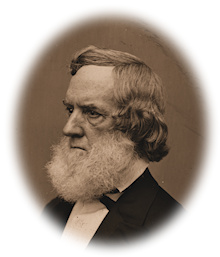
It is by no means certain that we shall get in—Rutherford B. Hayes

Diary and Letters of Rutherford Birchard Hayes
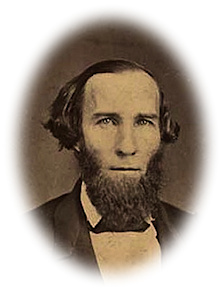
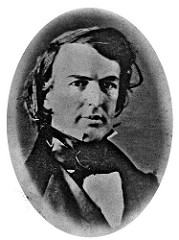
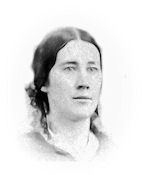
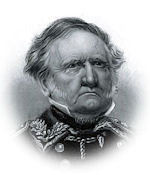
Rutherford B. Hayes (young)

CINCINNATI, May 22, 1861.

DEAR UNCLE:—Your last is highly satisfactory. It is by no means certain that we shall get in, but we shall keep trying and sooner or later I suspect we shall succeed.

Lucy rather prefers, I think, not to go out to Fremont this summer if I should go away, but will of course do what we think best. I will come out before going away, even if I can stay only a day. If I should not leave, I shall of course visit you this summer and stay some time.

Sincerely,

R. B. HAYES.

S. BIRCHARD.

0 comments

Letters of marque and the supposed presence of privateers in the Pacific.

War of the Rebellion: from the Official Records of the Union and Confederate Armies and Navies

Report of Captain Ritchie, U. S. Navy, senior officer present in Bay of Panama, relative to mail steamers.

U. S. S. Saranac,
Bay of Panama, May 22, 1861.
Sir: Communications from the Department of dates April 27 and May 1 have been received, together with the President’s proclamation in regard to pretended letters of marque.
Having been notified by the Pacific Mail Steamship Company of the supposed presence of privateers in the Pacific, I had partly anticipated the orders of the Department by directing Commander Bissell, now at Acapulco, to cruise with the Cyane between that port and Manzanilla; and have also dispatched an order to Commander Porter, at San Francisco to expedite the repairs on the St. Mary’s, and when in readiness for sea to repair at once to Manzanilla and cooperate with Captain Bissell in affording protection to the mail steamers along the most exposed line of coast.
By the English mail steamer sailing hence on the 24th instant I will forward instructions to Captain Hunt to proceed immediately with the Narragansett to the relief of the Cyane, which latter vessel, after receiving her stores at this port, will be dispatched to Callao and discharge the duties of the Narragansett at that place.
Captain ( J. K.] Mitchell’s last communication states that he expected to sail from San Francisco with the Wyoming for this port about the 1st instant. Should I hear, however, of the further detention of that vessel, I will direct Captain Mitchell to remain with the Wyoming at San Francisco and afford protection to our interests at that point. In my orders to Commander Bissell I have directed special vigilance to be exercised on the arrival and departure of the mail steamers at the port of Acapulco, and will instruct Captain Hunt to the same effect.
Copies of instructions received from the Department will be forwarded to the flag-officer by the earliest conveyance .
I am , very respectfully, your obedient servant,
Robt. Ritchie,
Captain , Senior Officer present.
Hon. Gideon Welles,
Secretary of the Navy, Washington, D. C.
0 comments

It is evident the Government at Washington is preparing for a prolonged and bloody war.

War of the Rebellion: from the Official Records of the Union and Confederate Armies and Navies

Secretary of War Walker explains the evolution of the length of service requirements of the CSA to the Governor of Georgia.

Confederate States Of America, War Department,
Montgomery, May 22, 1861.
His Excellency Joseph E. Brown,
Governor of Georgia:
Sir: I have the honor to acknowledge Your Excellency’s favor of
the 15th of May, and can well appreciate the embarrassment under which Your Excellency labors in respect to the apparent conflict of the rules of this Department as to periods of service in the Army, but a brief explanation of the matter, I feel quite sure, will relieve this difficulty in your mind. Congress in the beginning, as you are aware, passed bills with regard to the organization of a “regular army” and the raising of “provisional forces.” Afterward a further bill was passed to “provide for the public defense,” under which requisitions were authorized for troops to serve twelve months. More recently amendatory acts have been passed, giving to this Department the discretionary power to receive forces for the war.
So long as hostilities with the North were only apparent, this Department proceeded to act simply in the line of the organization of the Regular Army, and in providing temporary forces for the recovery of our forts, arsenals, and dock-yards; but, with the reduction of Sumter, it soon became necessary to make requisitions, under the act to provide for the public defense, for troops to serve for the more extended period of twelve months. While this Department was thus engaged in receiving companies, battalions, and regiments, it was scrupulous not to accept independent corps, and it always replied to such offers, as it did to Colonel Gartrell, that no troops could be received from within the limits of the Confederate States save through the several State Executives. The Congress now assembled, and in view of the proclamation of Mr. Lincoln at Washington calling for enrollments for three years and enlistments for the war, indicating preparations on the part of the enemy for a prolonged contest, our representatives, [continue reading…]
0 comments

The Blockade of Charleston

News of the Day

The New York Times
May 22, 1861

If the necessity of perfecting the Southern blockade has not been recognized heretofore, it must be so in the light of our European advices. The ports must not only be closed, but sealed hermetically. There is no time for laxity or imperfect measures. With a small but pestilent enemy eager to get out, and a large and rapacious neutral who avows his purpose to get in, the only alternative of their success lies in the erection of a barrier hopelessly impassable to both.

It is, doubtless, through no negligence of the authorities that the blockade has not yet reached Charleston. Advices from that place announce the uninterrupted entrance of British vessels, laden in all probability with arms and supplies for the insurgents. The Niagara, on the way to the Gulf, paused off the harbor long enough to expedite the inward movement of these ships, but presently pursued her course, and we have no tidings of any other naval steamer having visited the port. That vessels were dispatched for the purpose there is every reason to believe; but it is not impossible that a clerical error, similar to the one which is said to have misdirected the Powhatan, destined to reinforce Sumter, to Fort Pickens, may have sent to Texas the detachment of the blockading squadron designed for Charleston. If the Harriet Lane is correctly reported to have sailed with dispatches to that point, the presumption of a blunder gathers probability.

0 comments

Mr. Memminger and Mr. Toombs, the Secretary of State, in the offices of Mr. Walker, Secretary of War.—Rebel War Clerk.

Civil War Day-by-Day
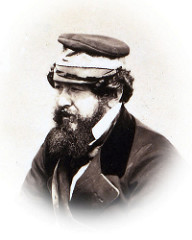
A likeness of Jones when he was editor and majority owner of the Daily Madisonian during President John Tyler’s administration.

MAY 22D.–To-day I had, in our office, a specimen of Mr. Memminger’s oratory. He was pleading for an installment of the claims of South Carolina on the Confederacy; and Mr. Walker, always hesitating, argued the other side, merely for delay. Both are fine speakers, with most distinct enunciation and musical voices. The demand was audited and paid, amounting, I believe, to several hundred thousand dollars.

And I heard and saw Mr. Toombs to-day, the Secretary of State. He is a portly gentleman, but with the pale face of the student and the marks of a deep thinker. To gaze at him in repose, the casual spectator would suppose, from his neglect of dress, that he was a planter in moderate circumstances, and of course not gifted with extraordinary powers of intellect; but let him open his mouth, and the delusion vanishes. At the time alluded to he was surrounded by the rest of the cabinet, in our office, and the topic was the policy of the war. He was for taking the initiative, and carrying the war into the enemy’s country. And as he warmed with the subject, the man seemed to vanish, and the genius alone was visible. He was most emphatic in the advocacy of his policy, and bold almost to rashness in his denunciations of the merely defensive idea. He was opposed to all delays, as fraught with danger; the enemy were in the field, and their purposes were pronounced. Why wait to see what they meant to do? If we did that, they would not only invade us, but get a permanent foothold on our soil. We must invade or be invaded and he was for making the war as terrible as possible from the beginning. It was to be no child’s play; and nothing could be gained by reliance upon the blunders and forbearance of the Yankees. News had been received of the occupation of Alexandria and Arlington Heights, in Virginia; and if we permitted them to build fortifications there, we should not be able to expel them. He denounced with bitterness the neglect of the authorities in Virginia. The enemy should not have been permitted to cross the Potomac. During the month which had elapsed since the passage of the ordinance in Virginia, nothing had been done, nothing attempted. It was true, the vote on ratification had not been taken; and although that fact might shield the provisional government from responsibility, yet the delay to act was fraught with danger and perhaps irreparable injury. Virginia alone could have raised and thrown across the Potomac 25,000 men, and driven the Yankees beyond the Susquehanna. But she, to avoid responsibility, had been telegraphing Davis to come to the rescue; and if he (Toombs) had been in Davis’s place, he would have taken the responsibility.

The Secretary of War well knew how to parry these thrusts; he was not responsible. He was as ultra a man as any; and all he could do was to organize and arm the troops authorized by Congress. Some thirty odd thousand were mustered in already; and at least five thousand volunteers were offering daily. Mr. Toombs said five hundred thousand volunteers ought to be accepted and for the war. We wanted no six or twelve months’ men. To this the Secretary replied that the Executive could not transcend the limits prescribed by Congress.

These little discussions were of frequent occurrence; and it soon became apparent that the Secretary of War was destined to be the most important man among the cabinet ministers. His position afforded the best prospect of future distinction–always provided he should be equal to the position, and his administration attended with success. I felt convinced that Toombs would not be long chafing in the cabinet, but that he would seize the first opportunity to repair to the field.

0 comments

Slaver captured

War of the Rebellion: from the Official Records of the Union and Confederate Armies and Navies

Report of Captain Nicholas, U. S. Navy, commanding U. S. S. Constellation, of the capture by that vessel of the American brig Triton (slaver).

U. S. S. Constellation,
Congo River, West Coast of Africa, May 22, 1861.
Sir: I have the honor to report to you that I yesterday captured at Punta da Lenha the American brig Triton. She had no slaves on board, but every preparation for their reception had been made.
I dispatched her to-day for Norfolk, under charge of Midshipman George A. Borchert, with the necessary written instructions for his guidance on his arrival. The men who accompany Mr. Borchert have been on this coast nearly two years, and on their arrival at Norfolk will have been at sea actively employed over two years. I therefore respectfully request that they may be paid off and discharged and that Mr. Borchert may be allowed the usual leave of absence.
I avail myself of this occasion to report to you the prompt and efficient cooperation which I received from Captain Bedingfield, of H. M. S. Prometheus. Having no means myself of communicating with Punta da Lenha I intimated the fact to Captain Bedingfield, who instantly placed his steamer at my disposal, with the offer to tow a boat with as many officers and men as I chose to send. I sent out the fourth cutter, under command of Lieutenant P. C. Johnson, and they commenced steaming up the river at 3 o’clock , and by 10 o’clock had taken possession of the Triton.
The only other American vessel there was the Falmouth. She doubtless is going to take in slave cargo, but her preparations were not sufficiently advanced to make it advisable to seize her. Had I been one month earlier I could have made a great capture, as there were at that time nine slavers at Punta da Lenha, all of which have escaped except the ship Nightingale, which was captured by the Saratoga.
It is perhaps proper for me to state that Flag-Officer Inman is temporarily absent from this ship, he having removed his flag to the Portsmouth. This will account for my making this report.
The crew of this ship are in tolerably good health, but the effect of the climate is beginning to tell upon them.
I have the honor to be, with great respect, your obedient servant,
J. S. Nicholas,
Captain, Commanding U. S. S. Constellation.
Hon. Gideon Welles,
Secretary of the Navy, Washington, D. C.
0 comments

Horatio Nelson Taft

Diary of US patent clerk Horatio Nelson Taft.

WEDNESDAY, MAY 22, 1861.

No particular occurence has marked this day here except the raising of a fine National Flag on the Genl Post office. Mr Lincoln handled the cords. Mr Seward, Mr Blair (the P.M.), and Mr Smith the Sec’y of the Interior spoke on the occasion. Was down today to see Chas and Saml Androus, who are both somewhat sick, at rooms on the Ave. Think they will get up in a day or two. Spent an hour or so at Mr C Woodwards in the evening with Julia.


The three diary manuscript volumes, Washington during the Civil War: The Diary of Horatio Nelson Taft, 1861-1865, are available online at The Library of   Congress.

0 comments

100 free negroes to work on the fortifications at Norfolk

News of the Day

Warning

The following diary entry contains wording that may be offensive to many in the world of today. However, the entry is provided unedited for its historical content and context.

Dallas Herald
May 22, 1861

The Petersburg Express has an account of the departure of 100 free negroes from that city for Norfolk, to work on the fortifications. They were addressed in an appropriate manner by Messrs. John Dodson and Wm. Fenn, and the last named gentleman presented them with a beautiful Confederate States flag, made by the true and noble hearted ladies of Bolingbrook street, as a token of their appreciation of the generous efforts they were about to make to achieve a successful defence of Virginia soil and principles.

Charles Tinsley, one of their number, stepped forward to receive the flag, and in reply said: “We are willing to aid Virginia’s cause to the utmost extent of our ability. We do not feel that it is right for us to remain here idle, when white gentlemen are engaged in the performance of work at Norfolk that is more suitable to our hands, and of which it is our duty to relieve them. There is not an unwilling heart among us, not a hand but will tell in the work before us; and we promise unhesitating obedience to all orders that may be given to us.” In referring to the flag, he said: “I could feel no greater pride, no more genuine gratification, than to be able to plant it first upon the ramparts of Fortress Monroe.”

This was truly a patriotic speech, coming from the source it did, and was received with general outburst of cheering.

The men were then marched down Sycamore street to the tune of Dixie, to the depot, where in presence of an immense crowd of darkeys, they took their leave.

0 comments

A Submarine Boat Captured in the Delaware.

News of the Day

Savannah Republican
Georgia
May 22, 1861

Philadelphia, May 17.—Quite an excitement was created in the upper part of the city this morning, by the seizure of a submarine boat, the invention of De Villerol, a Frenchman. It was going down the river, and struck on an island. Four men were found aboard.

Villerol says he was about taking it to the Navy Yard to test, but the officers of the Yard disclaim any knowledge of him. The boat was constructed some time since for raising wrecks and other submarine work, but was never put in active use. It is cigar shaped and made of iron, thirty feet long. It supplies its own air and will be useful in running under a fleet.

0 comments

There are some who maintain there will be no war after all—William Howard Russell

My Diary North and South – William Howard Russell

May 22nd.—The thermometer to-day marked 95 ° in the shade. It is not to be wondered at that New Orleans suffers from terrible epidemics. At the side of each street a filthy open sewer flows to and fro with the tide in the blazing sun, and Mr. Mure tells me the city lies so low that he has been obliged to go to his office in a boat along the streets.

I sat for some time listening to the opinions of the various merchants who came in to talk over the news and politics in general. They were all persuaded that Great Britain would speedily recognize the South, but I cannot find that any of them had examined into the effects of such a recognition. One gentleman seemed to think to-day that recognition meant forcing the blockade; whereas it must, as I endeavored to show him, merely lead to the recognition of the rights of the United States to establish a blockade of ports belonging to an independent and hostile nation. There are some who maintain there will be no war after all; that the North will not fight, and that the friends of the Southern cause will recover their courage when this tyranny is over. No one imagines the South will ever go back to the Union voluntarily, or that the North has power to thrust it back at the point of the bayonet.

The South has commenced preparations for the contest by sowing grain instead of planting cotton, to compensate for the loss of supplies from the North. The payment of debts to Northern creditors is declared to be illegal, and “stay laws” have been adopted in most of the seceding states, by which the ordinary laws for the recovery of debts in the States themselves are for the time suspended, which may lead one into the belief that the legislators themselves belong to the debtor instead of the creditor class.

0 comments

Civil War Day-By-Day

Civil War Day-by-Day

May 22, 1861

A Chronological History of the Civil War in America1

  • Ship Island fortifications destroyed to keep them from the rebels.
  • Flag-raising at the Post-office, Washington. Speeches of the President and cabinet officers.

  1. A Chronological History of the Civil War in America by Richard Swainson Fisher, New York, Johnson and Ward, 1863
0 comments

A Soldier’s Kit

News of the Day

Southern Confederacy
Atlanta, Georgia
May 21, 1861

A this time, when so many are preparing for the wars, a memorandum of the things necessary to take along as baggage will not be unacceptable. The desired catalogue is contributed, by an old soldier, as follows:

Two flannel shirts, red preferable; 2 stout hickory shirts; 2 fine shirts, if you can take them along; four pair of woolen socks; 2 pair drawers, white cotton or wool, indispensable; black silk neckerchief, very useful; pocket handkerchief, indispensable; 1 pair stout and easy boots, if you can, take a second pair; 2 towels, indispensable; 1 piece of soap; 1 fine and 1 coarse comb; 1 tooth brush; 1 butcher knife, (a good place for it is in the boot;) 1 quart tin cup; 1 button stick; 1 vial of sweet oil; 1 piece of rotten-stone; 1 button brush, (nail brush will do;) 1 flannel housewife, for and full of needles—throw in a few pins while you are about it; 1 pair small scissors; strong white and black threads in tidy skeins; 1 blacking brush, if you can take it; 1 box of blacking. Learn to pack your knapsack tidily, closely and conveniently for use.

To the above you may add all the grub you can stow away inside and out, and replenish when you can, without waiting for the stock on hand to be exhausted.

0 comments

The Battle of Fort Sumter

News of the Day

(A report on the injuries—or lack thereof—during and after the battle.)

The New York Times
May 21, 1861

The Charleston Courier publishes the following card:
State Of South Carolina, Head-Quarters Surgeon General’s Department.
Charleston, April 16, 1861.
Adjutant General Jones — Sir: From the returns received from the various posts, I have the unexampled privilege of stating that no serious casualty has occurred during the vigorous action of thirty-three hours of reducing Fort Sumter. Four trifling contusions are reported at Fort Moultrie, but none at other posts, and it is a subject of extreme gratification, that even in the management of heavy ordinance by new recruits and volunteers, no accident to life or limb has occurred. Immediately upon the flag being struck at Fort Sumter, I proceeded to that fortress to tender my assistance and Hospital at Mount Pleasant, to Major Anderson, and was gratified to learn, also, that only fire cases of slight injuries had resulted to his men. On the next day a sad casualty occurred in saluting his flag, when the explosion of some loose cartridges beneath a gun struck down seven men; one was instantly killed, and another so seriously wounded that he died soon after reaching my hospital in Charleston. One remains in the hospital, doing well under the care of Prof. J.J. Chisolm, and four were removed with the garrison. The precipitation suddenly of several regiments upon me during the past few day, totally without any preparation of their surgeons, has required a large supply of medicines instruments, hospital stores, &c., but I am happy to say that they have received promptly all their requisitions.
Very respectfully yours,
R.W. GIBBES, M.D., Surgeon-General S.C.A.
0 comments

CSA accepts the “gift” from Arkansas of the arsenal at Little Rock and the fort at Fort Smith.

War of the Rebellion: from the Official Records of the Union and Confederate Armies and Navies

AN ACT to provide for the cession, on the part of the State of Arkansas, of the arsenal at Little Rock, and of Fort Smith at the city of Fort Smith, in the State of Arkansas, to the Confederate States of America, and the acceptance of the same by the said Confederate States.

Whereas, by ordinance of the convention of the State of Arkansas, passed the 11th day of May, 1861, herewith submitted, authority was conferred upon the delegation of the State of Arkansas to cede to the Confederate States the arsenal at Little Rock, and Fort Smith at the city of Fort Smith, in the State of Arkansas, and the grounds, buildings, and appurtenances attached to each, in accordance with the terms of said ordinance: Therefore,
The Congress of the Confederate States of America do enact, That the cession as hereinbefore recited is hereby accepted, and it is now made the duty of the Secretary of War to accept a deed of cession of the said arsenal and other property to be executed by the said delegation, and to take charge of and hold the same in the name of the Government of the Confederate States of America.

Approved May 21, 1861.

0 comments

1861 Tintype of a Confederate Officer

Civil War Day-by-Day

Civil War Era Photographic Portraiture no. 3

Confederate Soldier Quarter Plate Tintype. Stunning 1861 Melainotype of a Confederate officer.

Sold at auction June 2015 for $6,875. Heritage Auctions description:

“Confederate Soldier Quarter Plate Tintype. Stunning 1861 Melainotype of a Confederate officer. Really, for quality, condition and content one of the finest Confederate images we’ve ever offered. Plate with embossed Melainotype patent information embossed along bottom edge, unquestionably dating the image to 1861. Officer wears gray frock coat with high standup collar, black flashing on edges of pocket on each breast and the shoulder straps appear to have black centers, possibly denoting North Carolina. Wears rather narrow brimmed slouch hat with one side turned up. Holds five ball pillow pommel sword over his shoulder, the sword dating to circa 1825. Interestingly wearing what appears to be two watch chains. Classic Confederate wide leather belt with two leather tabs and two horseshoe shaped iron buckles for closure. Superb quality and condition, with cheeks skillfully tinted pink. A great Confederate image.”

historical.ha.com/itm/photography/tintypes/confederate-so…

0 comments

“…the military men know the true weakness of the South and predict its ultimate ruin;”

Woolsey family letters during the War for the Union

Abby Howland Woolsey to the Sisters Abroad.
[Robert and his family and Hatty and Carry were still in Europe, but hurrying their return on account of the breaking out of the war.]

New York, May 21, 1861.

Dear Girls: We hope soon to have more particulars about your interview with Mrs. Browning, what she said, and “said he” and “said they.”

I hardly know what to tell you about home. I have been trying to think what questions about public affairs you are longing to have answered, the whys and wherefores of things, but am afraid I might hit on the very wrong ones. We cannot see into details ourselves; we live only on newspaper rumors, and the only peace of mind we get is by mentally consenting to leave everything in the hands of Scott, satisfied of his patriotism, wisdom and skill. The best statesmanship of the country is at work for its good; many knowing heads are contriving and planning; many brave hearts and steady hands are executing the will of government; the monied men, who have so much to save or lose, feel that their only hope of extrication is in the vindication of our laws and constitution; the military men know the true weakness of the South and predict its ultimate ruin; and above all and over all, as Mr. Prentiss preached to us on Sunday, “this continent belongs to Christ. [continue reading…]

0 comments

CSA approves move to Richmond

War of the Rebellion: from the Official Records of the Union and Confederate Armies and Navies

A RESOLUTION to provide for the removal of the seat of Government.

Resolved by the Congress of the Confederate States of America, That this Congress will adjourn on Tuesday next, to meet again on the 20th day of July, at Richmond, Va.; and that a committee of three members of this Congress be appointed to make suitable arrangements for the accommodation of this Congress and of the several Executive Departments.
Resolved, further, That the President be, and he is hereby, authorized to cause the several Executive Departments, with the archives thereof, to be removed, at such time between this and the 20th day of July next as he may determine, to Richmond: Provided, however, That in case of any public emergency which may, in the judgment of the President, render it impolitic to meet in Richmond, the President shall have power by proclamation to call the Congress together at some other convenient place to be selected by him.
Approved May 21, 1861
0 comments

New Orleans; First Impressions—William Howard Russell

My Diary North and South – William Howard Russell
(May 21 — The following material is from the diary entry of May 20, which actually appears to have covered two days. This blog entry covers the second day.)

When I woke up at daylight, I found the vessel lying alongside a wharf with a railway train alongside, which is to take us to the city of New Orleans, six miles distant.

A village of restaurants or “restaurats,” as they are called here, and of bathing boxes has grown up around the terminus; all the names of the owners, the notices and sign-boards being French. Outside the settlement the railroad passes through a swamp, like an Indian jungle, through which the overflowings of the Mississippi creep in black currents. The spires of New Orleans rise above the underwood and semitropical vegetation of this swamp. Nearer to the city lies a marshy plain, in which flocks of cattle, up to the belly in the soft earth are floundering among the clumps of vegetation. The nearer approach to New Orleans by rail lies through a suburb of exceedingly broad lanes, lined on each side by rows of miserable mean one-storied houses, inhabited, if I am to judge from the specimens I saw, by a miserable and sickly population.

A great number of the men and women had evident traces of negro blood in their veins, and of the purer blooded whites many had the peculiar look of the fishy-fleshy population of the Levantine towns, and all were pale and lean. The railway terminus is marked by a dirty, barrack-like shed in the city. Selecting one of the numerous tumble-down hackney carriages which crowded the street outside the station, I, directed the man to drive me to the house of Mr. Mure, the British consul, who had been kind enough to invite me as his guest for the period of my stay in New Orleans.

The streets are badly paved, as those of most of the American cities, if not all that I have ever been in, but in other respects they are more worthy of a great city than are those of New York. There is an air thoroughly French about the people—cafes, restaurants, billiard-rooms abound, with oyster and lager-bier saloons interspersed. The shops are all magazins; the people in the streets are speaking French, particularly the negroes, who are going out shopping with their masters and mistresses, exceedingly well dressed, noisy, and not unhappy looking. The extent of the drive gave an imposing idea of the size of New Orleans—the richness of some of the shops, the vehicles in the streets and the multitude of well dressed people on the pavements, an impression of its wealth and the comfort of the inhabitants. The Confederate flag was flying from the public buildings and from many private houses. Military companies paraded through the streets, and a large proportion of men were in uniform.

In the day I drove through the city, delivered letters of introduction, paid visits, and examined the shops and the public places; but there is such a whirl of secession and politics surrounding one it is impossible to discern much of the outer world.

Whatever may be the number of the unionists or of the non-secessionists, a pressure too potent to be resisted has been directed by the popular party against the friends of the Federal government. The agent of Brown Brothers, of Liverpool and New York, has closed their office and is going away in consequence of the intimidation of the mob, or as the phrase is here, the “excitement of the citizens,” on hearing of the subscription made by the firm to the New York fund, after Sumter had been fired upon. Their agent in Mobile has been compelled to adopt the same course. Other houses follow their example, but as most business transactions are over for the season, the mercantile community hope the contest will be ended before the next season, by the recognition of Southern independence.

The streets are full of Turcos, Zouaves, Chasseurs; walls are covered with placards of volunteer companies; there are Pickwick rifles, La Fayette, Beauregard, MacMahon guards, Irish, German, Italian and Spanish and native volunteers, among whom the Meagher rifles, indignant with the gentleman from whom they took their name, because of his adhesion to the North, are going to rebaptize themselves and to seek glory under one more auspicious. In fact, New Orleans looks like a suburb of the camp at Chalons. Tailors are busy night and day making uniforms. I went into a shop with the consul for some shirts—the mistress and all her seamstresses were busy preparing flags as hard as the sewing machine could stitch them, and could attend to no business for the present. The Irish population, finding themselves unable to migrate Northwards, and being without work, have rushed to arms with enthusiasm to support Southern institutions, and Mr. John Mitchell and Mr. Meagher stand opposed to each other in hostile camps.
0 comments

Important from Harper’s Ferry; Condition of the Secession Troops There

News of the Day

The New York Times
May 21, 1861

FREDERICK, Sunday, May 19—9 P.M.
via Chambersburgh, May 20.

I have just returned from Harper’s Ferry. Two thousand Mississippians arrived there to-day. They are a hard-looking set, poorly clad and dirty. Two Regiments arrived from Alabama yesterday. They are of the same stamp.

The small-pox has broken out among troops there.

A Company of Cavalry left Harper’s Ferry for Martinsburgh, this morning, to watch and prevent Union men from voting on the 23d of this month, as this is a strong Union district.

The Home Guards of Frederick City have arrested a man who was setting fire to a large tan-yard and barn. He was put in jail. The City is guarded by armed Union men; and all Secessionists are watched closely.

The Union men of this district will nominate a candidate for Congress next Saturday. The nominee will be an unconditional Union man, against whom there will be no opposition.

C.M.

0 comments

Scott chides McClellan—”It is not conceived what other instructions could have been needed by you.”

War of the Rebellion: from the Official Records of the Union and Confederate Armies and Navies
Headquarters of the Army,
Washington, May 21, 1861,
Maj. Gen. George B. McClellan, U. S. Army,
Commanding, &c.:
Sir: Considering that Cumberland, in Maryland, is not within your command, and is under the immediate consideration of Major-General Patterson and the authorities here (all of us much nearer at hand), we are surprised at your repeated admonitions to the Secretary of the Treasury, the Secretary of War, and myself to occupy that point, and I am still more surprised at your complaint to the Secretary of War against me that you are without instructions or authority and with your hands tied up. In reply, I refer to the communications sent you at the following dates, some of which, at any rate, you have acknowledged: First. Letter of April 30, on learning you were the major-general of Ohio Volunteers. Second. Copy of letters of commanding officer at Cairo, of May 2, instructing him not to detain provisions. Third. Letter of May 3, giving plan of a campaign. Fourth. Telegram of May 6, in relation to regular officers of your staff. Fifth. Telegram of May 8, order to stop provisions at Cairo, &c. Sixth. Telegram of May 8, in relation to camp at Cairo and intercepting regular companies from Fort Randall. Seventh. Telegram of May 10, in relation to re-enforcing Cairo. Eighth. Copy of letter to Col. Robert Anderson, May 15, in relation to volunteers in Western Virginia and Kentucky. Ninth. Letter of May 15, sent by Lieut. L. A. Williams. Tenth. Telegram of May 20, stating that your authority was ample within your military department. Eleventh. General Orders, Nos. 14 and 19, defining the limits of your department, adding thereto Western Pennsylvania and Virginia. Besides which, your communications on the subject of ordnance supplies have been promptly referred to the Ordnance Depart ment and attended to.
It is not conceived what other instructions could have been needed by you. Placed in the command of a wide department, with the quotas of three months’ men under you of several States, it surely was unnecessary to say that you were expected to defend it against all enemies of the United States, and it was not intended that you should make expeditions much beyond its borders without some great object of interest to the Federal Union to be suggested by you and approved here. Indeed, the three-months’ men were called into service mainly for defensive purposes, but permission would readily have been given to you to march into a neighboring State to countenance or to protect the friends of the Union, if you had presented a reasonable case for such interference. It is otherwise in respect to the greater part of the long-term volunteers of your department when received, but as yet I am not aware [continue reading…]
0 comments

Conditions in the west and needs of McClellan

War of the Rebellion: from the Official Records of the Union and Confederate Armies and Navies

“I regard these (shot proof) boats as an indispensable element in any system of operations, whether offensive or defensive.”

Headquarters Department of the Ohio,
Cincinnati, Ohio, May 21, 1861.
Col. E. D. Townsend,
Assistant Adjutant-General:
Sir: I have the honor to acknowledge the receipt of your letter of May 15, sent by Lieutenant Williams, and beg to assure the lieutenant general commanding that I will leave nothing undone to carry out his wishes as expressed therein. I have received from several different sources important information in relation to the movements and position of the rebels in Tennessee, the substance of which is as follows: Nashville and Memphis are evidently the strongholds of the secessionists in that State. There are counties in Western Tennessee, such as Stewart, Henry, Haywood, Lauderdale, and Henderson, where the Union feeling is predominant, if not repressed by main force. I learn that the Union men have determined to go armed to the polls, and, if necessary, use force to enable them to deposit their votes. Their ulterior course is not yet determined upon, but their leaders say that the presence of the troops of the General Government would be beneficial and would rally to the cause of the Union many who are now outwardly secessionists. I am told that there is much excitement among the negroes there, who in their private talks have gone so far as to select their white wives. Reliable information has reached me that a detachment of Arkansas troops, stationed on the Mississippi above Memphis, has been suddenly recalled to Searcy, White County, Ark., to repress a negro i?surrection. A white preacher and six negroes were hung there a few days since, and thirty negroes were to be hung there yesterday, charged with being concerned in the insurrection. Intercepted telegraphic dispatches indicate the movement of 1,000 Arkansas troops from the interior of the State to Fort Smith yesterday. Other Arkansas troops are said to have passed through Memphis en route to Lynchburg. The indications are that the disposable troops in the regular Confederate service from Mississippi, Alabama, and Louisiana have taken the same direction. The troops remaining in Tennessee seem to be State militia, and not in the regular Confederate Army. They are represented as being but indifferently armed, under no discipline, consisting to a large extent of boys and old men, much excited by liquor and politics, and anxious to fight. Desertions are said to be frequent, and it is said there will be much difficulty in keeping them together for any great length of time. Some allowance, of course, must be made for these statements. The following points are undoubtedly occupied: [continue reading…]
0 comments

General McClellan on the potential need for movement into Western Virginia and maybe Kentucky as well need for more troops

News of the Day
Headquarters Department of the Ohio,
Cincinnati, Ohio, May 21, 1861.
Col. E. D. Townsend,
Assistant Adjutant-General:
Colonel: Governor Dennison has sent to me copies of his telegraphic communication of yesterday to the lieutenant-general commanding, with the general’s reply. A movement into Western Virginia may become necessary any day; so also it may at any moment become imperative to move into Kentucky in order to save the loyal men of that State. With my present force it would be very dangerous to make these movements, particularly in view of the condition of the troops and the administrative branches. If we are to carry on this war in earnest, and in a manner to insure success, there should be at least 40,000 troops available for active operations in this department, and the means of transportation should be provided, as well as clothing and equipment. Not less than twenty, and, if possible, thirty regiments, should be called for from this State. I was extremely sorry a few moments since to receive a dispatch from the Adjutant-General, stating that no recruits can be allowed for companies from Randall. There are 400 or 500 recruits at Newport Barracks, and plenty can be had by opening rendezvous on this side of the river.
I am, very respectfully, your obedient servant,
GEO. B. MCCLELLAN,
Major-General, U. S. Army.
0 comments

I have no accouterments, no means of transportation, and no money.—General McClellan

War of the Rebellion: from the Official Records of the Union and Confederate Armies and Navies
Cincinnati, Ohio, May 21, 1861.
Col. E. D. Townsend,
If I have to move into Western Virginia or Kentucky, as may any
day become necessary, the Ohio contingent is not sufficient. I have no accouterments, no means of transportation, and no money. The Adjutant-General refuses recruits from Newport Barracks for the companies from Randall. Without means I can do nothing. If the Union men of Western Virginia and Kentucky are to be assisted, I must have from twenty to thirty regiments of Ohio troops, batteries, and money.
GEO. B. MCCLELLAN,
Major-General.
0 comments

A Good Move.

News of the Day
1860s newsprint

Daily Advocate
Baton Rouge, Louisiana
May 21, 1861

We learn that the Confederate Government has leased the large manufacturing establishment of W. F. Tunnard, Esq., on the corner of Main and church streets, and placed the whole concern under the personal superintendence of I. N. Collins, Esq. Mr. Collins informs us that it is the intention of the Government to give employment to about 150 mechanics in the manufacture of cannon carriages, harness, knapsacks, tents and all kinds of blacksmithing. For manufacturing purposes no place in the Southern Confederacy possesses superior advantages. Timber of the best kind and in abundance is near at hand, and it is accessible at all times.

0 comments

Protecting the inlets on the New Jersey coast

War of the Rebellion: from the Official Records of the Union and Confederate Armies and Navies

Letter from Secretary of the Navy to the governor of New Jersey regarding protection for that State.

Navy Department, May 21, 1861.
Sir: I have received your letter of the 15th instant on the subject of protecting the inlets on the New Jersey coast, and would respectfully state in reply that the coast guard of the loyal States is assumed by the Treasury Department as a part of the revenue system, to which I have referred your letter.
I am, very respectfully, your obedient servant,
Gideon Welles,
( Secretary of the Navy.)
His Excellency Charles S.Olden,
Governor of New Jersey.
0 comments