Coast Defence

News of the Day

The Indianola Courier
Texas
May 25, 1861

We are pleased to meet with Capt. Dan Shea, who arrived yesterday from San Antonio, where he had gone to participate in the expedition which resulted in the capture of the last body of Federal troops in our State. Capt. Shea comes with authority to enroll a company of one hundred men for the term of twelve months. We learn, that he is authorized and directed to take position at Pass Cavallo, and proceed to the erection of such fortifications as may be practicable and necessary. His company will be stationed there. Capt. Shea brings information that four 24 pounder guns are on the way from Fort Clark and will be put in battery at the Pass as soon as they arrive. Capt. Good of the Dallas Flying Artillery, with a full company and complete battery, has also been ordered by Col. Van Dorn to this part of the coast, and may be expected within a few days. The force thus provided with the assistance that can be obtained at short call, will be ample to keep off or whip out any force the Abolitionists can spare in this direction.

0 comments

Arrival of the New York 71st regiment at the Railroad Depot, Washington, D.C. May 25, 1861

Miscellaneous document sources

Arrival of the New York 71st regiment at the Railroad Depot, Washington, D.C. May 25, 1861New York Public Library Digital Collections

Sketches for Frank Leslie’s Illustrated Newspaper: 138 original drawings of the Civil War by staff artists, 1861-1864.

Extent: 1 drawing : pencil and ink wash ; 15.8 x 24.2 cm.

Note – This image has been digitally adjusted for one or more of the following:
– fade correction,
– color, contrast, and/or saturation enhancement
– selected spot and/or scratch removal
– cropped for composition and/or to accentuate subject matter
– straighten image

0 comments

Rebel War Clerk.—”But the Yankee has no such motive to fight for, no thought of serious wounds and death.”

Civil War Day-by-Day
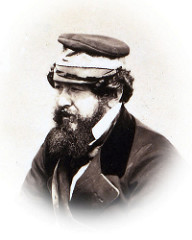
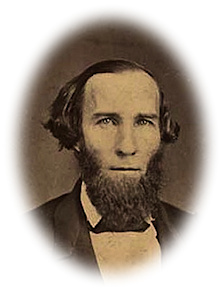
A likeness of Jones when he was editor and majority owner of the Daily Madisonian during President John Tyler’s administration.

MAY 25TH.–There is to be no fight–no assault on Pickens. But we are beginning to send troops forward in the right direction–to Virginia. Virginia herself ought to have kept the invader from her soil. Was she reluctant to break the peace? And is it nothing to have her soil polluted by the martial tramp of the Yankees at Alexandria and Arlington Heights? But the wrath of the Southern chivalry will some day burst forth on the ensanguined plain, and then let the presumptuous foemen of the North beware of the fiery ordeal they have invoked. The men I see daily keeping time to the music of revolution are fighting men, men who will conquer or die, and who prefer death to subjugation. But the Yankee has no such motive to fight for, no thought of serious wounds and death. He can go back to his own country; our men have no other country to go to.

0 comments

Back in South Carolina—Mary Boykin Miller Chesnut.

Civil War Day-by-Day

CHARLESTON, S. C, May 25, 1861.—We have come back to South Carolina from the Montgomery Congress, stopping over at Mulberry. We came with R. M. T. Hunter and Mr. Barnwell. Mr. Barnwell has excellent reasons for keeping cotton at home, but I forget what they are. Generally, people take what he says, also Mr. Hunter’s wisdom, as unanswerable. Not so Mr. Chesnut, who growls at both, much as he likes them. We also had Tom Lang and his wife, and Doctor Boykin. Surely there never was a more congenial party. The younger men had been in the South Carolina College while Mr. Barnwell was President. Their love and respect for him were immeasurable and he benignly received it, smiling behind those spectacles.

Met John Darby at Atlanta and told him he was Surgeon of the Hampton Legion, which delighted him. He had had adventures. With only a few moments on the platform to interchange confidences, he said he had remained a little too long in the Medical College in Philadelphia, where he was some kind of a professor, and they had been within an ace of hanging him as a Southern spy. “Rope was ready,” he sniggered. At Atlanta when he unguardedly said he was fresh from Philadelphia, he barely escaped lynching, being taken for a Northern spy. “Lively life I am having among you, on both sides,” he said, hurrying away. And I moaned, “Here was John Darby like to have been killed by both sides, and no time to tell me the curious coincidences.” What marvelous experiences a little war begins to produce.

0 comments

The Marines.

News of the Day

The Indianola Courier
Texas
May 25, 1861

The suggestion concerning the organization of a marine corps in this city has been gallantly responded to by our sturdy boatmen. We learn from Capt. McBride that a considerable number are already enrolled, and a full company will no doubt be soon organized. We regard such a corps as our best arm of defence [sic], and our citizens should lend it every
encouragement and support. With this company afloat and the Indianola Guards ashore we will have a nucleus around which a splendid little army could be gathered from the surrounding country at the first sound of the tocsin of alarm.

0 comments

“During the middle of the day soldiers were seen running with muskets in hand to join their companies, many being ordered out today.”—Horatio Nelson Taft

Diary of US patent clerk Horatio Nelson Taft.

SATURDAY, MAY 25, 1861.

Another most exciting day. Rumours of fighting on the other side of the river were rife all over the City the middle of the day but were without foundation. The Funeral of Col Ellsworth took place from the Prests House. His remains were in the East room where thousands passed through and saw them, among the rest myself, wife, Julia, and the two elder boys. Genl Scott was there in Uniform. (Willie will not be tempted to go into a crowd for anything). During the middle of the day soldiers were seen running with muskets in hand to join their companies, many being ordered out today.


The three diary manuscript volumes, Washington during the Civil War: The Diary of Horatio Nelson Taft, 1861-1865, are available online at The Library of   Congress.

0 comments

General Butler refuses to turn over 3 field hands, hires them instead and asks for direction from General Scott

War of the Rebellion: from the Official Records of the Union and Confederate Armies and Navies
Headquarters Department Of Virginia,
Fort Monroe, May 24, 1861.
Lieut. Gen. Winfield Scott:
* * * * * * * * * * *
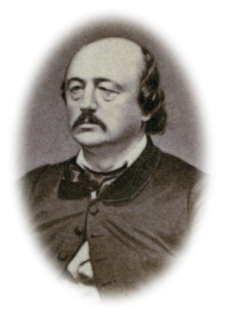
Saturday, May 25.— I had written thus far when I was called away to meet Major Cary, of the active Virginia volunteers, upon questions which have arisen of very considerable importance both in a military and political aspect and which I beg leave to submit herewith.
On Thursday night three negroes, field hands belonging to Col. Charles K. Mallory now in command of the secession forces in this district, delivered themselves up to my picket guard and as I learned from the report of the officer of the guard in the morning had been detained by him. I immediately gave personal attention to the matter and found satisfactory evidence that these men were about to be taken to Carolina for the purpose of aiding the secession forces there; that two of them left wives and children (one a free woman) here; that the other had left his master from fear that he would be called upon to take part in the rebel armies. Satisfied of these facts from cautious examination of each of the negroes apart from the others I determined for the present and until better advised as these men were very serviceable and I had great need of labor in my quartermaster’s department to avail myself of their services, and that I would send a receipt to Colonel Mallory that I had so taken them as I would for any other property of a private citizen which the exigencies of the service seemed to require to be taken by me, and especially property that was designed, adapted and about to be used against the United States.
As this is but an individual instance in a course of policy which may
be required to be pursued with regard to this species of property I
have detailed to the lieutenant-general this case and ask his direction. I am credibly informed that the negroes in this neighborhood are now being employed in the erection of batteries and other works by the rebels which it would be nearly or quite impossible to construct without their labor. Shall they be allowed the use of this property against the United States and we not be allowed its use in aid of the United States?
* * * * * * * * * * *
Major Cary demanded to know with regard to the negroes what course I intended to pursue. I answered him substantially as I have written above when he desired to know if I did not feel myself bound by my constitutional obligations to deliver up fugitives under the fugitive-slave act. To this I replied that the fugitive-slave act did not affect a foreign country which Virginia claimed to be and that she must reckon it one of the infelicities of her position that in so far at least she was taken at her word; that in Maryland, a loyal State, fugitives from service had been returned, and that even now although so much pressed by my necessities for the use of these men of Colonel Mallory’s yet if their master would come to the fort and take the oath of allegiance to the Constitution of the United States I would deliver the men up to him and endeavor to hire their services of him if he desired to part with them. To this Major Cary responded that Colonel Mallory was absent.
* * * * * * * * * * *
Trusting that these dispositions and movements will meet the approval of the lieutenant-general and begging pardon for the detailed length of this dispatch, I have the honor to be, most respectfully, your obedient servant,
BENJ. F. BUTLER,
Major-General, Commanding.
0 comments

Aid to the Families of Soldiers

News of the Day

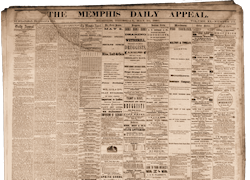
Memphis Daily Appeal
May 25, 1861

The county court have undertaken to allow to the wives of those who are absent on military duty twelve dollars a month, and to each of their children six dollars a month, when such families require such aid. Persons desirous of availing themselves of the allowance offered, will apply at the office of Esq. Hume F. Hill, on Main street, between Madison and Monroe streets, over Mansfield’s drug store, or to Esq. Mallory, over Dearing & Wetherill’s drug store, Main street, between Union and DeSoto streets.

0 comments

Blockade of the Mississippi

News of the Day

The New York Times
May 25, 1861

The following note appears in the New Orleans Picayune:
British Consulate, New Orleans, May 17, 1861.
Eds Picayune: Although I have not received any official notice regarding the time when the blockade of the Mississippi River will be established, it may be important to those interested to give such information as I have received from Washington.
“Neutral vessels will be allowed fifteen days to leave port after the actual commencement of the blockade, whether such vessels are with or without cargoes, and whether the cargoes were shipped before or after the commencement of the blockade.”
I may add that it is rumored that the blockade will be effectually established on or about the 25th inst.
I am, Sirs, your obedient servant.
W.M. MURE, H.B.M. Consul.
0 comments

No Printing Paper.

News of the Day

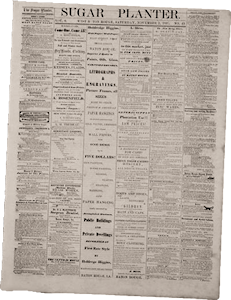
Sugar Planter
Baton Rouge
May 25, 1865

We were surprised to learn, while in New Orleans, a few days ago, that the stock of printing paper on hand there was nearly out, and that no more could be procured from the North—the Southern factories not being able to supply one-half the demand. Such being the case, we may expect soon to hear of many newspapers in this State, and else where, ‘shutting up shop’ until the war is over, or at least until a fresh supply can be procured from—the Lord only knows where!

0 comments

War Department Ordered to Move to Richmond

War of the Rebellion: from the Official Records of the Union and Confederate Armies and Navies

The several bureaus of the War Department, together with the officers attached thereto, will with the least delay practicable move to Richmond, Va., where they will take post until further orders.By command of the Secretary of War.

0 comments

Seceding Wives.

News of the Day

Semi-Weekly Raleigh Register
May 25, 1861

The Norfolk correspondent of the Petersburg Express writes:

Mrs. Commodore Pendergrast, who is a Southern lady, is still in Norfolk. She refuses to join her husband at the fort—says she will never live with him again, and it is reported that she will apply for a divorce. The wife of another reprobate who is at the fort, is in Norfolk, and has a pistol loaded, with which she says she intends shooting her liege lord upon sight.

0 comments

Funeral service over Col. Ellsworth at the White House East Room

Library of Congress

Funeral service over Col. Ellsworth at the White House East RoomTitle: Funeral service over Col. Ellsworth at the White House East Room
Creator(s): Waud, Alfred R. (Alfred Rudolph), 1828-1891, artist
Date Created/Published: [1861 May 25]
Medium: 1 drawing on brown paper : pencil, Chinese white ; 26.9 x 38.2 cm. (sheet).
Reproduction Number: LC-DIG-ppmsca-21446 (digital file from original item, recto) LC-DIG-ppmsca-21447 (digital file from original item, verso) LC-USZC4-5095 (color film copy transparency) LC-USZ62-4283 (b&w film copy neg.)
Rights Advisory: No known restrictions on publication.
Call Number: DRWG/US – Waud, no. 527 recto (A size) [P&P]
Repository: Library of Congress Prints and Photographs Division Washington, D.C. 20540 USA
Notes:
….Title devised from inscription on verso.
….Inscribed below image: 8 [officer?], 9 Dr. Pyne, 6 Lincoln, 7 Seward; 1 General Scott, 2-3 General Officers, 4 Sumner, 5 Reporters, Sentries 71st reg.
….Gift, J.P. Morgan, 1919 (DLC/PP-1919:R1.2.527)
….Reference print available in the Civil War Drawings file I.
….Forms part of: Morgan collection of Civil War drawings.

Image at Library of Congress

___________
Mike’s notes:

Note – This image has been digitally adjusted for one or more of the following:
– fade correction,
– color, contrast, and/or saturation enhancement
– selected spot and/or scratch removal
– cropped for composition and/or to accentuate subject

0 comments

A Schooner Destined for Raiding.

War of the Rebellion: from the Official Records of the Union and Confederate Armies and Navies
Custom-House, Collector’s Office,
New Orleans, May 25, 1861.
Hon. L. P. Walker,
Secretary of War, Montgomery, Ala.:
Sir: Your dispatch of yesterday came to hand last night. My purpose was quickly taken, viz, to ask unlimited control of the light schooner W. R. King; to transfer her to a British subject, and clear her under the British flag for Santiago de Cuba or some port in the West Indies in ballast, and dispatch her under sealed orders in charge of a reliable man, to cruise in the line of the course indicated for the Windsor Forest. My arrangements are all made, stores are ordered, my men selected, and one of our most respectable English merchants has agreed for the time being to assume the ownership of the vessel. I now only wait an answer to my dispatch of this morning for authority to act. The schooner by good fortune is now lying at Berwick’s Bay, making her departure more secure and certain. In all this I have acted in consultation with Commander Semmes, in whose good judgment and discretion I have great confidence. I consider this plan safe, expeditious, and economical. The propriety of sending a fast steamer to take the Windsor Forest in tow or to convoy her to some safe port will be the subject of a future letter.
Very respectfully, your obedient servant,
F. H. HATCH,
Collector.
0 comments

The people of New Orleans, consider Jackson was completely right, in shooting the Federal colonel—William Howard Russell

My Diary North and South – William Howard Russell

May 25th.—Virginia has indeed been invaded by the Federals. Alexandria has been seized. It is impossible to describe the excitement and rage of the people; they take, however, some consolation in the fact that Colonel Ellsworth, in command of a regiment of New York Zouaves, was shot by J. T. Jackson, the landlord of an inn in the city, called the Marshal House. Ellsworth, on the arrival of his regiment in Alexandria, proceeded to take down the secession flag, which had been long seen from the President’s windows. He went out upon the roof, cut it from the staff, and was proceeding with it down stairs, when a man rushed out of a room, leveling a double-barreled gun, shot Colonel Ellsworth dead, and fired the other barrel at one of his men, who had struck at the piece, when the murderer presented it at the Colonel. Almost instantaneously, the Zouave shot Jackson in the head, and as he was falling dead thrust his sabre bayonet through his body. Strange to say, the people of New Orleans, consider Jackson was completely right, in shooting the Federal colonel, and maintain that the Zouave, who shot Jackson, was guilty of murder. Their theory is that Ellsworth had come over with a horde of ruffianly abolitionists or, as the Richmond Examiner has it “the band of thieves, robbers and assassins, in the pay of Abraham Lincoln, commonly known as the United States’ Army,” to violate the territory of a sovereign state, in order to execute their bloody and brutal purposes, and that he was in the act of committing a robbery, by taking a flag which did not belong to him, when he met his righteous fate.

It is curious to observe how passion blinds man’s reason, in this quarrel. More curious still to see, by the light of this event, how differently the same occurrence is viewed by Northerners and Southerners respectively. Jackson is depicted in the Northern papers as a fiend and an assassin; even his face in death is declared to have worn a revolting expression of rage and hate. The Confederate flag which was the cause of the fatal affray, is described by one writer, as having been purified of its baseness, by contact with Ellsworth’s blood. The invasion of Virginia is hailed on all sides of the North with the utmost enthusiasm. “Ellsworth is a martyr hero, whose name is to be held sacred for ever.”

On the other hand, the Southern papers declare that the invasion of Virginia, is “an act of the Washington tyrants, which indicates their bloody and brutal purpose to exterminate the Southern people. The Virginians will give the world another proof, like that of Moscow, that a free people, fighting on a free soil, are invincible when contending for all that is dear to man.” Again—”A band of execrable cut throats and jail birds, known as the Zouaves of New York, under that chief of all scoundrels, Ellsworth, broke open the door of a citizen, to tear down the flag of the house—the courageous owner met the favorite hero of the Yankees in his own hall, alone, against thousands, and shot him through the heart—he died a death which emperors might envy, and his memory will live through endless generations.” Desperate, indeed, must have been the passion and anger of the man who, in the fullest certainty that immediate death must be its penalty, committed such a deed. As it seems to me, Colonel Ellsworth, however injudicious he may have been, was actually in the performance of his duty when taking down the flag of an enemy.

In the evening I visited Mr. Slidell, whom I found at home, with his family, Mrs. Slidell and her sister Madame Beauregard, wife of the general, two very charming young ladies, daughters of the house, and a parlor full of fair companions, engaged, as hard as they could, in carding lint with their fair hands. [continue reading…]

0 comments

A Touching Scene.

News of the Day

Sugar Planter
Baton Rouge
May 25, 1865

When the Cotten touched at Bruly Landing to take on board the Tirrailleurs, an old negro woman in the crowd was observed to be much excited, and with almost frantic pleadings begged to go on board the boat.—A bystander asked her the reason for such strange behavior. She replied that her young master was going away to be killed in the war, and that as she had nursed him in infancy, she wished to go and attend upon him wherever he went. We confess our eyes felt moist at witnessing such an exhibition of feeling from a ‘poor, downtrodden slave’ to liberate whom the North has waged an unholy war upon us for years. She was not allowed to go.

0 comments

Proposal to make a privateer out of a steam tug and request for letters of marque

News of the Day
Mobile, May 25, 1861.
The undersigned proposes to fit the steam tug A. C. Gunnison as a privateersman. She is about 70 feet long, 15 feet beam, 7 foot hold, has two 16-inch cylinders, working up to about 75 or 80 horsepower. Her registered tonnage is 54 tons. She is owned as follows: J. M. Hollingsworth, one-third; J. M. Brainard, one-sixth; P. O. Foster, one-sixth; R. A. Hiern, one-sixth; and Boyd & Merchant one-sixth. We propose to carry when cruising 10 to 15 men, armed with muskets and revolvers, and one or two pieces of a cannon; say 6 or 8 pounders. I therefore solicit letters of marque. All residents of the city and county of Mobile.
Respectfully, your obedient servant,
J. M. Hollingsworth.
Hon. T. Sanford,
Collector of Port of Mobile.
0 comments

“Alexandria is filled with Yankees.”

Diary of a Southern Refugee During the War by Judith White McGuire

Fairfax C. H., May 25.—The day of suspense is at an end. Alexandria and its environs, including, I greatly fear, our home, are in the hands of the enemy. Yesterday morning, at an early hour, as I was in my pantry, putting up refreshments for the barracks preparatory to a ride to Alexandria, the door was suddenly thrown open by a servant, looking wild with excitement, exclaiming, “Oh, madam, do you know?” “Know what, Henry?” “Alexandria is filled with Yankees.” “Are you sure, Henry?” said I, trembling in every limb. “Sure, madam! I saw them myself. Before I got up I heard soldiers rushing by the door; went out, and saw our men going to the cars.” “Did they get off?” I asked, afraid to hear the answer. “Oh, yes, the cars went off full of them, and some marched out; and then I went to King Street, and saw such crowds of Yankees coming in! They came down the turnpike, and some came down the river; and presently I heard such noise and confusion, and they said they were fighting, so I came home as fast as I could.” I lost no time in seeking Mr. _____, who hurried out to hear the truth of the story. He soon met Dr. _____, who was bearing off one of the editors in his buggy. He more than confirmed Henry’s report, and gave an account of the tragedy at the Marshall House. Poor Jackson (the proprietor) had always said that the Confederate flag which floated from the top of his house should never be taken down but over his dead body. It was known that he was a devoted patriot, but his friends had amused themselves at this rash speech. He was suddenly aroused by the noise of men rushing by his room-door, ran to the window, and seeing at once what was going on, he seized his gun, his wife trying in vain to stop him; as he reached the passage he saw Colonel Ellsworth coming from the third story, waving the flag. As he passed Jackson he said, “I have a trophy.” Jackson immediately raised his gun, and in an instant Ellsworth fell dead. One of the party immediately killed poor Jackson. The Federals then proceeded down the street, taking possession of public houses, etc. I am mortified to write that a party of our cavalry, thirty-five in number, was captured. It can scarcely be accounted for. It is said that the Federals notified the authorities in Alexandria that they would enter the city at eight, and the captain was so credulous as to believe them. Poor fellow, he is now a prisoner, but it will be a lesson to him and to our troops generally. Jackson leaves a wife and children. I know the country will take care of them. He is the first martyr. I shudder to think [continue reading…]

0 comments

Civil War Day-By-Day

Civil War Day-by-Day

May 25, 1861

A Chronological History of the Civil War in America1

  • Bridges on the Alexandria and Loudon Railroad destroyed by Union troops.

  1. A Chronological History of the Civil War in America by Richard Swainson Fisher, New York, Johnson and Ward, 1863
0 comments

The German Regiment, Steuben Volunteers, Col. John E. Bendix Commanding, Receiving the American and Steuben Flags in Front of the City Hall, New York, May 24th, 1861

Miscellaneous document sources

The German Regiment, Steuben Volunteers, Col. John E. Bendix Commanding, Receiving the American and Steuben Flags in Front of the City Hall, New York, May 24th, 1861(from Frank Leslie’s Illustrated History of the Civil War…, edited by Louis Shepheard Moat, Published by Mrs. Frank Leslie, New York, 1895)

The Seventh (Steuben) Regiment, commanded by Colonel Bendix, sailed for Fortress Monroe on May 25th, 1861. Previous to their departure they received a beautiful banner, the gift of some patriotic German ladies, and which was presented by Miss Bertha Kapff, daughter of the Lieutenant Colonel. Afterward they had another flag presented to them at the City Hall by Judge Daly, who made a forcible, brilliant and patriotic speech, which was enthusiastically received. The regiment was composed of 850 men. It was one of the most efficient regiments in the service.

0 comments

The Advance Guard of the Army of the United States Crossing the Long Bridge Over the Potomac, May 24, 1861

Miscellaneous document sources

The Advance Guard of the Army of the United States Crossing the Long Bridge Over the Potomac, May 24, 1861Harper’s Pictorial History of the Civil War by Alfred H. Guernsey and Henry W. Alden; copyrighted 1866 by Harper and Brothers; 1894 by Alfred H. Guernsey and Henry W. Alden; 1894 by McDonnell Bros; pub. The Puritan Press Co.; Chicago, Illinois

0 comments

Grant Volunteers

War of the Rebellion: from the Official Records of the Union and Confederate Armies and Navies
Galena, Ill., May 24, 1861.
Colonel L. Thomas,
Adjutant-General U . S. Army, Washington, D. C . :
Sir: Having served for fifteen years in the Regular Army, including four years at West Point, and feeling it the duty of every one who has been educated at the Government expense to offer their services for the support of that Government, I have the honor, very respectfully, to tender my services until the close of the war in such capacity as may be offered. I would say that, in view of my present age and length of service, I feel myself competent to command a regiment if the President, in his judgment, should see fit to intrust one to me. Since the first call of the President I have been serving on the staff of the Governor of this State, rendering such aid as I could in the organization of our State militia, and am still engaged in that capacity. A letter addressed to me at Springfield, Ill., will reach me.
I am, very respectfully, your obedient servant,
U. S. GRANT.
0 comments

CSA asks Virginia for aid in arming troops.

War of the Rebellion: from the Official Records of the Union and Confederate Armies and Navies
Montgomery, May 24, 1861.
Governor John Letcher,
Richmond :
Can you arm 5,000 troops from Confederate States?
L. P. WALKER.
_________________
Richmond, May 24, 1861.
Hon. L. P. Walker:
We can arm 5,000 troops with flint-lock muskets.
JOHN LETCHER.
0 comments

Wanted

News of the Day

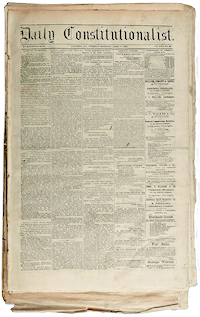
Daily Constitutionalist
Augusta, Georgia
May 24, 1861

Twenty or thirty Girls can find employment at the Confederate States Arsenal, in making up Cartridges for small arms. Enquire at the store of Messrs. Butt, Morris & Co.

0 comments

The Murder of Colonel Ellsworth at the Marshall House, Alexandria, Va., May 24th, 1861

Miscellaneous document sources

The Murder of Colonel Ellsworth at the Marshall House, Alexandria, Va., May 24th, 1861(from Frank Leslie’s Illustrated History of the Civil War…, edited by Louis Shepheard Moat, Published by Mrs. Frank Leslie, New York, 1895)

“Colonel Ellsworth was passing the Marshall House in Alexandria, Va., when he saw a Confederate flag waving above it. On the spur of the moment he entered the hotel, and ascending to the roof with two or three friends, cut the halyards and took possession of the flag. As he descended the stairs be was fired at by James W. Jackson, proprietor of the hotel. Colonel Ellsworth fell to the ground mortally wounded.”

0 comments