Sunday [June] 16.–Colonel Rosecrans and Matthews, having gone to Cincinnati, and Colonel King to Dayton, I am left in command of camp, some twenty-five hundred to three thousand men–an odd position for a novice, so ignorant of all military things. All matters of discretion, of common judgment, I get along with easily, but I was for an instant puzzled when a captain in the Twenty-fourth, of West Point education, asked me formally, as I sat in tent, for his orders for the day, he being officer of the day. Acting on my motto, “When you don’t know what to say, say nothing,” I merely remarked that I thought of nothing requiring special attention; that if anything was wanted out of the usual routine I would let him know.
American Civil War Chronicles
“When you don’t know what to say, say nothing,”—Diary of Rutherford B. Hayes
June 16, 2021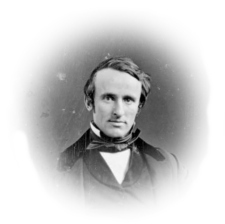
Five enlistees from Co. K, 11th Ohio Infantry Regiment
June 16, 2021Civil War Era Photographic Portraiture #004

Title: [Five enlistees from Co. K, 11th Ohio Infantry Regiment, one in uniform and three in hickory shirts, at Camp Dennison, three with bayoneted rifles]
Date Created/Published: [United States], [May 1861]
Medium: 1 photograph : ambrotype ; plate 82 x 70 mm (sixth plate format), case 92 x 80 mm + 1 manuscript fragment.
Summary: Photograph shows soldiers who enlisted Greenville, Ohio, identified as (left to right) Lieutenant Wesley Gorsuch, Private Francis M. Eidson, unidentified soldier, Brigadier General Joseph Washington Frizell, and Doctor Squire Dickey, a surgeon candidate who did not muster.
Reproduction Number: LC-DIG-ppmsca-55740 (digital file from original)
Rights Advisory: No known restrictions on publication.
Access Advisory: Use digital images. Original served only by appointment because material requires special handling.
Repository: Library of Congress Prints and Photographs Division Washington, D.C. 20540 USA
Notes:
….Title devised by Library staff.
….Date and soldiers’ identifications from: “Through The Camera’s Eye: Part One, Ohio Soldiers 1861,” by Larry M. Strayer and Brad L. Pruden. Military Images, volume XXVII, number 1, July/August 2005, page 6.
….Text on manuscript fragment: “Left, Capt. Gorsuch, Colonel Frazell, 3rd unknown, 4th Frank Eidson, private Squire Dickey, surgeon. Company from Greenville, Ohio.”
….Case: Berg, no. 4-17G.
….Gift; Tom Liljenquist; 2017; (DLC/PP-2017:171, formerly deposit D073)
….More information about this collection is available at http://hdl.loc.gov/loc.pnp/pp.lilj
….Purchased from: Larry M. Strayer, June 2017.
….Forms part of: Liljenquist Family Collection of Civil War Photographs (Library of Congress).
….Forms part of: Ambrotype/Tintype photograph filing series (Library of Congress)
Library of Congress file permalink
___________
Mike’s notes:
Note – This image has been digitally adjusted for one or more of the following:
– fade correction,
– color, contrast, and/or saturation enhancement
– selected spot and/or scratch removal
– cropped for composition and/or to accentuate subject
Before retouching:

William Howard Russell’s Diary: On dueling in Mississippi.—Train to Memphis.—Soldiers or volunteers heading to Corinth.
June 16, 2021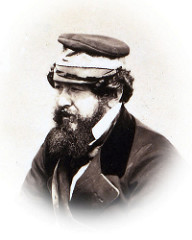
June 16th.–I was compelled to send my excuses to Governor Pettus, and remained quietly within the house of my host, entreating him to protect me from visitors and especially my own confrères, that I might secure a few hours even in that ardent heat to write letters to home. Now, there is some self-denial required, if one be at all solicitous of the popularis aura, to offend the susceptibilities of the irritable genus in America. It may make all the difference between millions of people hearing and believing you are a high-toned, whole-souled gentleman or a wretched ignorant and prejudiced John Bull; but, nevertheless, the solid pudding of self-content and the satisfaction of doing one’s work are preferable to the praise even of a New York newspaper editor.
When my work was over I walked out and sat in the shade with a gentleman whose talk turned upon the practises of the Mississippi duello. Without the smallest animus, and in the most natural way in the world, he told us tale after tale of blood, and recounted terrible tragedies enacted outside bars of hotels and in the public streets close beside us. The very air seemed to become purple as he spoke, the land around a veritable “Aceldama.” There may, indeed, be security for property, but there is none for the life of its owner in difficulties, who may be shot by a stray bullet from a pistol as he walks up the street.
I learned many valuable facts. I was warned, for example, against the impolicy of trusting to small-bored pistols or to pocket six-shooters in case of a close fight, because suppose you hit your man mortally he may still run in upon you and rip you up with a bowie knife before he falls dead; whereas if you drive a good heavy bullet into him, or make a hole in him with a “Derringer” ball, he gets faintish and drops at once.
Many illustrations, too, were given of the value of practical lessons of this sort. One particularly struck me. If a gentleman with whom you are engaged in altercation moves his hand towards his breeches pocket, or behind his back, you must smash him or shoot him at once, for he is either going to draw his six-shooter, to pull out a bowie knife, or to shoot you through the lining of his pocket. The latter practice is considered rather ungentlemanly, but it has somewhat been more honoured lately in the observance than in the breach. In fact, the savage practice of walking about with pistols, knifes, and poniards, in bar-rooms and gambling-saloons, with passions ungoverned, because there is no law to punish the deeds to which they lead, affords facilities for crime which an uncivilised condition of society leaves too often without punishment, but which must be put down or the country in which it is tolerated will become as barbarous as a jungle inhabited by wild beasts.
Our host gave me an early dinner, at which I met some of the citizens of Jackson, and at six o’clock I proceeded by the train for Memphis. The carriages were of course, full of soldiers or volunteers, bound for a large camp at a place called Corinth, who made night hideous by their song and cries, stimulated by enormous draughts of whiskey and a proportionate consumption of tobacco, by teeth and by fire. The heat in the carriages added to the discomforts arising from these causes, and from great quantities of biting insects in the sleeping places. The people have all the air and manners of settlers. Altogether the impression produced on my mind was by no means agreeable, and I felt as if I was indeed in the land of Lynch law and bowie knives, where the passions of men have not yet been subordinated to the influence of the tribunals of justice. Much of this feeling has no doubt been produced by the tales to which I have been listening around me–most of which have a smack of manslaughter about them.
“I do not believe there is a woman among us who would not give up every thing but the bare necessaries of life for the good of our cause.”—Diary of a Southern Refugee.
June 16, 2021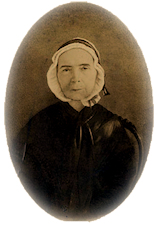
16th.—Rumours are abundant to-day of a Federal force approaching Strasburg. We are not at all credulous of the flying reports with which our ears are daily pained, and yet they make us restless and uneasy. We thank God and take courage from the little successes we have already had at Pigs Point, Acquia Creek, Fairfax Court-House, and Philippi. These are mere trifles, they say; well, so they are, but they are encouraging to our men, and show that we can hold our own.
A most decided revolution is going on in our social system throughout our old State: economy rules the day. In this neighbourhood, which has been not a little remarkable for indulging in the elegancies of life, they are giving up desserts, rich cake, etc. The wants of the soldiers are supplied with a lavish hand, but personal indulgences are considered unpatriotic. How I do admire their self-denying spirit! I do not believe there is a woman among us who would not give up every thing but the bare necessaries of life for the good of our cause.
16th, Night.—I can scarcely control myself to sit quietly down and write of the good news brought by the mail of to-day; I mean the victory—on our side almost bloodless victory—at Bethel. It took place on the 10th. Strange that such brilliant news was so long delayed! The enemy lost [continue reading…]
Letter from the Interior.
June 15, 2021
Register and Advertiser
Mobile Alabama
June 15, 1861
Gainesville, June 11, 1861.
Messrs. Editors: I am deprived of the pleasure of being able to announce that a good rain has fallen in this vicinity, insuring an abundant harvest. There has evidently been rain all around this place, and there have been most promising signs here, but, as usual in dry weather, all signs have failed and planters have still to wait and hope. One good visitation would suffice to make the corn crop. The wheat here, as in parts of Mississippi I have visited, has been gathered. No finer crop has ever been made in these parts, I am informed. Here, too, as elsewhere, planters have put double the quantity of land in grain every before devoted thereto. In fact, neither man nor beast will suffer for food this year, or indeed the next. Thus far crops are not suffering for rain, but soon will.
The subscription of cotton to the Confederate loan is going on in this county most satisfactorily. The proposition is from a fourth to a half the number of bales each planter expects to make. Some subscribe grain as well as cotton. At present about 3,500 bales have been subscribed, and it is thought by those best able to make a correct estimate, that between 5,000
and 6,000 bales will be obtained in the county. The Hon. Turner Feavis has been mainly [continue reading…]
and 6,000 bales will be obtained in the county. The Hon. Turner Feavis has been mainly [continue reading…]
Widows and Orphans of Volunteers.
June 15, 2021
The Memphis Daily Appeal
Memphis, Tennessee
June 15, 1861
We call attention to an important defect in the existing plan of providing for the wives and children of volunteers. As it exists, the wife of a volunteer may draw from the county a certain sum monthly, for herself and children, but let a battle be fought—let her husband die nobly fighting for the cause for which he has given his blood—let his wife be a widow and his children fatherless because of his devotion to his country, and the provision they enjoyed during his life is cut off. When he has given the last proof of his patriotism he has beggared his dear one. Is this generous, is it right?
Philanthropic Contributions.
June 15, 2021
The Memphis Daily Appeal
Memphis, Tennessee
June 15, 1861
We are glad to learn that the citizens—notwithstanding the adoption by council of Ald. Robinson’s resolution stopping relief to the poor by the city almoner—are sustaining the determination of Mr. Underwood, late the city almoner, to continue to distribute to the poor such provisions as citizens may place in his hands for the purpose. Contributions were yesterday made in support of this object to the amount of fifty dollars in money. This will be laid out in flour, meal and bacon. Any provisions that Mr. Underwood may have put into his hands will be faithfully bestowed on persons whose needy condition has been ascertained. The place of distribution is on Second street, north of Jefferson; it will be opened on Monday morning. The mayor gives his approbation to the plan, and to the party who has kindly assumed the difficult office of distribution of the charity of the public. It strikes us that the benevolent effort thus made, might advantageously be put on a more permanent footing than is at present contemplated, and have a wider sphere of operations. Owing to the absence of a considerable portion of the male community, many mothers and sisters will be left in very serious straits; and on account of the decreased demand for labor, there will be much difficulty in families hitherto exempt from privation. This will lead to many appeals on the private charity of our citizens, and imposters will take advantage of the existing distress to push their trade of deceit, and they, by impudence, will gain more than enough for their wants, thus cheating benevolence, and robbing the fund that kind and Christian hearts have intended for genuine and modest poverty. To put a stop to begging and all its attendant evils, [continue reading…]
Petty office politics in the war office.
June 15, 2021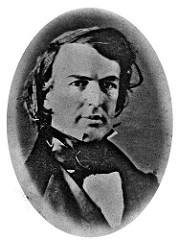
JUNE 15th—Another clerk has been appointed; a sedate one, by the name of Shepherd, and a former pupil of the colonel’s.
I received several hints that the Chief of the Bureau was not at all a favorite with the Secretary, who considered him utterly unfit for the position; and that it could hardly be good policy for me to be on terms of such intimacy with him. Policy! A word I never appreciated, a thing I never knew. All I know is that Col. Bledsoe has been appointed by the President to fill an important position; and the same power appoints the secretaries, and can unmake them. Under these circumstances I find him permitted to sit for hours and days in the department with no one to inform him of the condition of the business or to facilitate him in the performance of his official duties. Not for any partiality in his be-half, or prejudice against the Secretary, I step forward and endeavor to discharge my own duty. I strive to serve the cause, whatsoever may be the consequences to my personal interests.
“…, we could see the smoke and hear the guns very plain.”—Horatio Nelson Taft
June 15, 2021
SATURDAY, JUNE 15, 1861.
This has been the hotest day yet. M. 92 with a pretty good breeze all day. More troops have crossed the River, and many are looking for an assault upon the City. I do not. The Flying Artillery at Arlington House were practicing this evening, we could see the smoke and hear the guns very plain. Went down to market for strawberries, [cost] more than meat. Sergeant Mandeville was at the house this eve’g. Went down to Willards and on the Ave, bot the NY papers, home at 10 o’clock.
______
The three diary manuscript volumes, Washington during the Civil War: The Diary of Horatio Nelson Taft, 1861-1865, are available online at The Library of Congress.
“Men are constantly enlisting.”—Caroline Cowles Richards.
June 15, 2021
June, 1861.–There was a patriotic rally this afternoon on the campus of Canandaigua Academy and we Seminary girls went. They raised a flag on the Academy building. General Granger presided, Dr Coleman led the choir and they sang “The Star Spangled Banner.” Mr Noah T. Clarke made a stirring speech and Mr Gideon Granger, James C. Smith and E. M. Morse followed. Canandaigua has already raised over $7,000 for the war. Capt. Barry drills the Academy boys in military tactics on the campus every day. Men are constantly enlisting. Lester P. Thompson, son of “Father Thompson,” among the others.
A young man asked Anna to take a drive to-day, but Grandmother was not willing at first to let her go. She finally gave her consent, after Anna’s plea that he was so young and his horse was so gentle. Just as they were ready to start, I heard Anna run upstairs and I heard him say, “What an Anna!” I asked her afterwards what she went for and she said she remembered that she had left the soap in the water.
June.–Dr Dagget’s war sermon from the 146th Psalm was wonderful.
Camp life, Army of the Potomac Taking it Easy.
June 15, 2021 Title: Camp life, Army of the Potomac Taking it easy.
Creator(s): Brady’s National Photographic Portrait Galleries, photographer
Related Names:
E. & H.T. Anthony (Firm) , publisher
Date Created/Published: New-York : E. & H.T. Anthony & Co., American and foreign stereoscopic emporium, 501 Broadway, [15 June 1861]
Medium: 1 photograph : albumen print ; mount 9 x 17 cm (stereograph format)
Summary: Stereograph shows members of the 1st Boston Light Artillery at camp near Relay House in Baltimore County, Maryland, on June 15, 1861.
Reproduction Number: LC-DIG-stereo-1s04371 (digital file from original item, front) LC-DIG-stereo-2s04371 (digital file from original item, back)
Rights Advisory: No known restrictions on publication.
Call Number: LOT 4169, no. 208 [P&P]
Repository: Library of Congress Prints and Photographs Division Washington, D.C. 20540 USA
Notes:
….Title from item.
….Probably from the studio of Mathew Brady. E. & H.T. Anthony & Co. probably acquired the negatives in exchange for photographic supplies.
….Date and location information from hand written information on the verso of a matching stereograph in the American Antiquarian Society digital database, 509197.
….Purchase; Russell Norton; 2012; (DLC/PP-2012: 069).
Library of Congress file permalink
___________
Mike’s notes:
Note – This image has been digitally adjusted for one or more of the following:
– fade correction,
– color, contrast, and/or saturation enhancement
– selected spot and/or scratch removal
– cropped for composition and/or to accentuate subject
“He did not move and I ran my bayonet into his side an inch or so.”–Army letters of Oliver Willcox Norton.
June 15, 2021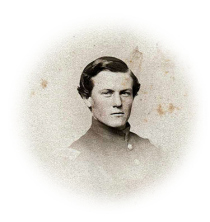
Camp Wright, Hulton, Penm.,
Saturday, June 15, 1861.
Dear Father:–
Our camp this week has been the scene of a good deal of confusion and uneasiness. I clip an extract from this morning’s Dispatch that explains the cause.
We have been told by some officers that “We were accepted; we were going to Chambersburg; we were not accepted; we were accepted for three years; those who would not enlist for the war would be sent home; they would be kept here till their three months expires; that Companies A, B, C, F and I only, would go for the war, and the rest would be disbanded,” and within ten minutes Major Schlaudecker has told me “that none of the companies would go; that we would all go together, one way or the other.”
Acting on the statement that our company would not go, I went this morning and put my name on Company B’s roll for the war. Our Captain said “No man should leave his company till it was disbanded.” The Colonel said “Any man who chose could enlist in any company in the regiment to go for the war. Captains notwithstanding.” “Father said I might and mother said I shouldn’t,” and I concluded I would do as I was a mind to.
The statement that the companies could not be filled in time to report according to orders, is probably the true one, and so that performance will not amount to much.
Such a feeling pervades the minds of the soldiers that discipline is played out. Company K refused to turn out to roll call the other morning, and day before yesterday, not a man of them appeared on dress parade. Company F would not come out on parade yesterday.
Night before last a row broke out in a beer saloon near the depot and some of the Pittsburgh boys cleaned out the whole thing, broke in the doors and windows, smashed up the glass and furniture. A crowd collected and Colonel Grant was obliged to call out Companies B, G and I with their guns to disperse them. Company G charged down the road and across the railroad track through the thickest of them. They made quite a determined stand on the track, and some six or eight were wounded before they would leave. A man stood before me and I called to him twice to stand back. He did not move and I ran my bayonet into his side an inch or so. He started then. He was awful mad. The wound was not a serious one, only a flesh wound, but he swears he will shoot the man who stabbed him. He has been hanging round our quarters with a revolver several times lately, and pointed out a man who, he says, stabbed him, but he has got the wrong man. I think I am safe enough unless some one peaches. Only three or four in our company know who it was. M. W. Goold pricked one man, Godfrey. Wheeler and others pricked some, but none were seriously hurt. I have carried a revolver for a day or so, and I think I am all right.
The way we have been treated is enough to make a preacher swear, almost. We are cheated in our rations about half the time. Our clothes are all dropping off from us. We don’t know whether we are accepted or not, or that we will ever get any pay.
We have been practicing at target shooting lately. Our guns beat everything I ever saw to shoot. The balls are very heavy, eleven to the pound. We were shooting at “Old Jeff” yesterday, at forty rods, and over half the boys hit him. We broke his back, legs, arms, and knocked his teeth out. This morning, since I commenced writing, nineteen of us have been shooting at a target at twelve rods. Thirteen balls struck the board, nine inside the ring and four hit the center. I call that good shooting. I, of course, am not among the best, though I hit inside the ring. One ball went plumb through an oak tree, nine inches in diameter.
The orders this morning are that we must commence drilling again, and have every man attending to his duties or lying in the guard house.
I hope you will write as often as you can. It seems to me my letters are like “angels’ visits.” My health is excellent. It never was better. I am in the river every day. The river is about one hundred rods wide here, with a swift current. I rolled up in my blanket the other night and slept under an apple tree. I slept first-rate, did not wake till reveille, nor take the least cold. The boys are all getting considerably copper-colored in the hot sun. The weather is warm and dry. The Dispatch says the thermometer stood at 102 yesterday at noon.
P. S.–At 12 m. It is definitely settled now that we are to stay in the State service the remainder of the three months. No companies will leave the regiment. According to past experience, we expect this changed in a couple of hours.
Day of prayer and fasting.—Diary of a Southern Refugee.
June 15, 2021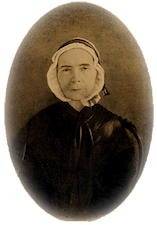
June 15.—Yesterday was set apart by the President as a day of prayer and fasting, and I trust that throughout the Confederacy the blessing of God was invoked upon the army and country. We went to church at Millwood, and heard Bishop Meade. His sermon was full of wisdom and love; he urged us to individual piety in all things, particularly to love and charity to our enemies. He is full of enthusiasm and zeal for our cause. His whole heart is in it, and from the abundance of the heart the mouth speaketh, for he talks most delightfully and encouragingly on the subject. He says that if our ancestors had good reason for taking up arms in 1775, surely we had much better, for the oppression they suffered from the mother-country was not a tithe of the provocation we have received from the Government at Washington.
“I hardly thought I would have been able to stand forty miles’ walk so well. Last night I felt very tired, but this evening entirely recovered.”–Letters from Elisha Franklin Paxton.
June 15, 2021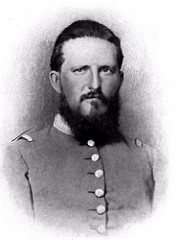
Winchester, June 15, 1861.
On Tuesday last we marched on foot from Harper’s Ferry to Shepherdstown, thence seven miles farther up the Potomac. There we remained a day and a half, when we were ordered to this place, on foot again, and reached here, forty miles, in a day and a half. How long we remain here, or when we move again, I have not an idea. I hardly thought I would have been able to stand forty miles’ walk so well. Last night I felt very tired, but this evening entirely recovered. The last three nights I have slept in the open air on the ground, and never enjoyed sleep more. I saw Capt. Jim White to-day, and his college boys. Lexington has been well drained of its youth and manhood. I heartily wish, Love, that I was with you again, I hardly know what I would not give for one day with wife and little ones. But I must not think of it. I would soon make myself very unhappy if I suffered my mind to wander in that direction. I ought to be grateful to Omnipotence for such a love as that which you give me. Blood and kindred never made a stronger tie. We have just received orders to hitch up again–for what destination I do not know. Harper’s Ferry has been abandoned by our forces, and hereafter direct your letters to the address below. Kiss the dear little baby boys for their absent papa, and for yourself accept the best love of a fond husband.
Civil War Day-By-Day
June 15, 2021
June 15, 1861
A Chronological History of the Civil War in America1
- Privateer “Savannah” arrived at New York a prize of the U. S. brig “Perry.”
- Gen. Lyon occupied Jefferson City, Mo.
- Gen. Price retreated to Booneville.
- Harper’s Ferry occupied by the Union forces.
- A Chronological History of the Civil War in America by Richard Swainson Fisher, New York, Johnson and Ward, 1863
Duryea Zouaves, Fort Schuyler Adjuant Mess
June 14, 2021 Metropolitan Museum of Art
Title: Duryea Zouaves, Fort Schuyler Adjuant Mess
Artist: Stacy (American, active 1860s)
Date: May 18, 1861
Medium: Albumen silver print from glass negative
Dimensions: 5 9/16 x 7 1/2
Classification: Photographs
Credit Line: Gilman Collection, Museum Purchase, 2005
Accession Number: 2005.100.1231
Inscription: Inscribed in pencil on mount, verso TC: “Duryea Zouaves // Fort Schuyler Adjuant Mess // Photo by Stacy”
Provenance: Alfred R. Waud Collection, Civil War Illustrator; [Paul Katz, North Bennington, Vermont, February 17, 1984]; Gilman Paper Company Collection, New York
The Met file permalink
Blog post (link active June 14, 2021)
___________
Mike’s notes:
Note – This image has been digitally adjusted for one or more of the following:
– fade correction,
– color, contrast, and/or saturation enhancement
– selected spot and/or scratch removal
– cropped for composition and/or to accentuate subject
“I drove out with Mrs. Davis yesterday to one of the Camp grounds and it was really a beautiful, though rather sad sight to me…” Charlotte Wigfall
June 14, 2021
(excerpts)
“June 11th and 14th.
“We are still at the Spotswood Hotel but I don’t know whether we shall continue very long. The President and his family will move next week to the place selected for them. I hear it is very handsome and the City Council has bought and put it at the disposal of the Government. They have also given Mrs. Davis the use of a nice carriage and horses and seem disposed to do all they can to show their joy at the exchange from Montgomery. . . . So far all is quiet here and I can yet scarcely realize that we are at war, actually.
“I drove out with Mrs. Davis yesterday to one of the Camp grounds and it was really a beautiful, though rather sad sight to me, to see them drill and go through with their manœuvres, Poor fellows! how many will never return to their homes! . . . There are several camp grounds in the neighborhood, and people throng them every afternoon and unless you engage a carriage in the morning, it is very hard to procure one.”
John Beauchamp Jones’ diary at the rebel war office.
June 14, 2021
JUNE 14th—Col. Bledsoe has given up writing almost entirely, but he groans as much as ever. He is like a fish out of water, and unfit for office.
Village Life in America.
June 14, 2021
June, 1861.–At the anniversary exercises, Rev. Samuel M. Hopkins of Auburn gave the address. I have graduated from Ontario Female Seminary after a five years course and had the honor of receiving a diploma from the courtly hands of General John A. Granger. I am going to have it framed and handed down to my grandchildren as a memento, not exactly of sleepless nights and midnight vigils, but of rising betimes, at what Anna calls the crack of dawn. She likes that expression better than daybreak. I heard her reciting in the back chamber one morning about 4 o’clock and listened at the door. She was saying in the most nonchalant manner: “Science and literature in England were fast losing all traces of originality, invention was discouraged, research unvalued and the examination of nature proscribed. It seemed to be generally supposed that the treasure accumulated in the preceding ages was quite sufficient for all national purposes and that the only duty which authors had to perform was to reproduce what had thus been accumulated, adorned with all the graces of polished style. Tameness and monotony naturally result from a slavish adherence to all arbitrary rules and every branch of literature felt this blighting influence. History, perhaps, was in some degree an exception, for Hume, Robertson and more especially Gibbon, exhibited a spirit of original investigation which found no parallel among their contemporaries.” I looked in and asked her where her book was, and she said she left it down stairs. She has “got it” all right, I am sure. We helped decorate the seminary chapel for two days. Our motto was, “Still achieving, still pursuing.” Miss Guernsey made most of the letters and Mr Chubbuck put them up and he hung all the paintings. It was a very warm week. General Granger had to use his palm leaf fan all the time, as well as the rest of us. There were six in our class, Mary Field, Lucy Petherick, Kate Lilly, Sarah Clay, Abby Scott and myself. Abbie Clark would have been in the class, but she went to Pittsfield, Mass., instead. General Granger said to each one of us, “It gives me great pleasure to present you with this diploma,” and when he gave Miss Scott hers, as she is from Alabama, he said he wished it might be as a flag of truce between the North and the South, and this sentiment was loudly cheered. General Granger looked so handsome with his black dress suit and ruffled shirt front and all the natural grace which belongs to him. The sheepskin has a picture of the Seminary on it and this inscription : “The Trustees and Faculty of the Ontario Female Seminary hereby certify that has completed the course of study prescribed in this Institution, maintained the requisite scholarship and commendable deportment and is therefore admitted to the graduating honors of this Institution. President of Board, John A. Granger; Benjamin F. Richards, Edward G. Tyler, Principals.” Mr Morse wrote something for the paper :
“To the Editor of the Repository:
“Dear Sir–June roses, etc., make our loveliest of villages a paradise this week. The constellations are all glorious and the stars of earth far outshine those of the heavens. The lake shore, ‘Lovers’ Lane’ ‘Glen Kitty’ and the ‘Points’ are full of romance and romancers. The yellow moon and the blue waters and the dark green shores and the petrified Indians, whispering stony words at the foot of Genundewah, and Squaw Island sitting on the waves, like an enchanted grove, and ‘Whalesback’ all humped up in the East and ‘Devil’s Lookout’ rising over all, made the ‘Sleeping Beauty’ a silver sea of witchery and love; and in the cottages and palaces we ate the ambrosia and drank the nectar of the sweet goddesses of this new and golden age.
“I may as well say to you, Mr Editor, that the Ontario Female Seminary closed yesterday and ‘Yours truly’ was present at commencement. Being a bachelor I shall plead guilty and appeal to the mercy of the Court, if indicted for undue prejudice in favor of the charming young orators. After the report of the Examining Committee, in which the scholarship of the young ladies was not too highly praised, came the Latin Salutatory by Miss Clay, a most beautiful and elegant production (that sentence, sir, applies to both salutatory and salutatorian). The ‘Shadows We Cast,’ by Miss Field, carried us far into the beautiful fields of nature and art and we saw the dark, or the brilliant shades, which our lives will cast, upon society and history. Then ‘Tongues in Trees’ began to whisper most bewitchingly, and ‘Books in the Running Brooks’ were opened, and ‘Sermons in Stones’ were preached by Miss Richards, and this old bachelor thought if all trees would talk so well, and every brook would babble so musically, and each precious stone would exhort so brilliantly, as they were made to do by the ‘enchantress,’ angels and dreams would henceforth be of little consequence; and whether the orator should be called ‘Tree of Beauty,’ ‘Minnehaha’ or the ‘Kohinoor’ is a ‘vexata questio.’
“In the evening Mr Hardick, ‘our own,’ whose hand never touches the piano without making delicious music, and Misses Daggett and Wilson, also ‘our own,’ and the musical pupils of the Institution, gave a concert. ‘The Young Volunteer’ was imperatively demanded, and this for the third time during the anniversary exercises, and was sung amid thunders of applause, ‘Star of the South,’ Miss Stella Scott, shining meanwhile in all her radiant beauty. May her glorious light soon rest on a Union that shall never more be broken.–Soberly yours,
A Very Old Bachelor.”
June—Dr. Daggett’s war sermon from the 146th Psalm was wonderful.
The rebels “are evidently afraid of ‘U.S.’ and have acted cowardly in all the little skirmishes which have occured so far.”—Horatio Nelson Taft
June 14, 2021
FRIDAY 14
Fine pleasant day. The evacuation of Harpers Ferry by the rebels is the only news of importance afloat today. Many think that the combined forces will now move on Washington. But I do not think they will attempt its capture. They are evidently afraid of “U.S.” and have acted cowardly in all the little skirmishes which have occured so far. But they may be reserving their courage for a great effort. Saw the 12th Parade with wife & Juliet. Did not go on the Ave.
______
The three diary manuscript volumes, Washington during the Civil War: The Diary of Horatio Nelson Taft, 1861-1865, are available online at The Library of Congress.
City Almoner.
June 14, 2021
“…the destitute, so far as the city goes, are left as destitute as before..,”
The Memphis Daily Appeal
Memphis, Tennessee
June 11, 1861
The city council two or three weeks ago appropriated money to give relief to destitute persons in the city, and appointed ex-Marshal Underwood, almoner, to distribute food to such persons. This gentleman performed his duties with rare sagacity, kindly attending to the wants of the poor, and firmly rejecting the importunity of imposters. Such confidence was felt in the discretion and integrity of the almoner, that many citizens placed flour, meal, bacon and other provisions at his disposal for distribution, thus more than doubling what the city had contributed. We had in the creation of the office of city almoner a provision made for those who, from the failure of the ordinary means of obtaining a living, and from the absence of sons and brothers in the army–for our county court have made no provision for the mothers or sisters of absent soldiers, and none for the widows and children of such as may fall in battle—require particular attention at this time, the provision was made at so trifling an expense to the city, owing to the voluntary contributions put in the almoner’s hands, that we looked upon the arrangement as in every way an excellent one. To our surprise, a motion made by an alderman of the 7th ward, J. B. Robinson, to destroy this arrangement, was on Tuesday last adopted by the city council, and the destitute, so far as the city goes, are left as destitute as before. In this condition of things Mr. Underwood has generously offered to continue to render his service gratuitously, as the dispenser to the poor of such provisions as may be given to him for that purpose. Those having anything to spare from their houses or stores, or who wish to aid the poor by the hands of one who will ascertain that their gifts go into proper hands, should send the articles to the almoner’s office, on Second street, east side, four doors north of Madison. Persons having vegetables in their gardens, or left over at market unsold; bakers having bread left over; or persons in any way disposed to help the many who now greatly require kindness from the philanthropic, should communicate with the almoner and leave the articles at his office. By such kind actions the unhappy consequences of Ald. Robinson’s resolution may be averted.
“Aren’t you glad Harper’s Ferry has been evacuated without bloodshed?—Woolsey family letters. Eliza Woolsey Howland to Joseph Hpwland (still in Albany.)
June 14, 2021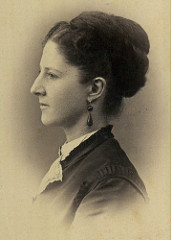
New York, June 14, 1861.
At 10 p. m. the expected telegram arrived saying the “Adriatic” would be at her wharf by 11, and Charley and Mr. S. left at once in carriages to bring the girls up. The travellers all look remarkably well and by no means as seedy and seasick as they ought to by rights. Molly has a sore throat, but is bright and very smart in spite of it, and the other children are lovely as possible. Bertha is the stranger after all, for Una is like most other sweet babies – round and plump and laughing–but Bertha is a little darling, unlike May and unlike Elsie, unlike all other children–not belonging to anyone, in likeness or manner. She is a mere baby herself; just running about and beginning to talk, saying, “I will” and “I won’t” in the sweetest and most winning way.
Robert has been out to the country with Charley, and the rest of us have had a grand “opening” of foreign traps. . . . Aren’t you glad Harper’s Ferry has been evacuated without bloodshed?
“We are in command of the whole camp…,”—Rutherford B. Hayes
June 14, 2021
CAMP JACKSON, NEAR COLUMBUS,
Friday P. M., June 14, 1861.
DEAR UNCLE:–I received from Cincinnati two letters from you, and am very sorry to hear of your ill health. If you are not likely to come here soon, let me know, and I will certainly visit Fremont, when I can get leave to go home. The business here will require attention for a few days yet, before we get into an established routine. I shall probably leave here in about a week, and can then, if you wish it, visit you one day. If you were well, you would enjoy a few days here. Laura could send you out in the morning, and there are hosts of conveyances back.
I enjoy this thing very much. It is open-air, active life, novel and romantic. Hotter than Tophet in the sun, but a good breeze blowing all the time.
Our arrangement of regimental matters has turned out to be a capital one so far. We are in command of the whole camp, and, as Colonel Rosecrans is absent, Matthews and I are starring it. What we don’t know, we guess at, and you may be sure we are kept pretty busy guessing.
My want now is a good horse. A small or medium-sized animal of good sense, hardy and kind, good looking enough, but not showy, is what I want. A fast walk, smooth trot, and canter are the gaits. I don’t object to a pacer if he can walk and gallop well. Don’t bother yourself to find one, but if you happen to know any, let me know. I am busy or I would write more.
Sincerely,
R. B. HAYES.
S. BIRCHARD.
CAMP JACKSON, NEAR COLUMBUS,
Friday P. M., June 14, 1861.
DEAR UNCLE:–I received from Cincinnati two letters from you, and am very sorry to hear of your ill health. If you are not likely to come here soon, let me know, and I will certainly visit Fremont, when I can get leave to go home. The business here will require attention for a few days yet, before we get into an established routine. I shall probably leave here in about a week, and can then, if you wish it, visit you one day. If you were well, you would enjoy a few days here. Laura could send you out in the morning, and there are hosts of conveyances back.
I enjoy this thing very much. It is open-air, active life, novel and romantic. Hotter than Tophet in the sun, but a good breeze blowing all the time.
Our arrangement of regimental matters has turned out to be a capital one so far. We are in command of the whole camp, and, as Colonel Rosecrans is absent, Matthews and I are starring it. What we don't know, we guess at, and you may be sure we a
CAMP JACKSON, NEAR COLUMBUS,

Friday P. M., June 14, 1861.

DEAR UNCLE:–I received from Cincinnati two letters from you, and am very sorry to hear of your ill health. If you are not likely to come here soon, let me know, and I will certainly visit Fremont, when I can get leave to go home. The business here will require attention for a few days yet, before we get into an established routine. I shall probably leave here in about a week, and can then, if you wish it, visit you one day. If you were well, you would enjoy a few days here. Laura could send you out in the morning, and there are hosts of conveyances back.

I enjoy this thing very much. It is open-air, active life, novel and romantic. Hotter than Tophet in the sun, but a good breeze blowing all the time.

Our arrangement of regimental matters has turned out to be a capital one so far. We are in command of the whole camp, and, as Colonel Rosecrans is absent, Matthews and I are starring it. What we don't know, we guess at, and you may be sure we are kept pretty busy guessing.

My want now is a good horse. A small or medium-sized animal of good sense, hardy and kind, good looking enough, but not showy, is what I want. A fast walk, smooth trot, and canter are the gaits. I don't object to a pacer if he can walk and gallop well. Don't bother yourself to find one, but if you happen to know any, let me know. I am busy or I would write more.

Sincerely,

R. B. HAYES.

S. BIRCHARD.
re kept pretty busy guessing.
My want now is a good horse. A small or medium-sized animal of good sense, hardy and kind, good looking enough, but not showy, is what I want. A fast walk, smooth trot, and canter are the gaits. I don't object to a pacer if he can walk and gallop well. Don't bother yourself to find one, but if you happen to know any, let me know. I am busy or I would write more.
Sincerely,
R. B. HAYES.
S. BIRCHARD.
William Howard Russell’s Diary: Vicksburg.—News of Great Bethel.—Train to Jackson.—Great moral degradation.—The Capital of Mississippi.—Governor Pettus.
June 14, 2021
Friday, June 14th.–Last night with my good host from his plantation to the great two-storied steamer General Quitman, at Natchez. She was crowded with planters, soldiers and their families, and as the lights shone out of her windows, looked like a walled castle blazing from double lines of embrasures.
The Mississippi is assuredly the most uninteresting river in the world, and I can only describe it hereabout by referring to the account of its appearance which I have already given–not a particle of romance in spite of oratorical patriots and prophets, can ever shine from its depths, sacred to cat and buffalo fish, or vivify its turbid waters.
Before noon we were in sight of Vicksburg, which is situated on a high bank or bluff on the left bank of the river, about 400 miles above New Orleans and some 120 miles from Natchez.
Mr. MacMeekan, the proprietor of the “Washington,” declares himself to have been the pioneer of hotels in the far west; but he has now built himself this huge caravanserai, and rests from his wanderings. We entered the dining saloon, and found the tables closely packed with a numerous company of every condition in life, from generals and planters down to soldiers in the uniform of privates. At the end of the room there was a long table on which the joints and dishes were brought hot from the kitchen to be carved by the negro waiters, male and female, and as each was brought in the proprietor, standing in the centre of the room, shouted out with a loud voice, “Now, then, here is a splendid goose! ladies and gentlemen, don’t neglect the goose and apple-sauce! Here’s a piece of beef that I can recommend! upon my honour you will never regret taking a slice of the beef. Oyster-pie! oyster-pie ! never was better oyster-pie seen in Vicksburg. Run about, boys, and take orders. Ladies and gentlemen, just look at that turkey! who’s for turkey ?”–and so on, wiping the perspiration from his forehead and combating with the flies.
Altogether it was a semi-barbarous scene, but the host was active and attentive; and after all, his recommendations were very much like those which it was the habit of the taverners in old London to call out in the streets to the passers-by when the joints were ready. The little negroes who ran about to take orders were smart, but now and then came into violent collision, and were cuffed incontinently. One mild-looking little fellow stood by my chair and appeared so sad that I asked him “Are you happy, my boy?” He looked quite frjghtened. “Why don’t you answer me?” “I’se afeered, sir; I can’t tell that to Massa.” “Is not your master kind to you?” “Massa very kind man, sir; very good man when he is not angry with me,” and his eyes filled with tears to the brim.
The war fever is rife in Vicksburg, and the Irish and German labourers, to the extent of several hundreds, have all gone off to the war.
When dinner was over, the mayor and several gentlemen of the city were good enough to request that I would attend a meeting, at a room in the railway-station, where some of the inhabitants of the town had assembled. Accordingly I went to the terminus and found a room filled with gentlemen. Large china bowls, blocks of ice, bottles of wine and spirits, and boxes of cigars were on the table, and all the materials for a symposium.
The company discussed recent events, some of which I learned for the first time. Dislike was expressed to the course of the authorities in demanding negro labour for the fortifications along the river, and uneasiness was expressed respecting a negro plot in Arkansas; but the most interesting matter was Judge Taney’s protest against the legality of the President’s course in suspending the writ of habeas corpus in the case of Merriman. The lawyers who were present at this meeting were delighted with his argument, which insists that Congress alone can suspend the writ, and that the President, cannot legally do so.
The news of the defeat of an expedition from Fortress Monroe against a Confederate post at Great Bethel, has caused great rejoicing. The accounts show that there was the grossest mismanagement on the part of the Federal officers. The Northern papers particularly regret the loss of Major Winthrop, aide-decamp to General Butler, a writer of promise. At four o’clock p.m. I bade the company farewell, and the train started for Jackson. The line runs through a poor clay country, cut up with gulleys and watercourses made by violent rain.
There were a number of volunteer soldiers in the train; and their presence no doubt attracted the girls and women who waved flags and cheered for Jeff. Davis and States Rights. Well, as I travel on through such scenes, with a fine critical nose in the air, I ask myself “Is any Englishman better than these publicans and sinners in regard to this question of slavery?” It was not on moral or religious grounds that our ancestors abolished serfdom. And if to-morrow our good farmers, deprived of mowers, reapers, ploughmen, hedgers and ditchers, were to find substitutes in certain people of a dark skin assigned to their use by Act of Parliament, I fear they would be almost as ingenious as the Rev. Dr. Seabury in discovering arguments physiological, ethnological, and biblical for the retention of their property. And an evil day would it be for them if they were so tempted; for assuredly, without any derogation to the intellect of the Southern men, it may be said that a large proportion of the population is in a state of very great moral degradation compared with civilised Anglo-Saxon communities.
The man is more natural, and more reckless; he has more of the qualities of the Arab than are to be reconciled with civilisation; and it is only among the upper classes that the influences of the aristocratic condition which is generated by the subjection of masses of men to their fellow-man are to be found.
At six o’clock the train stopped in the country at a railway crossing by the side of a large platform. On the right was a common, bounded by a few detached wooden houses, separated by palings from each other, and surrounded by rows of trees. In front of the station were two long wooden, sheds, which, as the signboard indicates, were exchanges or drinking saloons; and beyond these again were visible some rudimentary streets of straggling houses, above which rose three pretentious spires and domes, resolved into insignificance by nearer approach. This was Jackson.
Our host was at the station in his carriage, and drove us to his residence, which consisted of some detached houses shaded by trees in a small enclosure, and bounded by a kitchen garden. He was one of the men who had been filled with the afflatus of 1848, and joined the Young Ireland party before it had seriously committed itself to an unfortunate outbreak; and when all hope of success had vanished, he sought, like many others of his countrymen, a shelter under the stars and stripes, which, like most of the Irish settled in Southern States, he was now bent on tearing asunder. He has the honour of being mayor of Jackson, and of enjoying a competitive examination with his medical rivals for the honour of attending the citizens.
In the evening I walked out with him to the adjacent city, which has no title to the name, except as being the State capital. The mushroom growth of these States, using that phrase merely as to their rapid development, raises hamlets in a small space to the dignity of cities. It is in such outlying expansion of the great republic that the influence of the foreign emigration is most forcibly displayed. It would be curious to inquire, for example, how many men there are in the city of Jackson exercising mechanical arts or engaged in small commerce, in skilled or manual labour, who are really Americans in the proper sense of the word. I was struck by the names over the doors of the shops, which were German, Irish, Italian, French, and by foreign tongues and accents in the streets; but, on the other hand, it is the native-born American who obtains the highest political stations and arrogates to himself the largest share of governmental emoluments.
Jackson proper consists of strings of wooden houses, with white porticoes and pillars a world too wide for their shrunk rooms, and various religious and other public edifices, of the hydrocephalic order of architecture, where vulgar cupola and exaggerated steeple tower above little bodies far too feeble to support them. There are of course a monster hotel and blazing barrooms–the former celebrated as the scene of many a serious difficulty, out of some of which the participators never escaped alive. The streets consist of rows of houses such as I have seen at Macon, Montgomery, and Baton Rouge; and as we walked towards the capital or State-house there were many more invitations “to take a drink” addressed to my friend and me than we were able to comply with. Our steps were bent to the State-house, which is a pile of stone, with open colonnades, and an air of importance at a distance which a nearer examination of its dilapidated condition does not confirm. Mr. Pettus, the Governor of the State of Mississippi, was in the Capitol; and on sending in our cards, we were introduced to his room, which certainly was of more than republican simplicity. The apartment was surrounded with some common glass cases, containing papers and odd volumes of books; the furniture, a table or desk, and a few chairs and a ragged carpet; the glass in the windows cracked and broken; the walls and ceiling discoloured by mildew.
The Governor is a silent man, of abrupt speech, but easy of access; and, indeed, whilst we were speaking, strangers and soldiers walked in and out of his room, looked around them, and acted in all respects as if they were in a public-house, except in ordering drinks. This grim, tall, angular man seemed to me such a development of public institutions in the South as Mr. Seward was in a higher phase in the North. For years he hunted deer and trapped in the forest of the far west, and lived in a Natty Bumpo or David Crocket state of life; and he was not ashamed of the fact when taunted with it during his election contest, but very rightly made the most of his independence and his hard work.
The pecuniary honours of his position are not very great as Governor of the enormous State of Mississippi. He has simply an income of £800 a year and a house provided for his use; he is not only quite contented with what he has but believes that the society in which he lives is the highest development of civilised life, notwithstanding the fact that there are more outrages on the person in his State, nay, more murders perpetrated in the very capital, than were known in the worst days of mediæval Venice or Florence; –indeed, as a citizen said to me, “Well, I think our average in Jackson is a murder a month;” but he used a milder name for the crime.
The Governor conversed on the aspect of affairs, and evinced that wonderful confidence in his own people which, whether it arises from ignorance of the power of the North, or a conviction of greater resources, is to me so remarkable. “Well, sir,” said he, dropping a portentous plug of tobacco just outside the spittoon, with the air of a man who wished to show he could have hit the centre if he liked, “England is no doubt a great country, and has got fleets and the like of that, and may have a good deal to do in Eu-rope; but the sovereign State of Mississippi can do a great deal better without England than England can do without her.” Having some slight recollection of Mississippi repudiation, in which Mr. Jefferson Davis was so actively engaged, I thought it possible that the Governor might be right; and after a time his Excellency shook me by the hand, and I left, much wondering within myself what manner of men they must be in the State of Mississippi when Mr. Pettus is their chosen Governor; and yet, after all, he is honest and fierce; and perhaps he is so far qualified as well as any other man to be Governor of the State. There are newspapers, electric telegraphs, and railways; there are many educated families, even much good society, I am told, in the State; but the larger masses of the people struck me as being in a condition not much elevated from that of the original backwoodsman. On my return to the Doctor’s house I found some letters which had been forwarded to me from New Orleans had gone astray, and I was obliged, therefore, to make arrangements for my departure on the following evening.
“Although there has been and is more or less of sympathy with the slaveholders in certain circles, they are not so powerful as to overbear the general sentiment of the people.”–Adams Family Letters.
June 14, 2021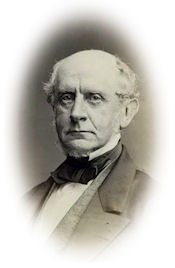
Charles Francis Adams To His Son
London, June 14, 1861
My position here thus far has not been difficult or painful. If I had followed the course of some of my colleagues in the diplomatic line this country might have been on the high road to the confederate camp before now. It did not seem to me to be expedient so to play into the hands of our opponents. Although there has been and is more or less of sympathy with the slaveholders in certain circles, they are not so powerful as to overbear the general sentiment of the people. The ministry has been placed in rather delicate circumstances, when a small loss of power on either extreme would have thrown them out. You can judge of this by the vote on the Chancellor’s budget which was apparently carried by fifteen, but really by the retirement of opponents from the division. The difficulty seems now to be removed. No farther test vote is expected at this session. I think they are at heart more friendly to the United States than the Conservatives, though the question is not raised between them. I am therefore endeavoring to establish such relations with them as may re-establish the confidence between the countries which has been somewhat shaken of late. Circumstances beyond my control will have more to do with the result for good or for evil than any efforts of mine. I wait with patience – but as yet I have not gone so far as to engage a house for more than a month at a time. . . .