A Rebel War Clerk’s Diary

A Rebel War Clerk’s Diary at the Confederate States Capital, By John Beauchamp Jones
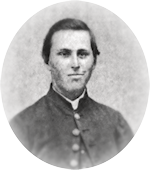
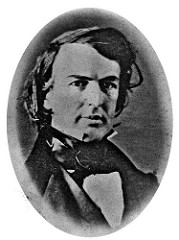
A likeness of Jones when he was editor and majority owner of the Daily Madisonian during President John Tyler’s administration.

October 18th.–Cloudy and cool.

Quiet below, but it is rumored that the enemy has erected one or two sand batteries, mounted with 400-pounders, bearing on our fleet of gun-boats.

The following dispatch was received from Gen. Hood to-day:

“9 Miles South of Lafayette, Ga.,

“Oct. 15th, via Selma, Oct. 17th, 1864.

“Gen. Bragg.

“This army struck the communications of the enemy about a mile above Resaca on the 12th inst., completely destroying the railroad, including block-houses, from that point to within a short distance of Tunnel Hill, and about four miles of the Cleaveland Railroad, capturing Dalton and all intermediate garrisons, with their stores, arms, and equipments, and about 1000 prisoners.

“The main body of Sherman’s army seems to be moving toward Dalton.

J. B. Hood, General.”

The following was received from Gen. Lee yesterday:

“Headquarters Army Northern Virginia,
“Oct. 16th, 1864.

“Hon James A. Seddon, Secretary of War.

“On the 14th instant, Col. Moseby struck the Baltimore and Ohio Railroad at Duffield, and destroyed a United States mail train, consisting of a locomotive and ten cars, and securing twenty prisoners and fifteen horses.

“Among the prisoners are two paymasters, with one hundred and sixty-eight thousand dollars in government funds.

“R. E. Lee.”

It is reported also that Gen. Early has gained some advantage in a battle; not authentic.

Gen. Bragg is going away, probably to Wilmington. The combination against him was too strong.

But “the Bureau of Conscription” is pretty nearly demolished under his blows. Order 81 directs the generals of Reserves to appoint inspecting officers for all the Congressional Districts, to revise all exemptions, details, etc., with plenary powers, without reference to “the Bureau.”

The passport checks on travel Northward are now the merest farce, and valuable information is daily conveyed to the enemy.
0 comments

A Diary From Dixie.

A Diary From Dixie by Mary Boykin Miller Chesnut.

October 18th.–Ten pleasant days I owe to my sister. Kate has descended upon me unexpectedly from the mountains of Flat Rock. We are true sisters; she understands me without words, and she is the cleverest, sweetest woman I know, so graceful and gracious in manner, so good and unselfish in character, but, best of all, she is so agreeable. Any time or place would be charming with Kate for a companion. General Chesnut was in Camden; but I could not wait. I gave the beautiful bride, Mrs. Darby, a dinner, which was simply perfection. I was satisfied for once in my life with my own table, and I know pleasanter guests were never seated around any table whatsoever.

My house is always crowded. After all, what a number of pleasant people we have been thrown in with by war’s catastrophes. I call such society glorious. It is the windup, but the old life as it begins to die will die royally. General Chesnut came back disheartened. He complains that such a life as I lead gives him no time to think.

0 comments

Robert M. McGill

Robert M. Magill – Personal Reminiscences of a Confederate Soldier Boy, 39th Georgia Regiment of Infantry

Monday, 17th.—Marched through Summerville, going to the left of Alpine. Yanks in Ship’s Gap.


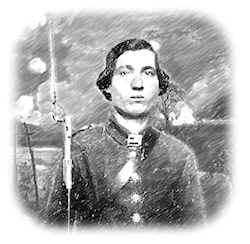
(Note: picture is of an unidentified Confederate soldier.)

0 comments

Downing’s Civil War Diary.–Alexander G. Downing.

Diary of Alexander G. Downing; Company E, Eleventh Iowa Infantry

Monday, 17th–We lay in bivouac all day, but at dark moved on about four miles and again went into bivouac. The weather has been very pleasant for some days. The muster rolls of the non-veterans of our regiment were made out today. They received their discharge papers, as their three years’ service will be up tomorrow. There are twelve from our company: Albert Allee, John L. Ayers, John Ford, George Eicher, Padenarin McCarty, Ebenezer Rankin, George Mooney, Hugh C. McBirney, Joseph McKibben, Thomas R. McConnoll, Samuel Metcalf and Albert B. Stiles.

0 comments

War Diary of Luman Harris Tenney.

War Diary of Luman Harris Tenney.

17th. Monday. In the morning rebs attacked pickets. Captured Maj. Morey. 20 men.

0 comments

“We have been having a gay time this morning.”–Army Life of an Illinois Soldier, Charles Wright Wills.

Army Life of an Illinois Soldier, Charles Wright Wills, (8th Illinois Infantry)

October 17, 1864.

I incline to think that the raid and pursuit are both over, though we wish that Sherman would follow them until they get the punishment they deserve for their impudence. They tore up some 20 miles of railroad, killed and wounded not over 750 for us, and captured about 1,100. Their loss in wounded and killed, whom we have buried, is 1,900; prisoners, that I know of, 600; besides a lot of deserters who have come in. Eight hundred of the prisoners captured by them were negroes, who could not have been taken but for the cowardice of their Colonel, Johnson.

The tearing up of the railroad amounts to nothing. We have not had our rations cut down an ounce in anything.

The man that run that raid ought to be ashamed of himself, and I’ll venture he is.

In Snake Creek Gap, but for General Stanley’s laziness, we would have got enough prisoners to make Hood howl. He rested his corps three hours, just as he did when entrusted with a critical piece of work at Jonesboro.

We have been having a gay time this morning. It is cold enough to make us sit close to the fire, and the negroes keep us in chestnuts.

0 comments

A Rebel War Clerk’s Diary

A Rebel War Clerk’s Diary at the Confederate States Capital, By John Beauchamp Jones
A likeness of Jones when he was editor and majority owner of the Daily Madisonian during President John Tyler’s administration.

October 17th.–Bright and beautiful.

Still all quiet below, and reinforcements (details revoked) are not arriving–1000 per day.

The Northern news makes some doubt as to the result of the election in Pennsylvania.

From the Valley we have rumors of victory, etc.

A thrill of horror has been produced by a report that Gen. Butler has, for some time past, kept a number of his prisoners (Confederates) at work in his canal down the river, and supposing they were Federals, our batteries and gun-boats have been shelling our own men!

0 comments

Robert M. McGill

Robert M. Magill – Personal Reminiscences of a Confederate Soldier Boy, 39th Georgia Regiment of Infantry

Sunday, 16th.—Crossed through Maddox Gap and marched down to Trion Factory. Received invitation to go to Mr. Job McKeehan’s and take supper; accepted the invitation, and was very nicely treated indeed. Strong Union man. Said Hood’s raid would ruin his army, and advised me to leave it. We had been wondering for several days what had become of Sherman and his army, and it was some time before we learned he had gone on to the sea.


(Note: picture is of an unidentified Confederate soldier.)

0 comments

Downing’s Civil War Diary.–Alexander G. Downing.

Diary of Alexander G. Downing; Company E, Eleventh Iowa Infantry

Sunday, 16th–We left bivouac early this morning and marched eight miles. We passed through Gooseneck Gap, about four miles long and quite narrow. The rebels did not take time to block this gap. The Fifteenth Corps being in the advance, came upon the rebels and engaged them in some skirmishing. The rebels are still falling back to the north. We are now in a mountainous country, and thinly settled, as it is so rough and rocky. The timber here is of chestnut and all varieties of oak.

0 comments

War Diary of Luman Harris Tenney.

War Diary of Luman Harris Tenney.

16th. Sunday. Returned to regt. Ordered to escort Sheridan to Piedmont. Remained in camp. Read some.

0 comments

“We got 35 prisoners and killed and wounded a dozen or so.”–Army Life of an Illinois Soldier, Charles Wright Wills.

Army Life of an Illinois Soldier, Charles Wright Wills, (8th Illinois Infantry)

North end Snake Creek Gap, October 16, 1864.

After a tedious march got here at 11 p.m. The Rebels about six hours ahead of us had blockaded the road in good style. They did some half a day’s work, with hundreds of men, and delayed us about–ten minutes.

On summit of Taylor’s Ridge, Shipp’s Gap, p.m.

Our division has the advance to-day. The Rebels drove very well, until we got here, when, having a very good position, they resisted us with some vim. A few men of the 1st brigade, finally climbed the hill, flanked and routed them. Our loss, seven wounded. We got 35 prisoners and killed and wounded a dozen or so.

0 comments

A Rebel War Clerk’s Diary

A Rebel War Clerk’s Diary at the Confederate States Capital, By John Beauchamp Jones
A likeness of Jones when he was editor and majority owner of the Daily Madisonian during President John Tyler’s administration.

October 16th, Sunday.–A pleasant sunny Sabbath morn.

The quiet below continues. Not a gun has been heard for three days; the longest intermission we have had for many months. What can it mean? Sheridan has spread desolation in the Shenandoah Valley, perhaps to prevent Early from penetrating Pennsylvania, etc., intending to come with all expedition to Grant.

Troops, or rather detailed men, and late exempts, are beginning to arrive from North Carolina. I saw 250 this morning. Some of them were farmers who had complied with the terms prescribed, and a week ago thought themselves safe from the toils and dangers of war. They murmur, but there is no escape. They say the Governor has called out the militia officers, and magistrates also.

Desertion is the order of the day, on both sides. Would that the men would take matters in their own hands, and end the war, establishing our independence. Let every man in both armies desert and go home!

Some one has sent a “Circular” of the “Bureau of Conscription” to the President, dated some few weeks ago, and authorizing enrolling officers everywhere to furlough farmers and others for sixty days, to make out their claims for exemption. This the President says in his indorsement defeats his efforts to put the whole able-bodied male population in the field; and no doubt has been the source of the many abuses charged against the “bureau.” The Secretary sends the paper to the “bureau” for report, stating that he felt great surprise at the terms of the “Circular,” and had no recollection of having seen or sanctioned such a document. The Superintendent reports that it was issued by the authority of the Secretary of War, and was warranted by law–looking to the interests of agriculture, etc. The truth is that the Circular was prepared by a subordinate in the Bureau of Conscription, and signed by Col. August, “Acting Superintendent.” It was approved by Judge Campbell, Assistant Secretary of War, “by order of the Secretary of War” who never saw it. Mr. Seddon has left all the business of conscription in the hands of Judge Campbell; and poor Gen. Preston–indolent and ill–has been compelled to sign, sanction, and defend documents he knew nothing about; and Mr. Seddon is in a similar predicament.

The Secretary of War has written a long letter to Gen. Lee, suggesting that he assemble a council of officers to decide what measure shall be adopted in regard to the treatment of prisoners in the hands of the enemy. It appears that Gen. Butler has notified Gen. Lee that he is now retaliating fearfully–making them work in his canal–on certain Confederates for some alleged harsh treatment of negro prisoners in our hands–sending slaves back to their masters. Mr. Seddon, without assuming any responsibility himself, yet intimates the idea that this government is prepared to sanction the most sanguinary remedy; and I understand several members of the cabinet to have always been in favor of fighting– that is, having others fight–under the black flag. If the government had only listened to Gen. Lee’s suggestions, we should have had abundance of men in the field to beat the enemy out of Virginia. I hope the present recruiting excitement comes not too late. And I trust he will interpose so far in behalf of the country as to wrest the railroads from the hands of the speculators and the dishonest quartermasters.

Not a gun has been heard by me to-day, and the mysterious silence defies my powers of penetration. I only hope it may continue sine die.

0 comments

Robert M. McGill

Robert M. Magill – Personal Reminiscences of a Confederate Soldier Boy, 39th Georgia Regiment of Infantry

Saturday, 15th.—Marched twenty miles to Maddox’s Gap, in Taylor’s Ridge.


(Note: picture is of an unidentified Confederate soldier.)

0 comments

Downing’s Civil War Diary.–Alexander G. Downing.

Diary of Alexander G. Downing; Company E, Eleventh Iowa Infantry

Saturday, 15th–We left Resaca early this morning, going out after the rebels whom we found at the south entrance of Snake Creek Gap. Here we formed a line of battle and skirmishing commenced. A small force of the rebels was behind some old works which our men had built last spring while advancing on Resaca. Finally two regiments of the Third Division made a charge upon them and routed them. Our loss was about fifty killed and wounded. The rebels then fell back through the pass, blockading it for about eight miles, by felling trees across the road. Our corps did not succeed in getting through the pass until about dark, and the Fifteenth Army Corps was still in our rear.

0 comments

War Diary of Luman Harris Tenney.

War Diary of Luman Harris Tenney.

clip_image00215th. Saturday. Moved out to Brigade Hdqrs. in evening. 2nd Ohio on picket.

0 comments

Army Life of an Illinois Soldier, Charles Wright Wills.

Army Life of an Illinois Soldier, Charles Wright Wills, (8th Illinois Infantry)

Resaca, October 15, 1864, 10 a.m.

We are waiting here for rations. The 4th and 14th Corps are ahead, and for the last half hour we have heard very heavy skirmishing toward “Snake Creek Gap,” just about where we heard the first fighting of the campaign, a little over five months ago. There is enough to interest me in the prospect for the next three days. Snake Creek Gap, 10 p.m. We have the whole gap.

0 comments

Army Life of an Illinois Soldier, Charles Wright Wills.

Army Life of an Illinois Soldier, Charles Wright Wills, (8th Illinois Infantry)

Calhoun, Ga., October 15, 1864.

Stayed here last night. Reveille at 3 a.m., but our brigade brings up the rear of the corps to-day, and we won’t get off until after daylight.

0 comments

A Rebel War Clerk’s Diary

A Rebel War Clerk’s Diary at the Confederate States Capital, By John Beauchamp Jones

October 15th.–A bright and glorious day–above.

All was quiet yesterday below, indicating that the enemy suffered severely in the last assault on our lines.

But we have nothing from Georgia. From the Valley, our cavalry had the misfortune to lose eleven guns by indiscreetly venturing too far in pursuit.

And the news from the United States indicates that Pennsylvania, Ohio, and Indiana have gone for the Republican candidates. This foreshadows Lincoln’s re-election, and admonishes us to prepare for other campaigns, though languishing for peace.

The farmers are now pouring in to replenish the armies, under the recent order revoking the details of agriculturists; and these are fine-looking men, and there will soon be successes in the field. Lately the indulgence of details to an immoderate extent, and corruption in the business of conscription, had depleted the armies extensively of men of substance and standing, and this may account for our disasters. Men, to fight well, must have something to fight for.

Gen. Price, at the head of 20,000 men, is in Missouri. To expel him, many troops will be required; and this may relieve us a little in the East.

My wife lost her purse in market this morning, before making any purchases; it contained $22 and her eye-glasses. I don’t think there are any pickpockets except the extortioners.

0 comments

Robert M. McGill

Robert M. Magill – Personal Reminiscences of a Confederate Soldier Boy, 39th Georgia Regiment of Infantry

Friday, 14th.—Cheatham’s Corps took Dalton yesterday. Camped for the night one mile south of Villanow.


(Note: picture is of an unidentified Confederate soldier.)

0 comments

Downing’s Civil War Diary.–Alexander G. Downing.

Diary of Alexander G. Downing; Company E, Eleventh Iowa Infantry

Friday, 14th–At Adairsville we took a train composed of box cars and left for Resaca, where we arrived about 4 o’clock this morning. We at once left the cars and formed a line of battle. Here we lay all day. The remainder of our corps soon arrived, and later the Fourteenth Army Corps came up. The first division of our corps was sent out after the rebels. They found them on the railroad about six miles out between Resaca and Dalton, where they already had destroyed about fifteen miles of track. Our troops engaged in a skirmish there in which the Seventeenth Iowa were taken prisoners, but were at once paroled. It is reported that the commander of the post at Dalton surrendered the place without firing a gun. It is thought that the rebels are making for the mountains, and if they succeed in getting there before we do, it will be hard to trap them, as they are in their own country and among friends.

0 comments

War Diary of Luman Harris Tenney.

War Diary of Luman Harris Tenney.

14th. Friday. Rebels made a reconnoissance along our whole line.

0 comments

“The Rebel army was, or part of it, at Resaca yesterday, about nine miles from here.”–Army Life of an Illinois Soldier, Charles Wright Wills.

Army Life of an Illinois Soldier, Charles Wright Wills, (8th Illinois Infantry)

Three miles southwest of Adairsville, October 14th.

We marched at sunset last evening and halted not until 3 this a.m. Marched miserably slow the first five miles through a deep gorge, but about 1 o’clock got straightened out on the Rome and Calhoun road, a good one, and then got along nicely. In the fighting at Rome yesterday, our folks whipped them and took some artillery. We got to bed at 3:15, and reveille sounded at 5 and we marched at 6:30. Not much sleep after marching 20 miles, was it. We had no crackers this morning, and before I got up my imagination was reveling in the prospect of a breakfast on parched corn, but at the festive board the cook surprised us with a mess of pancakes. They looked like plates cut out of a rubber blanket, and tasted accordingly. One member of the mess said they just came up to his ideal of a poet’s dream. Another, that they only lacked one thing, and that was the stamp, “Goodyear’s Patent.” The Surgeon advised us to use them sparingly, for, said he, “If they mass against any part of your interior lines the consequences will be dire.” But we were hard up for breadstuffs, and closed with the dreadful stuff manfully. Twelve m.—Have stopped for dinner.

The Rebel army was, or part of it, at Resaca yesterday, about nine miles from here.

0 comments

A Rebel War Clerk’s Diary

A Rebel War Clerk’s Diary at the Confederate States Capital, By John Beauchamp Jones

October 14th.–The following dispatch from Gen. Lee cheered the city this morning. None of the particulars of the battle have yet transpired, and all are looking hourly for a renewal of the contest.

“Headquarters Army of Northern Virginia,
“October 13th, 1864.

“Hon. James A. Seddon, Secretary Of War.

“At seven o’clock this morning the enemy endeavored to advance between the Darbytown and Charles City Roads, but was repulsed in every attempt. The most strenuous effort was made about four P.M., after which he withdrew, leaving many dead. Our loss very slight.

“Gen. Breckinridge reports that a force of the enemy came to Greenville on the 12th, and was defeated by Gen. Vaughan. Some prisoners, two stands of colors, many horses and arms were captured. The enemy lost many killed and wounded. Our loss slight.

“R. E. Lee, General.”

It is now 2 p.m., and yet we hear no cannon. If Grant does not renew the strife immediately, it will be natural to suppose he failed in his purpose yesterday, or that some unforeseen occurrence within his lines has happened. Be it either, it is a grateful respite to us.

On the 8th inst., Judge Campbell, Assistant Secretary of War, wrote the President a letter in vindication of P. Hamilton’s loyalty. Mr. H. is commissioner under suspension of the writ of habeas corpus to look into the loyalty of others, and was appointed on Judge C.’s recommendation. Some private individual in Mobile wrote the President, impeaching the patriotism of Mr. H., and also hinted something in relation to the loyalty of Judge C. This matter was shown to Mr. Seddon by the President, and Mr. S. spoke to Judge C. about it in his own manner, which produced the letter of Judge C. to the President. The President sends back the letter to-day, to the “Secretary of War,” indorsed in substance as follows: “He was surprised to receive such a letter, when he had intimated no purpose to have the matter investigated.” Judge C. had procured indorsements of Mr. H. from Alabama, which let the matter out; and it would have been appropriate–the President uses this word rather than improper, as he cannot dispense with either the Secretary or his assistant just now–to have consulted him before taking any steps whatever in the business. He seems vexed, even at Mr. S.

0 comments

Diary of a Southern Refugee, Judith White McGuire.

Diary of a Southern Refugee During the War by Judith White McGuire

13th.—The day has passed as usual—six hours in the Commissary Department, and the remainder occupied in various ways. Rumours of fighting below Richmond; we hear the cannon, but it is said to be merely a skirmish.

0 comments

0

Civil War Diary of Charles H. Lynch, 18th Conn. Vol’s.
Charles Lynch

October 13th. The long roll called us up very early, before daylight. We turned out on double-quick time leaving camp on the run, out on the Winchester Pike. When out a short distance came to a halt. After waiting a while, was ordered to return to camp. Wondering what it meant. Later in the day we heard that Mosby and his guerillas captured a train on the B. & O. R. R. between Martinsburg and Harper’s Ferry. The train was badly damaged, passengers robbed. Mosby knows every road and path in this section.

0 comments