22nd. Saturday. The Major started for home on leave of absence. Wrote a line and sent my money, $750.
American Civil War Chronicles
Army Life of an Illinois Soldier, Charles Wright Wills.
October 22, 2024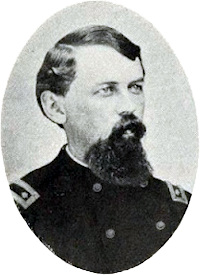
October 22, 1864.
I was foraging to-day for the regiment with about 20 men. Got plenty of hogs and potatoes. Sweet potatoes are about the size of ordinary pumpkins and most delicious.
A Rebel War Clerk’s Diary
October 22, 2024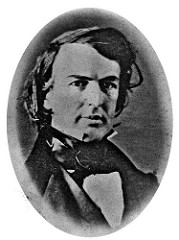
October 22d.–Cloudy; rained last night. 2 P.M.–Cold, and prospects of snow.
The news of Early’s disaster, and loss of artillery at Strasburg, is confirmed, and casts a new vexation over the country.
Mr. M. Byrd, Selma, Ala., is addressing some bold letters to the President on the blunders of the administration.
Gen. Longstreet has resumed command of the first army corps.
G. W. Custis Lee (son of the general) has been made a major-general.
There was no fighting below yesterday, that I have heard of.
Gold, which was $1 for $30 in Confederate States notes, commands $35 for $1 to-day, under the news from the Valley. Yet our sagacious statesmen regard the re-election of Lincoln (likely to follow our reverses) as favorable to independence, though it may prolong the war. It is thought there will certainly be revolution or civil war in the North, if the Democrats be beaten; and that will relieve us of the vast armies precipitated on our soil. Many of the faint-hearted croakers are anxious for peace and reconstruction.
Gen. Butler, called “the Beast” by the press, has certainly performed a generous action. Messrs. McRae and Henley, two government clerks in the local battalion, wandered into the enemy’s lines, and were put to work in the canal by Gen. Butler, who had been informed that we made some prisoners taken from him work on the fortifications. This was done but a short time, when they were relieved; and Mr. McRae was permitted to return to the city, to learn whether the Federal prisoners were really required to perform the labor named. No restrictions were imposed on him, no parole required. He came with Gen. B.’s passport, but felt in honor bound to communicate no intelligence, and voluntarily returned to captivity. We had Federal prisoners at work, but they were remanded to prison.
0
October 21, 2024
October 21st. We are rejoicing over the defeat of Early, and Sheridan’s great victory. We are also happy over the part our corps, the 8th under Crook, had in bringing about the great victory. It was not our fault that we were not there. We continue our picket duty and laboring for the good of Martinsburg and the railroad.
Downing’s Civil War Diary.–Alexander G. Downing.
October 21, 2024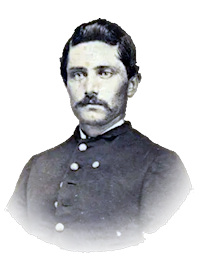
Friday, 21st–The Fourth, Fourteenth, Fifteenth, Seventeenth and Twenty-third Army Corps have concentrated here and are in bivouac. Foraging parties are sent out from the different corps, as there are some rich plantations in this section. Our corps moved camp today about four miles. All is quiet in the front. The report is that the rebels are retreating toward the Blue mountains.
War Diary of Luman Harris Tenney.
October 21, 2024
21st. Friday. Moved camp. Wrote a line home. Beautiful day. Letter from home yesterday. Regt. went on picket.
“If Hood’s army was to-day, twice as strong as it is, we would be too many for him.”–Army Life of an Illinois Soldier, Charles Wright Wills.
October 21, 2024
Gaylesville, Ala., October 21, 1864.
Marched about 18 miles yesterday down a very fine valley, between Lookout Mountain and Taylor’s Ridge, crossed the latter after dark through a pass that beat all for blackness and stones, to tumble over, that I ever saw. Got a very large mail yesterday, but only one letter from you. We move again this morning, but don’t know when. Can send a letter back from here, first chance we have had this month. I guess we have halted here to wait the building of a bridge over the Coosa. The Rebels burned it yesterday.
What we are going for nobody knows. I saw Sherman yesterday as we passed through Gaylesville. He was talking with Jeff. C. Davis. He always has a cigar hanging from the corner of his mouth. It is always about half-gone, but I never saw it lighted. He is certainly the most peculiar-looking man I ever saw. At one house we passed this morning we saw three of the ugliest-looking women imaginable. They sat on the porch step, side by side, hoopless, unkempt and unwashed. I’ll swear that man never before witnessed three such frights together. All three were singing a Rebel song. I knew they were trying to sing, but although close to them, could not distinguish a word. Some of the men recognized the tune as belonging to a tune called the “Rebel Soldier.” The men were so completely surprised and thunderstruck by the show that they had not a word to say. It tickles us to see that you home folks are uneasy about us because Hood has got into our rear. I tell you that I have not seen a man uneasy for a minute, on that subject, and that Hood has to run like a hound to get away from us. If Hood’s army was to-day, twice as strong as it is, we would be too many for him.
A Rebel War Clerk’s Diary
October 21, 2024
October 21st.–Bright.
Fort Harrison (Federal) opened its batteries on our lines at Chaffin’s Farm yesterday evening, without effect. An officer tells me that heavy and quick firing was also heard on the Petersburg lines, indicating, he thought, a battle. We have nothing of this in the papers, or in any dispatch I have seen.
Assistant Secretary Campbell is writing a portion of Mr. Secretary Seddon’s report for him. Mr. C.’s son was promoted to a majority yesterday.
At 2 P.M. we have a rumor that Gen. Early has been defeated, losing all his guns but one.
A letter from the Secretary of the Treasury recommends the detail or exemption of the bank officers of South Carolina. The poor country clod-hoppers have no friends, and must do the fighting.
The following order, dictated by the President, has been published:
“Adjutant And Inspector-general’s Office,
“Richmond, October 20th, 1864.
“General Orders No. 82.
“I. The Chief of the Bureau of Ordnance will, without delay, take measures to place in the field one-fifth of all the men employed in his department (including contractors and their employees) of the classes specified in General Order No. 77, A. and I. G. Office (current series). To this end he will direct the several officers in charge of arsenals, workshops, depots, etc. to turn over to the nearest enrolling officers, by lists showing their ages, occupations, and residences, such proportion of their employees (including contractors and employees under them) of the classes above referred to as will constitute in the aggregate one-fifth of the whole number in the said classes, according to returns in his office of Sept. 30th, 1864. Duplicates of such lists will be sent to the Generals of Reserves of the States, and triplicates to the Chief of Ordnance. Three days are allowed for the execution of this Order after its reception at any post or station of the Ordnance Department.
“II. The Chief of the Niter and Mining Bureau will, in like manner, turn over, on similar lists, one-fifth of all men of the classes specified in General Order No. 77, employed in iron, lead, copper, and coal mines, and all service appertaining thereto, whether directly under officers of his Bureau or by contractors. Duplicate and triplicate lists to be furnished as above directed in the Ordnance Bureau, and will in the same manner turn over one-fifth of all such men now employed in the Niter service.
“The period of three days, under the same conditions as above mentioned, is allowed for the execution of this order.
“III. The list of persons directed in the foregoing sections to be turned over to the enrolling officers will be prepared at once on the reception of this Order, and will be furnished to the said officers within three days, as above prescribed, by the various officers of each of the above Bureaus, having men under their charge, and every assistance will be rendered by the latter to the enrolling officer to carry out the intention of this order.
“IV. So much of General Order No. 77 as relates to men employed in the two Bureaus named above is hereby suspended, and the foregoing Orders will stand in lieu of all requirements under the former.
“By order.
S. Cooper,
“A. and I. General.”
Diary of a Southern Refugee, Judith White McGuire.
October 20, 2024
20th.—Nothing new in the field. Armies quiet; perhaps preparing for dreadful work. I got a note last night from J. P., written with a pencil. He and other prisoners are working ten hours a day on “Dutch Gap Canal.” They work under the fire of our own batteries. Poor fellow! my heart yearns over him.
0
October 20, 2024
October 20th. Many reports of the great battle came late last night and this morning. Great cheering and rejoicing. Our gallant Phil rode from Winchester to the army and saved the day. Expressions on all sides, General Sheridan was never defeated. Jubal Early found out that our gallant Phil Sheridan was in command of the Shenandoah Valley and he had the men to back him up. The talk in camp is the war will soon be over.
Downing’s Civil War Diary.–Alexander G. Downing.
October 20, 2024
Thursday, 20th–The same as ever. We marched twelve miles and went into camp near Galesville, Alabama. All of the forces of General Sherman which have been after Hood, came together at this place by different roads, and are now in bivouac. General Hardie of Hood’s army is in front of us with his corps and still retreating. It is fine marching weather.
War Diary of Luman Harris Tenney.
October 20, 2024
20th. Thursday. Pursued on back road 15 miles, picking up some prisoners. The victory complete. All worship Sheridan who turned a complete rout into the most complete victory of the war. Rebs panic stricken, not even forming at Fisher’s Hill. Our loss in killed and wounded heavy. Gen. Ramseur mortally wounded. At our old camp.
“An officer and 20 men are detailed daily for foragers.”–Army Life of an Illinois Soldier, Charles Wright Wills.
October 20, 2024
Alpine, Chatuga Valley, October 20, 1864.
Got here at dark last night, eight miles from Summerville. We seemed to be headed southwest. I have the sorest feet I have enjoyed for two years. Do you notice how accurately I miss it in every prediction I venture? I am a fair sample of the ignorance “Pap” keeps this army of his movements. He has shown his ability to keep us from divining his purposes, but he or any other general cannot keep us from guessing. Fine country here, for Georgia. An officer and 20 men are detailed daily for foragers.
They start ahead in the morning, and shoot hogs, sheep, gather sweet potatoes, apples, etc., and bring all out to the roadside. The hogs and sheep are cut into pieces of about 20 or 25 pounds. When the regiment comes along every man makes a grab as he passes at the pile, throws his chunk over his shoulder, and all without breaking ranks. You can imagine the appearance a battalion would make at nightfall.
A Rebel War Clerk’s Diary
October 20, 2024
October 20th.–Cloudy. There is a street rumor of a battle below, and on the Petersburg line. The wind is from the west, and yet we hear no guns.
The Secretary of the Treasury sent to the Secretary of War today an argument showing that, without a violation of the Constitution, clerks appointed to places created by Congress cannot be removed. We shall see what the Secretary says to that.
Diary of David L. Day.
October 20, 2024
Off For Home.
On the 5th of October, two days before the expiration of our term of service, an order came to Price’s creek, ordering all those who were entitled to muster out to turn over to the proper authorities our arms and equipments and report at the railroad station near Fort Spinola. This was just after dinner. Capt. Emery sent to the pickets across the creek for all those who had not re-enlisted to report at quarters. In a few minutes we were all there; the captain read the order and the boys cheered. I was all ready to comply with the order, and bidding faithful Spitfire a long and final farewell, I handed it to the captain. It was soon found out what was up, and for the next half hour the enemy was left to take care of themselves, and all hands gathered at quarters to say their good-byes and see us off. We went aboard the cars at Port Spinola and picked up others along the road, arriving at Morehead about dusk. There about 100 of us went aboard the steamer Dudley Buck, and soon after were sailing out the harbor of Beaufort, leaving behind us the scenes of our triumphs and hardships. The next morning we were around Cape Lookout and out to sea. Pretty soon we saw the officers come up out of the cabin, they were talking among themselves and seemed to wear a troubled look. It was soon discovered that there was a lot of citizens aboard coming down with yellow fever, and before noon one was brought up out of the cabin dead and laid in a boat that hung on the davits.
An Indignation Meeting.
The boys held an indignation meeting, declaring it was wrong and cruel on the part of the government or other authorities to allow these men to come aboard, and it seemed to be the evident intent of the government or some one else to murder us. They had just tried to drown us and failing in that had now, after having gone through one of the most unheard of campaigns, and as though were too obstinate to die, would give us one more chance, and smuggle aboard a lot of yellow fever stricken devils to go home with us. The captain disclaimed all knowledge of how they came aboard, but it was evident they were here and couldn’t have got here without the knowledge and consent of somebody. They still further declared that those citizens were of no earthly use nor hadn’t been of any, they were simply buzzards who had run away from the draft in New York, and were now running away from the yellow fever, and as a measure of safety and self-protection it was voted to throw them all overboard. The captain thought that would be most too summary a way of disposing of them, besides we would be liable to a charge of mutiny and murder at sea. It certainly was no lack of will, but only our better judgment that prevented their being thrown overboard. We reached Fortress Monroe on the forenoon of the 7th and were detained several hours by some quarantine regulations, but were finally permitted to resume our journey.
In Quarantine.
On the morning of the 9th we sighted Sandy Hook, and on getting nearer we could see quite a fleet of vessels lying there. This was the lower quarantine. We ran through this, arriving at the upper quarantine at Staten Island about 10 a. m. We were now in sight of New York, and were buoyant in hope that we should soon be there. As we neared a big steamer lying in the middle of the channel we were hailed with “Steamer ahoy!” We slowed down and ran alongside. Some kind of an official came to the middle gangway and [continue reading…]
0
October 19, 2024
October 19th. Early this morning, at daylight, we heard the guns at a distance. We knew by the sound that a hot battle was on, up the valley. We waited for a report but none came. We knew by the sound that our boys were falling back. It was an anxious time for us. Our regiment under arms, ready for duty as soon as called upon. There came a time when the firing seemed to cease, all was quiet. Later on the battle was on again. The sound became less. We could hardly hear it. Then we began to feel that our boys were driving the enemy. Quite late, reports came that a battle at Cedar Creek and Fisher’s Hill was on. At first our boys were surprised and driven back, but became victorious.
Downing’s Civil War Diary.–Alexander G. Downing.
October 19, 2024
Wednesday, 19th–We entered Summerville at 10 o’clock and remained there till noon, when we started for Galesville, Alabama. After marching fifteen miles, we went into bivouac on the banks of the Ogeechee river. All is quiet in front. The valleys through which we are marching are quite rich and there are some fine plantations which afford good forage. It is fortunate for us, as we have to get most of our living that way while on this expedition. Sweet potatoes are plentiful and then we also get some fresh pork.
War Diary of Luman Harris Tenney.
October 19, 2024
19th. Wednesday. Firing again on picket. Turned out. At daylight heavy firing commenced on left with infantry. At 8 A. M. learned the infantry had fallen back in confusion, losing 24 pieces of artillery. 8th and 19th corps broken. 6th corps firm and in line. Cavalry went into position immediately and gave infantry time to form. Crossed the pike and formed again–under heavy fire all the time. Kept the position until Sheridan came up, then sent over to the right again. Charged rebel cavalry. Little before dusk whole line advanced–routing the rebs. Two regts. of 3rd Div. charged to the right, driving reb cavalry over Cedar Creek and the rest charging on right of 19th corps, 5th N. Y. in advance. Overtook the artillery and wagon trains, capturing it and many prisoners.[1]
[1] Note–The modest entry under date of Oct. 19, 1864, refers to the historic battle of Cedar Creek, Va., when Sheridan made his famous ride on his black horse from Winchester, “twenty miles away,” and saved the day. During Sheridan’s temporary absence from his army, Gen. H. G. Wright, the next in command, permitted himself and the army to be totally surprised at three o’clock in the morning, by the recently defeated army of Gen. Jubal A. Early. The Union troops were nearly all sleeping in their tents when the enemy’s cannon and musketry opened on them in a terrific onslaught at close range. The Union artillery was mainly captured, nearly 5,000 Union soldiers killed and captured, and our army, except the Cavalry and one Division of Infantry, started in panic and confused retreat towards Winchester in the rear–where Sheridan had spent the previous night. Up to that point the event had been one of the greatest Union disasters of the war. But about 10 o’clock in the morning Sheridan arrived on the field in the dramatic manner described in the poem, “Sheridan’s Ride,” and instantly all was reversed. Meanwhile the Cavalry, which had not been involved in the surprise and panic and slaughter, being encamped on the right and left flanks of the army out of the line of the attack of Early, had promptly been ordered to the center and front, where they held the Confederates back from further pursuit until Sheridan’s arrival. Sheridan’s presence promptly restored confidence. The retreating and disorganized troops quickly rallied, and by 3 P. M. a general charge was ordered all along the line occupying some four miles front. The Cavalry charge on this occasion was the finest performance and spectacle at any time witnessed by the writer during the war. The astonished and recently victorious Confederates broke in confusion, their retreat was a worse panic than that of the Union army in the early morning. All our artillery was retaken from the enemy and some thirty cannon captured in addition, besides great numbers of prisoners and the entire wagon train of Early. Early’s army never made another serious rally.–A. B. N.
“The Rebels only take corn and meat, and we fatten on what they are not allowed to touch.”–Army Life of an Illinois Soldier, Charles Wright Wills.
October 19, 2024
Near Summerville, October 19, 1864.
Reached this place yesterday. The cavalry advance had some sharp skirmishing, and brought back some two or three prisoners. We are drawing full rations, besides preying off the country, all kinds of meat, apples, potatoes, and I believe the men find a little of everything known to be eatable. Entering houses is prohibited under penalty of death, but some scoundrels manage to pillage many houses. Foraging is also half prohibited, but I am satisfied that our general officers do not object to our taking meat, etc., if houses are not entered. Ten p.m.—Have stopped here to draw rations. The 23d and 4th Corps have already moved forward on the old Alabama road. That looks as though we were intending to follow the Rebels. We “liners” have no idea where they are. One rumor is that they are moving northwest, intending to cross the Tennessee river, south or southwest of Huntsville. Another that they are moving to their new base at or near Blue Mountain, on the road from here to Talladega, Ala. If we are going to follow them, I look for a long campaign. But for one thing, we would rather go into a campaign immediately than into camp. That is, the men have not been paid off for ten months, and many families are undoubtedly suffering in consequence. Our money is waiting for us, and we will get it whenever the Johnnies will let us stop long enough for the paymasters to catch up. Don’t you people ever think of us as being without rations. We sometimes wish the Rebels would cut our communications entirely, so that we could live wholly off the country. The Rebels only take corn and meat, and we fatten on what they are not allowed to touch.
A Rebel War Clerk’s Diary
October 19, 2024
October 19th.–Bright and beautiful.
Still all quiet below, the occasional bombarding near Petersburg being beyond our hearing.
Yesterday, Gen. Preston, a millionaire, who can stalk stiffly anywhere, had an interview with the President, who admitted that he had dictated the General Orders–” 76,” “77,” “78,”–rushing almost everybody into the army, but that it was not his meaning to take the whole business of conscription from “the Bureau.” Yet Gen. P., the superintendent, thinks the reading of the orders will admit of that construction, and he has written to the President asking another order, defining his position, etc., else his occupation is gone. The President cannot afford to lose Gen. P.
From Gen. Early’s army we learn that the detailed men and reserves are joining in great numbers, and the general asks 1000 muskets. Col. Gorgas, Chief of Ordnance, says he has but 300 available, his shops being closed, the workmen in the trenches, etc.
All the ordnance, quartermaster, and commissary stores of Hood’s army were ordered to Columbus, Ga. We expect stirring news from Georgia daily, and the opinion prevails that Sherman will “come to grief.”
The militia, furloughed by Gov. Brown so inopportunely, are returning to the front, the time having expired.
A Mr. B. is making Lincoln speeches in New York. It seems to me he had a passport from Mr. Benjamin, Secretary of State.
Gen. Lee writes today that negroes taken from the enemy, penitentiary convicts, and recaptured deserters ought not to be sent by the Secretary to work on the fortifications.
Robert M. McGill
October 18, 2024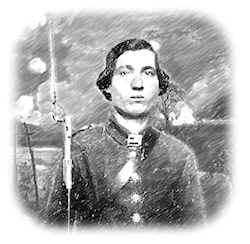
Tuesday, 18th.—Passed through Broom Town; crossed the Alabama line and camped at Waterloo Springs.
(Note: picture is of an unidentified Confederate soldier.)
0
October 18, 2024
October 18th. All quiet since the last date. Nothing special to record. Our regular routine has been going on through the days, picket and labor. When time permits we have to drill and have dress parade. Sunday morning inspection comes regular.
Downing’s Civil War Diary.–Alexander G. Downing.
October 18, 2024
Tuesday, 18th–We started early this morning and reached Lafayette at 9 o’clock. We lay there for two hours when we took up our march for Summerville, Georgia, and went into bivouac within four miles of the town. The rebels are still moving to the north through the Blue mountains. We had two days’ rations left in our haversacks this morning, when we received orders from the quartermaster that they would have to run us four days, as we could not draw any before that time. No news from the Eastern army.
War Diary of Luman Harris Tenney.
October 18, 2024
18th. Tuesday. All quiet. 2nd Ohio returned.
“We are now bound for Rome.”–Army Life of an Illinois Soldier, Charles Wright Wills.
October 18, 2024
La Fayette, October 18, 1864.
Our brigade was marching through Cane Creek Valley yesterday until 4 p.m., when we struck out for this place five miles, which we made in one and one-half hours. Nice little town almost surrounded with half-mountains. There has been a pair of cavalry fights here, the fruits whereof can be seen in an addition to the cemetery, near which we are bivouacked, some 25 Rebel graves, and half as many Yankees. Divers fair creatures can be seen here, chiefly Rebels; I have thought though, to-day, much Union. We are now bound for Rome.