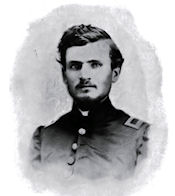
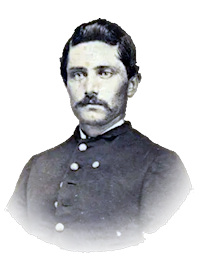
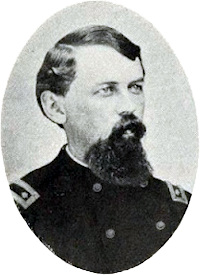
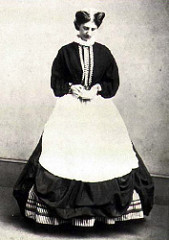
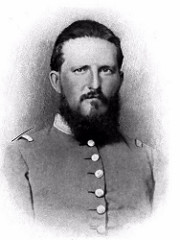
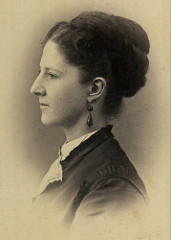
Diary of Horatio Nelson Taft

Diary of US patent clerk Horatio Nelson Taft.

January 14th 1862

This has been a wintry day, the ground covered with snow, air damp and chilly. M. about 27. Cameron, the Sec’y of War, has resigned. Edw’d M Stanton takes his place. Ostensibly he retires voluntarily, the Papers say so. But in reality the “outside pressure” forced it upon him. He was compelled to resign. Other changes in the Cabinet are expected and talked of. Nothing new stirring, but news expected of great moment from the West and south. The day has passed with me as usual in the office. I have spent the evening at home keeping as comfortable as I could. Ed Dickerson has spent an hour or two here, a great talker and not uninteresting. He was from the Camp of the 35th Regt yesterday. Nothing new over the River, “all quiet & comfortable.”

______

The three diary manuscript volumes, Washington during the Civil War: The Diary of Horatio Nelson Taft, 1861-1865, are available online at The Library of Congress.
0 comments

The Expedition is at the mercy of the wind and waves. — Diary of David L. Day.

David L Day – My diary of rambles with the 25th Mass

Jan. 14. This morning presents a scene of terror and wildest grandeur. The wrecked steamer has not broken up, but has settled down in the sand, the sea breaking over her, and her rigging is full of men. Boats that have been sent to her assistance are returning, having been unable to render any. We learn from the returning boats that she is the City of New York, loaded with stores. Another tug, with Gen. Burnside and a crew of picked men, has just gone to their assistance, and it is hoped will be able to take them off. The general is not one to see his men perish, and make no effort to rescue them. I reckon our friends at home, when they hear of the loss of this boat, will confound it with our own, and will experience the greatest anxiety until they get our letters, or get righted through the papers. The tug returned this afternoon, bringing off the officers and crew of the wrecked steamer, who report that she is breaking up, and will soon go to pieces.

At The Mercy of the Wind And Waves.

The wind is still blowing a gale. Many of our boats and vessels which have arrived are parting their cables and dragging their anchors, are being driven ashore, or sinking or fouling with each other. The saloon and upper works of our boat are stove in from gunboats and schooners fouling with us. One of our anchor cables has parted, and the engine is slowly working, helping the other one. Many of our vessels are still outside, and fears are entertained that some of them will be lost.

Capt. Clark says no boat can get in here today without the most skilful pilot, and then at great risk of being lost. The gunboat Zouave, with companies D and H of our regiment aboard, is in a sinking condition. Tugs are alongside of her, and the boys are scratching for their lives to get aboard of them. This is the kind of soldiering that makes the boys think of home and of their mothers. I cannot help laughing just a little when a boat or schooner fouls with us, and the timbers and planks begin to crack, to see the boys come out of their bunks, their eyes sticking out of their heads, and rush up stairs to see what the matter is. Well, it is not strange that these young boys should feel a little nervous, as it takes a man of pretty strong nerve to keep his fears down. We are here and have got to make the best of it. If we are to be lost, all our fears will avail us nothing; we must take things coolly, trusting in Providence, Mr. Mulligan and the good old steamer for safety.

0 comments

Rebel War Clerk

Civil War Day-by-Day
A likeness of Jones when he was editor and majority owner of the Daily Madisonian during President John Tyler’s administration.

JANUARY 14th.—All calm and quiet to-day.

0 comments

Mother Woolsey is told it is “…madness to run any such risk” to go to Washington, “full of small-pox and typhus.”

Woolsey family letters during the War for the Union
Mother to Georgeanna and Eliza.

8 Brevoort Place, Tuesday Eve.

My Dear Girls: The question of my going on to Washington has been agitated for some time past, yet I do not seem to come to any decision about it; not but that I would dearly love to look upon your faces again, and enjoy ever so much being with you, and seeing for myself all your goings and doings. Independent of all this, however, I confess I have no desire to visit Washington, and unless I could make myself useful there, and in every way a comfort to you, I think I am more in my place at home. Your uncle Edward was here this morning, and threw cold water on the movement, said it would be madness to run any such risk, as Washington was full of small-pox and typhoid fever. Now I write this evening to ask you what you think of our going on at present; whether there is really so much sickness as to cause any alarm. Do you want us? will it be a comfort to you to have a little visit from me? I do not ask these questions because I have any fears myself, but I am not willing, after your uncle’s remarks this morning, to run any risk in Charley’s or Hatty’s going. I feel now that it will all rest upon what you say about it. . . . The report here this morning said twenty-five hundred cases of small-pox in Washington! This evening it has come down to eighty. . . . My eyes failing last night, I left my scrawl to finish to you this morning. We have had our breakfast, cold turkey (not boned), hot biscuits, and fish-balls, and the girls are gathered round the front parlor fire with the newspapers, reading items, and discussing the times; Charley is directing Elizabeth about his cushions for the chair he has carved and made, and I am scribbling this in the dining-room, feeling an occasional pang when I look up and see a horrid stranger, John by name, in the pantry, instead of the old faithful servant, William. You don’t know how much I miss him in a thousand little things. This fellow is a perfect snail, never gets through with anything, and of course half is not done at all;–an Irish drone and tobacco chewer.

Poor William’s occasional spree was really preferable. . . . I have nothing to say to begin another sheet with, but to send you my love and a Mother’s blessing. Give Joe his share in both.

Yours lovingly.

Small pox was more or less prevalent about Washington at this time, and one of the sad cases, entirely characteristic of war, was that of G. R., a private in the 19th Indiana, cared for earlier by G. and E. in the Patent Office Hospital. He went safely through camp fever, measles and rheumatism, to die at last of small-pox in a lonely camp hospital in the outskirts of Washington, among strangers.
0 comments

War Diary of Luman Harris Tenney.

War Diary of Luman Harris Tenney.

13th. Principal Fairchild came down. Letters from home and Fannie. Also a book from her–”Sermons on the New Life.”

0 comments

Downing’s Civil War Diary.–Alexander G. Downing.

Diary of Alexander G. Downing; Company E, Eleventh Iowa Infantry

Monday, 13th–Some of the boys have been getting whiskey in this locality and today Lieutenant Compton with Carl Frink and John White went to find where they were getting it, but they returned late in the evening without finding the distilling plant.

0 comments

Diary of Horatio Nelson Taft

Diary of US patent clerk Horatio Nelson Taft.

Monday Jan’y 13th 1862

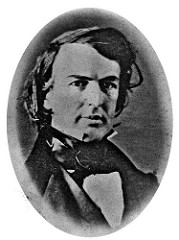
Colder today. M. this morning down to 34, tonight at 28. Have been in the office all day, moved into another room today on the Land office. A Brother of Geo D Prentice of the Louisville Journal is at the next desk to mine. Mr Rickets & Mr Osgood are also in the same Room, no. 10. The Room I left, no. 9, contained Mr Swan, Mr Darnell, both of Indiana, Mr Georgii (a German, from Minesota), Mr Ostrander of N York City, Mr Barnes of Detroit, and Mr Wheelock of California. It is said tonight that Mr Cameron (the Sec’y of War) has resigned, hope it is true. I called at Mr Pecks this evening. They have a very sick boy, have been at home the rest of the time. It is my Birth day today, fifty six years old. What a rough, smooth, sorrifull, pleasant, up hill, and down hill, road I have trodden for forty years past, such is life. I bear my years extremely well being perfectly healthy and quite active and spicy and walk with as quick a step as I ever did and am usualy taken by strangers for a man of 45 years. My eyes are bright, teeth good and my hair (thanks to Prof Wood) is not much grey. We are living very quietly this Winter, Self, Wife, Julia & the three boys. H N Junior, about 15, rather pale and languid, not very robust, pretty good schollar. Halsey C., 12, all motion and activity, never idle, impatient of restraint, quick to learn when he tries, impetuous, all “go ahead.” Willie, 8, dark hair & eyes, a ceaseless talker, ambitious to know everything, always asking questions, always busy, never sitting still like “Bud.” “Willie” & “Holly” are much alike in their disposition. Julia, 17 in March, is willing to take things as they come, rather inactive, somewhat indolent in her habits, but growing fast, quite handsome, quick tempered naturaly, but kind hearted and governs her spirit quite well, does not like study much, reads & writes most of the time.

______

The three diary manuscript volumes, Washington during the Civil War: The Diary of Horatio Nelson Taft, 1861-1865, are available online at The Library of Congress.
0 comments

The Expedition.–Storm at Hattaras Inlet.–Diary of David L. Day.

David L Day – My diary of rambles with the 25th Mass

At Anchor.

Jan. 13. Going on deck this morning, I found we were riding at anchor in sight of Hatteras light. Not knowing the meaning of this, I inquired of Mr. Mulligan if people went out to sea and anchored nights? He laughed and said the shoals and the lights being down alongshore, made navigation in these waters rather dangerous, and they thought they had better anchor. I went forward to take in the situation. The wind was blowing fresh from the southeast, with heavy swells running. As they weighed anchor, the boat rose and fell with the swells. I rather enjoyed this and thought it very nice. After a few moments I began to experience a peculiar sensation around the waistbands; and it occurred to me that I had better go and lie down. After a half hour I was all right again, and went on deck. Mr. Mulligan said, “We are going to have a great storm and Hatteras is a bad place to be caught in a storm.” But by way of encouragement he tells us we are safer with him aboard the New York than we should be at home in bed.

The Storm at Hatteras Inlet.

At 1 p. m., we dropped anchor in front of the battery at Hatteras inlet, in the midst of a terrific southeast storm. Our fleet comprising nearly 100 sail are making the inlet as fast as possible; but it is feared that some of them will not be able to get in and will either be lost or have to put back. This is indeed the grandest, wildest scene I ever beheld! As far as the eye can reach, the water is rolling, foaming and dashing over the shoals, throwing its white spray far into the air, as though the sea and sky met. [continue reading…]

0 comments

“Old Bird is a perfect old pirate and a greater does not live.”–Army Life of an Illinois Soldier, Charles Wright Wills.

Civil War Day-by-Day

Bird’s Point, Mo., January 13, 1862.

After all the excitement and promise we have had of a trip into Dixie, we are still here in our cabins, with the prospect of a move further off than ever. The 25,000 troops that are “on their way from St. Louis to Cairo” must have went up in a fog. General Grant must have credit for fooling everybody from the reporters up. He did it beautifully. We all here at this point kept our wagons loaded for two days with five days’ rations, expecting to start every hour. The troops have all left Cairo and gone down opposite Norfolk (where we were a month) and camped. It is cold as the devil, and they must suffer a good deal as none of them have ever been out of Cairo before, and hardly know what rough soldiering is. Charley Cooper’s company is with them. I believe that the whole object of the expedish is to keep the Columbians from sending reinforcements to the Bowling Green folks. The dispatches about the 25,000 forward movement, etc., all work to the same end. Some “damb’d” hounds shot four of our 7th cavalry boys dead a couple of mornings since. It was regular murder. They were on picket and in the evening they went out some seven miles from camp and got their supper and engaged breakfast in the morning. Just before daylight they started out for breakfast and when within two miles of the place three men that were concealed behind a log by the roadside shot them all dead. Their horses [continue reading…]

0 comments

Rebel War Clerk

Civil War Day-by-Day
A likeness of Jones when he was editor and majority owner of the Daily Madisonian during President John Tyler’s administration.

JANUARY 13th.—The department leaves Gen. Wise to his superior officer, Gen. Huger, at Norfolk, who has 15,000 men. But I understand that Huger says Wise has ample means for the defense of the island, and refuses to let him have more men. This looks like a man-trap of the “Red-tapers” to get rid of a popular leader. I hope the President will interfere.

0 comments

Boston.–Woolsey family letters.–Caroline Carson Woolsey to Georgeanna and Eliza.

Woolsey family letters during the War for the Union

Boston, January 13th.

Dear Girls: I dare say you will expect a letter from me while I am in Boston. . . . I find it exactly as I left it three years ago, only warmer. It used to be the coldest place imaginable, but the heated term seems to be on, so there is no skating and no talk of it. The Sanitary Commission occupies all the ladies, and in the spare time they work for the contrabands. Mrs. Huntington Wolcott is entirely devoted to it. She keeps thirty poor women in sewing and runs I don’t know how many machines. Mattie Parsons, too, has come out in an entirely new character and fairly slaves for the cause, besides taking care of two families of volunteers in Mr. Stackpole’s regiment, left destitute. They say she recruited a fourth of his company and knows every man in it. They are all devoted to the “Captain’s lady,” and swear to bring him safely home to her. . . . I went out to Cambridge on Saturday to review the scenes of my youth–three years ago–at the Prof. Agassiz’ School. Alas! the former familiar faces that were wont to flatten their noses against the law school windows no longer beam upon my path; they are married and gone, and I am sorry to say the best are in the rebel army. The undergraduates look very small and the college grounds don’t seem as classic as of yore.

0 comments

War Diary of Luman Harris Tenney.

War Diary of Luman Harris Tenney.

12th. Sunday. No services. Read and wrote.

0 comments

Horse theft.–Alexander G. Downing.

Diary of Alexander G. Downing; Company E, Eleventh Iowa Infantry

Sunday, 12th–Dr. Smith, a resident here, had his horse stolen last night. This morning Lieutenant Durbin with ten men went out to find the thief, but they returned this evening without finding him.

0 comments

The Expedition Sails.–Diary of David L. Day.

David L Day – My diary of rambles with the 25th Mass

The Expedition Sails.

Jan. 12. The big expedition, with colors flying and bands playing, sailed this afternoon, leading seaward. No one on board will know our destination until we round Cape Henry, when the seals are to be broken. A little before night we passed Cape Henry and headed south. We are now fairly at sea; the wind is blowing hard and the schooners are going past us as though we were anchored. Night has settled down on us and darkness covers the face of the deep. There is nothing more to be seen, we are now the creatures of chance, with the chances against us, and we must learn to adapt ourselves to the circumstances by which we are surrounded. Acting on this philosophy, we will lie down on our hard bunks and listen to the splashing of the water against the sides of our boat.

0 comments

Diary of Horatio Nelson Taft

Diary of US patent clerk Horatio Nelson Taft.

Sunday Jan’y 12 1862

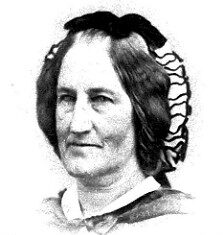
A warm pleasant day. Julia is over her cold and went out to church. Chaplin Booth of NY preached all day. He is a Methodist. Young Thos Lincoln (“Tad”) came up this morning and went to Sunday school and to church with our boys. I was down to the Hotels this evening, saw Fred Sickels at the “National.” He informed me that the “Pensecola” War Steam[er] which left her anchorage at Alexandria yesterday had safely run the Blockade of the Potomac. The night was misty and she was not seen. Only two shots were fired at her or in the direction of the noise she made. No news afloat tonight but it is expected that this will be an eventful week in the history of the War. It is thought that at least 400,000 Men, good Union soldiers, will “move” this week, and that will leave a quarter of a Million more stationary. To what immense proportions has this war grown. Such a demonstration of power made in so short a time the world has never seen. The pecuniary affairs of the Country are just now in a critical state. Treasury Notes at a discount of from two to four pr cent and gold at a premium of 4 [pr ct?]. All parties are awaiting the action of Congress to authorize another issue and to make them a legal tender. It is said that the expenses of the Govt are now near two millions pr day. If the war lasts a year more we shall be a thousand Millions in Debt, but that is nothing compared to the Value of the Union and the integrity and preservation of the constitution inviolate.

______

The three diary manuscript volumes, Washington during the Civil War: The Diary of Horatio Nelson Taft, 1861-1865, are available online at The Library of Congress.
0 comments

J.B. Jones records General Wise’s complaint of not enough men at Roanoke Island.

Civil War Day-by-Day
A likeness of Jones when he was editor and majority owner of the Daily Madisonian during President John Tyler’s administration.

JANUARY 12th.—Gen. Wise, whose headquarters are to be fixed at Nag’s Head on the beach near Roanoke Island, reports that the force he commands is altogether inadequate to defend the position. Burnside is said to have 20,000 men, besides a numerous fleet of gun-boats; and Gen. Wise has but 3000 effective men.

0 comments

Letter to Gov. Letcher from Elisha Franklin Paxton withdrawing resignation.

Elisha Franklin Paxton – Letters from camp and field while an officer in the Confederate Army

Unger’s Store, January 12, 1862.

Gov. John Letcher, Richmond, Va.

Dear Sir: My resignation, forwarded through the regular channel, will reach you in a few days. When it comes to hand you will treat it as withdrawn. I feel much aggrieved by my inability to get a furlough, and by an unjust discrimination made against me in withholding it, whilst granted to others. I have come to the conclusion that it is my duty as a citizen and a soldier to bear the grievance in patience, in the hope that hereafter I may be able to get such furlough as will save me the necessity of quitting the service.

0 comments

“I have handed in my resignation, and whether that will be accepted or not I do not know.”–Letters from Elisha Franklin Paxton.

Elisha Franklin Paxton – Letters from camp and field while an officer in the Confederate Army

Unger’s Store, January 12, 1862.

I was much disappointed in not getting a furlough a few days ago. I could not help but think that as the condition of the weather and the roads had made the expedition from which we had just returned a failure, it was full time to stop active operations, and in that event I was entitled to a leave of absence, if they were to be granted to any. I applied and was informed that two field officers must be left with the regiment, and that as a leave had been given to Col. Echols, none could be given to me until he returned. Hardly two days elapsed, however, until I received an order detaching me from my regiment and assigning me to the duties of a provost-marshal of the post, thus leaving but one field officer to my regiment. I have handed in my resignation, and whether that will be accepted or not I do not know. Jackson entered his disapproval of its acceptance, which will probably induce the Secretary of War and the Governor to do the same. The disapproval, it is true, implies the compliment that my services are valued, and that those in authority do not wish to dispense with them; but I do not feel satisfied, and the whole affair gives me much unhappiness. I shall endeavor to take such course as will not forfeit the good opinion which I have enjoyed from those with whom I have served, and at the same time try to be content with whatever may happen. I wish you to act upon the same principle. Some of us have as hard a road to travel as yourself. I should like to be at home, and know that you fondly desire my return. If I can’t get home, we must both be satisfied. I wish you to make up your mind to remain there, and take care of what we have as well as you can. You have, I doubt not, been as happy there for the last four or five months as you could have been elsewhere. With the work on the farm, your housekeeping, and the children, you will have too much to do to be lonesome. Plenty of work is a good antidote for loneliness; a very good means of drowning your sorrows. By this course you will be of infinite service to me, and will add much to your own comfort and happiness.

If there is an honorable road to get home, I shall spare no effort to find it as speedily as possible. In the meantime, Love, devote yourself to the babies and the farm, and not to grieving about me or my troubles. I will give them my undivided attention and get through with them as soon as I can. I don’t wish to share so great a luxury with you. Now, Love, good-bye. Kiss our dear little baby and tell Matthew and Galla papa says they must be good boys. Remember me kindly to Jack, Jane and Phebe (slaves). I am very grateful to them for their fidelity. Tell Jane to get married whenever she wishes, and not to trouble herself about the threats of her last husband. [continue reading…]

0 comments

Vaccinated against smallpox.–Alexander G. Downing.

Diary of Alexander G. Downing; Company E, Eleventh Iowa Infantry

Saturday, 11th–Our company were all vaccinated today as a protection against smallpox. The regimental surgeon came down from California to do the work. Our captain called the company up in line, and every man had to take his medicine.

0 comments

Still at Fortress Monroe.–Description of area and a little history.–Diary of David L. Day.

David L Day – My diary of rambles with the 25th Mass

Jan. 11. As I look out on the Old Dominion, the Mother of presidents, statesmen and heroes, my mind is filled with historical reminiscences of its past greatness and glory. Alas! that Virginia, a state that bore such a proud record in the history of our country, a state that has done so much and sacrificed so much to gain our independence and establish our government, should now be sunk in the mire and slough of rebellion.

There is no appearance of leaving here today; many of the officers are going ashore to look around, and the boys are amusing themselves as best they can. Many and various are the speculations and conjectures as to our destination. Some think we are to make an attack on Yorktown, others that Norfolk is the point of attack. Some prophesy that we shall go up the James river, others that we are going far down the coast. I have not bothered myself much about it, but conclude we shall fetch up somewhere. As one looks on “old glory” proudly waving over the frowning battlements of Fortress Monroe and the rip raps, he would naturally conclude that this part of Virginia had not passed the ordinance of secession. Fortress Monroe is built of granite and earthworks, and is calculated, I believe, to mount some 400 or 500 guns. It is the largest and strongest fort on the coast and the only complete work in this country; hence it is called a fortress. The rip raps is an unfinished work, built on an artificial island, and situated about a mile east of Fortress Monroe. When completed, it will be a powerful work, and all vessels going to Norfolk or up the James river will have to pass between the two forts. [continue reading…]

0 comments

Horatio Nelson Taft. — War gossip. –His 3 boys have 2nd dinner with the president and his family (after eating at home.)

Diary of US patent clerk Horatio Nelson Taft.

Saturday Jany 11th 1862

Warm pleasant day with muddy crossings. The public mind is now on “tiptoe” to learn news in reference to the two great expeditions, Genl Burnsides which left Annapolis yesterday, and Genl Grants Ironclad Gun Boat Expedition which left Cairo the same day for the south. It is thought that these concerted blows will fall with crushing force when they strike. It is understood that near 80,000 Men move with Genl Grant and some 40,000 with Genl Burnside, both armed and prepared to perfection. No particular news in the City. A woman was killed today on the Ave by her carriage coming in contact with a runaway Govt team, it was a Mrs Sweeny. The young “Lincons” were here to dinner. Our three boys went home with them, and at 5 o’clock took another dinner with the president and his family. Mrs L. sent a servant to call them while they were at play. They sent word that they had been to dinner at home. She sent again, the servt saying “The Madam says you must come with her boys.” They got home about 7.– The Boys are having a nice time on top of the White House. The Roof is copper, flat & with a high stone Ballistrade all round. They have built a cabin there which they call the “Ship of State” or rather the Qutar desk [Quarter deck]. They have a Spy Glass and report all strange sails on the River and objects on the Virginia Shore. They say that Mr Lincoln is Comodore. The Cabinet are officers but they sail “the Ship of State.” I went down to the P.O., got the NY papers, called upon Chas & Sallie. Got home about 8, did not get to bed till 11, raining a little.

______

The three diary manuscript volumes, Washington during the Civil War: The Diary of Horatio Nelson Taft, 1861-1865, are available online at The Library of Congress.

0 comments

Rebel War Clerk

Civil War Day-by-Day
A likeness of Jones when he was editor and majority owner of the Daily Madisonian during President John Tyler’s administration.

JANUARY 11th.—We have three candidates in the field in this district for Congress: President Tyler, James Lyons, and Wm. H. McFarland. The first will, of course, walk over the track.

0 comments

The returned Richmond prisoners of the 27th.

Woolsey family letters during the War for the Union
Among these released Richmond prisoners were twenty-one men of the 27th N. Y., a regiment brigaded with our 16th.
 
Eliza’s Journal, Jan. 11, ’62 says:

Joe told us of the pretty reception they had given the returned Richmond prisoners of the 27th. It was a shockingly muddy day or the whole brigade would have marched down to meet them. As it was, the General and Staff and the 27th marched as far as the Brigade Hospital, where they met the poor fellows trudging up the hill, each with his little bundle. They gave them a grand greeting with band-playing and hand-shaking and then the procession was formed: first the band, then the prisoners at the head of the column, then the rest of the regiment, and the General and Staff bringing up the rear. As they marched through the different camps there was a perfect ovation, friends and strangers alike smothering them with hugs, cheering them, slapping them on the back and “old-fellowing” them. The regimental bands were all out in force and the camp of the 27th was dressed festively for the occasion, the procession entering it by an archway over which hung the words “Welcome, Comrades! Your wounds bleed afresh in our hearts…” They were all more or less wounded but are now in pretty good condition and all are to have a furlough of thirty days.

0 comments

War Diary of Luman Harris Tenney.

War Diary of Luman Harris Tenney.

10th. Visited some with Mr. Haynes. He and Delos went to Cincinnati.

0 comments

Downing’s Civil War Diary.–Alexander G. Downing.

Diary of Alexander G. Downing; Company E, Eleventh Iowa Infantry

Friday, 10th–It is cool and cloudy, with some rain. We get our mail every day, as the railroad is open between here and St. Louis.

0 comments