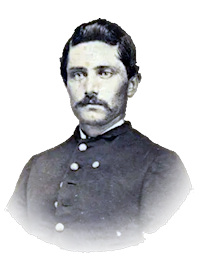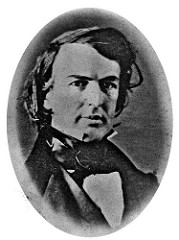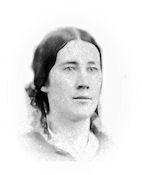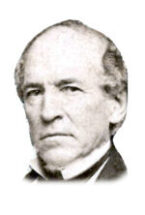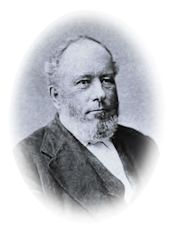
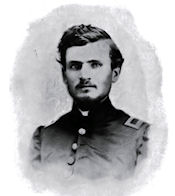
Alfred L. Castleman writes of some volunteer soldiers being treated outrageously.

Journal of Surgeon Alfred L Castleman.

19th.–I confess to myself to-night, that deeply as I am I interested in the cause for which we fight–the question of government against anarchy–what I have witnessed today has cooled much of the enthusiasm with which I entered the service of this government, which I find so tardy in doing justice to those who are fighting for its preservation: This is a stormy day in mid-winter. Whilst going my rounds of camp to see what was needed for the health and comfort of the men, I passed the guard house of the regiment, and stepped in to see the condition of things. I there found soldiers–formerly my neighbors–sons of my friends, imprisoned in a pen where pigs could not have lived a fortnight without scalding the hair off them, (this is not figurative language) and in which these men had been kept for three months, awaiting the decision of a court martial which had tried them for some trivial offence, the extremest penalty of which would have amounted to some three to six days’ confinement! at all events, under the extremest limit of the law, its punishment could not have exceeded in severity a sentence of three days’ imprisonment in this vile hole of filth and water! Yes, they had been tried, and for three months had been kept, not only in this vile hole, but under indignity and disgrace, awaiting the convenience of gentlemanly officers, to send them word whether they were honorably acquitted, or that they must be imprisoned for two or three days. When these men, who, perhaps, have never been guilty of offence besides being suspected of it, are released from this disgraceful punishment, will they not feel indignant at hearing the justice of their government questioned, and be ready to rush to arms again to defend it? If scenes like this are necessary to the preservation of a government for my protection, then in God’s name let me be untrammelled by conventional forms, and left dependent on my own powers for my protection. I assumed a prerogative; I pronounced most of these men sick, and ordered them sent to my hospital. They will hardly be pronounced well before the gentlemanly members of the court get ready to inform them of their sentence.

From this last scene I passed on to look up a party of our Regiment, who had been detailed to guard the General’s Headquarters. I found them; and, my God! what a sight!– Around the house occupied by the General was a large ditch, some five feet deep, and some ten or twelve feet wide, dug as the commencement of a fort. In this ditch, over which a few evergreen boughs had been thrown as a covering, stood a well dressed Lieutenant, (from my own county) with a squad of soldiers guarding the General’s house–the Lieutenant trying to infuse into the men a little warmth of patriotic feeling, whilst the winter torrents poured through the evergreen branches, and their whole frames shook with cold in this sentry house, charitably built for them by orders of the General, who at that moment was being joyful over his wine, and with his friends!! And is this the REPUBLIC, the government of equality for which I am fighting? If we were men, this would be pitiable, but we are only soldiers, volunteer soldiers at that; and what right have we to be cold, when our services are wanted for the comfort of a General? But these are only thoughts; should I write or speak them, it would amount to shameful insubordination, and I should be disgracefully dismissed from the service of the country which tolerates it. I am too honorable a man to permit myself to be disgraced, even for the privilege of uttering a truth. I therefore decline to say, or even to write, what I have seen.

This afternoon I received an order to be ready to move at a moment’s notice, and to give no more certificates for furloughs, as the applications would not be entertained. I have lost faith in the idea that the authorities have the slightest intention to move. They have seen our impatience to do something, and this order is a mere dumb-watch thrown us children to amuse us with the old promised hope that “when it gets a little older it will keep time.”
0 comments

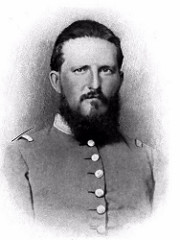
“Two battles would not have done us as much injury as hard weather and exposure have effected.”–Letters from Elisha Franklin Paxton.

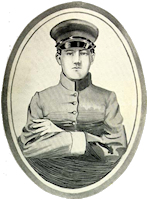
Elisha Franklin Paxton – Letters from camp and field while an officer in the Confederate Army

Romney, January 19, 1862.

We left Unger’s Monday morning and reached here on Wednesday, after three days’ hard march on roads as bad as rain, sleet and snow could make them. For some time since we reached here it has been raining, and the whole country is flooded with water. Since we left Winchester three weeks ago, we have indeed been making war upon the elements, and our men have stood an amount of hardship and exposure which I would not have thought was possible had I not witnessed it. In passing through it all, I have suffered but little, and my health is now as good as it ever was. Whilst this is true of myself, our ranks had been made thinner by disease since we left Winchester. Two battles would not have done us as much injury as hard weather and exposure have effected. After writing to you last Sunday, I concluded to write to the Governor to consider my resignation as withdrawn and I would trust to the chance of getting a furlough to go home. I am promised it as soon as Echols returns, and his furlough is out sixteen days from this time. I hope Jackson will have concluded by that time that a winter campaign is fruitful of disaster only, as it has been, and will put us at rest until spring. Then I may expect to see you.

Now, darling, just here the mail has come to hand, bringing your letter of the 15th inst. and the gratifying news that all are well at home. You say the sleet and snow were falling whilst you wrote, and you felt some anxiety lest I might be exposed to it. You were just about right. I left that morning at daybreak and marched in sleet and snow some fifteen miles to this place. When I got here the cape of my overcoat was a sheet of ice. If you have hard times, you may console yourself by knowing that I have hard times, too. I am amused with your fears of an inroad of the Yankees into Rockbridge. Their nearest force is about eighty miles from you, and if the roads in that section have not improved very much, they will have a hard road to travel. You all are easily scared. By the time you had been near the Yankees as long as I have, you would not be so easily frightened.

You must come to the conclusion which has forced itself upon me some time since. Bear the present in patience, and hope for the best. If it turns out bad, console ourselves with the reflection that it is no worse. We can see nothing of the future, and it is well for us we don’t. I have but little idea to-day where I will sleep to-night, or what shall be doing to-morrow. Our business is all uncertainties. I have been in great danger only once since I have been in the service, yet I suppose I have thought a hundred times that we were on the eve of a battle which might terminate my life. Now, after all, Love, I think it best to trouble myself little with fears of danger, and to find happiness in the hope that you and I and our dear children will one day live together again happily and in peace. It may be, dearest, this hope will never be realized, yet I will cherish it as my greatest source of happiness, to be abandoned only when my flowing blood and failing breath shall teach me that I have seen the last of earth. All may yet be well with us.

0 comments

War Diary of Luman Harris Tenney.

War Diary of Luman Harris Tenney.

18th. Rode out into the country with Delos and John. Got some milk.

0 comments

Downing’s Civil War Diary.–Alexander G. Downing.

Diary of Alexander G. Downing; Company E, Eleventh Iowa Infantry

Saturday, 18th–Some of the boys went out on a scouting expedition, but did not meet with any success.

0 comments

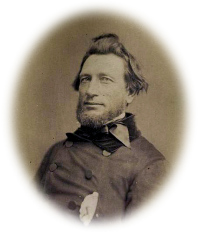
Rebel War Clerk

Civil War Day-by-Day
A likeness of Jones when he was editor and majority owner of the Daily Madisonian during President John Tyler’s administration.

JANUARY 18th.—Gen. L. P. Walker, the first Secretary of War, is assigned to duty in the Southwest under Gen. Bragg. How can he obey the orders of one who was so recently under his command? I think it probable he will resign again before the end of the campaign.

0 comments

“They want to go where people are least liable to help, and where there is most to do.” Woolsey Family letters.

Woolsey family letters during the War for the Union
Mrs. Thomas Gibbons, mentioned in the following letters, was one of the distinguished Hopper family of “Friends”– strong abolitionists and managers of what was called the “underground railroad.” Through their efforts many wretched hunted colored people were landed safely in Canada. Mrs. Gibbons was busy in the war from the beginning, and all her life long, with serene determination, waged her own war against evil wherever she encountered it.
 
From Abby Howland Woolsey.

J. C. called here yesterday bringing Mrs. Thomas Gibbons to see us. She told me much that was interesting, and disgusting too, about her experience at Fall’s Church; the brutality of the regimental surgeon, etc. She and her daughter go on again the 24th of this month, and unless they hear something to the contrary will go to the same regiment, the 23d New York Volunteers. She had thought of writing to Georgy; wished I would do so, and see if she could learn from any of the assistant-surgeons, at the office, from the Commission, or from the army officers, where she would be most needed. They want to go where people are least liable to help, and where there is most to do. We are to have some towels, little books, etc., ready for her. . . . Mrs. Gibbons said that Horace Greeley was greatly distressed at the course of the Tribune; he was sick at her house three weeks with brain fever, this autumn, the result of disappointment, etc., etc., in the paper.

0 comments

“Five wagons to the companies of a Regiment (two wagons to each company); one wagon to the Regimental Hospital.” — Journal of Surgeon Alfred L. Castleman.

Journal of Surgeon Alfred L Castleman.

18th.–I visited Washington to-day, through such rain and such mud, as no civilized country, save this, can sustain, and preserve its character for purity. Am back to-night. On my return, I find on my table the following: ” General Order No. 11.

“Headquarters, &c.

“When the time arrives for the troops of this Brigade to move, the following will be the allowance of the means of transportation:

“Five wagons to the companies of a Regiment (two wagons to each company); one wagon to the Regimental Hospital.

“Each wagon will carry the forage for its horses. The sixty rounds of reserved ammunition will be carried in extra wagons. In the company, wagons will be carried rations for two or three days, company mess equipage, and officers’ baggage, which will in no case exceed the amount by regulations for baggage in the field. The forage for horses of regimental and field officers will have to be carried in their wagons. This notice is given so that soldiers and officers may be aware, that all property not above mentioned, to be preserved, had better be removed, for if the troops march, it is probable the first notice given will be the presence of wagons for loading,

“By order of Brig. Gen. ————.”

Now that begins to look like business, and if our General means to put us in the way of doing something–if it will only not prove another counterfeit cry of “wolf”–we shall be pleased. Gen. McClellan has already grown several inches in the estimation of those whose confidence began to get shaky. I do not like that expression of “for if the troops march.” It looks a little wolfy. But I shall try to think it means “go in.”

0 comments

War Diary of Luman Harris Tenney.

War Diary of Luman Harris Tenney.

17th. Reached the eastern bank of the Mississippi, unable to cross on account of ice.

0 comments

Downing’s Civil War Diary.–Alexander G. Downing.

Diary of Alexander G. Downing; Company E, Eleventh Iowa Infantry

Friday, 17th–Warm and pleasant. Nothing of importance. Some of the boys are quite sick from the effects of vaccination, though on some of them it did not work. Mine worked fine, and some of the boys took virus from my arm and vaccinated themselves. The surgeon vaccinated a few of the boys as many as four or five times before it took.

0 comments

Tax bill. — Fear of the small-pox. — vaccination and re-vaccination. — from H. N. Taft’s diary.

Diary of US patent clerk Horatio Nelson Taft.

Friday 17th

Nothing new today. Soft moderate weather, the crossings all slush. Very muddy everywhere off the sidewalk. No particular war news. The financial affairs of the Nation look better. The 150,000,000 Tax Bill has passed both Houses of Congress which is a basis upon which loans can be made as it makes the interest sure. G. D. Prentice was writing in our room an hour or two today, he is quite a sober looking man. I went on to 7th St with “Bud” and got him a pair [of] Rubbers. Ha[ve] spent the evening at home. “Holly” has a bad cold, the rest of us in pretty good health but all fearing the small pox. Julia has been re-vaccinated, the rest of us will be.

______

The three diary manuscript volumes, Washington during the Civil War: The Diary of Horatio Nelson Taft, 1861-1865, are available online at The Library of Congress.

0 comments

Burnside Expedition. — The Storm is Over. — Diary of David L. Day.

David L Day – My diary of rambles with the 25th Mass

The Storm Over.

Jan. 17. The great storm has at last subsided and the sun once more shines out. All the bands are out playing, everything is putting on a more cheerful appearance, and we can now look around and see the result of the storm. Boats and vessels are ashore all around us, in a partially wrecked or damaged condition. The upper works of our boat are little better than a wreck, from the bowsprits of schooners and catheads of other craft that have fouled with us. Our accommodations are rather limited as is also the fare, but by practicing forbearance and great good nature, the harmony is as perfect as could be expected. A tug is alongside with rations, so at last the long fast is broken. I think the boys will not be over nice about their dinners when they get them. I have sometimes thought I could relish a dinner from that soup I saw at the park barracks. Our dinner today was served about 1 p. m.; bill of fare, pea soup and coffee. I have always persuaded myself that I didn’t like pea soup and wouldn’t eat it, but today I changed my mind and thought I never ate anything that tasted quite so good as pea soup. I voted it a great luxury.

0 comments

Rebel War Clerk

Civil War Day-by-Day
A likeness of Jones when he was editor and majority owner of the Daily Madisonian during President John Tyler’s administration.

JANUARY 17th.—A Mr. O. Hendricks, very lately of the U. S. Coast Survey, has returned from a tour of the coast of North Carolina, and has been commissioned a lieutenant by the Secretary of War. He says Burnside will take Roanoke Island, and that Wise and all his men will be captured. It is a man-trap.

0 comments

War Diary of Luman Harris Tenney.

War Diary of Luman Harris Tenney.

16th. Enjoyed the trip much, especially the prairies, saw one on fire. Left over one train.

0 comments

Diary of Horatio Nelson Taft

Diary of US patent clerk Horatio Nelson Taft.

1862

Thursday Jan’y 16th

Streets all ice this morning and all the boys out Skateing before breakfast. In the office all day. Geo D Prentice of the Louisville Journal in the room today. Very plain appearing man, rather slovenly in Dress and looking anything but a Wit who keeps the whole country laughing.

Went down this evening to see a fire Bomb burst and burn on the ground south of the Presidents House. It is designed to set fire to buildings, woods &c fired from a Mortar. The Lincoln boys were here to dinner and brought a request from their Mother that our boys “Bud” & “Holly” would go home and sleep with them tonight and they are there. War matters appear to be coming to a crisis and it is almost certain that there will be an advance soon. Genl McClellan is again in the Saddle after his illness, and expectation is on “tiptoe” to hear from the Burnside Expedition & Grants down the Mississippi. Called upon Judge Mason today. Saw Mr [Forburk?] of Buffalo at Willards. A perfect jam there tonight.

______

The three diary manuscript volumes, Washington during the Civil War: The Diary of Horatio Nelson Taft, 1861-1865, are available online at The Library of Congress.

0 comments

Downing’s Civil War Diary.–Alexander G. Downing.

Diary of Alexander G. Downing; Company E, Eleventh Iowa Infantry

Thursday, 16th–A squad of the boys went out scouting[1] and took one man a prisoner, besides bringing in nine mules and six hogs. They took the man to headquarters, turned the mules over to the regimental quartermaster, and the hogs we made use of as so much extra pork for the company.


[1] This was really a foraging expedition which at that time they spoke of as “scouting.”–Ed.

0 comments

John B. Jones writes about passports written by Secretary Benjamin.

Civil War Day-by-Day
A likeness of Jones when he was editor and majority owner of the Daily Madisonian during President John Tyler’s administration.

JANUARY 16th.—To-day, Mr. Benjamin, whom I met in the hall of the department, said, “I don’t grant any passports to leave the country, except to a few men on business for the government. I have ceased to grant any for some time past.” I merely remarked that I was glad to hear it.

Immediately on returning to my office I referred to my book, and counted the names of fifty persons to whom the Secretary had granted passports within thirty days; and these were not all agents of the government. Mr. Benjamin reminded me of Daniel Webster, when he used to make solemn declarations that his friends in office were likewise the partisans of President Tyler.

0 comments

Burnside Expedition.–More Boats Ashore and Sinking.–Diary of David L. Day.

David L Day – My diary of rambles with the 25th Mass

More Boats Ashore and Sinking

Jan. 16. Three more boats ashore and leaking, one of them is the U. S. mail-boat Suwanee, from Fortress Monroe for Hilton Head. She ran in here this morning to leave mails and dispatches for this fleet, intending to sail this afternoon, but owing to the high winds and heavy sea, she parted her cable and drifted on an anchor fluke, breaking a hole in her bottom and sunk. She lies on the sand, with her deck about four feet out of water. It is said she can be pumped out and raised when it calms, of which time, however, there seems to be a very dim prospect. We have just heard from the old steamer Pocahontas. She went ashore below Hatteras light. She had our team horses aboard, and nearly all of them were lost. The men who were aboard of her got ashore and are now coming down the island. The schooner on which the signal corps were aboard has not been seen or heard from and there is much anxiety for her safety. We have kept alive on hardtack thus far, but on account of the storm no tug has been able to get alongside with rations, and we going it with half a ration of hardtack and coffee once a day. Five cents apiece are freely offered for hardtack, with no takers.

0 comments

“But we have now moved into our winter quarters, huge log hut..,”

Civil War Day-by-Day

MANASSAS JUNCTION, VA., January 16, 1862.

Dear Sister:

I received your letter some days since and was very much rejoiced to hear from you, but I thought that you were a very long time in answering my last. It came at last and eagerly did I devour the contents and with what pleasure I lingered on every sentence, no tongue can tell. The description you gave of your tableaux interested me very much, and I regret very much, not being able to have been there, as all such scenes always interest me so much, besides the desire of seeing you act. I think, myself, that you should have had your face painted, and that would have set off the piece a great deal. It is a pretty hard piece. Didn’t you feel pretty scared? What does Dick act? Who was that sweetheart of yours that has been home four times? I should like to know him.

We have a hard time of it here now. The ground is covered with snow and then a sleet over that, and it is nearly as cold as the frozen regions, the winds come directly from mountains and blow around us like a regular hurricane. But we have now moved into our winter quarters, huge log hut, and we keep very comfortable, but it is nothing like home, home with its sweet recollections. As I sit and write I cannot refrain from gliding back into the past and enjoying the blessed memories of yore. But enough of indulging the imagination, for this is a sad reality and it will not do for my imagination to assume too large a sway. Tell Miss Myra that when I visit Washington I will call on her parents. I expect to go there soon, either as a visitor or captive, but I hope as the former. We will have a tableau before long, I expect, but I expect the scene will be played in a larger place than a hall. It will encompass several miles and will take several hours to perform it, but when it does come off it will end in a sad havoc. I am very thankful to you for those socks you knit for me, and when I wear them I shall think of you. All around me are asleep and the huge logs have sunk into large livid coals ever and anon emitting large brilliant sparks, that cast a ghastly hue around the whole room, and I now think it time to close, so goodbye.

Your loving brother,
GEORGE.


Letters from two brothers who served in the 4th North Carolina Infantry during the Civil War are available in a number of sources online.  Unfortunately, the brothers are misidentified in some places as Walter Lee and George Lee when their names were actually Walter Battle and George Battle. See The Battle Brothers for more information on the misidentification.

0 comments

War Diary of Luman Harris Tenney.

War Diary of Luman Harris Tenney.

Jan. 15th. Arrangements to move at 9 A. M. for Cincinnati– marched mounted by country road. Went on ahead with Robinson, overtook Abbey and Wood. Rode on my horse about the city. P. M. took cars for St. Louis–1,300 strong.

0 comments

“Some of our functionaries are not justly entitled to the great positions they occupy.” — John Beauchamp Jones

Civil War Day-by-Day
A likeness of Jones when he was editor and majority owner of the Daily Madisonian during President John Tyler’s administration.

JANUARY 15th.—I forgot to mention the fact that some weeks ago I received a work in manuscript from London, sent thither before the war, and brought by a bearer of dispatches from our Commissioner, Hon. Ambrose Dudley Mann, to whom I had written on the subject. I owe him a debt of gratitude for this kindness. When peace is restored, I shall have in readiness some contributions to the literature of the South, and my family, if I should not survive, may derive pecuniary benefit from them. I look for a long war, unless a Napoleon springs up among us, a thing not at all probable, for I believe there are those who are constantly on the watch for such dangerous characters, and they may possess the power to nip all embryo emperors in the bud.

Some of our functionaries are not justly entitled to the great positions they occupy. They attained them by a species of snap-judgment, from which there may be an appeal hereafter. It is very certain that many of our best men have no adequate positions, and revolutions are mutable things.

0 comments

Burnside Expedition. — Rough weather. — Short Rations. — David L. Day.

David L Day – My diary of rambles with the 25th Mass

Jan. 15. Rough weather still continues, and we are out of rations, subsisting entirely on hardtack and a short ration of that. Unless it calms down so a tug can get alongside, we shall be entirely out in a day or two more. Three more boats dragged their anchors and went ashore this morning, and other boats, with their flags union down, are calling for help. In fact, things are beginning to look gloomy, but amidst all the trouble and discouragements, Gen. Burnside is everywhere to be seen, flying about among the boats and vessels, encouraging his men and looking as cheerful as though everything was going to suit him. Today a rebel boat came down the sound to take a look at us. One of our boats went out to meet her, but the rebel, not caring for an interview, hauled off. The colonel, surgeon and one other man of the 9th New Jersey regiment were drowned today, by the upsetting of a small boat they were in. And so we go, trouble and dangers by sea, and I suppose there will be more by land, if we ever get there.

0 comments

Downing’s Civil War Diary.–Alexander G. Downing.

Diary of Alexander G. Downing; Company E, Eleventh Iowa Infantry

Wednesday, 15th–Nothing of importance. Got some more pies and doughnuts from a man and his wife who come in three times a week with them, to sell to the boys. We usually lay in a good supply.

0 comments

Diary of Horatio Nelson Taft

Diary of US patent clerk Horatio Nelson Taft.

Wednesday Jan’y 15th

Nothing new in the City or from the army. More Cabinet changes talked of, and I think necessary. Julia had letter from Mrs Dr Barnes of the 27th Regt. She has been staying in Camp for the last ten weeks living in a tent. She also had a letter from Miss Mirrick of Lyons. It has been a cold unpleasant day, freezing until near night with a misty sleet falling all day. The ground is covered with snow, tonight it thaws and the snow & water on the ground render “rubbers” an absolute necessity. What the poor soldiers do it is hard to tell [in] this kind of weather. There is an immense amount of sickness in the City now among citizens. Small pox & Typhoid fever are both prevailing to a great extent. The mortality in the Military Hospitals is very great, forty or fifty pr day are carried off to their long homes. Bad management I fear there.

______

The three diary manuscript volumes, Washington during the Civil War: The Diary of Horatio Nelson Taft, 1861-1865, are available online at The Library of Congress.

0 comments

War Diary of Luman Harris Tenney.

War Diary of Luman Harris Tenney.

14th. Prin. Fairchild returned home. Stayed with John Devlin over night. Cooked rations and packed up.

0 comments

Downing’s Civil War Diary.–Alexander G. Downing.

Diary of Alexander G. Downing; Company E, Eleventh Iowa Infantry

Tuesday, 14th–Lieutenant Compton with five men went out to capture the man who fired into a passenger train last summer and killed the conductor. When the man saw them approaching to surround his house, he started to run for the timber. He refused to surrender and the men fired on him, shooting him through the thigh, but upon seeing that the man was severely wounded, Lieutenant Compton gave the order to let the man remain at his home.

0 comments