Shiloh – A. G. Downing writes of the aftermath.

Diary of Alexander G. Downing; Company E, Eleventh Iowa Infantry

Tuesday, 8th–We formed a line of battle early this morning and remained in line about two hours.[1] So many men throughout the camp were firing off their loaded rifles, preparing to clean them, that the officers thought a battle was in progress out in front. About 9 o’clock word came in from the front that there was no rebel in sight, and we were ordered back to our quarters. We spent the day in burying the dead, both our own and those of the rebels.

Our battle line had been at the south end of Jones’ Field, where a few days before we had cleared the timber for a review ground. This place was fought over so often by both armies and the dead lay so close that one could walk on dead bodies for some distance without touching the ground. There were over three thousand five hundred dead on the battlefield, and something like five hundred dead horses. Seven hundred bodies of the rebels were put into one grave. It is an awful sight to see the dead lying all about. It rained this forenoon, but cleared off this afternoon. The heavy rains have soaked the ground, making it very muddy. About five thousand of our forces arrived today.


[1] It has been said by some that from General Grant down to the commonest private in the ranks of the entire Army of the Tennessee, all the men cared for on Monday afternoon, the second day of the battle of Shiloh, was to get back to their camps. I cannot believe the statement, for on Tuesday, the 8th, when we were ordered into line of battle, on that gloomy, rainy morning, and a cold wind blowing from the northwest, I know by the sentiment of the boys in my own company, that they would have gone to the front then if ordered to do so. We felt that the loss in our company was too great not to follow up the victory.—A. G. D.

0 comments

Ladies willing to serve.

Woolsey family letters during the War for the Union
Jane Stuart Woolsey to Mother in Washington.

Thursday Evening.

Dear Mother: Your letter, or rather Georgeanna’s, Eliza’s check, etc., arrived this morning, with the important item inscribed, as usual, on the flap and disfigured in opening. We are very sorry to hear that Hatty doesn’t get on faster. Perhaps if, instead of a “good old soul” of a doctor, she had an enlightened young one, she might get sooner rid of her sore throat. I believe much more devoutly in modern than in ancient doctors . . .

Sarah, Abby, Carry, Miss Parsons, Charley and Robert have all gone to the “Reception” of the Cumberland’s men to-night. It was time to show some interest in them. The Chamber of Commerce has got this up. I hope it will be a success. You remember the officer calling to the half-drowning men, “Shall we give her another broadside, boys?” and the “Aye, aye, sir,” and the final volley, as the water rushed in at the portholes. We have had two visits lately from Prof. Hitchcock on the subject of a ladies’ committee of visiting; auxiliary to the gentlemen’s committee of the New England Soldiers Relief Association. He asked us to collect some names of ladies willing to serve (visiting only), and we have enrolled six or eight: Mrs. Gurden Buck, Mrs. H. B. Smith, Miss Annie Potts, Margaret Post, etc., etc. I fancy there will be little to do really, as there is a resident superintendent and wife, and, I believe, nurses, in the house corner of John st. and Broadway. You will see the details of the arrangement in the papers. . . .

All the flags are out again for the Western victories and the Western heroes. Col. Bissell, the officer who made a river 12 miles long to flank the rebel position, is Mrs. Dr. Parker’s brother, a man of extraordinary energy and perseverance. .. .

Mrs. Bacon told Sarah that Frank had 700 sick men under his care and made a point of seeing every man every day, so never wrote, leaving that business to Theodore. We sent, him and Mr. Withers each, another bundle of papers by the last mail.

0 comments

“…it will be the meanest part, possible.”

Woolsey family letters during the War for the Union
Abby Howland Woolsey to Georgeanna.

New York, April, ‘62.

I notice what you say of bed sacks. The Sanitary Commission furnished thousands to the Burnside Division for its hospitals at Roanoke. Charley says not one of these was ever filled or used, there not being a wisp of hay or straw or moss or anything, except what was brought there for forage. The men all lay on the board floors. At Fort Monroe it might be easy to send down from Baltimore ready-made mattresses, or the material for filling, but I question whether anyone on the spot would take the trouble of seeing them applied. You could mention the instance of Roanoke to the Sanitary Commission to prove to them that mere sacks are not enough. .. .

Yesterday when I came in from Mary’s, I found “Robert Anderson, U. S. A.” ’s card on the table again. John said he bade him say General Anderson called in person to thank Miss Carry Woolsey for the flowers. . . . James Gibson writes from Belfast that “England did not want war with America, and special prayer meetings for peace were held”; but wasn’t it Earl Shaftesbury who refused to attend, saying such an act would place him in hostility to his government? If England did not mean war, why did she fly to arms in that indignant and indecent haste! Why did Lord Palmerston suppress the nature of the despatch from Seward, read to him by Mr. Adams, and even allow it to be contradicted in his organ the Post? No; two things will always stand on record as showing the hostility of the governing class in England toward America in its life and death struggle;–this hurry to make a casus belli of what ought to have been a question for diplomacy to settle; and that first great wrong done us in the outset, when the English ministry, while Adams was on the railway train, the very day he was on his way from Liverpool to London, last May, hastened to declare the North and South equal belligerents. They confound the law-power and the law-breaker; they call the police and the burglar brother-rogues. . . .

It is just as Mr. Scharff’s father said at the very beginning of the war, “Well, John, I don’t know what part England will take in this matter, but I am very sure of one thing, it will be the meanest part, possible.” . . .

0 comments

“Skirmishing near Yorktown reported; nothing definite.”—Diary of a Southern Refugee, Judith White McGuire.

Diary of a Southern Refugee During the War by Judith White McGuire

April 7.—Just returned from a little trip to the country in time to hear the morning news of a splendid victory yesterday, at Shiloh. No particulars received. Skirmishing near Yorktown reported; nothing definite.

0 comments

“We could see every motion of the Rebel gunners plainly, and they worked like men, until…”–Army Life of an Illinois Soldier, Charles Wright Wills.

Civil War Day-by-Day

Headquarters 7th Illinois Cavalry,
In a very fine House,
Point Pleasant, Mo., April 7, 1862.

If this isn’t fine your brother is incapable of judging. Cozy brick house, damask curtains, legged bedsteads, splendid tables and chairs, big looking glass, and everything just as fine as a peacock’s tail. I do wish you could have been with me the last two days. They’ve been two of the best days of my life. During the storm of Saturday night, the 5th instant, one of the gunboats ran by “Island 10.” I heard of it early Sunday morning, and got out a pass for Andy Hulit and myself to look for forage, intending, of course, to ride down to the river and watch the gunboat as we knew there’d be fun if she attempted to run below Madrid. We rode up the river about six miles (half way) to a point that extends into the river on our side, and got there just as the boat did. ‘Twas the “Carondelet,” and indeed she looked like an old friend. The sight of her did me more good than any amount of furloughs could. At this point, I spoke of, we have three batteries within a half-mile, and there were two Rebels’ batteries visible right at the water’s edge, opposite. We just got there in time to see the ball open. Besides the two secesh batteries visible, they opened from four others masked by the brush and trees, and hitherto unknown to us. Their six, our three, the gunboats, all firing together made by far the grandest thing I ever witnessed. I suppose there were from 30 to 40 guns used, and at least a half thousand shots fired. Andy and I were on a little rise of ground a couple of hundred yards from our main battery and where we could see every shot fired and its effect. There were lots of shots fell around that battery, but none near enough us to be disagreeable. About an hour’s fighting silenced the Rebel batteries, and that fun was over. Our boat didn’t go over to them at that time, but came into our shore and laid up. She was not struck once, nor was there a man hurt on our side. Andy and I rode out in the country and got our dinners with a friend of mine, and about 3 p.m. started home. We just got back here as the gunboat was preparing to attack the batteries immediately opposite here. She ran down the river on our side, a mile below their guns, and then turning her bow square toward the enemy, started for them and commenced firing. We could see every motion of the Rebel gunners plainly, and they worked like men, until the boat got within about 300 yards of them, when they broke, and I tell you they used their legs to advantage; all but one and he walked away with his arms folded perfectly at ease. There’s an immense sight of enjoyment in witnessing such fights as these. [continue reading…]

0 comments

Diary of Horatio Nelson Taft.

Diary of US patent clerk Horatio Nelson Taft.

Monday April 7 1862

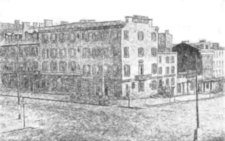
Rain last night and mud this morning. In the office as usual. A fire broke out this morning on the corner of the Ave & 7th Street, it has been burning most of the day. Six stores and one Hotel were destroyed before three o’clock. Willie came down to the office before three to go home with me. I took him down to see the fire, he was some frightened at the noise and confusion. It has snowed most of the day and no wind so the fire did not burn very rapidly. All the engines were there, but the efficiency of the fire department was not much. Went down to the “National” to meet some gentlemen with S Seely of NY to examine Models & Drawings in reference to Iron covering for Ships of War. Staid till 1/2 past 10. We had the corrigated Iron in question. We think that there must be “something up” down the River as since 9 o’clock two messengers have called at our door with Dispatches for Comodore Smith from the War Department, perhaps the “Merrimac” is out again.


The three diary manuscript volumes, Washington during the Civil War: The Diary of Horatio Nelson Taft, 1861-1865, are available online at The Library of Congress.

0 comments

Rebel War Clerk

Civil War Day-by-Day
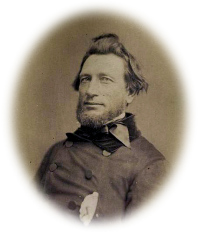
A likeness of Jones when he was editor and majority owner of the Daily Madisonian during President John Tyler’s administration.

APRIL 7th.—R. G. H. Kean, a young man, and a connection of Mr. Randolph, has been appointed Chief of the Bureau of War in place of Col. Bledsoe, resigned at last. Mr. Kean was, I believe, a lieutenant when Mr. Randolph was colonel, and acted as his adjutant.

0 comments

A Confederate Girl’s Diary

Civil War Day-by-Day

April 7th.

Until that dreary 1861, I had no idea of sorrow or grief. . . . How I love to think of myself at that time! Not as myself, but as some happy, careless child who danced through life, loving God’s whole world too much to love any particular one, outside of her own family. She was more childish then – yet I like her for all her folly; I can say it now, for she is as dead as though she was lying underground.

Now do not imagine that Sarah has become an aged lady in the fifteen months that have elapsed since, for it is no such thing; her heart does ache occasionally, but that is a secret between her and this little rosewood furnished room; and when she gets over it, there is no one more fond of making wheelbarrows of the children, or of catching Charlie or mother by the foot and making them play lame chicken. . . . Now all this done by a young lady who remembers eighteen months ago with so much regret that she has lost so much of her high spirits – might argue that her spirits were before tremendous; and yet they were not. That other Sarah was ladylike, I am sure, in her wildest moments, but there is something hurried and boisterous in this one’s tricks that reminds me of some one who is making a merit of being jolly under depressing circumstances. No! that is not a nice Sarah now, to my taste.

The commencement of ’61 promised much pleasure for the rest of the year, and though Secession was talked about, I do not believe any one anticipated the war that has been desolating our country ever since, with no prospect of terminating for some time to come. True the garrison was taken, but then several pleasant officers of the Louisiana army were stationed there, and made quite an agreeable addition to our small parties, and we did not think for a moment that trouble would grow out of it – at least, we girls did not. Next Louisiana seceded, but still we did not trouble ourselves with gloomy anticipations, for many strangers visited the town, and our parties, rides, and walks grew gayer and more frequent.

One little party – shall I ever forget it? – was on the 9th of March, I think; such an odd, funny little party! Such queer things happened! What a fool Mr. McG–– made of himself! Even more so than usual. But hush! It’s not fair to laugh at a lady – under peculiar circumstances. And he tried so hard to make himself agreeable, poor fellow, that I ought to like him for being so obedient to my commands. “Say something new; something funny,” I said, tired of a subject on which he had been expatiating all the evening; for I had taken a long ride with him before sunset, he had escorted me to Mrs. Brunot’s, and here he was still at my side, and his conversation did not interest me. To hear, with him, was to obey. “Something funny? Well –” here he commenced telling something about somebody, the fun of which seemed to consist in the somebody’s having “knocked his shins” against something else. I only listened to the latter part; I was bored, and showed it. “Shins!” was I to laugh at such a story?

0 comments

War Diary of Luman Harris Tenney.

War Diary of Luman Harris Tenney.

7th. After work was done went to the river and washed. Had a good visit with Ed June.

0 comments

Shiloh – For A. G. Downing, of the 11th Iowa, the battle continues.

Diary of Alexander G. Downing; Company E, Eleventh Iowa Infantry

Monday, 7th–It rained all night. The battle was renewed this morning at 6 o’clock, by our forces under General Buell. The Eleventh Iowa formed and marched forward with parts of broken regiments, in support of the left center of Buell’s army, whenever needed. It was very trying for us thus to stand in line of battle, shells exploding over our heads and cutting off limbs of trees, spent minie balls flying all about us, yet not being able to get into action, because of the line of battle just in front of us. The rebels were fighting desperately, but falling back all the while with great slaughter of men. About 3 p. m. the rebels in front of us began to retreat, with Buell’s army after them, but we remained in line. About an hour later the report came that the rebels had left the field, and we were ordered back to our camp in Jones’ Field, arriving there about dark. We had not been in our tents since Sunday morning and they were still standing, but a great many had been hit and badly torn by shells and minie balls. We found the body of a rebel soldier lying in my tent; he had been wounded and apparently had gone in, crawled between our bunks and bled to death. We carried the body out to the parade ground and then got a shovel to clean away the blood from the place where the body had lain in the tent.

0 comments

Safe arrival.

Woolsey family letters during the War for the Union
Eliza’s journal.
 

April 7.   A note from Joe tells of the regiment’s safe arrival at Manassas, where they are camped. The General had complimented J. on moving his regiment better than any of the others.

0 comments

Journal of Surgeon Alfred L. Castleman.

Journal of Surgeon Alfred L Castleman.

7th.–Some fighting to-day, by small bodies, with slight loss on either side. In the afternoon, finding our camps commanded by the enemy’s guns, we started suddenly on a move of what we were told was to be a mile or two. The rain poured in torrents, and, instead of marching a mile or two, we kept on the move until late in the night. Many of the officers made the soldiers carry their (the officer’s) tents on their shoulders, and this, in addition to gun and knap sacks, and whilst the officers rode unincumbered. In the organization of an army under a republican government, was such a distance between officer and soldier ever contemplated? We halted about ten o’clock, drenched with the still pouring rain. The men are almost starved, having been for nearly two days entirely without rations, and lie to-night in pools of water.

0 comments

Diary of Horatio Nelson Taft.

Diary of US patent clerk Horatio Nelson Taft.

Sunday 6th

A delightful morning. Hearing that the “27th” were soon to move, I crossed the River to Alexandria and walked out to their Camp. But to my surprise found the Camp vacated. The Regt left on Friday. Lieut Gaul was left in charge of some Stores but he expects to leave tomorrow. The Regt went by RR to Warrenton junction and are on the Way to Richmond. God Speed them. A deserted camp is about the most desolate place imaginable. The tents were all standing but all was still and lonely where so lately all was life and motion. I got back to Washington about 5 o’clock. The Steam Boat was crowded both ways. The country over there looks desolate enough. “Poor Virginia” “put back half a century.”


The three diary manuscript volumes, Washington during the Civil War: The Diary of Horatio Nelson Taft, 1861-1865, are available online at The Library of Congress.

0 comments

Rebel War Clerk

Civil War Day-by-Day
A likeness of Jones when he was editor and majority owner of the Daily Madisonian during President John Tyler’s administration.

APRIL 6th.—Two spies (Lincoln’s detective police) have been arrested here, tried by court-martial, and condemned to be hung. There is an awful silence among the Baltimore detectives, which bodes no harm to the condemned. They will not be executed, though guilty.

0 comments

War Diary of Luman Harris Tenney.

War Diary of Luman Harris Tenney.

6th. Sunday. Heard the minister make a few remarks from “Be ye not overcome of evil.” Letters from home and Fannie Andrews both.

0 comments

Shiloh – A. G. Downing, of the 11th Iowa, writes of his company’s first battle.

Diary of Alexander G. Downing; Company E, Eleventh Iowa Infantry

Sunday, 6th–The long roll sounded about half-past seven in the morning, and at once we formed a line of battle on the regimental parade ground. At about 8 o’clock we were ordered to the front, and marching out in battle line, about one-half mile, we met the rebels at Water Oaks Pond. Dresser’s battery was just in front of our regiment, we acting as a support to it. The rebels came up on our right, compelling us to fall back about eighty rods to our second position, where we remained until we were again flanked, when we fell back to within about one hundred yards of our parade ground, where we lay down on the brow of a hill awaiting the approach of the rebels in front. While in this position, Thomas Hains of Company E took off his hat, placed it upon his ramrod, and holding it up, shouted to the boys along the line to see what a close call he had had while out in front, for a minie ball had passed through the creased crown of his hat, making four holes. Before he could get his hat back on his head, a small shell burst over us and mortally wounded him.

By this time the rebels were marching right oblique, just in front of us, in double line of battle with their two stands of colors flying. By order we waited until we could look them in the eye and then rose up and fired a volley at close range into their ranks, throwing them into great confusion. We then made a bayonet charge, capturing one of their standards, and together with the Eleventh and the Twentieth Illinois Infantry we captured Cobb’s battery and retook General McClernand’s headquarters. In this charge Company E met its greatest loss of the day.

My musket became so dirty with the cartridge powder, that in loading it the ramrod stuck fast and I could neither get it up nor down, so I put a cap on, elevated the gun and fired it off. But now I had no ramrod, and throwing down my musket, I picked up a Belgian rifle lying at the side of a dead rebel, unstrapped the cartridge box from his body, and advanced to our company, taking my place with the boys. While in this position I witnessed a wonderful sight—thickly-flying musket balls. I have never seen hail falling thicker than the minie balls were flying in the air above us, though too high to do any harm. Our ammunition soon ran out and the entire regiment was ordered to the rear to replenish our cartridge boxes.

When leaving with my company for the rear to restock our ammunition supply, I passed a severely-wounded boy (a stranger to me) who begged me to help him to the rear and out of danger. I stooped down and let him put his arms around my neck, but finding that I could not rise up with him hanging on my neck, I assured him that he would be safe there among the logs, and explained that if I should stay with him, I would surely be taken a prisoner, so left the poor fellow to his fate.

After filling our cartridge boxes, we again formed in line of battle close by the cavalry field and right in the midst of heavy brush timber. Here we remained for about two hours, when we were ordered by General Grant (in person) to a position on the extreme left of the Army of the Tennessee, in support of Dresser’s battery, being placed in line by Webster of General Grant’s staff, just to the left of the siege guns. Here we were engaged for more than two hours. The Fifty-fifth Illinois and the Fifty-fourth Ohio were placed to our left in support of two batteries hard by the river. Here about 5 o’clock in the evening, three regiments of Buell’s army, just arriving, helped to repulse the fearful charge of the rebels. [continue reading…]
0 comments

Journal of Surgeon Alfred L. Castleman.

Journal of Surgeon Alfred L Castleman.

6th.–Accompanied the Brigade to-day on a reconnoisance. Frequent skirmishes with small bodies of the enemy. One man in Company F received a slight flesh wound in the thigh –the first blood spilt by our Regiment in the cause. We encamped to-day near “Lee’s Mill,” on the narrow neck of land spoken of yesterday, and about four miles from Yorktown. The whole distance between the James and York Rivers here is only about seven miles. Warwick Creek, emptying into the James, rises about two miles from Yorktown, and a small creek emptying into the York River takes its rise amongst the sources of Warwick Creek, so that the two rivers are here nearly connected by these two creeks. These creeks have wide, marshy bottoms, now deeply overflowed by means of dams thrown across at short distances apart by the enemy. And the whole western border of these marshes, now lakes, are strongly protected by earthworks, mounting heavy guns. This lake, or marsh, we must now cross before we can advance on Richmond. The enemy’s force here we do not know, but suppose it to be inconsiderable. This is a very strong point, and if well manned it is almost impregnable. My opinion is, that they have but a small force here. This, however, is a matter of conjecture. All are expecting a big battle at this point.

0 comments

Army Life of an Illinois Soldier, Charles Wright Wills.

Civil War Day-by-Day

April 5, 1862.—One of our boys has just returned from Madrid and says he saw our gunboat Cairo there. She slipped by the batteries at “Island No. 10” in the storm last night. Mosquitoes here already.

0 comments

Diary of Horatio Nelson Taft.

Diary of US patent clerk Horatio Nelson Taft.

Saturday April 5th 1862

Nothing has occured today worthy of notice. Everyone is looking anxiously for news from three or four different points. From “Buels Army” & Com Foote Ten; from McClellan who is now at Fortress Monroe with a large Army, 130,000; from Genl Burnside in N. Car[o]lina; and from New Orleans & Savannah. A delegation from the North is here holding a sort of Caucus attempting to galvanize the old Democratic Party into life. It moves at the suggestion of old Breckinridge supporters, which gives the matter a bad odor. It will not do to talk of Party till this Rebellion is crushed.


The three diary manuscript volumes, Washington during the Civil War: The Diary of Horatio Nelson Taft, 1861-1865, are available online at The Library of Congress.

0 comments

Rebel War Clerk

Civil War Day-by-Day
A likeness of Jones when he was editor and majority owner of the Daily Madisonian during President John Tyler’s administration.

APRIL 5th.—Newbern, N. C., has fallen into the hands of the enemy! Our men, though opposed by greatly superior numbers, made a brave resistance, and killed and wounded 1000 of the invaders.

The enemy were piloted up the river to Newbern by the same Mr. Dibble to whom I refused a passport, but to whom the Secretary of War granted one.

The press everywhere is commenting on the case of Dibble—but Mordecai still sits at the gate.

0 comments

Alexander G. Downing records a hard drill at Pittsburg Landing.

Diary of Alexander G. Downing; Company E, Eleventh Iowa Infantry

Saturday, 5th–We had company drill this morning as usual. Lieutenant Compton took the company out on the drill ground this afternoon for company drill, and he said: “Now, boys, we drill in earnest for an hour, then return to our quarters, put away our rifles, and then to the branch for bathing.” It was warm, but the men all went into it and after a hard drill we had a good wash-off in the branch.[1]


[1] This was the last time that Lieutenant Compton ever drilled our company, for the poor fellow was killed in the battle on the next day, Sunday, a little after noon. He was a fine drillmaster, and kind to his men, especially to those who tried to do their duty.—A. G. D.

0 comments

Through Some Eventful Years

Through Some Eventful Years by Susan Bradford Eppes
Susa Bradford Eppes

April 5th, 1862.—Sewing societies were organized long ago and every neighborhood has one. Ours meets first at one house and then at another, and all of us sew steadily all day long. Mother cuts many of the garments and Mrs. Manning helps her, that is, when they meet with us.

Peter and Mac make packing cases and it is astonishing how many garments go forward from the Bradford neighborhood.

I did not know much about sewing at first; at the beginning I made Charley Hopkins two flannel shirts but I am ashamed to say Lulu did most of the sewing. Now I can take any kind of a garment and make it entire, even the buttonholes, though Sister Mag says my button holes “gape.” I mean to improve on them. I have to do my book-keeping early in the morning and sometimes I have to work at night to finish up the day’s work. Since we have been sewing so steadily I have given up my horseback rides. Father does not approve of that. I take a good deal of exercise in other ways, however, and I feel well and strong.


Susan Bradford is 16 years old when this entry was made.

0 comments

One of the brightest, pleasantest days

Woolsey family letters during the War for the Union
Chaplain Hopkins to Eliza.

Alexandria Hospital, April 5th.

My Dear Mrs. Howland: Yesterday was one of the brightest, pleasantest days I have known for a long time. The wards were more inviting, and the men more cordial than usual. All day I seemed to be in the right place at the right time, and by a glad intuition, to discover the avenues which were unfortified and the doors which were unbarred. I have told you this because I am fully convinced that it was owing wholly to the good start that you gave me by that early morning visit. By some skillful adjustment, which I failed to notice at the time, you left me in tune. . . .

Please thank your sister Abby for the bundle of Independents. They were very welcome and I gave them away, each with the charge: “Be sure and read the Rainy Day in Camp.” Did I tell you that I read it after each of my services last Sabbath? and I think that it did more good than all that went before it. The men listened in perfect quiet. I feel sure that, if I could have looked up myself, I should have seen tears in the eyes of more than one who had been “skulking in the rear.”

0 comments

Journal of Surgeon Alfred L. Castleman.

Journal of Surgeon Alfred L Castleman.

5th.–A day of cooling rain, and warming excitement. Marched three miles, and found the enemy strongly entrenched behind a line of fortifications, on a narrow neck of land between the York and the James Rivers. Artillery duel at long range began about 12 o’clock, in which we had quite a number killed and wounded.

0 comments

“During the storm I though of our fleet at “Island 10” and it made me almost sick.”–Army Life of an Illinois Soldier, Charles Wright Wills.

Civil War Day-by-Day

Camp, near Point Pleasant, Mo., April 4, 1862.

I received your last letter within three days after it was mailed, and praised Uncle Sam duly therefor. Our regiment has had a run of bad luck since we’ve been here. Two men killed on the plank road, two wounded at same place, two killed by falling trees in a storm of night of April 1st, and a dozen wounded, and yesterday one drowned while watering his horse in the swamp, and our horses dying off very fast of horse cholera. The latter is a serious thing in a regiment were the men own the horses themselves. For they (or nearly all of them) cannot buy others. Most of them are still owing for the horses they have. The positions of troops and state of the war generally remains the same here as it has been ever since we took Madrid. Main body of our forces at that place. Five regiments here under Plummer and five seven miles further down the river with Palmer. That is as far down as we can go on this side for the swamps. Between here and Madrid we have batteries every three miles and the Rebels have rather more on the opposite side. Both are right on their respective banks and have their flags fluttering their mutual hatred in each others faces. We can see them very plainly without the aid of a glass. The Rebel gunboats lie just below our lower battery and ’tis rumored to-night that several new ones have arrived from Memphis or New Orleans.

This fuss about “Island 10” I think is all humbug. Don’t believe they have attacked it yet. It don’t sound like Foote’s fighting. Look on the map and [continue reading…]

0 comments