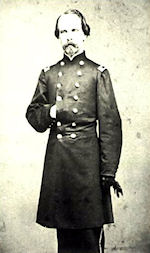
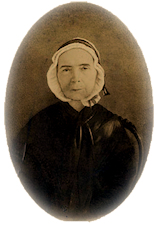
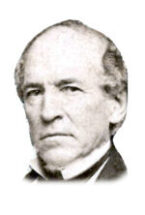
“He is fighting in a good cause, and ought to have a dose of ipecac.”

Woolsey family letters during the War for the Union
Georgeanna’s Journal.

Alexandria, April 15, ‘62.

Saturday morning we had private information that Franklin’s Division was shipping down the river, and we packed our bags at once and with Mrs. Franklin came down to the Dysons’ Cottage, Alexandria. . . . Dyson’s two slaves, Harriet and her mother, have run away, for which I sing songs of thanksgiving. . . . The 16th and all the others have arrived and are camping under Fort Elsworth, their old ground.

At the street corner coming down here, we found ten men struggling with one of their comrades of the 5th Maine, who had just fallen in a fit; about a hundred had collected to shut off the air and double him up, with his knapsack still strapped on his back. We asked the crowd to do what they ought to do for him, till we were tired; and then we pushed them aside and went in ourselves, had a strong sergeant keep the crowd off, put the man on his back with his clothes loose, bathed his head and poured brandy down his throat. E. went to a near hospital, but they would not take him in. So we put him in his blanket for stretcher, and started him off with bearers to the Mansion House, while the crowd dispersed, one woman saying, “Poor fellow, he is fighting in a good cause, and ought to have a dose of ipecac.”

0 comments

A Diary From Dixie

Civil War Day-by-Day

April 15th.–Mrs. Middleton: “How did you settle Molly’s little difficulty with Mrs. McMahan, that ‘piece of her mind’ that Molly gave our landlady?” “Oh, paid our way out of it, of course, and I apologized for Molly!”

Gladden, the hero of the Palmettos in Mexico, is killed. Shiloh has been a dreadful blow to us. Last winter Stephen, my brother, had it in his power to do such a nice thing for Colonel Gladden. In the dark he heard his name, also that he had to walk twenty-five miles in Alabama mud or go on an ammunition wagon. So he introduced himself as a South Carolinian to Colonel Gladden, whom he knew only by reputation as colonel of the Palmetto regiment in the Mexican war. And they drove him in his carriage comfortably to where he wanted to go–a night drive of fifty miles for Stephen, for he had the return trip, too. I would rather live in Siberia, worse still, in Sahara, than live in a country surrendered to Yankees.

The Carolinian says the conscription bill passed by Congress is fatal to our liberties as a people. Let us be a people “certain and sure,” as poor Tom B. said, and then talk of rebelling against our home government.

Sat up all night. Read Eothen straight through, our old Wiley and Putnam edition that we bought in London in 1845. How could I sleep? The power they are bringing to bear against our country is tremendous. Its weight may be irresistible–I dare not think of that, however.

0 comments

A Diary From Dixie

Civil War Day-by-Day

April 15th.–Trescott is too clever ever to be a bore; that was proved to-day, for he stayed two hours; as usual, Mr. Chesnut said “four.” Trescott was very surly; calls himself ex-Secretary of State of the United States; now, nothing in particular of South Carolina or the Confederate States. Then he yawned, “What a bore this war is. I wish it was ended, one way or another.” He speaks of going across the border and taking service in Mexico. “Rubbish, not much Mexico for you,” I answered. Another patriot came then and averred, “I will take my family back to town, that we may all surrender together. I gave it up early in the spring.” Trescott made a face behind backs, and said: “Lache!”

The enemy have flanked Beauregard at Nashville. There is grief enough for Albert Sidney Johnston now; we begin to see what we have lost. We were pushing them into the river when General Johnston was wounded. Beauregard was lying in his tent, at the rear, in a green sickness– melancholy–but no matter what the name of the malady. He was too slow to move, and lost all the advantage gained by our dead hero. ¹ Without him there is no head to our Western army. Pulaski has fallen. What more is there to fall?

______

¹ The battle of Shiloh, or Pittsburg Landing, in Tennessee, eighty-eight miles east of Memphis, had been fought on April 6 and 7, 1862. The Federals were commanded by General Grant who, on the second day, was reenforced by General Buell. The Confederates were commanded by Albert Sidney Johnston on the first day, when Johnston was killed, and on the second day by General Beauregard.

0 comments

Thwarted in his mission to report the war…the end of his story in America.—William Howard Russell’s Diary.

My Diary North and South – William Howard Russell

As soon as General McClellan commenced his movement, he sent a message to me by one of the French princes, that he would have great pleasure in allowing me to accompany his head-quarters in the field. I find the following, under the head of March 22nd:–

“Received a letter from General Marcy, chief of the staff, asking me to call at his office. He told me General McClellan directed him to say he had no objection whatever to my accompanying the army,’ but,’ continued General Marcy, ‘you know we are a sensitive people, and that our press is exceedingly jealous. General McClellan has many enemies who seek to pull him down, and scruple at no means of doing so. He and I would be glad to do anything in our power to help you, if you come with us, but we must not expose ourselves needlessly to attack. The army is to move to the York and James Rivers at once.’”

All my arrangements were made that day with General Van Vliet, the quartermaster-general of headquarters. I was quite satisfied, from Mr. Stanton’s promise and General Marcy’s conversation, that I should have no further difficulty. Our party was made up, consisting of Colonel Neville; Lieutenant-Colonel Fletcher, Scotch Fusilier Guards; Mr. Lamy, and myself; and our passage was to be provided in the quartermaster-general’s boat. On the 26th of March, I went to Baltimore in company with Colonel Rowan, of the Royal Artillery, who had come down for a few days to visit Washington, intending to go on by the steamer to Fortress Monroe, as he was desirous of seeing his friends on board the Rinaldo, and I wished to describe the great flotilla assembled there and to see Captain Hewett once more.

On arriving at Baltimore, we learned it would be necessary to get a special pass from General Dix, and on going to the General’s head-quarters his aide-de-camp informed us that he had received special instructions recently from the War Department to grant no passes to Fortress Monroe, unless to officers and soldiers going on duty, or to persons in the service of the United States. The aide-de-camp advised me to telegraph to Mr. Stanton for permission, which I did, but no answer was received, and Colonel Rowan and I returned to Washington, thinking there would be a better chance of securing the necessary order there. [continue reading…]

0 comments

Journal of Surgeon Alfred L. Castleman.

Journal of Surgeon Alfred L Castleman.

15th.–Another fine day spent in camp waiting for better roads. I am getting out of patience with red tape. Since our arrival at Fort Monroe, we have been without many hospital stores absolutely necessary to the comfort of sick and wounded. Three weeks ago, drew for articles to make up our loss. Notwithstanding that we have been almost constantly since in face of the enemy, frequently fighting and constantly expecting a general engagement, the supplies are not furnished, but all this time spent in enquiring “how were they lost,” as if that would comfort the suffering army. At night received orders to be ready to move at 7 A. M. tomorrow, and yet without hospital supplies. Poor men!

0 comments

Rebel War Clerk

Civil War Day-by-Day
A likeness of Jones when he was editor and majority owner of the Daily Madisonian during President John Tyler’s administration.

APRIL 14th.—There will soon be hard fighting on the Peninsula.

0 comments

Downing’s Civil War Diary.–Alexander G. Downing.

Diary of Alexander G. Downing; Company E, Eleventh Iowa Infantry

Monday, 14th–We had inspection of arms this forenoon. Most of the boys in our company picked up rifles from the battlefield and got better rifles than they had. But it makes it quite difficult for the quartermaster to supply the extra ammunition required for the different kinds of rifles. The weather is quite warm.

0 comments

War Diary of Luman Harris Tenney.

War Diary of Luman Harris Tenney.

14th. Issued one day’s rations in the morning and again in the afternoon three days’ rations. Orders countermanded before taps in the evening.

0 comments

Diary of David L. Day.

David L Day – My diary of rambles with the 25th Mass

Another Change in the Line.

April 14. And now another change has occurred, Capt. Clark of company B has resigned. If this thing becomes chronic, I am not quite sure but I shall resign and go home, and then, perhaps, I shall be given a sutler’s or horse doctor’s commission and be sent back. Capt. Clark’s resignation promotes First Lieut. Emery to captain, Second Lieut. Draper to first lieutenant, and first Sergeant John G. McCarter to second lieutenant. This again changes the formation of the line, and company B finds itself tenth in rank. This leaves the captain’s chances for straddling a horse in the rather dim distance, but then fame, like other doubtful things, is “mighty onsartin.”

Beautiful Spring.

The vernal season is now upon us and nature is arraying herself in her most beautiful robes. The trees are in leafage, while the yards and gardens attract the eye with their almost endless variety of plants and flowers. Roses are in great variety many of them remarkable for their size and beauty, changing their hues two and three times a day. Beautiful flowering vines clamber the verandas and porticos of the houses, sending out their sweet perfume, while the air is filled with the song of birds warbling forth their happiness. This is really a charming little city, but I reckon from neglect and hard usage from the soldiers, it will soon lose its beauty. The migratory birds, such as the robin and thrush, took their leave about the middle of March. Among the birds of song that remain the mocking bird must be ranked as king. He is a noble fellow, not remarkably handsome, of a dove color, with a white spot under his wings. He is a noisy, loud-voiced fellow, an early riser, commencing his song with the first gray streaks of dawn, and he keeps up an incessant flow until about 8 o’clock, when he seeks the shade for rest and quiet. The trees are full of them, and sometimes by the noise they make one would think the trees were full of all kinds of birds. When he comes down to his fine work, one unconsciously lays aside whatever he is doing and listens with delight to his soft warble and the low trembling cadence of his sweet trills.

0 comments

A Diary From Dixie

Civil War Day-by-Day

April 14th.–Our Fair is in full blast. We keep a restaurant. Our waitresses are Mary and Buck Preston, Isabella Martin, and Grace Elmore.

0 comments

Journal of Surgeon Alfred L. Castleman.

Journal of Surgeon Alfred L Castleman.

14th.–Have just received an order from Division Commander S—, to see that every regiment in my Brigade has a wagon set aside for the exclusive use of the hospital, to take steps at once to see that all of my regiments are amply supplied with every thing necessary for the comfort of the sick and wounded, and to report the sanitary condition of my Brigade early in the morning. This indicates a forward movement, and although a change of weather, or a variety of other circumstances may alter the plans, I doubt not the present intention is to go forward during the week. I am quite recovered from my sickness, and although I sleep in the hot and in the open air, generally, I never enjoyed better health. Visited Warwick Court House to-day, and spent much of the afternoon in musing over the musty records of two hundred years ago. Jamestown must have been a small affair then, and it has wonderfully “held its own.” The date of these records runs back to within a very few years of the organization of the first government in Virginia, when the blue laws of Connecticut were recognized as patterns of wisdom, even here, and tobacco was a legal tender. Brought away a few sheets, over which I expect to while away many otherwise lonely hours. This country presents subjects of study and reflection, as well for the moral as for the physical historian. Compare its age with its progress, its appearance with that of other districts differently conditioned. The face of the country presents large tracts of low, wet land, intersected by extensive ridges of rich rolling timber–if in a proper state of cultivation, a beautiful farming country. It is surrounded on all sides by the finest navigable waters, with one of the finest climates in the world; nearer to markets, both foreign and domestic, than any country of the same extent on the continent, and though it has been settled for two hundred and fifty years, we may travel for miles through an almost unbroken forest; or, if we chance to find an opening made by the work of man, it is some insignificant field worn out by the culture of tobacco till it would produce no more; then, like an old horse, turned over to fate. This little field perhaps will have in its midst an old house, after the fashion of the peasantry of George the Second, which will exhibit to the eye the same broken panes which disfigured it a hundred years ago, and grate upon the ear the same harsh sound of rusty, broken hinges, which answered on the swinging of the door to admit the tax-gatherer of England’s king, two centuries before. Oh, Slavery! if these be thy doings, and thou art doomed now, all the sufferings of widows and orphans, all the sins of this wicked world will be atoned in thy crucifiction. Aye, this war is but one of the links in the great chain of events wrought by Providence countless centuries ago, to draw forward the car of progress to its final goal.

0 comments

Rebel War Clerk

Civil War Day-by-Day
A likeness of Jones when he was editor and majority owner of the Daily Madisonian during President John Tyler’s administration.

APRIL 13th.—Gen. Wise now resolved to ask for another command, to make another effort in defense of his country. But, when he waited upon the Secretary of War, he ascertained that there was no brigade for him. Returning from thence, some of his officers, who had escaped the trap at Roanoke, crowded round him to learn the issue of his application.

“There is no Secretary of War!” said he.

“What is Randolph?” asked one.

“He is not Secretary of War!” said he; “he is merely a clerk, an underling, and cannot hold up his head in his humiliating position. He never will be able to hold up his head, sir.”

0 comments

Downing’s Civil War Diary.–Alexander G. Downing.

Diary of Alexander G. Downing; Company E, Eleventh Iowa Infantry

Sunday, 13th–It is clear and warm today. We had battalion drill again, twice today. Not more than two hundred of the regiment are fit for duty. Major Abercrombie, who drilled us, gave us a lecture about getting out to drill. He assured us that the battle we just had would be classed as a skirmish in comparison with what we would have to go through with before this war is over. The boys declared that if he called this battle a skirmish, they would like to know what he called a real battle.[1]


[1] Major Abercrombie’s words were quite true, as we found out later by experience.—A. G. D

0 comments

War Diary of Luman Harris Tenney.

War Diary of Luman Harris Tenney.

13th. Sunday. In the morning cleared up to my disgust. In the afternoon had my horse shod and visited hospital, very neat and clean. There seems to be so much need of female nurses. Went down and saw Indians (Delawares and Osages) in their savage state–had heavy beads and rings in their ears–wore buckskin leggings and red blankets, faces all painted and marked. Good visit with A. B. N.

0 comments

On the battle ground of Washington and Cornwallis.

Civil War Day-by-Day

YORKTOWN, VA., April 13, 1862.

Dear Mother:

I commenced a letter to you the other day but was unable to finish it, being called off to participate in a slight skirmish with the Yankees. We arrived at this place last Thursday evening and having sent out our portion of the picket, of which I was one, we ate our hard bread and meat and laid on the hard, cold ground for the night, with the blankets we brought on our backs for a covering. On Friday we were ordered out, for the Yankees were about to attack us, our skirmishers went out towards the enemy for the purpose of drawing them within range of our batteries, the enemy came in sight with a long line of artillery and drew up in battle array about half a mile from our batteries, by that time there was some right hard fighting on the part of the skirmishers. About two o’clock p.m., our batteries opened upon them and they were returned with the greatest alacrity; bombs, shells and balls flew about promiscuously, but happily they did no damage on our side, nearly all of them going over our heads. We threw some shells that seemed to do damage with the Yankees, the way they scattered when the shell fell among them. One shell which came over us bursted and fell all around, one piece fell right between two of our boys, but no injury done. The firing continued until dark, in the time the skirmishers set fire to a large dwelling house, near the enemy’s infantry and under the cover of the smoke they broke in on them and routed them, but they had soon to retreat for the Yanks turned their batteries upon them, after which hostilities ceased for the night. We lay in the entrenchments all night. Next morning, Saturday, the enemy was not to be seen. This morning we are expecting an attack again, and have been ordered into the entrenchments, but they have not made an attack yet.

Gen. Magruder says that if they do not attack us to-day, that he will them to-morrow. We are exactly on the battle ground of Washington and Cornwallis, but all that remains to be seen are the old breastworks of the British, which lie immediately behind ours. The Yankees hold the same position that Washington did. There is also the place where Cornwallis surrendered his sword to Washington. Yorktown is the oldest place I ever saw. I do not believe that there is a single house that has been built in fifty years. As I was walking through the town, I chanced to come upon an old grave yard, that had gone into entire ruin. There could be seen the tombstone of the Revolutionary soldier, citizen and foreigner. The oldest one was dated 1727, that was the tombstone of an old lady sixty years old, and another of a president of his majesty’s council in Virginia. He died in 1753, and all the rest of nearly the same date. It was a perfect pleasure to me to look over the old place, such a contrast to the clay hills of Manassas. I feel nearer home, but still I am a long ways off. I am wanted now, as they are continually detailing men for something or other. I will send the letter I wrote the other day. When the battle closes I will write again.

Give my love to all.

Your loving son,
GEORGE.

P. S. I have not heard from Walter yet, except from a man that came from the hospital, he says that his hand is nearly well.


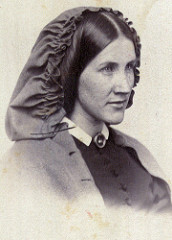
Letters from two brothers who served in the 4th North Carolina Infantry during the Civil War are available in a number of sources online.  Unfortunately, the brothers are misidentified in some places as Walter Lee and George Lee when their names were actually Walter Battle and George Battle. See The Battle Brothers for more information on the misidentification.
0 comments

Journal of Surgeon Alfred L. Castleman.

Journal of Surgeon Alfred L Castleman.

13th.–I have been made very glad by the receipt of a letter this morning from my dear M——. It is older than her letters used to be when they reached me; but whether old or new, her letters never lose their freshness. They are like the beautiful evergreens, standing in mid-winter amid the bare and ragged oaks. When I cannot get a new one I often go back to one of the old, and always read it with pleasure and instruction. But she does ask so many questions for me to answer. * * * *

At Fortress Monroe and at Norfolk lie the Merrimac and the Monitor, in sight of and watching each other, like two dogs with a bone between them, each wanting and neither daring to take it. By the side of the Monitor lies the Mystic, (now named the Galena,) and the little model of Stevens’ battery –all iron-clad. By the side of the Merrimac lie four ironclad gun boats. Either of these miniature fleets, unwatched by the other, could in a few days destroy the whole wooden fleet of the other party, and burn its principal cities. Either one, unwatched by the other, could change the whole aspect of the war, and work a revolution which would shake the world and indelibly stamp its future. For these reasons they do not fight. There is too much at stake for either to venture. Suppose a fight in which the Merrimac should prove successful; the mouth of the James and the York Rivers would be effectually closed to us, our supplies entirely cut off, this army starved out in a week, captured or destroyed, the iron fleet of the enemy free to go where it pleased, and, in twenty days, the destruction of Washington, Philadelphia, New York, Baltimore and Boston, would be as certain as that the enemy should wish to destroy them. The stakes are too large. We dare not risk the wager.

0 comments

War Diary of a Union Woman in the South

War Diary of a Union Woman in the South

April 13, 1862.—This morning I was sewing up a rent in H.’s garden-coat, when Aunt Judy rushed in.

“Laws! Mis’ L., here’s Mr. Max and Mis’ Annie done come back!” A buggy was coming up with Max, Annie, and Reeney.

“Well, is the war over?” I asked.

“Oh, I got sick!” replied our returned soldier, getting slowly out of the buggy.

He was very thin and pale, and explained that he took a severe cold almost at once, had a mild attack of pneumonia, and the surgeon got him his discharge as unfit for service. He succeeded in reaching Annie, and a few days of good care made him strong enough to travel back home.

“I suppose, H., you’ve heard that Island No. 10 is gone?”

Yes, we heard that much, but Max had the particulars, and an exciting talk followed. At night H. said to me, “G., New Orleans will be the next to go, you’ll see, and I want to get there first; this stagnation here will kill me.”


Note: To protect Mrs. Miller’s job as a teacher in post-civil war New Orleans, her diary was published anonymously, edited by G. W. Cable, names were changed and initials were generally used instead of full namesand even the initials differed from the real person’s initials. (Read Dora Richards Miller’s biographical sketch.)

0 comments

“It will take full 60 boats to hold us all.”–Army Life of an Illinois Soldier, Charles Wright Wills.

Civil War Day-by-Day

Camp New Madrid, Mo., April 12, 1862.

I have the extreme happiness to inform you that there is at last a hope of my dating the next letter from Memphis or vicinity. Our regiment has for several days been alone at Point Pleasant and we enjoyed it very much. When we are under a general of an infantry division we are run to death or thereabouts, for whenever anything is to be done the cavalry is sure to be called on. Yesterday we were ordered to report here immediately to General Granger, commanding cavalry division which numbers full 4,000. There are two brigades in this division; Colonel Kellogg commands the 1st brigade and therefore is now a brigadier general. There have been about 25 steamboats arrived here since 4 p.m. yesterday and the army will probably commence embarking to-day. It will take full 60 boats to hold us all. The rain has been falling in torrents ever since we started from the Point yesterday, and you can imagine the time we had pitching tents in a cornfield, and yet we are comfortable now as we can wish. I have faith to believe that they (or anybody else) can’t keep me from being comfortable under any circumstances, if my hands are loose and I can walk. I think that [continue reading…]

0 comments

Rebel War Clerk

Civil War Day-by-Day
A likeness of Jones when he was editor and majority owner of the Daily Madisonian during President John Tyler’s administration.

APRIL 12th.—The committee (Congressional) which have been investigating the Roanoke Island disaster have come to the conclusion, unanimously, and the House has voted accordingly, and with unanimity, that the blame and guilt of that great calamity rest solely upon “Gen. Huger and Judah P. Benjamin.”

0 comments

Downing’s Civil War Diary.–Alexander G. Downing.

Diary of Alexander G. Downing; Company E, Eleventh Iowa Infantry

Saturday, 12th–It is still raining every hour and the floors of our tents are very wet. Our camp has become very muddy, which, with constant rain and the braying of mules day and night, makes it a very gloomy time.

0 comments

A Confederate Girl’s Diary

Civil War Day-by-Day

April 12th.

Day before yesterday, just about this time of evening, as I came home from the graveyard, Jimmy unexpectedly came in. Ever since the 12th of February he has been waiting on the Yankees’ pleasure, in the Mississippi, at all places below Columbus, and having been under fire for thirteen days at Tiptonville, Island No. 10 having surrendered Monday night; and Commodore Hollins thinking it high time to take possession of the ironclad ram at New Orleans, and give them a small party below the forts, he carried off his little aide from the McRae Tuesday morning, and left him here Thursday evening, to our infinite delight, for we felt as though we would never again see our dear little Jimmy. He has grown so tall, and stout, that it is really astonishing, considering the short time he has been away. . . . To our great distress, he jumped up from dinner, and declared he must go to the city on the very next boat. Commodore Hollins would need him, he must be at his post, etc., and in twenty minutes he was off, the rascal, before we could believe he had been here at all. There is something in his eye that reminds me of Harry, and tells me that, like Hal, he will die young.

And these days that are going by remind me of Hal, too. I am walking in our footsteps of last year. The eighth was the day we gave him a party, on his return home. I see him so distinctly standing near the pier table, talking to Mr. Sparks, whom he had met only that morning, and who, three weeks after, had Harry’s blood upon his hands. He is a murderer now, without aim or object in life, as before; with only one desire – to die – and death still flees from him, and he Dares not rid himself of life.

All those dancing there that night have undergone trial and affliction since. Father is dead, and Harry. Mr. Trezevant lies at Corinth with his skull fractured by a bullet; every young man there has been in at least one battle since, and every woman has cried over her son, brother, or sweetheart, going away to the wars, or lying sick and wounded. And yet we danced that night, and never thought of bloodshed! The week before Louisiana seceded, Jack Wheat stayed with us, and we all liked him so much, and he thought so much of us; – and last week – a week ago to-day – he was killed on the battle-field of Shiloh.

0 comments

I wonder if I hit him!—A great secret.

Woolsey family letters during the War for the Union

Since the sailing of the great expedition from Annapolis, Francis Bacon had been on active duty with the troops on the coast of South Carolina and Georgia, and at the reduction of the two forts at Port Royal, and of Fort Pulaski, April 11th. At the siege of the latter he was on duty with the battery nearest the fort, and was requested by General Gilmore to keep an account of the shots fired from our batteries and from the rebel guns within the fort. Here he stood in a scarlet-lined cloak with Gilmore’s long, shining, double-barrelled field-glass in his hand for two days,–a fine mark for the enemy. After the fight he went about the fort with the rebel officer who surrendered it, and who said, as they came to a big gun, “I commanded here, and sent a large number of shots at a man who stood at the corner of that cistern, and wore a cloak, and had some long shining thing in his hand. I wonder if I hit him!”

0 comments

Journal of Surgeon Alfred L. Castleman.

Journal of Surgeon Alfred L Castleman.

12th.–Am not well to-day. Have diarrhœa, and at midday had high fever. How much I miss the tender care of my family in sickness. Am much better to-night, but feel sad. Have been reading Ernest Linwood, and, by contrast, it has recalled pleasant family scenes, which I miss in my sickness. I wish I had not written my last letter to my family. I felt badly when I wrote it, and spoke harshly of officers. ‘Twas wrong, but I cannot recall it. Oh, if every thought is a material thing, an entity, and goes forth to make a part of the great mental and moral atmosphere, how is it possible that, with the great preponderance of evil imaginations there can be moral or mental advancement? We should be as careful of our thoughts as of our acts.

0 comments

“Every thing seems to be in preparation for the great battle which is anticipated on the Peninsula.”—Diary of a Southern Refugee, Judith White McGuire.

Diary of a Southern Refugee During the War by Judith White McGuire

11th.—The “Virginia” went out again to-day. The Federal Monitor would not meet her, but ran to Fortress Monroe, either for protection, or to tempt her under the heavy guns of the fortress; but she contented herself by taking three brigs and one schooner, and carrying them to Norfolk, with their cargoes. Soldiers are constantly passing through town. Every thing seems to be in preparation for the great battle which is anticipated on the Peninsula.

Fort Pulaski has surrendered to the enemy’s gun-boats. The garrison fought until several breaches were made. They then surrendered, and are now prisoners. Lord, have them in thy holy keeping!

0 comments

Diary of Horatio Nelson Taft.

Diary of US patent clerk Horatio Nelson Taft.

Friday 11th

Fine pleasant day. The Event here has been the passage of the Bill by the House abolishing Slavery in the District of Columbia. It had passed the Senate. No particular War news today. I was down to the Hotels. They are all full and quite a crowd at Willards. Went to the “Festival” to call for Julia about 10, staid an hour, it is the last night. We got home about 111/2 o’clock. The nights are now bright and beautiful.


The three diary manuscript volumes, Washington during the Civil War: The Diary of Horatio Nelson Taft, 1861-1865, are available online at The Library of Congress.

0 comments