Friday, 25th–We struck our tents early this morning and marched about three miles to the southwest, and went into camp again, camp No. 2. We were brigaded over again. It rained all day.
American Civil War Chronicles
War Diary of Luman Harris Tenney.
April 25, 2022
25th. Started south for Diamond Grove. Detachments kept leaving when we approached the grove, so as to surround and enter it from different directions. Nettleton and we of the noncommissioned staff took one course and scouted through the woods. None found any rebels. Went to the farm of a Mr. Holsell, a notorious rebel. Boys took everything takable from the house and premises. Abundance of apples and some ammunition. Encamped here for the night. One girl, good secesh, has brother in the rebel army.
Diary of David L. Day.
April 25, 2022
Growing Tired.
April 25. We have now been several weeks in the city and the boys are beginning to tire of it. This every-day, humdrum life is getting irksome, and the boys are anxious for a change. Frequent changes and excitement are what keeps up the soldier’s spirits. In the dull routine and idleness of camp, they grow uneasy, homesick and despondent.
0
April 25, 2022
April 25th. Left our anchorage early and proceeded up the river, keeping constantly on the alert for a battery which had been reported in this vicinity. We found the batteries some five or six miles below New Orleans called the Chalmette batteries, and consisting of some ten to fifteen guns. They opened upon us before we could get range of them, and we passed steadily on amid a shower of shell, and when within range gave them a broadside that sent them flying from their guns.
After an action of some thirty minutes all was quiet again, and, strange to say, none were injured except two, who fell overboard. As we passed on towards the city we were met by burning ships of all kinds; large ships were fired and cut adrift to float upon us, while others were burned at the levee. The destruction of property was immense, and hardly a ship or steamer escaped the flames. We anchored abreast of the city about 1 o’clock, P. M., amid a drenching rain, and the Flag Officer sent ashore a demand for the surrender of the city by Captain Bailey. The levee was thronged with people, and a party who waved a white flag and cheered for the Union thus created a terrible riot, and several persons were killed.
A rebel ram was burned and sunk at the levee, and the new floating battery Mississippi, of immense strength and proportions, was destroyed by fire and floated by us down the river.
Some bombarding but no storming of the works.
April 25, 2022
Jane Stuart Woolsey to Georgeanna.
0 comments
New York, April 25, ‘62.
. . . I always have a little talk with Col. Betts coming out of church, he keeps out such a sharp eye. He predicted all that business of the sub-division of McClellan’s command and the Rappahannock department exactly as it fell out. He predicts now–(he laughs and says of course he only guesses)–no desperate fighting at Yorktown. He thinks there will be some bombarding but no storming of the works; that the great battle at Corinth, now imminent, will occur before a battle at Yorktown, and will probably greatly demoralize the rebel cause. . . . Cousin William Aspinwall has just sent us in an interesting letter from Lieutenant Greene, giving his experience on the Monitor in the voyage and fight. He is only 18, and was in command for a little while after Worden was blinded. I have been down several days this week to the New England Association, and have succeeded in doing nothing with considerable éclat. We have had only eight or ten transient lodgers, have had some droll incidents, have made a few beds and a few cups of tea, got great glory in the newspapers, and that is all. Don’t think I am going into a minute account, for I have no idea of it. Indeed there is none to go into. The ladies’ committee does not work altogether smoothly, and I think there will be some further attempt at organization with a responsible head. W– B– looks in occasionally and does nothing. M– P– tries to come the heavy patronizing over me with entire want of success. . . . The house is admirable, and the patients (if there are any) will be splendidly taken care of. If you know any New England men coming home invalided, and who want to rest over a night or two (most of them will not do it), send them to us.
Journal of Surgeon Alfred L. Castleman.
April 25, 2022
25th.–Still men are occasionally shooting each other along the picket lines, but nothing of general importance.
Rebel War Clerk
April 24, 2022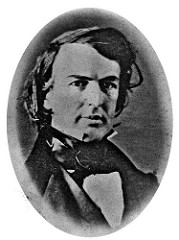
APRIL 24th.—Webster has been tried, condemned, and hung.
Is it not shameful that martial law should be playing such fantastic tricks before high heaven, when the enemy’s guns are booming within hearing of the capital?
Note: this hanging actually occurred on April 29, 1862.
Downing’s Civil War Diary.–Alexander G. Downing.
April 24, 2022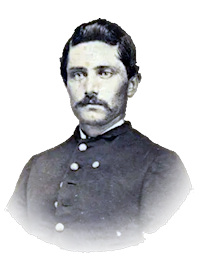
Thursday, 24th–No news of importance.
War Diary of Luman Harris Tenney.
April 24, 2022
24th. In the morning early, Companies “A” and “G” came in with Major Burnett and staff. At noon fifty men from each of the four companies of Burnett’s battalion left camp, marched twenty miles. Our ride was through a rich country, over Gen. Siegel’s first battle field. Many pretty flowers. Passed a little deserted village. Encamped by a clear stream and occupied some vacant houses. After supper made our bed out of doors and had a good night’s rest.
0
April 24, 2022
April 24th. This morning was destined to be recorded in history as the day on which occurred the most brilliant naval feat ever accomplished. It had been decided to run past the forts without stopping, and accordingly, at two o’clock A. M., all hands were quietly turned out, hammocks lashed, and everything put in order, while two red lights from our peak gave the signal for the squadron to get under way.
The squadron was divided into three divisions under the commands of Flag Officer Farragut, Capt. Bailey, and Capt. Bell. The night was pleasant and starlight, and as we moved away the morning moon came looming up from behind the trees. Twenty minutes brought us within range of the enemy’s guns, which were immediately opened upon us. Our men lay down on the decks till our guns could be brought to bear. The forts, mounting in the aggregate some two hundred and twenty guns, were soon in full blast upon us, and we returned the fire with decision and effect, making the action general and terrible. The forts, only three quarters of a mile apart, gave our ships shot and shell on both sides at once, while our ships sent back grape, canister, shrapnel, and shells, besides using our howitzers from our tops, where they had been mounted. On reaching the forts we were assailed by twenty of the enemy’s gunboats and rams, but we made short work of them, sinking some, and burning nearly all of them.
A shell entered our starboard beam, cutting off our cable passing through eighteen inches of oak, and after tearing the armory down, exploded at the main hatch, killing one man instantly, and severely wounding three or four others; another entered the muzzle of a gun, breaking the lip, which killed the sponger, who was in the act of ramming home a cartridge. At this time we ran aground, when the ram Manassas forced a fire raft against our port quarter for the purpose of destroying us, but owing to the superhumane fforts of the officers and crew it was cast off and sent floating down the river. Our mizzen rigging was burnt, and the ship considerably charred, but we providentially escaped, and in a few minutes got afloat by backing down towards the enemy’s forts, while they played away upon us beautifully.
After an hour and twenty minutes action we passed beyond reach of the rebel guns, and ceased firing. We came to our anchor at the quarantine grounds at about five o’clock, the river banks being lined on either side with burning steamers.
The ram Manassas had followed us up some distance, and now the old frigate Mississippi turned about to run her down, but the ram ran her nose into the mud, and the Mississippi in three broadsides crippled her, and she drifted down the river, while her crew escaped. One of our gunboats, the Varuna, after destroying five or six of the enemy’s steamers was herself sunk, and was run aground with some loss of life. Our loss was some thirty in killed and one hundred wounded. The enemy’s loss was five or six hundred, while their dead and wounded were burned in their steamers. Two of our gunboats were obliged to put back, one with a shot through her boilers, and the other disabled. Among the ships which passed the forts were the following: Flag ship Hartford, Brooklyn, Pensacola, Richmond, and the old frigate Mississippi, Iroquois, and Oneida. Gunboats Varuna, Wissahickon, Cayuga, Katadin, and Pinola. After taking prisoners from Camp Chalmette we started for New Orleans. White flags were waving in all directions, and as we proceeded the plantations and river banks presented a scene truly beautiful, being at a time of year when nature puts on her best attire. Some of the dwellings looked like castles, and bore evidence of age, being usually surrounded by large trees; each had attached its double row of negro dwellings, regularly laid out and interspersed with trees. We ran up near the English Turn, and anchored for the night unmolested.
Robert M. McGill
April 24, 2022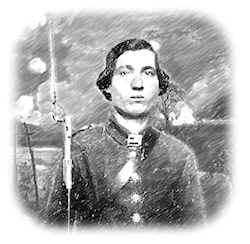
April 24th.—Volunteered at Chattanooga, Tenn., in Company F, 39th Georgia Regiment of Infantry. Privileged to stay at home until May 10th.
(Note: picture is of an unidentified Confederate soldier.)
Landed the regiment, at last.
April 24, 2022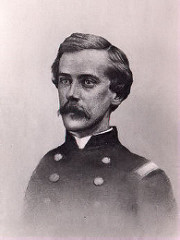
Joe Howland to Eliza Woolsey Howland.
0 comments
York River, April 24
Yesterday, at last, I landed the regiment, having asked permission to do so and have the boat thoroughly cleaned. Having picked out a piece of level ground at the head of a little bay where there are lots of oysters, I got a stern-wheeler and sent the regiment ashore by companies, and got all fairly into camp before sunset. I put the major in command on shore, keeping my headquarters on the steamer, and had the work of purification begun as soon as the hold was cleared.
I saw Franklin yesterday, and he asked after you and ours. I took the steamer’s quarter-boat last evening and serenaded the old chap with our stringed band. He seemed pleased and the music sounded very sweetly on the quiet water.
I suspect Commander Rodgers is the right sort of man for the Galena. I heard a story of him to-day. Some one said to him, “Your iron plates are too thin; their thickness should be at least four inches.” His reply (somewhat pro-fane) was, “What to h– do I care about their thickness,–my business is to go up York River and shell the enemy.”
Journal of Surgeon Alfred L. Castleman.
April 24, 2022
24th.–Comparatively quiet to-day, with only occasional skirmishing along the lines. Sickness rapidly increasing; yet government furnishes no medicines, no appliances for comfort of sick and wounded!
Rebel War Clerk
April 23, 2022
APRIL 23d.—The North Carolinians have refused to give up Dibble to Gen. Winder. And, moreover, the governor has demanded the rendition of a citizen of his State, who was arrested there by one of Gen. Winder’s detectives, and brought hither. The governor says, if he be not delivered up, he will institute measures of retaliation, and arrest every alien policeman from Richmond caught within the limits of his jurisdiction.
Downing’s Civil War Diary.–Alexander G. Downing.
April 23, 2022
Wednesday, 23d–We have company drill twice a day and more of the boys are getting out again for drill. The artillery men are receiving fresh horses to replace those killed in the battle. The weather is beginning to get very warm.
War Diary of Luman Harris Tenney.
April 23, 2022
23rd. Slept until ten o’clock. Commenced letter to Fannie. Brooks went out and got a load of hams and bacon.
A Diary From Dixie
April 23, 2022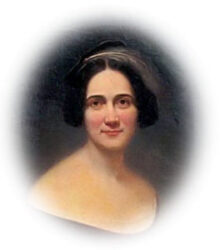
April 23d.–On April 23, 1840, I was married, aged seventeen; consequently on the 31st of March, 1862, I was thirty-nine. I saw a wedding to-day from my window, which opens on Trinity Church. Nanna Shand married a Doctor Wilson. Then, a beautiful bevy of girls rushed into my room. Such a flutter and a chatter. Well, thank Heaven for a wedding. It is a charming relief from the dismal litany of our daily song.
A letter to-day from our octogenarian at Mulberry. His nephew, Jack Deas, had two horses shot under him; the old Colonel has his growl, “That’s enough for glory, and no hurt after all.” He ends, however, with his never-failing refrain: We can’t fight all the world; two and two only make four; it can’t make a thousand; numbers will not lie. He says he has lost half a million already in railroad bonds, bank stock, Western notes of hand, not to speak of negroes to be freed, and lands to be confiscated, for he takes the gloomiest views of all things.
Rebel War Clerk
April 22, 2022
APRIL 22d.—Dibble, the traitor, has been captured by our soldiers in North Carolina.
Downing’s Civil War Diary.–Alexander G. Downing.
April 22, 2022
Tuesday, 22d–It is quite pleasant again after some rain—thunder showers. The wheat fields are looking fine.
0
April 22, 2022
April 22d. A serious accident occurred this evening severely wounding five of our crew. A submerged vessel drifted upon our cable with such force as to tear it from its fastenings, breaking the pawls from the capstan. As this chain was connected with the capstan, and the bars shipped, they were whirled around with great velocity, knocking down several men. These men sustained severe contusions; one suffered the fracture of the forearm, and another was struck in the stomach, nearly killing him outright. Fire rafts appeared to-night, but did no damage.
War Diary of Luman Harris Tenney.
April 22, 2022
22nd. General Doubleday and bodyguard and a few officers came. In the evening a man came in saying Union man was shot by jayhawkers. Thirty men of Co. “D”, Major, Adjutant, Assistant Surgeon and I, with three or four others started at noon for Horse Creek, twenty miles away. Took a backwoods road. Found no enemy. Orders from the General to burn the house. Major gave the wife and two daughters at home time to take out their valuables. Wife was sick. Declared her husband’s innocence. Finally concluded for the women’s sake not to burn the house. The scene of the women crying and the desolation the boys were spreading about the premises was painful. Two men from Price’s rebel army came up and were taken prisoners. Their horses and arms were taken and they were told to leave. When not more than three rods off, the boys, instigated by Major Purington, commenced shooting at them. They ran. Boys mounted and gave chase, shooting. Lieutenant Pike probably fired the fatal shot. One of the fellows not killed, was brought into the house. Two daughters–one married. Feared her husband was killed. At 8 P. M. we started back. Arrived in camp at 3:30 A. M. Wednesday morning.
So crowded and dirty that life is becoming intensely disgusting.
April 22, 2022
Joe Howland to Eliza Woolsey Howland.
0 comments
York River, April 22
Here we still lie awaiting orders, without a word of news and nothing to do. The boat is so crowded and dirty that life is becoming intensely disgusting, yet there does not appear any prospect of getting away. Last night there was heavy firing towards Yorktown and we could see the flashing of the guns; but we do not know what it was.
Journal of Surgeon Alfred L. Castleman.
April 22, 2022
22nd.–Nothing of general importance to day. There was an alarm, and in anticipation of an attack we were held in line of battle for about half an hour in a driving rain, then dismissed to quarters.
“We hear of so many horrors committed by the enemy in the Valley—houses searched and robbed, horses taken, sheep, cattle, etc.,”—Diary of a Southern Refugee, Judith White McGuire.
April 21, 2022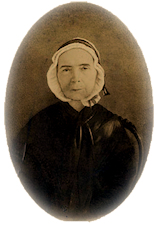
21st.—The ladies are now engaged making sand-bags for the fortifications at Yorktown; every lecture-room in town crowded with them, sewing busily, hopefully, prayerfully. Thousands are wanted. No battle, but heavy skirmishing at Yorktown. Our friend, Colonel McKinney, has fallen at the head of a North Carolina regiment. Fredericksburg has been abandoned to the enemy. Troops passing through towards that point. What does it all portend? We are intensely anxious; our conversation, while busily sewing at St. Paul’s Lecture-Room, is only of war. We hear of so many horrors committed by the enemy in the Valley—houses searched and robbed, horses taken, sheep, cattle, etc., killed and carried off, servants deserting their homes, churches desecrated!