A Confederate Girl’s Diary

Civil War Day-by-Day

June 12th [sic].

Brother writes that rumors of the capture of Baton Rouge by our troops have made him very uneasy about us; and he wishes us to go down to New Orleans if possible. I wish we could. The impression here, is that an attack is inevitable, and the city papers found it necessary to contradict the rumor of Ruggles having occupied it already. I wish mother would go. I can see no difference there or here, except that there, we will be safe, for a while at least. . . .

I grow desperate when I read these Northern papers reviling and abusing us, reproaching us for being broken and dispersed, taunting us with their victories, sparing no humiliating name in speaking of us, and laughing as to what “we’ll see” when we vile rebels are “driven out of Virginia, and the glorious Union firmly established.” I can’t bear these taunts! I grow sick to read these vile, insulting papers that seem written expressly to goad us into madness! . . . There must be many humane, reasonable men in the North; can they not teach their editors decency in this their hour of triumph?

0 comments

Downing’s Civil War Diary.–Alexander G. Downing.

Diary of Alexander G. Downing; Company E, Eleventh Iowa Infantry

Saturday, 12th–We had company inspection again as usual. A good many negroes are coming into camp. Some of the men who are strong enough to work and who want to be free are given work on the fortifications. A number of the officers are adopting negro boys as servants, and some of the most intelligent boys are being sent North to be educated.

0 comments

War Diary of Luman Harris Tenney.

War Diary of Luman Harris Tenney.

12th. Saturday. Wrote a letter to Uncle and Aunt Branch. My horse got away suddenly and I did not find him until morning.

0 comments

A Diary From Dixie

Civil War Day-by-Day

July 12th.–At McMahan’s our small colonel, Paul Hayne’s son, came into my room. To amuse the child I gave him a photograph album to look over. “You have Lincoln in your book!” said he. “I am astonished at you. I hate him!” And he placed the book on the floor and struck Old Abe in the face with his fist.

An Englishman told me Lincoln has said that had he known such a war would follow his election he never would have set foot in Washington, nor have been inaugurated. He had never dreamed of this awful fratricidal bloodshed. That does not seem like the true John Brown spirit. I was very glad to hear it–to hear something from the President of the United States which was not merely a vulgar joke, and usually a joke so vulgar that you were ashamed to laugh, funny though it was. They say Seward has gone to England and his wily tongue will turn all hearts against us.

Browne told us there was a son of the Duke of Somerset in Richmond. He laughed his fill at our ragged, dirty soldiers, but he stopped his laughing when he saw them under fire. Our men strip the Yankee dead of their shoes, but will not touch the shoes of a comrade. Poor fellows, they are nearly barefoot.

Alex has come. I saw him ride up about dusk and go into the graveyard. I shut up my windows on that side. Poor fellow!

0 comments

Journal of Surgeon Alfred L. Castleman.

Journal of Surgeon Alfred L Castleman.

12th.–This night closes the period of one year’s service in the United States. One year ago to-morrow, our regiment changed its situation from State to United States, and when I review that period, and recall the sufferings I have witnessed, the treason and incompetency which have thwarted the well laid plans of the government, the repeated failures of our leaders to embrace most favorable opportunities to crush the rebel armies and to arrest the war, I despair of accomplishing decisive results till we have a change of leaders. But I have a gratifying consciousness of having, up to the ability which God has given me, performed every duty to my country with as little selfishness as man’s frailty will permit. I cannot recall an instance where fatigue, the fear of danger, or even sickness, has been permitted to interpose between my comfort and my efforts to relieve the sufferings of the soldier in whatever form presented. I have had much reason to regret that my efforts were not more effective, but never that I have neglected their performance; nor has it been a source of less thankfulness to me that I have been so small a portion of time unable to labor.

0 comments

The army is quiet and resting, and the surgeons of the regiments have been coming in constantly… with requisitions for the hospitals.

Woolsey family letters during the War for the Union

Georgeanna Woolsey’s journal.

July 12.

Lying off Harrison’s Point in sight of the hospital on shore to which we went the other evening. The fifty tents we brought from Washington are going up and are partly filled– men on cots, and not very ill. The place is to be used as a rest for a few days for men who can then join their regiments. The Medical Department is greatly improved, and the Sanitary Commission, who were chiefly instrumental in putting in the new Surgeon-General (Hammond), who in his turn has put in all the good new men, finds its work here at an end, and might as well retire gracefully. Four thousand sick have been sent north from Harrison’s. Soup, and food generally, are being cooked all the time, without the aid of the Sanitary Commission, and they would leave now but for the flag of truce sent in by Lee to arrange for the bringing away of our wounded left behind in the retreat. The transports are under orders.

Commodore Wilkes is here in charge of the gun-boat fleet, and Captain Rodgers sent his small boat for us the other day, and took us all over his vessel and then over the Monitor and the Maratanza. The Galena was full of cannon ball holes. The Maratanza gave me a piece of the balloon found on the rebel gun-boat Teaser. It was made of the old silk dresses of the ladies of Richmond, forty or more different patterns. They gave me, too, the signal flag of the little imp. We went over her to see the damage the shell did her, bursting into the boiler and disemboweling her.

The army is quiet and resting, and the surgeons of the regiments have been coming in constantly to the Sanitary Commission supply boat with requisitions for the hospitals. We are giving out barrels of vegetables. The Small will run up the river and be ready to fill a gap in bringing off our wounded prisoners, and it will be a comfort to do something before going home ignominiously. The last two weeks of waiting has been wearing to us all, and Miss Wormeley is a fascinating wreck.

0 comments

“…we are very strong and can surely hold our own.”

Woolsey family letters during the War for the Union

Charles William Woolsey to his brother-in-law, Joseph Howland,

Wilson Small, Harrison’s Landing,

Saturday, July 12th.

Dear Joe: I saw, to-day, your adjutant, surgeon, and quartermaster; the former is much better, he says, and is going home in a day or two. He reports the 16th in good condition and in excellent spirits. This is unmistakably the case with the whole army. Exhausted and disappointed they naturally are (or were), but they have never lost heart, and the morale of our army is as good as ever. Having but little to do on the boat I have been on shore about the camps for a day or two, and have got a good idea of the strength of our position. It seems to me impregnable even without the earthworks we have thrown up at the weakest points. With these, we are very strong and can surely hold our own. Taking Richmond, however, is quite a different thing.

Send us the “Fishkill Standard” containing the account of the “ovation,” and do not stand too long poised on one leg when you harangue the assembled multitude from the Tioronda balcony.

Georgy is going home soon, and perhaps myself. Love to E.

Yours affectionately,

C. W. W.

0 comments

Homeless and Shelterless

War Diary of a Union Woman in the South

Saturday, July 12, 1862. (Under a cotton-shed on the bank of the Mississippi River.)—Thursday was a lovely day, and the sight of the broad river exhilarating. The negroes launched and reloaded the boat, and when we had paid them and spoken good-bye to them we felt we were really off. Every one had said that if we kept in the current the boat would almost go of itself, but in fact the current seemed to throw it about, and hard pulling was necessary. The heat of the sun was very severe, and it proved impossible to use an umbrella or any kind of shade, as it made steering more difficult. Snags and floating timbers were very troublesome. Twice we hurried up to the bank out of the way of passing gunboats, but they took no notice of us. When we got thirsty, it was found that Max had set the jug of water in the shade of a tree and left it there. We must dip up the river water or go without. When it got too dark to travel safely we disembarked. Reeney gathered wood, made a fire and some tea, and we had a good supper. We then divided, H. and I remaining to watch the boat, Max and Annie on shore. She hung up a mosquito-bar to the trees and went to bed comfortably. In the boat the mosquitoes were horrible, but I fell asleep and slept till voices on the bank woke me. Annie was wandering disconsolate round her bed, and when I asked the trouble, said, “Oh, I can’t sleep there! I found a toad and a lizard in the bed.” When dropping off again, H. woke me to say he was very sick; he thought it was from drinking the river water. With difficulty I got a trunk opened to find some medicine. While doing so a gunboat loomed up vast and gloomy, and we gave each other a good fright. Our voices doubtless reached her, for instantly every one of her lights disappeared and she ran for a few minutes along the opposite bank. We momently expected a shell as a feeler.

At dawn next morning we made coffee and a hasty breakfast, fixed up as well as we could in our sylvan dressing-rooms, and pushed on, for it is settled that traveling between eleven and two will have to be given up unless we want to be roasted alive. H. grew worse. He suffered terribly, and the rest of us as much to see him pulling in such a state of exhaustion. Max would not trust either of us to steer. About eleven we reached the landing of a plantation. Max walked up to the house and returned with the owner, an old gentleman living alone with his slaves. The housekeeper, a young colored girl, could not be surpassed in her graceful efforts to make us comfortable and anticipate every want. I was so anxious about H. that I remember nothing except that the cold drinking-water taken from a cistern beneath the building, into which only the winter rains were allowed to fall, was like an elixir. They offered luscious peaches that, with such water, were nectar and ambrosia to our parched lips. At night the housekeeper said she was sorry they had no mosquito-bars ready and hoped the mosquitoes would not be thick, but they came out in legions. I knew that on sleep that night depended recovery or illness for H. and all possibility of proceeding next day. So I sat up fanning away mosquitoes that he might sleep, toppling over now and then on the pillows till roused by his stirring. I contrived to keep this up till, as the chill before dawn came, they abated and I got a short sleep. Then, with the aid of cold water, a fresh toilet, and a good breakfast, I braced up for another day’s baking in the boat.

[If I had been well and strong as usual the discomforts of such a journey would not have seemed so much to me; but I was still weak from the effects of the fever, and annoyed by a worrying toothache which there had been no dentist to rid me of in our village.] ¹

Having paid and dismissed the boat’s watchman, we started and traveled till eleven to-day, when we stopped at this cotton-shed. When our dais was spread and lunch laid out in the cool breeze, it seemed a blessed spot. A good many negroes came offering chickens and milk in exchange for tobacco, which we had not. We bought some milk with money.

A United States transport just now steamed by and the men on the guards cheered and waved to us. We all replied but Annie. Even Max was surprised into an answering cheer, and I waved my handkerchief with a very full heart as the dear old flag we have not seen for so long floated by; but Annie turned her back.


¹ Restored omission

Note: To protect Mrs. Miller’s job as a teacher in post-civil war New Orleans, her diary was published anonymously, edited by G. W. Cable, names were changed and initials were generally used instead of full namesand even the initials differed from the real person’s initials. (Read Dora Richards Miller’s biographical sketch.)
0 comments

Rebel War Clerk

Civil War Day-by-Day
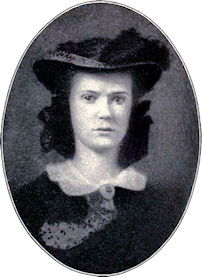
A likeness of Jones when he was editor and majority owner of the Daily Madisonian during President John Tyler’s administration.

July 11th.—Gen. Howell Cobb has been sent down the river under flag of truce to negotiate a cartel with Gen. Dix for the exchange of prisoners. It was decided that the exchange should be conducted on the basis agreed to between the United States and the British Government during the war of 1812, and all men taken hereafter will be released on parole within ten days after their capture. We have some 8000 prisoners in this city, and altogether, I dare say, a larger number than the enemy have of our men.

0 comments

A Confederate Girl’s Diary

Civil War Day-by-Day

July 11th.

A letter from George this morning! It was written on the 20th of June, and he speaks of being on crutches in consequence of his horse having fallen with him, and injured his knee. Perhaps, then, he was not in the first battle of the 25th? But bah! I know George too well to imagine he would keep quiet at such a moment, if he could possibly stand! I am sure he was there with the rest of the Louisiana regiment. The papers say “the conduct of the First Louisiana is beyond all praise”; of course, George was there!

And Jimmy is with him at Richmond; but whether in the army, or navy, or what rank if in the first, he does not say; he only says he is looking remarkably well. Gibbes he had heard from in a letter dated the 16th, and up to then he was in perfect health. His last letter here was dated 10th of March, so we are thankful enough now. I was so delighted to read the accounts of the “gallant Seventh” in some paper we fortunately procured. At Jackson’s address, and presentation of the battery they had so bravely won, I was beside myself with delight; I was thinking that Gibbes, of course, was “the” regiment, had taken the battery with his single sword, and I know not what besides. Strange to say, I have not an idea of the names of the half-dozen battles he was in, in June, but believe that one to be Port Republic.

0 comments

Downing’s Civil War Diary.–Alexander G. Downing.

Diary of Alexander G. Downing; Company E, Eleventh Iowa Infantry

Friday, 11th–Nothing of importance today. The weather is very warm. The entire army is engaged on the fortifications and in felling trees, and besides picket duty we have to keep the camp clean and our accouterments polished. Every man has his rifle in readiness.

0 comments

War Diary of Luman Harris Tenney.

War Diary of Luman Harris Tenney.

In a letter dated Camp Flat Rock, Ind. Ter., July 11, 1862, he says:

The Fourth of July was duly celebrated at Cabin Creek Camp. We did no marching, and perfect license was given to all to drink and carouse as much as they chose.

One officer even told his men that the one who wasn’t drunk that night should be ducked in Grand river.

When the 1st Brigade had their fight near here, Col. Weir, our commander, was so intoxicated that he could neither receive the report of the battle or give any orders.

One reason everybody liked Col. Doubleday so well was, that he never drank.

It seems good to get settled down again. While marching, the middle of the day was so very hot, that we commenced marching at three o’clock in the morning, so we had to get up very early to have breakfast out of the way and get ready.

The greatest trouble so far has been the scarcity of water.

Had we come down the other side of the river–people say–there would have been an abundance of water. But water has been very scarce–and mostly stale creek water for which we would have to go quite a distance.

One Q. M. Sergeant was reduced to the ranks day before yesterday for going to a spring almost in our line of march.

I feared there would be a mutiny that day, so many boys hadn’t water and weren’t permitted to leave the ranks to get any. Hereafter any member of the cavalry losing a horse, save in battle, must go afoot, by order of Col. Wier.

Well, Charlie seems to have had his fill of grass, so I must go back to camp. I have been sitting here on my blanket while he has been grazing. We have to go quite a distance from camp for good grass. . . You don’t know what melting weather we have had.

The thermometer has been as high as one hundred and twelve in the shade I believe.

Several men have been sunstruck. There has been no rain of consequence for about two months.

0 comments

Rebel War Clerk

Civil War Day-by-Day
A likeness of Jones when he was editor and majority owner of the Daily Madisonian during President John Tyler’s administration.

JULY 10th.— I forgot to note in its place a feat of Gen. Stuart and his cavalry, before the recent battles. He made a complete girdle around the enemy, destroying millions of their property, and returned without loss. He was reconnoitering for Jackson, who followed in his track. This made Stuart major-general.

I likewise omitted to note the death of the brave Gen. Ashby, who fell in one of Jackson’s brilliant battles in the Valley. But history will do him justice. [My chronicles are designed to assist history, and to supply the smaller incidents and details which the grand historian would be likely to omit.]

0 comments

A Confederate Girl’s Diary

Civil War Day-by-Day

July 10th.

A proclamation is out announcing that any one talking about the war, or present state of affairs, will be “summarily” dealt with. Now, seems to me “summarily “is not exactly the word they mean, but still it has an imposing effect. What a sad state their affairs must be in, if they can’t bear comment. An officer arrived day before yesterday, bringing the surprising intelligence that McClellan had captured Richmond and fifty thousand prisoners; that is the time they talked. But when we received yesterday confirmation of his being finally defeated by our troops, and the capture of his railroad train twelve miles in length, they forbid further mention of the subject. I wonder if they expect to be obeyed? What a stretch of tyranny! O free America! You who uphold free people, free speech, free everything, what a foul blot of despotism rests on a once spotless name! A nation of brave men, who wage war on women and lock them up in prisons for using their woman weapon, the tongue; a nation of free people who advocate despotism; a nation of Brothers who bind the weaker ones hand and foot, and scourge them with military tyrants and other Free, Brotherly institutions; what a picture! Who would not be an American? One consolation is, that this proclamation, and the extraordinary care they take to suppress all news except what they themselves manufacture, proves me our cause is prospering more than they like us to know. I do believe day is about to break!

If our troops are determined to burn our houses over our heads to spite the Yankees, I wish they would hurry and have it over at once. Ten regiments of infantry are stationed at Camp Moore, and Scott’s cavalry was expected at Greenwell yesterday, both preparing for an attack on Baton Rouge. If we must be beggars, let it come at once; I can’t endure this suspense.

0 comments

Downing’s Civil War Diary.–Alexander G. Downing.

Diary of Alexander G. Downing; Company E, Eleventh Iowa Infantry

Thursday, 10th–The regiment returned from picket this morning at 8 o’clock, the Thirteenth coming out to relieve us. The roads are becoming very dusty and a regiment of men with a few mules can kick up a big dust. The soil is a sandy loam, and so fine and of such a color as to look like smoke from even a short distance.

0 comments

War Diary of Luman Harris Tenney.

War Diary of Luman Harris Tenney.

10th. Grazed our horses and rested. Wrote some.

0 comments

A Diary From Dixie

Civil War Day-by-Day

July 10th.–My husband has come. He believes from what he heard in Richmond that we are to be recognized as a nation by the crowned heads across the water, at last. Mr. Davis was very kind; he asked him to stay at his house, which he did, and went every day with General Lee and Mr. Davis to the battle-field as a sort of amateur aide to the President. Likewise they admitted him to the informal Cabinet meetings at the President’s house. He is so hopeful now that it is pleasant to hear him, and I had not the heart to stick the small pins of Yeadon and Pickens in him yet a while.

Public opinion is hot against Huger and Magruder for McClellan’s escape. Doctor Gibbes gave me some letters picked up on the battle-field. One signed “Laura,” tells her lover to fight in such a manner that no Southerner can ever taunt Yankees again with cowardice. She speaks of a man at home whom she knows, “who is still talking of his intention to seek the bubble reputation at the cannon’s mouth.” “Miserable coward!” she writes, “I will never speak to him again.” It was a relief to find one silly young person filling three pages with a description of her new bonnet and the bonnet still worn by her rival. Those fiery Joan of Arc damsels who goad on their sweethearts bode us no good.

Rachel Lyons was in Richmond, hand in glove with Mrs. Greenhow. Why not? ” So handsome, so clever, so angelically kind,” says Rachel of the Greenhow, ” and she offers to matronize me.”

Mrs. Philips, another beautiful and clever Jewess, has been put into prison again by “Beast” Butler because she happened to be laughing as a Yankee funeral procession went by.

Captain B. told of John Chesnut’s pranks. Johnny was riding a powerful horse, captured from the Yankees. The horse dashed with him right into the Yankee ranks. A dozen Confederates galloped after him, shouting, “Stuart! Stuart!” The Yankees, mistaking this mad charge for Stuart’s cavalry, broke ranks and fled. Daredevil Camden boys ride like Arabs!

Mr. Chesnut says he was riding with the President when Colonel Browne, his aide, was along. The General commanding rode up and, bowing politely, said: “Mr. President, am I in command here?” “Yes.” ” Then I forbid you to stand here under the enemy’s guns. Any exposure of a life like yours is wrong, and this is useless exposure. You must go back.” Mr. Davis answered: “Certainly, I will set an example of obedience to orders. Discipline must be maintained.” But he did not go back.

Mr. Chesnut met the Haynes, who had gone on to nurse their wounded son and found him dead. They were standing in the corridor of the Spotswood. Although Mr. Chesnut was staying at the President’s, he retained his room at the hotel. So he gave his room to them. Next day, when he went back to his room he found that Mrs. Hayne had thrown herself across the foot of the bed and never moved. No other part of the bed had been touched. She got up and went back to the cars, or was led back. He says these heartbroken mothers are hard to face.

0 comments

Woolsey Family during the War.

Woolsey family letters during the War for the Union

Abbie Howland Woolsey to her sister, Georgeanna.

8 Brevoort Place, New York, July 10th, 1862.

Eliza, Joe and Jane have gone off this morning to Fishkill. . Joe’s place here was in the long lounging-chair by the front parlor window, while we received ordinary folks whom he wouldn’t see, in the dining-room. He has worn a full white suit of Charley’s, which Hatty happened to lay her hands on, and went off in it this morning, home, via Newburgh. . . . He did not mean to go till this afternoon, but got a letter yesterday from Mr. Masters (who has been one of the callers here) written in great haste, and full of excitement. It was to Eliza, saying that the people of Fishkill were so full of enthusiasm for her husband, that they were bent on having a demonstration on his arrival, which he knew would be contrary to Eliza’s taste, and injurious to Joe’s health. He therefore advised that they should change the hour and way of their proposed coming, and if they would telegraph him to Newburgh–under an assumed name (isn’t it funny?)–he would be there to receive the message and would let Thomson and Moritz know! . . . We think it a shame to disappoint the people so much, but Joe would get up at five this morning and leave the house at six, with his sword, etc. done up in a brown paper parcel. He thinks if there is such enthusiasm, he ought to be able to turn it to account for recruiting. It is really pleasant to know that the country people have such a spirit –for the cause. It is a good sign. . . . [continue reading…]

0 comments

Homeless and Shelterless

War Diary of a Union Woman in the South

Thursday, July 10, 1862. (____ Plantation.)—Yesterday about 4 o’clock we walked to the lake and embarked. Provisions and utensils were packed in the lockers, and a large trunk was stowed at each end. The blankets and cushions were placed against one of them, and Annie and I sat on them Turkish fashion. Near the center the two smaller trunks made a place for Reeney. Max and H. were to take turns at the rudder and oars. The last word was a fervent God-speed from Mr. E., who is left in charge of all our affairs. We believe him to be a Union man, but have never spoken of it to him. We were gloomy enough crossing the lake, for it was evident the heavily laden boat would be difficult to manage. Last night we staid at this plantation, and from the window of my room I see the men unloading the boat to place it on the cart, which a team of oxen will haul to the river. These hospitable people are kindness itself, till you mention the war.


Note: To protect Mrs. Miller’s job as a teacher in post-civil war New Orleans, her diary was published anonymously, edited by G. W. Cable, names were changed and initials were generally used instead of full namesand even the initials differed from the real person’s initials. (Read Dora Richards Miller’s biographical sketch.)

0 comments

Rebel War Clerk

Civil War Day-by-Day
A likeness of Jones when he was editor and majority owner of the Daily Madisonian during President John Tyler’s administration.

JULY 9th.—Lee has turned the tide, and I shall not be surprised if we have a long career of successes. Bragg, and Kirby Smith, and Loring are in motion at last, and Tennessee and Kentucky, and perhaps Missouri, will rise again in “Rebellion.”

0 comments

A Confederate Girl’s Diary

Civil War Day-by-Day

Wednesday, 9th July.

Poor Miriam! Poor Sarah! they are disgraced again! Last night we were all sitting on the balcony in the moonlight, singing as usual with our guitar. I have been so accustomed to hear father say in the evening, “Come, girls! where is my concert?” and he took so much pleasure in listening, that I could not think singing in the balcony was so very dreadful, since he encouraged us in it. But last night changed all my ideas. We noticed Federals, both officers and soldiers, pass singly, or by twos or threes at different times, but as we were not singing for their benefit, and they were evidently attending to their own affairs, there was no necessity of noticing them at all.

But about half-past nine, after we had sung two or three dozen others, we commenced “Mary of Argyle.” As the last word died away, while the chords were still vibrating, came a sound of – clapping hands, in short! Down went every string of the guitar; Charlie cried, “I told you so!” and ordered an immediate retreat; Miriam objected, as undignified, but renounced the guitar; mother sprang to her feet, and closed the front windows in an instant, whereupon, dignified or not, we all evacuated the gallery and fell back into the house. All this was done in a few minutes, and [continue reading…]

0 comments

Downing’s Civil War Diary.–Alexander G. Downing.

Diary of Alexander G. Downing; Company E, Eleventh Iowa Infantry

Wednesday, 9th–Nothing of importance today. Our regiment went out on picket again. Our picket line and reserve post are both in heavy timber and so we do not have to be in the hot sun while on duty.

0 comments

War Diary of Luman Harris Tenney.

War Diary of Luman Harris Tenney.

9th. Marched all the forenoon, and went only five miles forward. So many blunders. Encamped on Grand River near it on the edge of the woods, good place.

0 comments

Robert M. McGill

Robert M. Magill – Personal Reminiscences of a Confederate Soldier Boy, 39th Georgia Regiment of Infantry

Wednesday, 9th.—Moved over to Cherokee Springs; remained until the 29th, enjoying myself as best I could. Had several big games of Ten Pins.


(Note: picture is of an unidentified Confederate soldier.)

0 comments

Without mattresses, without food, without decent attention from the time they left till their arrival.

Woolsey family letters during the War for the Union
Georgeanna Muirson Woolsey to Frederick Law Olmsted.

Washington.

My dear Mr. Olmsted: Can the Sanitary Commission do anything to prevent a repetition of the inhuman treatment the sick received last week, on their way from Jamestown to Alexandria? 150 men were packed in one canal boat between decks, stowed so closely together that they were literally unable to turn over; without mattresses, without food, without decent attention from the time they left till their arrival. Among them were three or four men with the worst kind of measles put in with all the rest: one of them died on the boat, and another on the way from the boat to the hospital, and it will be wonderful if the disease has not communicated itself to others among the 150. There was of course no ventilation, and the men say that they suffered greatly from bad air. A medical officer came down with the boat and is perhaps not responsible for the state of things on board; some one must be, however, and it may save further suffering if the affair could be made public. We heard this story through a friend who was in Alexandria when the boat arrived and has known all the facts of the case.

0 comments