A Confederate Girl’s Diary

Civil War Day-by-Day

August 10th, Sunday.

Is this really Sunday? Never felt less pious, or less seriously disposed! Listen to my story, and though I will, of course, fall far short of the actual terror that reigned, yet it will show it in a lukewarm light, that can at least recall the excitement to me.

To begin, then, last evening, about six o’clock, as we sat reading, sewing, and making lint in the parlor, we heard a tremendous shell whizzing past, which those who watched, said passed not five feet above the house. Of course, there was a slight stir among the unsophisticated; though we, who had passed through bombardments, sieges, and alarms of all kinds, coolly remarked, “a shell,” and kept quiet. (The latter class was not very numerous.) It was from one of the three Yankee boats that lay in the river close by (the Essex and two gunboats), which were sweeping teams, provisions, and negroes from all the plantations they stopped at from Baton Rouge up. The negroes, it is stated, are to be armed against us as in town, where all those who manned the cannon on Tuesday were, for the most part, killed; and served them right! Another shell was fired at a carriage containing Mrs. Durald and several children, under pretense of discovering if she was a guerrilla, doubtless. Fortunately, she was not hurt, however.

By the time the little émeute had subsided, determined to have a frolic, Miss Walters, Ginnie, and I got on our horses, and rode off down the Arkansas Lane, to have a gallop and a peep at the gunboats from the levee. But mother’s entreaties prevented us from going that near, as she cried that it was well known they fired at every horse or vehicle they saw in the road, seeing a thousand guerrillas in every puff of dust, and we were sure to be killed, murdered, and all sorts of bloody deaths awaited us; so to satisfy her, we took the road about a mile from the river, in full view, however. We had not gone very far before we met a Mr. Watson, a plain farmer of the neighborhood, who begged us to go back. “You’ll be fired on, ladies, sure! You don’t know the danger! Take my advice and go home as quick as possible before they shell you! They shot buggies and carriages, and of course they won’t mind horses with women! Please go home!” But Ginnie, who had taken a fancy to go on, acted as spokeswoman, and determined to go on in spite of his advice, so, nothing loath to follow her example, we thanked him, and rode on. Another met us; looked doubtful, said it was not so dangerous if the Yankees did not see the dust; but if they did, we would be pretty apt to see a shell soon after. Here was frolic! So we rode on some mile or two beyond, but failing to see anything startling, turned back again. [continue reading…]
0 comments

Downing’s Civil War Diary.–Alexander G. Downing.

Diary of Alexander G. Downing; Company E, Eleventh Iowa Infantry

Sunday, 10th–We had company inspection this morning. We received orders to sweep the camp twice a day from now on. Our new chaplain, Chauncey H. Remington, conducted preaching services in the evening on the regimental parade ground.

0 comments

War Diary of Luman Harris Tenney.

War Diary of Luman Harris Tenney.

10th. Sunday. In the morning received a little treasure from Fannie at Richfield. Finished the story of the “Woman in White,” so well told. Like the style. Inspection at ten A. M. Our staff did not go. I went to the creek and bathed. Issued rations for five days. Delos came up from town and went with me to see Charlie. Had a good visit. Heard Will’s journal read. Received a good photograph of Will. Glad to get it. Chaplain preached in the evening, on the parade. Large numbers out to hear him. Good remarks, especially in reference to his visits at home. Enjoyed it.

0 comments

Rebel War Clerk

Civil War Day-by-Day
A likeness of Jones when he was editor and majority owner of the Daily Madisonian during President John Tyler’s administration.

AUGUST 10th.—Jackson struck Pope yesterday! It was a terrible blow, for the numbers engaged. Several thousand of the enemy were killed, wounded, and taken prisoners. Among the latter is Gen. Prince, who arrived in this city this morning. He affected to be ignorant of Pope’s brutal orders, and of the President’s retaliatory order concerning the commissioned officers of Pope’s army taken in battle. When Prince was informed that he and the fifty or sixty others taken with him were not to be treated as prisoners of war, but as felons, he vented his execrations upon Pope. They were sent into close confinement.

0 comments

A poor stranger.

Experience of a Confederate Chaplain—Rev. A. D. Betts, 30th N. C. Regiment

Sunday, Aug. 10—Hear Rev. Rumple preach to 4th Regiment. A poor stranger mustered in this day as a substitute for Reams of Company “G.” dies very suddenly. He called himself Wayne, from Alexandria, but a discharge for Williams was found in his pocket. Mysterious and sad! Brother Rumple preached a good sermon for me at night.

0 comments

A Confederate Girl’s Diary

Civil War Day-by-Day

August 9th.

To our great surprise, Charlie came in this morning from the other side. He was in the battle, and General Carter, and dozens of others that we did not think of. See the mountain reduced to a mole-hill! He says, though the fight was desperate, we lost only eighty-five killed, and less than a hundred and fifty wounded! And we had only twenty-five hundred against the Yankees’ four thousand five hundred. There is no truth in our having held the Garrison even for a moment, though we drove them down to the river in a panic. The majority ran like fine fellows, but a Maine regiment fought like devils. He says Will and Thompson Bird set fire to the Yankee camp with the greatest alacrity, as though it were rare fun. General Williams was killed as he passed Piper’s, by a shot from a window, supposed to have been fired by a citizen. Some one from town told him that the Federals were breaking in the houses, destroying the furniture, and tearing the clothes of the women and children in shreds, like maniacs. O my home! I wonder if they have entered ours? What a jolly time they would have over all the letters I left in my desk! Butler has ordered them to burn Baton Rouge if forced to evacuate it. Looks as though he was not so sure of holding it.

Miss Turner told Miriam that her mother attempted to enter town after the fight to save some things, when the gallant Colonel Dudley put a pistol to her head, called her an old she-devil, and told her he would blow her d– brains out if she moved a step; that anyhow, none but we d– women had put the men up to fighting, and we were the ones who were to blame for the fuss. There is no name he did not call us.

0 comments

Downing’s Civil War Diary.–Alexander G. Downing.

Diary of Alexander G. Downing; Company E, Eleventh Iowa Infantry

Saturday, 9th–The weather is very hot and during the day the men not on duty keep close to camp. There are some fine orchards in this locality and we get plenty of fruit now, as all orchard guards have been removed. The men are given passes and every day four or five from each company go out to get fruit.

0 comments

War Diary of Luman Harris Tenney.

War Diary of Luman Harris Tenney.

9th. Saturday. In the morning had to give up the book which I had borrowed from Robinson. Accomplished very little during the day. Tried to write Will but could not think fast enough, so threw aside paper and ink. Sale of cattle confiscated at the fort. Archie attended. Stock mostly bought by Babcock and Company, who are getting rich from the government. So are many of Kansas officers interested in the many contracts made for the troops, purposely kept here in Kansas. 9th and Battery arrived.

0 comments

Robert M. McGill

Robert M. Magill – Personal Reminiscences of a Confederate Soldier Boy, 39th Georgia Regiment of Infantry

Thursday, 9th.—Moved a quarter of a mile to good water. Drew two months’ wages to-day, $22.00. Remaining here until the 13th, had some time for letter-writing. Some letter paper and envelopes had been captured in the fight; I got hold of some of it; the envelopes were pretty small, but on the left-hand corner was printed “The Girl I Left Behind Me;” so I proceeded to write to one I had left behind me and I wrote so much that when I got it into that small envelope it looked about as full as a “stuffed toad;” I got a very nice answer to that letter, but it wasn’t very long until the girl married an old bachelor. A lady told me after the war was over, that she read that letter. No doubt she enjoyed reading it for it was a “goodun.”


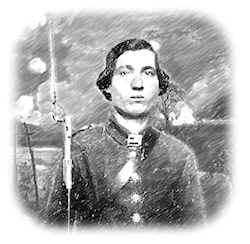
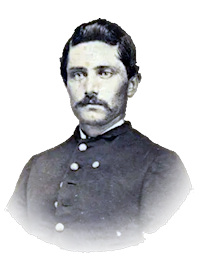
(Note: picture is of an unidentified Confederate soldier.)

0 comments

Rebel War Clerk

Civil War Day-by-Day
A likeness of Jones when he was editor and majority owner of the Daily Madisonian during President John Tyler’s administration.

AUGUST 9th.—Jackson and Ewell are waiting and watching. Pope will expose himself soon.

0 comments

August 8 & 9, 1862

Experience of a Confederate Chaplain—Rev. A. D. Betts, 30th N. C. Regiment

Aug. 8—Ride early to Pa’s calling at three Hospitals. Fever all day. Take medicine at night.

Aug. 8 (9?)—Go late and walk to camp.

0 comments

“Our President has just given most sensible orders for retaliation.”—Diary of a Southern Refugee, Judith White McGuire.

Diary of a Southern Refugee During the War by Judith White McGuire

9th.—We hear of a little cavalry fight at Orange Court-House, in which we drove off the enemy. General Pope continues to commit depredations in his district of operations. He seems to have taken Butler as his model, and even to exceed him in ferocity. Our President has just given most sensible orders for retaliation.

The Misses N. are spending the summer here. Their home in Clarke in possession of the enemy, together with their whole property, they are dividing their time among their friends. It is sad to see ladies of their age deprived of home comforts; but, like the rest of the refugees, they bear it very cheerfully. Born and reared at Westover, they are indignant in the highest degree that it should now be desecrated by McClellan’s army. They are deeply mourning the death of their noble young cousin, Captain B. Harrison, of Upper Brandon, who was killed at the head of his troop, in one of the battles near Richmond.

0 comments

A Confederate Girl’s Diary

Civil War Day-by-Day

August 8th, Friday.

Again last night, about nine, we heard cannon in Baton Rouge, and watched the flashes which preceded the reports by a minute, at least, for a long time. We must have seen our own firing; perhaps we wanted to find out the batteries of the enemy. It was not the most delightful thing imaginable to watch what might be the downfall of our only home! And then to think each ball might bring death to some one we love! Ah, no! it was not pleasant!

Miriam and I have many friends in Breckinridge’s division, I expect, if we could only hear the names of the regiments. The Fourth is certainly there. And poor Will! I wonder if he has had his supper yet? I have been thinking of him ever since Mr. Scales told me he was there, and praying myself sick for his safety and that of the rest. I shut my eyes at every report and say, “Oh, please! poor Will! –and the others, too!” And when I don’t hear the cannon, I pray, to be in advance of the next.

It is now midday, and again we hear firing; but have yet to learn the true story of the first day’s fight. Preserve me from the country in such stirring days! We might as well be in Europe as to have the Mississippi between us and town.

By unanimous consent, the little lane in front of the house has been christened “Guerrilla Lane,” and the long one leading to the river, “Arkansas.” What an episode that was, in our lives! The officers go by the name of Miriam’s, Ginnie’s, Sarah’s, as though they belonged to each!

Those girls did me the meanest thing imaginable. Mr. Talbot and I were planning a grand combined attack on Baton Rouge, in which he was to command a fleet and attack the town by the river, while I promised to get up a battalion of girls and attack them in the rear. We had settled it all, except the time, when just then all the others stopped talking. I went on: “And now, it is only necessary for you to name the day –” Here the girls commenced to giggle, and the young men tried to suppress a smile; I felt annoyed, but it did not strike me until after they had left, that I had said anything absurd. What evil imaginations they must have, if they could have fancied I meant anything except the battle!

0 comments

“Orders have been given us to put every woman and child (imprison the men) across the line that speaks or acts secesh..,”–Army Life of an Illinois Soldier, Charles Wright Wills.

Civil War Day-by-Day
Note: This letter–a document written in 1862–includes terms and topics that may be offensive to many today.   No attempt will be made to censor or edit 19th century material to today’s standards.

Tuscumbia, Ala., August 8, 1862.

My pet negro got so lazy and worthless I was compelled to ship him. I’ll take back, if you please, everything good that I ever said of free negroes. That Beauregard nigger was such a thief that we had to also set him adrift. He stole our canned fruit, jellies and oysters and sold some of them and gave parties at the cabins in the vicinity. This was barely endurable but he was a splendid, smart fellow and the colonel would have kept him, but he got to stealing the colonel’s liquor. That of course, was unpardonable, when the scarcity of the article was considered. In my last I spoke of a ride on the railroad and having to turn back on account of bridges being burned There were, maybe, 150 sick soldiers on board, and they concluded to march to Decatur, only 10 miles. They were attacked just after we started back, five of them killed and about 100 taken prisoners. There was a woman along and she was wounded. There were three little fights yesterday between here and 25 miles east. In all, four killed and 13 wounded. The fight first spoken of was day before yesterday. Orders have been given us to put every woman and child (imprison the men) across the line that speaks or acts secesh, and to burn their property, and to destroy all their crops, cut down corn growing, and burn all the cribs. That is something like war. ‘Tis devilish hard for one like me to assist in such work, but believe it is necessary to our course. Having been very busy preparing reports and writing letters all day, feel deuced little like writing you. People here treat us the very best kind, although they are as strong Rebels as live. Bring us peaches and vegetables every day. I can’t hardly think the generals will carry out the orders as above, for it will have a very demoralizing effect upon the men. I’d hate like the deuce to burn the houses of some secesh I know here, but at the same time don’t doubt the justice of the thing. One of them has lent us his own cook, or rather his wife did; and they don’t talk their secessionism to you unless you ask them to. We are getting a good many recruits from this country. All poor people, in fact that is the only kind that pretend to any Unionism here. There are now three full companies of Alabamians (Union) at Huntsville, and many more coming in. It is the opinion of the court that this new law, a copy of which you sent me, will boost me out of the service. I will make no objection, although would rather stay in if I thought the war would last 30 or 40 years. Don’t see how the boys can stay at home under the pressure. A young man here, and a splendid fellow, if he is a Rebel, showed me four letters from different young ladies urging him, by ridicule and appeals to his pride to go into the army. He was in for a short time, and was stationed at Fort Morgan. Business keeps him out now—crops, etc. I think will arrange things so that he can leave, if we carry out orders. ‘Twould be quite a change for me to be out of the army now. I don’ know how I would relish it while the war continues, although am sure could stand it if peace times would come again.

0 comments

Downing’s Civil War Diary.–Alexander G. Downing.

Diary of Alexander G. Downing; Company E, Eleventh Iowa Infantry

Friday, 8th–No news of importance. The officers are having considerable trouble in keeping the boys from getting through the lines. We have regular brigade guard to keep the men in camp, yet every day a few slip through when the guards are walking in opposite directions. But now, every morning at guard mount, the officer of the day gives strict orders that guard number 1 shall walk his beat so that he will be looking at guard number 2, and continuing thus around the entire camp, so that all getting to the end of their beats at the same time face about and proceed as before, each looking toward the guard ahead of him.

0 comments

War Diary of Luman Harris Tenney.

War Diary of Luman Harris Tenney.

8th. August. Commenced “Woman in White” again. Fairly begun when I was ordered off with Capt. Smith to find a camp. Selected one up on the hill west of town. Somewhat fortified. Moved camp in the forenoon. All tired after moving. Had one meal. Continued the story. Our new site for camp overlooks a large tract of country. The horses are picketed away from the immediate vicinity of the camp so that we will be free from the dust, and be nearer water for horses.

0 comments

Robert M. McGill

Robert M. Magill – Personal Reminiscences of a Confederate Soldier Boy, 39th Georgia Regiment of Infantry

Wednesday, 8th.—All quiet to-day; two of our wounded died.


(Note: picture is of an unidentified Confederate soldier.)

0 comments

Rebel War Clerk

Civil War Day-by-Day
A likeness of Jones when he was editor and majority owner of the Daily Madisonian during President John Tyler’s administration.

AUGUST 8th.—We hear of skirmishing in Orange County, and the enemy seem as familiar with the paths and fords as our own people; hence some surprises, attempted by our cavalry, have failed.

0 comments

A Diary From Dixie

Civil War Day-by-Day

August 8th.–Mr. Daniel Blake drove down to my sister’s in his heavy, substantial English phaeton, with stout and strong horses to match. I went back with him and spent two delightful days at his hospitable mansion. I met there, as a sort of chaplain, the Rev. Mr. ____. He dealt unfairly by me. We had a long argument, and when we knelt down for evening prayers, he introduced an extemporaneous prayer and prayed for me most palpably. There was I down on my knees, red-hot with rage and fury. David W. said it was a clear case of hitting a fellow when he was down. Afterward the fun of it all struck me, and I found it difficult to keep from shaking with laughter. It was not an edifying religious exercise, to say the least, as far as I was concerned.

Before Chancellorsville, was fatal Sharpsburg.¹ My friend, Colonel Means, killed on the battle-field; his only son, Stark, wounded and a prisoner. His wife had not recovered from the death of her other child, Emma, who had died of consumption early in the war. She was lying on a bed when they told her of her husband’s death, and then they tried to keep Stark’s condition from her. They think now that she misunderstood and believed him dead, too. She threw something over her face. She did not utter one word. She remained quiet so long, some one removed the light shawl which she had thrown over her head and found he was dead. Miss Mary Stark, her sister, said afterward, “No wonder! How was she to face life without her husband and children? That was all she had ever lived for.” These are sad, unfortunate memories. Let us run away from them.

What has not my husband been doing this year, 1862, when all our South Carolina troops are in Virginia? Here we were without soldiers or arms. He raised an army, so to speak, and imported arms, through the Trenholm firm. He had arms to sell to the Confederacy. He laid the foundation of a niter-bed; and the Confederacy sent to Columbia to learn of Professor Le Conte how to begin theirs. He bought up all the old arms and had them altered and repaired. He built ships. He imported clothes and shoes for our soldiers, for which things they had long stood sorely in need. He imported cotton cards and set all idle hands carding and weaving. All the world was set to spinning cotton. He tried to stop the sale of whisky, and alas, he called for reserves–that is, men over age, and he committed the unforgivable offense of sending the sacred negro property to work on fortifications away from their owners’ plantations.

________

¹ During the summer of 1862, after the battle of Malvern Hill and before Sharpsburg, or Antietam, the following important battles had taken place: Harrison’s Landing, July 3d and 4th; Harrison’s Landing again, July 31st; Cedar Mountain, August 9th; Bull Run (second battle), August 29th and 30th, and South Mountain, September 14th.

0 comments

A Confederate Girl’s Diary

Civil War Day-by-Day

August 7th.

Last night, shortly after we got in bed, we were roused by loud cannonading towards Baton Rouge, and running out on the small balcony up here, saw the light of a great fire in that direction. From the constant reports, and the explosion of what seemed to be several powder magazines, we imagined it to be either the Garrison or a gunboat. Whatever it was, it was certainly a great fire. We all ran out in our nightgowns, and watched for an hour in the damp air, I without even shoes. We listened to the fight a long while, until the sound ceased, and we went back to bed.

Evening.

I am so disheartened! I have been listening with the others to a man who was telling us about Baton Rouge, until I am heartsick. He says the Yankees have been largely reinforced, and are prepared for another attack which will probably take place to morrow; that the fight was a dreadful one, we driving them in, and losing twelve hundred, to their fifteen hundred. It must have been awful! And that our troops have resolved to burn the town down, since they cannot hold it under the fire of the gunboats.


0 comments

“I’ll not enlist again until the policy of this war changes, and in actions as well as words, too.”–Army Life of an Illinois Soldier, Charles Wright Wills.

Civil War Day-by-Day

Tuscumbia, Ala., August 7, 1862.

The enemy is reported nearer us than usual to-night, and in considerable force. Have no idea they intend fighting us here though. This has been the hottest day of the summer, and I’ve been in the sun all day with thick woolen clothes on, wool shirts, too. I started for Decatur about 7 this morning and got back at 5 p.m. All platform cars, no possible chance for shade. I rode on the cowcather going out, and on the tender, which was ahead, coming back. We got within ten miles of Decatur when we came to two bridges burned last night, and had to come back. There is not a bridge or culvert on this road as far as our brigade guards it, that has not been burned, at least once, and many of the cattle guards even have been burned. They don’t fire on the trains though in this country, which is some little consolation to the traveler. Since we have been guarding the road, some two weeks, they have burned in our district four bridges, one water tank, and two station houses, and torn up rails several times. All this work is done in the night. The tank and stations were of no use to us and the bridges we can build about as fast as they can burn them, tearing down secesh houses to find the timbers ready hewn. There are some grand plantations along the line I have traveled to-day. Thousands of acres in some of them with from 50 to 250 hands, each. The negroes are under no restraint whatever, now. Don’t half work, their masters say, About 40 negro women who were clearing a piece of woodland dropped their axes and picks and came out to the road as the train passed. They were by odds the most antic and amusing lot of slaves I have yet seen. So clumsily ludicrous, with their close-curled wool, great white and black eyes, and heavy-ended motions. Some wore sun bonnets, some men’s old hats, but most were bareheaded. The negro women all wear handkerchiefs (I think they are), turban fashion, while indoors, and sun bonnets, or go bareheaded, when out. They seem to be all dressed alike, in very ragged, shabby, thick, cotton stuff, which is either white or yellow. I have never seen one of these dresses clean enough to tell which. I have seen but two negroes yet that have marks of severe punishment. They were man and wife, and belong to a planter living 12 miles from here. The man I think is made a cripple for life from blows by a club on his ankles and knees, the woman is badly cut on the arms and shoulders, as with a horsewhip, but she’s all right yet. How a man can be fool enough to so abuse such valuable property as this is more than I can understand. You have no idea to what an extent the habit of dipping is carried here. I have, while talking to women who really had in every way the appearance of being ladies, seen them spit tobacco juice, and chew their dipping sticks, perfectly at ease. I don’t think it common to do it so openly, but I have seen two ladies, and any number of common women, engaged in the delightful pastime. Colonel Kellogg seems to think that I will be mustered out in a short time. I’ll promise you one thing, that if I am, I’ll not enlist again until the policy of this war changes, and in actions as well as words, too. J. Pope is disgusting me with him very rapidly. John is a horrid blower of his own horn. If he don’t astonish this country, after all of his blowing, the country will astonish him to his entire dissatisfaction before he’s many months older. Oh! if Grant will only go to work and get somebody whipped, or if he’d retreat, that would be better than doing nothing, though not as good as advancing.

0 comments

Downing’s Civil War Diary.–Alexander G. Downing.

Diary of Alexander G. Downing; Company E, Eleventh Iowa Infantry

Thursday, 7th–Nothing of importance. Everything is quiet in camp. The rebels are not giving us much anxiety yet, but our officers are not napping; a strong picket is constantly kept in line.

0 comments

War Diary of Luman Harris Tenney.

War Diary of Luman Harris Tenney.

7th. Watered my horse and took a good bath. Had a good visit with Newt. Adams about officers of our acquaintance and future prospects. Today, as often, I am uneasy for something to satisfy a nervous want of something real to do. Can’t be easy at anything. Commenced reading the “Woman in White,” by Wilkie Collins. Found the book quite interesting. Could hardly leave it for my meals. There seems to be no stopping place. Every paragraph, every chapter, every book is full of thrilling adventures, well laid plot. Great vigilance against surprise.

0 comments

Robert M. McGill

Robert M. Magill – Personal Reminiscences of a Confederate Soldier Boy, 39th Georgia Regiment of Infantry

Tuesday, 7th.—Last night Federals retreated back towards Cumberland Gap, taking most of their dead and wounded with them.


(Note: picture is of an unidentified Confederate soldier.)

0 comments

Rebel War Clerk

Civil War Day-by-Day
A likeness of Jones when he was editor and majority owner of the Daily Madisonian during President John Tyler’s administration.

August 7th.—Much incomprehensible manœuvring is going on in Orange County.

0 comments