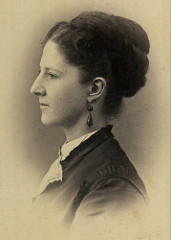
“…he must not think of returning to camp.”

Woolsey family letters during the War for the Union

Eliza Woolsey Howland to her Mother.

Fishkill, Aug. 15.

Dear Mother: In answer to my letter Dr. Draper came up yesterday noon and stayed till this afternoon. . . . The visit was part professional and part for pleasure and was satisfactory in both ways. He finds Joe improving, though more slowly than he had hoped, but he says he must not think of returning to camp. That if fever got hold of him again he would stand very little chance of recovery. It would permanently break down his constitution, if it was not immediately fatal. . . . It is very disappointing. He hoped to gain fast enough to go back the end of this month, and is greatly depressed about it, for he has made up his mind that under the circumstances it is great injustice to the regiment and to Major Seaver to continue to hold his commission, getting the credit as it were, while the Major has all the care and responsibility. He wishes to do only what is most for the interests of the service.


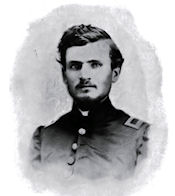
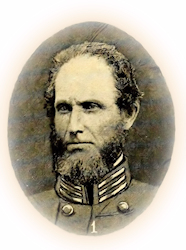
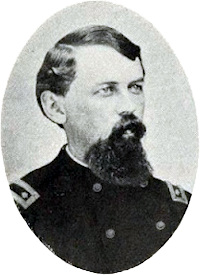
Joseph Howland resigned from the service by the advice of Dr. W. H. Draper of New York, whose medical certificate stated that he was suffering from extreme nervous exhaustion and debility, and was unfit for duty. The resignation was received by his superior officers with expressions of great regret, and letters full of affection poured in upon him.

General Bartlett, commanding the brigade, writes:

Headquarters 2d Brigade.
Sept. 4th, 1862, “Camp Franklin,” VA.

Dear Howland: I received your papers just as we were embarking at Newport News, and you cannot imagine how badly I felt at the thought that perhaps we should never be associated together in the field again, and perhaps never again see each other. We all agreed that you ought not to come back, all seemed actuated by the same feeling of love for you and all expressed their sorrow that you would no longer be with us. . . .

The old 16th are still “A. No. 1.”

General Bartlett writes again:

Headquarters 2d Brigade,
Near Bakersville, Md.
Oct. 1st, .1862

My dear Howland: I enclose to you the acceptance of your resignation and honorable discharge from the service.

I had much rather it had been your appointment as brigadier, for I don’t believe the service can afford to lose many such officers, and yet I would rather see you recover your health and strength than to be made a major-general, myself.
0 comments

“We are raking in about 100 bales of cotton per day and could get more if we had the transportation.”–Army Life of an Illinois Soldier, Charles Wright Wills.

Civil War Day-by-Day

Tuscumbia, Ala., August 14, 1862.

Things are progressing here swimmingly. Seldom have more than two bridges burned in the same night, or lose more than five or six men in one day. Scared a little though, now. The 7th went down yesterday through Moulton, where they were encamped but a few days since, and gained us the information that they had evacuated that post. People here are considerably scared about the free and easy way we are gobbling up their little all. We are raking in about 100 bales of cotton per day and could get more if we had the transportation. It makes the chivalry howl, which is glorious music in our ears, and the idea of considering these confederacies something else than erring brothers is very refreshing. But I can’t talk the thing over with them with any pleasure, for they all pretend so much candor and honesty in their intentions, and declare so cheerfully, and (the women) prettily, that they will do nothing opposed to our interest, and express so much horror and detestation of guerrillas and marauders of all kinds, that one can’t wish to do them any harm or take and destroy their property. But the murders of Bob McCook, a dozen of men in this command, and hundreds in the army, all tend to disipate such soft sentiments, for we are satisfied that citizens do ten-elevenths of such work; and nothing less than the removal of every citizen beyond our lines, or to north of the Ohio river, will satisfy us. We are all rejoicing that “Abe” refuses to accept the negroes as soldiers. Aside from the immense disaffection it would create in our army, the South would arm and put in the field three negroes to our one. [continue reading…]

0 comments

Downing’s Civil War Diary.–Alexander G. Downing.

Diary of Alexander G. Downing; Company E, Eleventh Iowa Infantry

Thursday, 14th–The Eleventh Iowa was ordered to move across the river, which we did this afternoon and went into camp on a low piece of ground. Our regiment is to guard the railroad track for four miles. We have to go on duty every other day and have to see that the rebels do not come and tear up the track.

0 comments

War Diary of Luman Harris Tenney.

War Diary of Luman Harris Tenney.

14th. Thursday. Put some stripes on my pants, and gave my poor wardrobe a good looking over and repairing. Should not like playing old bachelor for life–not any. Like company and society too well. In the afternoon orders came for the 2nd Ohio to be ready to march at 8 P. M. with 5 days’ rations. Under way at nine P. M. 1st Brigade and 6th and 9th Kansas marched from town at ten with the 2nd Ohio in the rear. The dismounted men and 9th Wisconsin rode in the wagons. Marched all night. I got Major’s permission and rode in baggage wagon. Most sick with the bloody flux. All were ignorant of our destination, but supposed and hoped to fight.

0 comments

Rebel War Clerk

Civil War Day-by-Day
A likeness of Jones when he was editor and majority owner of the Daily Madisonian during President John Tyler’s administration.

AUGUST 14th.—Lee has gone up the country to command in person. Now let Lincoln beware, for there is danger. A mighty army, such as Napoleon himself would have been proud to command, is approaching his capital. This is the triumph Lee has been providing for, while the nations of the earth are hesitating whether or not to recognize our independence.

0 comments

Journal of Surgeon Alfred L. Castleman.

Journal of Surgeon Alfred L Castleman.

14th.–At 9 P. M., received orders to be ready to move at daylight to-morrow morning, with two days’ rations in haversacks. The crisis approaches, and whilst the men are cooking their rations, I note this, and then go to packing.

0 comments

A Confederate Girl’s Diary

Civil War Day-by-Day

August 13th.

I am in despair. Miss Jones, who has just made her escape from town, brings a most dreadful account. She, with seventy-five others, took refuge at Dr. Enders’s, more than a mile and a half below town, at Hall’s. It was there we sent the two trunks containing father’s papers and our clothing and silver. Hearing that guerrillas had been there, the Yankees went down, shelled the house in the night, turning all those women and children out, who barely escaped with their clothing, and let the soldiers loose on it. They destroyed everything they could lay their hands on, if it could not be carried off; broke open armoirs, trunks, sacked the house, and left it one scene of devastation and ruin. They even stole Miss Jones’s braid! She got here with nothing but the clothes she wore.

This is a dreadful blow to me. Yesterday, I -thought myself beggared when I heard that our house was probably burnt, remembering all the clothing, books, furniture, etc., that it contained; but I consoled myself with the recollection of a large trunk packed in the most scientific style, containing quantities of nightgowns, skirts, chemises, dresses, cloaks, – in short, our very best, – which was in safety. Winter had no terrors when I thought of the nice warm clothes; I only wished I had a few of the organdie dresses I had packed up before wearing. And now? It is all gone, silver, father’s law papers, without which we are beggars, and clothing! Nothing left!

I could stand that. But as each little article of Harry’s came up before me (I had put many in the trunk), I lost heart. . . . They may clothe their negro women with my clothes, since they only steal for them; but to take things so sacred to me! O my God, teach me to forgive them! [continue reading…]

0 comments

Downing’s Civil War Diary.–Alexander G. Downing.

Diary of Alexander G. Downing; Company E, Eleventh Iowa Infantry

Wednesday, 13th–The weather is very hot. I was on camp guard today when one of the guards suddenly became sick. I was number 24 in the first relief, and the man next to me, number 25, got sick. He called out to me, “Corporal the guard number 25.” It then became my duty to repeat the same call, “Corporal the guard number 25,” to the guard next to me, number 23, who made the same call to the guard next to him, and in this way the call went down the line to guard No. 1. Guard number 1 then sent the same call to the corporal of the guardhouse, who went out to guard number 25 to see what he wanted. When he was found to be sick another guard was brought out to relieve guard number 25.

0 comments

War Diary of Luman Harris Tenney.

War Diary of Luman Harris Tenney.

13th. Wednesday. Did very little in the morning. In the afternoon Lt. Carter was buried. Capt. Nettleton rode up to our tent and told me he would like to see me a minute. I went aside and he said he was going home. I asked him if he were going home for good. He said that was about the only way men could get out of the department at this time. Finally after deceiving me he told me he was going on regiment business. Wrote lines to Fannie and home.

0 comments

Robert M. McGill

Robert M. Magill – Personal Reminiscences of a Confederate Soldier Boy, 39th Georgia Regiment of Infantry

Wednesday, 13th.—Company F, on picket one mile west of Tazewell. Deer came running by our picket post. Went back to camp.


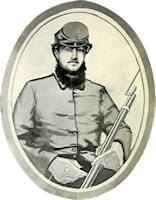
(Note: picture is of an unidentified Confederate soldier.)

0 comments

Rebel War Clerk

Civil War Day-by-Day
A likeness of Jones when he was editor and majority owner of the Daily Madisonian during President John Tyler’s administration.

AUGUST 13th.—McClellan is gone, bag and baggage, abandoning his “base;” to attain which, he said he had instituted his magnificent strategic movements, resulting in an unmolested retreat from the Peninsula and flight to Washington, for the defense of his own capital. So the truth they crushed to earth on the Chickahominy has risen again, and the Yankees, like the Cretans, are to be known henceforth as a nation of liars.

0 comments

Scotland and Ireland furnished several good soldiers to that company.

Experience of a Confederate Chaplain—Rev. A. D. Betts, 30th N. C. Regiment

Aug. 13—Visit sick at Division and Winder Hospital. Lieutenants Davis, Jackson and Johnson, and privates Jackson, Jenkins, Hester and Merritt doing well. Marshall Teachy will hardly live. Lieutenant McLeod hardly can recover. Peter Stanley out of his head, imagines himself on Lockwood’s Folly. Says he has seen his wife and children! Perhaps he has. Prays right intelligently. Poor old Mr. Graham will hardly go in ranks again. My private roll says: Samuel W. Graham, born in Ireland was living in Chatham County, North Carolina, when he enlisted in Company “H” September 23, 1861, was forty-six years old and left two motherless children. He died next day. Scotland and Ireland furnished several good soldiers to that company. Dennis Carr and Andrew McFarland were born in Ireland. James Rogers, William McCulloch and A. D. McGill were born in Scotland. McCulloch was thirty-seven when he enlisted, and left two motherless children when he was lost, or reported “missing”; McGill was nineteen. He has lived to be a blessing to North Carolina. He has been heard in the halls of her Legislature. Graham seemed to know me the day before he died. Teachy called me “Brother Betts,” as usual though he had recognized no one for some days. Died August 14, 1862, leaving a wife and five children. After supper I call to see Revs. L. and B. Culbreth, A. Maxwell and D. Ray at Hotel. (Love and Blackman Culbreth were brothers, local preachers, raised in Sampson County, North Carolina. Blackman died early. Love, a sweet singer and a fine preacher, had given a son to the North Carolina Conference in 1859, and lived till 1896.) Return to Pa’s by moonlight, praying and meditating, and receive a blessing on my soul.

0 comments

Journal of Surgeon Alfred L. Castleman.

Journal of Surgeon Alfred L Castleman.

13th. We are now all packed ready for a move, awaiting only the final order to march. Where or how we go, we do not yet know. We learn, however, beyond a doubt, that the regiments which disappeared so mysteriously a few nights since, embarked on transports under cover of the darkness, and have gone down the river. Their destination is not certainly known to us. From present appearances the plan seems to be, that the army, with the exception of Smith’s Division, or perhaps Franklin’s Corps, are to embark on transports, leaving us to escort and protect our immense transportation train overland to Fortress Monroe. Should this conjecture be true, we shall have a hazardous time, unless General Pope shall succeed in keeping the enemy so busily engaged as to relieve us. I have full confidence that he will exert himself to the utmost to relieve us in this manner.

Our leaders here are rapidly losing the confidence of the army and becoming objects of ridicule to the enemy. At White Oak Bridge, when we retreated, we left our pickets at their posts, without notifying them of our movements. They were of course taken prisoners. They have been paroled and are returning to camp. They say that immediately on being captured, they were being examined by a rebel Colonel, when Stonewall Jackson came up and upbraided the Colonel for spending time with the prisoners. “Let the prisoners go,” said he, and “press on after the enemy. So accustomed have they become to digging that if you give them twelve hours’ rest, they will dig themselves clear under ground.” Flattering, truly! I hope General McClellan will note it. But these things must not be talked about. Oh, no! We must see army after army sacrificed, the bones of hundreds of thousands of our bravest men bleaching on the plains, the nation draped in mourning, and not speak of it lest we shake confidence in our Generals, who through selfishness or incompetency, I will not yet say treason, are so frequently subjecting us to such contumely and sacrifices. History will make sad revelations of this war. I verily believe that, could its abuses be fully told, it would arouse the people to an enthusiasm which no acts of the enemy can excite. Under our present leaders, God knows what is to become of us. I have lost all confidence in them. In only four months from the time we landed on the Peninsula we had lost nearly two-thirds of the vast army brought with us, without one decisive battle! Since the 20th March we have landed here about 160,000 men. I doubt whether we could to-day bring 45,000 into action! At any time between October and June last, it has been in the power of this army to crush out this rebellion in a month; and yet the rebellion is more formidable to-day than at any previous time. Even now we are receiving reports of the discomfiture of Pope’s army, and, notwithstanding that its struggles are for our relief, it is unmistakeably evident that the report gives pleasure to the staffs of McClellan and Hancock. It may be so with other staffs; these are the only ones I have seen. Jealousy, jealousy–what will be the end of this? God preserve us.

Whilst I am noting down these abuses, a strange feeling possesses me; I lose all sense of my determination to abandon this rotten thing, and I resolve here to fight to the bitter end. Oh, if we had a Wellington, a Napoleon, a Scott, or even a Jackson, to do–something–anything, but dig and watch and –! falsely report!

Just as I close this journal of the day, a man rides up and tells me that General Pope has had a fight, and “holds his own.” I hope this is true, but I cannot forget that on the 26th of June, General McClellan made the army boisterously joyful by his assertion that McCall had thoroughly whipped Stonewall Jackson. On the next morning at daylight, it was claimed that McCall had only “held his own.” Two hours later we find that instead of even holding his own, he had retreated four miles, but it was only a “strategic movement,” and next day it became necessary for the whole army to–not retreat–but–”change its base.” All this it required to tell the simple truth that we were overpowered, whipped, and on the retreat. I hope it may not now be the beginning of a like history of General Pope’s movements.

0 comments

0

Civil War Day-by-Day
Charles Lynch

During the spring and summer of 1862 the war fever was running very high. Great excitement prevailed. Darkness and gloom seemed to cover the country. Men were urged to enlist, go to the war, and help save the country. It was preached from the pulpits, printed by the press, talked about at great war meetings that were held by day and nights. Business at times was suspended. Drums and fifes were heard continuously being paraded through the streets and followed by men and boys. Churches were open in country towns, giving men an opportunity to enlist.

Mr. Isaac H. Bromley, City Editor of the Norwich Morning Bulletin, at a great war meeting held at Breed’s Hall, had enlisted to go to the war. He came out with a card in the Bulletin asking one hundred young men to go with him and organize a company for the 18th Regiment that was forming at the time.

On the evening of August 6th, 1862, I visited the recruiting office with my mind fully made up to enlist for the war and go in Bromley’s company.

On the 12th the members were requested to meet at the recruiting office at 1 P. M. to form company and march to the fair grounds where camp had been located. Distance about two miles. At 2 P. M. with drum and fife we began our march to the camp. Cheers greeted us all along the line of march.

The camp was known as Camp Aiken, so named in honor of General Aiken, son-in-law of Connecticut’s war Governor, William A. Buckingham. At camp we were assigned two rows of tents, mattresses and army blankets included. After the medical examination, uniforms were given to us. Then began the life of a real soldier, learning how to march and drill and also doing guard duty.

A meeting of the company was called to elect officers. Isaac H. Bromley was elected Captain, Samuel T. C. Merwin, a lawyer, ist Lieutenant, Henry F. Cowles, 2nd Lieutenant. In due time we were selected as color company, also known as Company C. It was considered a very great honor to be the color company of a regiment. With cheers and congratulations we pledged ourselves to be true and to carry the flags with honor. We are now getting the new experience of a soldier’s life in camp.

0 comments

A Confederate Girl’s Diary

Civil War Day-by-Day


Linwood, August 12th.

Another resting-place! Out of reach of shells for the first time since last April! For how long, I wonder? For wherever we go, we bring shells and Yankees. Would not be surprised at a visit from them out here, now!

Let me take up the thread of that never-ending story, and account for my present position. It all seems tame now; but it was very exciting at the time.

As soon as I threw down bonnet and gloves, I commenced writing; but before I had halfway finished, mother, who had been holding a consultation downstairs, ran up to say the overseer had advised us all to leave, as the place was not safe; and that I must pack up instantly, as, unless we got off before the Essex came up, it would be impossible to leave at all. All was commotion; every one flew to pack up. Phillie determined to go to her friends at Grosse Tete, and insisted on carrying us off with her. But I determined to reach Miriam and Lilly if possible, rather than put the Federal army between us. All en déshabillé, I commenced to pack our trunk, but had scarcely put an article in when they cried the Essex was rounding the point, and our last opportunity passing away. Then I flew; and by the time the boat got opposite to us, the trunk was locked, and I sat on it, completely dressed, waiting for the wagon. We had then to wait for the boat to get out of sight, to avoid a broadside; so it was half-past ten before we set off, fortified by several glasses of buttermilk apiece.

All went in the carriage except Ginnie, Lilly (Nolan), and me, and we perched on the baggage in the wagon. Such stifling heat! The wagon jarred dreadfully, and seated at the extreme end, on a wooden trunk traversed by narrow slats, Ginnie and I were jolted until we lost our breath, all down Arkansas Lane, when we changed for the front part. I shall never forget the heat of that day. [continue reading…]

0 comments

Downing’s Civil War Diary.–Alexander G. Downing.

Diary of Alexander G. Downing; Company E, Eleventh Iowa Infantry

Tuesday, 12th–We just learned that Ebenezer McCullough of Company E died of chronic diarrhea at Corinth, on the third of this month. His home was at Davenport, Iowa.

0 comments

War Diary of Luman Harris Tenney.

War Diary of Luman Harris Tenney.

12th. Tuesday. In the morning molasses was issued to the boys. Wrote a letter home. One boy from Co. G was buried. Wrote to Fannie and Uncle. Lt. Carter died. It must be a sad affliction for his poor mother who esteemed him her pet. Sergt. Daniels was wounded in the thigh by accident. Gen. Blunt held a council of all the officers in the division. Squashed the whole Wier fuss. I hope Wier won’t accept the terms. Many officers talk of resigning. Ladies about camp. Arrived yesterday. Mesdames Miner, Burnett, Ratliffe, Taylor.

0 comments

Rebel War Clerk

Civil War Day-by-Day
A likeness of Jones when he was editor and majority owner of the Daily Madisonian during President John Tyler’s administration.

AUGUST 12th.—Pope claims a victory! So did McClellan. But truth will rise, in spite of everything. I will not quote Bryant literally because he is an enemy in this war and falsifies his own precepts.

0 comments

A Confederate Girl’s Diary

Civil War Day-by-Day

At Randallson’s Landing, August 11th.

I don’t mean those ladies were, but that I am at present. I’ll account for it after I have disposed of the stampede. Imagine no interruption, and continue – in the carriage urging Uncle Will to hurry on, and I had hardly time to thrust my sack under their feet before they were off. Lilly and Miss Walters were already in the buggy, leaving Ginnie and me to follow on horseback. I ran up after my riding-skirt, which I was surprised to find behind a trunk, and rolled up in it was my running-bag, with all my treasures! I was very much provoked at my carelessness; indeed, I cannot imagine how it got there, for it was the first thing I thought of. When I got back, there was no one to be seen except Ginnie and two negroes who held our horses, and who disappeared the instant we were mounted; with the exception of two women who were running to the woods, we were the only ones on the lot, until Mr. Watson galloped up to urge us on. Again I had to notice this peculiarity about women – that the married ones are invariably the first to fly, in time of danger, and always leave the young ones to take care of themselves. Here were our three matrons, prophesying that the house would be burnt, the Yankees upon us, and all murdered in ten minutes, flying down the Guerrilla Lane, and leaving us to encounter the horrors they foretold, alone.

It was a splendid gallop in the bright moonlight, over the fields, only it was made uncomfortable by the jerking of my running-bag, until I happily thought of turning it before. A hard ride of four miles in about twenty minutes brought us to the house of the man who so kindly offered his hospitality. It was a little hut, about as large as our parlor, and already crowded to overflowing, as he was entertaining three families from Baton Rouge. Can’t imagine where he put them, either. But it seems to me the poorer the man, and the smaller the house, the greater the hospitality you meet with. There were so many of us that there was not room on the balcony to turn. The man wanted to prepare supper, but we declined, as Phillie had sent back for ours which we had missed. [continue reading…]

0 comments

Downing’s Civil War Diary.–Alexander G. Downing.

Diary of Alexander G. Downing; Company E, Eleventh Iowa Infantry

Monday, 11th–I wrote a letter home today and sent a ten dollar bill in it. I am sending home nearly all my pay from the Government, with the understanding that father is to keep it for me.

0 comments

War Diary of Luman Harris Tenney.

War Diary of Luman Harris Tenney.

11th. Monday. Read some in the June Atlantic. Nothing especially interesting. After dinner went down for Charlie and visited Delos per engagement. Had a splendid visit, real social time. Got some lemon syrup, talked over our old experiences at home and with “B. F.” In the evening went to town to hear Lane and Blunt. Lane did well enough for a border ruffian. Blunt criticised the course of our officers in arresting Wier. Referred to the whole thing as a conspiracy. 1st Brigade did not cheer much till Gen. Salomon’s name was heard. Then the boys grew wild with excitement and cheered heartily for him. Blunt found, I guess, that Wier had enemies and Salomon friends.

0 comments

Rebel War Clerk

Civil War Day-by-Day
A likeness of Jones when he was editor and majority owner of the Daily Madisonian during President John Tyler’s administration.

AUGUST 11th.—Our killed, wounded, and captured did not amount to more than 600. We might have captured a whole brigade at one time during the battle, but did not. They charged our batteries, not perceiving a brigade of our own lying concealed just in the rear of the guns: so, when they advanced, shouting, to within thirty yards of our troops, they rose and “let them have it.” Nine-tenths of the enemy fell, and the rest were soon dispatched, before they could get away. One of their dying officers said they would have surrendered to us, if we had demanded it. He was reminded of Pope’s beastly orders, and died with a horrible groan.

0 comments

It looks right funny to see men so green…

Civil War Day-by-Day

HEAD QUARTERS, ANDERSON BRIGADE,

RIPLEY DIVISION, August 11, 1862.

My Dear Mother:

I am sorry I have kept you waiting so long before writing to you, but I thought I would wait until I could have a talk with General Anderson to find out what I was to do before writing. I sent word by John Hines, also Dr. Barham, that I was well and for them to tell you all the news. When I arrived at the Camp of our Regiment it was gone to Malvern Hill to have a fight with the Yankees. They did not return in a day or two. General Anderson went to Richmond immediately on business, so I did not have an opportunity of speaking with him until this morning. He was perfectly willing for me to come back into the office, so I commenced duty this morning. We have a very pleasant place for our quarters, a large two story house with plenty of shade, in an open field, where we have the breezes from every direction.

I don’t know yet, but I may come up here to mess and sleep, though I thought I would wait a while. I haven’t slept in a tent since I’ve been in camp, but once. That was last night. It rained yesterday morning, and the ground was wet, and the air rather cold, so I thought I would go in the tent, as it was convenient. I shall go in bathing tonight to cool off, and sleep out doors. We have an excellent place for that purpose, that is bathing. It’s been awfully hot here today. I believe it is warmer here than at home.

General G. W. Smith was to-day assigned to the command of our Division. I understand he is an excellent officer. Some of our regiments in this brigade have received their conscripts. They are a very good looking set of men seen drilling in a field, as they were this morning. It looks right funny to see men so green, but I suppose all of us were so at first, and we ought not to make fun of them. Dossey’s Regiment is only about half mile from here. He has been to see me twice since I have been here. I went over to see him last Saturday. He was very well. I went up to see Dunham when I passed through Richmond, but he had gone home the week before, so I was disappointed. Give my best respects to all friends, and my love to all the family, some of you write often and tell me everything that happens about town.

Goodbye, as ever,

Your loving son,
WALTER.

P. S. I’ve got to endorse this letter for the want of stamps. I haven’t written any in so long a time that my hand is as stiff as if I had been mauling rails, you can readily see the difference now and some time ago. I hope it will soon get better.

I forgot to tell you that our whole brigade was throwing up breastworks every day, about two miles from here, that is the only duty they do now, no guard duty.


Letters from two brothers who served in the 4th North Carolina Infantry during the Civil War are available in a number of sources online.  Unfortunately, the brothers are misidentified in some places as Walter Lee and George Lee when their names were actually Walter Battle and George Battle. See The Battle Brothers for more information on the misidentification.

0 comments

Wild Times in Mississippi

War Diary of a Union Woman in the South

Aug. 11, 1862.—We cannot get to New Orleans. A special passport must be shown, and we are told that to apply for it would render H. very likely to be conscripted. I begged him not to try; and as we hear that active hostilities have ceased at Vicksburg, he left me this morning to return to his uncle’s and see what the prospects are there. I shall be in misery about conscription till he returns.


Note: To protect Mrs. Miller’s job as a teacher in post-civil war New Orleans, her diary was published anonymously, edited by G. W. Cable, names were changed and initials were generally used instead of full namesand even the initials differed from the real person’s initials. (Read Dora Richards Miller’s biographical sketch.)

0 comments

0

Civil War Day-by-Day

On the 10th August, Commander Wainwright died, after an illness of two weeks. His remains were placed in a metallic coffin and sent on board the U. S. steamer Miami, which steamer carried them to Washington, D. C.

0 comments