Downing’s Civil War Diary.—Alexander G. Downing.

Diary of Alexander G. Downing; Company E, Eleventh Iowa Infantry

Monday, 30th–We marched about three miles this morning and then went into bivouac to await further orders. The report is that we are now ready to make the grand raid through South Carolina. The Seventeenth and Fifteenth Corps are to form the right wing, as in the campaign through Georgia, with General O. O. Howard in command. General Slocum is in command of the left wing, composed of the other two corps, the Fourteenth and Twentieth, while Kilpatrick’s cavalry will take the flanks as rear guard. General Sherman is in chief command. General Foster, it is said, is either to remain here or move to Charleston.

0 comments

0

Civil War Diary of Charles H. Lynch, 18th Conn. Vol’s.
Charles Lynch

January 30th. Seven companies remain at regimental headquarters. The change makes extra duty for the companies at headquarters. Five prisoners were brought to camp, having been captured by our pickets. They were sent under guard to Harper’s Ferry.

0 comments

“Not a citizen, white or black, here.”–Army Life of an Illinois Soldier, Charles Wright Wills.

Army Life of an Illinois Soldier, Charles Wright Wills, (8th Illinois Infantry)

McPhersonsville, S. C,
January 30, 1865.

We returned from Combahee river last night and at 10 p.m. received orders to move at 6 a.m. Came through Pocataligo and have made 14 miles to-day. Quite a place, but there is not even a clearing. Say 50 ordinary dwellings dropped down in the pine woods, and you have it. Not a citizen, white or black, here.

0 comments

War Diary of Luman Harris Tenney.

War Diary of Luman Harris Tenney.

30th. Monday. Spent the day in camp. Fixed up sheds.

0 comments

A Rebel War Clerk’s Diary

A Rebel War Clerk’s Diary at the Confederate States Capital, By John Beauchamp Jones
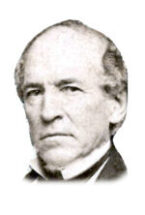
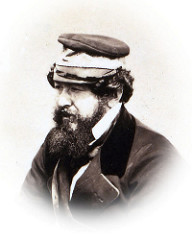
A likeness of Jones when he was editor and majority owner of the Daily Madisonian during President John Tyler’s administration.

January 30th.–Bright and beautiful, but quite cold; skating in the basin, etc.

The departure of the commissioners has produced much speculation.

The enemy’s fleet has gone, it is supposed to Sherman at Charleston.

No doubt the Government of the United States imagines the “rebellion” in articulo mortis, and supposes the reconstruction of the Union a very practicable thing, and the men selected as our commissioners may confirm the belief. They can do nothing, of course, if independence is the ultimatum given them.

Among the rumors now current, it is stated that the French Minister at Washington has demanded his passports. Mr. Lincoln’s message, in December, certainly gave Napoleon grounds for a quarrel by ignoring his empire erected in Mexico.

Mr. Seddon still awaits his successor. He has removed Col. and Lieut -Col. Ruffin from office.

Mr. Bruce, M. C. from Kentucky, and brother-in-law to Mr. Seddon, is named as Commissary-General. [continue reading…]

0 comments

A Woman’s Wartime Journal.

Dolly Sumner Lunt Burge – A Woman’s Wartime Journal.

January 30,1865.

As the moon has changed, Julia [the cook] has gone to making soap again. She is a strong believer in the moon, and never undertakes to boil her soap on the wane of the moon. “It won’t thicken, mist’ess–see if it does!” She says, too, we must commence gardening this moon. I have felt a strong desire today that my captured boys [slaves] might come back. Oh, how thankful I should feel to see them once more safe at home!

0 comments

Diary of a Southern Refugee, Judith White McGuire.

Diary of a Southern Refugee During the War by Judith White McGuire

29th, Sunday.—As usual, we attended Mr. Peterkin’s church, and enjoyed his sermon. Every thing looks so dark without that our only comfort is in looking to God for His blessing. The Union Prayer-Meetings are great comforts to us. They are attended by crowds; ministers of all denominations officiate at them. Prayers for the country, hymns of praise, and exhortations, fill up the time. Some of the addresses are very stirring, urging the laity to work and to give, and to every branch of the Christian Church to do its duty to the country. Our brave old Bishop Meade, on his dying bed, admonished one of his presbyters to speak boldly to the people in behalf of the country; and I am glad to hear the ministers do it. They speak cheerfully, too, on the subject; they are sanguine of our success, depending upon the Lord and on the bravery of our troops—on the “sword of the Lord and of Gideon.”

0 comments

Downing’s Civil War Diary.—Alexander G. Downing.

Diary of Alexander G. Downing; Company E, Eleventh Iowa Infantry

Sunday, 29th–Our company left camp in the old fort at 10 o’clock and reached the brigade headquarters at Garden Corners about noon. Our entire division then moved forward about ten miles and went into bivouac for the night. The roads were fine for marching, having had no rain for four days.

0 comments

“I think that is a turkey by brevet.”–Army Life of an Illinois Soldier, Charles Wright Wills.

Army Life of an Illinois Soldier, Charles Wright Wills, (8th Illinois Infantry)

Combahee River, Charleston and Beaufort road,
January 29, 1865.

We have had some rich sport to-day. Our regiment and the 40th are out here on a little reconnoisance, and making a demonstration pretending to be building a bridge on the river, etc. A party of Rebels saluted our skirmishers when they got to the river bank with a volley, but the boys soon drove them off, with no loss to us (or the Rebels either). We lay around a couple of hours shooting at marks, etc., when a party of the Rebels attempted to reoccupy their pits. We saw them coming for a full mile and they had hardly got within the very longest range before the 40th sent them back flying. Later in the p.m. half a dozen Johnnies arose from the mud and weeds and though they were across the river, surrendered to us. They are really deserters, though they say not. Had a great time getting them over the river. Four board and log rafts were made, launched, and put off after them. Two of them were wrecked against the bridge benches, and the other two succeeded in bringing over three Johnnies; we left the other three there. I certainly would not have risked myself on one of those rafts for 500 prisoners or 5,000 deserters. General Hazen of our corps has been made a full major general. The other division commanders only by brevet, and they feel a little sore over it. To-day one of General Wood’s aids saw a turkey buzzard, and pointed it out to the general, saying, “there is a turkey.” Old Woods looked at it and answered, “I think that is a turkey by brevet.”

0 comments

War Diary of Luman Harris Tenney.

War Diary of Luman Harris Tenney.

29th. Sunday. Weather moderated. Scout came in at midnight. Wrote home. Captured 16 or 20 rebs on picket.

0 comments

A Rebel War Clerk’s Diary

A Rebel War Clerk’s Diary at the Confederate States Capital, By John Beauchamp Jones
A likeness of Jones when he was editor and majority owner of the Daily Madisonian during President John Tyler’s administration.

January 29th.–Clear, and moderating.

To-day at 10 A.M. three commissioners start for Washington on a mission of peace, which may be possibly attained. They are Vice-President Stephens, Senator R. M. T. Hunter, and James A. Campbell, Assistant Secretary of War, and formerly a judge on the bench of the Supreme Court of the United States, all of them heartily sick of war, and languishing for peace. If they cannot devise a mode of putting an end to the war, none can. Of course they have the instructions of the President, with his ultimata, etc., but they will strive earnestly for peace.

What terms may be expected? Not independence, unless the United States may be on the eve of embarking in a foreign war, and in that event that government will require all the resources it can command, and they would not be ample if the war should continue to be prosecuted against us. Hence it would be policy to hasten a peace with us, stipulating for valuable commercial advantages, being the first to recognize us over all other powers, hoping to restore the old trade, and ultimately to reconstruct the Union. Or it may proceed from intimations of a purpose on the part of France and England to recognize us, which, of itself, would lead inevitably to war. The refusal of the United States to recognize the Empire of Mexico is an offense to France, and the augmentation of the armament of the lakes, etc. is an offense to England. Besides, if it were possible to subjugate us, it would be only killing the goose that lays the golden egg, for the Southern trade would be destroyed, and the Northern people are a race of manufacturers and merchants. If the war goes on, 300,000 men must be immediately detailed in the United States, and their heavy losses heretofore are now sorely felt. We have no alternative but to fight on, they have the option of ceasing hostilities. And we have sufferred so much that almost any treaty, granting us independence, will be accepted by the people. All the commissioners must guard against is any appearance of a Protectorate on the part of the United States. If the honor of the Southern people be saved, they will not haggle about material losses. If negotiations fail, our people will receive a new impulse for the war, and great will be the slaughter. Everyone will feel and know that these commissioners sincerely desired an end of hostilities. Two, perhaps all of them, even look upon eventual reconstruction without much repugnance, so that slavery be preserved.

0 comments

The men on vidette had to be relieved every half hour, to keep from freezing.

Civil War Letters of Walter and George Battle

I am afraid we will have more desertions in the spring than we have ever had yet.

CAMP FOURTH NORTH CAROLINA REGIMENT,
NEAR PETERSBURG, VA., Jan. 29, 1865.

My Dear Folks:
I received your letter dated 20th inst., yesterday, which made nine days that it has been on the way.

Last week we spent on the front lines doing picket duty in the place of Scales Brigade which has been sent off. We had an awful time; the whole week it rained, and sleeted part of the time, and the rest of the time, it kept up the coldest wind that I ever felt. The men on vidette had to be relieved every half hour, to keep from freezing. One man in our regiment got so cold he could hardly talk when he was relieved. On the right of our brigade, the Yankees were some six or eight hundred yards off, but on the left we were near enough to talk to each other in an ordinary tone of voice, though we were not allowed to speak to them or to communicate with them in any way. We had two men to desert our regiment and go to the enemy. They were two brothers. I am afraid we will have more desertions in the spring than we have ever had yet. The men are getting very must dissatisfied. The Consolidation Bill, which is to be carried into effect shortly will cause a good deal of desertion among our best soldiers. I am afraid our company and regiment will lose their name after all the hard service which we have done since the commencement of the war. There are a good many peace rumors circulating through camp, which gives the men something to talk about. I fear it will all end in another summer’s hard fighting. If Blake comes by home, when he starts back, you may send me a gallon of peas and some potatoes. You need not send anything that you will have to buy. I expect we draw as much meat here in the army as you can afford to eat at home. I hope something will turn up by spring which will enable me to go home. I should like very much to see a good crop growing on our little places. What does brother intend doing in case the war continues? I hope he will never have to go. If he does, anything is preferable to infantry in the field.

Give my love to all.

Yours affectionately,
WALTER.


Letters from two brothers who served in the 4th North Carolina Infantry during the Civil War are available in a number of sources online.  Unfortunately, the brothers are misidentified in some places as Walter Lee and George Lee when their names were actually Walter Battle and George Battle. See The Battle Brothers for more information on the misidentification.

0 comments

Downing’s Civil War Diary.—Alexander G. Downing.

Diary of Alexander G. Downing; Company E, Eleventh Iowa Infantry

Saturday, 28th–Our company received orders to move on to the front tomorrow. The weather is quite pleasant. Some of the trains of the Fifteenth Corps came in from the landing this evening, but the corps has not yet arrived.

0 comments

Army Life of an Illinois Soldier, Charles Wright Wills.

Army Life of an Illinois Soldier, Charles Wright Wills, (8th Illinois Infantry)

Six miles south of Combahee River,
January 28, 1865, 6 p.m.

The campaign commences Monday. It is yet cold; about an inch of ice forms every night, and sleeping out without tents is not a fair sample of paradise. I am in excellent health and we are all anxious to be en route.

0 comments

War Diary of Luman Harris Tenney.

War Diary of Luman Harris Tenney.

28th. Saturday. 50 men of the 2nd Ohio on a scout with sabres under Capt. Chester. Clear and cold.

0 comments

A Rebel War Clerk’s Diary

A Rebel War Clerk’s Diary at the Confederate States Capital, By John Beauchamp Jones
A likeness of Jones when he was editor and majority owner of the Daily Madisonian during President John Tyler’s administration.

January 28th.–Clear and very cold; can’t find a thermometer in the city.

The President did sign the bill creating a general-in-chief, and depriving Gen. Bragg of his staff.

Major-Gen. Jno. C. Breckinridge has been appointed Secretary of War. May our success be greater hereafter!

Gen. Lee has sent a letter from Gen. Imboden, exposing the wretched management of the Piedmont Railroad, and showing that salt and corn, in “immense quantity,” have been daily left piled in the mud and water, and exposed to rain, etc., while the army has been starving. Complaints and representations of this state of things have been made repeatedly.

Gold sold at $47 for one at auction yesterday.

Mr. Hunter was seen early this morning running (almost) toward the President’s office, to pick up news. He and Breckinridge were old rivals in the United States.

The Enquirer seems in favor of listening to Blair’s propositions. [continue reading…]

0 comments

Robert M. McGill

Robert M. Magill – Personal Reminiscences of a Confederate Soldier Boy, 39th Georgia Regiment of Infantry

Saturday, 28th.—Marched in regular order along the big road. Passed near Lafayette, Alabama. 56th Georgia boys left us, and took their own ways home, being in a different direction. From this on I can’t remember dates but we got plenty to eat and had a jolly time, finding plenty of friends to help us on our way. One day about half-dozen young ladies came out and said they were glad to see us going home. Some of the older women shouted: “That’s the way we love to see you coming home, boys; wish they would all come home that way.” One nice-looking old lady said: “I wish I could see my old man coming.” Several places in Alabama, as we were marching on, half dozen women and children would come running and ask if peace was made. The first ones we told if it was we did not know it. Well, they said, we have heard it has. The next that asked us, we said we had heard that it was, but only a few miles back. They would take it as confirmation of what they had heard, and get almost into an ecstasy of joy. Poor things, perhaps, we ought not to have treated them so; but we had been bound down so long, we wanted a little fun.

We kept in Alabama, but near the line, until we crossed both Big and Little Talapoosa River. Came into the left of Cedar Town; passed through Cave Springs. Crossed Coosa River at Queen’s Ferry; same place Hood’s army crossed, twelve miles below Rome. We had dreaded Coosa River all the way, because we were afraid it would be the line between the contending armies and ferry boats destroyed and pickets along the river, but when we got near, we learned that ferry boat was running all right and no pickets. As we came to the river, a man by the name of Davis was coming over in the ferry boat. He told the ferry man he ought to set us over free, as we were soldiers. The ferryman replied: “You pay half and I will give half.” The fare was $10.00. The man was caught at his own game, and handed him $5.00, and so we passed over free, and gave three cheers for Davis—not Jeff, mind you. The boys of Companies H and E and also W. A. Keys, left us here, leaving only seven of us. Came on by Ecles’ Mill, in sight of Subligna and struck Taylor’s Ridge some distance south of Shipp’s Gap. After passing Shipp’s Gap, we decided we had better not carry our guns farther, for fear we run upon some Yankee soldiers, and they might treat us as bushwhackers. So we hid our guns in the cleft of a rock on top of Taylor’s Ridge. Travelled Taylor’s Ridge to Nickajack Gap; there turned eastward and came to Dixie’s Ridge, near James Wright’s.


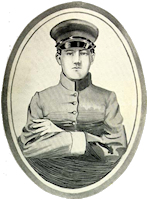
(Note: picture is of an unidentified Confederate soldier.)

0 comments

“…we are 43 miles from Charleston on the C. & Beaufort road.”–Army Life of an Illinois Soldier, Charles Wright Wills.

Army Life of an Illinois Soldier, Charles Wright Wills, (8th Illinois Infantry)

Near Pocataligo, S. C., January 27, 1865.

Moved out at 7 a.m. this morning, crossed Broad river on pontoons, and are about four miles on the main land towards Charleston. Can’t tell our position, but here the Rebels hold all the crossings on the opposite side of the river six miles ahead and so far as reconnoitered, with fortifications and artillery.

The 17th Corps lay to our left extending across the C. & S. R. R. We made about 13 miles to-day. Saw some fine plantations on the road, nothing but chimneys in them, though. It feels good and homelike once more to be out loose. The boys all feel it and they act more like schoolboys, having a holiday, than the veterans they are. Wouldn’t it be a joke if we were to get badly whipped over this river? I believe it would do us good. We are too conceited. The river ahead is the Combahee, and we are 43 miles from Charleston on the C. & Beaufort road.

0 comments

War Diary of Luman Harris Tenney.

War Diary of Luman Harris Tenney.

27th. Friday. Chess with Laundon. Cold night. Clear.

0 comments

A Rebel War Clerk’s Diary

A Rebel War Clerk’s Diary at the Confederate States Capital, By John Beauchamp Jones
A likeness of Jones when he was editor and majority owner of the Daily Madisonian during President John Tyler’s administration.

January 27th.–Clear, and coldest morning of the winter. None but the rich speculators and quartermaster and commissary peculators have a supply of food and fuel. Much suffering exists in the city; and prices are indeed fabulous, notwithstanding the efforts of the Secretary of the Treasury and the press to bring down the premium on gold. Many fear the high members of the government have turned brokers and speculators, and are robbing the country–making friends of the mammon of unrighteousness, against the day of wrath which they see approaching. The idea that Confederate States notes are improving in value, when every commodity, even wood and coal, daily increases in price, is very absurd!

The iron-clad fleet returned, without accomplishing anything– losing one gun-boat and having some fifteen killed and wounded. The lower house of Congress failed yesterday to pass the Midshipman bill over the President’s veto–though a majority was against the President.

It is said, and published in the papers, that Mrs. Davis threw her arms around Mr. Blair and embraced him. This, too, is injurious to the President.

My wood-house was broken into last night, and two (of the nine) sticks of wood taken. Wood is selling at $5 a stick this cold morning; mercury at zero.

A broker told me that he had an order (from government) to sell gold at $35 for $1. But that is not the market price. [continue reading…]

0 comments

Downing’s Civil War Diary.—Alexander G. Downing.

Diary of Alexander G. Downing; Company E, Eleventh Iowa Infantry

Friday, 27th–We are still on duty at the old fort, and everything is going well. The trains have now quit going to Beaufort and we expect to receive orders to leave soon.

0 comments

Robert M. McGill

Robert M. Magill – Personal Reminiscences of a Confederate Soldier Boy, 39th Georgia Regiment of Infantry

Friday, 27th.—About 8 A. M., we were on train and started for Columbus, Ga. We had set Opelika as the place we would leave the train for home. There was no secret about it. It was the general talk, and at least half said they were coming. We talked to our officers, and some of them would have come had they not been officers. Reuben Harris had a new pair of shoes. The lieutenant in command said, “Reub, you are going home, where you can get more shoes; please give me these; I need them.” And he did and bade him good-bye. Train stalled about mile below Opelika, and as we were considering whether we had best not get off then, some of Company H came by, and that decided us; so we got off. Just then the train moved off, and we counted noses and had twenty-four—eight of Company F, eleven of Company H, one of Company E and four of 56th Georgia. We took the direction as best we could, and marched seven miles, and laid down and rested without any fires.


(Note: picture is of an unidentified Confederate soldier.)

0 comments

“…we all think Charleston is the objective point.”–Army Life of an Illinois Soldier, Charles Wright Wills.

Army Life of an Illinois Soldier, Charles Wright Wills, (8th Illinois Infantry)

Near Beaufort, S. C., January 26, 1865.

We have had heavy rains and now very cold weather without being in the least prepared for it. We move tomorrow at 7 a.m. for the main land and forage.

All tents are to be left behind “until they can be forwarded by water.” That seems to point to a short and sharp campaign, and we all think Charleston is the objective point.

0 comments

War Diary of Luman Harris Tenney.

War Diary of Luman Harris Tenney.

26th. Thursday. Relieved by 1st Conn. Cold, some chess.

0 comments

A Rebel War Clerk’s Diary

A Rebel War Clerk’s Diary at the Confederate States Capital, By John Beauchamp Jones
A likeness of Jones when he was editor and majority owner of the Daily Madisonian during President John Tyler’s administration.

January 26th.–Clear and cold. No further news from the iron-clad fleet that went down the river.

Beef is selling at $8 per pound this morning; wood at $150 per cord. Major Maynard, instead of bringing 120, gets in but 30 or 40 cords per day. I am out of wood, and must do my little cooking in the parlor with the coal in the grate. This is famine!

Congress passed a bill a few days ago increasing the number of midshipmen, and allowing themselves to appoint a large proportion of them. Yesterday the President vetoed the bill, he alone, by the Constitution, being authorized to make all appointments. But the Senate immediately repassed it over the veto–only three votes in the negative. Thus the war progresses! And Mr. Hunter was one of the three.

The President, in reply to a committee of the State Legislature, says Gen. Lee has always refused to accept the command of all the armies unless he could relinquish the immediate command of the Army of Northern Virginia defending the capital; and that he is and ever has been willing to bestow larger powers on Gen. Lee; but he would not accept them.

This makes me doubt whether the President has signed the bill creating a commander-in-chief. [continue reading…]

0 comments