“…Sherman told Wood we were four days ahead of time..,”–Army Life of an Illinois Soldier, Charles Wright Wills.

Army Life of an Illinois Soldier, Charles Wright Wills, (8th Illinois Infantry)

Twelve miles south of Johnston’s Summit,
Augusta and Branchville Railroad,
February 5, 1865.

They call the stations on this road “turnouts.” Negroes are swarming into our camps. I never heard a negro use the word “buckra” until last night. One of the 97th Indiana was killed this morning while foraging close to camp. Our men killed two and captured four Johnnies, all dressed in our clothing. Only moved four miles to-day, and will probably lay here a few days as Sherman told Wood we were four days ahead of time, he having counted it would take that long to effect a crossing at Buford’s bridge.

0 comments

A Rebel War Clerk’s Diary

A Rebel War Clerk’s Diary at the Confederate States Capital, By John Beauchamp Jones
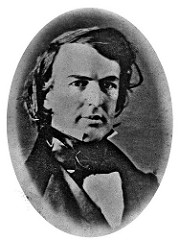
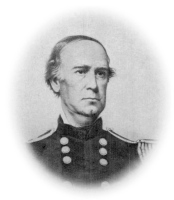
A likeness of Jones when he was editor and majority owner of the Daily Madisonian during President John Tyler’s administration.

February 5th.–Clear and cold. Our commissioners are back again! It is said Lincoln and Seward met them at Fortress Monroe, and they proceeded no further. No basis of negotiation but reconstruction could be listened to by the Federal authorities. How could it be otherwise, when their armies are marching without resistance from one triumph to another–while the government “allows” as many emissaries as choose to pass into the enemy’s country, with the most solemn assurances that the Union cause is spreading throughout the South with great rapidity–while the President is incapacitated both mentally and physically by disease, disaster, and an inflexible defiance of his opponents–and while Congress wastes its time in discussions on the adoption of a flag for future generations!

This fruitless mission, I apprehend, will be fraught with evil, unless the career of Sherman be checked; and in that event the Battle for Richmond, and Virginia, and the Confederacy, will occur within a few months–perhaps weeks. The sooner the better for us, as delay will only serve to organize the Union party sure to spring up; for many of the people are not only weary of the war, but they have no longer any faith in the President, his cabinet, Congress, the commissaries, quartermasters, enrolling officers, and most of the generals.

Judge Campbell was closeted for hours last night with Mr. Secretary Seddon at the department. I have not recently seen Mr. Hunter.

We have news from the Eastern Shore of Virginia. My wife’s aunt, Miss Sally Parsons, is dead–over 90 years of age. The slaves are free, but remain with their owners–on wages. The people are prosperous, getting fine prices for abundant crops. Only a few hundred Federal troops are in the two counties; but these, under the despotic orders of Butler, levy heavy “war contributions” from the unoffending farmers.

0 comments

Robert M. McGill

Robert M. Magill – Personal Reminiscences of a Confederate Soldier Boy, 39th Georgia Regiment of Infantry

February 5th.—Arrived at home very unexpectedly to all, about 9 P. M. after having marched nine days and over a distance of about two hundred miles.

The weather was freezing cold during our two-hundred mile homeward march. The shoes I had drawn from Confederate States Government were so short I could not bear my feet in them, and so pressed down the vamps and tying the quarters over the instep, my feet, with very thin socks, were exposed on top of the shoe vamps. Result, my big toes were so frozen that soon the nails came off.

Remained at home until the 7th. Reported at Tunnel Hill; was sent to Chattanooga. Brother J. H. Magill came and got us set at liberty, Brother Tom and myself, by our taking the Amnesty Oath. Brother J. H. bought us a nice suit of clothes each and gave us government contract to put cord wood on Eastern Tennessee, Virginia and Georgia Railroad at Chickamauga Junction. So we went to work for the Government, and continued until 1st of July, when the job played out, and we returned home. During this time all the Rebel armies had surrendered, and all was quiet. In July I made a visit to relatives in East Tennessee. Since that time I have been at home. While in the army I marched 3,320 miles; and travelled on railroad trains, 2,280 miles; total, 5,600 miles.

R. M. Magill


(Note: picture is of an unidentified Confederate soldier.)

0 comments

Downing’s Civil War Diary.—Alexander G. Downing.

Diary of Alexander G. Downing; Company E, Eleventh Iowa Infantry

Saturday, 4th–We remained in line of battle all night, not being allowed to build any fires. This morning we moved out about two miles nearer the upper bridge, the rebels having left the vicinity during the night. We remained here, fortifying the bridge. Our teams and batteries came across the bridge this morning. General Mower’s division lost several men here at the bridge yesterday morning about the time that we were crossing below.[1]


[1] There was a concerted move by the Union army all along the line. –Ed.

0 comments

“…the ‘Army of the Cumberland’ is a very heavy army, sir.”–Army Life of an Illinois Soldier, Charles Wright Wills.

Army Life of an Illinois Soldier, Charles Wright Wills, (8th Illinois Infantry)

Buford’s Bridge, north side Salkehatchie River,
February 4, 1865.

Most unaccountably, to me, the Rebels evacuated an impregnable position (if there is such a thing), and our brigade was saved thereby from making some more history, for which I am grateful. A straight pike or causeway three quarters of a mile long and in which there are 24 bridges, was our only chance of crossing. They had strong embrasured works, but left an hour before our adance reached their fortifications. We got a lot of good horses and more good forage than I ever before saw brought in. I am sure that we have either a nice ham or shoulder for every two men in the regiment, and I think, more. A Company B boy got a good strong horse which he let me have. People here say that the Rebels have all gone to Branchville. Colonel Catterson told Sherman (he was in our camp some time to-night) that a negro reported that the Rebels had all gone to Branchville. “Pap” replied, “They can go to Branchville and be d____d.” We infer from that, that we don’t go there. He also said to Catterson, who was superintending the bridge building, “Build them strong, Catterson, build them strong; the whole army may have to pass over them, and the ‘Army of the Cumberland’ is a very heavy army, sir.” Besides the little slur on the 14th and 20th, that gave us an idea of the whereabouts of the left wing.

I just now heard what made the Rebels evacuate this. Mowers’ Division of the 17th formed line and marched across this stream and swamp eight miles below at River Bridge. They waded through three miles of water and then took the Rebel works with a loss to us of only 12 killed and 72 wounded. I think that beats anything I ever heard of in the show line. There was a town of 20 or 25 houses here, but we have used it up in building bridges.

0 comments

A Rebel War Clerk’s Diary

A Rebel War Clerk’s Diary at the Confederate States Capital, By John Beauchamp Jones
A likeness of Jones when he was editor and majority owner of the Daily Madisonian during President John Tyler’s administration.

February 4th.–Clear, but rained last night. From the South we learn that Sherman is marching on Branchville, and that Beauregard is at Augusta.

The great struggle will be in Virginia, south of Richmond, and both sides will gather up their forces for that event. We can probably get men enough, if we can feed them.

The City Council is having green “old field pine” wood brought in on the Fredericksburg railroad, to sell to citizens at $80 per cord–a speculation.

The Quartermaster’s Department is also bringing in large quantities of wood, costing the government about $40 per cord. Prior to the 1st inst., the Quartermaster’s Department commuted officer’s (themselves) allowance of wood at $130 per cord!

The President still suffers, but is said to be “better.”

Yesterday much of the day was consumed by Congress in displaying a new flag for the Confederacy–before the old one is worn out! Idiots! [continue reading…]

0 comments

0

Louise Wigfall Wright — A Southern Girl in ’61

“C. S. SENATE CHAMBER,
“4th February, 1865.

“GENL. R. E. LEE.
“Sir: The undersigned beg leave earnestly but respectfully to recommend the assignment of Genl. Joseph E. Johnston to the command of the troops lately composing the Army of Tennessee. We are induced to make this suggestion by information derived from such sources as to leave us no room to doubt its correctness, that the Army referred to is seriously disorganized, and that the surest, if not the only means of effecting its speedy reorganization, and of restoring its discipline and efficiency in time for the approaching campaign, will be the immediate return of its former commander, whose assignment to that position is universally desired by the Officers and Soldiers of that Army. We are further persuaded that among the people of those important and principal States of the Confederacy which have looked to the Army of Tennessee as furnishing their chief defence against the forces with which the enemy is seeking to overcome them, the desire is not only general, but intense, that the principal Army designed for their protection should be placed under the command of Genl. Johnston. And we are convinced that the gratification of their wishes on this point would materially assist in dissipating the feeling of despondency which undoubtedly prevails to a considerable extent in those States, and do much towards restoring public confidence and reanimating the hopes and courage of the people.

“In making this suggestion to you, we assume that under the recent Act, by virtue of which, you have been appointed General in Chief of the Armies of the Confederate States, the right and duty of assigning the General Officers to command our different Armies, are devolved upon you. Such we believe was the intention of Congress in passing the Act, and such we trust will be its practical construction.

“In conclusion we beg leave to assure you that in recommending the assignment of Genl. Johnston to the command in question, we have been influenced by an imperative sense of duty, and by a firm conviction that what we have advised, would be promotive of the public good, if indeed it be not essential to the public safety.

“With high respect,
“Your obdt. Servants,
“R. H. Walker, Ala.
A. T. Caperton, Va.
Landon C. Haynes, Ten.
Waldo P. Johnson, Mo.
A. H. Garland, Ark.
Jos. C. Watson, Miss.
H. C. Burnett, Ken.
James L. Orr, So. Ca.
Geo. G. Vest, Mo.
W. E. Simms, Ken.
W. A. Graham, No. Ca.
W. S. Oldham, Texas.
Wm. T. Dortch, No. Ca.
A. G. Brown, Miss.
Louis T. Wigfall, Texas.”

        “Without committing myself to all the reasons set forth in the foregoing paper, I cordially endorse the recommendation in it for the assignment of Genl. Johnston to the position requested.

“ALEXANDER H. STEPHENS,

“V. P. C. S. A.

“I concur in the foregoing recommendation, not agreeing however, to the view expressed in the paragraph next preceding the last.

“A. E. MAXWELL, Flo.
“JAS. M. BAKER, Flo.

“Official.
“W. H. Taylor,
“A. A. G.”

0 comments

Downing’s Civil War Diary.—Alexander G. Downing.

Diary of Alexander G. Downing; Company E, Eleventh Iowa Infantry

Friday, 3d–It rained quietly nearly all day, and we remained in camp until 1 p. m., when we received marching orders. Our division under General Giles E. Smith then made ready to wade and swim the river midway between the two bridges. The river is one and one-fourth miles wide, having at least one hundred and thirty-three different channels or branches, from two to four feet deep. It took us an hour and a half to cross over, General Smith leading on foot, for no horse could go across. We were not allowed to talk or let our accouterments make any noise. We found the rebel pickets on the opposite side, but they fired only a single shot each and made for tall timber. We remained here on guard. The First and Third Divisions crossed the river above us and also drove in the rebel pickets.[1] Our teams and batteries were left in the rear.


[1] Our division, after successfully crossing the river, effected a lodgment on the main Charleston road just before the arrival of eight regiments which had been sent up to make good the enemy’s position at this bridge.—A. G. D.

0 comments

War Diary of Luman Harris Tenney.

War Diary of Luman Harris Tenney.

3rd. Friday. Brigade Officer of the Day. Rode around the line with A. B., Div. Officer of the Day. Stormy day. Deserters came in.

0 comments

“We expect to reach Buford’s bridge on the Salkehatchie, to-morrow.”–Army Life of an Illinois Soldier, Charles Wright Wills.

Army Life of an Illinois Soldier, Charles Wright Wills, (8th Illinois Infantry)

Baren’s Mills, S. C.,
February 3, 1865.

Fifteen miles to-day. The 17th is having some pretty lively firing on our right. At a house I stopped at to-day a “cit” told me we were 95 miles from Charleston, 65 from Augusta, and 33 from Branchville. That is as near as I can tell you where we are. We expect to reach Buford’s bridge on the Salkehatchie, to-morrow. The Rebels have fortified there, I hear. Our brigade has the advance, and fun to-morrow, if there is any. It has rained since 12 last night.

0 comments

A Rebel War Clerk’s Diary

A Rebel War Clerk’s Diary at the Confederate States Capital, By John Beauchamp Jones
A likeness of Jones when he was editor and majority owner of the Daily Madisonian during President John Tyler’s administration.

February 3d.–The report that the United States Government had appointed commissioners to meet ours is contradicted. On the contrary, it is believed that Gen. Grant has been reinforced by 30,000 men from Tennessee; and that we shall soon hear thunder in Richmond.

Gen. Lee writes urgently in behalf of Major Tannahill’s traffic for supplies, in Northeastern North Carolina and Southeastern Virginia, for the army. Large amounts of commissary stores are obtained in exchange for cotton, tobacco, etc; but the traffic is in danger of being broken up by the efforts of bureau officials and civilian speculators to participate in it–among them he mentions Major Brower (Commissary-General’s office, and formerly a clerk)–and asks such orders as will be likely to avert the danger. The traffic is with the enemy; but if conducted under the exclusive control of Gen. Lee, it would be of vast benefit to the army.

The House of Representatives yesterday passed a singular compensation bill, benefiting two disbursing clerks and others already rich enough. I have written a note to Senator Johnson, of Missouri, hoping to head it off there, or to so amend it as to make it equable and just. All the paths of error lead to destruction; and every one seems inclined to be pressing therein. [continue reading…]

0 comments

Downing’s Civil War Diary.—Alexander G. Downing.

Diary of Alexander G. Downing; Company E, Eleventh Iowa Infantry

Thursday, 2d–This is a beautiful morning and we started early on our march. We had better roads than yesterday, on higher ground, and covered thirteen miles. We drove the rebels forward all day, doing some lively skirmishing in the front. The rebels have all crossed the Salkehatchie river, but have possession of the two bridges about eight miles apart. We went into camp near the river. We lost some good officers and brave men in the skirmishing today. It makes one sorrowful to think that they have to be buried here in this God-forsaken swamp country.

0 comments

War Diary of Luman Harris Tenney.

War Diary of Luman Harris Tenney.

2nd. Several furloughs came back. Boys happy. Am almost homesick, but put on as good a face as possible. Who knoweth the heart?

0 comments

“Our boys captured several and killed three. Only made six miles.”–Army Life of an Illinois Soldier, Charles Wright Wills.

Army Life of an Illinois Soldier, Charles Wright Wills, (8th Illinois Infantry)

February 2, 1865.

The advance started at daylight, but we are the rear guard of the corps and will not get off before 4 p.m. We have no idea of our destination, but are now traveling the Augusta road.

The country is very level, but every mile or so there is a little swale or depression of but a few feet, and before a hundred wagons pass over it thorough corduroying is necessary. The foragers had sharp fighting for what they got to-day. We had two captured, Billy Haller and a 40th boy. Our boys captured several and killed three. Only made six miles.

0 comments

A Rebel War Clerk’s Diary

A Rebel War Clerk’s Diary at the Confederate States Capital, By John Beauchamp Jones
A likeness of Jones when he was editor and majority owner of the Daily Madisonian during President John Tyler’s administration.

February 2d. – Bright and beautiful, and pleasantly frosty. Gen. Sherman is advancing as usual in such dubiety as to distract Gen. Hardee, who knows not whether Branchville or Augusta is his objective point. I suppose Sherman will be successful in cutting our communications with the South–and in depreciating Confederate States Treasury notes still more, in spite of Mr. Trenholm’s spasmodic efforts to depreciate gold.

Yesterday the Senate passed a bill dropping all commissaries and quartermasters not in the field, and not in the bureaus in Richmond, and appointing agents instead, over 45 years of age. This will make a great fluttering, but the Richmond rascals will probably escape.

Military men here consider Augusta in danger; of course it is! How could it be otherwise?

Information from the United States shows that an effort to obtain “peace” will certainly be made. President Lincoln has appointed ex-Presidents Fillmore and Pierce and Hon. S. P. Chase, commissioners, to treat with ours. The two first are avowed “peace men;” and may God grant that their endeavors may prove successful! Such is the newspaper information.

A kind Providence watches over my family. The disbursing clerk is paying us “half salaries” to-day, as suggested in a note I wrote the Secretary yesterday. And Mr. Price informs me that the flour (Capt. Warner’s) so long held at Greensborough has arrived! I shall get my barrel. It cost originally $150; but subsequent expenses may make it cost me, perhaps, $300. The market price is from $800 to $1000. I bought also of Mr. Price one-half bushel of red or “cow-peas” for $30; the market price being $30 per bushel. And Major Maynard says I shall have a load of government wood in a few days!

0 comments

Downing’s Civil War Diary.—Alexander G. Downing.

Diary of Alexander G. Downing; Company E, Eleventh Iowa Infantry

Wednesday, 1st–We left camp early this morning for the grand raid through South Carolina, under the command of General Sherman. But our march will not be an easy one, for the rebels will do their best to hold us in check. There are one hundred thousand men within a radius of twenty miles, and there’s no telling how the campaign will end or who will be left dead or mortally wounded upon the field without a friend near. Cannon began booming in less than an hour, but we had no losses today. We moved foward about eight miles through Whiffy Swamp, driving the rebels all the way. On account of the bad road we had to travel, our division could not keep up with the rest of the corps, but went into camp about four miles in the rear. The Fifteenth Corps came up on our left to Hicky Hill, making a march of twenty miles.

0 comments

0

Civil War Diary of Charles H. Lynch, 18th Conn. Vol’s.
Charles Lynch

February 1st. The Christian Commission, with headquarters at Harper’s Ferry, furnish the chapel tent with pens, ink, paper, books, magazines, and newspapers. Our duty remains about the same from day to day. All is quiet these days. Occasionally we have a visitor from Connecticut. Always pleased to meet and welcome them.

0 comments

War Diary of Luman Harris Tenney.

War Diary of Luman Harris Tenney.

1st. Wednesday. Grand Cavalry review. Raw day. Grand sight. Whole corps. Lady with Gen. Sheridan. Passed through Winchester.

0 comments

“Sherman rode at the rear of our regiment all day and was quite sociable with some of the men.”–Army Life of an Illinois Soldier, Charles Wright Wills.

Army Life of an Illinois Soldier, Charles Wright Wills, (8th Illinois Infantry)

Hickory Hill, S. C.,
February 1, 1865.

Fifteen miles to-day and had an excellent supper of South Carolina ham, honey and sweet potatoes. Found a good deal of road blockaded to-day, but the pioneers removed the obstructions so rapidly that the train did not have to halt once. The Rebels disputed our advance a little, killed a cavalryman and wounded another for us, but did not stop the column a moment. Sherman rode at the rear of our regiment all day and was quite sociable with some of the men. Don’t think any of the officers noticed him. Miserable pine land country, but some quite large plantations.

0 comments

A Rebel War Clerk’s Diary

A Rebel War Clerk’s Diary at the Confederate States Capital, By John Beauchamp Jones
A likeness of Jones when he was editor and majority owner of the Daily Madisonian during President John Tyler’s administration.

February 1st.–Clear and pleasant; subsequently thawing and foggy. Gen. R. E. Lee has been appointed General-in-Chief by the President, in response to the recent action of Congress and the clamorous demands of the people. It is to be hoped he will, nevertheless, remain in person at the head of the Army of Virginia, else the change may be fraught with disaster, and then his popularity will vanish! He has not been fortunate when not present with the troops under his command, as evidenced by Early’s defeat and Jones’s disaster in the Valley last year. A general must continue to reap successes if he retains his popularity.

Gen. Lee has called upon the people everywhere to send in any cavalry arms and equipments in their possession–the importation being stopped.

The report of a raid yesterday, grew out of the return to the city of a small body of our own cavalry that had been on detached service. Quite an alarm was raised!

The President was better yesterday; it is neuralgia in the right shoulder, disabling his arm.

Our “commissioners” were delayed until yesterday morning at Petersburg; during which there was a sort of truce, and the troops of the opposing fortifications ventured out, both sides cheering vociferously.

Gen. Lee writes that his army is suffering for want of soap. The Secretary sends the letter to Commissary-General Northrop (neither of their successors being inducted yet) for “prompt attention.” The Commissary-General sends it back, saying 800 barrels of soap are now, and have been for months, lying at Charlotte, N. C., awaiting transportation! The speculators get from Charlotte that much freight every week. The Commissary-General says 800 barrels of soap ought to last Gen. Lee’s army one month. It must be a large army to consume that amount of soap in a month.

Yesterday Congress passed another bill over the President’s veto, to allow soldiers to receive letters, etc. free. Thus the war progresses between the executive and the legislative branches of the government.

In future revolutions, never let a “permanent government” be established until independence is achieved!

0 comments

Downing’s Civil War Diary.—Alexander G. Downing.

Diary of Alexander G. Downing; Company E, Eleventh Iowa Infantry

Tuesday, 31st–We remained in bivouac all day and have heard no news. We drew some clothing today. Our camp is located about thirty miles northwest of Beaufort. The country is very level and heavily timbered, chiefly with pine. It is thinly settled and the farms are small with nothing of consequence raised on them. The people are poor, the women and children being left destitute, as the men have all gone off to the war.

0 comments

0

Civil War Diary of Charles H. Lynch, 18th Conn. Vol’s.
Charles Lynch

January 31st. When off duty read, write letters, wash and mend my clothes. Try to keep clean and in good condition. Do my part handling an axe. We use up a whole lot of wood during this extreme cold weather. Try to keep as comfortable as we can. All sorts of questions come up for discussion. The close of the war is the most important. All companies do much singing during the evening. There are some violins and banjos in camp.

0 comments

Army Life of an Illinois Soldier, Charles Wright Wills.

Army Life of an Illinois Soldier, Charles Wright Wills, (8th Illinois Infantry)

January 31, 1865.

Lay still all day. This place was a country summer resort. I was in a house to-day; the walls were rough boards white-washed, the floors were very rough, and I think had never been carpeted, yet the room was filled with mahogany furniture of the best quality, had a fine piano, splendid plate mirror, and a fine library. About 20 sets of buck horns were nailed to the walls in lines. Hear that the 17th Corps has crossed the Combahee. We hear that strict orders against burning and all foraging is to be done even more regularly than before.

0 comments

War Diary of Luman Harris Tenney.

War Diary of Luman Harris Tenney.

31st. Tuesday. Millard on picket. Read “Rob Roy,” “Lucile,” Harper’s. Drilled.

0 comments

A Rebel War Clerk’s Diary

A Rebel War Clerk’s Diary at the Confederate States Capital, By John Beauchamp Jones
A likeness of Jones when he was editor and majority owner of the Daily Madisonian during President John Tyler’s administration.

January 31st.–Bright and frosty.

The “peace commissioners” remained Sunday night at Petersburg, and proceeded on their way yesterday morning. As they passed our lines, our troops cheered them very heartily, and when they reached the enemy’s lines, they were cheered more vociferously than ever. Is not this an evidence of a mutual desire for peace?

Yesterday, Mr. De Jarnette, of Virginia, introduced in Congress a resolution intimating a disposition on the part of our government to unite with the United States in vindication of the “Monroe doctrine,” i.e. expulsion of monarchies established on this continent by European powers. This aims at France, and to aid our commissioners in their endeavors to divert the blows of the United States from us to France. The resolution was referred to the Committee on Foreign Relations.

If there be complication with France, the United States may accept our overtures of alliance, and our people and government will acquiesce, but it would soon grow an unpopular treaty. At this moment we are hard pressed, pushed to the wall, and prepared to catch at anything affording relief. We pant for a “breathing spell.” Sherman is advancing, but the conquest of territory and liberation of slaves, while they injure us, only embarrass the enemy, and add to their burdens. Now is the time for the United States to avert another year of slaughter and expense. [continue reading…]

0 comments