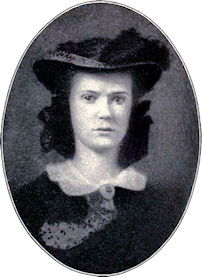
A Confederate Girl’s Diary

Civil War Day-by-Day

Clinton,
October 19th, Sunday.

What an unexpected change! I am surprised myself! Yesterday as the Baton Rouge party were about leaving, Miriam thought Lilly would be lonesome alone here with her sick baby, and decided that we should leave by the cars, and stay with her until mother returned. There was no time to lose; so dressing in haste, we persuaded Anna to accompany us, and in a few moments stood ready. We walked down to the overseer’s house to wait for the cars, and passed the time most agreeably in eating sugar-cane, having brought a little negro expressly to cut it for us and carry our carpet-bag. Three young ladies, who expected to be gone from Saturday until Wednesday, having but one carpet-bag between them! Can it be credited? But, then, we knew we had clothes here, and depended upon them for supplies, when we now find they are in the trunk and mother has the key.

We walked aboard alone, in the crowded train, and found ourselves in the only car reserved for ladies, which was already filled with a large party returning from Port Hudson, consisting of the fastest set of girls that I have seen for some time. Anna and I had to content ourselves with a seat on a small box between the benches, while Miriam was established on the only vacant one, with a sick soldier lying at her feet. The fast girls talked as loud as possible and laughed in a corresponding style in spite of the sick man. They must have been on a picnic, from the way they talked. One in a short dress complained that she had not seen her sweetheart. A pert little miss of thirteen cried, “You can bet your head I never went to any place where I did not see one of my sweethearts.” One of about seventeen, a perfect beauty, declared she would die of thirst. “So will I! and I don’t want to die before I get a husband!” exclaimed her vis-á-vis. They evidently expected to produce an impression on us. At every “brilliant” remark (“stupid” understood), they looked at us to see what we thought. All of them sat with bare heads in the strong light, an unfailing proof of la basse classe on steamers and cars. Every time my veil blew aside, they made no difficulty about scanning my features as though they thought it might be agreeable. [continue reading…]
0 comments

Downing’s Civil War Diary.–Alexander G. Downing.

Diary of Alexander G. Downing; Company E, Eleventh Iowa Infantry

Sunday, 19th–Nothing of importance. This is our first Sunday in a quiet camp for more than two months. We had company inspection this morning and dress parade at 5 o’clock in the evening.

0 comments

War Diary of Luman Harris Tenney.

War Diary of Luman Harris Tenney.

Sunday, 19th. Fed when out two or three miles. Got some apples. When we reached Heron’s division, I called at his quarters and inquired if he could give the Capt. any information. Very pleasant. Stylish. A fur coverlet, neat stove and desk, cigars and very fine dress. Said that the rebel pickets were within a third of a mile of ours the night before. Wouldn’t pass his pickets, hardly advisable, do as he thought fit. Went through to the town, 100 of our Indians there. Called at two houses and had very pleasant and spicy chats with two girls, one pleasant lady. Southern officers left their “regards” for any “Feds” that might call. Believed the south right. Would fight if a man. Got back to camp at dark and found good letter from home and Fannie. Pleased with the whole trip and incidents. Quite a laugh with the captain. Like Arkansas first rate considering–good farms and orchards–pretty girls.

0 comments

“I felt to-day as though I were at my old trade—destroying the railroad—which I was at eighteen months ago.”–Letters from Elisha Franklin Paxton.

Elisha Franklin Paxton – Letters from camp and field while an officer in the Confederate Army

Martinsburg, October 19, 1862.

I have spent a busy Sunday, superintending the destruction of the railroad here, and will spend what little remains of the day in writing you a short note. It is a bad chance for a letter, as I write on my pocket-book resting on my knee. I received your letter of the 9th ult., and was glad to hear from you. I felt to-day as though I were at my old trade–destroying the railroad–which I was at eighteen months ago. Last week we thought there was a chance for another battle, as it was reported the enemy was advancing. But it turned out to be only a scouting party. With that exception, we have had a very quiet time.

0 comments

A Confederate Girl’s Diary

Civil War Day-by-Day

October 18th, Saturday.

Last night mother arrived from Clinton with Gibbes and Lydia, who had gone there the day before to get her to go to Baton Rouge.

0 comments

Downing’s Civil War Diary.–Alexander G. Downing.

Diary of Alexander G. Downing; Company E, Eleventh Iowa Infantry

Saturday, 18th–It is reported that General Bragg is marching on this place.[1] Colonel Hare has not been with us for some time and will not be with us again. We have just learned that he resigned his commission on August 31st, on account of the wound which he received at the battle of Shiloh. He was respected by all the men of the regiment, and we are sorry to lose him.


[1] This was one of those mere rumors, for we know by history that General Bragg was not around there at the time.—A. G. D.

0 comments

War Diary of Luman Harris Tenney.

War Diary of Luman Harris Tenney.

Saturday, 18th. Lay about two or three hours, then went into camp on the rise near the spring. Marks of a large rebel camp. At noon orders came for the Capt. to go with 50 men to Bentonville, to learn locality and number of the enemy. I went. Started about dusk. Called at a house to know distance. Two or three girls. Looked like a cousin. Shattuck with advance guard two miles ahead. Boys said he was a coward, rode way behind the men. Halted and fed. Heard artillery moving. Capt. ordered me to take four men and guide and learn what it was. It sounded as though it were moving from the southwest. After going a mile or two, we were halted by a picket, close at hand. Ordered one to advance, dismount, and give the countersign. Dared not risk it. Asked who they were. “Federals.” Asked who we were. “Federals.” “Advance then.” What division did they belong to? Gen. Heron’s. Never heard of him. What brigade? Would not tell. Ordered them to tell or would march my battalion on them. Didn’t care a damn, advance or he would fire. Advanced horseback, a couple of rods. Ordered to dismount or he would shoot. Couldn’t see it and shied behind a tree. Told him to listen and I would give the countersign–”Allen.” “What! Allennever! that won’t do here.” Did you understand it, “Allen”? Bang, bang, bang, bang. Boys wheeled and ran. I had sent two back to report to the captain. I wheeled and got behind another tree a rod back. Cocked my revolver and fired once, then wheeled and ran. The bullets followed mighty thick. Met the command and reported the facts. One of the boy’s horses was shot in the leg and abandoned. Capt. turned back and went back the same road to camp. Capt. discovered he had given me the “parole” instead of countersign, a mistake that would not happen again for an age, but one that might have caused a great deal of trouble. Started for Bentonville on another road. Slept two hours. N. had cautioned me to be very careful and not approach any force but to learn from families. Proved to be our men–Heron’s.

0 comments

Robert M. McGill

Robert M. Magill – Personal Reminiscences of a Confederate Soldier Boy, 39th Georgia Regiment of Infantry

Saturday, 18th.—Ordered into line this morning and roll called. Ordered by Colonel McConnel to remain standing in line one hour for not being prompt to get into line. Boys pretty mad. Orders to remain here all day. 12 o’clock, ordered to move forward; passed Loudon at sundown; camped at old camping-ground at Laurel Bridge.


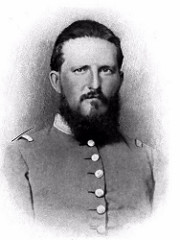
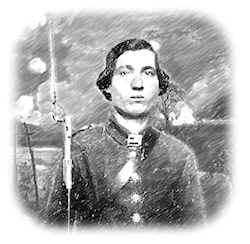
(Note: picture is of an unidentified Confederate soldier.)

0 comments

Rebel War Clerk

Civil War Day-by-Day
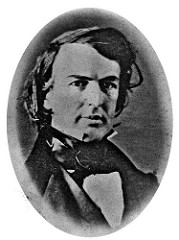
A likeness of Jones when he was editor and majority owner of the Daily Madisonian during President John Tyler’s administration.

OCTOBER 18th.—Major-Gen. Jones telegraphs from Knoxville, Tenn., that a wounded officer arrived from Kentucky, reports a victory for Bragg, and that he has taken over 10,000 prisoners. We shall soon have positive news.

A letter from Admiral Buchanan states that he has inspected the defenses of Mobile, and finds them satisfactory.

I traversed the markets this morning, and was gratified to find the greatest profusion of all kinds of meats, vegetables, fruits, poultry, butter, eggs, etc. But the prices are enormously high. If the army be kept away, it seems the supply must soon be greater than the demand. Potatoes at $5 per bushel, and a large crop! Half-grown chickens at $1 each! Butter at $1.25 per pound! And other things in the same proportion.

Here is a most startling matter. Gov. Baylor, appointed Governor of Arizona, sent an order some time since to a military commander to assemble the Apaches, under pretense of a treaty—and when they came, to kill every man of them, and sell their children to pay for the whisky. This order was sent to the Secretary, who referred it to Gen. Sibley, of that Territory, to ascertain if it were genuine. To-day it came back from Gen. S. indorsed a true bill. Now it will go to the President—and we shall see what will follow. He cannot sanction such a perfidious crime. I predict he will make Capt. Josselyn, his former private Secretary, and the present Secretary of the Territory, Governor in place of Baylor.

0 comments

Downing’s Civil War Diary.–Alexander G. Downing.

Diary of Alexander G. Downing; Company E, Eleventh Iowa Infantry

Friday, 17th–Everybody is now busy in the routine duties of camp life. The Government is having some deep wells drilled here in our camp; one of them is now completed and we are enjoying plenty of good water, although it is quite a job to draw it. We draw the water by means of a bucket attached to the end of a rope which runs upon a pulley fastened upon a tall pine tree standing near the well. The bucket is about four feet long and has a valve in the bottom. There are always some of the men at the well waiting for their turn to draw water.

0 comments

War Diary of Luman Harris Tenney.

War Diary of Luman Harris Tenney.

Friday, 17th. Aroused at 3 A. M. Killed a calf for breakfast. Quite a time trying to kill a pig. Marched at sunrise. Whole command gone from old camp. Rear guard. At noon arrived at Kritsville. Stayed till 10 P. M. Marched again at 10 and moved till near morning. Lay down a few minutes by a little fire. Before daybreak passed the Arkansas line, Elkhorn Tavern, and stopped for a cold lunch on the old Pea Ridge battle ground. Interesting–trees considerably marred by bullets. Shot, grape, and shell picked up by different boys as relics of the battle.

0 comments

Robert M. McGill

Robert M. Magill – Personal Reminiscences of a Confederate Soldier Boy, 39th Georgia Regiment of Infantry

Friday, 17th.—Woke up this morning; a hog had taken my haversack from under J. A. Park’s head and had eaten up all my bread. Regiment passed during the night; overtook at Rock Castle River; camped two miles farther on.


(Note: picture is of an unidentified Confederate soldier.)

0 comments

Rebel War Clerk

Civil War Day-by-Day
A likeness of Jones when he was editor and majority owner of the Daily Madisonian during President John Tyler’s administration.

OCTOBER 17th.—The article in the Whig is backed by one of a similar character in the Examiner. We shall see what effect they will have on the policy adopted by the Secretary of War.

Although still unofficial, we have confirmatory accounts of Bragg’s victory in Kentucky. The enemy lost, they say, 25,000 men. Western accounts are generally exaggerated.

The President has appointed the following lieutenant-generals: Jackson, Longstreet, (Bishop) Polk, Hardee, Pemberton, Holmes, and Smith (Kirby).

The raid of Stuart into Pennsylvania was a most brilliant affair. He captured and destroyed much public property—respecting that of individuals. The Abolitionists are much mortified, and were greatly frightened. The plan of this expedition was received at the department to-day—just as conceived and prepared by Lee, and it was executed by Stuart in a masterly manner.

Advices from Winchester inform the government that McClellan is receiving large reinforcements. He may be determined to cross the Potomac and offer battle—as nothing less will satisfy the rabid Abolitionists. Gen. Lee is tearing up the rails on the road from Harper’s Ferry.

Our improvident soldiers lose a great many muskets. We should not have arms enough on the Potomac, were it not for those captured at Harper’s Ferry. An order will be issued, making every man responsible for the safe-keeping of his gun.

0 comments

A Confederate Girl’s Diary

Civil War Day-by-Day

Thursday, October 16th.

It seems an age since I have opened this book. How the time has passed since, I have but a vague idea, beyond that it has passed very pleasantly. . . . Once since, I have been with Mrs. Badger to a Mr. Powell, who has started quite an extensive shoemaking establishment, in the vain attempt to get something to cover my naked feet. I am so much in need that I have been obliged to borrow Lydia’s shoes every time I have been out since she returned. This was my second visit there, and I have no greater satisfaction than I had at first. He got my measure, I got his promise, and that is the end of it, thus far. His son, a young man of about twenty-four, had the cap of his knee shot off at Baton Rouge. Ever since he has been lying on his couch, unable to stand; and the probability is that he will never stand again. Instead of going out to the manufactory, Mrs. Badger has each time stopped at the house to see his mother (who, by the way, kissed me and called me “Sissie,” to my great amusement) and there I have seen this poor young man. He seems so patient and resigned that it is really edifying to be with him. He is very communicative, too, and seems to enjoy company, no matter if he does say “her ‘n” and his ‘n.” Wonder why he does n’t say “shisen” too? The girls are highly amused at the description I give of my new acquaintance, but still more so at Mrs. Badger’s account of the friendship of this poor young cripple, and his enjoyment of my visits. Of course it is only her own version, as she is very fond of jokes of all kinds.

Night before last Lydia got playing the piano for me in the darkened parlor, and the old tunes from her dear little fingers sent me off in a sea of dreams! She too caught the vision, and launched off in well-remembered quadrille. The same scene flashed on us, and at each note, almost, we would recall a little circumstance, charming to us, but unintelligible to Anna, who occupied the other side. Together we talked over the dramatis persona. Mrs. Morgan, Jr., in dark blue silk with black flounces, a crimson chenille net on her black hair, sits at the piano in her own parlor. On the Brussels carpet stands, among others, Her Majesty, Queen Miriam, in a lilac silk, with bare neck and arms save for the protection afforded by a bertha of appliqué lace trimmed with pink ribbon, with hair á la madonna, and fastened low on her neck. Is she not handsome as she stands fronting the folding doors, her hand in tall Mr. Trezevant’s, just as she commences to dance, with, the tip of her black bottine just showing? Vis-á-vis stands pretty Sophie, with her large, graceful mouth smiling and showing her pretty teeth to the best advantage. A low neck and shortsleeved green and white poplin is her dress, while her black hair, combed off from her forehead carelessly, is caught by a comb at the back and falls in curls on her shoulders. A prettier picture could not be wished for, as she looks around with sparkling eyes, eager for the dance to begin. There stands calm Dena in snuff-colored silk, looking so [continue reading…]

0 comments

Downing’s Civil War Diary.–Alexander G. Downing.

Diary of Alexander G. Downing; Company E, Eleventh Iowa Infantry

Thursday, 16th–We have a beautiful camping ground; it is well situated on high ground which affords good drainage and in case of rain will dry off quickly. The weather is very warm and pleasant, with signs of autumn on every hand, and a northern autumn at that. We have warm days and cool nights, and the foliage of the forest is turning many different colors.

0 comments

War Diary of Luman Harris Tenney.

War Diary of Luman Harris Tenney.

Thursday, 16th. Spent the day reading various nonsensical books. Rather a lazy day on the whole. Capt. Nettleton returned. Whole detachment ordered to “Hazel Hollow” on picket duty. Six miles, advance guard. Slept in a vacant house. Quite a confab with a Kansas Lieut.

0 comments

Robert M. McGill

Robert M. Magill – Personal Reminiscences of a Confederate Soldier Boy, 39th Georgia Regiment of Infantry

Thursday, 16th.—Detail of fifteen more men this morning, rolling wagons up Big Hill. Two men killed last night by being accidentally thrown over bluff. Two more badly burned with powder. Were tearing up cartridges, and putting powder in canteen. Wagons ordered to Rock Castle River; think it very certain we are going back into Tennessee. Driving out great many cattle; left most of our cooking vessels at foot of Big Hill. Burning most of the tents. Heard good sermon by Chaplin Kramer; left camps at sundown; started up Big Hill at dark; being unwell, got permission to go ahead of regiment; got to top, 9 P. M. J. A. Park and I went on about two miles and lay down and went to sleep.


(Note: picture is of an unidentified Confederate soldier.)

0 comments

Rebel War Clerk

Civil War Day-by-Day
A likeness of Jones when he was editor and majority owner of the Daily Madisonian during President John Tyler’s administration.

OCTOBER 16th.—There is no confirmation of the reported victory in Kentucky.

An Englishman, who has been permitted to go North, publishes there a minute and pretty accurate description of our river defenses.

I have written a leading article for the Whig to-morrow, on “Martial Law and Passports.” My plan is to organize committees in all the border counties to examine the passports of strangers seeking egress from the country; and to permit loyal citizens, not desiring to pass our borders, or the lines of the armies, to travel without passports. An officer and a squad of soldiers at the depots can decide what soldiers are entitled to pass on the roads.

0 comments

Diary of a Southern Refugee, Judith White McGuire.

Diary of a Southern Refugee During the War by Judith White McGuire

Richmond, October 15th.—Yesterday morning my sister M., J. W., and myself, drove up from W. to the depot, seven miles, in a wagon, with four mules. It was a charming morning, and we had a delightful ride; took the accommodation cars at twelve and arrived here at two. We drove to the Exchange, and were delighted to find there our dear J. McI. And her little Bessie, on her way to W. to spend the winter. Poor thing, her lot is a sad one! She was excited by seeing us, and was more cheerful than I expected to see her; though she spoke constantly of her husband, and dwelt on her last days with him. She was in Memphis; her little Jemmie was excessively ill; she telegraphed for her husband in Arkansas. He came at once, and determined that it would be better to take the little boy to the house of his aunt in Louisiana, that J. might be with her sister. They took the boat, and after a few hours arrived at Mr. K’s house. The child grew gradually worse, and was dying, when a telegram came to General McIntosh from General Price, “Come at once—a battle is imminent.” He did not hesitate; the next steamer bore him from his dying child and sorrowing wife to the field of battle, Pea Ridge. He wrote to her, immediately on his arrival at camp, the most beautifully resigned letter, full of sorrow for her and for his child, but expressing the most noble, Christian sentiments. Oh, how she treasures it! The lovely boy died the day after his father left him! The mother said, “For a week H. and myself did nothing but decorate my little grave, and I took a melancholy pleasure in it; but darker days came, and I could not go even to that spot.” She dreamed, a few nights after little Jemmie’s death, of being at Fort Smith, her home before the war; standing on the balcony of her husband’s quarters, her attention was arrested by a procession—an officer’s funeral. As it passed under the balcony she called to a passer-by: “Whose funeral is that ?” “General McIntosh’s, madam.” She was at once aroused, and ran to her sister’s room in agony. She did what she could to comfort her, but the dream haunted her imagination. A few days afterwards she saw a servant ride into the yard, with a note for Mrs. K. Though no circumstance was more common, she at once exclaimed, “It is about my husband.” She did not know that the battle had taken place; but it was the fatal telegram. The soldiers carried his body to Fort Smith, and buried it there. To-morrow she returns, with her aunt, to W. She wishes to get to her mother’s home in Kentucky, but it is impossible for her to run the blockade with her baby, and there is no other way open to her.

0 comments

Downing’s Civil War Diary.–Alexander G. Downing.

Diary of Alexander G. Downing; Company E, Eleventh Iowa Infantry

Wednesday, 15th–We are once more getting settled in camp. Our duties are not as laborious as they were at Bolivar and Iuka. We have begun the building of forts and rifle-pits, close in, all around Corinth, so that a small force can hold the place. We are pulling down some of the vacant houses to make room for fortifications. But the fortifications will not be on as grand a scale as those built here during the summer. They will be smaller, too, than the fortifications which protected us during the battle here.

0 comments

War Diary of Luman Harris Tenney.

War Diary of Luman Harris Tenney.

Wednesday, 15th. Paymaster started for the fort–9th Kansas and 3rd Wis. escort–made the picket detail. Man wanted to buy salt at most any price–the article is very scarce.

0 comments

Robert M. McGill

Robert M. Magill – Personal Reminiscences of a Confederate Soldier Boy, 39th Georgia Regiment of Infantry

Wednesday, 15th.—Started at midnight, marching in direction of Big Hill; rather think we are leaving the State; halted within two miles of Big Hill; detail of fifteen men from Company F.


(Note: picture is of an unidentified Confederate soldier.)

0 comments

Rebel War Clerk

Civil War Day-by-Day
A likeness of Jones when he was editor and majority owner of the Daily Madisonian during President John Tyler’s administration.

OCTOBER 15th.—A young man showed me a passport to-day to return to Washington. It appears that Secretary Randolph has adopted another plan, which must be a rare stroke of genius. The printed passport is “by order of the Secretary of War,” and is signed by “J. H. Winder, Brig.-Gen.” But this is not all: on the back it is “approved–by order of Major-Gen. Gustavus W. Smith,” and signed by one of Smith’s “adjutants.” So the command of the Secretary of War is approved by the New Yorker, Smith, after being first manipulated by Winder. It is an improvement, at all events, on the late mode of sending out spies—they cannot get passports for bribes now, without Smith’s adjutant knowing something about it. Heretofore the “Plug Uglies” might take the bribe, and by their influence with Gen. Winder, obtain his signature to a blank passport.

The following was received yesterday :

..”WINCHESTER, VA., Oct. 14, 1862.

“HON. G. W. RANDOLPH.

“The cavalry expedition to Pennsylvania has returned safe. They passed through Mercersburg, Chambersburg, Emmetsburg, Liberty, New Market, Syattstown, and Burnesville. The expedition crossed the Potomac above Williamsport, and recrossed at White’s Ford, making the entire circuit, cutting the enemy’s communications, destroying arms, etc., and obtaining many recruits.

“R. E. LEE, General.”

..

Thus, Gen. Stuart has made another circle round the enemy’s army; and hitherto, every time he has done so, a grand battle followed. Let McClellan beware!

A letter, just received from Gen. Lee, says there is no apprehension of an immediate advance of McClellan’s army. This he has ascertained from his scouts sent out to obtain information. He says the enemy is in no condition to advance. Will they go into winter quarters? Or will Lee beat them up in their quarters?

But the government has desired Lee to fall back from the Potomac; and Lee, knowing best what he should do at present, declines the honor. He says he is now subsisting his army on what, if he retreated, would subsist the enemy, as he has but limited means of transportation. He says, moreover, that our cavalry about Culpepper and Manassas (belonging to the command of Gen. Gustavus W. Smith), should be more active and daring in dashing at the enemy; and then, a few weeks hence, McClellan would go into winter quarters. That would insure the safety of Richmond until spring.

There is a rumor, generally credited, that Bragg has led the enemy, in Kentucky, into an ambuscade, and slaughtered 25,000. A traveler from the West reports having read an account to this effect in the Louisville Journal. If the Journal really says so—that number won’t cover the loss. The Abolitionist journals are incorrigible liars. And, indeed, so are many of those who bring us news from the West.

0 comments

Downing’s Civil War Diary.–Alexander G. Downing.

Diary of Alexander G. Downing; Company E, Eleventh Iowa Infantry

Tuesday, 14th–No news of importance. We washed our clothes today. We have to haul our water about two miles, and it is poor at that. The horses and mules are taken by the men to water.

0 comments

Robert M. McGill

Robert M. Magill – Personal Reminiscences of a Confederate Soldier Boy, 39th Georgia Regiment of Infantry

14. Marched all night last night. Passed Bryanville at 2 A. M. Camp Dick Roberson at 2:30 A. M. Lancaster at 6 A. M. Marched eight miles, when we rested until midnight.


(Note: picture is of an unidentified Confederate soldier.)

0 comments