0

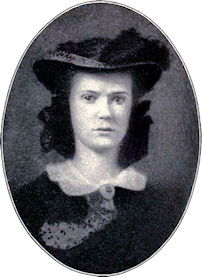
Louise Wigfall Wright — A Southern Girl in ’61
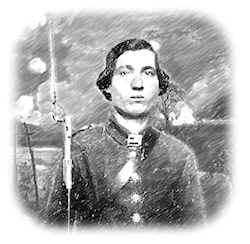
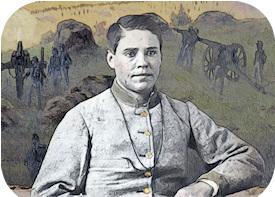
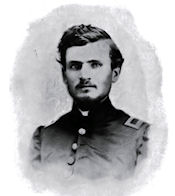
(Note: picture is of an unidentified Confederate soldier.)

(excerpts)

“I had a very pleasant visit to Rosser’s Camp where I spent the night. On my way down I met Genl. Stuart and stopped and had some conversation. He was in as high spirits as ever, and told me particularly to tell you, when I wrote, that in his recent raid into Pennsylvania he got nothing but ‘Apple butter’ and ‘Dry water.’ You know he is a ‘Total Abstinence Man’ in practice. The next day I rode down to Shepherdstown about eight miles from Camp with Rosser and through the town to the river bank (the Potomac) where our cavalry pickets are stationed. The Yankees who still picket entirely with infantry have their lines on the opposite bank. While I was in that neighborhood Jackson’s Corps, and McLaw’s Division from this Corps, were hard at work destroying the B.& O. R. R. They have also torn up the track of the road between Winchester and Harper’s Ferry and it will be a long time before these roads can be repaired. I put my last postage stamp on this letter and I understand there are none in Winchester.”


(Note: picture is of an unidentified Confederate soldier.)
0 comments

Rebel War Clerk

Civil War Day-by-Day
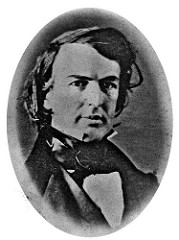
A likeness of Jones when he was editor and majority owner of the Daily Madisonian during President John Tyler’s administration.

OCTOBER 24th.—Bragg is in full retreat, leaving Kentucky, and racing for Chattanooga—the point of interest now. But Beauregard, from whom was taken the command of the Western army, day before yesterday repulsed with slaughter a large detachment of the Yankees that had penetrated to the Charleston and Savannah Railroad, Thus, in spite of the fantastic tricks of small men here, the popular general is destined to rise again.

0 comments

We have no income, and are in a fair way of getting to the end of what we have…

Journal of Meta Morris Grimball
Meta Morris Grimball

24th October

       Papa has determined to go to his Plantation early in November, and I am quite reconciled to his going because he always moves at this season, and because it is now difficult to get what he likes to eat, if he cannot remain on his place he will return to us. We will have to remain up here, I suppose all Winter. The difficulty of getting supplies increases and now we shall be without Butter and soon I suppose the Cow will go dry.

       We have a number of servants to feed and there seems a prospect of not getting corn. We wrote for Rice but it has not been sent as there is none in Town. Mr Grimball has given $50 to the Hospital in Richmond $100 to the relief of those who suffered by the fire in Charleston and all subscriptions brought to the house are responded to, $5 or $4 or $3. to the supplying clothes for the soldiers or a hospital. We have no income, and are in a fair way of getting to the end of what we have, in this state of things, he earnestly desires to subscribe to the free Market, to other demands upon the liberality of the public, but I tell him he has first to consider his own family. The papers have been filled with heart rending accounts of the needs of our soldiers in the field their shoeless, and bleeding feet their rags the cold nights, no blankets. Since the war began the efforts of private charity have been directed to the soldiers and we hear that in their rapid Marches they are forced to throw away their clothes blankets &c and how can they be supplied. The South Carolina troops are said to be the most destitute.

       Heyward Manigault is going to his Plantation in that way he avoids Military duty his family are to remain in Greenville.

       Berkley & Arthur have had second attacks of fever. W. is trying to get Arthur in the Signal Company. John writes from Mobile that the Naval Officers are greatly excited by the new plan of promoting for Meritorious conduct and not as in the old way according to rank. It is not thought this is rendering justice.

0 comments

October 17 to October 24, 1862

Experience of a Confederate Chaplain—Rev. A. D. Betts, 30th N. C. Regiment

Oct. 17—Ready to march before day. Rev. Power, of 14th Regiment, arrives.

Oct. 19—Preach to a small congregation. Major General D. H. Hill a devout hearer. A. R. McDonald. of Moore county arrives, and spends night with me.

Oct. 21—Captain Witherspoon and I ride to Winchester. He meets Mrs. R. H. Apperson at hotel in trouble. She rides in ambulance to near Whitehall and thence on saddle to Mr. Zephaniah Silver’s and finds her husband convalescent. Happy soldier! Happy wife! Silver family so nice and kind. Two sons in our army.

Oct. 22—Ride with Captain Apperson to our camp. Bury Sergeant Cornelius Savage of Company E.

Oct. 24—Fail to get clothing which I much need. Get marching orders.

0 comments

Downing’s Civil War Diary.–Alexander G. Downing.

Diary of Alexander G. Downing; Company E, Eleventh Iowa Infantry

Thursday, 23d–No news of importance. The roads are quite dusty.

0 comments

War Diary of Luman Harris Tenney.

War Diary of Luman Harris Tenney.

Thursday, 23rd. Bill and I did some washing. Johnson, Co. E, invited us to dinner–pork and crackers. Made inquiries about Sheldon. Found he had not sold his pony–never found it. Claimed he sold it to get “poker money.” Said he went immediately to playing poker with Co. F after leaving here. They said it was the middle of the P. M. N. asked him in and saw him. Would not admit it. Read St. Louis Republican of the 20th. Surprised to see Ohio so Democratic. Hope it won’t influence the president.

0 comments

Robert M. McGill

Robert M. Magill – Personal Reminiscences of a Confederate Soldier Boy, 39th Georgia Regiment of Infantry

East Tennessee.

Thursday, 23d.—Left camp at 6:30 A. M. Crossed Powell’s River at 7 o’clock this morning; passed Tazewell at 11:30 A.M.


(Note: picture is of an unidentified Confederate soldier.)

0 comments

Rebel War Clerk

Civil War Day-by-Day
A likeness of Jones when he was editor and majority owner of the Daily Madisonian during President John Tyler’s administration.

OCTOBER 23d.—The Gov. of Florida calls for aid, or he thinks his State will fall.

Albert Pike, writing from Texas, says if the Indian Territory be not attended to “instantly,” it will be lost.

Per contra, we have a rumor that Lee is recrossing the Potomac into Maryland.

0 comments

A Confederate Girl’s Diary

Civil War Day-by-Day

Wednesday, 22d October, Linwood.

We left Clinton this morning, and have just now arrived by the cars. Charlie came in last evening, to our great surprise, so we did not scruple to leave Lilly. . . .

The Baton Rouge party returned late this evening. In spite of all preparation, Gibbes was horrified at the appearance of home.

0 comments

Downing’s Civil War Diary.–Alexander G. Downing.

Diary of Alexander G. Downing; Company E, Eleventh Iowa Infantry

Wednesday, 22d–We had brigade inspection today with all accouterments on. There is a report in camp that the army is soon to make an important move south into Mississippi. It is rumored that there are soon to be some changes of brigade and division commanders.[1]


[1] There was a sentiment even then among the rank and file of the men, that General Grant was the man to lead them. Some expressed the opinion that in the course of time he would be placed in command of all the armies of the United States. The men had the utmost confidence in his leading the army to complete victory.—A. G. D.

0 comments

War Diary of Luman Harris Tenney.

War Diary of Luman Harris Tenney.

Wednesday, 22nd. After breakfast went out on Culver’s horse foraging with Spurgeon and Bushnell. Got some apples and a sheep. At one house where we stopped, two sons were forced into the army. The people felt very badly. The old lady, 70 years old, prayed very earnestly and loudly for mercy and protection–quite touching.

0 comments

Robert M. McGill

Robert M. Magill – Personal Reminiscences of a Confederate Soldier Boy, 39th Georgia Regiment of Infantry

Wednesday, 22d.—Started at 6:30 A. M. Passed through Cumberland Gap at 1:30 P. M. W. E. Storey and L. B. Smith detailed to cook three days’ rations.


(Note: picture is of an unidentified Confederate soldier.)
0 comments

Rebel War Clerk

Civil War Day-by-Day
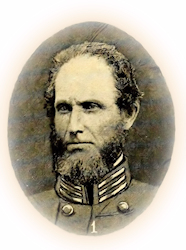
A likeness of Jones when he was editor and majority owner of the Daily Madisonian during President John Tyler’s administration.

OCTOBER 22d.—Back at the department at work, but not much to do yet. The mails are not heavy.

We have Bragg’s report of the battle of Perryville. He beat the enemy from his positions, driving him back two miles, when night set in. But finding overwhelming masses accumulating around him, he withdrew in good order to Bryattsville. Thus Kentucky is given up for the present!

McClellan has retired back into Maryland, hoping, I suppose, Lee will follow and fall into his ambuscade.

The President will call out, under the Conscription Act, all between the ages of eighteen and forty. This will furnish, according to the Secretary’s estimate, 500,000, after deducting the exempts. A great mistake.

A letter from Gen. Lee indicates that he is in favor of making Treasury notes a legal tender. It was so with Washington concerning Continental money—but Congress pays no attention to the subject. Why does not the President recommend it? It would then pass—for, at present, he is master.

The paper from the Provost Marshal, referred by the latter to the President, came back to-day. The Secretary, in referring it, seems to incline to the opinion that the writ of habeas corpus not being suspended, there was no remedy for the many evils the Provost Marshal portrayed. The President, however, did not wholly coincide in that opinion. He says: “The introduction and sale of liquors must be prevented. Call upon the city authorities to with-hold licenses, and to abate the evil in the courts, or else an order will be issued, such as the necessity requires.”

Judge Campbell, late of the United States Supreme Court, has been appointed Assistant Secretary of War.

0 comments

Downing’s Civil War Diary.–Alexander G. Downing.

Diary of Alexander G. Downing; Company E, Eleventh Iowa Infantry

Tuesday, 21st–Some very fine weather. We have received orders to have company drill twice a day now, and dress parade every day at 5 p. m. We are getting over the effects of our hard service of the past two months.

0 comments

War Diary of Luman Harris Tenney.

War Diary of Luman Harris Tenney.

Tuesday, 21st. Spurgeon went out with forage detail. Bill Smith lost $15. Circumstances as follows: Capt. had given him some money to pay the boys. We lay on the blankets conversing when Sheldon came up, and Bill pulled out his money and paid him. He had showed me the money a little while before. All three lay down, Bill and I side by side and S. a little farther down. All at once Sheldon attracted mine and B.’s attention to a holster, asking if I had lost my revolver. After we had examined, I left. In five or ten minutes Nick called us to dinner. We ate and I went a few rods into the woods, leaving B. by his horse. When I came back B. had lost his money. We looked all about. Soon he told me he suspicioned Sheldon. I tried to find him. Finally found him playing poker, 2 or 3 P. M. Stolen at noon.

0 comments

Robert M. McGill

Robert M. Magill – Personal Reminiscences of a Confederate Soldier Boy, 39th Georgia Regiment of Infantry

Tuesday, 21st.—Went over river in canoe and got some corn and gritted it for dinner. 3 P.M., ordered forward; crossed Cumberland Ford at 5 P.M. Our Brigadier-General Reynolds says we are going to McMillans Station to take up camp.


(Note: picture is of an unidentified Confederate soldier.)
0 comments

Rebel War Clerk

Civil War Day-by-Day
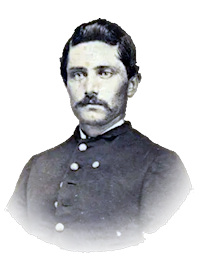
A likeness of Jones when he was editor and majority owner of the Daily Madisonian during President John Tyler’s administration.

OCTOBER 21st.—Still nothing definite from Kentucky, more than the retreat of Bragg. Gen. Loring is here—he would not act upon the suggestions of Lee, and so he is recalled.

The government is uneasy about Richmond. They want a portion of Lee’s army sent hither. But Lee responds, that although he is not advised of the condition of things on the south side of James River, yet, if he detaches a portion of his army, he may be too weak to encounter McClellan, if he should advance.

I saw the Secretary again this morning; he wished me to turn over all the passport business to the military. I said I was glad to be rid of that business, and would never touch it again.

0 comments

0

Civil War Day-by-Day

October 21, 1862, Peoria Morning Mail (Illinois)

From the Chicago Post.

Our readers will remember some mention made in these columns of Mr. Montgomery, a gentleman connected with the Vicksburg Whig, who endeavored to escape from that place on board a federal boat carrying a flag of truce, but was given up by the officer in command. The wife of Montgomery was formerly a resident of Chicago, and, together with her husband, was anxious to reach their friends in the north. Mr. Montgomery was taken from the federal boat and thrown into jail, but through the intercession of his wife with the rebel commander, was at length liberated and furnished with a pass to leave the city. With his bundle on his back, and wife and two children – one four, the other six years old – bareheaded, he started on his long journey, and, after much hardship and innumerable hair breadth escapes, at last reached the federal lines at Memphis, from which place he proceeded to St. Louis. His statement, which is published in the St. Louis Union, contains much interesting information. We reprint the following, showing the

Effect of the Bombardment of Vicksburg.

Mr. Montgomery and his family were in Vicksburg all the time during the terrible bombardment of that rebel town by our gun boats. The shelling lasted eleven weeks, lacking one day, during which period 25,000 shells were thrown into that doomed city. Every building in town was hit more or less by shells and fragments of shells. The Baptist Church was struck four times and was injured the worst. Yet it is estimated that $50,000 will repair all the damage done to the buildings. The damage done to the streets and pavements by the furrowing shells was repaired in three days, after the shelling ceased. The city being located on a number of small hills, sheltering the [continue reading…]

0 comments

Downing’s Civil War Diary.–Alexander G. Downing.

Diary of Alexander G. Downing; Company E, Eleventh Iowa Infantry

Monday, 20th–No news of importance. We are again drawing regular army rations, having a railroad to our base of supplies. There is little to be secured by foraging around Corinth, as the rebels’ attempt to retake the place has resulted in keeping a large force of our men here and food and feed has been almost cleaned up, with the men for a part of the time on short rations.

0 comments

War Diary of Luman Harris Tenney.

War Diary of Luman Harris Tenney.

Monday, 20th. In the morning watered my horse and cleaned up his feet. Capt. N. told me something very acceptable from Col. Ratliffe. Read the Lorain News and Cleveland Herald. In the P. M. wrote to Fannie.

0 comments

Robert M. McGill

Robert M. Magill – Personal Reminiscences of a Confederate Soldier Boy, 39th Georgia Regiment of Infantry

Monday, 20th.—Wagons met us this morning at 6 o’clock, with two days’ rations, ready cooked; drew one pound of bread to the man. When we arrived within four and one-half miles of Cumberland Gap, halted and waited further orders.


(Note: picture is of an unidentified Confederate soldier.)
0 comments

Diary of David L. Day.

David L Day – My diary of rambles with the 25th Mass

A Trip to Plymouth, N. C.

On the 15th of this month, the 25th, Major Pickett in command, with the 17th Massachusetts and the 10th Connecticut regiments, the whole under command of Col. Upton, embarked on steamers bound for Plymouth, on the Roanoke river which empties into the Albemarle sound at its extreme western end. On the morning of the 16th we passed Roanoke island, and our attention was attracted towards it as being the scene of our first conflict and success. We soon afterward entered the Albemarle sound, a beautiful sheet of water running east and weft, about 70 miles long with an average width of some 20 miles. It was a beautiful day, and the sail, as we slowly steamed along, was delightful, affording us a fine view of the shores. The shores were in striking contrast; the south shore is low and swampy, rising scarcely out of the water, while the north is bold, with a gently rising slope and shows many handsome farms. The scenery here is the first that has reminded us of home, and looks as though it was inhabited by a better class of people than we have yet seen.

About dusk we reach the upper end of the sound, and turning sharply to the left, enter the woods, where the overhanging branches of the tall trees seem almost to embrace each other. We are now in the Roanoke river, which is here quite narrow. In the dusk of the evening, as we grope our way along the narrow channel through the trees, the scenery is grandly wild. Some five or six miles through the woods brought us to the little town of Plymouth, situated on the left or south bank of the river. Here we drop anchor for the night, and wait until morning to learn more of our excursion. [continue reading…]

0 comments

Rebel War Clerk

Civil War Day-by-Day
A likeness of Jones when he was editor and majority owner of the Daily Madisonian during President John Tyler’s administration.

OCTOBER 20th.—The news from Kentucky is very vague. It seems there has been a battle, which resulted favorably for us, so far as the casualties are concerned. But then Bragg has fallen back forty miles, and is probably retiring toward Cumberland Gap, that he may not be taken in the rear by the enemy’s forces lately at Corinth.

The President intends suspending the Conscription Act in Western Virginia, for the purpose, no doubt, of organizing an army of Partisan Rangers in that direction,

It seems, from recent Northern papers received in this city, that the elections in Pennsylvania, Ohio, and Indiana have gone against the Abolitionists. What then? If the war should be waged by the Democrats for the restoration of the Union, and waged according to the rules of civilized nations, respecting non-combatants, and exempting private property from pillage, it would be a still more formidable war than that now waged against us.

I have just received the following note from the Secretary:

“OCTOBER 17th, 1862.

“MR. J. B. JONES will hereafter refer all applicants for passports to Gen. Smith’s Adjutant-General, and grant none from the department.

“GEORGE W. RANDOLPH,
“Sec. of War.”

Neither the acting Assistant Secretary, nor Mr. Kean, with his whole alphabet of initials, could be certain whether the order referred merely to applicants to go out of the Confederacy, or all applicants of whatever kind. If the latter, I am functus officio, so far as passports are concerned. But Capt. Kean says there is plenty of work for me to do; and I presume I will not be entirely out of employment.

I took a good look at Mr. Randolph today. He is thin, frail. His face is pale, and will soon be a mass of wrinkles, although he is not over forty. His eyes are extremely small, blue, and glisten very much.

0 comments

Diary of a Southern Refugee, Judith White McGuire.

Diary of a Southern Refugee During the War by Judith White McGuire

Ashland, October 19.—We are now snugly fixed in Ashland. Our mess consists of Bishop J.and family, Major J and wife, Lieutenant J. J. and wife (our daughter,) Mrs. S. and daughter, of Chantilly, Mr.––, myself, and our two young daughters—a goodly number for a cottage with eight small rooms; but we are very comfortable. All from one neighbourhood, all refugees, and none able to do better, we are determined to take every thing cheerfully. Many remarks are jestingly made suggestive of unpleasant collisions among so many families in one house; but we anticipate no evils of that kind; each has her own place, and her own duties to perform; the young married ladies of the establishment are by common consent to have the housekeeping troubles; their husbands are to be masters, with the onerous duties of caterers, treasurers, etc. We old ladies have promised to give our sage advice and experience, whenever it is desired. The girls will assist their sisters, with their nimble fingers, in cases of emergency; and the clerical gentlemen are to have their own way, and to do their own work without let or hindrance. All that is required of them is, that they shall be household chaplains, and that Mr.–– shall have service every Sunday at the neglected village church. With these discreet regulations, we confidently expect a most pleasant and harmonious establishment. Our young gentlemen are officers stationed in Richmond. Mr. –– and themselves go in every morning in the cars, after an early breakfast, and return to dinner at five o’clock. J. J. and myself have free tickets to go on the cars to attend to our hospital duties. I go in twice a week for that purpose.

A dispatch just received from General Bragg, claiming a signal victory at Perryville; but in consequence of the arrival of large reinforcements to the enemy, he had fallen back to Cumberland Gap. These victories without permanent results do us no good, and so much blood is spilled. There seems to be a revolution going on at the North. Ohio, Indiana, and Pennsylvania have given the Democrats a large majority for Congress! So may it be!

0 comments

A Confederate Girl’s Diary

Civil War Day-by-Day

Clinton,
October 19th, Sunday.

What an unexpected change! I am surprised myself! Yesterday as the Baton Rouge party were about leaving, Miriam thought Lilly would be lonesome alone here with her sick baby, and decided that we should leave by the cars, and stay with her until mother returned. There was no time to lose; so dressing in haste, we persuaded Anna to accompany us, and in a few moments stood ready. We walked down to the overseer’s house to wait for the cars, and passed the time most agreeably in eating sugar-cane, having brought a little negro expressly to cut it for us and carry our carpet-bag. Three young ladies, who expected to be gone from Saturday until Wednesday, having but one carpet-bag between them! Can it be credited? But, then, we knew we had clothes here, and depended upon them for supplies, when we now find they are in the trunk and mother has the key.

We walked aboard alone, in the crowded train, and found ourselves in the only car reserved for ladies, which was already filled with a large party returning from Port Hudson, consisting of the fastest set of girls that I have seen for some time. Anna and I had to content ourselves with a seat on a small box between the benches, while Miriam was established on the only vacant one, with a sick soldier lying at her feet. The fast girls talked as loud as possible and laughed in a corresponding style in spite of the sick man. They must have been on a picnic, from the way they talked. One in a short dress complained that she had not seen her sweetheart. A pert little miss of thirteen cried, “You can bet your head I never went to any place where I did not see one of my sweethearts.” One of about seventeen, a perfect beauty, declared she would die of thirst. “So will I! and I don’t want to die before I get a husband!” exclaimed her vis-á-vis. They evidently expected to produce an impression on us. At every “brilliant” remark (“stupid” understood), they looked at us to see what we thought. All of them sat with bare heads in the strong light, an unfailing proof of la basse classe on steamers and cars. Every time my veil blew aside, they made no difficulty about scanning my features as though they thought it might be agreeable. [continue reading…]

0 comments