A Confederate Girl’s Diary

Civil War Day-by-Day

Sunday, 7th, December.

I have had a shock! While writing alone here (almost all have gone to church), I heard a step ascending the stair. What, I asked, if it should be Will? Then I blamed myself for supposing such a thing possible. Slowly it came nearer and nearer, I raised my head, and was greeted with a ghastly smile. I held out my hand. “Will!” “Sarah!” (Misery discards ceremony.) He stood before me the most woebegone, heartbroken man I ever saw.

With a forced laugh he said, “Where is my bride? Pshaw! I know she has gone to Clinton! I have come to talk to you. Was n’t it a merry wedding?” The hollow laugh rang again. I tried to jest, but failed. “Sit down and let me talk to you,” I said. He was in a wayward humor; cut to the heart, ready to submit to a touch of silk, or to resist a grasp of iron. This was the man I had to deal with, and get from him something he clung to as to – not his life, but – Miriam. And I know so little how to act in such a case, know so little about dealing gently with wild natures!

He alarmed me at first. His forced laugh ceased; he said that he meant to keep that license always. It was a joke on him yesterday, but with that in his possession, the tables would be turned on her. He would show it to her occasionally. It should keep her from marrying any one else. I said that it would be demanded, though; he must deliver it. The very devil shot in his eye as he exclaimed fiercely, “If any one dares demand it, I’ll die before giving it up! If God Almighty came, I’d say no! I’ll die with it first!” O merciful Father, I thought; what misery is to come of this jest. He must relinquish it. Gibbes will force him into it, or die in the attempt; George would come from Virginia. . . . Jimmy would cross the seas. . . . And I was alone in here to deal with such a spirit! [continue reading…]

0 comments

Downing’s Civil War Diary.–Alexander G. Downing.

Diary of Alexander G. Downing; Company E, Eleventh Iowa Infantry

Sunday, 7th–No news of importance. The weather is getting quite cool. The chaplain of our regiment is not with us at present and we have no preaching on Sundays, though we have prayer meeting in the evening. We had regular company inspection this evening. Our guard and picket duties are light at this place.

0 comments

War Diary of Luman Harris Tenney.

War Diary of Luman Harris Tenney.

Sunday, 7th. Up and off as early as usual. I carried a carbine and rode as usual in the ranks. Saw a large flock of wild turkeys. Advance ran after three “butternuts.” Took two horses. Saw any number of rebels around Diamond Grove. Encamped four miles west of Sherwood.

0 comments

A Rebel War Clerk’s Diary

Civil War Day-by-Day
A likeness of Jones when he was editor and majority owner of the Daily Madisonian during President John Tyler’s administration.

DECEMBER 7th.—Last night was bitter cold, and this morning there was ice on my wash-stand, within five feet of the fire. Is this the “sunny South” the North is fighting to possess? How much suffering must be in the armies now encamped in Virginia! I suppose there are not less than 250,000 men in arms on the plains of Virginia, and many of them who survive the war will have cause to remember last night. Some must have perished, and thousands, no doubt, had frozen limbs. It is terrible, and few are aware that the greatest destruction of life, in such a war as this, is not produced by wounds received in battle, but by disease, contracted from exposure, etc., in inclement seasons. But the deadly bullet claims its victims. A friend just returned from the battle-field of June, near the city, whither he repaired to recover the remains of a relative, says the scene is still one of horror. So great was the slaughter (27th June) that we were unable to bury our own dead for several days, for the battle raged a whole week, and when the work was completed, the weather having been extremely hot, it was too late to inter the enemy effectually, so the earth was merely thrown over them, forming mounds, which the rains and the wind have since leveled. And now the ground is thickly strewn with the bleaching bones of the invaders. The flesh is gone, but their garments remain. He says he passed through a wood, not a tree of which escaped the missiles of the contending hosts. Most of the trees left standing are dead, being often perforated by scores of Minié-balls, but thousands were prostrated by cannon-balls and shells. It will long remain a scene of desolation, a monument of the folly and wickedness of man.

And what are we fighting for? What does the Northern Government propose to accomplish by the invasion? Is it supposed that six or eight million of free people can be exterminated? How many butchers would be required to accomplish the beneficent feat? More, many more, than can be sent hither. The Southern people, in such a cause, would fight to the last, and when the men all fell, the women and children would snatch their arms and slay the oppressors. Without complete annihilation, it is the merest nonsense to suppose our property can be confiscated.

But if a forced reconstruction of the Union were consummated, does the North suppose any advantage would result to that section? In the Union we could not be compelled-to trade with them again. Nor would intercourse of any kind be re-established. Their ships would be destroyed, and their people could never come among us but at the risk of ill treatment. They could not maintain a standing army of half a million, and they could not disarm us in such an extensive territory. The best plan, the only plan, to redeem the past and enjoy blessings in the future, is to cease this bootless warfare and be the first to recognize our independence. We are exasperated with Europe, and like the old colonel in Bulwer’s play, we can like a brave foe after fighting him. Let the North do this, and we will trade with its people, I have no doubt, and a mutual respect will grow up in time, resulting, probably, in combinations against European powers in their enterprises against governments on this continent.

0 comments

“I begin to feel that my highest ambition is to make my brigade the best in the army, to merit and enjoy the affection of my men.”–Letters from Elisha Franklin Paxton.

Elisha Franklin Paxton – Letters from camp and field while an officer in the Confederate Army

Camp near Guiney’s Depot, December 7, 1862.

We have a quiet Sunday to-day. Everything in camp stopped except the axes, which run all night and all day, Sunday included. With the soldiers it is, “Keep the axes going or freeze.” They are the substitutes for tents, blankets, shoes, and everything once regarded as necessary for comfort. The misfortune is that even axes are scarce; the army is short of everything, and I fear soon to be destitute of everything. Yet the men are cheerful and seem to be contented. It seems strange, but, thanks to God for changing their natures, they bear in patience now what they once would have regarded as beyond human endurance. Whilst I write, I expect you are sitting in our pew at church, my place by your side filled by little Matthew,–bless the dear boy!–listening to a sermon from Parson White on covetousness, avarice and such kindred inventions of Satan. I wish him success, but I fear he will hardly be able to convince that leather can be too high, or that it is not the will of God for poor soldiers to go barefooted. God seems to have consigned one-half of our people to death at the hands of the enemy, and the other half to affluence and wealth realized by preying upon the necessities of those who are thus sacrificed. The extortioners at home are our worst enemies. If our soldiers had their sympathies, their assistance in providing the necessary means of sustaining the army, they might bear the hardships and do the work before them, feeling that it was a common undertaking for the benefit of us all and sustained by us all. But it seems like a revolution to make those rich who stay at home, and those poor who do their duty in the army.

I begin to like my new position. It occupies my whole mind and time. I begin to feel that my highest ambition is to make my brigade the best in the army, to merit and enjoy the affection of my men. I trust that both may be realized. When I came to it I knew that my appointment was unwelcome to some of the officers, but I have received nothing but kindness and respect from all. They all knew me, and knew that what I said would have to be done. I have had much better success thus far than I anticipated. We made a long march from Winchester– the longest the brigade has ever made without stopping. Usually on such marches the men fall behind, leave the road to get provisions at the farm-houses, etc. But on this march I came very near stopping such practices. Out of the five last days of the march, on three of them every man was present when we reached the camp in the evening; on the other two days but one was missing each day. I am sure that no other brigade in the army can show any such record. During this winter I shall spend my time in trying to make them comfortable and happy, in teaching them all the duties of soldiers, and in instilling into them the habit of obeying orders. I hope to gather in all absentees, and when the winter is over to turn out at least 2500 men for duty. So, you see, Love, I have laid out my work for the winter; and you, so far, as I have said, are to take no part of my care. I think I shall be able to devote a week to you at home. I wish that week were here now, but I can’t ask for it now. I must wait till the snow is deeper, the air colder. Then, I think, I will be allowed a short absence.

0 comments

Downing’s Civil War Diary.–Alexander G. Downing.

Diary of Alexander G. Downing; Company E, Eleventh Iowa Infantry

Saturday, 6th–I was on duty today with a foraging party of our division, to help load the wagons with corn and cotton. We brought in seventy-five loads of cotton worth about $40,000. At one plantation some negroes were out at work picking cotton, while others were baling it in the gin houses, but we drove into the houses and loaded up without asking for the privilege. The Sixth Division almost every day brings in from seventy-five to one hundred loads of corn or cotton. This part of the state is thickly settled and the settlements are rich, there being a great deal of corn and cotton.

0 comments

War Diary of Luman Harris Tenney.

War Diary of Luman Harris Tenney.

Saturday, 6th. Up at 3 A. M. and off at daylight as usual. Reached Neosho at 8 P. M. Charlie and I got supper at a private house, secesh. Got into a little fuss with Mart Cole in regard to forage. He pushed me off the wagon and I reported him. He was tied up to a tree for an hour. The Major asked me why I did not knock him down. Afterwards I was put under arrest for investigation.

0 comments

Through Some Eventful Years

Through Some Eventful Years by Susan Bradford Eppes
Susa Bradford Eppes

December 6th, 1862.—We have been here three days; there are nine girls in the party and twelve gentlemen, young ones I mean; then there are two married couples with little children and our host and hostess, who are just lovely to us all. We have music and dancing at night, go riding whenever we feel like it and there is a nice boat on the Flint River which is very near the house. Albany is not far, if we want to shop—but there it is again–we have plenty of money but the stores are almost empty. When we went in yesterday, all we could find to buy was some delicious molasses candy. There is a cotton factory somewhere near here where they are making cloth for the army. I am going to see how they make it.


Susan Bradford is 16 years old when this entry was made.

0 comments

Journal of Surgeon Alfred L. Castleman.

Journal of Surgeon Alfred L Castleman.

6th.–This morning, during a rain, we moved our bivouac about a quarter of a mile, and encamped. To get settled, we have worked most of the day in the rain, and to-night I feel about as miserably as the most miserable wife on earth could wish a more miserable husband, and this, I presume, is as miserable a condition as a miserable nostalgia can well imagine.

Letters from home to-day, but they are from twelve to twenty days old. The comfort of a regular mail, the Government, with a very little well directed effort, might easily afford to the soldier, and it would be, even as a sanitary measure, a great stroke of economy. How many a poor fellow would be saved by regular cheering letters from home, from a depressing nostalgia, lapsing “rapidly into typhoid fever, and death. But it is folly to think of a reform in this, when the families of so many of our soldiers are in a state of destitution, simply because the pay due to them is withheld for five, six, and even, in some instances, for eight or nine months. One of my hospital nurses has just come to me, with tears on his face, showing me a letter from his wife, in which she says that her little home has been sold under the hammer, because she could not pay a debt of fifty dollars! and this when the government is in arrears to them over a hundred dollars. This seems unjust, and ought to be remedied.

0 comments

Robert M. McGill

Robert M. Magill – Personal Reminiscences of a Confederate Soldier Boy, 39th Georgia Regiment of Infantry

December.—Nothing special from 1st to 5th; on evening of 5th, went on picket five miles out; snowed until about ten inches deep; very cold.


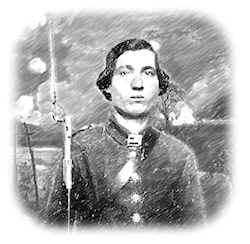
(Note: picture is of an unidentified Confederate soldier.)

0 comments

Downing’s Civil War Diary.–Alexander G. Downing.

Diary of Alexander G. Downing; Company E, Eleventh Iowa Infantry

Friday, 5th–The rain continued all night. We were relieved from picket this morning about 9 o’clock. Troops are passing to the front and there is some heavy cannonading in that direction.

0 comments

War Diary of Luman Harris Tenney.

War Diary of Luman Harris Tenney.

Friday, 5th. As we neared Cowskin a good many bushwhackers showed themselves, but at a distance. Camped three miles north of Elk Mills.

0 comments

A Rebel War Clerk’s Diary

Civil War Day-by-Day
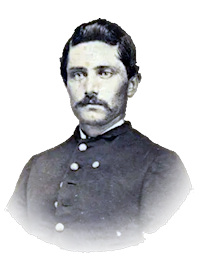
A likeness of Jones when he was editor and majority owner of the Daily Madisonian during President John Tyler’s administration.

DECEMBER 5th.—Yesterday there was some little skirmishing below Fredericksburg. But it rained last night, and still rains. Lee has only 30,000 or 40,000 effective men.

We have the Federal President’s Message to-day. It is moderate in tone, and is surprising for its argument on a new proposition that Congress pass resolutions proposing amendments to the Constitution, allowing compensation for all slaves emancipated between this and the year 1900! He argues that slaves are property, and that the South is no more responsible for the existence of slavery than the North! The very argument I have been using for twenty years. He thinks if his proposition be adopted that “several of the border States will embrace its terms, and that the Union will be reconstructed.” he says the money expended in this way will not amount to so much as the cost of a war of subjugation. He is getting sick of the war, and therein I see the “beginning of the end” of it. It is a good sign for us, perhaps. I should not be surprised if his proposition had advocates in the South.

Lt.-Col. T. C. Johnson sent in a communication to-day. He alludes to an interview with the Secretary, in which the latter in-formed him that the government intended to exchange cotton for supplies for the army, and Lt.-Col. J. suggests that it be extended to embrace all kinds of merchandise for the people, and informs him that New York merchants are willing to send merchandise to our ports if we will permit their ships to return laden with cotton, at 50 cts. per pound, and pledging themselves to furnish goods at 50 per cent. advance on cost. He advocates a trade of this nature to the extent of $100,000,000, our government (and not individuals) to sell the cotton. The goods to be sold by the government to the merchants here. I know not what answer the Secretary will make. But I know our people are greedy for the merchandise.The enemy have shelled Port Royal, below Fredericksburg, in retaliation for some damage done their gun-boats in the river by one of our land batteries. And we have news of the evacuation of Winchester by the enemy. The Northern papers say Burnside (who is not yet removed) will beat Lee on the Rappahannock, and that their army on the James River will occupy Richmond. When Lee is beaten, perhaps Richmond will fall.

A large number of our troops, recruited in Kentucky, have returned to their homes. It is said, however, that they will fight the enemy there as guerrillas. The President has appointed his nephew, J. R. Davis, a brigadier-general. I suppose no president could escape denunciation, nevertheless, it is to be regretted that men of mind, men who wrought up the Southern people, with their pens, to the point of striking for national independence, are hurled into the background by the men who arranged the programme of our government. De Bow was offered a lower clerkship by Mr. Secretary Memminger, which he spurned; Fitzhugh accepted the lower class clerkship Mr. M. offered him after a prolonged hesitation; and others, who did more to produce the revolution than any one of the high functionaries now enjoying its emoluments, are to be found in the lowest subordinate positions; while Tom, Dick, and Harry, never heard of before, young, and capable of performing military service, rich, and able to live without office, are heads of bureaus, chief clerks of departments, and staff-officers flourishing their stars! Even this is known in the North, and they exult over it as a just retribution on those who were chiefly instrumental in fomenting revolution. But they forget that it was ever thus, and that our true patriots and bold thinkers who furnish our lesser men, in greater positions, with ideas, are still true and steadfast in the cause they have advocated so long.

0 comments

Journal of Surgeon Alfred L. Castleman.

Journal of Surgeon Alfred L Castleman.

5th.–Broke camp this morning, marched southerly through the village of Stafford, the most miserable and dilapidated looking place the imagination can picture, unless it should take for its pattern some other Virginia village. About a mile and a half south of Stafford Court House we crossed, at Brooks’ Station, the railroad leading from Fredericksburg to the mouth of Acquia Creek, and, after marching about one mile further, in the night, we bivouaced in a most woe-be-gone, hilly, pine-covered, tobacco-eaten country.

Shortly after passing Stafford Court House, I rode up to some “negro quarters,” to see if I could get a canteen of milk, or something “fresh” for my supper. An old black woman came to the door, expressed gratification at our arrival, and fears that we should not be able to retain our hold in the country. She seemed about seventy years old. I asked her if she cared anything for her freedom, or whether she would rather continue a slave, and be taken care of by her master?

“Ah, massa, my freedom ain’t wuf much to me now, but if it please de Laud, I would love to live to see dis a Free State; seem like’t would be so good to die in a free country, and den when I sings praises in hebben, it would be so nice to tell de Laud to his face, how I lub him for dat goodness.”

The slave may be “satisfied with his condition,” but it strikes me that this expresses a strange yearning for change in a mind already satisfied.

0 comments

A Southern Girl in 61

Louise Wigfall Wright — A Southern Girl in ’61

(excerpts)

“Dec. 5th, 1862.

         ” . . . We are all painfully anxious about Fredericksburg. It has been raining hard all day and hailing this evening, and if there has been no advance yet I think Burnside will have little chance of doing anything this winter. . . . Genl. Johnston carried quite a numerous staff with him to the West and I hope with all my heart that he will win fresh laurels there.”

0 comments

A Confederate Girl’s Diary

Civil War Day-by-Day

Thursday, December 4th[i]

It would be only the absurd tableaux I agreed to, with plenty of fun, and nothing more. So I tried to be merry and content, and so I should have been, for there was plenty to talk about, and every one was so solicitous for my comfort; and there was Mr. Enders who would wheel my chair for me wherever I wished it, and was as kind and attentive as a brother. Surely my first trip should have been a gay one! Miriam sat down by the piano, Mr. Enders drew me by her, and we three sang until dark together. A Mr. Morse, his wife, and mother, who are spending a week here, were our audience. The first two retired at candle-light, while the latter, present at the play the night before, remained to the last. But while we sang, every noise at the parlor door caused us to turn with the apprehension of we hardly knew what. A dozen times Mr. Enders consulted his watch, and telegraphed his fears to me, though I persisted in thinking it only the fun that had been intended.

Half-past six came, and with it, Mrs. Worley. Now, she knew better. For Dr. Dortch had come to see me, and was guiding me in my game of euchre in which I was not even as wise as my partner, Mr. Enders, when her note came. Instantly we put down our cards, while Miriam begged him to write and tell her the true story. He wrote and we all read it. Not only that, but Miriam added a postscript which I think was this, word for word: “Mrs. Worley, it is only a bet at cards, intended as the merest joke. There is not a word of truth in it, and I will consider it the greatest favor if you will contradict the report whenever you may hear it!” [continue reading…]

0 comments

Downing’s Civil War Diary.–Alexander G. Downing.

Diary of Alexander G. Downing; Company E, Eleventh Iowa Infantry

Thursday, 4th–Our entire company went out on picket duty this morning with the orders to keep a sharp lookout for rebels. The sentinels out on the front are ordered to stand in secluded places, as they are in danger of being picked off by the rebel sharpshooters. It rained all day again.

0 comments

War Diary of Luman Harris Tenney.

War Diary of Luman Harris Tenney.

Thursday, 4th. Marched to Maysville and camped in town. Cold and uncomfortable. Went to the Secesh hospital and got supper of the family. Good visit with the surgeon. Invited me to stay over night.

0 comments

Through Some Eventful Years

Through Some Eventful Years by Susan Bradford Eppes
Susa Bradford Eppes

December 4th, 1862.—Now, that the bullet has been extracted, Brother Amos is improving rapidly and he tells us many interesting things as he lies there so helpless. Last night his thoughts turned to the battle of Seven Pines; it seems that he, with a party of his company, was detailed to help to bury the dead. Some of those he found were acquaintances and two were kinsmen but the deepest interest with him centered in two young strangers, who were found clasped in each others arms. One wore the blue uniform and the other was a lieutenant in a Maryland regiment and wore the gray. They were of the same size and figure and when he looked into the poor dead faces they were exactly alike. He was so sure they must be brothers that he examined the papers in the pockets of each, and, sure enough, they must have been brothers—maybe twin brothers, as the last name was the same. In each boy’s pocket were letters from the same place in Maryland and though these letters were simply signed “Mother,” the writing was identical. They looked to be boys of twenty or perhaps less. He buried them still in that close embrace. The pine tree, beneath which they were found was carefully marked; some cannon balls were picked up and piled above them and when brother Amos returned to camp he wrote to that mother and told her all this.

I wonder why they were on opposite sides in this gigantic struggle. Will the poor, bereaved mother send and take them home or will they sleep on, under the Virginia pines? Brother Amos says he sent the contents of each boy’s pockets to the mother in Maryland. How her poor heart must ache.

Now brother Amos is able to sit up and can even stand with his crutches and we are going to a house party, at the home of his oldest brother. Mr. John Whitehead is too old for army duty and he is also too fat for a soldier. Three of his four brothers have been wounded and are convalescent and he is having a family reunion. Sister Mart and I are going, too, for the Whitehead girls are dear friends of ours. Mother has made me some pretty clothes and it would make a funny picture if I could portray the great amount of turning and fixing she had to do to get me “something out of nothing,” she says. We Southerners are copying Burns’ heroine, who “Gars auld cloes look amaist as weel’s the new.” I really believe I forgot my Scotch just there and should have written “noo.” I wish I could take my black mammy with me, it is bad getting on without her but she always has a baby.


Susan Bradford is 16 years old when this entry was made.

0 comments

A Rebel War Clerk’s Diary

Civil War Day-by-Day
A likeness of Jones when he was editor and majority owner of the Daily Madisonian during President John Tyler’s administration.

DECEMBER 4th.—All is quiet (before the storm) on the Rappahannock, Gen. Jackson’s corps being some twenty miles lower down the river than Longstreet’s. It is said Burnside has been removed already and Hooker given the command.

Gen. S. Cooper takes sides with Col. Myers against Gen. Wise. Gen. W.’s letter of complaint of the words, “Let them suffer,” was referred to Gen. C., who insisted upon sending the letter to the Quartermaster-General before either the Secretary or the President saw it,—and it was done. Why do the Northern men here hate Wise?

Gen. Lee dispatches to-day that there is a very large amount of corn in the Rappahannock Valley, which can be procured, if wagons be sent from Richmond. What does this mean? That the enemy will come over and get it if we do not take it away? A letter from the President of the Graniteville Cotton Mills, complains that only 75 per ct. profit is allowed by Act of Congress, whose operatives are exempted from military duty, if the law be interpreted to include sales to individuals as well as to the government, and suggesting certain modifications. He says he makes 14,000 yards per day, which is some 4,000,000 per annum. It costs him 20 cts. per yard to manufacture cotton cloth, including, of course, the cotton, and 75 per ct. will yield, I believe, $500,000 profits, which would be equivalent to 32 cts. per yard. But the market price, he says, is 68 cts. per yard, or some $2,000,000 profits! This war is a great encourager of domestic manufacturers, truly!

The Governor sends out a proclamation to-day, saying the President has called on him and other governors for assistance, in returning absent officers and men to their camps; in procuring supplies of food and clothing for the army; in drafting slaves to work on fortifications; and, finally, to put down the extortioners. The Governor invokes the people to respond promptly and fully. But how does this speak for the government, or rather the efficiency of the men who by “many indirect ways” came into power? Alas it is a sad commentary.

The President sent a hundred papers to the department to-day, which he has been diligently poring over, as his pencil marks bear ample evidence. They were nearly all applications for office, and this business constitutes much of his labor.

0 comments

0

Louise Wigfall Wright — A Southern Girl in ’61

“CHATTANOOGA,
“Dec. 4th, 1862.

“My dear Wigfall:
         “After a perilous journey, I arrived a little after twelve last night, having been delayed by three railroad accidents. A telegram from the Ad. Genl. urges me, in the name of the President, to reinforce Pemberton, who ‘has fallen back from his positions by advance of very superior force of the enemy’ with ‘a sufficient force of Genl. Bragg’s command.’ ‘Genl. Holmes has been peremptorily ordered to reinforce him—but his troops may be too late,’ I am told. Genl. Pemberton in falling back, moves towards Vicksburg, where Holmes must cross the river—every step he makes, therefore, brings him nearer to his reinforcements. But as this march is in a direction exactly away from Bragg, and the enemy’s army is between, every day’s march makes a junction of the latter with Pemberton more difficult. I proposed the order to Holmes more than two weeks ago. Had it been given then, his troops would now be near Vicksburg, and we should be secure of our possession of the Mississippi. As matters now are, the enemy being between our armies, and probably superior to any one of them, their junction must be difficult—impossible, if his troops are well directed. I have not had time yet to learn if the movement of Bragg’s troops is practicable, and if so, what time will be necessary for it, nor what Pemberton’s force is, nor that of the enemy—nor where he is—nor in what direction he proposes to move. Under such circumstances a much wiser man, than any I know, might fail to plan wisely. The thing to be done is to urge Holmes to expedition. Do tell the Secretary of War to do so.
         “The President does not consider, in estimating the time Bragg’s movement may require, what an obstacle the Tennessee is. Nor that Vicksburg at least, will secure Holmes’s junction.
         “Nobody ever assumed a command under more unfavorable circumstances. If Rosecranz had disposed our troops himself, their disposition could not have been more unfavorable for us.
         “My suggestion to the President, referred to above, was to unite the troops of Pemberton and Holmes and attack Grant. It was about the 15th ulto. Genls. Cooper and G. W. Smith were present.
         “I shall join Bragg at Tullahoma tomorrow; the railroad arrangements make it impracticable sooner. All the information necessary to me is still to be gained.
         “Mrs. J. sends cordial regards to Mrs. Wigfall and yourself.

“Very truly yours,
“J. E. JOHNSTON.

“GENL. WIGFALL,
“C. S. Senate.”

0 comments

Journal of Surgeon Alfred L. Castleman.

Journal of Surgeon Alfred L Castleman.

4th.–This afternoon I procured signatures of Surgeons to certificates, that in consequence of my long continued labors, I was breaking down. I immediately drew up my letter of resignation and started to present it in person, and to ask the approval of the Colonel. Before reaching his quarters I was met by a courier with an order to march at daylight tomorrow morning. I, of course, withheld the paper till the march, perhaps to battle, was over.

0 comments

“Our soldiers are not clothed or fed now as they used to be. We are short of everything.”–Letters from Elisha Franklin Paxton.

Elisha Franklin Paxton – Letters from camp and field while an officer in the Confederate Army

Spottsylvania C. H., December 4, 1862.

We have reached what I suppose to be our destination after eleven days’ march, stopping but once on the route. The roads were good; the troops were in good spirits, and with moderate marching reached here but little exhausted. I really don’t know what we came for, as everything here is in a most profound state of quiet. The enemy are on the other side of the Rappahannock, showing but little, if any, signs of an intention to cross.

I am getting used to my new position, and, whilst I prefer that which I left, I can be contented here. I have no reason now to complain of a want of employment, but feel that I have more than I can do. I have found much that I would like to remedy, but have not the means to do it. Our soldiers are not clothed or fed now as they used to be. We are short of everything. I hope this winter that much may be supplied, and next spring we may be able to begin the campaign in fine condition.

We have bright, clear weather now, but it is the season when we may expect it not to last. Soon we shall have snow, bad roads, cold weather and the usual attendants of the season. I wish now we had the order to prepare for it and build such cheap huts as would shelter. Now very few of them have tents and many are thinly clad; some are barefooted and a few without blankets. I wish that I had the power to supply their wants, but I can do but little. Have you made up your mind, Love, when the war will be over? I am heartily sick and tired of it. If any one had told me, when it began, that I should pass through two years of it and reach the rank of Brigadier, with pay of $300 per month, it would have been a flattering prospect; but I feel now as if no rank or pay could induce me to be a soldier–nothing but necessity and a feeling that I am not a true man if I leave our cause for the comforts of home? I sometimes have been severely tempted to follow the example which many whom I thought good men have set in staying at home. But other and better impulses have controlled my conduct. When we were separated in times past, I could feel with some certainty that we should soon be together again. Not so now. When will it be, if ever? This is the question shrouded in impenetrable gloom. I would like to see through it. I would like to know when I should be at home again to spend my life with loved wife and children. God in his mercy grant that hope so fondly cherished may some day be realized! It may never be. Yet it is a fond hope which I cherish while life lasts.

0 comments

“There has been cannonading the last three days some four or six miles ahead, but none to-day. Squads of prisoners pass us going to the rear every day.”–Army Life of an Illinois Soldier, Charles Wright Wills.

Civil War Day-by-Day

Camp near the Tallahatchie, seven miles South of
Holly Springs, Miss.,

December 3, 1862.

We received marching orders at Lagrange, Tenn., at 9 o’clock p.m. on the 27th, and moved at 6 a.m. on the 28th, on the Holly Springs road. We marched some five miles and then waited four or five hours for the divisions of Ross and McArthur from Grand Junction, and Quinby and Moscow to file into the road ahead of us. About 4 p.m. we were again set in motion, and at 7 p.m. (moonlight) we turned into the woods, about 10 miles from Lagrange, and bivouacked for the night. Fell in at 7 a.m., 29th, marched nine miles by 2:30 p.m. to Coldwater, a very nice little stream, the water in which is as cold in July as in December. Here we rested until 6:30 p.m. and then marched six miles by moonlight to Holly Springs, Miss., where we camped for the night. At 8 a.m., 30th, moved out and arrived at the present camp about 2 p.m. The last five miles we were cheered by the enlivening music of artillery firing ahead, pretty lively at times and then subsiding into an ocasional bellow, bringing the good old Madrid and Corinth times very distinctly to my mind. It’s astonishing what an amount of ignorance I am guilty of in regard to the situation of affairs here, but I really haven’t inquired of or listened to any of the powers that be on the subject. I’ve had my mind set on a fight in the neighborhood, and if we get that I don’t care about details, if not I’ll find out what I can, though ’tis an awful sight of trouble to sift sense and matter to be credited out of camp rumors, and that is about the only source a line officer has for getting information. Believe I’ll give you a little list of rumors condensed. (1) Enemy 50,000 strong fortified on this side of Tallahatchie. (2) Rebels driven across the river, only rifle pits on [continue reading…]

0 comments

Downing’s Civil War Diary.–Alexander G. Downing.

Diary of Alexander G. Downing; Company E, Eleventh Iowa Infantry

Wednesday, 3d–It rained all night, but the weather is rather cold. We moved our camp today and set it up again in a deserted camp, one mile from Abbeville, which the rebels had built for winter quarters.

0 comments