17th. After breakfast fixed up a little and went to town to see Melissa and get second volume of “Life of Washington.” Received an excellent letter from the fair Rowena. In the P. M. and evening wrote to Ella Clark and a little to Fannie. I like Ella Clark very much. She is talented and good and true, I guess.
American Civil War Chronicles
Downing’s Civil War Diary.–Alexander G. Downing.
February 17, 2023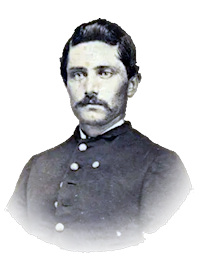
Tuesday, 17th–Another all night rain, which continued all day today. Our camp is again becoming very muddy. Company E went on picket duty today. Our camp guard has been taken off.
A Rebel War Clerk’s Diary
February 17, 2023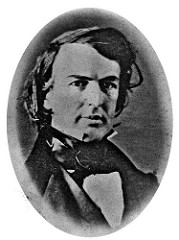
FEBRUARY 17th.—Gen. Lee is not sending troops to Charleston. He is sending them here for the defense of Richmond, which is now supposed to be the point of attack, by land and by water, and on both sides of the James River. Well, they have striven to capture this city from every point of the compass but one—the south side. Perhaps they will make an attempt from that direction; and I must confess that I have always apprehended the most danger from that quarter. But we shall beat them, come whence they may!
0
February 17, 2023February 17, 1863, The
Our Hilton Head Correspondence.
HILTON HEAD, S.C., Feb. 11, 1863.
There seems to have been some misunderstanding as to whom belongs the command of the reinforcements for this department which have arrived from
The vessel composing the expedition which sailed from Beaufort, N. C., on the 29th ult. have lain quietly at anchor in
The troops of the two divisions are slowly landing at the
0
February 17, 2023February 17, 1863, The
The official account of the recent attack on our fleet in
Some difficulty occurred at
General Hooker, accompanied by Generals Butterfield and Sickles, reviewed the corps of General Sigel yesterday, and expressed himself greatly pleased with the appearance and discipline of the men. There is nothing of importance regarding military movements reported from the Army of the
The official account of the destruction of the
Among the interesting items of news from the South which we publish today are the proceedings of the rebel Congress [continue reading…]
0
February 17, 2023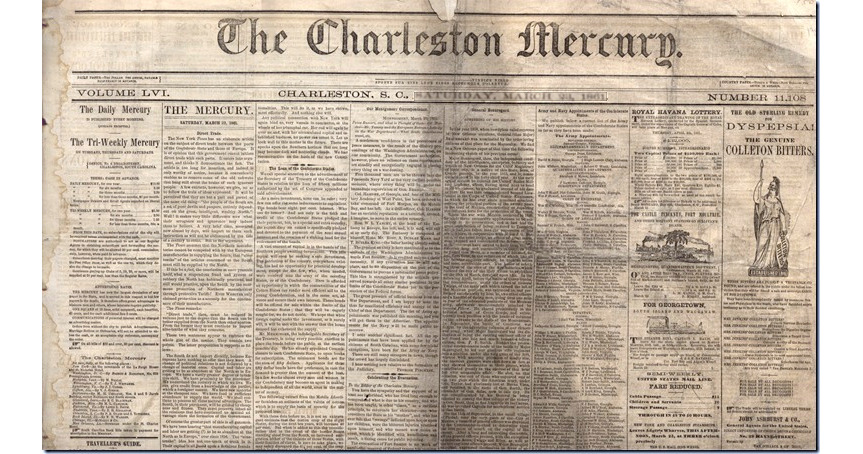
February 17, 1863, The Charleston Mercury
(CORRESPONDENCE OF THE MERCURY.)
RICHMOND, Friday, February 13.
It is rumored that Mr. BOYCE has been making a speech in secret session advocating conciliation towards the Northwest. Yesterday, the House, in its anxiety to dispose of the question of impressments, refused to go into secret session in order that Mr. BOYCE might conclude his speech. What the temper of the House is in regard to the Northwest, I cannot say. The tone of the Enquirer indicates the indisposition of the Administration to rely on anything but hard blows – the right view. Our policy is the execution of the Conscript Law.
The Yankees say all the blockading fleet ran away seven miles from Charleston harbor to see whether the Keystone State needed any assistance. What a joke! I see in the Herald of the 4th an elaborate map of Charleston, its approaches and defences. How accurate it is needless to say.
A great many operatives are anxious to leave England for Yankeedom, in order to escape the cotton famine, which Mr. Cobden admits is getting worse every day. More than this, he says there is danger lest the bankrupt manufacturers be compelled to sell their machinery, and so bring about a serious and permanent injury to the English industrial system. Inasmuch as the starving operatives would find a cotton famine at the North as severe almost as that in England, and since we need machinery and labor, a resolution looking to this matter is to be introduced at an early day in the House.
Joe Hooker has forbidden the exchange of newspapers, and so the chances of certain city papers for getting $100 worth of news on a shingle every week are rather slim. We hear of conjectural movements of Gen. Lee that need not be spoken about.
The Illustrated News for this week has a likeness of Gen. Longstreet and Mr. Timrod’s Prize Poem. Gens. Jeb Stuart and A. P. Hill are in town. Capt. Montgomery, of the New Orleans press, is writing a book to be called ‘Heroes and Heroines of the War,’ and Dr. Bagby, of the Messenger, is making a collection of the humorous anecdotes and incidents of the war.
Weather is splendid.
HERMES.
Robert M. McGill
February 16, 2023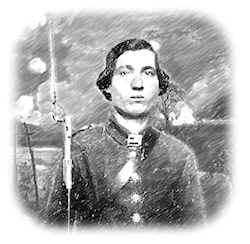
Monday, 16th.—Rained all day; P. M., regiment went to town. One regiment of our brigade has to be in town every night, so that if the fleet should attack the city, could man the ditches at once.
(Note: picture is of an unidentified Confederate soldier.)
Diary of Horatio Nelson Taft.
February 16, 2023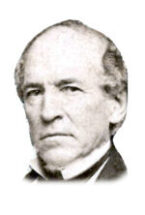
Monday Feb 16th 1863
A beautiful day, bright and mild. No particular news or excitement in the City. Arrests are made almost every day of those acting as Spies, or engaged in contraband trade. Mr Nairn a prominent and wealthy Drugist was recently arrested for purchasing medicines for the Rebels. He is now in the old Capitol. A Clergyman tore down a U.S. Flag from a church in Baltimore yesterday. He was immediately arrested and will be punished. His name is Dashiel, a methodist.
Genl Butler hung a man in New Orleans for doing the same thing. Grant has cut the Levees of the Miss above Vicksburgh and intends to cut them off by water. That is the great point of interest now. The largest rebel Army now in the field is said to be there for its defense. A part of the Army of the Potomac has gone to N. Carolina but Genl Hooker has still a large Army opposite Fredericksburgh V.A. Charleston & Savannah are both threatened and will be soon attacked by our “Iron Clads” in connection with a land force. I called at Doct Munsons this evening and staid an hour or two. Mrs Mary Pruyn, Mrs McDowell, and another lady, all from Albany, were there. Waited upon two of them over to the “Herndon House” where they are staying. Mis Pruyn is staying with Mrs Munson her relative. Got a very nice letter from Julia today. Wrote to “Holly.”
War Diary of Luman Harris Tenney.
February 16, 2023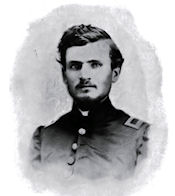
16th. After breakfast exercised my horse a little bareback. Enjoyed it well, though it was hard work. Got her shod. Finished “Ravenshoe.” Rather pleased with the story. Mud deeper than ever. A poor woman told us how she had $6.25 stolen from her. Has two little children, dependent upon her daily work.
Downing’s Civil War Diary.–Alexander G. Downing.
February 16, 2023
Monday, 16th–It rained all night and some today. Our canvas tents are no good in shedding water. I was on guard today, but on account of the heavy rain and high wind all the guards were taken off duty.
A Rebel War Clerk’s Diary
February 16, 2023
FEBRUARY 16th.—Another gun-boat has got past Vicksburg. But three British steamers have run into Charleston with valuable cargoes.
Gem Lee is now sending troops to Charleston, and this strengthens the report that Hooker’s army is leaving the Rappahannock. They are probably crumbling to pieces, under the influence of the peace party growing up in the North. Some of them, however, it is said, are sent to Fortress Monroe.
Our Bureau of Conscription ought to be called the Bureau of Exemption. It is turning out a vast number of exempts. The Southern Express Company bring sugar, partridges, turkeys, etc. to the potential functionaries, and their employees are exempted during the time they may remain in the employment of the company. It is too bad!
I have just been reperusing Frederick’s great campaigns, and find much encouragement. Prussia was not so strong as the Confederate States, and yet was environed and assailed by France, Austria, Russia, and several smaller powers simultaneously. And yet Frederick maintained the contest for seven years, and finally triumphed over his enemies. The preponderance of numbers against him in the field was greater than that of the United States against us; and Lee is as able a general as Frederick. Hence we should never despair.
0
February 16, 2023February 16, 1863, The
Our
KEY WEST, Jan. 24, 1863.
During the stay of the United States steamer San Jacinto at this port I was enabled to obtain many interesting particulars from her officers regarding the escape of the Alabama from Fort Royal, island of Martinique, and it is but a simple act of justice to Captain Rockendorff and those under his command that a fair and impartial statement of the affair should be laid before the public.
The public at large are too much in the habit of condemning unheard an officer of the army or navy who fails to accomplish impossibilities. In regard to naval operations they look upon the ocean as a mere pond, and imagine that one of our cruisers, fairly at sea, is able to observe from the masthead, if not from deck, every other vessel on its surface. They also think that a United States vessel of war meeting a rebel steamer in a neutral port should at once destroy her, or, if not, so blockade the port that her flying jib boom should be over one side of the channel way wile her spanker boom is over the other, thus preventing ingress as well as egress.
To illustrate the difficulties that the steamer San Jacinto had to encounter, I send herewith a sketch of the harbor of port Royal, showing where the Alabama was anchored when the San Jacinto made her appearance, and the course she pursued in making her escape, and also the position the San Jacinto was compelled to take by order of the Governor of Martinique. It must be taken into consideration that the mouth of the harbor at
0
February 16, 2023February 16, 1863, The
We learn by intelligence from
From the Army of the
We give today a most interesting account of the proceedings of the
By the arrival of the
Two rebel schooners, the Pelican, with eighty-two bales of cotton, and Break o’ Day, with one hundred and forty-two bales of cotton arrived at the Belize, Honduras, after running the blockade at Mobile on the 23d and 25th December. The latter reports being chased by two cruisers. They ran out in a dark night.
Considerable excitement was caused in
0
February 16, 2023
February 16, 1863, The Charleston Mercury
(CORRESPONDENCE OF THE MERCURY.)
RICHMOND, Thursday, February 12.
Some queer things are said to be occurring in our army at Fredericksburg, with respect to absent officers. For example, when a Brigadier leaves for home on urgent business, his command is distributed to other brigades, so that on his return he is functus officio. This has occurred with Toombs, who, for a month past, has been forced [….] said, to employ his leisure in cock fighting. General T. is now in this city.
With regard to Gen. G. W. Smith, I hear further, on what I deem good authority, that he will resign. This was stated to my informant two or three days ago, with the addition that all the facts in the case would be published at an early day. Perhaps the matter has been composed.
Under the caption of ‘Exaggeration,’ the Enquirer laments the sparse fruits of the recent exploits off your harbor, and informs us that the Princess Royal might have been recaptured with a little energy, as she was only a mile and a half from your shore batteries.
The Dispatch acknowledges the receipt, through THE MERCURY office, of $600, contributed for the relief of the Fredericksburg sufferers. Next to Hood’s brigade, the South Carolina brigades have been the most liberal of all the army contributors to the sacked city.
Street reports say that the flour contract has been investigated to some purpose by the Special Committee. Mr. Ruffin is exonerated, but other parties are seriously implicated. It is stated that an honest quartermaster has turned up and exposed glaring frauds.
Papers as late as the 9th came to the Examiner last night. They contain nothing very encouraging either from the United [continue reading…]
0
February 16, 2023February 16, 1863, The
The laws of nations can not be really laws, until nations join in enforcing them. As things now are, the strong observe or break them, according to their volition or interest, and the weak are their victims. But the other day, in 1856, the great nations of Europe, in solemn council assembled, determined to settle what these laws should be hereafter on certain disputed points; and yet in 1862, but six years after, they submit to their violation, in every form and manner, by the United States. They determined to put an end to paper blockades. They declare precisely what a blockade shall be:
‘Blockades, in order to be binding, must be effective – that is to say, maintained by a force sufficient really to prevent access to the coast of an enemy.’
Dr. JOHNSON’S definition of a blockade – shut up by obstruction – seems to be realized by these words of the Paris Conference. Yet, either from prejudice towards one of the belligerents, or fear of the other, the great European nations which put forth this declaration have totally disregarded it, in the war between the United and the
‘A bona fide blockade must be by a force sufficient to maintain it on the spot; and there must be a sufficient notification of some kind or other of that blockade. These are the two principles. Whatever may be found in some writers, not now of recent date, it is perfectly clear that we have no exact technical definition of what constitutes a sufficient force. What, from the beginning of this century, has been laid down as the test in this matter? Why in the first place, that of evident danger; and then, that due credit must be given to the judgment of naval officers entrusted with the execution of the service.’
Here is the marvelous retrocession from the declaration of the Paris Conference.
Sir ROUNDEL PALMER was mistaken when he said that is perfectly clear that we have no exact definition of what constitutes a sufficient force. The object of the declaration of the Paris Conference was to do this very thing – to define exactly what shall be a force to constitute a blockade. It lays down that the force must be – and then, to settle what it meant by an effective force, it adds a definition, as follows: ‘That is to say, it must be maintained by a sufficient force [continue reading…]
0
February 16, 2023February 16, 1863, The New York Herald
Our Special Correspondence.
PADUCAH, Ky., Feb. 8, 1863.
From some reason or other best known to themselves the professional correspondents – with a score of which the army of General Grant is now blessed – were none of them present at the late battle at Fort Donelson. They had other matters to attend to – and perhaps more important matters, in their estimation. But the public has so long been in the habit of having their accounts of all that transpires, that it feels lost when left to depend upon the meagre particulars afforded by the telegraph. Thus far the telegraph has been the sole and only chronicler of the second battle of Fort Donelson. Knowing these facts, and thinking that perhaps a late account would serve where an early one could not be had, your correspondent left his snug quarters at Cincinnati the other day, and after enjoying the luxury of a protracted ride and some snow, some rain, and a great deal of mud, arrived this morning at Paducah. Here I have accidentally met an officer in the navy who witnessed and participated in the conclusion of the fight, and who, from observation and conversation with general officers, was enabled to give me a tolerably correct and connected narrative of the affair. A battle where two hundred rebels were slain, in which a fort was defended for six hours against seven thousand rebel troops by a force of less than six hundred federals, should not pass unrecorded. The future historian, if no other inquiring individual, will demand this much of me.
THE APPEARANCE OF THE ENEMY.
It was early upon the 3d of February that information was brought to Fort Donelson to the commander of the post, Colonel Harding, of the Eighty-third Illinois regiment, that a force of rebels had been discovered not far distant, apparently marching in his direction. This information was directly telegraphed to Colonel Lowe, commanding the three forts, Heiman, Donelson and Henry, his headquarters being at the latter place, and his advice asked. The answer was: “Send out scouts; learn the force of the enemy, and their intentions.” This was done. A despatch was sent about noon [continue reading…]
0
February 16, 2023February 16, 1863, The New York Herald
The Order Permitting Volunteers to Enlist in the Regular Service Rescinded – Subsistence Stores to Be Sold to Citizens in Actual Want – The Destruction of the Philips House, &c., &c.
HEADQUARTERS ARMY OF THE POTOMAC, Feb. 15, 1863.
EXTRACTS FROM GENERAL ORDERS NO. 10.
The General commanding has been informed that General Orders from the War Department authorizing enlistments of volunteers into the regular service have been rescinded.
Subsistence stores may be sold and issued to citizens residing within the limits of the army by the commissaries of subsistence, under the following restrictions: – First – a certificate, under oath, of the purchaser that he is without the means of subsistence, and that he is unable to sustain life without being permitted to make such purchases, this certificate to be approved by the corps commander to whom application is made, who may thereon direct the sales. Such sales shall not at one time exceed the quantity necessary to sustain the applicant and the members of his family five days. Second – Issues to destitute citizens may be made under the same restriction, upon returns approved by the Provost Marshal General of the Army of the Potomac. The parties in all cases will be required to take the oath of allegiance before sales or issues are made to them.
Captains Benjamin C. Berry and Allen M. Seymour, Second regiment New York cavalry, having deserted their regiment while on the march to meet the enemy, January 21, 1863, and having left this army without proper authority and continued absent up to the present time, are dishonorably dismissed from the military service of the United States, subject to the approval of the President.
By command of Major General HOOKER.
S. WILLIAMS, Adjutant General.
The Phillips House was destroyed by fire yesterday. It was the finest dwelling in this section of the State, having been up to a recent date upon the Downing College plan. The fire was of accidental origin, having caught from a defective flue. The [continue reading…]
“You certainly have to measure men by different standard in the army from that used at home.”–Army Life of an Illinois Soldier, Charles Wright Wills.
February 15, 2023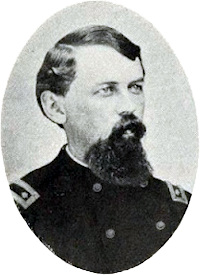
Camp 103d Illinois Infantry, Jackson, Tenn.,
February 15, 1863.
It’s 11 o’clock now, so I haven’t much time to write. We’ve been having some trouble in the regiment this week. The colonel appointed Lieutenant Mattison, captain of Company “I,” vice Medley, resigned, and Lieutenant Dorrance, captain of Company K, to fill the vacancy occasioned by King’s death. The men in both companies swore they wouldn’t do duty under the new officers, and the devil’s to pay. The colonel finally relieved them both from their new commands, doubting his right to enforce obedience until the new officers had received their commissions, which will probably be some two or three weeks hence, when the men will undoubtedly have to submit, even if harsh measures have to be resorted to to make them. The colonel has appointed Geo. Wilkinson, of Farmington, and Mr. Wagstaff, who formerly worked in the Ledger office, for my first and second lieutenants. My company have received them well, and I am well pleased with both of them so far. I like quiet people. I enclose you some resolutions which have been submitted to all the troops here for their adoption. We voted by companies. Company A, I, and F opposed them strongly, more on account of the spirit of dissatisfaction and discontent, which is rampant among them, than because of opposition to the principles they embody. Colonel D_____ seems to allow the trouble in his regiment to wear upon him. He has not the decision I once gave him credit for. Wears gloves at the wrong time in handling men. One more case where my judgment has fooled me during my army experience. Can’t now remember where it was correct. You certainly have to measure men by different standard in the army from that used at home. Everybody thinks we are going to evacuate here within a month. It looks like it, but can’t see why we should. Nearly all the troops are gone. Our regiment and the 50th Indiana have to do all the picket duty. We are on every other day as regularly as clock work. I like it better than lying in camp. Union citizens say that we will be attacked here the last of this week or first of next, by forces which are now crossing the Tennessee. That’s too old, played out, etc. There’s never any danger of a fight where I am. One of my boys died the other day, the first I have lost. Typhus fever, following measles, killed him. Was a real good soldier. Geo. Trader by name; lived near Ellisville. I have two more quite dangerously sick, but the general health of the regiment is improving. You don’t know how much I love these men I have under me. Not as individuals many of them, but as soldiers, of my company, for whose actions, and in a measure, health, I am responsible. Something, I suppose, like the love of a parent for his children. I never thought I could feel half the interest in the welfare of my brother man as I do now for these men.
Diary of Horatio Nelson Taft.
February 15, 2023
Washington Sunday Feb’y 15 1863.
Went to the Senate Chamber this morning at 11. and heard G B Cheever the celebrated radical Abolitionist preach, or rather declaim against Slavery. I never heard the man before and had some curiosity to hear what he would say. The Senate Chamber was crowded. I did not leave the Capitol till I had visited the other chamber and taken a look at the “Westward Emigrants” of Leutze, and the marble Washington. I did not know last Sunday (when I first saw it) that it was taken from Baton Rouge L.a. and sent here as a trophy. It is realy too beautiful a thing to be owned by any but Loyal citizens. The Rebels have no business with Washington, at least until they return to their duty as good citizens of the Union. It rained by spells all night and it has been a misty disagreeable day, and went over and spent the afternoon at Charleys taking dinner with them. Came back to my room about dark, and did not go out again. Doct Smith held service in his church today for the first time since it was vacated by the soldiers. The number of soldiers in the Hospitals in the City has greatly decreased and there is now 15,000 vacant beds in them, in and around the City. Another great Battle may fill them.
War Diary of Luman Harris Tenney.
February 15, 2023
15th. Thought some of going to camp, but concluded not to. Made some taffy and read some in “Ravenshoe.” Called at Captain’s quarters and had a good visit. Seems lonely without Thede after being with him so constantly for a week or two. How hard it is for mother to be entirely alone. God bless her.
Downing’s Civil War Diary.–Alexander G. Downing.
February 15, 2023
Sunday, 15th–We had another all night rain, which again stopped work on the canal. We moved our tents a little distance, to get out of the mud, going onto higher ground, closer to the lake. We are still in the plantation lawn, however, which comprises about twenty acres and has a great variety of shrubbery and tropical trees.
A Rebel War Clerk’s Diary
February 15, 2023
FEBRUARY 15th.—Already, as if quite certain that the great Northwest would speedily withdraw from the Eastern United States, our people are discussing the eventualities of such a momentous occurrence. The most vehement opposition to the admission of any of the non-slaveholding States, whose people have invaded our country and shed the blood of our people, into this Confederacy, is quite manifest in this city. But Virginia, “the Old Mother,” would, I think, after due hesitation, take back her erring children, Ohio, Illinois, Indiana, and perhaps one or two more, if they earnestly desired to return to her parental protection.
Some of the Cotton States might revolt at such a project, and even the cabinet might oppose the scheme of adding several powerful free States to the Confederacy; but it would not all suffice to prevent it, if they desire to join us. It is true, the constitution would have to be modified, for it is not to be supposed that slaves would be held in any of the States referred to; but then slavery would be recognized by its proper term, and ample guarantees would be agreed upon by the great free States which abandon the United States on the issue of emancipation.
Ohio, Indiana, and Illinois, added to the thirteen Confederate States, would speedily constitute us a people of sufficient military power to defy the menaces of the arms of the greatest powers of the earth; and the commercial and agricultural prosperity of the country would amaze the world.
I am of the opinion that Virginia, Maryland, Delaware, Kentucky, North Carolina, Tennessee, Arkansas, and Missouri would form a league of union with Ohio, Illinois, and Indiana, even if the rest of the Southern States were to reject the alliance. But who can foresee the future through the smoke of war, and amid the clash of bayonets? Nevertheless, division and subdivision would relieve all of the burden of debt, for they would repudi ate the greater part, if not the whole, of the indebtedness of both the present governments, which has been incurred in ravaging the country and cutting each other’s throats. The cry will be: “We will not pay the price of blood–for the slaughter of our brothers!”
0
February 15, 2023February 15, 1863, The New York Herald
The above map clearly points out the position of the blockading fleet at the time when the rebel rams made the dash upon them on the 31st of January last. It will be seen that the Mercedita was stationed off the bar of Charleston harbor in the line of the ship channel, with the Keystone State as a support. The rebel rams came down this channel and made the first attack upon the Mercedita, which received the whole shock almost before she was aware of the proximity of the enemy. The Keystone State advanced to her assistance and gave chase to the enemy, but was soon crippled by the heavy fire poured upon her by the rams. The positions of the Quaker City and other vessels of the blockading fleet show plainly that they could not have been in the engagement – therefore the serious injury of the Quaker City, as reported by the rebels, was, doubtless, applicable to the Keystone State. The lines of the various channels are set forth in the map, which also shows how closely the vessels were blockading them at the time of the attack.
The following is the official circular of the rebel Secretary of State to the foreign consuls relative to the above attack, and which document has just come to hand:
SECRETARY BENJAMIN’S CIRCULAR ON THE RAISING OF THE CHARLESTON BLOCKADE.
The following is a copy of the circular addressed by Secretary Benjamin to the foreign consuls in the confederacy:
DEPARTMENT OF STATE, RICHMOND, Jan. 31, 1863.
Monsieur BETTANCOURT, Consular Agent of France, at Wilmington, N. C.
SIR – I am instructed by the President of the Confederate States of America to inform you that this government has received an official despatch from Flag Officer Ingraham, commanding the naval forces of the confederacy on the coast of South Carolina, stating that the blockade of the harbor of Charleston has been broken by the complete dispersion and disappearance of the blockading squadron, in consequence of a successful attack made on it by the iron clad steamers commanded by Flag Officer Ingraham. During this attack one or more of the blockading vessels were sunk or burned.
As you are doubtless aware that by the law of nations, a blockade, when thus broken by superior force, ceases to exist, and cannot be subsequently enforced unless established de novo, with adequate forces, and after due notice to neutral Powers, it has been deemed proper to give you the information herein contained for the guidance of such vessels as may choose to carry on commerce with the now open port of Charleston.
Respectfully, your obedient servant,
J. P. BENJAMIN, Secretary of State.
0
February 15, 2023February 15, 1863, The New York Herald
The Army of the Rappahannock is still immovable. The state of the weather and the condition of the roads, no doubt, preclude the possibility of any military movements. Yesterday General Hooker visited General Sigel, and was accompanied on his return by that officer and General Stahel.
Our special army correspondents at the headquarters near Vicksburg and on board the ram Queen of the West furnishes today some interesting accounts of the state of affairs in that quarter. It would not appear that the canal, although our troops are working vigorously upon it, is so certain of being made available as was at first supposed. It is yet regarded, however, by those engaged upon it as a feasible means of capturing Vicksburg, notwithstanding the fact that the river, so far, refuses to adopt the new channel. The army at that point is represented to be in excellent condition, well supplied with stores, and in good health and spirits. Gen. Grant and Admiral Porter are working vigorously to insure the success of their expedition.
The Navy Department received yesterday a despatch from the fleet on the Cumberland river detailing an account of the successful attack made the 3d inst. by Lieutenant Leroy Fitch, with the gunboats Brilliant, Fairplay, Lexington, St. Clair, Robb and Silver Lake, upon a force of 4,000 rebels, under Generals Wheeler, Forrest and Wharton, who were surrounding the forces of Col. Harding, and pressing them hard at a point a few miles below the town of Dover, Ky. The fleet of Lieutenant Fitch most opportunely arrived at night, and shelled the rebels so effectively that they were compelled to abandon their position after sustaining a heavy loss.
By the arrival of the Talisman, from Jamaica, we are put in possession of news touching the movements of the rebel vessel Alabama up to the 5th inst. The journals of Kingston contain very interesting descriptions of her run from Galveston and the destruction of the Hatteras. Captain Semmes, of the Alabama, was received by the merchants and citizens of Kingston in the Commercial Exchange on the 25th ult., after his arrival there, and was met with distinguished [continue reading…]
0
February 15, 2023February 15, 1863, The New York Herald
Our Special Mississippi Correspondence.
ON BOARD THE RAM QUEEN OF THE WEST,
MISSISSIPPI RIVER, BELOW VICKSBURG, Feb. 5, 1863.
The Union ram Queen of the West, which ran the blockade of the rebel batteries at Vicksburg on Monday morning last, and then ran further down the river, has just returned from a most exciting, romantic, perilous and important passage down the Mississippi river, into the Red river, and up the Mississippi again to her present anchorage in the immediate vicinity of Vicksburg. During this excursion Colonel Ellet destroyed three rebel steamboats, several hundred thousand dollars worth of stores intended for the rebel army, captured a number of rebel officers, and struck a fearful blow at the vaunted security of the rebel authorities on the Lower Mississippi.
I have already forwarded you the particulars of the ram running past the Vicksburg batteries. Herein I send you a description of her subsequent exploits. Although in the beginning I may repeat a few facts mentioned in my first despatch sent when she had passed the formidable fortifications at the city, I do so in order that the present narrative may contain a complete account of all her operations from the commencement to the close.
Whilst we could see the rebel steamboat City of Vicksburg lying opposite the city and under the protection of its guns, it was known that further down the river there were in the service of the Confederate authorities a large number of transports, which were of incalculable benefit to them in furnishing supplies to their troops at Vicksburg and Port Hudson. It was important for us that we should destroy at least a portion of their means for river transportation, and, by proving comparatively easy the accomplishment of an apparent impossibility, teach them a moral lesson. Rear Admiral David D. Porter, commanding the Mississippi squadron, requested Colonel Charles E. Ellet, commanding the co-operating ram fleet, to prepare the Queen of the West for the contemplated dangerous and important mission. Eighteen hours were allowed him within which to effect the necessary arrangements to start at the appointed time. Three hundred cotton bales were placed on board, in order to protect her machinery from serious damage by the shot and shell from the rebel batteries. The Queen of the West is a wooden vessel – her prow only is of iron. Consequently, in the absence of iron armor, these cotton bales were necessary for her protection. Next to the safety of the machinery one of the most important points to be attended to in making the arrangements was the protection of the pilot house. With the limited [continue reading…]