0

News of the Day
1860s newsprint

March 27, 1863, Southern Banner (Athens, Georgia)

Persons indebted to the Southern Banner office, from one dollar up to one hundred, can now discharge their indebtedness in clean cotton or linen rags, at five cents per pound, delivered at this office. This is a fair proposition, and we hope every body will avail themselves of it.

We will also pay the same amount in cash for rags delivered at this office.

0 comments

0

News of the Day
1860s newsprint

March 27, 1863, Peoria Morning Mail (Illinois)

 The Democracy of Pekin Township assembled in large numbers at the Court House in the city of Pekin, on Saturday evening last; and organized by calling J. McDonald to the chair and appointing H. P. Finnigan Secretary.

 After the nomination of a town ticket, and the transaction of other business the following Preamble and Resolutions were unanimously adopted.

 Whereas, the Union has no existence separate from the Federal Constitution, but being created solely by that instrument, it can only exist by virtue thereof; and when the provisions of that Constitution are suspended either in time of war or in peace, whether by the North or the South, it is alike disunion; Therefore

 Resolved, That the acts of the federal administration in suspending the writ of habeas corpus; the arrest of citizens not subject to military law, without warrant or authority, transporting them to foreign States, incarcerating them without charge or accusation, denying them the right of trial by jury, prescribing, in many cases, arbitrary; illegal test oaths on their discharge, and finally attempting to indemnify those responsible for the same under the law; in abridging the freedom of speech and of the press; in suppressing newspapers; in establishing a secret police; in declaring martial law over States not in rebellion, where the courts are open to punish crime; in attempting to enforce a compensated emancipation; in proposing to tax white men to purchase and elevate the negro; in the dismemberment of the State of Virginia–are each and all subversive of the Federal and State Constitutions, and the reserved rights of the people, and tend to a consolidated military despotism. In deep reverence for our Constitution, which has been ruthlessly violated, we do hereby enter our most solemn protest against these usurpations of power.

 Resolved, That while this war was conducted with the avowed purpose on the part of the administration and of congress to restore the constitution and the Union, and the constitutional authority of congress over the whole Union, we gave it our hearty support, and continued to do so until the administration made it a war for the liberation of the negro, and destructive of the constitutional rights of the States, and individuals; that we are and ever have been opposed to a war for the freedom of the negro, or the destruction of any right of any State or individual under the Constitution.

 Resolved, That the conscription and indemnification bill recently passed by Congress are subversive of the sovereignty and rights of the States, and designed to make them mere dependencies upon the central Government, unconstitutional in their provisions, and dangerous to the liberties of the people.

 Resolved, That the Government of the United States is vested with full power by the Federal Constitution to prosecute war; and that there is no “war power” outside the Constitution; that the President can execute the laws only by such means as the Constitution and the laws give him power to employ; and that the establishment of the doctrine that the President possesses, or that Congress can confer upon him, unlimited power over the land by a declaration of martial law, with immunity for wrongs and trespasses upon the rights of the people, is a calamity little, if any, less to be deplored than the success of the rebellion.

 Resolved, That we will maintain our soldiers in the field, and at home, in all their social, political and military rights; and while we are proud of their capacity, and glory in their achievements, we deprecate their treatment by the Administration, and many of their officers; and we declare that they did not enter the military service to steal either negroes or cotton, nor to be treated like the serfs of a Czar, but as citizens, the equals in character, in spirit, in patriotism and in social relations, of any of their officers, or of the President of the nation; and we protest against their being compelled, in the ranks of the army, to become the associates of negroes, and the equals in degradation of the slaves in the South.

 Resolved, That we condemn and oppose all secret political associations; they are the dens of demagogues, the enemies of the republic, and the assassins of liberty.

 Resolved, That there can be no liberty where there is no freedom of the press; and that it is the ancient and constitutional right of the people to canvass public measures, and the merits of public men.

 Resolved, That, under no circumstances are we willing to submit to the illegal and arbitrary arrests of our citizens; that the writ of habeas corpus must be restored, the rights of citizens respected, and civil, not military law be supreme, so long as civil law can be maintained; that we will protect and defend the constitution of the state of Illinois and the rights of her citizens against all and every violation, whether civil or military, from any quarter whatsoever.

 Resolved, That the recent arrest of the Hon. Charles H. Constable for discharging his duty as an officer and a citizen, was an open attack by the military power upon the liberties of the people, and an attempt to destroy the judiciary of the State, whose duty it is by law to protect and preserve to the public their rights; and we call upon the governor of the state to demand his instant release, and the prosecution of the parties who were in complicity with the outrage.

 Resolved, That we tender to Judge Constable the assurance of our heartfelt sympathy in this outrage upon his rights as an officer and a citizen; that we will not forsake him in any emergency, but will see that the majesty of the law is as amply vindicated as it has been grossly violated in his person.

 Resolved, That at all times, and more especially the present, the people should keep themselves informed concerning the condition of State and National affairs, and to this end the circulation of good democratic newspapers should be encouraged; we therefore recommend the Tazewell Register, Illinois State Register, Chicago Times, and Peoria Morning Mail as reliable sources of information, and worthy of public patronage.

 On motion the secretary was directed to forward a copy of the resolutions to Judge Constable, and also to Gov. Yates.

 On motion the following gentlemen were appointed by the chair to act as the township committee for the ensuing year:

J. B. Cohrs, James Haines, B. S. Prettymen, C. A. Roberts and H. P. Finigan.

 The chair announced that a meeting of the German Democrats will be held in the Court House next Wednesday evening, for the purpose of organization.

 In response to the calls of the meeting, Mr. Prettyman took the stand, and in a speech of about an hour, ably and successfully vindicated the position of the Democracy as indicated in the resolutions. His speech was listened to with interest, and gave great satisfaction to the Democracy, who evinced their approbation by frequent applause.

 Jonathan Haines, who had just returned from Washington, made some interesting remarks concerning matters and things in that locality.

 On motion it was ordered that the proceedings of the meeting be published in the Tazewell Register, and that the Chicago Times, State Register, PEORIA MAIL, and other Democratic papers be requested to copy the same.
 

0 comments

0

News of the Day
1860s newsprint

March 27, 1863, Southern Banner (Athens, Georgia)

–The Columbus Sun says:

“If you would like cheap newspapers, a good supply of writing paper and envelopes–all of which are almost as indispensable as clothing–save your rags. Let the rag bag become a recognized institution in every household. Nothing would tend more to increase the quantity of paper, and cheapen its price, than the general institution of the rag bag. Let every scrap of cloth, rope and thread, refuse cotton, flax or hemp forms the fibre be diligently saved, and sold to the paper mills and paper will become abundant and be furnished at reduced rates.

“People of the South, if you would read and write, save your rags.”

0 comments

0

News of the Day

March 27, 1863, The New York Herald

The only news from the Potomac Army today is that Governor Curtin, of Pennsylvania, visited the troops from his State and made quite a sensation among them.

The forces of Union cavalry under Major Stratton, which was sent from Suffolk to relieve the garrison of General Foster command, who were hemmed in at Winfield, N.C., as we reported yesterday, has just been heard from. They were in full pursuit of the enemy, who fled on their approach across the Chowan river with the aid of flatboats and rafts. General Foster subsequently destroyed these appliances of escape by the fire of his gunboats. The fight was of short duration, but while it lasted was kept up on both sides in a spirited manner. We had eight of the Eleventh Pennsylvania cavalry wounded in the encounter.

General Burnside has assumed command of the Department of Ohio, and has issued his order announcing the fact, which is declared most satisfactory. Indiana is made a separate military district, under General Carrington, who reports to General Burnside. The rebel advance force in the Kentucky invasion is variously estimated at from thirty-five hundred to ten thousand. Our troops are concentrating rapidly. Skirmishing was going on yesterday at Camp Dick Robinson, Ky., where a grand engagement was expected to come off soon.

We are in possession of news from Memphis, by way of Cincinnati, dated yesterday, to the effect that Admiral Farragut’s flagship Hartford discovered the Indianola at Hard Times Bend and recaptured her without resistance. The rebels had been at work on her, and she was nearly ready for service. The Queen of the West is up the Black river out of the reach of our vessels. The Jackson Appeal of the 18th instant says that General Banks had failed to make a land attack, and that Farragut went into the fight alone and passed the rebel batteries at Port Hudson at night under a terrific cannonade.

The Royal Gazette of Georgetown, British Guiana, of the 26th of February, contains the following: – It is rumored that his Excellency has issued instructions to the pilot department to the effect that, in the event of the Alabama calling here shortly on the plea of requiring supplies, the pilots are to inform Captain Semmes that as his vessel has recently received supplies at Jamaica, none can be obtained here within the time allowed by the home regulation.

0 comments

0

News of the Day

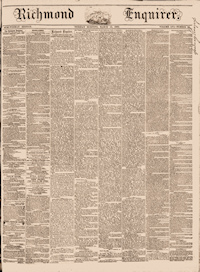
March 27, 1863, Richmond Enquirer

It is said that there is a certain gloom and anxiety over our people, greater than that which was observed even during the winter of 1861–1862; that disastrous season which witnessed the reverses of Fort Donelson, Nashville, Roanoke Island, Memphis and New Orleans. Yet there is no cause for despondency in the military situation, nor does any exist amongst military men. It is the peaceable trading citizens who exhibit this sombre gloom. An officer visiting Richmond from the camp near Fredericksburg, declares that it makes him sad to see the long countenances, and he hurries back to his regiment. From the army of Tennessee, from Vicksburg, Fredericksburg, Charleston, the accounts of our armies and of the state of our defences are every day more and more cheering. What, then, is the meaning of this civilian despondency, if any there be?

It is due, in the first place, to the feigned alarms of those who seek to inflate prices still further, under the influence of a sort of general panic, so that they may amass sudden fortunes. The greedy rage of speculation has increased in intensity within twelve months, and seized upon all classes. – Cunning speculators have found, in the disordered condition of the currency, while Congress had not yet matured plans of curing the evil, infinite facilities to gamble in all sorts of products, and make prices to suit themselves. During the preceding winter all were patriotic and the spirit of self-sacrifice was stronger than avarice, both amongst solders and civilians. These last few months a greedy madness has seized on most of the latter class, and that noble patriotism finds finds refuge in the camp.

Another cause of the present collapse of public spirit amongst merchants and politicians is the bursting of the great Northwestern bubble; a foolisher craze, perhaps than even those two previous hallucinations which did us such deadly harm – the King Cotton delusion first, and then the French intervention bowl of Tantalus. Singular as it may appear, many thousands of persons of intelligence did for a while dream and dote, that Vallandigham and the intelligent lady would somehow bring us peace in thirty days – or say thirty-five. The future historian of the struggle will have to relate [continue reading…]

0 comments

0

News of the Day

March 27, 1863, The New York Herald

NEWS FROM WASHINGTON.

WASHINGTON, March 26, 1863.

Four hundred and eighty-four rebel prisoners were sent South tonight by the flag of truce boat State of Maine, under charge of Captain Mulford. The number was made up of two hundred and forty prisoners that reached here last night from Sandusky, Ohio, captured mostly in Missouri, and two hundred and forty-four from the Old Capitol and Carroll prisons of this city. Among the prisoners were twelve officers captured prior to the proclamation of Jeff. Davis and the interruption of interchanges of officers caused thereby; also Dr. Wilmer, of rebel smuggling notoriety. The steamer State of Maine takes the place of the regular flag of truce boat New York while the latter is having her boilers repaired in Philadelphia.

Something of a scene took place as the prisoners were being marched on board the boat, in consequence of a party of rebel sympathizers, mostly females, making so demonstrative a display of their affection for the prisoners as to cause the guards to require them to vacate the wharf. The females seemed inclined to hold their ground, waving their handkerchiefs and kissing their hands to the prisoners, who replied by noisy cheers and shouts. The Union soldiers were greatly excited by this impudent demonstration, and expressed their indignation by groans and warm expressions of feeling. In view of the inhuman treatment of Union prisoners at Richmond, nothing restrained them from pitching into both Butternuts and sympathizers but the fact that the first were prisoners in their hands and the latter were women.

0 comments

0

News of the Day
1860s newsprint

March 27, 1863, Peoria Morning Mail (Illinois)

Pish!Pshaw!Pooh!–The Washington correspondent of the Chicago Times has the effrontery to declare that there is a movement on foot in New York city, looking towards the impeachment of the President at the opening of the next session of Congress, in the manner provided by the Constitution.The movement, he says, originated with the most eminent constitutional lawyers of the country, including two from the West, and is in the hands of men whose character for decision and firmness, as well as for courage, is a sufficient guarantee that they will carry it through.

We presume that this statement is a falsehood, “made out of whole cloth.”The Copperheads may have the will, but they lack the courage, to attempt an outrage of this nature–Buffalo Commercial Advertiser.

0 comments

0

Cruise of the U.S. Flag-Ship Hartford -Wm. C. Holton

March 26th. To-day the men have been at work forming barricades on the poop deck and forecastle with hammocks and old sails; it will prove to be quite a protection to the men who are exposed at these points, as Minie balls are dealt out to us in a profuse manner generally.

We were honored to-day with a visit from Major-General Grant and staff. A consultation of war was held on board by them and our Admiral.

0 comments

Downing’s Civil War Diary.–Alexander G. Downing.

Diary of Alexander G. Downing; Company E, Eleventh Iowa Infantry

Thursday, 26th–It is very warm and pleasant, and the mud is drying up fast. We have no need for camp guards at this camp. We drew six days’ rations. The Eleventh and Fifteenth Iowa Regiments received orders to move at once down the river. We immediately struck our tents and by 10 o’clock p. m. were on board the “Superior” with all the quartermaster’s supplies, but the boat is to lie here all night. Everything seems to point to a movement upon Vicksburg, and the report is that the fleet, protected by the gunboats, will have to run the blockade, while the troops will have to move by land through Louisiana and cross the river below Vicksburg.

0 comments

War Diary of Luman Harris Tenney.

War Diary of Luman Harris Tenney.

26th. In the morning played battledore with Melissa. Scored 711 and 637. Made us feel large. D. R. and C. G. who came in last night, were down an hour or two. Went to town. Met Minnie. Called on Lucy Randall at the store, then at Mr. Fairchild’s and at Mr. Lincoln’s door. C. G. and I went to F. A.’s F. H. came up. They played for us. Said goodbye all around. Left at 6:30 with C. G. and Mrs. Norton. Tried to be cheerful.

0 comments

A Rebel War Clerk’s Diary

Civil War Day-by-Day
A likeness of Jones when he was editor and majority owner of the Daily Madisonian during President John Tyler’s administration.

MARCH 26th.—We have dispatches (unofficial) from the West, Stating that one of the enemy’s gun-boats has been sunk in attempting to pass Vicksburg, and another badly injured. Also that an engagement has occurred on the Yazoo, the enemy having several gun-boats sunk, the rest being driven back.

It snowed a little this morning, and is now clear and cold.

Mr. Seddon is vexed at the unpopularity of the recent impressments by his order. It was an odious measure, because it did not go far enough and take all, distributing enough among the people to crush the extortioners.

0 comments

0

News of the Day

March 26, 1863, The New York Herald

Our intelligence from the Southwest today, confirming, as it does, the floating news which we have been in possession of for the past two or three days, is most important and satisfactory. There appears to be no doubt that Admiral Farragut’s entire squadron has arrived below Vicksburg, farther down than Warrenton. The Hartford and the Albatross have reached the Vicksburg cut-off. Admiral Porter’s splendid movement through the bayous into Deer creek, on his way to the Yazoo with five iron-clads, is also confirmed from the same source. The Monitor Lafayette is reported to be above Haines’ Bluff, on the Yazoo river, with other gunboats following her. Admiral Porter has struck out a new line of navigation through numerous bayous and water courses, by which he has got into the rear of the enemy’s position at Haines’ Bluff. Our map will correctly illustrate the line of operations followed so successfully by Admiral Porter.

The expedition on the Tallahatchie has not been so successful, the temporary check which it received by the disabling of the Chillicothe, as we before announced, being now confirmed.

We learn from Kentucky that the advance of the rebel army into that State is exciting much alarm. The advance of Longstreet’s forces are at Danville, and Breckenridge is said to be at Harrodsburg with a large army. He has issued a proclamation carrying out the conscription act, which is being rigidly enforced in all portions of Kentucky now under rebel rule.

No important movements are reported from General Hooker Army of the Potomac. Our cavalry had a brisk skirmish with the rebels in front of Chantilly, Va., on Monday evening. They drove the enemy for two miles, but getting into an ambuscade in the woods our troops were driven back by a heavy fire of carbines and pistols and a superior force of the foe. Reinforcements under Captains McGuire and Haberack then arrived, and drove back the rebels a distance of eight miles. Night coming on our column then returned to Chantilly, with the loss of one killed, three wounded, and one of their [continue reading…]

0 comments

0

News of the Day

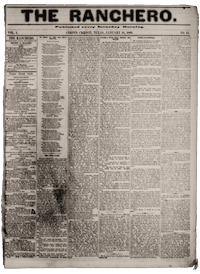
March 26, 1863, The Ranchero (Corpus Christi, Texas)

From the Fort Brown Flag.

On the night of Saturday, the 14th, or rather on the morning of Sunday the 15th, a party of men, consisting of some citizens and some soldiers, so we have been told, (for the names and details of the transaction have been kept pretty close by the actors in the affair,) passed from the Texas side of the Rio Grande into Mexico, and captured and took prisoner a man named I. T. Montgomery, a very desperate character, who had made himself notorious and objectionable to the Confederate citizens on this frontier. At the time that Montgomery was captured, there happened to be present a Texas renegade named E. J. Davis, who pretends to hold a colonel’s commission in the Yankee army. Davis was with his family at the time, and it is probable that this circumstance is the only excuse for his being alive at this time, to perplex matters between people who ought to have more important matters to quarrel about.

The Texans crossed the Rio Grande early in the morning and soon surrounded the house in which Montgomery was lodged. Quite a number of renegades were in the house, and they soon showed a disposition to fight.  This was just the card that suited the Texans, and our boys pitched in. The renegades soon found that fighting was not their game, and they commenced a lively skedaddle over the sand hills. They were fired at by our boys, and we are informed through their own party that they lost three men

As we said before, owing to the secrecy observed about the affair on the Texas side of the Rio Grande, we can ascertain none of the particulars of the transaction from those of our men who were engaged in it, and therefore we have to rely mainly on the statements of parties who have heard the talk of the runaway renegades.

Montgomery and Davis were brought to the Texas side of the Rio Grande.  Montgomery is said to have been hung immediately after he was landed, and Davis was concealed in the bushes near Brownsville to prevent his being taken possession of by Gen. Bee.

As a matter of course this invasion of Mexico and capture of Yankees in that country, created great excitement and much anxious regret both in Matamoros and Brownsville. The renegades took it in high dudgeon and got up a torchlight procession in Matamoros which consisted of runaways, white and black, a few barefooted Mexicans, and any number of children. The same crowd could have been hired to turn out for any disreputable purpose, either to attend the funeral of a thief or the orgies of a prostitute.

The Mexican authorities acted very promptly and very calmly on the subject. Gov. Lopez simply made a demand for the surrender of the captured individuals, and as soon as Gen. Bee could obtain control of Davis, he returned him to the Mexican authorities. This act of justice was done on Wednesday, Major Gray acting as the agent of the Military in surrendering the renegade.

The Mexican population of Matamoros, that is the respectable portion of it, acted with a great deal of calmness on the occasion, and used their best endeavors to bring the matter to a peaceful termination. They perceived that the act was one purely personal, and that the two people should not embroil themselves for one of those events which no authority can at all times control.

When the renegades were captured they were at the mouth of the Rio Grande for the purpose of going away on a Yankee transport. When she learned of the capture she put to sea with the threat to return soon with forces to thrash the Texans at the mouth of the river.

0 comments

0

News of the Day
1860s newsprint

March 26, 1863, Savannah Republican (Georgia)

The Baltimore Clipper says Antonia J. Ford was the principal spy and guide for Capt. Mosely in his recent raid on Fairfax Court House, and aided in planning the arrest of Gen. Slaughter, Wyndham and others. She was arrested and brought to the Old Capitol Prison on Sunday last, with $1,000 Confederate money on her person. The following is a copy of her commission:

To all whom it may concern: Know ye that, reposing special confidence in the patriotism, fidelity and ability of Antonia J. Ford, I, J. E. B. Stuart, by virtue of power vested in me as Brigadier General, Provisional Army Confederate States, hereby appoint and commission her my Honorable Aid-de-Camp, to rank as such from this date. She will be obeyed, respected and admired by all lovers of a noble nature.

Given under my hand and seal, Headquarters Cavalry Brigade, at Camp Beverly, 7th October, 1861, and first year of our Independence.

J. E. B. Stuart.

By the General,

 L. T. Bryan, A. A. G.

0 comments

0

News of the Day
1860s newsprint

March 26, 1863, Savannah Republican (Georgia)

We had the pleasure of examining at the Jewelry establishment of Mr. John Hill on 14th street, yesterday, a pair of very magnificent spurs, of solid burnished gold, which were imported through the blockade, from citizens of Maryland, as a present to General Lee. They are each engraved, on the inside, with the following inscription:

 “Stemulus Dedit Virtus, Presented to Gen. Robert E. Lee, by his friends and admirers of Prince George county, Maryland.”

The gift does honor to the patriotism and credit to the taste of the givers.–Rich. Enq.

0 comments

0

News of the Day

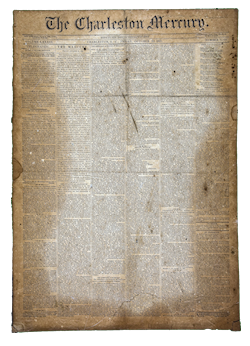
March 26, 1863, The Charleston Mercury

VICKSBURG, March 25. – Two of the enemy’s boats attempted to pass down the river this morning. Our batteries opened upon them with effect. One was sunk opposite our batteries. The other was badly riddled, and now lies opposite the canal batteries. It is expected she will be sunk. She was set of fire, but appeared to be extinguished. The firing of our batteries was splendid; nearly every shot taking effect.

On Saturday morning Colonel FERGUSON, commanding the batteries at the junction of Deer Creek with the Sunflower River, thirty miles above its junction with the Yazoo River, repulsed the enemy, destroying, it is said, three gunboats and driving the rest back. Colonel FERGUSON had sufficient strength to hold the enemy in check, and recommended that reinforcements should be sent in rear of the enemy to cut off his retreat. This movement on the part of the enemy was made with a view to flank our batteries at Haines’ Bluff, on the Yazoo River.

0 comments

0

News of the Day

March 26, 1863, The New York Herald

Advices received from all parts of the seceded States go to prove how greatly the people suffer for provisions and food of every description. Prices have attained a height which places almost all the necessities of life out of reach of the poorer and even the middling classes, the wealthy being themselves deprived of all luxuries. The authorities at the South are making every effort to induce the people to grow corn and wheat in place of cotton, and have begun seizing upon provisions wherever they find them for the purpose of feeding their armies. This, however, but precipitates the moment when, unable to bear such suffering any longer, the misguided people of the so called Confederate States will throw off the yoke of the ambitious and traitorous men who rule their destinies. The want of food will shortly compel them to evacuate many of their strongholds – a fact which is already deeply impressed upon the minds of a large portion of the public in the South.

The Governor of Georgia has issued a proclamation to the people in his State, which, as an illustration of what we have stated above, we append. This document we extract from the Savannah Republican of the 16th of March:

TO THE OFFICERS AND MEMBERS OF THE GENERAL ASSEMBLY:

I am satisfied that developments have clearly shown the necessity for further legislation at an early day to secure the use of all our productive labor this year in the cultivation of our lands in grain and other articles necessary to sustain life, and not in cotton, tobacco or like productions, and to prevent the destruction of food by distillation.

As the public exigencies do therefore, in my opinion, require that the General Assembly convene at an earlier day than fixed for your meeting when you last adjourned, I issue this, my proclamation, requiring you and each of you to assemble in your respective halls in the Capitol, in this city, on Wednesday, the 25th day of this present month, at ten o’clock A.M. [continue reading…]

0 comments

0

News of the Day

March 26, 1863, The New York Herald

The cheering news from the Mississippi, which we have the pleasure to submit to our readers this morning, opens a splendid prospect before us. Admiral Porter, by a convenient bayou, has succeeded in running five gunboats into the lower Yazoo, and into the very position desired above Haines’ Bluff. Thus he is enabled to move up the river to the support of the descending expedition at Fort Pemberton, to reduce the rebels there to a speedy capitulation or evacuation, and to bring down the combined land and naval forces of our two expeditions to the flank and rear of Vicksburg, preparatory to a general assault or complete investment of the place. We therefore confidently expect very soon to receive the news that the rebels, to save their army at each place, have abandoned Vicksburg and Port Hudson, and that the whole line of the Mississippi is cleared of rebel obstructions.

It appears that the rebel report that only one of the vessels of Admiral Farragut’s squadron had run the gauntlet of the enfilading batteries at Port Hudson was a deception. The latest reports state that all of his vessels are now above Port Hudson. Two of them have reached the mouth of the canal opposite Vicksburg, while the remainder are stationed at Red river, doubtless to look after the ram Queen of the West and other rebel craft.

While it is evident that we are near a general collapse of the rebellion in the Southwest, with the capture or evacuation of Vicksburg and Port Hudson, the general reports of the day, including those from rebel sources, and all the signs of the times, indicate the speedy expulsion of Jeff. Davis from Virginia. The scarcity of subsistence of itself is powerfully operating to the abandonment by the rebel armies of their exhausted Northern frontier lines. We dare say that the principal object of Longstreet’s advance into Kentucky, from East Tennessee, is to secure subsistence for his troops, and some needful supplies for the army of Jo. Johnston in front of General Rosecrans; but in this foraging foray we predict that Longstreet will be far less successful than Bragg.

The skies are brightening. The rebellion is evidently upon the point of exhaustion and dissolution. When one gold dollar in Richmond commands six dollars and a half in Confederate scrip, we may reasonably assume that the rotten paper fabric upon which the rebellion stands is falling to pieces. The time has come, and President Lincoln has now the opportunity, the means and the power, to bring this war to a speedy conclusion. Let him exert his authority, and push on the war with an overwhelming pressure, and he will soon achieve a glorious, comprehensive and lasting peace. In view of the hour of our great deliverance, who can attempt to portray the glory and grandeur of the future destiny of the United States of America, fully reunited and all powerful for peace or war?

0 comments

0

News of the Day

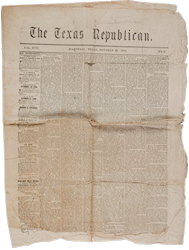
March 26, 1863, (Marshall) Texas Republican

Capt. T. J. Coleman, who has just returned from a trip South, informs us that throughout the counties of San Augustine, Shelby, Sabine, Jasper, &c., provisions are very scarce and that corn is selling at from three to five dollars per bushel. He paid five dollars for himself and horse, for one night’s entertainment at the hotel in San Augustine, and very rough fare at that.  The crops throughout the region he traveled looked promising. The season thus far has been unusually propitious, and if it continues, there will be an abundant yield of breadstuffs and fruits. He saw but little cotton planted.  Nearly every one was preparing for a heavy corn harvest.

0 comments

0

News of the Day
1860s newsprint

March 26, 1863, Peoria Morning Mail (Illinois)

The London Times thus speaks of the condition of sewing women in London and represents a state of things truly deplorable:

The young female slaves of whom we speak, are worked by gangs in ill ventilated rooms, or rooms that are not ventilated at all, for it is found by experience, that if the air be admitted it brings with it “blacks” of a kind which damages the work on which the women are employed. Their occupation is to sew from morning to night, and night to morning–stitch, stitch, stitch, without speech, without a smile, without a sigh. In the gray morning, they must be at work–say at six o’clock, having a quarter of an hour allowed for breakfast. The food served out to them is scanty and miserable enough, but still, in all probability, more than their fevered systems can digest. From six o’clock, then, till eleven, it is stitch, stitch, stitch. At eleven a bit of bread is served out, and at one twenty minutes are allowed for dinner, a slice of meat and a potato, with a glass of toast and water to each. Then again to work–stitch, stitch, stitch, until five, when fifteen minutes are allowed for tea.

Their needles are again set in motion once more, stitch, stitch–until nine o’clock, when fifteen minutes are allowed for supper, a piece of dry bread and cheese, and a glass of beer. From nine o’clock at night until one, two and three o’clock in the morning, stitch, stitch! the only break in this long period being a minute or two, just time enough to swallow a strong cup of tea, which is supplied lest the young people should “feel sleepy.” At three o’clock A.M., to bed; at six o’clock A.M., out of it again, to resume the duties of the day. There must be a good deal of monotony in the occupation. But when we have said that for certain months in the year these young persons are worked in this manner, we have not said all. Even during the few hours allotted to sleep–should we not say a feverish cessation from toil?–their miseries continue. They are cooped up in sleeping pens ten in a room, which would, perhaps, be sufficient for the accommodation of two persons. The alternation is from treadmill (and what a treadmill) to the Black Hole of Calcutta. Not a word of remonstrance is allowed, or is possible. The seamstress may leave the mill no doubt, but what awaits her on the other side of the door? Starvation, if honest; if not, in all probability, prostitution and all its consequences.

0 comments

0

News of the Day
1860s newsprint

March 26, 1863, Clarke County Journal (Alabama)

 The high prices of everything we have to buy–provisions, paper, ink, &c.–compel us to raise the subscription price of the Journal. Accordingly we have placed it at $3 per annum, in advance. This is a very reasonable price for a newspaper considering the exorbitant prices of almost everything else.  Paper and ink have gone up five or six hundred per centum, and are extremely difficult to obtain at that.

0 comments

Robert M. McGill

Robert M. Magill – Personal Reminiscences of a Confederate Soldier Boy, 39th Georgia Regiment of Infantry

March 25th.—Two gunboats undertook to pass the batteries just at daylight this morning; one sunk in front of town; other badly damaged; reported sunk at 12 M.


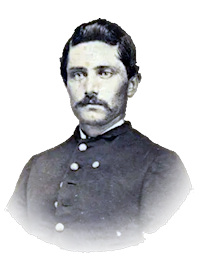
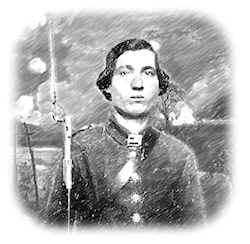
(Note: picture is of an unidentified Confederate soldier.)

0 comments

0

Cruise of the U.S. Flag-Ship Hartford -Wm. C. Holton

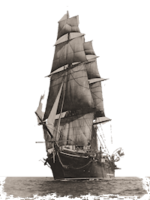
March 25th. This morning, at five thirty, heard heavy firing up the river in the direction of Vicksburg, which continued until six A. M., at which time we got under way and steamed up the river, beat to quarters, and shelled the rebel earthworks at Warrenton. The rebels returned our fire with rifled field pieces and musketry. At seven fifteen A. M., passed the batteries and discovered ahead the U. S. ram Switzerland and Lancaster, both having just passed the batteries at Vicksburg. The former vessel received a shot through one of her boilers, and the latter sunk from injuries received in the action. Three of the Switzerland’s men were very badly scalded; the crew of the Lancaster were all saved. At seven thirty A. M. brought ship to anchor above Warrenton. This afternoon Mr. Gabaudan, the Admiral’s Secretary, returned.

0 comments

Downing’s Civil War Diary.–Alexander G. Downing.

Diary of Alexander G. Downing; Company E, Eleventh Iowa Infantry

Wednesday, 25th–A division of troops passed our camp going down the river, while General Logan’s Division came back again going on up the river.

0 comments

A Confederate Girl’s Diary

Civil War Day-by-Day

Wednesday, March 25th.

Early last evening the tremendous clatter of a sword that made such unnecessary noise that one might imagine the owner thereof had betaken himself to the favorite pastime of his childhood, and was prancing in on his murderous weapon, having mistaken it for his war steed, announced the arrival of Captain Bradford, who with two friends came to say adieu. Those vile Yankees have been threatening Ponchatoula, and his battery, with a regiment of infantry, was on its way there to drive them back. The Captain sent me word of the distressing departure, with many assurances that he would take care of “my” John.

Scarcely had he departed, when lo! John arrives, and speaks for himself. Yes! he is going! Only a moment to say good-bye . . . sunset approaches. Well! he must say good-bye now! Chorus of young ladies: “Oh, will you not spend the evening with us? You can easily overtake the battery later.” Chorus of married ladies: “You must not think of going. Here is a comfortable room at your service, and after an early breakfast you can be on the road as soon as the others.” No necessity for prayers; he readily consents. And yet, as the evening wore on, when we laughed loudest I could not help but think of poor little Mrs. McPhaul sitting alone and crying over her brother’s departure, fancying his precious bones lying on the damp ground with only the soldier’s roof – the blue vault of heaven – above, while two miles away he sat in a comfortable parlor amusing himself.

About sunrise, while the most delightful dreams floated through my brain, a little voice roused me exclaiming, “Sady! Sady! John Hawsey say so! Say give Sady!” I opened my eyes to see little Gibbes standing by me, trying to lay some flowers on my cheek, his little face sparkling with delight at his own importance. A half-opened rosebud with the faintest blush of pink on its creamy leaves – a pink, and a piece of arbor vitae, all sprinkled with dew, this was my bouquet. The servant explained that Mr. Halsey had just left, and sent me that with his last good-bye. And he has gone! “And now there’s nothing left but weeping! His face I ne’er shall see, and naught is left to me, save” – putting away my book and all recollections of nonsense. So here goes!

0 comments