
April 1st.—”All quiet on the Rappahannock to-night,” and we are almost as still as in days gone by. The girls got up a little merriment this morning by their “April fools.” The remainder of the day passed in our usual way.
American Civil War Chronicles
A Rebel War Clerk’s Diary
April 1, 2023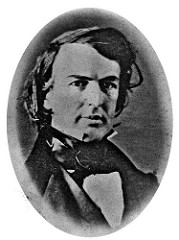
APRIL 1st.—It is said we have taken Washington, a village in North Carolina. And it is represented that large supplies of meat, etc. can be taken from thence and the adjacent counties.
Every day we look for important intelligence from Charleston, and from the West.
Mr. Seddon, the Secretary of War, has receded from his position in regard to resident aliens.
0
April 1, 2023
April 1, 1863, Austin State Gazette
Mr. Editor–Permit me to inquire of you why it is that the editor of the Houston Telegraph is so tardy in acknowledging the receipt of money forwarded by the ladies of Austin for the benefit of the soldiers? Why is it that when he does condescend to do so, he can find room for the notice only in some out of the way corner of his sheet? He has found space for undeserved sneers against us. He allows, so far as he is concerned, the public to remain ignorant of the fact that the ladies of Austin were among the first, if not the very first, to give tableaux, concerts, etc., to aid our cause.
The ladies of Austin feel conscious of having done their full duty to their country; and that their patriotism will not suffer by contrast with others, whether they are women in petticoats or pants, whether they ply the needle or wield the pen, and studiously keep out of danger in these times of strife and peril.
A Lady of Austin.
Austin, March 27th, 1863.
0
April 1, 2023
April 9, 1863, Savannah Republican (Georgia)
One grain of corn in the earth is as a bullet in the heart of a Yankee soldier; and a ridge of potatoes is worth any mile of breastwork from Vicksburg to the Rappahannock.
0
April 1, 2023
April 1, 1863, Galveston Weekly News
Galveston, March 28, 1863.
Eds. News.–Yesterday Evening the train did not arrive from Houston until 8 o’clock. The freight was so great that the engine was incapable of taking it beyond Virginia Point, where eleven cars out of thirty were switched off. After taking the balance on the bridge the locomotive started to Galveston for a fresh supply of fuel. Many of the passengers, impatient of further delay, resolved to accomplish the remainder of the journey, about 6 miles, on foot and arrived home hungry, dissatisfied and fatigued with the day’s adventure.
0
April 1, 2023
April 1, 1863, Montgomery Weekly Advertiser
The Field and Fireside in reply to a query gives the following list:
There are several mills in Virginia; in North Carolina there is a mill at Fayetteville, Raleigh, Shelby, Salem and Lincolnton. In South Carolina there are two at Greenville, controlled, we believe, by the same company, and one at Bath, (agency at Augusta). In Georgia there is one near Columbus, one near Athens, and one near Marietta. In Tennessee we only know of one that is accessible, and that is near Knoxville, and not in operation.
0
April 1, 2023
April 1, 1863, The New York Herald
Our Hilton head Correspondence.
HILTON HEAD, S.C., March 27, 1863.
I wrote you a day or two since of the alarming destitution existing in city of Savannah. Since then we have received into our lines several deserters from the rebel defences at Canston’s Bluff and Thunderbolt, who more than confirm my statements. They affirm that the daily rations of the troops consist of only four ounces of bacon and seven of corn meal. Soldiers on a diet so slim cannot be expected to fight and thrive. In consequence of their privations very many of the rebel troops are failing sick, and all are fearing illness. A panic is on them. Starvation stares them in the face. The last batch of deserters who came in assert that only for the fact that they are kept on inside post duty, the entire regiment to which they belong would desert.
From what is deemed to be a source entirely trustworthy, I learn that all the women and children have been ordered out of Savannah. They left the city on Monday and Tuesday. This measure was induced not more by the fear of an attack than by the inability of the commanding General to subsist his troops while so many non combatants were to be fed.
The iron-clad steamer Keokuk arrived safely last evening. She came up the bay under her own steam, making excellent time. From the character of the vessel, and from the reputation for dash and gallantry which her captain, Commander Rhind, enjoys, we are led to assign the Keokuk an important place on the list of iron-clads in this department. Her arrival has brought a good deal of relief to us all, for the weather has not been very [continue reading…]
0
April 1, 2023
April 1, 1863, The New York Herald
From all the information which reaches our lines at Suffolk and Yorktown it appears evident that the enemy are about evacuating Richmond. The large guns and machinery are being conveyed to Chattanooga, as though the hazard of the die was to be accepted at that point.
A successful attack on Point Pleasant, Va., was made by the rebels, 700 strong, on Monday. They were subsequently repulsed, however, with a loss of twelve killed and fourteen prisoners.
The news from the Southwest today is important. Rebel accounts from the Richmond papers state that General Morgan’s guerillas had a contest at Milton, Tenn., on the 20th inst., in which they drove the union troops two miles, when they were reinforced, and the battle ceased. General Morgan admits that his loss in officers was very heavy. On the same authority we have the fact that General Forrest captured 800 Union troops at Brentwood on the 26th ult., destroyed a house containing a large quantity of commissary stores, burnt the railroad bridge, tore up the track, and got possession of seventeen loaded wagons.
The intelligence of the retreat of the rebels from Kentucky is confirmed by our latest news from Cincinnati. General Pegram, at last accounts, was south of Stanford, hotly pursued, and is reported to have been compelled to abandon his cattle and train. The rebels are reported advancing on Murfreesboro, Tenn.
An attempt to run by the rebel batteries at Vicksburg was made by the Union rams Lancaster and Switzerland on Wednesday last, without success. According to a despatch, dated at Cairo yesterday, as soon as they came within range [continue reading…]
0
April 1, 2023
April 1, 1863, Montgomery Weekly Advertiser
The Richmond Enquirer has a list of the newspapers now published in Virginia, and they number only 17, of which 10 are in Richmond and only 7 in all the rest of the State, viz: 1 at Petersburg, 3 at Lynchburg, 1 at Staunton, 1 at Harrisonburg, 1 at Danville and 1 at Abingdon. We are aware that there had been great mortality among the press of Virginia, but had no idea that so few survived.
In North Carolina we have lost about one half of the papers since the war commenced, but we can still count 26, viz: at Raleigh 8, Charlotte 3, Greensborough 2, Fayetteville 2, Wilmington 1, Hillsborough 1, Milton 1, Salisbury 1, Asheville 1, Hendersonville 1, Tarboro’ 1, Wadesboro’ 1, Salem 1, Winston 1, Statesville 1.–Fayetteville Observer.
In Alabama we have lost many since the war commenced but still have quite a respectable number. We count six dailies, viz: At Montgomery 2, Mobile 2, Selma 2. Of the weeklies we have at Montgomery 2, Selma 2, Mobile 3, Huntsville 2, Talladega 2, Eufaula, Clayton, Prattville, Marion, Gainesville, Grove Hill, Linden, Butler, Tuscaloosa, Florence, Tuscumbia, Livingston, Jacksonville, Troy, Lafayette, Fayetteville, Eutaw, Greensboro’, Claiborne, Tuskegee, Moulton, one each.
0
April 1, 2023
April 1, 1863, The Charleston Mercury
It has been known for some time that General FINEGAN was making arrangements to attack the Yankee vandals at Jacksonville, and we have for several days past been expecting an account of a fight in that neighborhood. Gen. FINEGAN had just made his arrangements to clear out that den of mongrels and thieves, and had his troops in order to make the attack, when the Yankees suddenly evacuated the place. All their forces embarked on their transports and gunboats on Sunday last, taking everything they had with them, and carrying off their stolen property. It is thought that they embarked for Port Royal. Before leaving, they, set fire to a number of buildings in various parts of the town, no doubt with the intention of destroying it. Gen. FINEGAN immediately went in and succeeded in stopping the progress of the fire, but not until a number of houses had been destroyed.
0
April 1, 2023
April 1, 1863, Galveston Weekly News
We notice that many Galvestonians in this city are anxiously awaiting the removal of the military restrictions which still prevent their return to their homes. It is said these restrictions will soon be removed. They are now subjected to heavy expenses and great inconveniences, and most of them are here deprived of all income whatever, while their property in Galveston is daily suffering for the want of their attention. The establishment of a General Hospital in Galveston is believed to be an indication that the restrictions will be removed before long, for if Galveston is a suitable place for the sick, no reason is seen why it should not be at least equally so for the well.
0
April 1, 2023
April 1, 1863, The Charleston Mercury
The white or buff facing of the Confederate uniform is so easily soiled and so difficult to clean, it is fast going out of use. In defiance of the regulations, our officers are having their coats made plain without any facings. In the English army many regiments have white or buff facings, and they find no difficulty in keeping them perfectly clean. A little dry pipe clay well rubbed into the cloth, and then brushed out, is the only means used by them. If the cloth is greasy, make the pipe clay into a paste with a little water, rub this paste on the cloth with a piece of sponge or any other suitable thing, dry it well, rub the dry powder in and brush out; it will clean both the cloth and lace. A coat can be cleaned in this way in ten minutes.
Robert M. McGill
March 31, 2023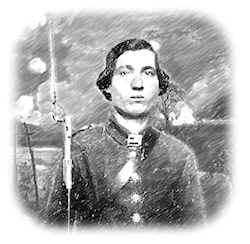
Tuesday, 31st.—Warrenton has been badly torn up by shells, and the levee being cut, the water is about three feet deep all over town, but the houses being up on posts about four feet high, the water was not up into them. South of the town there is a vast expanse of water, covering several miles; have good house to stay in, the citizens all being away. Working on fort; only have to work four hours a day.
(Note: picture is of an unidentified Confederate soldier.)
0
March 31, 2023
March 31st. This morning at six o’clock, got under way and steamed down the river, followed by the Albatross, and ram Switzerland; at eight-thirty A. M. we all came to anchor; sent boats on shore for fresh provisions; unfortunately but very little could be obtained; at six-thirty P. M. got under way again, and proceeded on down the river. Came in sight of Grand Gulf, continued on our way; beat to general quarters; at seven-thirty P. M. came within range and opened fire. The enemy replied very briskly, but we were too much for them this time, and drove them from their guns. They rallied, but were obliged to retreat the second time. Their loss must have been very great. Our loss during this action was one man mortally wounded. This was one of the sharpest fights we have yet had. After the action was over and the ship brought to anchor for the night, all hands were called on the quarter-deck to splice the main brace.
Jones, who was wounded to-day, deserves more than a passing notice. He was a fine young man, and dearly beloved by his shipmates. He was wounded by a bolt from a stanchion, which passed entirely through his body while he was in the act of carrying a shell to his gun. With the bolt in his body he tried to lift the projectile, but his strength failed him and he went below to the surgeon to have his wound dressed. The doctor could not get it out, and poor Jones suffered all night. He was a brave man, and will die regretted by our officers and men.
Downing’s Civil War Diary.–Alexander G. Downing.
March 31, 2023
Tuesday, 31st–Warm and pleasant today. More troops passed down the river. I commenced cooking for the captain and officers of our company.[1] I was considered a pretty good cook at home, but having so few utensils here, I fear there will be quite a contrast.
[1] It seems that Private Downing was to get $5.00 per month as cook. See the entry for May 2d.–Ed.
A Confederate Girl’s Diary
March 31, 2023
Tuesday, March 31st.
“To be, or not to be; that’s the question.” Whether ‘t is nobler in the Confederacy to suffer the pangs of unappeasable hunger and never-ending trouble, or to take passage to a Yankee port, and there remaining, end them. Which is best? I am so near daft that I cannot pretend to say; I only know that I shudder at the thought of going to New Orleans, and that my heart fails me when I think of the probable consequence to mother if I allow a mere outward sign of patriotism to overbalance what should be my first consideration – her health. For Clinton is growing no better rapidly. To be hungry is there an everyday occurrence. For ten days, mother writes, they have lived off just hominy enough to keep their bodies and souls from parting, without being able to procure another article – not even a potato. Mother is not in a condition to stand such privation; day by day she grows weaker on her new regimen; I am satisfied that two months more of danger, difficulties, perplexities, and starvation will lay her in her grave. The latter alone is enough to put a speedy end to her days. Lilly has been obliged to put her children to bed to make them forget they were supperless, and when she followed their example, could not sleep herself, for very hunger.
We have tried in vain to find another home in the Confederacy. After three days spent in searching Augusta, Gibbes wrote that it was impossible to find a vacant room for us, as the city was already crowded with refugees. A kind Providence must have destined that disappointment in order to save my life, if there is any reason for Colonel Steadman’s fears. We next wrote to Mobile, Brandon, and even that horrid little Liberty, besides making inquiries of every one we met, while Charlie, too, was endeavoring to find a place, and everywhere received the same answer – not a vacant room, and provisions hardly to be obtained at all. [continue reading…]
War Diary of Luman Harris Tenney.
March 31, 2023
31st. Got up rations for the next issue. Read some in “Country Living and Country Thinking,” by Gail Hamilton. Was particularly interested in “Men and Women,” a good deal of sense and truth. In the evening wrote to Ella Clark.
“The 6th boys deserve infinite credit for their fighting, and their colonel, a rope for his carelessness.”–Army Life of an Illinois Soldier, Charles Wright Wills.
March 31, 2023
The following material contains wording that may be offensive to many in the world of today. However, the work is provided unedited for its historical content and context.
Camp 103d Illinois Infantry, Lagrange, Tenn.,
March 31, 1863.
I have lost my negro, Bob. The cavalry have been indulging in a pretty rough fight near here, and I am engaged on a “Board of Survey” which will occupy me for some days to come. There is also a good quality of Scotch ale in town, no paper collars, and a great deal of robbing and scoundrelism generally. There is some kind of a scare along the line, and the authorities this morning shipped to Memphis some 600 negroes, to get them out of the way of the trouble. I made my Bob send his wife and children, and the scamp, when it came to the parting, couldn’t resist her pleading, and so he joined the party. It is beautiful to see such an exhibition of love and constancy in the brute species. All of these Africans will undoubtedly be sent to Illinois or somewhere else. I declare I don’t like to see them introduced into our State, for they increase like rabbits. I believe will eventually outnumber the white race, in any country in which they are planted. This matter of slavery is an awful sin and I’m satisfied debases the governing race, but if we have to keep these negroes in the country, I say keep them as slaves. Take them from secesh and turn them over to Unionists, but don’t free them in America. They can’t stand it. These negroes don’t average the ability of eight-year-old white children in taking care of themselves. There are exceptions of course; arm all the latter and make them fight Rebels. They will probably be fit for freedom after a few years as soldiers. I received the Register with the letters from our regiment and Peterson’s dressing of the Democrat. ‘Tis jolly to throw stones at that paper. You see if they all don’t get their fingers burned by that foulmouthed Davidson. A decent man has no business talking against him, and will always come out behind. I am sure that he would be hung if he would venture within our regimental lines. One of my boys cut a great caper to-day. He is an old Dutchman, and has been aching for a fight ever since we left Peoria. [continue reading…]
A Rebel War Clerk’s Diary
March 31, 2023
MARCH 31st.—Another stride of the grim specter, and corn-meal is selling for $17 per bushel. Coal at $20.50 per ton, and wood at $30 per cord. And at these prices one has to wait several days to get either. Common tallow candles are selling at $1 per pound. I see that some furnished houses are now advertised for rent; and I hope that all the population that can get away, and subsist elsewhere, will leave the city.
The lower house of Congress has passed a most enormous tax bill, which I apprehend cannot be enforced, if it becomes a law. It will close half the shops—but that may be beneficial, as thousands have rushed into trade and become extortioners.
I see some batteries of light artillery going toward Petersburg. This is to be used against the enemy when he advances in that direction from Suffolk. No doubt another attempt will be made to capture Richmond. But Lee knows the programme, I doubt not.
0
March 31, 2023
March 31, 1863, Peoria Morning Mail (Illinois)
The signs of the times clearly indicate that the people of the Northern States are moving, and that we are in the midst of a great conservative, political revolution, which is destined to sweep every vestige of republicanism into oblivion.The movement which was inaugurated last fall, in the great States of Illinois, New York, Pennsylvania, Ohio. Indiana, and Wisconsin, has been augmenting in strength from day to day.The people of Maine have felt the invigorating influence of the conservative spirit, and another year will see that State free from the clutches of abolition misrule, and Connecticut is about to put the seal of condemnation upon a weak and imbecile administration.
The town elections which have thus far been held in various parts of the country, give evidence of the truth of our assertion that the people are moving, for they have resulted in unprecedented democratic victories and gains, astonishing to the abolitionists as they are gratifying to the true friends of the Union and the Constitution.
Wherever democratic meetings have been held, thither have the people flocked in untold numbers, and instances are not rare where democrats have walked a distance of twenty or thirty miles to attend them.Old men who had discarded politics and settled down to spend the remnant of their days in peace and quietude, are again buckling on their armor, and going forth to fight their battles o’er again, and young men are entering the political arena, casting their first vote for the party which for over sixty years has maintained the integrity and honor of the American Union.
This general uprising is deeply significant.On the one hand it exhibits the fact that the great heart of the people is right–that we are conservative and deeply and sincerely attached to the Union as it was framed by our Fathers, and are loyal to the Constitution and the laws.On the other, that the administration of President Lincoln is an entire failure, and there is but faint hope of a restoration of the Union under its present reckless, unconstitutional and illiberal policy.
Friends of the Union and the Constitution, take courage!Whilst you are giving the Government all the Constitutional aid in your power towards putting down the rebellion lose not sight of those important political questions which are now agitating the nation–and which with the success of the Democratic party are the only safety to the Republic.
0
March 31, 2023
March 31, 1863, New Orleans Bee
The United States steamer Honduras arrived here on Sunday from the Rio Grande, having two hundred and sixty refugees from Texas.The Era learns the following from Lieutenant Colonel Stancel:
On the morning of the 15th a force of Confederates of about one hundred and fifty men crossed the Rio Grande into Mexico, at the mouth of the river, and captured Col. E. J. Davis, of the First Texas Cavalry, Captain W. W. Montgomery, of the same regiment, and three soldiers.
About one hundred and fifty were lying there, says the Era, (at the mouth of the Rio Grande) waiting an opportunity to get on board the Honduras; they being prevented by the rough weather.
The Mexican authorities demanded the return of the prisoners.Accordingly on the 18th Col. Davis and the three soldiers taken were returned to Matamoros.Captain Montgomery, however, was not returned.
After the return of the captured officers and soldiers, the refugees (forty-six in number) were got on board the steamer.The bark Arthur, after she had been brought around from Galveston, threw two shells into the Confederate camp on the night of the 25th, at which time the Honduras left the city.The officers mentioned above, Col. Davis, Lieut.-Col. Stancel, Captain Montgomery and the two lieutenants, were officers of the First Texas (Federal) Cavalry, recruited in this city for Gen. Hamilton’s Brigade.
0
March 31, 2023
March 31, 1863, The Charleston Mercury
It is the part of the truly brave seldom to make an undue estimate of the dangers or difficulties before them, but to see things as they are, because passions are not permitted to pervert judgment. Their hopes and expectations are not beyond the warrant of events, and fears neither hide nor magnify the truth. Hence, when disasters come, the truly brave are neither surprised nor alarmed, and their will is ready to meet the disasters present. Indeed, their spirit and resolution rises higher, because a mightier task is before them, and the wrong inflicted by disaster inspires a deeper anger, indignation and resentment. These strong passions, kindled by opposition rouse and sustain them in resistance. All truly brave men, therefore, have been greatest when most pressed. Constancy is a virtue only known in trial and peril. The indomitable spirit of the Roman people was only seen when, after the loss of three pitched battles, their Senate rose up and thanked their defeated General he had not despaired of the Republic.
We, of the Confederate States, it seems, must soon prove that we are worthy of independence and liberty. We would have preferred to have won them more easily. Whether we would have kept them, if thus won, may be questionable. A vast portion of our people neither realized the characteristics of the Northern people, nor the dangers which long, like a gathering cloud, have impended over our existence and institutions. It has required red-handed war to teach us our true relations towards these people, and to force us into that antagonism necessary for a permanent separation. Some have clung to the hope of compromise and a reunion with them; and this vain, and (if realized) fatal hope, spread a spirit of inactivity and weakness over our arms. That delusion, we trust, is passed away; and the stern alternative of utter subjugation or independence is forced upon us. In this state of things, the people of the Confederate States make up their minds to meet their destiny. That destiny is either to be an enslaved and undone people forever, or to be free and self-existent. They have the choice, and fighting manfully is the only way to independence. The Northern people cannot give to conquered subjects rights which they have not themselves. They have set up a military despotism over themselves, and they have nothing else to offer us. The only difference between us and themselves would be this: their despotism is for their benefit – to conquer and overrun us; for us, it would be a hostile despotism without benefit. It is a despotism of a mob – ferocious, avaricious and fanatical – armed with hatred for us and our institutions. Submission to such a despotism must be destruction. Safety – liberty – existence itself, depends on our successful resistance to their domination. We can do it; and, with God’s help, we will do it. A strenuous will must stimulate our determinations, and excite our utmost efforts to give them a practical […..] result. It is the time for a display of energy and courage.
0
March 31, 2023
March 31, 1863, Nashville Dispatch
Yesterday afternoon six or seven of Uncle Sam’s four-in-hands drove up to the Recorder’s office, laden down with a lot of contrabands, varying in age from d’enfant to second childhood, except the strong middle-aged, whom the officer in charge was about to consign to the care of the Recorder, when the civic powers protested, and ordered a retreat.Failing to obey, a parley ensued, which ended in a compromise, U. S. ordering the eighty-five negro paupers to take possession of the Court House, and Nashville agreeing to “let ’em slide.”This interesting portion of Uncle Sam’s children are said to hail from the neighborhood of Triune, and have brought with them their bags and baggage, expecting to settle down among us.
0
March 31, 2023
March 31, 1863, The New York Herald
The United States steam transport New Brunswick, Captain Winchester, from New Orleans 23d inst., arrived here yesterday morning.
Advices per the New Brunswick report the return of Gen. Grover’s forces to the vicinity of Baton Rouge. Three hundred and fifty bales of cotton, twelve to fifteen hundred hogsheads of sugar and over three thousand barrels of molasses were secured, and much more can be readily obtained. Captain Youngblood, chief of General Gardner’s staff, and five members of the rebel signal corps were captured. Youngblood says that the rebels have a force in reserve which can readily be thrown into Port Hudson or Vicksburg. At latest accounts General Dudley’s brigade was encamped at the head of Prophet Island. General Grover’s headquarters are on the cross road leading from Taylor’s house to the Bayou Sara road.
We learn that the steamship Bio Bio, which arrived at New Orleans on the 22d inst., from New York and Havana, was totally destroyed on the morning of the 22d by fire, together with the passengers’ baggage and her cargo, while lying at the wharf. The origin of the fire is unknown.
We have a full and detailed report of the movements of the army under Major General Banks, with the intention of supporting the operations of the fleet. The military forces approached to within two miles of the fortifications of Port Hudson, but for reasons detailed by our correspondent did not come into action at all. General Banks, however, made a thorough reconnoissance of the country and obtained much valuable information, with a view to future operations. The whole army returned in safety to Baton Rouge without any other casualty than the wounding of Colonel Clark. We have not room for the publication of this report to-day, the naval operations occupying our space.
The United States steam transport McClellan, Captain A. T. Gray, from New Orleans, also arrived yesterday, with mails, passengers and $63,258 in specie. She left the mouth of the Mississippi at seven A. M., on the 23d inst.
0
March 31, 2023
March 31, 1863, The New York Herald
An attack by the rebel cavalry, one hundred strong, was made yesterday on our cavalry patrol on the telegraph road, between Dumfries and the Occaquan. Eight of our men were captured.
An expedition from General Hooker’s army, under colonel Fairchild, which was sent out recently to Northern Neck, returned to Belle Plain yesterday after a successful forage, in which they got possession of three hundred pounds of bacon, one thousand pounds of pork, two hundred and thirty bushels of wheat, three thousand bushels of corn, fifteen bushels of white beans and a large quantity of oats were secured. The cavalry seized a number of valuable horses and mules, captured several prisoners and broke up the ferries at Union wharf and Tappahannock. Colonel Fairchild also burned a schooner engaged in smuggling contraband goods into Virginia. All is quiet on the Rappahannock.
A despatch from Cincinnati says that the rebel raid in Kentucky has proved a failure, and that intelligence from Murfreesboro says: – “The rebels report 15,000 Union troops at Savannah, Tenn.; that Grenada is in our possession, and that Gen. Grant’s forces are surrounding Vicksburg.”
The daring attempt of Admiral Farragut to pass the rebel batteries at Port Hudson, on the Mississippi, as well as of the cooperating movement of the army under General Banks, are fully and graphically described in the letters of our special correspondents which we publish today. The Hartford (flagship) and the Albatross were the only two vessels that succeeded in running the gauntlet. The firing is described as hiving been most terrific and continuous. The Richmond made vigorous efforts to go by the batteries; but after firing for over an hour was disabled, and had to withdraw. The loss of the Mississippi by fire is fully confirmed. The army operations were brilliant and successful so far as the commanding General intended it should be. The accounts are in every way worthy of attentive perusal, coming as they do from our own reliable correspondents who were in the thickest of the battle.
By this arrival we also learn that the steamer Bio, from Havana, was completely destroyed by fire at New Orleans.
We learn from Hilton Head that on the morning of the 25th inst. all the Monitors (six in number) left that point, together with several wooden gunboats and half a dozen schooners. The Ericsson had just arrived there with a floating nondescript in tow, called “The Devil.” Its purpose is understood to be to clear channels of torpedoes and other obstructions.