Wednesday, 22d–We landed at Milliken’s Bend early this morning and went into camp on a large plantation about a mile from the levee of the river.
American Civil War Chronicles
A Rebel War Clerk’s Diary
April 22, 2023
APRIL 22d.—The President is reported to be very ill to-day–dangerously ill—with inflammation of the throat, etc. While this is a source of grief to nearly all, it is the subject of secret joy to others. I am sure I have seen some officers of rank to-day, not fighting officers, who sincerely hope the President will not recover. He has his faults, but upon the whole is no doubt well qualified for the position he occupies. I trust he will recover.
The destruction of the Queen of the West, and of another of our steamers, is confirmed. Is not Pemberton and Blanchard responsible?
The loss of two guns and forty men the other day, on the Nansemond, is laid at the door of Major-Gen. French, a Northern man! Can it be Gen. Cooper (Northern) who procures the appointment of so many Northern generals in our army?
I cut the following from the Dispatch of yesterday:
Produce, etc.–Bacon has further declined, and we now quote $1.25 to $1.30 for hog-round; butter, $2.25 to $3 per pound; beans in demand at $20 per bushel. Corn is lower–we quote at $6 to $6.50 per bushel; corn meal, $7 to $9 per bushel–the latter figure for a limited quantity; candles, $3.50 to $3.75 per pound; fruit–dried apples, $10 to $12; dried peaches, $15 to $18 per bushel; flour–superfine, $31 to $32; extra, $34; family, $86; hay is in very small supply–sales at $15 per cwt.; lard, $1.65 to $1.70 per pound; potatoes–Irish, $3 to $10; sweet, $10 to $11 per bushel; rice, 25 to 33 cents per pound; wheat, $6.50 to $7 per bushel.
Groceries.–Sugars have a declining tendency: we quote brown at $1.15 to $1.25; molasses, $9 to $10 per gallon; coffee, $1 to $4.50; salt, 45 cents per pound; whisky, $28 to $35; apple brandy, $24 to $25; French brandy, $65 per gallon.
0
April 22, 2023
April 22, 1863, Peoria Morning Mail (Illinois)
Telegraphed to the Peoria Mail.
Vicksburg, April 21.
Official dispatches received here last night say that a portion of Admiral Porter’s fleet, with a large number of soldiers from General Grant’s army, have succeeded in running the batteries at Vicksburg, and are now in a condition to either help Banks in an attack on Port Hudson or to make an assault on Vicksburg from the South.
0
April 22, 2023
April 22, 1863, Montgomery Weekly Advertiser
The New York Tribune, of the 8th, gives a flourishing account of a great “bread riot in Richmond,” for the particulars of which it is indebted to Col. Stewart, of the 22d Indiana Regiment, an U. S. Officer, just released by the Confederates. Col. S. says he witnessed the riot from his prison window. The rioters were composed of 3,000 women, who were armed. They broke upon the government and private stores, and took bread, clothing and whatever else they wanted. The militia were ordered out to check the riot, but failed to go. Jeff Davis and other high officials made speeches to the infuriated women, and told them they should have what they wanted, when they became calm.
0
April 22, 2023
April 22, 1863, Arkansas True Democrat (Little Rock)
It has been known, for weeks, that the federals in this State, as well as others, were destroying all farming implements, seizing all provisions and preventing the planting of crops, with the avowed determination to starve the people into submission. We suppose it might be possible that this was the vindictive cruelty of some cowardly commander, who vented his spite on women and children. But it is now certain that orders to that effect have issued from Lincoln’s war department. In Phillips, Chicot, and other counties, where the federals have a foothold they have and are burning all the fences, plows and farming utensils they find. They destroy the property of widows as well as of male citizens. They are sending thousands of women and children within our lines, destroying all the provisions they find and preventing the people from planting. Out of many cases reported to us, is one of a widowed lady, at whose house a number of officers and men called and demanded their dinners. After having eaten, they told her that they had orders to seize all her provisions, destroy all the farming implements and fences and prevent her from having a crop raised. They left her a week’s supply of provisions only. In Phillips county they kill every milch cow, shoot down every hog and cut down fruit trees. In Chicot county, they have made a clean sweep.
This is not civilized warfare. It is a war upon women and children. It is a wholesale robbery and national murder. Yet so timid has been our policy that we have let these villains navigate our waters, because they protested against the barbarity of firing into boats. We have paroled jayhawkers whose hands and garments were incarnadined with the blood of murdered patriots. We have forborne until forbearance has ceased to be a virtue, until it has ceased to be manly. What will the action of the President and the military authorities, in this crisis, we cannot anticipate, but that an enemy so violating all rules of warfare and waging a barbarous and fiendish war, should be treated according to the rules of civilized war, is absurd. Surely, these men should be hung as soon as caught. They have thrown away their stars and stripes and hoisted the black flag. They are warring upon women and children, and when caught their captors would be justifiable in killing them as they would be in killing a wild beast.
As strenuously and sternly as we have resisted all attempts to make this a black flag war, the enemy seem determined to drive us to it. They are organizing insurrections in South Carolina; they have sent a negro army into Florida; they are organizing black regiments in Tennessee; they execute partisans who fire on boats, and guerrillas everywhere, and now, they declare a war for extermination, not only of men, but of women and children.
This being the acknowledged policy of the federals, it becomes a matter of life and death that we should raise everything that will sustain life in those parts of the country beyond reach of the federals; that we should be economical in the use of breadstuffs; close all distilleries and hold the distillers as public enemies, and cultivate fields and gardens to their utmost limit.
It has been demonstrated that the Confederacy cannot be whipped, and if we do our duty, we can prepare to ward off this blow, and hold those to strict accountability who seek to inflict it upon us.
0
April 22, 2023
April 22, 1863, The New York Herald
The Recent Fighting on the Nansemond River.
Our Suffolk Correspondence.
SUFFOLK, Va., April 20, 1863.
At sunset yesterday afternoon, a portion of the force under command of General Getty, accomplished quite a feat of daring.
Major General Peck for two days past has been watching a good opportunity to launch out upon the enemy’s lines, with the view to the striking of a quick, sharp and decisive blow.
On Sunday morning the enemy opened on our gunboats from one of his earthworks, about eight miles down the Nansemond river. The gunboats immediately replied, and in less than two hours the engagement ceased, our forces, land and water, having completely silenced that of their adversaries. The firing from the gunboats was so accurate that the parapets of the enemy works were deeply plowed with shot, and cut away in some thirty or forty places.
Just about dusk on Sunday evening our gunboats again opened with much vigor of firing upon the enemy’s line of batteries. He replied in good earnest. Thus matters remained in this direction for nearly an hour. While this was going on a couple of gunboats that had come to an anchorage, just around the turn of the point of land on which the enemy’s batteries were located, came together in such a manner as to make a tolerable safe bridge across the water of the Nansemond river. In this way two detachments of infantry, numbering in all about four hundred men (one detachment being from the Eighth Connecticut regiment and the other from the Eighty-ninth New York Volunteers), passed over to the opposite bank. As soon as the rebels were come upon in any force our men fired one volley and charged at the point [continue reading…]
0
April 22, 2023
April 22, 1863, Galveston Weekly News
The Almanac Extra contains a letter from Gen. H. E. McCulloch, dated Camp Wright, Arkansas, March 6th, stating that as Congress commuted soldiers’ rations in Hospital at one dollar a day, the means from this source will be more than sufficient to support the hospitals of that State, and he presumes the same is the case in other States. He therefore says their friends in Texas may now turn their attention to the wants of the soldiers’ families, many of whom have been left dependent. He says:
Let these, and the widows and orphans of those who have already fallen in your defence, have ALL that you can POSSIBLY spare them; and, in performing this noble service, remember that you not only dry up the tears and soothe the distress of the suffering at home, but you encourage and warm up the heart of the patriot soldier, battling for our cause in camp. When he knows that his loved ones behind him are not permitted to suffer by his absence, he is better prepared to give his mind and heart, and, if needs be, his life to the defence of his country.
0
April 22, 2023
April 22, 1863, Peoria Morning Mail (Illinois)
It is announced on high authority that the conscription will be enforced in May–that is, the enrollment will be made during that month. The list of provost marshals and their regulations are nearly completed. The delay has been caused by section eight, which requires the appointment by the President of a surgeon and another civilian in each district, who, with the provost marshal, are to form a board of enrollment.
0
April 22, 2023
April 22, 1863, Galveston Weekly News
I take this opportunity to say to those planters with whom I have conferred on the subject of establishing a cotton and woolen factory, some of whom subscribed conditionally to the stock of the proposed Texas Manufacturing Company before I obtained a charter incorporating the same, which was granted at the last regular session of the Texas Legislature, that I have made arrangements for all the machinery for a cotton and woolen mill of any size or capacity desired, and if those planters who were in favor of establishing said manufactory, or any other responsible individual, or set of men in the State wish to establish a large or small cotton and woolen factory in Texas, and will furnish me the cotton at once to pay for the machinery, I will furnish it at such place and on such terms as may be agreed on, and I will turn over to them the said charter at what it is worth, and I will take stock if parties desire me to do so, and do all in my power to aid in establishing such an institution as the planters in this State need.
I beg leave to say, however, that I am not in favor of the South becoming a manufacturing people to a great extent, especially of the finer fabrics, but I am in favour of Texas and all the Confederate States becoming more self-reliant, and manufacturing plantation goods and producing in our glorious Confederacy every necessary of life we require.
With the sword in one hand and the plow and spindle in the other, and God on our side, we will gain our independence, and by economy, industry and temperance, and the productions of our soil, the Confederate States of America may become one of the wealthiest, the most independent and powerful nations on the globe–for if God be for us, who can be against us.
Any communications addressed to me at Brenham between this and the first day of May will receive attention.
Harris Hoyt.
0
April 22, 2023
April 22, 1863, Dallas Herald
From the Telegraph.
By Captain W. T. G. Weaver.
Brave sons of that chivalrous land of the west,
The first and the boldest in war,
Since the hour you struck for a nation oppressed
By the light of her rising star–
Remember that field where our countrymen fought
The heroes of the Mexican foe;
And how dearly the freedom of Texas was bought
While the blood of her heroes did flow!
Let JACINTO–the ALAMO! be the war cry,
When the Northmen in battle we meet;
Let each Texan, like Travis, the hero, reply,
“We’ll never submit or retreat!”
We’ll swear by the sunniest land of the west–
By our star that is shining above;
By the rivers that flow by the prairies’ green breast,
By the homes and the women we love;
By the shades of our sires; by the blood of the Past,
Besprinkled on Liberty’s tree;
By the cross of the South, we will fight to the last,
And die in the ditch, or be free!
Ay, the blood of McCulloch, of Johnston, and all
The hero-crowned chiefs who have died,
Will teach us to conquer or gloriously fall
Like them in the battle’s red tide!
Camp Nelson, Ark., 1862.
0
April 22, 2023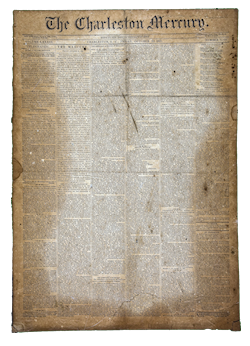
April 22, 1863, The Charleston Mercury
Gen. BRAGG has moved his headquarters from Tullahoma to Shelbyville. A correspondent of the Savannah News, writing from the latter place, gives the following account of VAN DORN’S fight at Franklin.
On Sunday last a courier came from Gen. Van Dorn, with despatches containing a report of his engagement with a large body of the enemy’s forces near the town of Franklin. Of the details of the fight no one seemed able to ascertain anything, and the impression became very general that the ‘Little Dragon’ had met with some disaster. This morning I happened to the good fortune of falling in with an officer who was wounded in the engagement, and from whom I received the following particulars of the fight: On Thursday night Gen. Van Dorn was informed by his scouts that some three or four thousand of the enemy had moved on the Franklin pike, and were encamped in some three or four miles of the town. Orders were instantly issued, and before daylight the whole command was in motion. The object of the General was to surprise, attack and rout the enemy before he could get reinforcements; but it seems that by some means the enemy received information of his design, and were all prepared to meet him at his coming. Gen. Van Dorn soon discovered this; but, having gone so far, he resolved to give them battle anyhow. The enemy’s pickets were soon driven in or captured, skirmishers and flankers were thrown out, and onward advanced our brave men. Capt. Freeman opened with his battery of four guns, which were immediately replied to by guns of larger calibre on the side of the enemy. One brigade of our cavalry dismounts, and two others are posted, one on the right and the other on the left; and [….] the commander rings out !’
Capt. Freeman moves up, and from his four guns he rains a storm of iron hail upon the foe, and onward goes our cavalry on foot and our cavalry on horse. The enemy gradually give way and are falling back, when to the right is seen a large column advancing in battle line. Reinforcements from the enemy are there, and suddenly the whole scene changes. Gen. Van Dorn makes a new disposition of his forces, orders up his reserve, and now the battle rages with great fury. Captain Freeman – the noble, the brave Captain Freeman – falls at the head of his command, and his battery of four splendid guns are captured by the enemy. A momentpause – a desperate resolve – and a thousand horsemen come dashing headlong upon the enemyranks, utterly regardless of danger. The death of the gallant Freeman is avenged, and his fine battery recaptured. The enemy are falling back in some confusion, and Gen. Van Dorn retires, not whipped, but rather worsted. The casualties on our side are over a hundred in killed, wounded and missing; whilst the loss of the enemy is supposed to be considerably greater.
0
April 22, 2023
April 22, 1863, The New York Herald
THE SIEGE OF WASHINGTON.
THE VERY LATEST.
The Siege of Washington raised.
OUR NEWBERN CORRESPONDENCE.
NEWBERN, N.C., April 18, 1863.
Yesterday morning the gunboat Whitehead, Captain French commanding, arrived at this place, with despatches from Washington, stating the enemy had the […..] siege” at that place and were in full retreat. Even the guns on the […..] batteries” had been with our forces at the above place. To us there seems to be considerable mystery to this new freak of the enemy, and it calls forth many speculations, the most important of which is that this siege at Washington has been a mere feint, while the real intent was to procure supplies from the counties adjoining, as in Hyde particularly, large quantities of supplies have been reported, having but on one or two occasions been visited by either army. This is the construction placed upon the recent movements of the rebel forces by secession sympathizers in this place. Others are inclined to think they have been defeated at some point, or that some movement of “Hooker’s army” has caused this sudden change of programme. This, however, is all speculation, and the real truth yet remains to be developed.
Thus ends this siege of Washington, which existed eighteen days; and, for whatever purpose the rebels came, it has shown a courage and indomitable will in our soldiers which finds no superior as yet. A mere handful, compared with the large force at the enemy’s disposal, holds at bay a force its superior in numbers six to one, at the least calculation. No [continue reading…]
0
April 22, 2023
April 22, 1863, Memphis Daily Appeal (Jackson, Mississippi)
Among the many efforts of the ladies of the South to contribute to the comfort of their brave defenders in the field, few, perhaps, have been more successful in accomplishing their original purpose than the enterprise of establishing a lunch house for the passing soldier at Jackson. The association has quietly pursued its generous work, until after contributing to the comfort of thousands from every State in the Confederacy, it has become an institution favorably known in every corps that has had individual members detained in our city. Modestly pursuing the purpose of their organization, the leading spirits in the good work have gone on with great energy and perseverance, until they have placed at the disposal of the soldier a home. True, it is plain and simple, still it is a retreat that has proven a benefit to thousands who would otherwise have suffered.
In this praiseworthy movement we are pleased to learn a number of ladies from all parts of the State have participated, and all of these can rest assured that every day their enterprise is filling its mission of relieving the distressed and toilworn soldiers, whose blessings upon the kindness and thoughtfulness of women are constantly ascending. The monthly report recently published shows that the hearts of the noble women of the State are enlisted in the work they have undertaken. The institution, to the honor of its supporters be it said, is not a local one, any more than are the benefits it confers confined to the soldier from any particular locality. And as far as the latter is concerned we know a soldier of the Confederacy is always welcome.
We commend to the ladies at other important points in the State, the example furnished by the ladies engaged in this work. There are other places where a few vigilant workers can accomplish the same beneficial results we have witnessed here. At Meridian, Grenada, Vicksburg, and elsewhere, we have seen our soldiers suffer, when they might, by similar efforts, have been relieved. Let the women reflect and act–the men will aid and assist. The burden will not fall upon the weaker sex alone.
We refer to the lunch house at Jackson, fully appreciating the good that has been accomplished by its establishment. And, because we believe it is accomplishing so much, we bespeak for the ladies connected with it every assistance that the charitable can possibly afford them. Of course its continued success depends upon the liberality of the public, and to this we would appeal. No matter how small the contribution, or what its nature, if of any value whatever, prudent managers will turn it to account. Nothing can come amiss. We hope the public will continue to respond to the call of the ladies, as heretofore, in order that there may be no intermission in their good works.
0
April 22, 2023
April 22, 1863, Galveston Weekly News
The undersigned begs leave to inform the public that he has succeeded in introducing into this State two suits of double Wool Carding Machines and Picker, and has located the same at Prairie Lea, in Caldwell county, at the Mills of Mr. Thos. Mooney, on the San Marcos river. The machinery will be in operation by the first of May next, and wool will be carded into rolls for hand spinning, for cash or wool, at reasonable rates, and rolls constantly on hand for sale.
Mr. Thos. Mooney, an old Texian, is favorably known to many, having resided many years at Prairie Lea, is interested in the carding business, and will fix price and terms for carding wool and the sale of rolls. I have secured the services of a competent and experienced man in the person of Mr. S. S. Bryant, my father-in-law, to superintend the operative parts of the business, and can vouch for him in every particular, and I hope we may be able to give entire satisfaction to all who may favor us with their patronage, which we respectfully solicit.
Persons sending wool to the Factory to be carded will please observe the following suggestions: Wash the wool clean before sending it to the factory, or request in writing to have it cleansed at the factory. You need not pick the wool to pieces, only so much as is necessary to get the burs all out, but the burs must be all taken out before sending the wool to be carded. Send one pound of clean fresh lard to every ten pounds of wool, and strong sheets or blankets to pin up the rolls in.
The above named machinery will turn off work enough to keep one thousand hand spinning sheets supplied with rolls and furnish filling for two thousand yards of plantation goods per day.
Harris Hoyt.
Houston, April 21, 1863.
0
April 22, 2023
April 22, 1863, The New York Herald
The grand campaign, upon which the rebellion has staked its strength, its resources, its fortunes and its destiny, opens cheeringly for the Union cause, East and West.
The co-operative movements of General Grant and Admiral Porter, General Banks and Admiral Farragut, in Louisiana, lead us to anticipate very soon the tidings, not of one, but of a series of great successes in that quarter. A powerful fleet of Porter’s gunboats had run the gauntlet of the Vicksburg batteries in safety. The rebels were caught napping, doubtless under the impression that our gunboats had gone up the Mississippi on some distant expedition. The reader will readily comprehend the importance of this movement, in connection with the special news from New Orleans which we publish this morning and the accompanying illustrative map.
Some seventy-five miles west of New Orleans, among the lakes and bayous which, through the Atchafalaya river, are connected with the Gulf of Mexico, the rebels had a strongly fortified position at a place called Centreville. This position they were evacuating on the approach of the Union forces, but would probably be captured in the lump, as they were enclosed between General Grover’s column on the one side and those of Generals Emory and Weitzel on the other. That the rebels were intent only upon escaping is evident from the fact that they were leaving their guns and ammunition behind them. The gunboat Diana, it was also expected, as a last resort, she may be destroyed by the enemy. The ram Queen of the West had already been recovered, and her rebel captain and crew were prisoners of war at Berwick Bay.
This item of news is exceedingly important, considering the locality in which the Queen of the West was recaptured; for it suggests a variety of the most desirable military combinations against Port Hudson and Vicksburg, in addition to the complete clearing out of all the country between the Mississippi river and Texas. Doubtless Porter’s gunboats, with a strong co-operating land force, will speedily proceed up the Red river to look after the enemy’s defences and depots of [continue reading…]
0
April 22, 2023
April 22, 1863, Arkansas True Democrat (Little Rock)
Cross County, Ark., April 11th, 1863.
Mr. Editor–Having a leisure moment, I proceed to give you a concise statement of the federal raid in this portion of the State recently made. On Tuesday, the 7th inst., four transports arrived at Wittsburg, on the St. Francis river, with a federal force of between 600 and 1,000 soldiers, consisting mostly of cavalry, with several pieces of artillery. At this point they made their headquarters. On their way up the river, they landed a considerable force at Linden, in St. Francis county, which secured the whole country across Crowley’s Ridge all the way up to Wittsburg, where they joined the transports again–then the entire force was sent out up the ridge as high as Harrisburg. I do not suppose the enemy has made a raid in any portion of the Confederacy since the war commenced, where the consequences resulted with as much injury or detriment to the interest to the citizens as the one here alluded to. They robbed the whole country, taking off negroes in large numbers from every one who owned them, taking every horse and mule that they could possibly get hold of, and every thing else of value. It seems that they had been furnished with the names of every one who was supposed to be a money holder, and in fact, they demanded the money and all valuables of every one they met with, making a general search at every residence, by bursting open drawers, trunks, etc., with revolvers in their hands. At the residence of Mr. Samuel Johnson they required Mrs. Johnson to divest herself of every piece of her clothing, stripping her entirely of every garment she had on, save one; at which place they obtained $2,500 in gold and silver, and similar occurrences were common. They carried off about 1,000 negroes, it is supposed. Many who were wealthy as it were on yesterday, to-day are destitute and needy. I myself was a sufferer to the amount of at least $20,000, and many others to a much larger amount than myself. Why are such outrages as these tolerated in Eastern Arkansas, by our military authorities? It cannot be because we are disloyal, for no portion of Arkansas has more readily and heartily responded to every call that has been made to aid in the defence of our country than the eastern portion of the State, yet thus far we have had no succor sent us, save an occasional visit by Capt. McGee and his little company, consisting only of about 80 men, and although with the disparity of numbers from four or five to one, the valiant captain with his brave and patriotic company, in the vicinity of G. W. Seaborn, esq., the day before the enemy left, gave flight to the advance of the enemy, killing some five or six upon the field, and mortally wounding as many more. Mr. Seaborn, I understand, sustained a considerable loss by the Yankees–they burnt up his residence with all his furniture, etc.
S. L. A.
0
April 22, 2023
April 22, 1863, The New York Herald
The city experienced no little excitement yesterday, after a lull of some days, from the news which reached here from different quarters; each of a highly important and interesting character. For example: –
1. – New Orleans.
2. – Vicksburg.
3. – Nansemond river.
4. – Washington, N.C.
5. – Mexico.
6. – Europe.
It is rarely that so large an amount of intelligence of like interest arrives in one day.
The news from New Orleans comes by the steamship Geo. Washington, with dates to the 14th inst. The campaign has been gloriously opened by Gen. Banks. The rebel forces of General Sibley have been so completely hemmed in by the armies of General Grover, Emory and Weitzel that their annihilation or capture is almost certain. General Sibley was abandoning his position near Brashear City, leaving his guns and ammunition behind him. The fine ram Queen of the West was retaken on Grand Lake by our troops, and her captain and drew are now prisoners in Berwick Bay. The capture of the steamer Diana, lately seized by the rebels, was also almost ensured, the United States steamer Clifton having removed the obstructions in the river and closing rapidly upon her. This is the substance of the news from the Extreme Southwest, and it tells well for the activity of our army and navy there. The full details will be found in our New Orleans correspondence. We give, in illustration of this valuable intelligence, a map of Brashear City, Berwick, and the surrounding country and waters, showing the position, fortifications and force of the rebel General Sibley. It is impossible to calculate the effect of these operations upon the entire phase of the war in the Southwest; but it must tend greatly to the advantage of General Grant and General Rosecrans, and may eventuate in the abandonment of Vicksburg and Port [continue reading…]
0
April 22, 2023
April 22, 1863, The New York Herald
Our New Orleans Correspondence.
NEW ORLEANS, April 13, 1863.
Important military movements are now in progress against the enemy on the Bayou Teche. General Banks is in the field, at the head of General Grover’s and Emery’s divisions and Brigadier General Weitzel’s brigade.
On Saturday last Gen. Weitzel’s brigade crossed Berwick Bay on pontoon bridges, and advanced towards Pattersonville, situated about five miles up the Teche. The enemy retreated upon the approach of our forces, which steadily advanced. The latter were reinforced on Sunday by Emory’s division. The forces under Gen. Grover are understood to have embarked at Brasher City, and proceeded into Grand Lake to a point called Indian Bend, above Franklin. This movement, if successfully accomplished, will place the rebels between two fires, which can scarcely fail to be attended with good results. The forces of the rebels are estimated at about 8,000 of all arms, including Indians, &c.
On Sunday afternoon, at three o’clock, sharp skirmishing began between General Weitzel’s advance and the rebels, the latter retreating towards Franklin. It is reported to-day that General Weitzel is within six miles of Franklin.
It is rumored here that General Grant has appeared with a strong force upon Red river, thus threatening the rebels in that direction. This movement, if it has taken place, will bring about some decided results very shortly.
On the 9th instant Colonel Daniels, with a detachment of 180 men of the Second Louisiana Native Guards (colored), went from Ship Island to Pascagoula, a well known watering place on the Mississippi coast, landed and took possession of the place, hoisting the Stars and Stripes on the hotel. Subsequently he was attacked by a force of three hundred rebel cavalry [continue reading…]
0
April 22, 2023
April 22, 1863, Daily Mississippian (Jackson, Mississippi)
We have lately published the fact that several societies have been inaugurated in Georgia, and, also we think in Alabama, for the purpose of supplying provisions to families at as low a cost as possible–the only profit on what is sold being made just sufficient to pay the expenses of those employed to do the business.
It is gratifying to us to state that an organization of this kind has been got up in Jackson. The work was only commenced on Monday, and the subscription yesterday amounted to fourteen thousand seven hundred and fifty dollars. Those who wish to aid in the matter may do so by attending the meeting of the stockholders, to-morrow, which will be held at Stewart & co’s., banking house at 11 o’clock.
0
April 21, 2023
April 21st. Very rainy weather. Everything dark and cloudy overhead, and the faces of the ship’s company bearing anything but a smile upon them. A heavy pressure seems to be weighing down their hearts—something more than common must be the cause of this depression of spirits. A sailor does not have the blues often, and when he does, something extraordinary is the cause of it. Jack is full of fight, and when he cannot fight his enemy, he will get in a quarrel with his own friends and shipmates. Secesh will not give Jack a chance to show his powers of endurance, and he is sick at heart, and says he wants to go home.
War Diary of Luman Harris Tenney.
April 21, 2023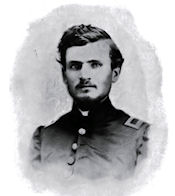
21st. Took my horse out to graze in the morning. A good long letter from Fannie. Saw Delos’ journal. Ordered out on a reconnoissance. Went to the river. Major P. and several of us went down the bank about two miles. Pickets visible. Quite romantic, a narrow path between deep river and high perpendicular bluffs. In the evening wrote to Fannie. Have been happy all day.
Downing’s Civil War Diary.–Alexander G. Downing.
April 21, 2023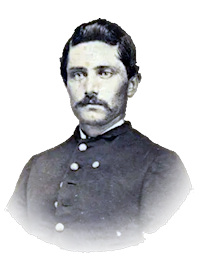
Tuesday, 21st–We struck our tents and at 3 o’clock in a heavy rain embarked on board the “Platte Valley.” We had all the supplies loaded by dark and during the night left for Milliken’s Bend to join the other brigades. The boys all feel very fine.
A Rebel War Clerk’s Diary
April 21, 2023
APRIL 21st.—Gen. Longstreet lost, it is said, two 32-pounder guns yesterday, with which he was firing on the enemy’s gun-boats. A force was landed and captured the battery.
Gen. Lee writes that his men have each, daily, but a quarter pound of meat and 16 ounces of flour. They have, besides, 1 pound of rice to every ten men, two or three times a week. He says this may keep them alive; but that at this season they should have more generous food. The scurvy and the typhoid fever are appearing among them. Longstreet and Hill, however, it is hoped will succeed in bringing off supplies of provision, etc.—such being the object of their demonstrations.
Gen. Wise has fallen back, being ordered by Gen. Elzey not to attempt the capture of Fort Magruder—a feat he could have accomplished.
0
April 21, 2023
April 21, 1863, Weekly Columbus Enquirer (Georgia)
I have 400 bushels of corn that I will sell to poor soldiers’ families of Spalding county for one dollar per bushel; also, 2,000 lbs. of meat, at 40c per pound.
R. H. Tooley.
Griffin, Ga., March 28, 1863.
The above notice was posted by Mr. Tooley, a man of moderate means, who keeps a candy store in Griffin. He purchased these articles before the seizures, and now, with a generous liberality, while corn is selling in Griffin at $2.50 per bushel, and bacon at 80 to 90c per lb., he is giving relief to soldiers’ families at the prices named in his notice. There are many whose means would better enable them to assist the poor, but who are slow to follow his example.
0
April 21, 2023
April 21, 1863, Daily Mississippian (Jackson, Mississippi)
Editor Mississippian.–What is our duty toward the poor and dependent families of the poor men of our country in the army? Let every man who reads this question, propound it to himself and to his neighbors.–Let all seriously and carefully reflect upon it and then do what duty and a clear conscience tells them. If they will do this there will be but little suffering in our land, while any are able to help. Remember that amidst sickness, hunger, famine, sorrow and death at home, the poor soldier is standing or dying in battle far away. The present and future of that poor soldier is one of deepest gloom, while the condition of his family at home is truly sad and horrifying. He is fighting and making all the sacrifices possible for him to make for our liberties, our homes and our property. He is making common cause with and for the rich, comfortable and poor.–Should not the rich, comfortable and poor make common cause for and with him and his family for their support? Let us reflect for a moment, and we will see that in view of the high prices of salt, meat, meal, cards, wool, shoes, clothing, medicines, &c., the State and county taxes for their relief cannot half supply their absolute wants, and that the deficiency must be made up by private charity from those who can and should bestow it.
Let us recollect that in a large number of our counties, the poor largely exceeds the rich, while in many counties the rich largely exceed the poor, and hence these charities, confined to counties must fall most unequally and in many cases beyond their ability to meet and supply, while in others it must be small and trifling. Take the counties of Yazoo, Madison, Hinds, Holmes, Carroll, Monroe, Lowndes, Noxubee and many others and the revenue being large in these counties and the poor but few compared to the wealth and wealthy, and you will find the poor already well provided for; but take Leake, Attala, Winston, Choctaw, Neshoba, Scott, Newton, &c., where the revenue is small, and where the poor very largely exceed the rich, and you will find a destitution and distress that cannot be supplied by taxation or private charity in those counties. Shall they not be relieved, and who shall do it? Men of Yazoo, Holmes, Carroll, Hinds, Madison, Lowndes, Monroe, Noxubee, &c., will you not respond promptly and liberally to the necessities of the poor of Leake, Attala, Winston, Choctaw, Neshoba, Newton, Scott, Hancock, Harrison, Wayne, &c., &c.
Recollect that thousands of poor men have let their families, little fields, stock, and every thing behind them unprotected, undefended, dependant and in grief and distress, with but few in their midst able to help them, to stand as barriers between the destroying enemy, and you and your homes and prosperity, and all they ask is that you keep their families from suffering. It is a reasonable demand, and is due to them beyond all question. If you don’t do it, can you be surprised to see the poor soldier desert the army, or can you look upon his absence from the army in the light of desertion under such circumstances?
Sickness, death, famine, and cries of entreaty for help in the poor family of the soldier, however brave and loyal in our cause he may be, are far more terrible to him than all the bayonets, powder, steel and bullets of the enemy, and he is more than human, patriot soldier and citizen who can, under such circumstances, remain in the service, a true and steadfast soldier.
Let us inquire into the true condition of our poor, and know why they are so poor and dependent–and devise ways and means for their relief. Let us send them money, salt, corn, cotton cards, wood, medicine, &c., and make the poor soldier and his family alike rejoice to know that we appreciate his service and their sacrifices, and are indeed his and their friends in need and a common cause. Let us send out a few of our negroes and distribute them among these poor families as a loan to cultivate their little farms under the guidance of some male neighbor. Let us thus strengthen our army, nerve our poor soldiers and aid and console the poor families. Let each county organize into an aid society–send delegates to Jackson and form a State Aid Society, and through the latter, properly distribute the contributions of the former, where they are most needed. I know of no people who are better qualified for these purposes than our ministers of the Gospel–and appeal to them to take the matter in hand, and mould it into form, substance and relief. I would suggest Rev. J. T. Freeman as the man of mind, heart and energy, to lead in this matter. Let the work begin at once. I will give both labor and money freely.
Truly, &c.,
Robert.
April 14, 1863.