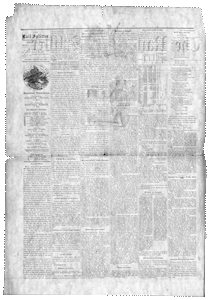
June 3, 1863, Montgomery Weekly Advertiser
Within the past two or three weeks several thousand citizens of New Orleans, who have during the long occupancy of that city remained faithful to the Confederacy, have been compelled to leave their homes and go beyond the Yankee lines. Through the politeness of Mr. Eugene Desdunes, who is now in this city, an exile from his home and family, we have been furnished with the following copy of the certificate furnished to registered enemies of the United States, and also the order requiring them to leave for the “so called Confederacy:”
Provost Marshal’s Office, }
New Orleans, Oct. 3d, 1862. }
This certifies that Mr. Eugene Desdunes has rendered a statement of his property in accordance with general orders No. 76, and claims to be an enemy of the United States.
C. W. Kilborn,
Department Provost Marshal.
––––
Office of Provost Marshal Parish of N.O. }
No. 67, Carondelet Street, }
New Orleans, May 9, 1863. }
Mr. Eugene Desdunes:–In accordance with general order No. 35, headquarters Department of the Gulf, you being a registered enemy of the United States, are hereby notified that you must leave this Parish for the so called Confederacy before the 15th inst.
June 3, 1863, Galveston Weekly News
Our sister State of Louisiana is overrun by the enemy! Thousands of her daughters are in their hands, and subjected to insult and abuse from a brutal Yankee, foreign and negro soldiery! Think of their condition, and remember that the same fate awaits you, unless the men of our State stand between you and the foe. I, for one, cannot remain at home a quiet spectator, in times like these, and avail myself of the only way left me of serving my country; and that is, as partizan, and independent of the Government. Will you aid me?
I know that your generosity and patriotism have been heavily taxed; but I know too, that it is in the darkest hours of trial and sorrow that woman can be most surely relied on. I beg you, then to aid me in the purchase of such articles as may be necessary for the sick and wounded soldiers, in such way as you may think proper. Send your contributions to Capt. C. S. Longcope, Houston, by the 10th of June. Should I fail to get the men I want, the funds can remain at your disposal in Capt. Longcope’s hands. Should I succeed in raising men, I will account to you for every dollar, and will endeavor to spend it well. I feel assured, from my knowledge of partizan warfare, that I can be of service to our Generals in Louisiana, and can inflict on the enemy serious loss. Believing that the time has come when every man is needed who can serve the country, no matter in what position, I, for one, will not remain idle, and pledge myself that those who contribute to the support of my company, shall have no cause to regret it. My highest ambition will be to serve my country, and prove myself worthy of the assistance I may receive from the noble women of my State.
John R. Baylor.
San Antonio, May 22, 1863.
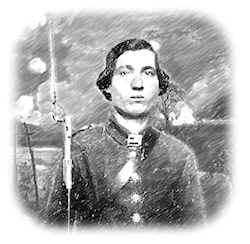
Wednesday, 3d.—Reported Johnston has been fighting Yanks in the rear. Last night moved over hill to safer place, but very near works.
(Note: picture is of an unidentified Confederate soldier.)
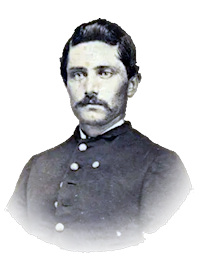
Tuesday, 2d–We lay here in bivouac again all day. Our quartermaster drew some clothing for the regiment. I drew a pair of shoes, a shirt and a canteen. We are still without provisions. We spent the day in cleaning our clothing and equipments. There was some very heavy cannonading at Vicksburg today and we are expecting to receive orders to leave soon for the lines in the rear of Vicksburg.
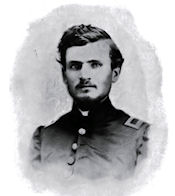
2nd. Saw the Capt. again and got permission to write to Melissa. Wrote short letter, did not feel very well myself. Sent letters to Melissa, Fannie and Sarah Felton. I believe 9th Army Regts. marched in the night. Destination supposed to be Vicksburg.

June 2d. Early this morning vessels of lower fleet fired a few shots; later, during this forenoon, sent seven rebel prisoners ashore to be taken across the point of land opposite Port Hudson to lower fleet; at nine o’clock heavy firing in rear of Port Hudson by our army; during the evening the upper batteries at Port Hudson opened fire inland.
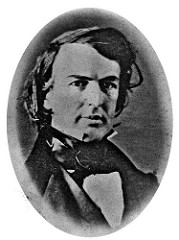
JUNE 2d.—We have a dispatch from Mississippi, stating that on Thursday last Grant demanded the surrender of Vicksburg in three days. He was answered that fifteen minutes were not asked; that the men were ready to die—but would never surrender. This was followed by another assault, in which the enemy lost great numbers, and were repulsed—as they have been in every subsequent attempt to take the town.
A letter from our agent in London says H. O. Brewer, of Mobile, advanced £10,000 in March last, to buy a steamer for the use of the Confederate States.
Gen. Whiting writes from Wilmington, that a captured mail furnishes the intelligence that the enemy have thirty-one regiments at Newbern, and he apprehends they will cut the railroad at Goldsborough, as we have but two small brigades to resist them. Then they may march against Wilmington, where he has not now sufficient forces to man his batteries. The general says he is quite sure that individual blockade-runners inform the enemy of our defenseless points, and inflict incalculable injury. He desires the Secretary to lay his letter before the President.
A circular from the Bureau of Conscription to the commandants of conscripts says, the Assistant Secretary of War (Judge Campbell) suggests that overseers and managers on farms be disturbed as little as possible just at this time, for the benefit of the crops. But what good will the crops do, if we be subjugated in the mean time? I thought every man was needed, just at this time, on the field of battle.
The President rides out (on horse) every afternoon, and sits as straight as an English king could do four centuries ago.
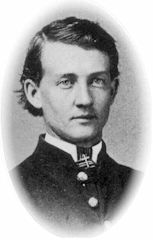
From the diary of Osborn H. Oldroyd
JUNE 2D.–We stayed in camp again all day, and I improved the time strolling through the camps, forts and rifle pits, which had been deserted by the Confederates. They seem to have left their quarters rather unceremoniously, for they abandoned siege guns, with tents, wagons, clothing and ammunition scattered about in confusion. I thought, while camped here, they seemed to feel quite secure. They frequently looked towards the Yazoo, and defied our boats to come up. However, when the boats did come, with Sherman in the rear, they beat a hasty retreat to the inside of Vicksburg.
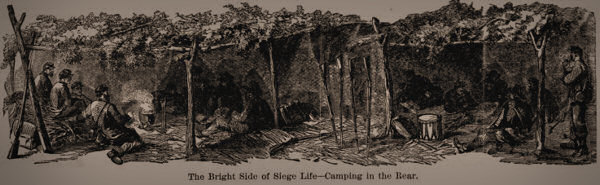
As our duties have been light to-day, the time has been occupied socially, by the boys reciting many little scenes of the past month. We conversed feelingly of those left behind on acount of sickness, or wounds, or death in battle. Only half our company is left now, and after two years more, what will have become of the rest? We shall fight on, perhaps, till the other half is gone. The friendship that now exists among our remnant is very firmly knit. Through our past two years of soldier life such ties of brotherhood have grown up as only companions in arms can know. And I trust before the end of another two years the old flag will again float secure in every State in the Nation.
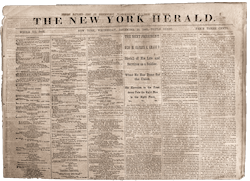
June 2, 1863, The New York Herald
THE UNION AND REBEL CAVALRY COMPARED.
The superior efficiency of the Southern cavalry over the Northern has been repeatedly asserted, and until very recently it was almost impossible to gainsay the fact. The well mounted light horsemen of Morgan have swept like a hurricane over the fertile regions of Western Kentucky, plundering and destroying the property of Union loving citizens, and easily evading every attempt to capture them by their superior activity. In the North we have had repeated evidence of the same fact in the dashing raid of Stuart and his cavalry into the State of Pennsylvania, and the futility of the efforts made by our slower and worse mounted troops to cut them off while thus engaged in their predatory excursions. It is true that a great change has been effected in this arm of the service, still it is worth while devoting a portion of our attention to an investigation of the cause of such inferiority in this important arm of our military service. It is most certainly not in the material of our soldiers; for in the qualities of bravery, coolness and the capacity to endure fatigue our Union troops have proved themselves to be fully equal, if not superior, to their rebel opponents. We must therefore look a little further for the source of the former Southern superiority, and we think, it will not be difficult to arrive at the actual cause.
THE CAUSE
Previous to the breaking out of the present unhappy war, a long continuance of [continue reading…]
June 2, 1863, The New York Herald
The mysterious and threatening movements of the rebel army of Virginia have created the suspicion that it is the intention of General Lee to repeat immediately his aggressive campaign of last summer. Under this idea we are assured there is another great scare in Washington. According to our information the Cabinet are really apprehensive that, getting round or getting over the superior army of General Hooker, the terrible rebel General Lee may not only invade Maryland again, but that, more successful than he was the last time, he may possibly be able this time to get into Washington by way of Frederick city or Baltimore.
The deplorable failure of General Hooker at Chancellorsville, on his own chosen ground, against a rebel army not more than one-half his own in point of numbers, appears, from all that we can learn, to have completely demoralized the administration in regard to the further prosecution of the war in Virginia. In the first place, General Hooker’s rashness placed him in a position where the house in front of which he was standing was knocked to pieces by the enemy’s shells, and he was prostrated by one of the falling timbres, and lay for some time in a helpless and doubtful condition in the very crisis of the battle. Otherwise, perhaps, he might have seen his opportunity, and by sending up an unemployed army corps at hand to the support of General Sickles he might have cut the rebel army in twain and utterly routed it in that Saturday’s fight. In the next place, in recovering from his fall, it seems that General Hooker did not recover his balance of mind, but that from this unfortunate accident, and from the breaking of his lines by the enemy, he saw no safety except in a retreat, when by a general engagement at any time [continue reading…]
June 2, 1863, Dawsons Daily Times and Union (Fort Wayne, Indiana)
If the Abolitionists and Republicans; if Lincoln and Seward desire the Union to be restored, why did they so conduct themselves as to break it up? Why did they proclaim the “Irrepressible Conflict? Why did they treat the Constitution as a covenant with death and the Union as a league with hell? Were they in earnest then, or are they not deceiving the people now? We believe they meant what they said and did to break up the Union, and that they mean to destroy it now, and that they are using the army for that purpose.
June 2, 1863, The New York Herald
When General Hooker was before the Congressional committee sundry questions were put to him which accomplished what they were intended to do, and brought out, not the truth, but General Hooker. He was purposely given an opportunity to say to the country, from a high standpoint, whatever he had to say about the war. He was asked about Yorktown. Upon that subject his opinions were positive, and after some preliminary queries he was squarely requested to state what he would have done at Yorktown had he then been in command of the army. He cited the battle of Williamsburg as the indication of what he would have done. He invited the country to judge of his abilities by that battle. There, he said, he had advanced with his single division against a line of works stronger than the line at Yorktown. Here is a military opinion of the relative strength of those two line. Can it be credited that the finest army in the United States is now under the command of a man who is such a tyro in military matters as not to know which of those two lines was the stronger, and not to know that this statement was absurdly false? Well, Gen. Hooker advanced, and this is what came of it: he fought all day, lost seventeen hundred men, and failed – disastrously, miserably failed – to carry the position. That is what he would have done at Yorktown – that is the battle he desires to be known by. With all deference to those who are wise in war, we are of the opinion that any one could do that. Yet such was in reality Gen. Hooker’s part in the great battle by which he first became widely known. Moreover, his battle had been fought in defiance of orders. Now, when a general fights in violation of orders, loses heavily, and does not accomplish his object, it is, or ought to be, a serious mater. Charges were accordingly made out against Gen. Hooker by the [continue reading…]
June 2, 1863, Savannah Republican (Georgia)
The body of a white man, aged about twenty-five years, wearing a striped shirt and pants of homespun, corresponding with the clothing worn by the Confederate marines of this post, was discovered floating in the Savannah river yesterday morning about Fort Jackson, having being drowned. Coroner Eden held an inquest–verdict in accordance with the above.
June 2, 1863, The New York Herald
Our Baltimore Correspondence.
BALTIMORE, May 31, 1863.
I have come into possession today of the following facts in regard to the present actual condition of the Southern railroads and the rolling stock on them, which have an important bearing on the present military operations both at the West and in the East.
When the war broke out the Southern railroads were in perfect order, and their equipment in rolling stock was enormous in amount and of the best possible construction. With a few trifling and unimportant exceptions, none of this equipment has been lost or destroyed during the progress of the war. On the other hand, it has been considerably increased. At Macon and Atlanta, in Georgia; at Fayetteville, in North Carolina; at Knoxville and at one other point, there are extensive shops where both locomotives and cars are built, and where they are taken for repairs. The railroad from Memphis to Chattanooga, running along the north of Mississippi and Alabama, is very much broken up and damaged, except the fifty-one miles between Chattanooga and Bellefonte, which are in a perfect state. But the railroad from Tullahoma to Vicksburg, by the way of Stevenson, Chattanooga, Atlanta, Montgomery Meridian and Jackson – a distance of 673 miles – is in perfect order and has abundance of rolling stock. The same may be said of the great Southern railroad from Gordonsville to Chattanooga, by the way of Lynchburg and Knoxville – a distance of 526 miles; and of the two railroads from Charleston to Vicksburg, one by the way of Atlanta and Opelika, and the other by the way of Savannah [continue reading…]
June 2, 1863, Dawsons Daily Times and Union (Fort Wayne, Indiana)
Dates from Vicksburg are to the 28th ult. There had been no fighting of consequence since the 24th. The most formidable forts remain to be taken. The rebels seem to think their positon impregnable.– Johnson, with 20,000 men, was reported to be moving to attack Grant’s rear; but Grant was confident of his ability to to repel any such demonstration. The gunboat Cincinnati was sunk by the fire of the rebel batteries on the 26th. Banks, it is said, was rapidly advancing towards the theatre of hostilities. There is a rumor at Cincinnati that Gen. Grant has raised the siege and thrown his whole force back upon Johnson.
The rebels on the Rappahannock are shifting their position. A large force has been sent in the direction of Culpepper, and the opinion is expressed that the plains of Manassas may soon witness another sanquinary struggle.
Gen. Forey captured Puebla on the 17th ult., taking about 18,000 prisoners, including 24 generals. One division of the French army started for the City of Mexico on the 20th.
Many members of the Legislature have arrived at Springfield, but no quorum is expected before Thursday. [continue reading…]
June 2, 1863, Savannah Republican (Georgia)
On Thursday morning last, about the hour of seven o’clock, Mrs. Mena Landgraff, wife of Charles A. Landgraff, who is now a member of Company D, First Battalion Georgia Sharpshooters, left her residence, situated at the corner of Broughton and West Broad streets, for the purpose of going to the market house and returning. At the time she left she had about her somewhere in the neighborhood of one hundred and fifty dollars, and wore a lilac calico dress, light plaid silk apron with a frill; the sleeves of her dress was trimmed with a different colored calico than that of her dress; a white straw hat trimmed with red ribbon, and a thick pair of shoes–black silk mantilla and white collar, and carried a basket of reddish color. At the time she left I had every reason to believe that she would shortly return home to breakfast, but from that hour she has never been seen by me. She was seen in the market by several purchasing her meats.
I make this statement known to the public in as much as I was living with her, and feel confident that some foul play has been done. I call upon the public officers and citizens to use their honest efforts in ferriting out this thing in order that the guilty may be brought to that punishment so much deserved.
Miss Ellen Kennedy.
Savannah, May 30th, 1863.
Any information given will be thankfully received.
June 2, 1863, The New York Herald
The latest reports from the scene of operations around Vicksburg are to the 27th, by way of Cincinnati, to the effect that three assaults had been made by our forces on the rebel stronghold, in all of which we were repulsed. The last assault was made by General Sherman, with twenty thousand men, in which we lost six hundred killed and a large number wounded. Our outer line is within one hundred yards of the rebel works. Our sharpshooters prevent the rebels from working their guns. The rebel works in the rear of the city are far more formidable than those in front.
General Joe Johnston is in the neighborhood of Jackson with about fifteen thousand men, and is reported to be short of provisions and ammunition.
General Grant has taken 8,400 prisoners and 84 pieces of artillery.
The main fortifications of Vicksburg consist of a chain of forts, about eight hundred yards apart, connected by deep intrenchments, and extending for seven miles.
Despatches from headquarters in the battle field near Vicksburg, dated on the 23d, which we publish today, give some thrilling accounts of the progress of the siege up to that time. The fight was evidently a fierce and sanguinary one, involving heavy loss on both sides. At one time, while attacking the outer works, our troops were within twenty-five feet of the enemy.
Telegrams from the headquarters of General Hooker state that a flag of truce was sent [continue reading…]
June 2, 1863, Dawsons Daily Times and Union (Fort Wayne, Indiana)
The President, it is reported, means to have Ge. McClellan mustered out of the United States’ service and to give Gen. Grant the Major Generalship in the regular army thus made vacant.
June 2, 1863, Weekly Columbus Enquirer (Georgia)
From the Knoxville Register.
After a visit to the Rappahannock army, the writer of this made a parting call on General Jackson, in his tent. As we stood exchanging the last words, some reference was made to what our ladies were doing. “Yes,” said he, “but they must not entice the men away from the army. You must tell them so for me. We are fighting for principle, for honor, for everything we hold dear. If we fail we must lose everything. We shall then be slaves–we shall be worse than slaves–we shall have nothing worth living for.”
I am sure the women of the Confederacy will give these words of the now lamented hero a place in their hearts. Let them not be impatient even about their friends in the army coming on visits home. Let them encourage and cheer them in staying at their posts whenever and so long as may be necessary.
But, whether there may have been much occasion for such a suggestion to them or not, the words which Jackson spoke in connection with it, are words alike noble and solemn, to which every man, as well as every woman, in the Confederate States ought to listen. Let our soldiers inscribe them on their banners. Let our citizens at home keep them before their eyes. Let those who are mad in the pursuit of gain, amid the sufferings of their country, aid their fellow-citizens, and give ear to the tones of warning which these words convey.
L.
Tuesday, 2d.—3:30 A. M., ordered back to our brigade. Lying in reserve behind 57th Georgia. 3 P. M., ordered into ditches between 39th and 56th Georgia regiments; very dangerous place, as can be raked by artillery.
(Note: picture is of an unidentified Confederate soldier.)
Monday, 1st–We lay over here below Haines’s Bluff all day, the boys being very tired after their long march. We ran out of provisions last night and could not draw any today. Some of the boys went out into the country to see what they could forage. We heard the roar of cannon at Vicksburg all day.
June 1.—L. and B. went up to Mr. Marye’s near Fredericksburg to-day, to visit their brother’s grave. They took flowers with which to adorn it. It is a sweet, though sad office, to plant flowers on a Christian’s grave. They saw my sister, who is there, nursing her wounded son.
News from Vicksburg cheering.
Monday, 1st. Ration day. After breakfast and morning work, we went at it. Hereafter to have fresh beef every day. Pontoon train arrived in P. M. indicating a forward move. Talk of pay; order reducing of baggage to 30 Ib. Capt. Nettleton sick. Commenced a letter to Fannie.
June 1st. Commences calm and pleasant; firing of musketry this morning heard at Port Hudson; in fact no day has passed since the investment of this rebel stronghold and siege of same commenced, but what more or less bombarding of it has been going on by our army and naval forces, and skirmishing with their pickets, &c.; at nine o’clock this morning inspected crew at quarters; this duty is performed every day at this hour, unless engaged in combat with the enemy, or important work is going on in the ship, calling all hands to perform their share of the labor; from eight P. M., to midnight, mortar vessels, or bombers, below, shelling the batteries at Port Hudson.
JUNE 1st.—Nothing decisive from Vicksburg. It is said Northern papers have been received, of the 29th May, stating that their Gen. Grant had been killed, and Vicksburg (though at first pre maturely announced) captured. We are not ready to believe the latter announcement.
Mr. Lyons has been beaten for Congress by Mr. Wickham.
It is said the brigade commanded by Gen. Barton, in the battle near Vicksburg, broke and ran twice. If that be so, and their conduct be imitated by other brigades, good-by to the Mississippi Valley.
Our people everywhere are alive to the expected raid of the enemy’s cavalry, and are organizing the men of non-conscript age for defense.
One of our pickets whistled a horse, drinking in the Rappahannock, and belonging to Hooker’s army, over to our side of the river. It was a very fine horse, and the Federal Gen. Patrick sent a flag demanding him, as he was not captured in battle. Our officer sent back word he would do so with pleasure, if the Yankees would send back the slaves and other property of the South not taken in battle. There it ended—but we shall probably soon have stirring news from that quarter.
The Baltimore American contains the proceedings of the City Council, justifying the arrest of Vallandigham.