A Rebel War Clerk’s Diary

A Rebel War Clerk’s Diary at the Confederate States Capital, By John Beauchamp Jones
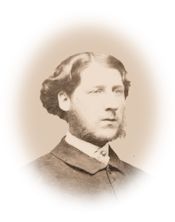
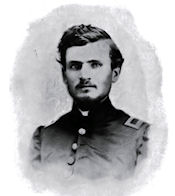
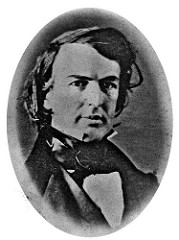
A likeness of Jones when he was editor and majority owner of the Daily Madisonian during President John Tyler’s administration.

JUNE 4th.—To-day we have characteristic unintelligible dispatches from Mississippi. They say, up to third instant, yester­day, everything is encouraging; but the Memphis papers say Grant’s losses have not been so large as was supposed. Then it is reported that Grant has retired to Grand Gulf. Yet it is expected the town will be stormed in twenty-four hours!

When Grant leaves Vicksburg, our generals will pursue and assume the aggressive in more directions than one. Lee has some occult object in view, which must soon be manifest.

Major-Gen. D. H. Hill writes that if the enemy penetrates to the railroad, a great many men in North Carolina will welcome them, and return to their allegiance to the United States. The general wants Ranseur’s brigade sent him. He Says Mr. Warren, one of the governor’s council, in a recent speech remarked, if the enemy got the railroad, it would be a question whether they would adhere to the Confederate States or to the United States. Does the general mean to alarm the authorities here?

After a month of dry weather, we have just had a fine rain, most refreshing to the poor kitchen vegetables in my little garden, which I am cultivating with careful assiduity in hopes of saving some dollars in the items of potatoes, tomatoes, beets; etc.

The crops of wheat, etc. south of Virginia, mature and maturing, are perfect in quality and unprecedented in quantity.
0 comments

0

A Soldier’s Story of the Siege of Vicksburg

From the diary of Osborn H. Oldroyd

JUNE 4TH.–We move at last. We left camp as the sun rose, reaching our old quarters in front of the rebel Fort Hill in the afternoon. Glad we are to get here. A great change has taken place during our ten days’ absence. More rifle-pits have been made and new batteries erected, and our lines generally have been pushed closer to the works of the enemy. Mines are being dug, and we shall soon see something flying in the air in front of us, when those mines explode. The work is being done very secretly, for it would not do to have the rebels find out our plans. Fort Hill in our front and on the Jackson road is said to be the key to Vicksburg. We have tried often to turn this key, but have as often failed. In fact, the lock is not an easy one. The underground work now going on will perhaps break the lock with an explosion. Our return to camp from our excursion after Johnston creates some excitement among those who stayed behind. They all want to hear about our trip, and what we saw and conquered. Our clothes are so dirty and ragged, that though we have sewed and patched, and patched and sewed, Uncle Sam would hardly recognize those nice blue suits he gave us a little while ago. This southern sun pours down a powerful heat, which compels us to keep as quiet as possible. Just a month from today we celebrate our Fourth of July–where, I do not know, but inside of Vicksburg, I hope.

I have asked both officers and men to write in an album I have opened since reaching our old post near the city, and here are a few of their contributions :

Friend 0.: Here is hoping we may see the stars and stripes float over the court house in Vicksburg on the Fourth of July, and also that we may see this rebellion, in which so many of our comrades have fallen, come to an end, while we live on to enjoy a peace secured by our arms. Then hurrah for the Buckeye girls. Your sincere friend,

HENRY H. FULTON,
“Company E, 20th Ohio.”

“Here is hoping we may have the pleasure of zweiglass of lager in Vicksburg, on July 4th.

“D. M. COOPER,
“Company A, 96th Ohio.”

“I hope we shall be able to spend the coming Fourth in the famous city before us, and to have a glorification there over our victories.

“SQUIRE MCKEE,
“Company E, 20th Ohio.”

“Here is hoping that by the glorious Fourth, and by the force of our arms, we shall penetrate their boasted Gibraltar.

“T. B. LEGGETT,
“Company E, 20th Ohio.”

“I offer you this toast: Though you have seen many hardships, let me congratulate you on arriving safely so near Vicksburg. May the besieged city fall in time for you and all our boys to take a glass of lager on the Fourth of July; and may the boys of the Twentieth be the first to taste the article they have duly won.

“D. B. LINSTEAD,
“Company G, 20th Ohio.”

0 comments

0

News of the Day

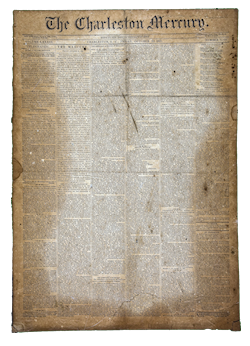
June 4, 1863, The Charleston Mercury

We have gathered some additional particulars of the recent destructive Yankee raid along the banks of the Combahee. The latest official despatch from Gen. WALKER, dated Green Pond, eleven o’clock Tuesday night, and which was received here on Wednesday morning, conveyed intelligence that the enemy had entirely disappeared.

It seems that the first landing of the Vandals, whose force consisted mainly of three […..] companies, officered by whites, took place at Field’s Point, on the plantation of Dr. R.L. BAKER, at the mouth of the Combahee River. After destroying the residence and outbuildings, the incendiaries proceeded along the river bank, visiting successively the plantations of Mr. OLIVER MIDDLETON, Mr. ANDREW W. BURNETT, Mr. WM. KIRKLAND, Mr. JOSHUA NICHOLLS, Mr. JAMES PAUL, Mr. MANIGAULT, Mr. CHAS. T. LOWNDES and Mr. WM. C. HEYWARD. After pillaging the premises of these gentlemen, the enemy set fire to the residences, outbuildings and whatever grain, etc., they could find. The last place at which they stopped was the plantation of WM. C. HEYWARD, and, after their work of devastation there had been consummated, they destroyed the pontoon bridge at Combahee Ferry. They then drew off, taking with them between 600 and 700 negros, belonging chiefly, as we are informed, to Mr. WM. C. HEYWARD and Mr. C.T. LOWNDES.

The residences on these plantations are located at distances from the river, varying in different cases from one to two miles. On the plantation of Mr. NICHOLLS between 8000 and 10,000 bushels of rice were destroyed. Besides his residence and outbuildings, [continue reading…]

0 comments

0

News of the Day

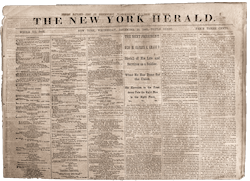
June 4, 1863, The New York Herald

Up to noon yesterday no advices touching any late movements of the army before Vicksburg had been received by the government. All stories of attacks and repulses of Grant army are totally discredited.

It is stated in despatches from Cincinnati yesterday, by way of Cairo, that the base of our lines extends from right to left on the Mississippi, from Yazoo to the lower part of Vicksburg, over six miles in the rear of the rebels and east of the city. We hold undisputed possession of everything between the Black river bridge and sixth […..] of hills in the rear of the rebel army. At the last accounts General Frank Blair division had started for the Big Black river bridge. His destination was unknown.

Admiral Porter sends an official report to the Secretary of the Navy of the proceedings of the gunboats at Vicksburg, acting in cooperation with General Grant’s army. Admiral Porter also sends a despatch relative to the loss of the gunboat Cincinnati. She endured a tremendous fire from the rebel batteries, and went down in shoal water with her flag still flying.

The progress of our forces around Port Hudson is very favorable. The siege goes on well, with every prospect of success. Our correspondence by the steamer Cromwell, from New Orleans, gives a very full account of the movements there up to the 27th. The New Orleans journals of the 28th, however, furnish the latest news from that point. The place appears to be so completely invested as to render its capture a matter of certainty.

It was officially known in Washington yesterday that the rebel privateer Alabama was off Campeachy on the 12th ult.

Great excitement exists in Chicago in consequence of the order of General Burnside to suppress the Times of that city. After midnight on Tuesday a writ was issued by Judge Drummond, restraining the military authorities from suppressing the paper until a [continue reading…]

0 comments

0

News of the Day
1860s newsprint

June 4, 1863, Semi-Weekly News (San Antonio, Texas)
                      A short time since, Col. Bankhead ordered a cavalry company to Medina County to arrest conscripts; Castroville was surrounded and about twenty were taken out of about one hundred and fifty in the County; the remainder escaped in consequence of some persons getting through the lines and giving them information of what was going on.  A few nights since, eighteen of the twenty taken escaped, carrying away with them several horses, guns, pistols, &c.  At the same time the sergeant of the guard deserted.  We have not learned that any of them have been re-taken.

0 comments

0

News of the Day

June 4, 1863, The New York Herald

THE REBEL POSITION IN THE GULF.

The rebels are determined to intensify their strength on several, as it were, cardinal points of their so-called confederacy, and one of the principal of these points in Mobile. A large sum of money and a great amount of labor have been employed since the breaking out of the rebellion on the defences of this place, already well defended by the forts erected by and at the expense of the United States. From the Gulf of Mexico there are three channels into the harbor of Mobile, two of them (the most easterly) being defended by Fort Morgan, while the western one is fully guarded by a casemated work known as Fort Gaines. The swash channel, which is the principal one by which vessels of any size can enter the harbor, runs directly under the guns of Fort Morgan, and it is by this channel that nearly all the vessels that have recently run the blockade of the harbor of Mobile have effected their object. It is said the foreign consuls, especially the Spanish, are heavily engaged in this business. To further defend the harbor or bay a line of spiles has been driven between the channels, and their tops cut off so that they cannot be seen when the tide is in, and are but barely visible when it is out. Spiles have also been driven into the Dog river bar, along the channel line and on either side of the entrance to the bay, so that it would be almost a matter of impossibility for a vessel, unaccompanied by a thoroughly versed pilot, to reach Mobile even if it passed the forts. Further than this, a sloop loaded with stone rides at anchor at the entrance, and at the first sign of invasion she would be scuttled and sunk in the channel. It is true the rebels place but little reliability in the power of resistance offered by Forts Morgan and Gaines; yet they would prove sufficiently strong to allow them time to complete so simple an operation as the sinking of a vessel prepared for the purpose. [continue reading…]

0 comments

0

News of the Day

June 4, 1863, The Charleston Mercury

LATEST FROM VICKSBURG.

JACKSON, May 30. No fighting at Vicksburg. The enemy has quit the storming process, and is going to try the starving. From reliable authority I learn that GRANT is entrenching in parallel lines with our batteries, but out of reach of our guns, and cutting off communication above and below Vicksburg entirely. He is also entrenching at Big Black Bridge, and the fords above and below.

Information received states that the enemy’s cavalry went to Belton’s Depot, twenty miles from Jackson, on the Southern road, and burnt the depot, a large lot of corn, and 800 or 900 bales of cotton, besides committing other depredations.

The Mississippian of this morning publishes a speech made by Gen. PEMBERTON, after three repulses of the enemy. It is as follows:

‘You have heard that I was incompetent and a traitor, and that it was my intention to sell Vicksburg. Follow me, and you will see the cost at which I will sell Vicksburg. When the last pound of beef, bacon and flour; the last grain of corn, the last cow, and hog, and horse, and dog shall have been consumed, and the last man shall have perished in the trenches, then, and only then, will I sell Vicksburg.

It is said that the tremendous repulse and slaughter of the Yankees at Vicksburg on [continue reading…]

0 comments

0

News of the Day

June 4, 1863, The New York Herald

The great struggle for the Mississippi is now reduced to two points, the capture of which will give to the government the complete control of the great river from its sources to the sea, and the loss of which by the rebellion will be as decisive against it as the cutting in two of an army on the field of battle. These two points are Vicksburg and Port Hudson, both completely invested by the land and naval forces of the Union, and with every prospect in each case of complete success.

General Pemberton, the rebel commander at Vicksburg, estimates the investing force of Gen. Grant at sixty thousand men. The rebel force inside the defences of the besieged city hardly exceeds, we dare say, twenty thousand men. Forty-five miles inland, at Jackson city, is Gen. Joe Johnston, with the fragment of an army reported as not exceeding fifteen thousand men. When driven out of Jackson by General Grant it was less than six thousand. The additional nine thousand have doubtless been picked up from the debris of General Pemberton’s army, left behind in his disastrous retreat to Vicksburg. From these data, not omitting the powerful co-operation of Admiral Porter’s gunboat squadron, all the advantages of the situation at Vicksburg appear to be so largely in the possession of General Grant as to discountenance the remotest misgiving of a failure.

Next, with regard to Port Hudson, some three hundred miles below, the strength and the chances seem to be as strongly in our favor. The rebel garrison is represented as not exceeding ten thousand men. They are invested on the land side by General Banks, with [continue reading…]

0 comments

A reprieve from a sentence to be shot.

Woolsey family letters during the War for the Union

…a copy of this original paper written by Charley June 4th:

Major General Meade, commanding 5th Corps.

General: I have the honor of transmitting to you herewith a copy of a telegram just received from the President respecting sentences of Daily, Magraffe and Harrington.

(Signed) C. W. W., A. D. C.”

and Charley had the pleasure of hurrying to Meade’s headquarters with the reprieve of these men from sentence to be shot. These are among the very few papers connected with Charley’s position at headquarters which are now in our possession, many others having been lost in the Morrell fire.

0 comments

Robert M. McGill

Robert M. Magill – Personal Reminiscences of a Confederate Soldier Boy, 39th Georgia Regiment of Infantry

Thursday, 4th.—Major Jackson took command of reserve battalion. Two men killed in 36th Georgia. Last night Company F ordered into a very dangerous place by Captain Osborne. All very glad when Jackson superseded him.


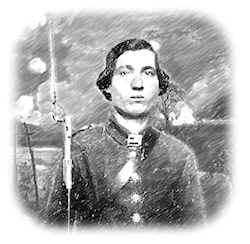
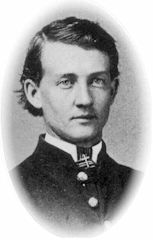
(Note: picture is of an unidentified Confederate soldier.)

0 comments

War Diary of Luman Harris Tenney.

War Diary of Luman Harris Tenney.

3rd. Day passed much as usual. Played a little chess with Thede and Johnny. Called on the Capt. Found him about the same. Stomach much out of order and some fever. Called for bread at Widow Vickery’s. Permission to borrow some books.

0 comments

0

Cruise of the U.S. Flag-Ship Hartford -Wm. C. Holton

June 3. During the early part of this day, or even the whole morning, all was quiet at Port Hudson and on the Mississippi. During early part of the afternoon the steamer General Sterling Price arrived from Vicksburg; fighting still going on in that quarter; at five thirty the steamer Price and Gen. Banks went up the river. Heard heavy cannonading going on at Port Hudson, between the two contending armies, and I am not aware as yet who’s who, or who is getting the best of it; at six thirty P. M. ram Switzerland came down the river, and anchored, communicating with us. She returned up the river, again. Mortar vessels below, commenced about nine o’clock, and continued firing during the watch, three of the enemy’s guns at the same time firing inland upon our army in rear of Port Hudson, and continuing their firing until a late hour; at eleven P. M.; quick discharges of musketry heard in rear of Port Hudson, and two rockets seen sent up from that vicinity. It is reported as being true, that Banks has lost, up to the present time, from his late engagements with the enemy, some two thousand men in killed and wounded. Of one negro regiment, numbering a thousand men, when they charged the rebel works on the morning of the 27th of May last, six hundred remain to tell the fate of their comrades. This speaks well for their bravery.

0 comments

“…there has been a very destructive Raid on Combahee…,”

Journal of Meta Morris Grimball
Meta Morris Grimball

June.

       Berkley came up 10 days since for his furlough he looks well and is quiet and as he always has been. He leaves us on Tuesday 9th to return to his Artillery. I am not satisfied that he is in a healthy position but they give the men quinine. We have been very glad to see him.

       Vicksburg holds out finely there has been a very destructive Raid on Combahee1, Millions of property destroyed & carried off; 6 or 7 hundred negroes by 200 Armed negroes with white Officers.

       We have now been up here a year and think of remaining until the fall, we have a nice little garden and some promising chickens.—


  1. Raid on Combahee Ferry that included Harriet Tubman leading an expedition of 150 African American soldiers of the 54th Massachusetts Infantry Regiment. (Wikipedia)
0 comments

Through Some Eventful Years

Through Some Eventful Years by Susan Bradford Eppes
Susa Bradford Eppes

June 3rd, 1863. —I have been sick, dear Diary. I have not been able even to think at times and I am a fright. The fever made my hair drop out and I am wearing a black silk cap, which makes me look like the picture of the Jesuits.

So much has happened since I wrote here last. I miss Susie and Aunt Nancy and I am so sorry for Aunt Margaret. The whole country misses Uncle Daniel for he was such a fine officer, so splendidly equipped to command men.

My pupils have all gone away. I did not know when they went but the father died and the boys are scattered among their relatives. I hope they can go to school for they were actually learning a little.

Father says I can resume the book-keeping when I am well again. The call for troops made it necessary for Mr. Ansell and Mr. Edmondson, the brother-in-law, to enlist or leave the country. Rather than return to England they took the oath of allegiance to the Confederate Government and have joined the Gamble Artillery; that is, they expect to be in Colonel Gamble’s command. Mrs. Ansell will stay on in the house provided for the mill manager.

Dr. English has written to Father in regard to a wounded soldier he is bringing with him from a hospital in Virginia. The doctor went on to see his nephew, who was wounded in a skirmish near Harper’s Ferry, but when he reached the hospital his nephew had been dead two weeks. He found there a young Virginian, whose injuries were severe and painful; the surgeons in attendance said he was shot through both lungs, the bullet making what they term “a clean wound,” entering on one side cutting its way through and leaving the body in a direct line. They think if he could get to some quiet place, where his wound could receive close medical treatment he might recover. Of course Father wants him to come here.

We always keep Charley when the doctor goes and he is with us now. He is like a little brother to me and Father and Mother are more like parents to him than his own father. The doctor is a scientific man, not an M. D., but a Ph.D., and a long list of other letters, which mean so much to him. He is so wrapped up in his researches that he does not find his own young son very interesting. Charley is happy here, however, and we love the poor motherless boy.


Susan Bradford is 17 years old when this entry was made.

0 comments

A Rebel War Clerk’s Diary

A Rebel War Clerk’s Diary at the Confederate States Capital, By John Beauchamp Jones
A likeness of Jones when he was editor and majority owner of the Daily Madisonian during President John Tyler’s administration.

JUNE 3d.—Gen. Lee communicates to the department to-day his views of the Montgomery letter to Gen. Forrest, a copy of which was sent him by Governor Vance. He terms it “diabolical.” It seems to have been an official letter, superscribed by “C. Marshall, Major and A. A. G.” Gen. Lee suggests that it be not published, but that copies be sent to all our generals.

Hon. R. M. T. Hunter urges the Secretary, in a lengthy letter, to send a cavalry brigade into Essex and the adjacent counties, to protect the inhabitants from the incursions of the “Yankees.” He says a government agent has established a commissary department within six miles of his house, and it will be sure to be destroyed if no force be sent there adequate to its defense. He says, moreover, if our troops are to operate only in the great armies facing the enemy, a few hostile regiments of horse may easily devastate the country without molestation.

Gov. Vance writes a most indignant reply to a letter which, it seems, had been addressed to him by the Assistant Secretary of War, Judge Campbell, in which there was an intimation that the judicial department of the State government “lent itself” to the work of protecting deserters, etc. This the Governor repels as untrue, and says the judges shall have his protection. That North Carolina has been wronged by calumnious imputations, and many in the army and elsewhere made to believe she was not putting forth all her energies in the work of independence. He declares that North Carolina furnished more than half the killed and wounded in the two great battles on the Rappahannock, in December and May last.

By the Northern papers we see the President of the United States, his wife, and his cabinet are amusing themselves at the White House with Spiritualism.

0 comments

0

A Soldier’s Story of the Siege of Vicksburg

From the diary of Osborn H. Oldroyd

                      JUNE 3D.–Expected to move to-day, but got orders instead to remain in camp. Have heard heavy cannonading towards Vicksburg. Would prefer to take our place in the line around the city rather than stay away, for there is glory in action. It may be very nice, occasionally, to rest in camp, but to hear firing and to snuff the battle afar off, creates a natural uneasiness. Besides, if the city should surrender in the meantime, we might be cheated out of our share in a prize, to the taking of which we have contributed some valuable assistance.

2007-00712.jpg

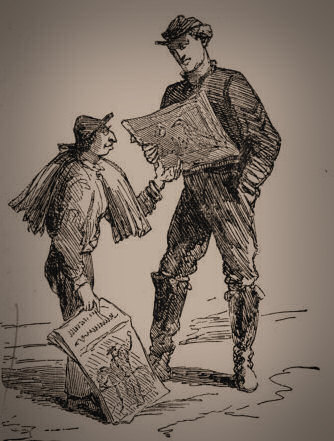
                      Newsboys are thick in camp, with the familiar cries, “Chicago Times” and “Cincinnati Commercial.” The papers sell quite freely. At home each man wants to buy a paper for himself, but here a single copy does for a whole company, and the one that buys it reads it aloud–a plan which suits the buyer very well, if not the seller. While some of these papers applaud the bravery of the generals and their commands, and pray that the brilliancy of past achievements be not dimmed by dissensions in the face of the enemy, other papers have articles that sound to us like treason, slandering the soldier and denouncing the government. But they can not discourage or demoralize this army, for it was never stronger or more determined than now, and it will continue to strike for our country, even though bleeding at every pore. The rebels can not be subdued, so they say. Why not? In two years have we not penetrated to the very center of the South? And in less than that time we shall be seen coming out, covered all over with victory, from the other side.

0 comments

0

News of the Day
1860s newsprint

June 3, 1863, Galveston Weekly News

                      The Shreveport South Western says, that large droves of slaves daily pass through that place on their way to Texas.  The editor suggests that they should be taken to the wheat region of Texas, as he is requested to state that ten thousand of them can find employment there in the wheat harvest.  He says they will obtain two bushels of wheat per day for their labor.

0 comments

0

News of the Day

June 3, 1863, The Charleston Mercury

A despatch from Pocotaligo stated that at an early hour yesterday morning the enemy made a raid towards the Combahee Ferry. They destroyed the pontoon bridge at the Ferry, and set fire to many dwellings on the river banks. Three hundred of the Yankees landed at Field’s Point, supposed to be a division of their force to protect the marauders. It was reported that they had visited several of the plantations in the neighborhood, inflicting all the damage in their power. Passengers by the Savannah Railroad, saw the blaze of the burning property on their way to the city yesterday. Among the dwellings destroyed, it is said, is the fine residence of A. W. BURNET, Esq. Our troops in that direction are on the alert however, and ready to meet the enemy in any force, so that a sudden check to his depredations may be expected. Up to a late hour last night we were unable to learn any additional particulars.

0 comments

0

News of the Day
1860s newsprint

June 3, 1863, Galveston Weekly News

                      The Telegraph publishes a long letter from Gen. H. E. McCulloch, dated Camden, Ark, April 30, in which he dwells upon the reported sufferings of soldiers’ families, and denounces the heartless speculators and extortioners in severe terms.  Judging from the best information we have been able to get, we come to the conclusion that Gen. McCulloch has been misinformed as regards the sufferings of soldiers’ families in Texas.  We have been informed that they have been everywhere amply provided for.  This is a duty that has devolved upon the counties, and our exchanges inform us that it has not been neglected, and that there is really no ground for such charges of neglect of soldiers’ families.  We, in common with other journals, have taken pains to state these facts, so that our soldiers might feel relieved from all anxiety on the subject.  Although our State, as well as other States, is cursed with many heartless speculators, who seem willing to extort the last dollar from the people for the necessaries of life, yet these speculators, we are happy to state, do not entirely control the State.  We believe it is a gross libel on the people of Texas to say they will permit the families of soldiers to suffer for any of the necessaries of life, especially after the liberal measures adopted by our late Legislature.

0 comments

0

News of the Day

June 3, 1863, The New York Herald

The latest news from Vicksburg is to the 29th ult., last Friday. No change in the condition of affairs there had occurred, but the prospects of General Grant were regarded as […..].” News from Memphis to the 1st inst. recounts the destruction of the United States gunboat Cincinnati by the fire of the rebel batteries on the 26th ult., and the loss of from fifteen to forty killed and wounded.

The rebel newspapers up to the 30th ult. do not speak very hopefully of their prospects at Vicksburg.

No important movement has taken place on the Rappahannock. The rebel journals, however, talk of a change of base on the part of General Hooker, insinuate that his headquarters have been changed and assert that large bodies of his troops have moved down in the direction of Port Royal, &c.

Our New Orleans news today by the steamships Creole and United States is very interesting, relating chiefly to the practical and successful operations of General Banks. He was closing upon Port Hudson and so enveloping it in his toils that its capture was almost certain.

It appears that the rebel authorities refuse to parole the officers of Colonel Streight’s command recently captured near Rome, Georgia; but still retain them as prisoners of war at Richmond.

Our forces in Alabama have been accomplishing something of importance recently. A despatch from Cincinnati, dated yesterday, says that Colonel Cornyn defeated General Roddy at Florence, Alabama, on the 27th ult., capturing one hundred men, eight officers, four hundred mules and three hundred negroes. Colonel Cornyn then proceeded northward, destroying foundries, mills and everything else useful to the enemy that he could lay his hands on.

0 comments

0

News of the Day

June 3, 1863, The Charleston Mercury

FROM NEW ORLEANS.

ATLANTA, GA., June 2. New Orleans refugees arrived here state that it was believed at New Orleans that FARRAGUT, finding his ship, the Hartford, in a sinking condition and too weak to return past the batteries at Port Hudson, stopped the vessel and destroyed her near the mouth of the Red River. FARRAGUT with his officers and crew were at New Orleans.

THE WAR IN MISSISSIPPI.

The Jackson Mississippian, of Tuesday, 26th, says: ‘We learn from a gentleman who arrived from Vicksburg, that the most stubborn battle of the series around that devoted place took place on Saturday, in which the Federals were repulsed with terrible slaughter, our boys literally piling up their dead bodies in heaps.’

We have news from the Yazoo up to May 25th. The Yankee gunboats were reported as having left Yazoo City. Four steamers were sunk in the Yazoo by order of Capt. I. N. Brown, of the Confederate Navy – the Scotland, Golden Age and two others. All other steamers in the river are safe. Our forces have evacuated Fort Pemberton – bringing off all the guns safely.

It is said that Gen. Pemberton has been compelled to burn tar and other disinfectants in order to save his troops from the ill effects of the effluvia of the dead bodies of the [continue reading…]

0 comments

0

News of the Day

June 3, 1863, The Charleston Mercury

One good lesson, says the Richmond Enquirer, may be learned from late events; and especially from the manner in which that Yankee raid through North Alabama into Georgia was met and ended. The lesson is, that old men, boys, and even girls, may and can, by a little timely preparation, be enabled to resist, capture, or destroy a large band of mounted brigands making what they call a […..] ‘– that is, riding through an unprotected, thinly– peopled country, where they expect to meet no resistance, destroying and stealing as they go. Sixteen hundred Yankee horsemen were held in check and frightened out of their senses by the sudden gathering of the peaceable folk in the counties through which they passed; harassing their march, menacing their front and gathering in their rear, until at last the farmers and the women of Floyd county closed them up, barred their passage, and handed them over to FORREST’S handful of cavalry. Nothing alarms the Yankee forager like any force collecting in their rear; and the truth is, they are not sufficiently at home on horseback, nor sufficiently confident in their own hardihood to carry their marauding operations very far where they have reason to expect resistance at all.

Hereafter we may look out for these villainous plundering expeditions in all directions; and the only way to prevent them entirely (as army corp and divisions cannot be everywhere) is, local organization for local defence, and for co-operation with neighboring districts, in case of necessity. Every town and village should agree upon signals which are to arouse the surrounding country. This can be done for the immediate neighborhood by [continue reading…]

0 comments

0

News of the Day
1860s newsprint

June 3, 1863, Savannah Republican (Georgia)

                      The following extract from a letter received from Jackson, Miss., is but in keeping with the conduct of the enemy against whom we are battling.

                      *                  *                  *                  “I must tell you of some of the outrages committed by the vandals.  Besides destroying every pound of food they could find in the stores and on the plantations, they destroyed furniture, fences, killed milk cows and hogs, leaving them lying on the ground.  Even good old Bishop Green was visited very hardly.  They took his sermons and scattered and trampled them in the mud–took a favorite prayer book and cut it up; chopped the piano and melodeon to pieces, and even carried off his robes.  At the Church they carried off the robes and offertory plates.

                      “They robbed a woman with four children of her cow and pigs, took her last pound of meal from her refusing to leave her any for her children, and even took off a cake that was cooking, saying they intended to starve them out.  Ladies’ wardrobes were sacked, the clothing torn to pieces, and everything like jewelry was carried off.  One prisoner taken yesterday had fifteen watches, besides jewelry.  Fences, hedges and shrubbery were wantonly destroyed–indeed, every outrage that a fiendish malignity could suggest.  But I will not shock you further with the recital of these cruel wrongs.”

*                  *                 *                  *                  *                  *                  *

0 comments

0

News of the Day
1860s newsprint

June 3, 1863, Savannah Republican (Georgia)

(From the Augusta Chronicle and Sentinel.)

                      We have had the pleasure of an interview with a gentleman recently from Camden, Ark., who has kindly furnished us with some facts in regard to the situation of affairs in that State, which cannot fail to be of great interest to our readers.  Our informant is a gentleman of rare cultivation, strong good sense, and pleasing conversational powers, and his knowledge of affairs in that quarter is ample and reliable.

                      The social condition of the people of Arkansas is most encouraging.  The war has proved to them a blessing, in the sense that it has brought out the resources of the country, taught the inhabitants self reliance, and developed their slumbering energies.  In the enterprise and activity, born of the emergency, the State has become a perfect hive of industry.  Factories, machine shops, forges, foundries, etc., abound, where articles for home use, and for the use of the army, are abundantly supplied.  Salt wells have been found, and the manufacture of salt is carried on extensively and successfully.  The tanning of hides, for the past eighteen months, has been beyond all parallel in the history of the State.  By precaution and foresight, cotton and woolen cards are plenty, and many families are engaged in carding, spinning and weaving cloth, both for domestic purposes and for clothing the soldiers.  Our informant mentioned some households where eight hundred yards had been wove the past year, who intended this year to increase the amount to one thousand yards. Under the quickening influence of the time, the whole State is alive with industrial enterprise. [continue reading…]

0 comments

0

News of the Day

June 3, 1863, The New York Herald

Our latest accounts from Vicksburg are down to the 29th of May (Friday last), at which time the prospects of the siege were […..] encouraging.” We think the issue must be determined now within a very few days; that the garrison is holding out in expectation of a rescue by General Joe Johnston, and that should he fail to come up within the appointed time the city will be surrendered.

When Pemberton was driven in behind his intrenchments Johnston assured him that if he could hold out for fifteen days a hundred thousand men would be brought to his support. On Friday last ten of those fifteen days had expired, and all the efforts of General Grant to penetrate the enemy’s works had been repulsed. Meantime, General Johnston, who, in the sweeping advance of General Grant, had been driven northward from Jackson, with some five or six thousand men, had returned to that city with a force reported at fifteen thousand. Doubtless this increase of his nucleus of an army was made up from the odds and ends of Pemberton’s forces, scattered about to the right and left, and left behind by General Grant in his pursuit of Pemberton to Vicksburg. We may next hear that from Mobile, Charleston, Savannah, and from Bragg’s army in Tennessee, larger accessions have been joining Johnston. But, from the destruction of the enemy’s stores at Jackson and Yazoo City, from the damages done to their lines of communication, and from the exhaustion of their supplies over a great extent of country around Jackson, we think it most likely that Johnston will not get his army or his provisions in season to fulfill his promise to Pemberton. [continue reading…]

0 comments