Monday, 15th–Our brigade is all broken up, most of it being on picket duty facing Johnston’s army and acting as a reserve, and doing police duty between the two lines of battle. Johnston is reported to be out on the Big Black river with about ten thousand men, in an attempt to get into Vicksburg, but he’s afraid to come for fear of getting whipped. The boys are having fine times picking blackberries and plums. I quit cooking for the captain, and was recommended as a first-class cook. John Lett took my place as cook for the officers.
American Civil War Chronicles
0
June 15, 2023
June 15th. At 1 o’clock A. M. the mortars of the army and navy firing into Port Hudson; at two forty-five A. M. the mortars of lower fleet ceased bombardment. From this time up to four A. M. brisk firing of musketry—the rebels replying with two guns; at two thirty P. M. got up steam; at four P. M. hauled fires; at nine fifteen P. M. beat to quarters. Several transports came down from Bayou Sara, on account of guerillas being about.
0
June 15, 2023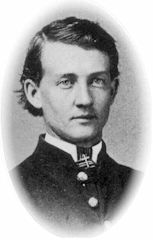
From the diary of Osborn H. Oldroyd
JUNE 15TH.–Our regiment went into the rifle-pits again before daylight, at which time the din of musketry and cannonading from both sides had begun, and will cease only when darkness covers the earth.
We are now so close to Fort Hill that a hard tack was tossed into it by one of our boys, and then held up on a bayonet there, to satisfy us of its safe arrival. Some of the boys have become reckless about the rifle-pits, and are frequently hit by rebel bullets. Familiarity breeds a contempt of danger.
Some of the boys wounded at Raymond have got back to us, and are now ready again to do their part. They are, however, more timid than we who have been at the front so long. It is fun to see these new-corners dodge the balls as they zip along. But they, too, will soon become accustomed to flying lead.
Several of the boys have been hit, but not hurt badly, as the balls were pretty nearly spent before reaching them. Those returning from Raymond say they have marked the graves there, but I fear it will not be long before the last vestige of the resting places of our late comrades will be lost.
A Rebel War Clerk’s Diary
June 15, 2023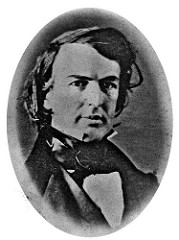
JUNE 15th.—The enemy have abandoned the vicinity of Fredericksburg, falling back across the river, and probably retiring toward Alexandria, or else they have taken to their transports, and intend making another effort to capture Richmond. It is rumored that Gen. Ewell has taken Winchester ; but this, I think, is at least premature.
Certainly the government is taking steps to guard against a blow at Richmond. All the civil officers (subordinates, only, of course) are being mustered into the service for “local defense or special duty;” but Gen. Elzey, the Marylander, it is reported, has said the “d___d clerks have given me so much trouble, that I intend to keep them on duty in such a way that they cannot perform their functions in the departments, and so others must be appointed in their places.” This would be in violation both of the Constitution and several acts of Congress. Yet they are to be mustered in this evening “for three years, or the war.” And the Secretary of the Treasury has announced that all who refuse to volunteer are to be reported, by the President’s command, and will be removed. The President has intimated no such thing. Of course they will volunteer. There is much censure of the President for “bad faith”—most of the clerks being refugees, with families to support.
Mayor Mayo has refused to admit Gen. Winder’s three policemen (all imported) to bail, and they remain in prison; and Judge Meredith has refused to discharge them on a writ of habeas corpus—resolving first to test the validity of the martial law set up for them in their defense.
I believe the government is acting on my suggestion to Col. Johnston, A. D. C., in regard to searching blockade-runners, caught in the lines, bearing sealed letters to the North. To-day the Attorney-General sent to the department, for Mr. Seddon’s approval, instructions to Confederate Attorneys and Marshals to aid and co-operate with M. Greenwood, a detective agent of the government. I think about the first men he detects in treasonable practices will be Gen. Elzey and Gen. Winder’s detectives.
Mr. Vallandigham has been nominated for Governor of Ohio.
The following are the conditions upon which women and children can come to the South, or go to the North, published in Washington and Baltimore:
“First.—All applications for passes to go South must be made in writing and verified by oath, addressed to Major L. C. Turner, Judge Advocate, Washington, D. C., as follows:
“I, A___ B___, applicant for a pass to go to City Point, Virginia, and now residing at _____, do solemnly swear that, if said pass be granted, I will not take any property excepting my wearing apparel, and that all the articles to be taken with me are contained in the trunk or package delivered or to be delivered to the quartermaster on the transport steamer on which I am to go to City Point. That I have not been in any insurgent State, nor beyond the military lines of the United States, within thirty days last past. That I will not return within the military lines of the United States during the present war, and that I have not in my trunk nor on my person any papers or writings whatsoever, nor any contraband articles.
“No person will be allowed to take more than one trunk or package of female wearing apparel, weighing not over one hundred pounds, and subject to inspection; and if anything contraband be found in the trunk or on the person, the property will be forfeited and the pass revoked.
“Second.—A passenger boat will leave Annapolis, Md., on the first day of July next, to deliver those permitted to go South at City Point, and the baggage of each applicant must be delivered to the quartermaster on said boat, at least twenty-four hours previous to the day of departure for inspection.
“Third.—Children will be allowed to accompany their mothers and relatives, and take their usual wearing apparel; but the name and age of each child must be given in the application.
“Fourth.—Ladies and children desiring to come North will be received on the boat at City Point and taken to Annapolis, and every adult person coming North will be required to take and subscribe to the oath of allegiance to the Government of the United States before the boat leaves Fortress Monroe.
“L. C. TURNER, Judge Advocate.”
0
June 15, 2023
June 15, 1863, Savannah Republican (Georgia)
Owing to a failure in our regular supply of paper, we are compelled for a day or two to issue the Republican on a half sheet. We hope to be righted up during the week, and even to increase the size of the paper by the close of the month.
0
June 15, 2023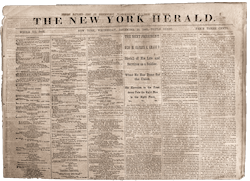
June 15, 1863, The New York Herald
About two years ago General Scott started grand army of the United States “on its march southward, by way of Virginia, to occupy and possess the property and places belonging to the government,” and to take care that […..] laws of the Union should be faithfully executed in all the States.” Since that we have had a succession of battles, of greater or less extent, with advances and retreats innumerable, and not less than half a million men have been lost to the country in all ways. After so much endeavor, in what position is the war?
Practically we may now consider the rebellion as represented by about three hundred and fifty thousand effective soldiers. Aside from its armies, the rebellion has no vitality, and those armies are consequently the true objective points. They are in the field at Fredericksburg, Petersburg and Staunton, in Virginia; at Goldsboro and Wilmington, in North Carolina; at Charleston, in South Carolina; at Savannah, in Georgia; at Tallahassee, in Florida; at Monticello, in Kentucky; at Knoxville, Shelbyville and Chattanooga, in Tennessee; at Madison, Jacksonport and Little Rock, in Arkansas; at Mobile, at Port Hudson and at Vicksburg.
Though we have thus named eighteen points, the force at some of them is quite small, and might, for any importance in the points themselves, be smaller; for the whole struggle is now concentrated really in five theatres of operations, and the theatres of primary importance are fewer still; for the positions at Goldsboro and Wilmington are merely the acknowledgment of a weakness there, and the positions at Petersburg and [continue reading…]
0
June 15, 2023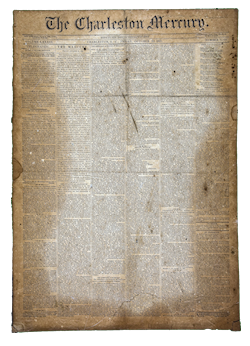
June 15, 1863, The Charleston Mercury
LATEST FROM THE WEST – THE SIEGE OF VICKSBURG.
JACKSON, June 12. – An officer who left Vicksburg on the night of Wednesday, the 10th, reports all as working well. The garrison is in fine spirits, and well supplied with provisions. So far but little damage has been done by the enemy’s fire. The total loss to the garrison since the siege began does not exceed 500. GRANT is still, pegging away upon his parallels, but no mischief has been done so far.
Our scouts from the vicinity of Vicksburg report GRANT hauling water for his troops from the Big Black, eight miles. He has mounted siege guns and opened fire. Tonight the firing is incessant. Our columbiads are replying promptly. All eyes are turned to Gen. JOHNSTON, who is in front superintending in person. Such are the secresy of his plans, it is stated they are unknown to his commanders. The next five days will determine the fate of GRANT’S army.
At the latest advices GRANT was compelled to burn most of his dead before Gen. PEMBERTON’S […..] pen.’ The Vicksburg ladies promenade the streets during the bombardment, and at night go out to see the display, which is very fine.
We have good news from the Trans-Mississippi Department, but it is considered contraband. You may, however, soon expect to hear that Gen. KIRBY SMITH is at glorious work. He has undoubtedly captured Milliken’s Bend, in Madison county, [continue reading…]
0
June 15, 2023
June 15, 1863, Menphis Daily Appeal (Atlanta, Ga)
From the Savannah News.
We have announced before that Gen. Hunter, the Federal commander at Hilton Head, had ordered that all the citizens of St. Augustine who sympathized with the South, or who had relatives in the Confederate army, should be banished from that city. In pursuance of this barbarous order, on Tuesday, the 28th of May, the Federal steamer Boston was at the wharf at St. Augustine, prepared to receive the exiles. Some thirty or forty citizens, men, women, and children, were embarked on board the steamer, which proceeded on her voyage, the exiles being uniformed of their destination. Many supposed that they would be landed at Fernandina, but, upon their arrival there, they were informed that the order from General Hunter was peremptory for the steamer to proceed to Hilton Head. The steamers accordingly arrived at that port. The prisoners were not taken on shore, but were kept on board one week. They were then taken to Beaufort, and placed in a dwelling there, guarded by Federal troops. This, we learn, was done to protect them from the insults of the Federal troops, frequent complaints having been made by political prisoners of the ill treatment received by them at the hands of the Yankee officers and soldiers. From Beaufort they were conveyed in accommodation wagons to the Confederate lines, and by railroad a portion of them arrived in this city on Wednesday night by the Charleston train.
On their arrival within our lines, they separated in different directions, in search of relatives and friends, many of them being comparatively destitute, having been robbed of their property and driven from their homes with scant means.
0
June 15, 2023
June 15, 1863, The Charleston Mercury
The Richmond papers bring us accounts of the great cavalry fight in Culpeper County, Va., last Tuesday, but no two of them agree as to the precise result. All, however, seem to concur in the opinion that our forces were surprised, that the fight was protracted and bloody, and that although victory finally perched upon our banners, it was dearly bought.
The Richmond Sentinel gives the following details of the action:
The cavalry of the enemy numbered, it is supposed eight to ten thousand. It was accompanied and supported by two or three thousand dismounted men and artillery. The enemy’s force crossed in one place, it is said, at a ford prepared by them for the occasion. They thus eluded our pickets, got in their rear and captured them, and pressed on rapidly to our camps. This was at an early hour in the morning. The 1st South Carolina and 4th Virginia, which were on picket, lost many men captured in these early operations. The enemy’s column next fell on General Jones’ brigade, which they found in the act of forming, with guns and pistols not yet loaded. Taking them at this disadvantage, they pierced and broke our line, and forced our men to fall back. They gained so much ground as to capture General Stuart’s headquarters, near Brandy; also, Brandy Station, and, we understand, some stores there. Our men, recovering from their surprise, now rapidly came forward and threw themselves, sabre in hand, upon the enemy. These were driven, in their turn, nearer to the river, with the loss of a number of prisoners, besides the killed and wounded. [continue reading…]
0
June 15, 2023
June 15, 1863, Savannah Republican (Georgia)
We have succeeded in reorganizing our corps of army reporters, and shall hereafter be supplied regularly with the latest and most reliable news from every important division of the army, except that in Mississippi, where correspondents are not allowed. Our own “P. W. A.” is in the front with the Army of the Rappahannock; “N.” one of the most thorough and intelligent reporters of military movements developed by the war is with the Tennessee branch of the Army of the West; while the ever welcome letters of “V.A.S.P.” and “Tout-la-Monde” will continue to reach us from the vicinity of Fredericksburg.
These arrangements have been made with a largely increased expense, but we look to the public to save us harmless. We have no expectation of making money as long as the war shall last, but as the readers of the Republican will enjoy peculiar advantages while hostilities shall last, we may reasonably claim from them an active interest in our behalf.
0
June 15, 2023
June 15, 1863, The Charleston Mercury
The details of the fighting which preceded the investment of Vicksburg are coming to light. A participant in the recent battle of Baker’s Creek furnishes to the Appeal the annexed account of the affair, which is the first connected narrative yet published from a Southern source. The writer dates at Jackson, Miss., May 24:
On Friday afternoon, the 15th instant, three divisions of the army under Lieut. Gen. Pemberton (Loring’s, Stevenson’s and Bowmen’s), advanced from Edward’s Depot in the direction of Raymond, and stopped that night about six miles from the starting point, and on what is known as the middle Raymond road. At eight o’clock the next morning, Saturday, just as we were preparing to move forward, the enemy opened upon our advance guard with artillery briskly, indicating that they had found out our movements and had determined to give us battle.
We immediately fell back a mile to an eligible position, and formed in line of battle, to be in readiness for an advance or to receive their attack. We had not long to wait. Our line was formed in a curve of Baker’s Creek, upon a ridge, our right being posted in a position to use a ford at the crossing of the creek in case we were overwhelmed, and our left equally convenient to a bridge over the stream, which, it was expected, would furnish safe passage for our army in such a contingency.
The cannonading on our right ceased as we fell back to this point, and a distinguished officer remarked at the time that the attack on our right was a feint; that, in his [continue reading…]
0
June 15, 2023
June 15, 1863, Menphis Daily Appeal (Atlanta, Ga)
You can very materially assist the Government of your choice in its struggle against the Northern despotism.
Every house, cowshed or other building, that has stood for ten or more years, has under it large quantities of saltpeter, which is contained in the earth that has been kept dry.
The Government urgently calls upon you for a further exercise of your patriotism. You have done much already, but all must keep their energies strained to the utmost, until the enemy ceases his endeavors to subjugate us, and we are blessed with peace, under our own victorious flag.
You have it in your power to hasten the much desired result, by reducing the saltpeter that is under your houses and bringing it into market. The fixtures required amount to but very little, the process is easy and the labor light. Your boys under eighteen can thus be made as useful as their older brothers who are baring their breasts to the storm of war.
All necessary information will be furnished upon application to the offices of the Nitre and Mining Bureau, at Athens, McMinnville, Shellmound, or in this city.
The bureau officers in charge at the above points, will also purchase from you all the saltpeter you can bring, at seventy-five cents per pound.
F. H. Smith, Capt.
Assistant Superintendent N. & M. Bureau.
0
June 15, 2023
June 15, 1863, The Charleston Mercury
THE FIRING from our battery on the lower extremity of Morris Island against the Yankee works on Folly Island, was renewed yesterday afternoon, but we have, as yet, no definite intelligence as to the results of this, or of any of the engagements of the same character, which have taken place within the last few days, excepting that the enemy’s return fire has been harmless.
The battery upon Morris Island, to which we have referred, is under command of the gallant and skilful Capt. JOHN C. MITCHEL, of the 1st Regiment S. C. Artillery, and is manned by a portion of his regiment.
0
June 15, 2023
June 15, 1863, The Charleston Mercury
Again the honor and the fame of South Carolina is pledged upon the field of battle in the blood of some of her noblest sons. The soldierly spirit of BEE is gone – the grand Roman heroism of GREGG is but a page of history – the fiery soul of CUTHBERT shall blaze no more in the forefront of battle – and a thousand others of honored lineage, and much worth, have perished in her cause – and still the dark list of fate is unfilled; still the blood-stained roll of honor stretches out before our mournful gaze. BUTLER, whose name is a part of the history of South Carolina in her councils of state and upon the battle field, from the great struggle of 1776 to the scorching plains of Mexico and the deadly heights of Cherubusco – BUTLER is down and hors du combat for the war. HAMPTON, JONES and FARLEY have run their high career, and left their names as legacies to their State. Deep and steady is the drain upon the very vitals of the State, and dearly bought the crimson tide of honor which bathes her escutcheons. As individuals, we mourn their fall; as a people, we mourn our loss. But what can grief avail? Others can step into their places in the field, but who can recall the high spirits of these gallant gentlemen – who fill up the broad gaps left in our State?
Perhaps there was no man of his rank, in the Army of Virginia, who served the cause with more effect and more unconquerable zeal, from the first battle of Manassas to the hour of his death, than did Capt. FARLEY. As a scout, an independent fighter, a leader, his restless and ardent spirit knew no repose in the great contest. Alone, or at the head of his men, by day or by night, he ever hung like an Indian upon the track of the enemy, and smote him with his unerring rifle in every valley and from every hilltop, from the [continue reading…]
0
June 15, 2023
June 15, 1863, The New York Herald
The indications that an offensive campaign has not only been resolved upon, but has actually been commenced, by General Lee, similar to that of last years, are so numerous, consistent and conclusive, in our judgment, as to leave no margin for the slightest doubt upon the subject.
The movements of the enemy around Culpeper Court House, which were supposed, on our side, a week ago, to be only the preparations for a grand cavalry raid by Stuart, it now appears were movements involving the whole rebel army. This is pretty broadly indicated in General Lee’s despatch relating to the recent cavalry fight, which shows that on June 9 his headquarters were at Culpepper. But the despatch of June 13, from Mr. Cook, one of our correspondents with the army of General Hooker, settles the question. He says that movements of General Lee in the direction of Culpepper have been on a larger and a more expeditious scale than was at first supposed, and embrace nearly the entire forces of his army, there now remaining opposite Falmouth a force not exceeding ten thousand men. From other despatches it appears that Lee has been heavily reinforced from the neighborhood of Suffolk, and from North and South Carolina. He is thus prepared for offensive operations; and what these operations will be we think may be readily conjectured from certain other facts betraying his preliminary reconnoissances.
Our Harper’s Ferry correspondent reports that at the time of Mosby’s late raid into Maryland from Edwards’ Ferry a powerful body of rebel infantry was not far behind him [continue reading…]
0
June 15, 2023
June 15, 1863, The New York Herald
At the commencement of the war the rebel government had so much military talent on its hands that it hardly knew what to do with it. General R.E. Lee, in particular, was almost as much of a bother in Richmond as he has since been in better places, and he was quietly given the command in Western Virginia to get him out of the way. General Rosecrans had then succeeded to the principal command of the Union forces there, and thus it happened that he was the first of our generals to try conclusions with Lee. By the brilliant actions which first brought General McClellan prominently before the country much had been done to weaken the rebel hold upon that district; yet Floyd was still rampant, Wise not less so, and Lee, to strengthen all, had put them in positions from which it seemed impossible that they could be driven. From hill after hill, however, they were compelled to retire in most unseemly haste, and almost without the opportunity to fight. In the light of the fame that Lee has since won it is certainly greatly to the honor of Rosecrans that he clearly proved himself the superior soldier – so clearly, that it was a public acknowledgment in the South that the fated campaign in Western Virginia had ended in a […..] blaze of glory for the Yankees.” After this Lee was given by the rebel government an important command in the East, and by our government Rosecrans was effectually kept out of sight for a year.
Such men, however, will come up some time, and Rosecrans came up again at the battle of I-u-k-a, September 19, 1862. Sterling Price had manoeuvred with some success towards the Tennessee, with the hope to operate in Bragg’s favor against Buell, and had taken possession of I-u-k-a with that end in view. Rosecrans arranged for a joint advance [continue reading…]
0
June 15, 2023
June 15, 1863, The New York Herald
It is evident from all the ascertained movements of General Lee’s army that an active campaign is now in operation against the Union forces on the Rappahannock, and that at any moment a most important phase in the state of affairs there may be developed. Harper’s Ferry, the Shenandoah valley and the upper fords of the Potomac are the points indicated by the recent rebel movements as the theatres of approaching complications. Our army appears also to be changing its base. The supplies are being transported from Aquia creek to Alexandria.
The last despatches from Vicksburg and vicinity, received last night via Cairo, and dated the 8th inst., merely repeat the accounts previously published. The army continues in good health and spirits. The siege advances with every prospect of success.
We give an extended and highly interesting account today of the recent operations of the rebel privateers, which is worthy of attention, as showing the activity of the enemy on the seas. Two new privateer steamers have made their appearance, and it would appear from all the report that they are scouring the Atlantic Ocean as far down as Cape Horn, and from that point round into the Pacific, to intercept our vessels from China and India. The reports of these bold proceedings on the part of the rebel navy appear to have waked up our Navy Department, for four United States vessels were sent from this port on Saturday night; three were ordered out from Hampton Roads at the same time, and others are under orders to follow immediately to hunt up the Clarence (or Coquette).
We publish in another column the reply of Mr. Lincoln to the resolutions adopted at the Albany meeting of the 16th ult., relative to the arrest of Mr. Vallandigham, the vindication of free speech and so forth. The President deals with the question elaborately, justifying the suspension of the habeas corpus, and arguing with much logic and sophistry the claims of the administration to act as they have done in the matter of summary arrests, trials by military courts, and the necessity of not waiting for the commission of defined crimes to put troublesome persons out of the way. He says that he regrets the necessity of Mr. Vallandigham’s arrest and banishment, and will be glad to discharge him, provided the public safety will not suffer by it. At the same time he intimates that if he had exercised his own discretion he would not have ordered the arrest of Mr. Vallandigham at all. The President’s letter, on the whole, is most interesting.
Our correspondent in Vera Cruz, writing on the 1st of June, furnishes a very interesting and important resume of the conditions of affairs in Mexico to that day. He states that Puebla was defended to the last moment, and that Ortega surrendered only when hunger compelled him to do so. It was said that nine thousand of the defenders of the place had reached Mexico City. The French were in possession of Vera Cruz, Cordova, Orizaba and Puebla, but the writer alleges that the other portions of the republic were universally hostile to them. Napoleon’s officers were, nevertheless, driving on some very huge public works in the shape of railroads, bridges, viaducts and so forth, paying over thirty thousand dollars weekly in wages to the laborers, independent of the salary of engineers and mechanics. One viaduct is to be built at a cost of two millions of dollars. The cash and material for these undertakings are landed from France, and laborers in hundreds from New Orleans. The French officials in Vera Cruz assert that all these undertakings will soon be completed, and they seem to entertain no idea of leaving the country. Over fifty civil officers are said to be on their way from France, in order to assist in reorganizing the civil government in the departments. The war had produced an extensive disorganization of the commerce, the executive administration, the postal arrangements, finances, and naval and military departments of Mexico. In and around Vera Cruz, as well as in the city and port of Minititian and other points of the sea coast, the French enforced the most watchful and rigorous system of military repression against all who opposed them. The British officials said nothing, and seemed rather to approve of the action of their late allies. The Egyptian negroes impressed by Napoleon had murdered nine women and children in a village near Vera Cruz. Colonel Labrausse, French Commandant in Vera Cruz, had died of vomito, as had also the chief of the negroes. It was reported at Panama, our correspondent writes, that the affairs of the French progressed most favorably in Mexico, and it was thought that Mexico City would soon fall after Puebla.
Robert M. McGill
June 15, 2023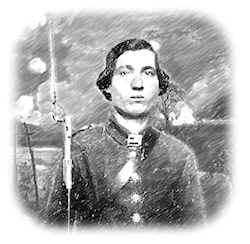
Monday, 15th.—Various reports afloat, but none very reliable. Heavy firing all day. Nearly one-half of company sick; rations very short and bad; been living on pea-bread for some days.
(Note: picture is of an unidentified Confederate soldier.)
0
June 14, 2023
June 14th. Last night our position was changed from the south to the east side of the town, on the Berryville road. The night was a very dark, stormy one, with severe lightning and thunder. We were wet through. Not allowed fires as it might draw the enemy’s fire. Passed a very uncomfortable night. This morning, at daylight, our position was again changed, extending our lines further towards the north, under fire from the enemy as we attempted to enter the rifle pits. In the movement Lieutenant Merwin commanding our company was wounded in the foot.
The enemy had possession of a large brick house a short distance in front of our position in the pits. Their sharpshooters made it hot for us. A charge on the house was ordered. The enemy ran, but we captured a few prisoners. Later in the day the rebs again took possession of the house making it hot for us in the pits. We had to lie low or zip would come a bullet, and at times many of them. Colonel ordered a section of a battery. Two guns putting a few shells through the house, the enemy left it. No more trouble came from that point, the house was ruined. About 6 P. M. General Milroy called in all his forces and formed them around the Star Fort, the largest fort. A fierce battle came on. It was a hot place. The roaring of the big guns, explosion of shells, rattling of musketry, was something fearful. The charging of both sides was hot work. We drove the enemy back and they also forced our lines back. Darkness put an end to the carnage and I had passed through the battle unharmed. The end of the second day. The casualties were great as I could not help seeing. It gave me an opportunity to see what a horrible thing war really was. We were fighting Jackson’s old corps, now commanded by General Ewell, reported to number forty thousand.
War Diary of Luman Harris Tenney.
June 14, 2023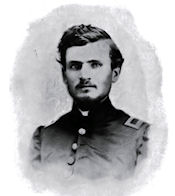
14th. Entered Harrison on state line at 2 A. M. Napped and breakfasted. Seemed good to be in Ohio again, and see faces of Ohio people. Passed through New Baltimore, New Springfield, Sharon, Montgomery, Miamiville, in sight of Camp Dennison and camped 5 miles. Morgan has today burned 48 cars, captured 300 militia, etc. People very hospitable.
War Diary of Luman Harris Tenney.
June 14, 2023
Sunday, 14th. No services during the day. Mr. Brown said he had an appointment to preach at 10:30, but no one went to hear him. I took a bath, changed my clothes and read in Independent. Stayed awhile with Drake.
Downing’s Civil War Diary.–Alexander G. Downing.
June 14, 2023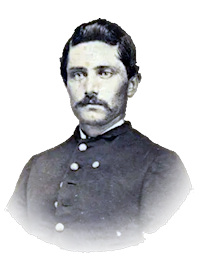
Sunday, 14th–Company E moved back as a reserve and to do police duty. Six of our companies are out on picket. There was heavy cannonading today by our men, the rebels in return throwing a few shells now and then. It is reported that one of our shells exploding in the streets of the town killed six women. Women and children as well as the men are shut in and are of course helping to consume the small store of provisions, but there is no way of escape.
A Confederate Girl’s Diary
June 14, 2023
Sunday, June 14th.
The excitement about Port Hudson and Vicksburg is intense. When I heard on Friday that the last attack was being made on the former place, I took to my prayers with a delirium of fervor. If I was a man, if I had the blessed privilege of fighting, I would be on the breastworks, or perchance on the water batteries under Colonel Steadman’s command. But as I was unfortunately born a woman, I stay home and pray with heart and soul. That is all I can do; but I do it with a will. In my excitement, I was wishing that I was a Catholic, that I might make a vow for the preservation of Port Hudson, when a brilliant idea struck me. It was this: though vows are peculiar to Catholics, mosquitoes are common to all sects. From that arose this heroic scheme: I said, “Hear me, Miriam, thou who knowest I have slept undisturbed but three nights out of seventeen, four hours out of each of the other fourteen having been spent in destroying my insatiable foe. Thou seest that nightly vigils are torturing me pale and weak, thou knowest what unspeakable affection I have for the youth yclept by the ancients Morpheus. Yet listen to my vow: If Port Hudson holds out, if our dear people are victorious, I offer up myself on the altar of my country to mosquitoes, and never again will I murmur at their depredations and voracity.”
Talk of pilgrimages, and the ordinary vow of wearing only the Virgin’s colors (the most becoming in the world); there never was one of greater heroism or more sublime self-sacrifice than this. And as if to prove my sincerity, they have been worse than ever these last two nights. But as yet I have not murmured; for the Yankees, who swore to enter Port Hudson before last Monday night, have not yet fulfilled their promise, and we hold it still. Vivent vows and mosquitoes, and forever may our flag wave over the entrenchments! We will conquer yet, with God’s blessing!
A week or ten days ago came a letter from Lydia, who is placed within the lines by this recent raid. She writes that the sugar-house and quarters have been seized for Yankee hospitals, that they have been robbed of their clothing, and that they are in pursuit of the General, who I pray Heaven may escape them. She wrote for clothing, provisions, and a servant, and after we had procured them all, and were ready to send them, we discovered that they would not be allowed to pass; so I hardly know what the poor child will do unless she accepts Brother’s invitation to come down to him immediately, if she thinks it right.
0
June 14, 2023
June 14th. At ten A. M. inspected crew at quarters, and performed Divine service. Slight artillery and musketry-firing in the rear of Port Hudson. Slight northerly breezes. Bombardment of Port Hudson, by the army and navy, kept up throughout this day, with slight intermission.
0
June 14, 2023
From the diary of Osborn H. Oldroyd
JUNE 14TH–Sunday. No bells to ring us to church. I wish we had one day in seven for rest and freedom from care; but there is no such thing now for the soldier. It is shoot, shoot, dodge, dodge, from morning to night, without cessation, except when we are asleep. When the time comes, we can lie down and sleep soundly all night, right under our cannon, firing over us all the time, without disturbing us in the least. But let the long roll be sounded–every man is up at the first tap–for that sound we know means business for us.
Occasionally the rebs plant a mortar in some out of the way spot and drop a shell or two into our midst; but a few well directed shots from our big guns at the rear soon settle them. These rebels obey very well.
We have several large siege guns, lately planted in the rear of our division, which it took ten yoke of oxen to haul, one at a time, to their places. I had been told that the balls from these guns could be seen on their journey, and could not believe it until I put myself in range of the monsters, just behind them, when I found I could see the balls distinctly, as they flew across the hills towards Vicksburg. These guns are nine-inch calibre and they are about twelve feet long. They are monsters, and their voices are very loud.
Sunday is general inspection day, and the officers passed through our quarters at 10 A.M., finding our guns and accoutrements bright and clean. If any young lady at the North needs a good housekeeper, she can easily be accommodated by making a requisition on the 20th Ohio. In fact we can all do patchwork, sew on buttons, make beds and sweep ; but I do not think many of us will follow the business after the war is done, for the ” relief ” always so anxiously looked for by the soldiers must then come.
I heard one of our boys–a high private in the rear rank– lament that he was
“Only a private. and who will care
When I shall pass away?”
Poor lad, he was in a sad way ! But it was mere homesickness that ailed him. If dissatisfied with his position as a private, let him wait, for if he survives the war, he will, no doubt, have a chance to be captain of an infant-ry company.