0

A Soldier’s Story of the Siege of Vicksburg

From the diary of Osborn H. Oldroyd

JUNE 18TH.–I was relieved from guard at 9 A.M. and returned to camp. There has been very heavy firing all day, and it is rumored that Pemberton will try to break through our lines; but if he tries that game he will find it dangerous enough. It is no easy matter to climb over the bulwark of steel now encircling this city.

The weather is getting altogether too hot for comfort. A few sun-strokes have occurred, but without proving fatal so far. One poor fellow even dropped at midnight, when I presume the surgeon’s diagnosis must have been–moonstruck. There are more ways than one of shirking a battle, for which purpose some are even willing to part with a finger or toe.

If the rebels are short of provisions, their ammunition seems to hold out, for they are quite liberal in their distribution of it. But when Sherman begins firing from the east, McClernand from the west, McPherson from the rear, and the mortars from the north, then look out for big fire-works. The cannon are all pointed towards the town, but some of the shells fall far short of it. When these burst in mid-air, we can see a small round cloud of smoke left behind, and then there is a sharp lookout for fragments to be scattered in every direction. Our artillerymen have had such good practice during the siege, that they can generally drop a shell wherever they want to.

Boys at the front have time for sport, which is not to be interrupted even by stray shells. I noticed four of our boys playing euchre, when a shell from the enemy came careering just above their heads ; but they treated it with entire indifference. Another group I saw playing “seven-up” under a blanket caught at the four corners in the hammers of muskets stuck in the ground, and thereby forming a very good shelter from the sun. A shell burst right over this group, scattering its fragments all around, but even this failed to disturb the game, further than to call forth the timely comment, “Johnny passes.”

0 comments

0

News of the Day

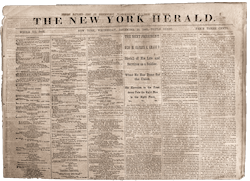
June 18, 1863, The New York Herald

In this moment of painful anxiety, when the nation has lost confidence in the general at the head of the Army of the Potomac, and the army itself, if it ever believed in him, has faith in him no more, and when the army and the people look to the restoration of General McClellan to the command as the main hope of safety, it is the duty of the military authorities at Washington to publish McClellan’s final report of his operations, in which he disposes of the slanders of Wade, Chandler and the other radical members of the Committee on the Conduct of the War. This is a necessary act of justice, and it will be at the same time sound policy, in view of recent and coming events, which may compel the government in a few days, if not in a few hours, to fall back upon the general whom, in its profound wisdom, it so unceremoniously rejected in the height of his success. Like a soldier and a hero, he has heretofore borne his wrongs in silence rather than injure the cause of the Union by discussing them in public, and the last we hear of him is that he is quietly assisting Governor Seymour to organize the militia whom the emergency demands from this State. But the proper time has come for Mr. Lincoln to vindicate his character and his military reputation, and to expose the frauds and machinations by which the President was misled into the false step of removing him from is command. If Halleck and Stanton will not make the amends honorable, the legal and constitutional commander-in-chief of the army and navy has the power to compel them, under pain of removing them from office. Indeed, their removal would be the very best thing Mr. Lincoln could do under the circumstances; for experience has already shown that they would not only not work in harmony with McClellan, but that they would be likely to [continue reading…]

0 comments

0

News of the Day

June 18, 1863, The New York Herald

The Harrisburg Telegrams.

HARRISBURG, June 16 – Midnight.

Two of our reporters have just returned from in front of the rebel pickets, who are picketed forty-seven miles from Harrisburg, at Scotland Bridge, which they burned this morning.

A party of fifteen set fire to the structure.

The rebels are encamped at three points around Chambersburg, and are thirty-five hundred strong, under General Jenkins.

The rebels say that a brigade under General Rhodes is coming, and that they have seized two hundred horses to mount their infantry.

The rebels have fifteen pieces of artillery.

This morning a skirmish took place in the town between some rebels and some men from Carlisle Barracks. No lives were lost.

General Jenkins has ordered all the stores to be opened.

The rebels made prisoners of seven citizens, but injured no private property. [continue reading…]

0 comments

0

News of the Day

June 18, 1863, The New York Herald

Major General Hunter arrived in this city yesterday, having been relieved of his command of the Department of the South. General Gillmore, the conqueror of Fort Pulaski, takes General Hunter’s place, and we are sure that no appointment could be more popular with the officers and soldiers of that department, among whom General Gillmore is a universal favorite. It is now very likely that we shall hear of warm work in South Carolina before very long. General Gillmore is not the man to waste time in experiments with negroes or in writing silly and bloodthirsty letters to Jeff. Davis, threatening to hang, draw and quarter everybody within reach if some proclamation or other be not withdrawn. Charleston ought to have been taken long ago, and, now that General Gillmore leads the troops, we shall probably soon hear that the cradle of the rebellion is as closely invested as Vicksburg and Port Hudson by land, while our iron-clads bombard it from the harbor.What disposition is to be made of General Hunter we are not informed. If poor Greeley would only trot out his negro brigade “Black Dave” Hunter might take command of that and lead it on to glory. Such a position would be just suited to Hunter’s capacity. He has repeatedly demonstrated that he is unfit to govern a department or to hold any very high command. He went to South Carolina with a good reputation as a soldier, but lost it on the passage, and became somehow transformed into one of the craziest of fanatics – worse than Greeley, Garrison, Wendell Phillips or Cheever, and about equal to old John Brown, whose soul is popularly supposed to be marching on with the negro regiments. Poor Hunter was a fighting man before he became a negromaniac; but since then he has done absolutely nothing in the military line. On the contrary, he has stayed away from the battle field with extraordinary persistency; and all accounts agree that Charleston might have been taken at the time of our attack upon and repulse at James Island had General Hunter led and directed our army, instead of remaining at headquarters and allowing other generals to take the troops into action. A general who sacrifices his reputation, his soldiers and his position to his love for the negro deserves some consideration from poor Greeley. Therefore by all means hurry up the negro brigade.

0 comments

0

News of the Day

June 18, 1863, The New York Herald

By the latest accounts it has been ascertained that no rebels were to be found as far as Shippensburg yesterday. They were in possession of the little town of Scotland, where they had burned the bridge. About three o’clock yesterday they retreated from Chambersburg.

An official despatch from General Tyler, at Harper’s Ferry received in Washington last night, represents that the enemy have a force of infantry and artillery from seven to eight thousand strong at Williamsport, and that their cavalry are making dashes into Pennsylvania. The rebel General Imboden is reported to be in front of Cumberland with two regiments of cavalry and a battery. Our troops evacuated Harper’s Ferry yesterday, and hold Maryland Heights, strongly fortified, to resist any attack.

It is reported that about five hundred of our cavalry were flanked at Greencastle by the rebels in force, and but twenty escaped. The rebels have burned the bridge at Chambersburg. They avoid the turnpike in their raids.

From all the information we have as to the position and movements of General Hooker’s army it would appear that it is again near the celebrated Bull run scene of action. The Third Army corps arrived at Manassas Junction on Monday morning. The First and Eleventh corps are at Centreville. The balance of the army – the Second, Fifth, Sixth and Twelfth corps – were expected at Bull run next night. General Gregg’s division are operating in the neighborhood of Warrenton and White Sulphur Springs. General Dufie’s [continue reading…]

0 comments

0

News of the Day

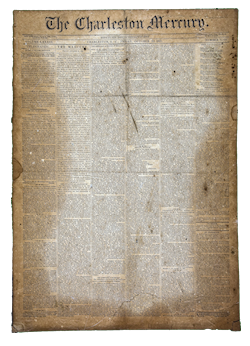
June 18, 1863, The Charleston Mercury

GOOD NEWS FROM VIRGINIA!

RICHMOND, June 17. – A despatch dated Rockingham, June 16th, to the agent of the Associated Press, says that EWELL attacked the enemy at Winchester on Saturday, and fought them all day Sunday. On Monday, at 4, a.m., he renewed the attack, and, after a struggle of one hour, the Abolition flag was lowered. Our victorious veterans took entire possession of the place, and the command of MILROY, between 6000 and 7000 strong, which formed the Yankee garrison, surrendered to our forces, with all their stores, etc., embracing several hundred horses and wagons, artillery, equipments and trains. Our loss in killed, wounded and missing will not exceed 100. Not one of our officers was killed. MILROY endeavored to escape, but it is rumored that he has since been captured. Colonel ALICOTT, who was endeavoring to reinforce MILROY, with about 2000 men, was surprised by and surrendered to General EDWARD JOHNSON, near Berryville, on Sunday evening.

(Later.)

RICHMOND, June 17. – Passengers by the Central train from the Valley of Virginia, confirm the news received by telegram from Harrisonburg this morning. They also report the escape of MILROY, with an escort of cavalry. There is no other news. The weather is very warm. No rain yet. [continue reading…]

0 comments

0

News of the Day

June 18, 1863, The Charleston Mercury

On Friday, the 15th November, 1861, just after the fall of Hilton Head, we put forth the following editorial, submitting it to an eminent citizen of Charleston deemed most wise and most discreet. It was a calm, practical, common sense consideration of the evident dangers in view and of the manifest method of repelling them. The object was to give direction to the popular excitement, and to stimulate and encourage our military authorities in practical exertions for securing Charleston. Yet some persons did not like to look matters in the face. They feared the enemy might become aware of what every sensible man at all cognisant of our affairs, whether in or out of the harbor, knew perfectly well. They abused us roundly – were greatly alarmed at our […..].’ A few even stopped their subscriptions. But no harm resulted, and we flatter ourselves in the belief that the effect aimed at was produced. The work of preparation made decided progress, and events have justified, to a considerable extent, the good sense of our remarks, however unpalatable they may have been to some of our citizens. We are about to make more remarks, touching the necessity of present preparations, and our readers may peruse this extract before hearing what we have to say. We tell them plainly Charleston has yet to be saved from threatening dangers.

PREPARATION FOR OUR DANGERS.

The danger to Charleston, from the Yankee invaders, appears to be in three directions: First, from the passage of gunboats and light draft transports through the inland navigation. They command the communication by water, because we have no gunboats with [continue reading…]

0 comments

0

News of the Day

June 18, 1863, The New York Herald

Our Harrisburg Correspondence.

HARRISBURG, June 16, 1863.

GOVERNOR CURTIN AND HIS PRESENT ACTION.

I called upon the Governor this morning at seven o’clock, and found him at the Executive chamber looking wearied and disappointed. He is resigned to the fate that awaits the capital of the glorious old Commonwealth of which he is the Executive. He has done everything that lay in his power to avert the dreaded blow. He has importuned and pleaded with the War Department to no avail. He has repeatedly warned the Cabinet of what might be expected, and his advice has never been hearkened unto. It is well to state, though, that, now that the raiders are in such close proximity, he bears up courageously and manfully, and will not desert his post until the last hope has been extinguished. Never had the people greater confidence in his wisdom, devotion and courage, and even political enemies, now present at the capital, in attendance upon the proposed Democratic Convention, testify to his eminent fitness, and sympathize with him in this to him dire calamity.

GENERAL DEPRESSION AND PANIC IN THE CITY.

Most of the stores in the city are closed, the markets deserted and private residences abandoned. The streets present much the same appearance that they do upon Sunday or fast day. The people are standing in knots, conversing upon the probable fate in store for [continue reading…]

0 comments

0

News of the Day

June 18, 1863, The New York Herald

The Main Body of the Enemy in the Shenandoah Valley.

PHILADELPHIA, June 17, 1863.

A special despatch from Washington, dated last night contains the following intelligence:–

The latest advices from the army show that General Lee has pushed a very large force up the Shenandoah valley.

General Ewell’s corps is in the advance, accompanied by General Stuart’s cavalry.

General Hill’s corps is close behind, and General Longstreet is bringing up the rear.

There no longer seems to be any doubt that General Lee is throwing the whole of his forces up towards Maryland and Pennsylvania.

Our cavalry have been skirmishing with Lee’s rear guard for two days, and all information now tends to show that the rebels are not moving to give us battle on the old field of Bull run, or in that vicinity.

Our forces evacuated Frederick, Maryland, and that vicinity, and fell back to the Relay House this morning. No enemy pursuing them, they returned to Frederick this morning with strong reinforcements. [continue reading…]

0 comments

0

News of the Day

June 18, 1863, The New York Herald

Correspondence of Mr. F. G. Chapman.

FREDERICK, Md., June 16, 1863.

After a hard ride of sixty miles I arrived here today, and found the most excited set of people that could possibly be conceived of inhabiting the town. I had been led to expect that the town was occupied by the Confederate troops, (you see I must speak of the gentlemen composing General Lee’s army respectfully under the circumstances), for all along the road from Baltimore I heard well authenticated stories of their presence here; nevertheless, I was determined not to turn back until I had obtained a view of their pickets at least, and the result was I came into the city as quietly and unharmed as if I had been the presiding elder entering a camp meeting. There were no troops here of any kind, save a few sick and wounded Unionists in the hospitals whom General Briggs had left in his movement back to the Relay House, below Baltimore. The most exaggerated reports were rife as to the movements of the enemy, many averring that the whole country between here and Harper’s Ferry was lousy with graybacks, and others asserting that Lee’s whole rebel (Confederate, I mean) army was crossing the Potomac at Point of Rocks, and that before night Frederick would be full of Southern troops. And it must be confessed that the female portion of the town seemed highly pleased with the prospect, while the sterner class, of all politics, looked upon the advent as anything but desirable. I found all communication with Harper’s Ferry cut off, except by telegraph, though I do not see why the cars do not run through, as it is said the railroad is unharmed east of the Ferry. The cars now run as far as Monocacy Junction. [continue reading…]

0 comments

0

News of the Day
1860s newsprint

June 18, 1863, Clarke County Journal (Alabama)

Camp Sawyer, Caroline County, Va  }
May 30th, 1863.                  }

Mr. Editor:

                      Whilst the press teem with individual acts of heroism exhibited in the late battles of Chancellorsville, permit me to mention one, which I consider second to none in this army of heroes.  The men belonging to the “Ambulance Corps,” being required to keep very near the rear of the Regiment to gather up the wounded, are constantly exposed to the fire of the enemy, and not having an opportunity to return the fire of the enemy there is no excitement to drown the thought of danger.  At every step one meets with his dead and wounded comrades, and so powerful is the effect upon the nerves that many men who have acted well in line of battle, falter in this position.  After the battle had been raging for some hours on Sunday, the woods, being thickly covered with dead leaves, were fired by the shells, where hundreds of our brave wounded comrades lay helplessly scattered.  Upon these woods the enemy poured a most terrific and deadly fire and it seemed death to enter them in this awful hour.  But Jesse R. Bettis, of the “Ambulance Corps,” exhibited the heroic courage of a Christian soldier.  He did not falter for a moment, but went though the woods, raked the leaves from around them and thus saved hundreds of helpless wounded men from perishing in the flames.  Hundreds of the wounded enemy were burned, because we could render them no assistance.  It required the courage of a lion to face the shower of deadly missiles that swept every part of the woods where our helpless wounded were lying–and he who braved the storm to rescue them deserves to have his name written in letters of gold.

H. M. J.

0 comments

0

News of the Day

June 18, 1863, The New York Herald

According to our latest advices from Washington, the main body of the rebel army is moving down the Shenandoah valley towards Maryland, while the army of General Hooker is gathered around the old battle field of Bull run. It is conjectured that Lee’s programme is substantially that of last September, and that it will probably culminate in another great battle on the field of Antietam. Such a contingency may possibly occur; but we can hardly imagine that it enters into the plans or calculations of General Lee, or General Hooker, or the War Office. It is evident that the whole rebel army is in motion towards Maryland and Pennsylvania; but it remains to be seen whether, on crossing the borders, it will move southward for the rear of Washington or Baltimore, northward for Harrisburg and Philadelphia or westward for Pittsburg, and a grand raid into Ohio.

We cannot imagine that Lee will hazard the experiment of moving down upon Baltimore or Washington while Gen. Hooker is in a position either to confront him or get in his rear and cut him off from his lines of retreat; nor do we suppose that if Lee had designed to march upon Harrisburg and Philadelphia he would have sent forward a detachment of his forces in advance sufficiently strong only to give the alarm to Pennsylvania, and sufficient time to Gen. Couch to muster a force on the banks of the Susquehanna competent to protect the whole line of the river against even a hundred thousand men; nor can we believe that he has any design of leading his army on a wild goose chase over the Alleghany Mountains for Pittsburg.

What then is the grand object of this Northern movement of the rebel army of Virginia? [continue reading…]

0 comments

Robert M. McGill

Robert M. Magill – Personal Reminiscences of a Confederate Soldier Boy, 39th Georgia Regiment of Infantry

Thursday, 18th.—Not so much cannonading to-day; reported Yanks have taken away some of their cannon, P. M., sharp-shooters firing away pretty rapidly yet.


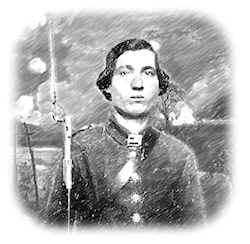
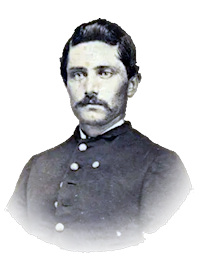
(Note: picture is of an unidentified Confederate soldier.)

0 comments

The Siege Itself.

War Diary of a Union Woman in the South

June 18th.—To-day the “Citizen” is printed on wall paper; therefore has grown a little in size. It says, “But a few days more and Johnston will be here”; also that “Kirby Smith has driven Banks from Port Hudson,” and that “the enemy are throwing incendiary shells in.”


Note: To protect Mrs. Miller’s job as a teacher in post-civil war New Orleans, her diary was published anonymously, edited by G. W. Cable, names were changed and initials were generally used instead of full namesand even the initials differed from the real person’s initials. (Read Dora Richards Miller’s biographical sketch.)

0 comments

War Diary of Luman Harris Tenney.

War Diary of Luman Harris Tenney.

17th. A very hot, sultry, uncomfortable day. Suffered much from the extreme heat. Passed part of the day with Henry. Finished Emma Bartlett or “Prejudice and Fanaticism”, a book borrowed from Mrs. Vickery. Treats some of slavery, both sides, very good.

0 comments

Downing’s Civil War Diary.–Alexander G. Downing.

Diary of Alexander G. Downing; Company E, Eleventh Iowa Infantry

Wednesday, 17th–Our mortar boats are shelling the rebels day and night, and the constant roar of cannon is something dreadful to listen to. Our regiment drew some clothing from the quartermaster today. We just learned that we are to remain out here on picket. The boys are having easy times picking blackberries and plums. They are quite plentiful, and come as a Godsend to us. Water is becoming very scarce, for the branches which we have to depend upon have now stopped running, and all we can get is the water left in the sink holes in the creek bottom.

0 comments

A Confederate Girl’s Diary

A Confederate Girl’s Diary by Sarah Morgan Dawson

June 17th.

I must write something somewhere, I don’t care if dinner is ready, and Brother’s “safe old Secesh “downstairs! Lydia has another boy! Letter has just come, and I am demented about my new godchild! There now! feel better!

One more word – it shall be called “Howell.” Dear, blessed little baby! how I shall love it!

0 comments

0

Cruise of the U.S. Flag-Ship Hartford -Wm. C. Holton

June 17th. Early this morning, mortars of lower fleet firing at intervals. At ten A. M. gunboat Sachem came down the river with despatches, and anchored ahead of the Albatross, off Falls river; burned several buildings on left bank of river; artillery and musketry firing in rear of Port Hudson, which continued until twelve o’clock; at ten thirty P. M., two rockets were seen sent up from Port Hudson.

0 comments

0

A Soldier’s Story of the Siege of Vicksburg

From the diary of Osborn H. Oldroyd

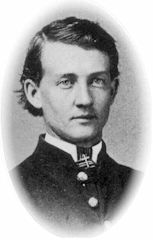
JUNE 17TH–I was detailed to the charge of a squad of men to guard rebel prisoners in the corral at Logan’s headquarters. They were not hard to guard, for they think themselves in pretty good hands, and surely they seem to get better grub here than in their own lines. Some of them are deserters, and upon such I look with contempt. I am ready to share my rations with an honest prisoner, but have no use for a man who enlists in a cause, and then deserts his comrades when they get into a tight place.

If what they say is true, the garrison over there is already familiar with mule meat and scanty meal rations. If they have had to eat mules such as we have killed in the trenches, I pity them, for they are on a tough job. Several cows which I suppose had served families there with milk, we had to kill for browsing too close to our lines.

I am pretty well convinced Pemberton would not hold out much longer but for the help he expects from Johnston. If that, however, is all the hope they have, they might as well surrender at once, for if Johnston should come, he can not do them any good.

A ball struck a little drummer boy a while ago, and he limped off, whimpering: “I wouldn’t care a darn, but my other leg has been shot already.” Some of the boys went to his assistance, and then they had to hurry towards the hospital, for the rebels got range of them and began firing quite briskly.

I was quite amused to see one of the prisoners brought in today, eating his supper. We gave him all he could eat, and that was no small amount. But he was certainly a very hungry man, and if he is a fair sample of those remaining in Vicksburg, Uncle Sam’s commissary will have to endure quite a burden, for after the surrender, no doubt, Grant will have to feed them all.

0 comments

A Rebel War Clerk’s Diary

A Rebel War Clerk’s Diary at the Confederate States Capital, By John Beauchamp Jones
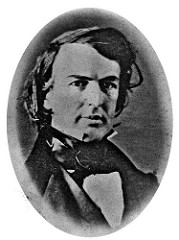
A likeness of Jones when he was editor and majority owner of the Daily Madisonian during President John Tyler’s administration.

JUNE 17th.—The city has been gladdened by the reception of this dispatch from Gen. Lee :

“JUNE 15th, 1863.

“HIS EXCELLENCY, JEFFERSON DAVIS.

“God has again crowned the valor of our troops with success. Early’s division stormed the enemy’s intrenchments at Winchester, capturing their artillery, etc.

“(Signed)R. E. LEE, General.”

Subsequent reports to the press state that we captured some 6000 prisoners, Gen. Milroy among them, 50 guns, and a large amount of stores. If we caught Milroy, the impression prevails that he was hung immediately, in accordance with the President’s order some time since, as a just punishment for the outrages inflicted by him on our helpless old men, women, and children.

A sealed envelope came in to-day, addressed by the President to the Secretary of War, marked “Highly important and confidential,” which, of course, I sent to the Secretary immediately without breaking the seal, as it is my duty to do to all letters not private or confidential. I can as yet only conjecture what it referred to. It may be of good, and it may be of bad import. It may relate to affairs in the West; or it may be a communication from abroad, several steamers having just arrived. Can it be from the Government at Washington? I care not what it is, if we hold Vicksburg.

The Commissary-General reports that he has some 8,000,000 pounds of bacon, and quite as much salt and fresh beef at the various depots, besides some 11,000 head of cattle. This is not a large amount for such armies as we have in the field ; but in the fall we shall, have 10 per cent. of all the products in the Confederate States as tax in kind. The Commissary-General, however, recommends the following reduction of rations: for men in garrison or batteries, a quarter pound of bacon per day; in camp, one-third of a pound ; and marching, half a pound.

Mr. James Spence, our financial agent in England, gives a somewhat cheering account of money matters. He recommends the shipping of $1,000,000 worth of cotton per week, which appears to be practicable. He also advises the shipment of the few millions of gold the government holds in this country to England; and Mr. Memminger approves it–in boxes weekly, containing $75,000. If this were known, it could hardly be accomplished, for such is the distrust of several members of the cabinet that the people would revolt. They would believe the cabinet meant soon to follow the gold. And some of our military commanders have no better opinion of them than the people. Beauregard once stopped some bullion ordered away by Mr. Memminger.

There is a rumor that Gen. Wise had a combat yesterday on the Peninsula. But the operations beyond the Rappahannock, and approaching the capital of the United States, must relieve Richmond of all immediate danger.

Mr. Lincoln says he is “making history;” forgetful of the execrable figure he is likely to be in it. Our papers to-day contain the following:

Yankee Cruelty ; Forty-three Negroes Drowned—One of the most atrocious incidents of the whole war was yesterday related to us by a gentleman of this city, who obtained the facts from Capt. Jas. G. White, of King William County, who vouches for the accuracy of the statement. Some days ago, when the Yankees made their raid to Aylett’s, they visited the place of Dr. Gregg, living in the neighborhood, and took from their comfortable homes forty-three negroes, who were hurried off to York River and placed on board a vessel bound Northward. Along with these negroes, as a prisoner, was a gentleman named Lee, a resident and highly respectable citizen of King William, who has since been released and allowed to return to his home. He states that when the vessel arrived in Chesapeake Bay, the small-pox made its appearance among the negroes, that disease having existed to some extent among the same family before they were dragged from their homes in King William. The captain of the Yankee vessel and his crew were greatly alarmed at the appearance of the disease on board, and very soon determined to rid the vessel of the presence of the negroes. Without attempting to make the shore, and not considering for an instant the inhumanity of the cruel deed, the whole negro cargo was thrown into the bay, and every one left to perish by drowning. Not one, perhaps, escaped the cruel fate visited upon them by those who profess to be their earnest friends and warmest sympathizers.”
0 comments

Through Some Eventful Years

Through Some Eventful Years by Susan Bradford Eppes
Susa Bradford Eppes

June 17th, 1863.—Vague and contradictory rumors fill the air; we seem to be upon the brink of a change some way. The army of Northern Virginia is on the move and we can only pray and work, for it grows more difficult with every passing day to provide the barest necessities for our brave boys at the front. Never did men fight under greater disadvantages. The armies must be supplied even if the home-folks starve. We do not let them know how we have to stint ourselves. They must not have our burdens to bear in addition to their own.


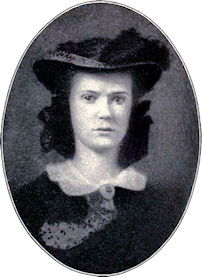
Susan Bradford is 17 years old when this entry was made.

0 comments

0

News of the Day

June 17, 1863, The New York Herald

The latest official news concerning the rebel raid into Pennsylvania was received by the government last night from Governor Curtin. It states that the rebels had made no progress toward Harrisburg and Scotland, within seven miles of Shippensburg, where we had strong works, and were prepared to give them battle. Governor Curtin says that the people are rising handsomely for the defence of the State. As late as ten o’clock last night the telegraph offices at Carlisle and Shippensburg were in full operation, the rebels not having made their appearance up to that time. Every confidence was felt that Harrisburg could be defended if attacked.

Our advices from Harrisburg at one o’clock yesterday report that one hundred wagons of General Milroy’s force had just arrived there. The rebel advance yesterday morning was five miles east of Chambersburg. The reports that General Milroy lost all his wagons, tents, &c., are consequently untrue.

It was officially known in Washington last night that the rebels had not then made an attack on Harper’s Ferry, although they were in considerable force at Charlestown, only eight miles distant.

The advance of General Hooker’s army from Falmouth to its present position was attended by severe labors, owing to the intense heat and the drying up of the springs and rivulets on the route. It was believed in Washington yesterday that the rebel raid would not extend any farther than its present point, and that Hooker might possibly intercept [continue reading…]

0 comments

0

News of the Day
1860s newsprint

June 17, 1863, Southern Watchman (Athens, Georgia)

                      Rose leaves are extensively used in the manufacture of blue pills, and are in great demand for preparing this valuable medicine.  The gardens of city and country now abound in roses, and we are sure that the ladies will see to it that the leaves are made to subserve this purpose of utility.  Surgeon J. J. Chisholm, of the Medical Purveying Department, in Columbia, S. C., invokes the aid of the ladies in collecting a supply and we trust our lady readers everywhere will heartily respond to the call.

0 comments

0

News of the Day
1860s newsprint

June 17, 1863, Montgomery Weekly Advertiser

To the Associated Press North.

                      St. Louis, June 1.–The second installment of persons ordered to be sent to the Southern States, took their departure tonight.  The delegation numbered seventeen, among whom were Phillip Coyne, James H. Kennett, W. K. Knight, Dr. William Goldling, Mrs. Truston Polk, wife of ex-Senator Polk, Mrs. Welsh and Mrs. Dorsey; also, at their own request, Mrs. Coyne, Miss Mary Polk and Miss Elizabeth Polk, daughters of Mrs. Trustan Polk; Mrs. Welsh, adopted daughter of Mrs. Welsh; and Mr. Jas. Dorsey, husband of Mrs. Dorsey.  All of these persons were under charge of Capt. J. H. Davis, of the 1st Missouri cavalry, who will transfer them through our line, under a flag of truce, and deliver them to some responsible rebel authority.

                      The persons thus passed through the lines, are forbidden to return within the lines of the United States army during the existence of the rebellion, except by permission of the Secretary of War, under penalty of imprisonment during the war, and such other punishment as may be imposed by the Military authorities.

0 comments

0

News of the Day

June 17, 1863, The New York Herald

By our correspondence from Murfreesboro, published yesterday, it would appear that Rosecrans is making some advances against Bragg, but that he is ordered from Washington not to provoke the rebel general too far, but just to divert him sufficiently to keep him from sending reinforcements to Johnston, in the vicinity of Vicksburg. But from other sources of information, more reliable, we learn that it is highly probable that if Rosecrans boldly and in earnest advanced he would find no Bragg there, but discover, to his great mortification, that the rebel bird had flown, leaving behind only some deceptive appearances of his presence.

From the intelligence we have received we are led to believe that Bragg has reinforced Lee with one-third of his army, and Johnston with one-third, while with one-third he amuses Rosecrans, and if pressed by that generation will fall back upon the strong fortifications at Chattanooga, and hold them till he is reinforced in turn by Johnston or Lee, or from some other quarter. Such is the advantage of interior lines to the rebels, and the disadvantage to us of exterior lines. The probability therefore is that Johnston has at this moment an army fully as large as Grant, and that he will speedily operate against his rear, while, by concert, the garrison sallies out from Vicksburg and attacks him in front, thus enclosing him between two fires. It is highly improbable that Lee would make so bold a movement northward if he had not received large reinforcements from Bragg; and the importance of Vicksburg and Port Hudson, and the peril in which these strongholds are placed, have no doubt compelled Jeff. Davis to send every available man from the balance of Bragg’s army to Johnston. The march of Lee is not an isolated move, but part of a comprehensive game which is played on the Mississippi, on the Rappahannock, on the Potomac, and on the Cumberland and the Tennessee. The pieces are being moved simultaneously by an unseen hand on the whole of the chessboard of the war, and we [continue reading…]

0 comments