Wednesday, 15th–A train of provisions and ammunition arrived from Vicksburg this morning. Late in the afternoon they finished loading the wagons with the provisions and ammunition for Jackson, and our regiment was ordered to accompany them. We started late and after marching six miles stopped for the night. We received orders to keep a sharp lookout for the rebels’ cavalry, as they had crossed the Pearl river and had captured and burned a part of the train just ahead of ours.
American Civil War Chronicles
A Confederate Girl’s Diary
July 15, 2023
Wednesday, July 15th.
It is but too true; both have fallen. All Port Hudson privates have been paroled, and the officers sent here for exchange. Aye! Aye! I know some privates I would rather see than the officers! As yet, only ten that we know have arrived. All are confined in the Custom-House. Last evening crowds surrounded the place. We did something dreadful, Ada Peirce, Miriam, and I. We went down to the confectionery; and unable to resist the temptation, made a détour by the Custom-House in hope of seeing one of our poor dear half-starved mule and rat fed defenders. The crowd had passed away then; but what was our horror when we emerged from the river side of the building and turned into Canal, to find the whole front of the pavement lined with Yankees! Our folly struck us so forcibly that we were almost paralyzed with fear. However, that did not prevent us from endeavoring to hurry past, though I felt as though walking in a nightmare. Ada was brave enough to look up at a window where several of our prisoners were standing, and kept urging us to do likewise. “Look! He knows you, Sarah! He has called another to see you! They both recognize you! Oh, look, please, and tell me who they are! They are watching you still!” she would exclaim. But if my own dear brother stood there, I could not have raised my eyes; we only hurried on faster, with a hundred Yankees eyes fixed on our flying steps.
My friend Colonel Steadman was one of the commissioners for arranging the terms of the capitulation, I see. He has not yet arrived.
– – – – – – – – – – – – – – – –
Dreadful news has come of the defeat of Lee at Gettysburg. Think I believe it all? He may have been defeated; but not one of these reports of total overthrow and rout do I credit. Yankees jubilant, Southerners dismal. Brother, with principles on one side and brothers on the other, is correspondingly distracted.
0
July 15, 2023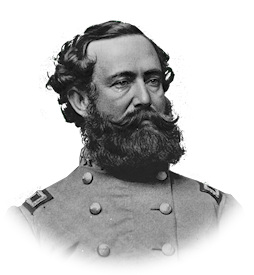
“CHARLOTTESVILLE, July 15th, 1863.
“My dear Wigfall,
“Hood and myself came to Staunton together and he remained there under charge of Darby. He is doing well and his arm will be saved. All he needs now is good nursing, together with cheerful company and generous living. He proposes to pay you a visit if he can get rooms at Hiden’s, so do drop him a line. Halsey was well up to the time of my leaving Gettysburg, the 4th instant. I have been handled pretty roughly, having received two sabre cuts on the head—one of which cut through the table of my skull—and a shrapnel shot in my body, which is there yet. But I am doing well and hope in a few days to be able to go home. Suppose you meet me at Gordonsville as I pass? Our Army is in good condition after its terrible and useless battle.
“The Yankees will be defeated if we can get at them on fair ground. We could better have stormed the heights of Stafford than those of Gettysburg.
“I had a large leather trunk, canvas covered, and with ‘W. H.’ printed on each end. Will you do me the favor to enquire for it? It was put on the cars at Culpeper C. H. With kind regards to Mrs. Wigfall, I am,
“Hood and myself came to Staunton together and he remained there under charge of Darby. He is doing well and his arm will be saved. All he needs now is good nursing, together with cheerful company and generous living. He proposes to pay you a visit if he can get rooms at Hiden’s, so do drop him a line. Halsey was well up to the time of my leaving Gettysburg, the 4th instant. I have been handled pretty roughly, having received two sabre cuts on the head—one of which cut through the table of my skull—and a shrapnel shot in my body, which is there yet. But I am doing well and hope in a few days to be able to go home. Suppose you meet me at Gordonsville as I pass? Our Army is in good condition after its terrible and useless battle.
“The Yankees will be defeated if we can get at them on fair ground. We could better have stormed the heights of Stafford than those of Gettysburg.
“I had a large leather trunk, canvas covered, and with ‘W. H.’ printed on each end. Will you do me the favor to enquire for it? It was put on the cars at Culpeper C. H. With kind regards to Mrs. Wigfall, I am,
“Yours very truly,
“WADE HAMPTON.
“WADE HAMPTON.
“HON. L. T. WIGFALL.”
0
July 15, 2023
July 15th. At seven forty-five A. M., the U. S. mail steamship Columbia arrived from New York, bringing mails and passengers. This afternoon, broke down the cotton bales around poop, and sent them ashore (sixteen bales), since we needed them for a barricade no longer, our fighting days being over; also employed coaling ship, repairing damages to rigging, &c; at five P. M. the U. S. steam sloop-of-war Portsmouth came down, in tow of a steam-tug; at six, finished coaling ship; at seven thirty, two river steamers arrived with rebel prisoners from above, Vicksburg and Port Hudson.
Robert M. McGill
July 15, 2023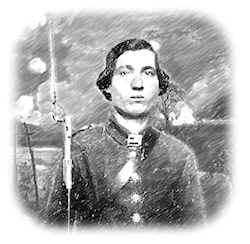
Wednesday, 15th.—We hobbled on; Elrod somewhat improved, but I was not. When in about three miles of Pearl River, which we must cross to-night or be cut off, we saw a man coming on horseback. Elrod begged me to try to get the man to let me ride behind him to the river. I at first refused, but after his urging, saying he could make it to the river before dark, and for me to wait on this side until he came, I consented to try the man. He agreed to take me, and by hard work they got me on behind without anything under me. He turned out to be drinking heavily, but took me to the river as hard as his horse could run, for which I paid him $4.00 and found myself badly skinned from the hard ride bareback. As it was getting dark, my friend, Elrod, made his appearance, and though he was very tired, we crossed over Pearl River near Byram’s Station, on New Orleans Railroad. Saw Yankee foragers. Got over river just in time; skirmishing towards Jackson.
(Note: picture is of an unidentified Confederate soldier.)
Diary of a Southern Refugee, Judith White McGuire.
July 15, 2023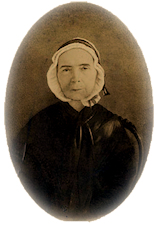
15th.—In Richmond, to-day, I saw my old friend, Mrs. E. R. C, looking after her sons. One was reported “wounded;” the other “missing.” This sad word may mean that he is a prisoner; it may mean worse. She can get no clue to him. His company has not come, and she is very miserable. Two mothers, one from Georgia, another from Florida, have come on in pursuit of their sons, and are searching the hospitals for them. They were not in our hospital, and we could give them no information, so they went on to others. There is more unhappiness abroad among our people than I have ever seen before. Sometimes I wish I could sleep until it is over—a selfish wish enough; but it is hard to witness so much sorrow which you cannot alleviate.
July 14 & 15, 1863
July 15, 2023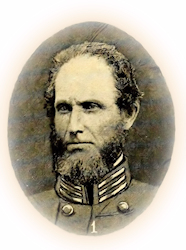
July 14—Ride in rain to Martinsburg, and stop with Mr. Doll. His son Dick is in 2d Va. Regiment. Meet Dr. Hoge. Dr. Witherspoon extracts a tooth for me.
July 15—Spend a. m. as yesterday with sick and wounded. Army passing all day. Fever in p. m. and night. Night in field near Martinsburg.
A Rebel War Clerk’s Diary
July 15, 2023
JULY 15th.—There was a rumor of another battle beyond the Potomac, this morning, but it has not been confirmed.
From Charleston we have no news; but from Jackson there has been considerable fighting, without a general engagement.
The Enquirer and Sentinel to-day squint at a military dictatorship; but President Davis would hardly attempt such a feat at such a time.
Gen. Samuel Jones, Western Virginia, has delayed 2000 men ordered to Lee, assigning as an excuse the demonstrations of the enemy in the Kanawha Valley. “Off with his head—so much for Buckingham!”
There is some gloom in the community; but the spirits of the people will rebound.
A large crowd of Irish, Dutch, and Jews are daily seen at Gen. Winder’s door, asking permission to go North on the flag of truce boat. They fear being forced into the army; they will be compelled to aid in the defense of the city, or be imprisoned. They intend to leave their families behind, to save the property they have accumulated under the protection of the government.
Files of papers from Europe show that Mr. Roebuck and other members of Parliament, as well as the papers, are again agitating the question of recognition. We shall soon ascertain the real intentions of France and England. If they truly desire our success, and apprehend danger from the United States in the event of a reconstruction of the Union, they will manifest their purposes when the news of our recent calamities shall be transported across the ocean. And if such a thing as reconstruction were possible, and were accomplished (in such a manner and on such terms as would not appear degrading to the Southern people), then, indeed, well might both France and England tremble. The United States would have millions of soldiers, and the Southern people would not owe either of them a debt of gratitude.
While driving out here we heard distinctly the cannon at Harlem.
July 15, 2023
Caroline Carson Woolsey to Abby Howland Woolsey.
Astoria, July 15th, 1863.
We left in such a hurry we had no time to leave directions for the servants, except to close the house early, and be very particular about fastening the doors and windows. . . . While driving out here we heard distinctly the cannon at Harlem. We have had no real trouble here from the mob, but were threatened last night and the night before. About two hundred men and boys, principally from Harlem and the upper parts of the city, were careering round the village. They went to Mr. M____’s, and made him come out and speak against the draft, and announced their intention of visiting Messrs. Wolcott, Woolsey and Howland among others. Groups of them were gathering in the afternoon as we drove through the village. Uncle Edward was a good deal excited as night came on, and had a man placed in the stable with directions to cut the horses loose should any alarm be made. Robert had his carriage, or rather his horses, harnessed and ready to pack the children in. Uncle Edward had a pile of fire-arms loaded and placed conveniently near the window. Aunt Emily put her rings on and her valuables in a safe place, and we pocketed our purses and laid Mother’s camel’s-hair shawls, which we brought with us, where we could easily seize them in case of sudden chill, caused by the draft! . . . But nothing turned up, and things have quieted down. The militia regiments are (five of them) coming home; the 7th has already arrived.
Hatty adds:–
 One of the Ball & Black firm came the next morning to ask Uncle E. if he could hide some treasure on his place. He lives in 86th Street and his house had been threatened. Uncle E. said he might take his three or four trunks through the woods to the “black lodge,” but of course it was at his own risk, as no one was to be trusted on the place. They were all kept safe in Margaret’s hands, and he came back and got them in a few days. Isn’t it shameful that the fiends should have sacked Mrs. Gibbons’ house?–everything destroyed and all her little things carried off. Uncle E. is perfectly indignant and in a state of suppressed rage at the Irish, but he agrees with Aunt E. in not allowing a word said against them at table, or within reach of any of the servants’ ears.
Downing’s Civil War Diary.–Alexander G. Downing.
July 14, 2023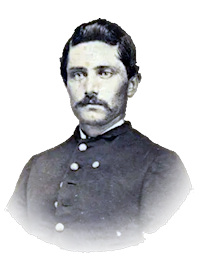
Tuesday, 14th–We lay here in bivouac at Black river bridge all day, and we are glad for the chance to rest and clean our clothes. The cars from Vicksburg can run only to the river, since the bridge is burned and the railroad track is torn up for five miles east of the river. A train load of provisions came out from Vicksburg today, and a part of the provisions and ammunition have been loaded upon wagons and started with an escort for Jackson.[1]
[1] The men generally dreaded this kind of service, for it was exceedingly dangerous. Then, too, much of the journey had to be made on the run—but it is a soldier’s business to obey orders and do the best he can.—A. G. D.
0
July 14, 2023
July 14th. Commences with clear and pleasant weather. Engaged during the whole 24 hours, coaling ship; at one P. M., gave liberty to 2nd Division, twenty-four hours; at two, the steamer Zephyr came down the river; at five the Albatross went down the river.
Robert M. McGill
July 14, 2023
Tuesday, 14th.—Brigade started at daylight. No one allowed to go in wagons to-day. J. B. Elrod and myself left behind, not able to march, he having a very bad leg and I given out in my hips. We made an agreement that we would not leave each other, and would move on as best we could.
Dark found us at Cooper’s Wells, only four miles from Raymond. Heavy cannonading towards Jackson.
(Note: picture is of an unidentified Confederate soldier.)
Diary of a Southern Refugee, Judith White McGuire.
July 14, 2023
14th.—–To-day spent in the hospital; a number of wounded there from the fatal field of Gettysburg. They are not severely wounded, or they could not have been brought so far. Port Hudson has fallen! It could not be retained after losing Vicksburg. General Lee’s army is near Hagerstown. Some of the casualties of the Gettysburg fight which have reached me are very distressing. The death of James Maupin, of the University of Virginia—so young, so gentle, so brave! He fell at his gun, as member of the Second Howitzers of Richmond. My heart goes out in warmest sympathy for his parents and devoted grandmother. Colonel James Marshall, of Fauquier, has fallen. He is yet another of those dear ones over whose youth we so fondly watched. Yet another was Westwood McCreery, formerly of Richmond. Another was Valentine Southall. They all went with bright hope, remembering that every blow that was struck was for their own South. Alas! alas! the South now weeps some of her bravest sons. But, trying as it is to record the death of those dear boys, it is harder still to speak of those of our own house and blood. Lieutenant B. H. McGuire, our nephew, the bright, fairhaired boy, from whom we parted last summer at Lynchburg as he went on his way to the field, full of buoyancy and hope, is among the dead at Gettysburg. Also, Captain Austin Brockenbrough, of Essex County. Virginia had no son to whom a brighter future opened. His talents, his education, his social qualities, his affectionate sympathy with all around him, are all laid low. Oh, may God be with those of whose life they seemed a part! It is hard to think of so many of our warm-hearted, whole-souled, brave, ardent Southern youths, now sleeping beneath the cold clods of Pennsylvania. We can only hope that the day is not far distant when we may bring their dear bodies back to their native soil.
A Rebel War Clerk’s Diary
July 14, 2023
JULY 14th.—To-day we have tidings of the fall of Port Hudson, on the Mississippi River, our last stronghold there. I suppose some 10,000 or 12,000 of our men had to surrender, unconditionally. Thus the army of Gen. Pemberton, first and last, some 50,000 strong, has been completely destroyed. There is sadness and gloom throughout the land!
The enemy are established on Morris Island, and the fate of Charleston is in doubt.
We have nothing authentic from Gen. Lee; but long trains of the slightly wounded arrived yesterday and to-day.
It has been raining, almost every day, for nearly two weeks.
The President is quite amiable now. The newspaper editors can find easy access, and he welcomes them with smiles.
A letter was received to-day from a Major Jones, saying he was authorized to state that the Messrs. engine-makers in Philadelphia, were willing to remove their machinery to the South, being Southern men. The President indorsed that authority might be given for them to come, etc.
Gen. Beauregard writes for a certain person here skilled in the management of torpedoes—but Secretary Mallory says the enemy’s gun-boats are in the James River, and he cannot be sent away. I hope both cities may not fall!
A heavy thunder-storm, accompanied with a deluging rain, prevails this afternoon at 5 ½ o’clock P.M.
0
July 14, 2023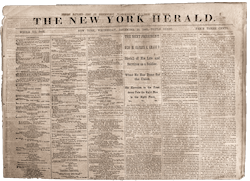
July 14, 1863, The New York Herald
DESCRIPTION OF THE BATTLE FIELD IN PROSPECT.
HARRISBURG, Pa., July 11, 1863.
All eyes are now strained towards Hagerstown and Williamsport. With breathless eagerness and anxiety does every one here strain his ears for the first echoes which shall bring the sounds of victory final and crowning from the two great conflicting armies on the bank of the Potomac. The rebel right, which is the key of the enemy’s position, rests on the hills which encircle Hagerstown and extend back towards Williamsport in one direction and Clear Spring in the other. The road, about half a mile from Hagerstown towards Williamsport, passes through a gorge, with a swamp close on one side, extending about three hundred yards, and precipitous wooded hills beyond, while the other side of the wood is skirted by an almost perpendicular chain of hills. These hills extend about two miles back towards the river from the point at which they commence, and on one side they undulate as far as the Antietam creek, and on the other they are continuous till they reach the mountains beyond Clear Spring. All the way beyond them, as far as the Potomac, they rise occasionally, till you arrive within half a mile of Williamsport, when there is a gradual descent towards the river. As it is more than probable that the grand closing scenes of the present campaign will take place over the ground, and as I am thoroughly acquainted with it, I conclude that the above short description will not be void of interest. What fortifications the enemy may have erected are in the vicinity of Hagerstown; but how extensive they are or their precise nature or location I know not. The attack will not be made upon Hagerstown, but from the direction of the Antietam, so as to cut off the enemy from Williamsport and compel him to abandon his fortifications at Hagerstown. The bridges over the Antietam destroyed by the enemy will require to be replaced before our army can move on. This has probably been done already, and this is [continue reading…]
0
July 14, 2023
July 14th. General Lee and the rebel army have crossed the Potomac River into Virginia. I saw a number of prisoners who were taken at the river. They informed us that we were too late, Lee was pushing up the valley. We are again on the march, going south, up and over the South Mountain. A hot, hard, dusty march as we go pushing along. A soldier’s life in the field is a severe one. Came to a halt in the valley, near Sandy Hook. The 2nd Corps passed. Met some of the 14th Connecticut as the corps came to a halt. I had friends in that regiment who I was anxious to see. One who I expected to meet was Walter Standish. I asked for him, was informed that he was killed at Gettysburg. Again on the march. Passed through the town of Sandy Hook, on over the Potomac into Harper’s Ferry, crossing the Shenandoah River, up Loudon Heights, into the Loudon Valley, Virginia. Pushing right up the valley to guard the gaps in the Blue Ridge Mountains.
Surrender and After.
July 14, 2023
July 14th, 1863.—Moved yesterday into a house I call “Fair Rosamond’s bower” because it would take a clue of thread to go through it without getting lost. One room has five doors opening into the house, and no windows. The stairs are like ladders, and the colonel’s contraband valet won’t risk his neck taking down water, but pours it through the windows on people’s heads. We shan’t stay in it. Men are at work closing up the caves; they had become hiding-places for trash. Vicksburg is now like one vast hospital—every one is getting sick or is sick. My cook was taken to-day with bilious fever, and nothing but will keeps me up.
Note: To protect Mrs. Miller’s job as a teacher in post-civil war New Orleans, her diary was published anonymously, edited by G. W. Cable, names were changed and initials were generally used instead of full names—and even the initials differed from the real person’s initials. (Read Dora Richards Miller’s biographical sketch.)
Downing’s Civil War Diary.–Alexander G. Downing.
July 13, 2023
Monday, 13th–We left this morning at 3 o’clock on our return trip via Black river bridge, with a train of two hundred and fifty empty wagons. We took with us sixty-one prisoners, giving them the first free ride they have had for some time. We all rode on the wagons, standing, and in order to keep from falling out when the teams made a lurch, we removed the canvas covers so as to hold to the bows. The road was lined the whole way with troops going to reinforce General Sherman. The day was cloudy, and we were thankful, as it kept the deep dust from rising somewhat. We reached the bridge at dark and went into bivouac. I was on a detail to guard the prisoners during the night. The paroled prisoners are all being sent out of Vicksburg to their homes. They are a hard-looking set of men.
War Diary of Luman Harris Tenney.
July 13, 2023
13th. Breakfasted in town about 5 A. M., at Mrs. Harper’s, very kind and hospitable people. Mrs. Derban’s husband Q. M. in Grant’s Army. Two little girls sang “Down With the Traitor.” Passed through several German towns, very patriotic. Passed through Lawrenceburgh. Reached the Whitewater at dusk. T. and I stopped at a German’s for supper and napped till 2 A. M. Rebels burned the bridge, compelling us to ford the river.
0
July 13, 2023
July 13th. At one thirty A. M., the U. S. mail steamer Creole came up the river; at seven o’clock, U. S. mail steamer George Cromwell, arrived; at ten thirty, a heavy rain shower came up from the southward and westward which lasted about an hour. Carpenters were engaged repairing ship’s side. The boatswain and crew engaged repairing rigging and getting ship ready for sea, for a homeward bound trip. Lieut. John C. Watson left the ship to go on board of Flag-ship Tennessee, and report for duty to the Admiral, having been temporarily detached from the Hartford.
Robert M. McGill
July 13, 2023
Monday, 13th.—Marched eighteen miles; passed through Champion Hills battleground. Gave out in my hips so that I could not walk; got to ride in wagon. Camped near Raymond; nice country.
(Note: picture is of an unidentified Confederate soldier.)
July 13, 1863
July 13, 2023
July 13—Visit Regiment. Rain. Late in the afternoon start for Virginia, at twilight. Ride down through rain and mud to pontoon bridge at Falling Water. Cross at 10:30 and pass on in rain and mud to within one mile of Martinsburg. Sleep a little on two rails under a wagon. God bring our soldiers over safely!
A Rebel War Clerk’s Diary
July 13, 2023
JULY 13th.—The Enquirer says the President has got a letter from Gen. Lee (why not give it to the people?) stating that his operations in Pennsylvania and Maryland have been successful and satisfactory, and that we have now some 15,000 to 18,000 prisoners, besides the 4000 or 5000 paroled. Nonsense!
Lee and Meade have been facing each other two or three days, drawn up in battle array, and a decisive battle may have occurred ere this. The wires have been cut between Martinsburg and Hagerstown.
Not another word have we from either Charleston or Jackson; but we learn that monitors, gun-boats, and transports are coming up the James River.
Altogether, this is another dark day in our history. It has been officially ascertained that Pemberton surrendered, with Vicksburg, 22,000 men! He has lost, during the year, not less than 40,000! And Lovell (another Northern general) lost Fort Jackson and New Orleans. When will the government put “none but Southerners on guard?”
Letters to-day from the Governors of South Carolina, Alabama, and North Carolina show that all are offended at the Confederate government. Judge Campbell’s judicial profundity (and he is the department’s correspondent) is unfortunate at this crisis, when, not great principles, but quick and successful
It appears that President Lincoln has made a speech in Washington in exultation over the fall of Vicksburg, and the defeat of an army contending against the principle that all men were created equal. He means the negro—we mean that white men were created equal—that we are equal to Northern white people, and have a right, which we do not deny to them, of living under a government of our own choice.
Resistance to the draft!
July 13, 2023
Caroline Carson Woolsey to Abby Howland Woolsey at Fishkill.
10th St., New York, Monday, July 13, 1863.
Dear Abby: It has come–resistance to the draft! The city is in a tumult and Uncle Edward wishes us to go out to Astoria in the 6 o’clock boat. The regulars are all out and the streets are full of rioters. The gas house on 23rd Street is blown up and 10th Street full of black ashes,–our door-steps covered. They say they will blow up the powder-mill in 28th Street, where the Gilmans live, and we have told them (if they will) to come all here. Hatty G. was in a minute ago, and Mr. Prentiss. There has been a great noise in town all day. The carriage is waiting, but I was afraid you would feel anxious. We would like very much to stay, but Uncle E. insists.
Downing’s Civil War Diary.–Alexander G. Downing.
July 12, 2023
Sunday, 12th–We started this morning at sunup and arrived at General Sherman’s headquarters at 10 o’clock. Two regiments of Sherman’s army came out to reinforce our train guard. They feared that the rebels’ cavalry would make a raid on the train before we could reach the main army. We arrived safely without losing a single wagon. Cannonading is going on quite lively from both sides. Good water is very scarce here, and the few wells and cisterns which we can draw upon are crowded all the time; I stood with two canteens for more than an hour waiting for my turn.