A Rebel War Clerk’s Diary

A Rebel War Clerk’s Diary at the Confederate States Capital, By John Beauchamp Jones
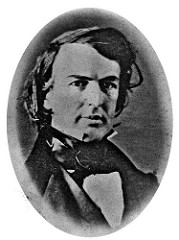
A likeness of Jones when he was editor and majority owner of the Daily Madisonian during President John Tyler’s administration.

 JULY 28th.—The rumor that Gen. Lee had resigned was simply a fabrication. His headquarters, a few days ago, were at Culpepper C. H., and may be soon this side of the Rappahannock. A battle and a victory may take place there.

Col. J. Gorgas, I presume, is no friend of Pemberton; it is not often that Northern men in our service are exempt from jealousies and envyings. He sends to the Secretary of War to-day a remarkable statement of Eugene Hill, an ordnance messenger, for whom he vouches, in relation to the siege and surrender of Vicksburg. It appears that Hill had been sent here by Lieut.-Gen. Holmes for ammunition, and on his way back to the trans-Mississippi country, was caught at Vicksburg, where he was detained until after the capitulation. He declares that the enemy’s mines did our works no more injury than our mines did theirs ; that when the surrender took place, there were an abundance of caps, and of all kinds of ordnance stores; that there were 90,000 pounds of bacon or salt meat unconsumed, besides a number of cows, and 400 mules, grazing within the fortifications; and that but few of the men even thought of such a contingency as a surrender, and did not know it had taken place until the next day (5th of July), when they were ordered to march out and lay down their arms. He adds that Gen. Pemberton kept himself very close, and was rarely seen by the troops, and was never known to go out to the works until he went out to surrender.

Major-Gen. D. Maury writes from Mobile, to the President, that he apprehends an attack from Banks, and asks instructions relative to the removal of 15,000 non-combatants from the city. He says Forts Gaines and Morgan are provisioned for six months, and that the land fortifications are numerous and formidable. He asks for 20,000 men to garrison them. The President instructs the Secretary, that when the purpose of the enemy is positively known, it will be time enough to remove the women, children, etc.; but that the defenses should be completed, and everything in readiness. But where the 20,000 men are to come from is not stated—perhaps from Johnston.
0 comments

He and all of them I am sure must be mortified at this escape of Lee at Gettysburg, scot free.

Woolsey family letters during the War for the Union

Abby Howland Woolsey to Harriet Gilman.

Fishkill, July, 1863.

It took so long for letters to come from Gettysburg, and Mother and Georgy had so little time to write, that we didn’t hear often. They have come themselves at last; arrived Tuesday, midnight. . . . Georgy came up here this noon, and we have been sitting together talking over all the strange scenes in those tents by the railroad, where 16,000 men have been fed and comforted in the last three weeks. Just imagine Mother in a straw flat and heavy Gettysburg boots, standing cooking soup for 200 men at a time, and distributing it in tin cups; or giving clean shirts to ragged rebels; or sitting on a pile of grocer’s boxes, under the shadow of a string of codfish, scribbling her notes to us.

She has many a memento of that strange battle–one, of a rebel lieutenant who died in her care; and a score of palmetto buttons from rebel coats–dirty but grateful, poor wretches; etc. . . . They say that the women of Gettysburg have done all they can, given the wounded all that the rebels had not taken, and have boarded the Sanitary and Christian Commission for nothing. At one house, where Mother and G. got their dinner one day, the woman could not be induced to take money. “No, ma’am,” she said, “I would not wish to have that sin on my soul when this war is over.”

We may go to Brattleboro for a month. But if Charley holds out the hope of his coming home, it won’t be worth while to go away. . . . We have not heard anything recently from “the army,”–I mean our modest portion of it in the form of Charley. He and all of them I am sure must be mortified at this escape of Lee at Gettysburg, scot free. He lost many men, but so did we. Pennsylvania is safe from “the invader”; but, dear me, our army has begun the hateful scramble all over Virginia again. . . .

Charley wrote that “Halleck urged forced marches after the retreating rebels and an immediate attack, as he had positive information that Lee was rapidly crossing the Potomac.” Charley adds, “but we have had nothing but forced marches since we left the Rappahannock, and we know that Lee isn’t crossing and cannot cross rapidly.” [He did, though.]

0 comments

Downing’s Civil War Diary.–Alexander G. Downing.

Diary of Alexander G. Downing; Company E, Eleventh Iowa Infantry

Tuesday, 28th–We started early this morning and though it was hot and sultry, we reached Vicksburg at 10 a. m. So we finally entered Vicksburg after more than eight months in trying to take the place. In the afternoon we moved out a few miles to the north of town and went into bivouac. While in Vicksburg we saw some of the paroled prisoners leaving for their homes. They were indeed sorrowful-looking beings—all in rags and without food; yet they were ready to fight for their cause to the bitter end.

0 comments

0

Cruise of the U.S. Flag-Ship Hartford -Wm. C. Holton

July 27th. At three A. M. the sloop-of-war Seminole came up and anchored astern of the Portsmouth; at six o’clock, the U. S. gunboat Genesee arrived from up the river; at 9 o’clock, as usual, inspected crew at quarters. During the remainder of this day, engaged setting up topmast-rigging. At five P. M., steamer General Banks went down the river with rebel prisoners, under a flag of truce, for Mobile.

0 comments

War Diary of Luman Harris Tenney.

War Diary of Luman Harris Tenney.

27th. Guards and team came for us soon after breakfast and gave us a ride to Columbus. Provo. Marshal examined us and sent us to guard house, supposed to be implicated in stealing horses. Thede and I do not feel worried at all, for we know we are in the right. The Sergt. Major of the 18th Regulars was the man who caused us the trouble–a Dutch upstart with little brains–was all in a tremor and frightened.

0 comments

Robert M. McGill

Robert M. Magill – Personal Reminiscences of a Confederate Soldier Boy, 39th Georgia Regiment of Infantry

Monday, 27th.—Left Montgomery at 7:30 A. M.; at West Point, 6 P. M. Left West Point at sundown.


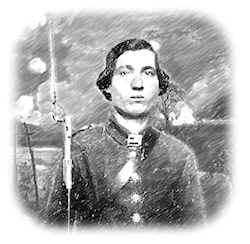
(Note: picture is of an unidentified Confederate soldier.)

0 comments

A Rebel War Clerk’s Diary

A Rebel War Clerk’s Diary at the Confederate States Capital, By John Beauchamp Jones
A likeness of Jones when he was editor and majority owner of the Daily Madisonian during President John Tyler’s administration.

JULY 27th.—Nothing but disasters to chronicle now. Natchez and YazooCity, all gone the way of Vicksburg, involving a heavy loss of boats, guns, and ordnance stores; besides, the enemy have got some twenty locomotives in Mississippi.

Lee has retreated as far as Culpepper Court House.

The President publishes another proclamation, fixing a day for the people to unite in prayer.

The weather is bad. With the exception of one or two bright days, it has been raining nearly a month. Superadded to the calamities crowding upon us, we have a rumor to-day that Gen. Lee has tendered his resignation. This is false. But it is said he is opposed to the retaliatory executions ordered by the President, which, if persisted in, must involve the life of his son, now in the hands of the enemy. Our officers executed by Burnside were certainly recruiting in Kentucky within the lines of the enemy, and Gen. Lee may differ with the President in the equity of executing officers taken by us in battle in retaliation.

0 comments

Downing’s Civil War Diary.–Alexander G. Downing.

Diary of Alexander G. Downing; Company E, Eleventh Iowa Infantry

Monday, 27th–Our brigade started for Vicksburg at 4 o’clock this afternoon. We moved only four miles, when we stopped for the night. The country is very rough and the heavy rains have made the roads very muddy.

0 comments

0

Cruise of the U.S. Flag-Ship Hartford -Wm. C. Holton

July 26th. At ten P. M., inspection of ship and crew by Commodore Palmer; at ten thirty called all hands to muster, and performed Divine service on the quarter-deck; at five thirty in the afternoon steamer Lancaster came down the river with a load of rebel prisoners.

0 comments

Village Life in America

Village Life in America, 1852 – 1872, by Caroline Cowles Richards

July 26.–Charlie Wheeler was buried with military honors from the Congregational church to-day. Two companies of the 54th New York State National Guard attended the funeral, and the church was packed, galleries and all. It was the saddest funeral and the only one of a soldier that I ever attended. I hope it will be the last. He was killed at Gettysburg, July 3, by a sharpshooter’s bullet. He was a very bright young man, graduate of Yale college and was practicing law. He was captain of Company K, 126th N. Y. Volunteers. I have copied an extract from Mr Morse’s lecture, “You and I:” “And who has forgotten that gifted youth, who fell on the memorable field of Gettysburg? To win a noble name, to save a beloved country, he took his place beneath the dear old flag, and while cannon thundered and sabers clashed and the stars of the old Union shone above his head he went down in the shock of battle and left us desolate, a name to love and a glory to endure. And as we solemnly know, as by the old charter of liberty we most sacredly swear, he was truly and faithfully and religiously

Of all our friends the noblest,
The choicest and the purest,
The nearest and the dearest,
…..In the field at Gettysburg.
Of all the heroes bravest,
Of soul the brightest, whitest,
Of all the warriors greatest,
…..Shot dead at Gettysburg.

And where the fight was thickest,
And where the smoke was blackest,
And where the fire was hottest,
…..On the fields of Gettysburg,
There flashed his steel the brightest,
There blazed his eyes the fiercest,
There flowed his blood the reddest
…..On the field of Gettysburg.

O wailing winds of heaven!
O weeping dew of evening!
O music of the waters
…..That flow at Gettysburg,
Mourn tenderly the hero,
The rare and glorious hero,
The loved and peerless hero,
…..Who died at Gettysburg.

His turf shall be the greenest,
His roses bloom the sweetest,
His willow droop the saddest
…..Of all at Gettysburg.
His memory live the freshest,
His fame be cherished longest,
Of all the holy warriors,
…..Who fell at Gettysburg.

These were patriots, these were our jewels. When shall we see their like again? And of every soldier who has fallen in this war his friends may write just as lovingly as you and I may do of those to whom I pay my feeble tribute.”

0 comments

War Diary of Luman Harris Tenney.

War Diary of Luman Harris Tenney.

Columbus, Ohio.

26th. At noon moved on. Passed through Groveport and reached Columbus a little before dark. Passed Camp Thomas and reached Camp Worthington about 11. Had hardly fed the horses when a squad of men came for us. Kept us under guard. Whole town and Militia near Columbus turned out. Morgan’s advance reported at Worthington. Ludicrous.

0 comments

Robert M. McGill

Robert M. Magill – Personal Reminiscences of a Confederate Soldier Boy, 39th Georgia Regiment of Infantry

Sunday, 26th.—Left Tensaw on train, at 1 A. M.; at Pollard 6 A. M.; Montgomery, 10 P. M. Rained on us all day, being in open cars.


(Note: picture is of an unidentified Confederate soldier.)

0 comments

A Rebel War Clerk’s Diary

A Rebel War Clerk’s Diary at the Confederate States Capital, By John Beauchamp Jones
A likeness of Jones when he was editor and majority owner of the Daily Madisonian during President John Tyler’s administration.

JULY 26th.—Letters were received to-day from Gens. Beauregard, Mercer, Whitney, and S. Jones.

It appears that Beauregard has some 6000 men of all arms, and that the enemy’s force is estimated to be, or to have been (before losing some 3000), about 10,000. It is true the enemy has the benefit of his floating batteries, but we have our stationary ones. I think Charleston safe.

Gen. Mercer squeaks for the fate of Savannah, unless the government impresses slaves to work on the fortifications. All our generals squeak when an attack is apprehended, for the purpose of alarming the government, and procuring more men and material, so as to make success doubly sure.

And Gen. Whiting is squeaking loudly for the impressment of a thousand slaves, to complete his preparations for defense; and if he does not get them, he thinks the fall of Wilmington a pretty sure thing.

And Gen. Jones squeaks from the West, asking that the 3000 infantry he was at last compelled to send to Gen. Lee, near Winchester, be returned to him to oppose the enemy’s raids. But what were they sent to Lee for, unless he meant to give battle? Such may be his intention, and a victory now is demanded of him to place him rectus in curio.

Beauregard says Fort Wagner, which has made such a successful defense on Morris Island, was located by Gen. Pemberton, and this is evidence of some military skill. But all the waters of Lethe will not obliterate the conviction of the people that he gave his army in the West to the enemy. If he had not been Northern born, they would have deemed him merely incompetent. Hence the impolicy of the government elevating Northern over Southern generals. All generals are judged by the degree of success they achieve, for success alone is considered the proof of merit, and one disaster may obliterate the memory of a dozen victories. Even Lee’s great name is dimmed somewhat in the estimation of fools. He must beat Meade before Grant comes up, or suffer in reputation.

Gov. Bonham has demanded the free negroes taken on Morris Island, to be punished (death) according to the State law.

0 comments

Downing’s Civil War Diary.–Alexander G. Downing.

Diary of Alexander G. Downing; Company E, Eleventh Iowa Infantry

Sunday, 26th–We were relieved by an Iowa brigade from Sherman’s army, which just arrived, but we remained in bivouac all day, awaiting orders. One of General Sherman’s foraging trains came in; they are going to forage for oats. News came that there was fighting going on at Charleston, South Carolina. It was quite hot this morning, and in the afternoon we had a hard rainstorm. A great many of the boys in camp here are sick with the chills, while others are almost worn out by the hard service.

0 comments

0

Cruise of the U.S. Flag-Ship Hartford -Wm. C. Holton

July 25th. During forenoon of this day, engaged in fitting topgallant and royal yards. Bent fore and main top-gallant sails and royals, and placed them in the rigging; also bent the foresail and mizzen topsail. Gunboat New London went down the river. During the hours of eight and ten P. M., squalls of rain accompanied by thunder and lightning; wind from the southward.

0 comments

War Diary of Luman Harris Tenney.

War Diary of Luman Harris Tenney.

Saturday, 25th. Breakfasted at a farmer’s. Off at 7, towards Lancaster, 45 miles. At Chancey got some horses shod. Rained considerably. Road lay along the canal. Two miles out of Lancaster, rested and remained till after dinner. A very pleasant family by the name of McLeary.

0 comments

Robert M. McGill

Robert M. Magill – Personal Reminiscences of a Confederate Soldier Boy, 39th Georgia Regiment of Infantry

Saturday, 25th.—Had good place to sleep last night; went down to market house. Everything plentiful, but prices high. Saw one watermelon said to weigh eighty pounds; price, $5. Took steamboat at 3 o’clock; at Tensaw landing, 6 P. M.


(Note: picture is of an unidentified Confederate soldier.)

0 comments

A Rebel War Clerk’s Diary

A Rebel War Clerk’s Diary at the Confederate States Capital, By John Beauchamp Jones
A likeness of Jones when he was editor and majority owner of the Daily Madisonian during President John Tyler’s administration.

JULY 25th.—Gen. Beauregard telegraphs that preparations should be made to withstand a bombardment at Savannah, and authority is asked, at the instance of Gov. Brown, to impress a sufficient number of slaves for the purpose.

Gen. Jos. E. Johnston telegraphs the President that Grant has fallen back to Vicksburg, and, from information in his possession, will not stay there a day, but will proceed up the river. Gen. Johnston asks if this eccentric movement does not indicate a purpose to concentrate the enemy’s forces for the reduction of Richmond.

Grant’s men, no doubt, objected to longer service at this season in the Southwest; perhaps Lincoln thinks Grant is the only general who can take Richmond, or it may be necessary for the presence of the army in the North to enforce the draft, to overawe conspirators against the administration, etc. We shall soon know more about it.

Misfortunes come in clusters. We have a report to-day that Gen. Morgan’s command has been mostly captured in Ohio. The recent rains made the river unfordable.

It appears that Gen. Pemberton had but 15 days’ rations to last 48 days, that the people offered him a year’s supply for nothing if he would have it, and this he would not take, red tape requiring it to be delivered and paid for, so it fell into the hands of the enemy. He had a six months’ supply of ammunition when he surrendered, and often during the siege would not let his men reply to the enemy’s guns.

Advertisers in the papers offer $4000 for substitutes. One offers a farm in HanoverCounty, on the Central Railroad, of 230 acres, for a substitute. There is something significant in this. It was so in France when Napoleon had greatly exhausted the male population.

0 comments

Downing’s Civil War Diary.–Alexander G. Downing.

Diary of Alexander G. Downing; Company E, Eleventh Iowa Infantry

Saturday, 25th–Our brigade returned to the bridge and went into camp, with Colonel Chambers in command of the entire post. Our army field hospital is located here and the convalescents are being cared for in it. Refugees by the thousands are at this place and are still pouring in by the hundreds from every direction, ahead of Sherman’s returning army. It is a wonderful sight to see; they are of all colors and ages, though mostly women and children. I bought a gold pen today from the sutler for $2.00, and had the misfortune to lose it before night.

0 comments

Downing’s Civil War Diary.–Alexander G. Downing.

Diary of Alexander G. Downing; Company E, Eleventh Iowa Infantry

Friday, 24th–We remained here in bivouac all day. Orders came for our brigade to return to Black river bridge and remain there until relieved by General Sherman. The cars are coming through now from Vicksburg twice a day. We are very anxious for mail, having had none for many days, and are disappointed in not receiving any today. We put in our time today cleaning clothes.

0 comments

0

Cruise of the U.S. Flag-Ship Hartford -Wm. C. Holton

July 24th. During the morning received fresh beef and vegetables for crew. Carpenters at work repairing fore-top-gallant mast; at two P. M. had top-gallant mast ready to send aloft.

0 comments

War Diary of Luman Harris Tenney.

War Diary of Luman Harris Tenney.

24th. After breakfast drew 5 days’ rations. Regt. moved about 9 A. M. with horses. Got permission from Major to be absent from Regt. for 5 days. Going around with S. R. Nettleton. Thede goes across too. Shall send my mare home. Passed through Pomeroy, Rutland and Athens. Fed and rested.

0 comments

Robert M. McGill

Robert M. Magill – Personal Reminiscences of a Confederate Soldier Boy, 39th Georgia Regiment of Infantry

Friday, 24th.—Left Enterprise at 8 A. M.; arrived at Mobile at 8 P. M.


(Note: picture is of an unidentified Confederate soldier.)

0 comments

A Rebel War Clerk’s Diary

A Rebel War Clerk’s Diary at the Confederate States Capital, By John Beauchamp Jones
A likeness of Jones when he was editor and majority owner of the Daily Madisonian during President John Tyler’s administration.

 JULY 24th.—Nothing from Lee, or Johnston, or Beauregard, or Bragg—but ill luck is fated for them all. Our ladies, at least, would not despair. But a day may change the aspect; a brilliant success would have a marvelous effect upon a people who have so long suffered and bled for freedom.

They are getting on more comfortably, I learn, on the Eastern Shore of Virginia. Only about 25 of the enemy’s troops are said to be there, merely to guard the wires. In the Revolutionary war, and in the war of 1812, that peninsula escaped the horrors of war, being deemed then, as now, too insignificant to attract the cupidity of the invaders.

The Secretary of the Treasury sent an agent a few weeks ago with some $12,000,000 for disbursement in the trans-Mississippi country, but he has returned to this city, being unable to get through. He will now go to Havana, and thence to Texas; and hereafter money (if money it can be called) will be manufactured at Houston, where a paper treasury will be established.

Gen. Jos. E. Johnston has recently drawn for $20,000 in gold.

A letter from the Commissary-General to Gen. Lee states that we have but 1,800,000 pounds of bacon at Atlanta, and 500,000 pounds in this city, which is less than 30 days’ rations for Bragg’s and Lee’s armies. He says all attempts to get bacon from Europe have failed, and he fears they will fail, and hence, if the ration be not reduced to ¼ pound we shall soon have no meat on hand. Gen. Lee says he cannot be responsible if the soldiers fail for want of food.

0 comments

0

Civil War Diary of Charles H. Lynch, 18th Conn. Vol’s.

July 24th. Marching orders. Broke camp. After a short march, go into camp on high ground near the Potomac River. Plenty of water here where we could bathe and wash our clothes, hang them on the bushes and wait for them to dry. We also used the river water to drink and make coffee. The current ran very swift at this point.

(During my army life I drank, made coffee, fished, bathed, washed my clothes, waded through, its blue waters. When clear it was blue as one looked at it. When storms came it was yellow, the color of Virginia and Maryland mud.)

0 comments