A Rebel War Clerk’s Diary

A Rebel War Clerk’s Diary at the Confederate States Capital, By John Beauchamp Jones
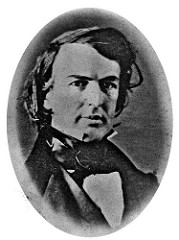
A likeness of Jones when he was editor and majority owner of the Daily Madisonian during President John Tyler’s administration.

AUGUST 1st.—The President learns, by a dispatch from Gen. Hardee, of Mississippi, that information has reached him, which he considers authentic, that Gen. Taylor has beaten Banks in Louisiana, taking 6000 prisoners but then it is said that Taylor has fallen back.

I see by Mr. Memminger’s correspondence that he has been sending $1,000,000 in sterling exchange, with the concurrence of the President and the Secretary of War, to Gen. Johnston and Gov. Pettus. What can this mean? Perhaps he is buying stores, etc.

Gen. Pemberton, it is said, has proclaimed a thirty days’ furlough to all his paroled army—a virtue of necessity, as they had all gone to their homes without leave.

Gen. Lee writes that fifty men deserted from Scale’s Regiment, North Carolina (a small regiment), night before last, being incited thereto by the newspapers. He wants pickets placed at certain places to catch them, so that some examples may be made.

Gov. Vance urges the War Department to interdict speculation on the part of officers of the government and army, as it tempts them to embezzle the public funds, enhances prices, and enrages the community.

Peter V. Daniel, Jr., President of the Central Railroad, is anxious for the defense of the four bridges near Hanover Junction, which, if destroyed by the enemy, could not be replaced for months, and Lee would have to fall back to Richmond, if not farther, as all his supplies must be transported by the road. He indicates the places where troops should be stationed, and says from those places, if needed in battle, 10,000 men could be transported in twenty-four hours to either Fredericksburg or Richmond.

Gen. Bragg is hurt, because one of his captains has been given an independent command, without consulting him, to defend Atlanta, in his department. He says the captain has no merit, and Atlanta and Augusta are in great danger—the newspapers having informed the enemy of the practicability of taking them. He intimates an inclination to be relieved.

Mr. Plant, President of the Southern Express Company, was “allowed” to leave the Confederate States to-day by the Assistant Secretary of War, subject to the discretion of Gen. Whiting at Wilmington. I suppose his fortune is made.

0 comments

Downing’s Civil War Diary.–Alexander G. Downing.

Diary of Alexander G. Downing; Company E, Eleventh Iowa Infantry

Saturday, 1st–The quartermaster received some clothing for our regiment. I drew a pair of pants for $3.05 and a shirt for $1.46. A certain number of men from each company will be permitted to go home on a thirty-day furlough, and the boys of our company are looking forward to the time, wondering who will be the lucky ones.

0 comments

0

Cruise of the U.S. Flag-Ship Hartford -Wm. C. Holton

July 31st. At nine A. M. inspected crew at quarters. Fleet-Surgeon J. M. Foltz reported on board for passage home. During the afternoon Commodore Morris, late of U. S. steam sloop Pensacola was hoisted inboard, upon a cot, an invalid, for passage to the North.

0 comments

War Diary of Luman Harris Tenney.

War Diary of Luman Harris Tenney.

31st. Didn’t arise until nearly eight. Passed rather a restless night on account of rash. Went over to Covington and made arrangements for barracks for 2nd O. V. C. Only 30 allowed to go home now. Some disappointed. Called on A. B. in P. M. Took me to ice cream saloon and did the fair thing. Got leave of absence. Rained some. Off at 10 P. M. Jolly boys.

0 comments

July 18 to July 31, 1863

Experience of a Confederate Chaplain—Rev. A. D. Betts, 30th N. C. Regiment

July 18—Ride by Mr. Silver’s at White Hall. Night in camp. Peter P. Scales, my class-mate at University, dies.

Sunday, July 19—Bros. Stradley, Power and F. H. Wood, preach to our Brigade. I have prayers with my Regiment and with Dr. Sprunt, Chaplain of 20th Regiment sick.

July 22—Carry many papers to Regiment.

July 25—Heavy rain. Night in Mr. R’s barn.

Sunday, July 26—Preach to my Regiment in a. m. Bro. Wood at church in p. m. Bro. Harding in church. I pray with Gen. Ewell in a. m.

July 27—Division moves early. Cross mountain at Thornton’s Gap. cool springs all the way up the mountain. Four miles up and four miles down.

July 28—Rain in p. m. Camp in twelve miles of Madison Court House.

July 30 – Conscripts, thirty-five or forty arrive for our Regiment. Prayer meeting at night.

July 31 – Ride to court house. Much edified by an hour’s chat with sister of Rev. Lemon. Begin sermon in p. m. and we suddenly receive marching orders.

0 comments

0

Louise Wigfall Wright — A Southern Girl in ’61
“HD. QRS. COV., DIV. A. of N. VA.

“Dear General,
         “I regret very much that a state of affairs, so different from what you expected, exists here. Instead of ‘no active operations’ you suppose, we are in a fight nearly every day and on the 4th especially Halsey’s1 gun was particularly engaged at Fleetwood and under very heavy fire, and I am gratified to inform you that Maj. Beckham speaks of him as ‘a very fine officer’ in which our expectations were not disappointed,
         “You will readily understand that such an officer cannot be spared in such times to visit home—but should there be a period when an engagement is not daily expected in which the Horse Artillery will not necessarily take part, I will cheerfully approve his absence.
         “I was truly glad to hear the favorable accounts you gave of Hampton’s, Butler’s and Hood’s wounds, and sincerely hope that all three of those glorious fellows will be in the field again for the next fight. Hampton I fear will not soon be with us His wound must have been very severe. Baker, Black and Young were all three wounded in a fight the other day (2nd). The first mentioned is a Brigadier Genl. and will command the four N. C. Regiments.
         “Present my kindest regards to Mrs. Wigfall and any other friends you may fall in with, and believe me,

“Truly yours,
“J. E. B. STUART.”

  1. Louis Wigfall’s son, Francis Halsey Wigfall.
0 comments

A Rebel War Clerk’s Diary

A Rebel War Clerk’s Diary at the Confederate States Capital, By John Beauchamp Jones
A likeness of Jones when he was editor and majority owner of the Daily Madisonian during President John Tyler’s administration.

JULY 31st.—Hon. E. S. Dargan, member of Congress, writes from Mobile that Mississippi is nearly subdued, and Alabama is almost exhausted. He says our recent disasters, and Lee’s failure in Pennsylvania, have nearly ruined us, and the destruction must be complete unless France and England can be induced to interfere in our behalf. He never believed they would intervene unless we agreed to abolish slavery; and he would embrace even that alternative to obtain their aid. He says the people are fast losing all hope of achieving their independence; and a slight change of policy on the part of Lincoln (pretermitting confiscation, I suppose) would put an end to the revolution and the Confederate States Government. Mr. D. has an unhappy disposition.

Mr. L. Q. Washington recommends Gen. Winder to permit Mr. Wm. Matthews, just from California, to leave the country. Gen. W. sends the letter to the Assistant Secretary of War, Judge Campbell, who “allows” it; and the passport is given, without the knowledge of the President or the Secretary of War.

The news from Mexico (by the Northern papers) is refreshing to our people. The “notables” of the new government, under the auspices of the French General, Forey, have proclaimed the States an Empire, and offered the throne to Maximilian of Austria; and if he will not accept, they “implore” the Emperor of France to designate the one who shall be their Emperor. Our people, very many of them, just at this time, would not object to being included in the same Empire.

The President is still scrutinizing Beauregard. The paper read from the general a few days since giving a statement of his forces, and the number of the enemy, being sent to the President by the Secretary of War, was returned to-day with the indorsement, that he hoped “a clearer comprehension of the cause,” in the promised further report of the general, would be given “why the enemy approached Morris Island before being observed.” So, omitting all notice of the defense (so far) of the batteries, etc., the attention of the President seems fixed on what the general omitted to do; or what he might, could, or should have done.

0 comments

Downing’s Civil War Diary.–Alexander G. Downing.

Diary of Alexander G. Downing; Company E, Eleventh Iowa Infantry

Friday, 31st–The weather continues hot. Our men are at work raising the gunboat “Cincinnati,” which was sunk during the siege of Vicksburg. She was a fine boat. A detail of men was sent to bring our tents today, but they failed to get them.

0 comments

0

Cruise of the U.S. Flag-Ship Hartford -Wm. C. Holton

July 30th. At one thirty A. M. gunboat Albatross went down the river; at ten o’clock gunboat Katandin got under way and steamed down the river; at one P. M. received on board some of Admiral Farragut’s baggage. During the afternoon Mr. Van Denhougle, late Admiral Farragut’s Secretary, reported on board for passage to New York. Sent aloft topmast and topgallant studding sail booms; at four thirty P. M. U. S. steam sloop-of-war Richmond got under way, turned around, and went down the river. As she passed, our lads manned the rigging and gave them three hearty farewell cheers, which they returned. We were well aware our day for following in her path homeward-bound was now near at hand, and she was the messenger sent to announce our coming. The reader need not be informed of the feelings of all on board the Hartford, since he knows all must have been in high spirits.

0 comments

War Diary of Luman Harris Tenney.

War Diary of Luman Harris Tenney.

30th. After some shopping and looking around went on street cars to Regt. Met it and came back. Found everything all right. Went around with Tod. Many boys congratulated me, did me good. Received two good letters from Fannie and one from home. What a contrast between today and yesterday. In the afternoon helped some about filling furloughs for boys. Applied for leave of absence for ten days. Boys on tiptoe. Saw Bushnell and Shorty who was in Oberlin the Sen. Prep. year. Good men. Went to Wood’s theatre to hear Minstrels. Went for ice cream with Maj. Nettleton.

0 comments

Diary of a Southern Refugee, Judith White McGuire.

Diary of a Southern Refugee During the War by Judith White McGuire

30th.—Our good President has again appointed a day for fasting and prayer.

The Florida and Alabama are performing wonderful feats, and are worrying the North excessively. Many a cargo has been lost to the Northern merchant princes by their skill, and I trust that the Government vessels feel their power.

Several members of our household have gone to the mountains in pursuit of health—Mr. –– among the rest.

Mrs. P., of Amelia, is here, cheering the house by her sprightliness; and last night we had Mr. Randolph Tucker, who is a delightful companion—so intellectual, cheerful, and God-fearing!

The army is unusually quiet at all points. Does it portend a storm? Many changes are going on in “our village.” The half-English, half-Yankee Wades are gone at last, to our great relief. I dare say she shakes the dust from her feet, as a testimony against the South; for she certainly has suffered very much here, and she will not have as many difficulties there, with her Yankee Colonel father. She professes to outrebel the rebels, and to be the most intense Southern woman of us all; but I rather think that she deceives herself, and unless I mistake her character very much indeed, I think when she gets among her own people she will tell them all she knows of our hopes, fears, and difficulties. Poor thing! I am glad she is gone to those persons on whom she has a natural claim for protection.

0 comments

A Rebel War Clerk’s Diary

A Rebel War Clerk’s Diary at the Confederate States Capital, By John Beauchamp Jones
A likeness of Jones when he was editor and majority owner of the Daily Madisonian during President John Tyler’s administration.

JULY 30th.—Raining still! Lee’s and Meade’s armies are manœuvring and facing each other still; but probably there will be no battle until the weather becomes fair, and the gushing waters in the vales of Culpepper subside.

From Charleston we learn that a furious bombardment is going on, the enemy not having yet abandoned the purpose of reducing the forts and capturing the city. Mr. Miles calls loudly for reinforcements and heavy cannon, and says the enemy was reinforced a few days since.

An indignant letter was received from Gov. Vance to-day, in response to the refusal of the government and Gen. Lee to permit him to send with the army a newspaper correspondent to see that justice was done the North Carolina troops. He withdraws the application, and appeals to history for the justice which (he says) will never be done North Carolina troops in Virginia by their associates. He asserts also that Gen. Lee refused furloughs to the wounded North Carolinians at the battle of Chancellorville (one-half the dead and wounded being from North Carolina), for fear they would not return to their colors when fit for duty!

Hon. Wm. L. Yancey is dead—of disease of the kidney. The Examiner, to-day, in praising him, made a bitter assault on the President, saying he was unfortunately and hastily inflicted on the Confederacy at Montgomery, and when fixed in position, banished from his presence the heart and brain of the South—denying all participation in the affairs of government to the great men who were the authors of secession, etc.

0 comments

A Diary From Dixie

A Diary From Dixie by Mary Boykin Miller Chesnut.

Montgomery, July 30th.–Coming on here from Portland there was no stateroom for me. My mother alone had one. My aunt and I sat nodding in armchairs, for the floors and sofas were covered with sleepers, too. On the floor that night, so hot that even a little covering of clothes could not be borne, lay a motley crew. Black, white, and yellow disported themselves in promiscuous array. Children and their nurses, bared to the view, were wrapped in the profoundest slumber. No caste prejudices were here. Neither Garrison, John Brown, nor Gerrit Smith ever dreamed of equality more untrammeled. A crow-black, enormously fat negro man waddled in every now and then to look after the lamps. The atmosphere of that cabin was stifling, and the sight of those figures on the floor did not make it more tolerable. So we soon escaped and sat out near the guards.

The next day was the very hottest I have ever known. One supreme consolation was the watermelons, the very finest, and the ice. A very handsome woman, whom I did not know, rehearsed all our disasters in the field. And then, as if she held me responsible, she faced me furiously, “And where are our big men?” “Whom do you mean?” “I mean our leaders, the men we have a right to look to to save us. They got us into this scrape. Let them get us out of it. Where are our big men?” I sympathized with her and understood her, but I answered lightly, “I do not know the exact size you want them.”

Here in Montgomery, we have been so hospitably received. Ye gods! how those women talked! and all at the same time! They put me under the care of General Dick Taylor’s brother-in-law, a Mr. Gordon, who married one of the Beranges. A very pleasant arrangement it was for me. He was kind and attentive and vastly agreeable with his New Orleans anecdotes. On the first of last January all his servants left him but four. To these faithful few he gave free papers at once, that they might lose naught by loyalty should the Confederates come into authority once more. He paid high wages and things worked smoothly for some weeks. One day his wife saw some Yankee officers’ cards on a table, and said to her maid, “I did not know any of these people had called?”

”Oh, Miss!” the maid replied,” they come to see me, and I have been waiting to tell you. It is too hard! I can not do it! I can not dance with those nice gentlemen at night at our Union Balls and then come here and be your servant the next day. I can’t!” “So,” said Mr. Gordon, “freedom must be followed by fraternity and equality.” One by one the faithful few slipped away and the family were left to their own devices. Why not?

When General Dick Taylor’s place was sacked his negroes moved down to Algiers, a village near New Orleans. An old woman came to Mr. Gordon to say that these negroes wanted him to get word to “Mars Dick” that they were dying of disease and starvation; thirty had died that day. Dick Taylor’s help being out of the question, Mr. Gordon applied to a Federal officer. He found this one not a philanthropist, but a cynic, who said: ”All right; it is working out as I expected. Improve negroes and Indians off the continent. Their strong men we put in the army. The rest will disappear.”

Joe Johnston can sulk. As he is sent West, he says, “They may give Lee the army Joe Johnston trained.” Lee is reaping where he sowed, he thinks, but then he was backing straight through Richmond when they stopped his retreating.

0 comments

Downing’s Civil War Diary.–Alexander G. Downing.

Diary of Alexander G. Downing; Company E, Eleventh Iowa Infantry

Thursday, 30th–It is quite hot and sultry. There is no news of importance. Colonel Hall has again taken command of our brigade. I bought a two-pound can of butter, paying $1.25, and five loaves of bread for fifty cents.

0 comments

War Diary of Luman Harris Tenney.

War Diary of Luman Harris Tenney.

29th. Friday. The Major went down to see friends in the 18th Corps. a failure. I thought of accompanying him but through a blunder didn’t go. My eyes have occasioned me much trouble of late. At 10 P. M. Thede and I made our way to 9th Corps Hdqrs. to see affair reported to come off in morning.

0 comments

0

Cruise of the U.S. Flag-Ship Hartford -Wm. C. Holton

July 29th. At two thirty A. M. a propeller came up the river, and at two forty the gunboat Katandin. The latter anchored off our starboard bow. At six o’clock sent fourth cutter to Tennessee, and brought off spare main and topsail yard, and sent up a new one; stowed outboard damaged main topsail yard; painted spare topsail yard. At ten P. M. the steamer Westmoreland arrived from Vicksburg, with two days later news from the North.

0 comments

War Diary of Luman Harris Tenney.

War Diary of Luman Harris Tenney.

29th. About 9 A. M. some coffee. Bought some cakes. Major A. B. N. called early and assured S. R. that all was right. Seemed good to see him. At noon went with A. B. and Mr. Hall to dinner at Gibson House. Got shaved and went at 3 to report to Gen. Cox. Released, without examination. Telegraphed to Columbus and received reply that I had been commissioned, 2nd Lt. Got me a suit of clothes. Went round with Thede. Took a bath at the Burnett house. Purington, Kautz and others laughed at me–for the scrape. Regiment came in and camped. Received some congratulations.

0 comments

Diary of a Southern Refugee, Judith White McGuire.

Diary of a Southern Refugee During the War by Judith White McGuire

July 29.—A letter of farewell from the Valley, written as the enemy’s lines were closing around our loved ones there. It is painful to think of their situation, but they are in God’s hands.

It is said that Lee’s army and Meade’s are approaching each other. Oh, I trust that a battle is not at hand! I feel unnerved, as if I could not stand the suspense of another engagement. Not that I fear the result, for I cannot believe that Meade could whip General Lee, under any circumstances; but the dread casualties! The fearful list of killed and wounded, when so many of our nearest and dearest are engaged, is too full of anguish to anticipate without a sinking of heart which I have never known before.

There was a little fight some days ago, near Brandy Station—the enemy driven across the river. Fredericksburg and Culpeper Court-House are both occupied by our troops. This is very gratifying to our Fredericksburg refugees, who are going up to see if they can recover their property. All movables, such as household furniture, books, etc., of any value, have been carried off. Their houses, in some instances, have been battered down.

I was in Richmond this morning, and bought a calico dress, for which I gave $2.50 per yard, and considered it a bargain; the new importations have run up to $3.50; and $4 per yard. To what are we coming?

0 comments

Robert M. McGill

Robert M. Magill – Personal Reminiscences of a Confederate Soldier Boy, 39th Georgia Regiment of Infantry

Wednesday, 29th.—Still not very well, but hope I will improve, as I am at home. We all got furloughs for thirty days.


(Note: picture is of an unidentified Confederate soldier.)

0 comments

A Rebel War Clerk’s Diary

A Rebel War Clerk’s Diary at the Confederate States Capital, By John Beauchamp Jones
A likeness of Jones when he was editor and majority owner of the Daily Madisonian during President John Tyler’s administration.

JULY 29th.—Still raining! The great fear is that the crops will be ruined, and famine, which we have long been verging upon, will be complete. Is Providence frowning upon us for our sins, or upon our cause?

Another battle between Lee and Meade is looked for on the Upper Rappahannock.

Gov. Harris, in response to the President’s call for 6000 men, says Western and Middle Tennessee are in the hands of the enemy, and that about half the people in East Tennessee sympathize with the North!

Some two or three hundred of Morgan’s men have reached Lynchburg, and they believe Morgan himself will get off, with many more of his men.

The New York Herald’s correspondent, writing from Washington on the 24th inst., says the United States ministers in England and France have informed the government of the intention of those powers to intervene immediately in our behalf; and that they will send iron-clad fleets to this country without delay. Whereupon the Herald says Mr. Seward is in favor of making peace with us, and reconstructing the Union—pardoning us—but keeping the slaves captured, etc. It is a cock-and-bull story, perhaps, without foundation.

0 comments

Downing’s Civil War Diary.–Alexander G. Downing.

Diary of Alexander G. Downing; Company E, Eleventh Iowa Infantry

Wednesday, 29th–We passed a miserable night, for we had no tents and the ground was wet from yesterday’s rain; besides, the ground is so rough and hilly that we can hardly find a place big enough to camp on. Things dragged on slowly this morning, so I had a chance to run around some to view the fortifications. The rebels were strongly fortified, and had dug large caves under ground at the foot of the hills just off from the roadway to protect themselves from our shells. Troops are going aboard the transports, some down the river to reinforce General Banks at Port Hudson, and others north to aid General Dodge in Tennessee and northern Mississippi.

0 comments

0

Cruise of the U.S. Flag-Ship Hartford -Wm. C. Holton

July 28th. Commences with pleasant weather and light westerly winds. The following is what has transpired this day:—At eight A. M. the U. S. steamer Virginia arrived; at three P. M. the Monongahela came down the river and anchored off the Richmond’s starboard quarter. Ship’s company engaged getting ship ready for sea.

0 comments

War Diary of Luman Harris Tenney.

War Diary of Luman Harris Tenney.

28th. Passed the night very quietly in guard house. Deserters and drunken men filled the room. Novel place. Before noon went down to Provost and saw Mrs. Mills. At 3 P. M. we took the train under guard to Cincinnati. Lawyer Hall came with S. R. N. Pleasant ride down. Reached the city and after marching half an hour took quarters on fifth floor of Military Prison. Felt sorry for S. R. and friends. Felt jolly enough myself. Floor filthy and no blankets.

0 comments

Robert M. McGill

Robert M. Magill – Personal Reminiscences of a Confederate Soldier Boy, 39th Georgia Regiment of Infantry

Tuesday, 28th.—At Atlanta, 1:30 A. M. Left Atlanta, at 7 A. M. At Tunnel Hill, 3 P. M., where Brother I. L. met me with buggy; found all well except brother; his wound doing very well.


(Note: picture is of an unidentified Confederate soldier.)

0 comments

Diary of a Southern Refugee, Judith White McGuire.

Diary of a Southern Refugee During the War by Judith White McGuire

28th.—The girls are in Richmond, staying at Dr. G’s. They went in to attend a tournament to be given to-day by General Jenkins’s Brigade, stationed near Richmond; but this morning the brigade was ordered to go South, and great was the disappointment of the young people. They cannot feel as we do during these gloomy times, but are always ready to catch the “passing pleasure as it flies,” forgetting that, in the best times,

“Pleasures are like poppies spread:
You seize the flower, the bloom is shed.”

And how much more uncertain are they now, when we literally cannot tell what a day may bring forth, and none of us know, when we arise in the morning, that we may not hear before noonday that we have been shorn of all that makes life dear!

0 comments