Saturday, 29th–We had a heavy rain during the night and the day opened cloudy and dismal. Our entire expedition started on the return journey for Vicksburg. We covered twenty-six miles and camped for the night on Oak Ridge. Some of the men had found too much of the “Southern bay rum,” and imbibing quite freely, became so top-heavy on the way that they had to be hauled all day.
American Civil War Chronicles
A Rebel War Clerk’s Diary
August 29, 2023
AUGUST 29th.—After all, it appears that only a few hundred of the enemy’s cavalry came up the Peninsula as far as Bottom’s Bridge, from whence they quickly fell back again. And this alarm caused Gen. Elzey, or the government, to put in movement nearly 20,000 men! But something else may be behind this demonstration; it may be the purpose of the enemy to strike in another direction, perhaps at Hanover Junction—where, fortunately, we have nearly a division awaiting them.
The Hon. Mr. Dargan’s letter, received at the department a few days ago, saying that the reinstatement of Gen. Pemberton in command would be the ruin of the cause, was referred by the Secretary to the President, with some strong remarks, to the effect that popular opinion was almost universal against Pemberton. It came back to-day, with the following indorsement of the President: “The justice or injustice of the opinion will be tested by the investigation ordered.–J. D.” If the President desires it, of course Pemberton will be exonerated. But even if he be honorably and fairly acquitted, the President ought not to forget that he is not a ruler by Divine right to administer justice merely, but the servant of the people to aid in the achievement of their independence; and that their opinions and wishes, right or wrong, must be respected, or they can deprive him of honor, and select another leader.
War Diary of Luman Harris Tenney.
August 28, 2023
28th. Was mustered soon after breakfast (as 2nd Lieutenant). Ordered to march. Boys got in about 5, then started. Saddled several hours in the rain. Moved half a mile, teams fast. Stopped till 10 P. M., unsaddled and got lunch, just asleep. Wrote to Lucy Randall. Spencer ordered back to Camp Nelson, leaving me in command. Awful roads and hills, many wagons mired. Camped about 2 A. M. in woods. Had the pleasure of answering several inquiries from Gen. Burnside. Met 50 prisoners.
Downing’s Civil War Diary.–Alexander G. Downing.
August 28, 2023
Friday, 28th–We had company inspection this morning and then started out for Monroe, expecting to have a little fight in taking the town. But upon reaching the place we found that the rebels had withdrawn, leaving at 6 o’clock in the morning. General Logan’s Division entered the town at 10 o’clock, while our brigade had come within a mile of town, where we again went into bivouac. In the afternoon there was a heavy rain. The rebels have a hospital here, with about fourteen hundred sick and wounded. Monroe is a nice town, well situated, and has some fine buildings. Strict orders had been given us not to kill any livestock on this expedition; all persons caught in the act were to be arrested. But some of the boys of our regiment had killed a hog and were in the act of cutting it up when the general of our division came riding along with his staff. The boys were caught in the very act. General Stephenson halted, and wanting to know by what authority they had killed the hog, he was going to have them arrested on the spot. But they had one fellow equal to the occasion, who explained that they had killed a wild hog. They were out in the timber getting wood with which to build fires, when some wild hogs there made a charge upon them, and in self-defense they had killed the boldest one; they then thought that as they had killed it they might as well bring it in and have some fresh pork. The general rode on.
Robert M. McGill
August 28, 2023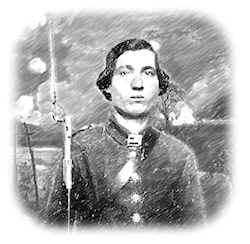
Friday, 28th.—Reported Federals have taken Knoxville.
(Note: picture is of an unidentified Confederate soldier.)
A Rebel War Clerk’s Diary
August 28, 2023
AUGUST 28th.—Another letter, from Gen. Whiting, calls vehemently for reinforcements, artillery, cavalry, and infantry—or else the city and harbor are soon to be at the mercy of the enemy. He is importunate.
After all, Morgan’s head was not shaved—but his beard, and that of his officers, was cut, and their hair made short. This I learn from a letter at the department from Morgan’s Assistant Adjutant-General.
The tocsin was ringing in my ears when I awoke this morning. Custis packed his haversack, and, taking blanket, etc. etc., joined his department comrades, and they were all marched out the Brooke turnpike. Yesterday the enemy in considerable force came up the Peninsula and attacked the guard (70 men) at Bottom’s Bridge, killing, so report says, Lieut. Jetu, of South Carolina, and some twelve or fifteen others. But I believe the attacking party have recrossed the Chickahominy. We shall know in a few hours. Gen. Lee is still here. Gen. Wise’s brigade, with the militia, the department companies, and the convalescents from the hospitals, must number some 8000 men in this vicinity. If the enemy be in formidable numbers, we shall soon be reinforced.
We have nothing from Charleston since Tuesday evening, when, it is said, the “first assault” was repulsed. It is strange we get nothing later.
War Diary of Luman Harris Tenney.
August 27, 2023
27th. Breakfasted and moved out at 7. Passed the 44th, 104th, 103rd, 57th and 12th Ky. Watered and went into camp. Forage party detailed and started and then ordered back. Roads still among the hills, through woods. Pioneer corps finds work. Went on 1 ½ miles and camped with orders to muster. Boys returned with little forage. Read some in “Barnaby.” Ate dinner at Commissary.
Downing’s Civil War Diary.–Alexander G. Downing.
August 27, 2023
Thursday, 27th–Leaving our Oak Ridge bivouac early this morning we journeyed fifteen miles more and stopped for the night on the banks of Bayou Said, only seven miles from Monroe, our destination. During the day we crossed another ridge known as Pine Ridge, which is eight miles across and about twenty feet above the surrounding land. It is beautifully covered with yellow pine, growing so straight and tall, seventy-five to one hundred feet. We noticed a few small clearings with log huts. This is the worst bivouac we have yet occupied. It is full of poisonous reptiles and insects, centipedes, jiggers, woodticks, lizards, scorpions and snakes of all kinds—I have never seen the like. Some of the boys killed two big, spotted, yellow snakes and put them across the road—they measured about fifteen feet each. The ground is covered with leaves ten inches deep, and the water of the bayou has a layer of leaves and moss fully two inches thick.[1]
[1] This proved to be our most dangerous Journey in all our four years’ service. The natives told us the next morning that no Southern soldiers could have been hired to do what we did. I have often wondered and would like to know, just as we did then, why we were sent into this forsaken section of the country, and during the most sickly time of the year, at that! The natives we saw were a white-livered set; they were all ardent sympathizers of the secession cause.–A. G. D.
A Rebel War Clerk’s Diary
August 27, 2023
AUGUST 27th.—There is trouble in the Conscription Bureau. Col. Preston, the new superintendent, finds it no bed of roses, made for him by Lieut.-Col. Lay—the lieutenant-colonel being absent in North Carolina, sent thither to compose the discontents; which may complicate matters further, for they don’t want Virginians to meddle with North Carolina matters. However, the people he is sent to are supposed to be disloyal. Gen. Pillow has applied to have Georgia in the jurisdiction of his Bureau of Conscription, and the Governors of Georgia, Alabama, and Tennessee unite in the request; also Generals Johnston and Bragg. Gen. Pillow already has Mississippi, Tennessee, Alabama, etc.—a much larger jurisdiction than the bureau here. Col. Preston, of course, protests against all this, and I believe the Secretary sympathizes with him.
Prof. G. M. Richardson, of the Georgia Military Institute, sends some interesting statistics. That State has furnished the army 80,000, between the ages of eighteen and forty-five years. Still, the average number of men in each county between sixteen and eighteen and forty-five and sixty is 462, and there are 132 counties: total, 60,984. He deducts 30 per cent. for the infirm, etc. (18,689), leaving 42,689 men able to bear arms still at home. Thus, after putting some 500,000 in the field (if we could put them there), there would yet remain a reserve for home defense against raids, etc. in the Confederate States, of not less than 250,000 men.
Gen. Winder sent to the Secretary of War to-day for authority to appoint a clerk to attend exclusively to the mails to and from the United States—under Gen. Winder’s sole direction.
Major Quantrel, a Missouri guerrilla chief, has dashed into Lawrence, Kansas, and burnt the city—killing and wounding 180. He had Gen. Jim Lane, but he escaped.
Gen. Floyd is dead ; some attribute his decease to ill treatment by the government.
I saw Mr. Hunter yesterday, bronzed, but bright. He is a little thinner, which improves his appearance.
Gen. Lee is in town—looking well. When he returns, I think the fall campaign will open briskly.
A dispatch received to-day says that on Tuesday evening another assault on Battery Wagner was in progress—but as yet we have no result.
Lieut. Wood captured a third gun-boat in the Rappahannock, having eight guns.
The prisoners here selected to die, in retaliation for Burnside’s execution of our officers taken while recruiting in Kentucky, will not be executed.
Nor will the officers taken on Morris Island, serving with the negroes, suffer death in accordance with the act of Congress and the President’s proclamation. The Secretary referred the matter to the President for instruction, and the President invited the advice of the Secretary. The Secretary advised that they be held indefinitely, without being brought to trial, and in this the President acquiesces.
Army Life of an Illinois Soldier, Charles Wright Wills.
August 26, 2023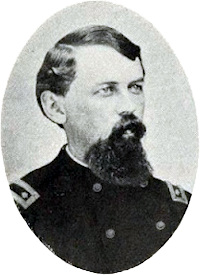
Decatur, Ills., August 26, 1863.
I write for the purpose of informing you that I am recovering from that miserable attack of the jaundice. You can imagine nothing more disagreeable than a visitation thereof. Am enjoying myself first rate. Am sure I will find a letter from you in the office. Haven’t been there for five days. Am nearly white once more.
War Diary of Luman Harris Tenney.
August 26, 2023
26th. Crossed Jellico Mountain. Quite steep and long. Cool and very pleasant marching. Marched 10 miles over hilly road and camped for dinner. Ate with Chamberlain. Homeliest girls–least intelligent looking I ever saw. Went on to Chitwoods and camped. Cold night. Thought much of home and friends this commencement day. At 5:35 P. M. crossed the Tenn. line. Gen. Burnside passed us while at dinner.
Downing’s Civil War Diary.–Alexander G. Downing.
August 26, 2023
Wednesday, 26th–Getting an early start again this morning, we covered sixteen miles and camped for the night on Oak Ridge. This ridge is on a dead level and only about twenty feet higher than the bottoms where the cypress grow so luxuriantly. It is covered with oak and fine large walnut, also magnolia and a few other semi-tropical trees. To reach the ridge we had to wade across Bayou Lee. Our cavalry had preceded us and routed a small detachment of rebel cavalry. They were nicely fixed up at this place. Our boys went in on their nerve at foraging.
Diary of a Southern Refugee, Judith White McGuire.
August 26, 2023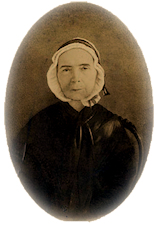
August 26.—A week ago I was called to Camp Jackson to nurse ––, who has been very sick there. The hospital is very extensive, and in beautiful order. It is under the supervision of Surgeon Hancock, whose whole soul seems engaged in making it an attractive home to the sick and wounded. The beautiful shade-trees and bold spring are delightful to the convalescents during this warm weather. Fast-day was observed there with great solemnity. I heard a Methodist chaplain preach to several hundred soldiers, and I never saw a more attentive congregation.
A Rebel War Clerk’s Diary
August 26, 2023
AUGUST 26th.—H. C. ____, a mad private, and Northern man, in a Georgia Regiment, writes to the President, proposing to take some 300 to 500 men of resolution and assassinate the leading public men of the—United States—the war Abolitionists, I suppose. The President referred the paper, without notice, to the Secretary of War.
Gen. Whiting writes that Wilmington is in imminent danger from a coup de main, as he has but one regiment available in the vicinity. He says he gives the government fair warning, and full information of his condition; asking a small brigade, which would enable him to keep the enemy at bay until adequate reinforcements could arrive. He also wants two Whitworth guns to keep the blockaders at a more respectful distance, since they captured one steamer from us, recently, nine miles below the city, and blew up a ship which was aground. He says it is tempting Providence to suffer that (now) most important city in the Confederate States to remain a day liable to sudden capture, which would effectually cut us off from the rest of the world.
Gen. Beauregard telegraphs for a detail of 50 seamen for his iron-clads, which he intends shall support Sumter, if, as he anticipates, the enemy should make a sudden attempt to seize it—or rather its debris—where he still has some guns, still under our flag. None of his vessels have full crews. This paper was referred to the Secretary of the Navy, and he returned it with an emphatic negative, saying that the War Department had failed to make details from the army to the navy, in accordance with an act of Congress, and hence none of our war steamers had full crews.
War Diary of Luman Harris Tenney.
August 25, 2023
(Kentucky)
25th. Was aroused at midnight to draw rations. Abbey away. Went to town and was told to come next morning. Rained slowly during night. Many out with no blankets. Train blocked. Wrote Sarah Felton and F. D. Allen. Still a chilly rain falls. Saddled at two and waited till five for rations. Marched three miles and camped at the foot of the mountains. Helped issue rations. Fannie graduates today. Great day in Oberlin. Would I were there.
Downing’s Civil War Diary.–Alexander G. Downing.
August 25, 2023
Tuesday, 25th–We took up our march at 4 o’clock this morning and journeyed seventeen miles, when we stopped for the night. Our brigade took the rear, the Eleventh Regiment acting as rear guard. The day’s march was through swamps and bayous and land heavily timbered. Now and then we noticed a field with a little log hut in it, occupied by a poor white family, whose head was away with the rebel army, or with a cavalry squad in this section.
A Rebel War Clerk’s Diary
August 25, 2023
AUGUST 25th.—Hon. A. R. Boteler, after consultation with Gen. Stuart and Capt. Moseby, suggests that the Secretary of War send up some of Gen. Rains’s subterra torpedoes, to place under the track of the Orange and Alexandria Railroad, in possession of the enemy. Gen. Stuart suggested that a man familiar with their use be sent along with them, as they are dangerous weapons.
We have a report, to-day, that our expedition from this city has succeeded in boarding and capturing two of the enemy’s gun-boats in the Rappahannock.
A Confederate Girl’s Diary
August 24, 2023
Monday, August 24th.
A letter from Captain Bradford to Miriam. My poor Adonis, that I used to ridicule so unmercifully, what misfortunes have befallen him! He writes that during the siege at Port Hudson he had the top of his ear shot off (wonder if he lost any of that beautiful golden fleece yclept his hair?), and had the cap of his knee removed by a shell, besides a third wound he does not specify. Fortunately he is with kind friends. And he gives news of Lydia, most acceptable since such a time has elapsed since we heard from her. . . . He says, “Tell Miss Sarah that the last I saw of John, he was crossing the Mississippi in a skiff, his parole in his pocket, his sweet little sister by his side,” (O you wretch! at it again!) “and Somebody else in his heart.” How considerate to volunteer the last statement! Then followed half a page of commendation for his bravery, daring, and skill during the siege (the only kind word he ever spoke of him, I dare say), all looking as though I was to take it as an especial compliment to myself, and was expected to look foolish, blush, and say “Thanky” for it. As though I care!
Monday night.
I consider myself outrageously imposed upon! I am so indignant that I have spent a whole evening making faces at myself. “Please, Miss Sarah, look natural!” William petitions. “I never saw you look cross before.” Good reason! I never had more cause! However, I stop in the midst of a hideous grimace, and join in a game of hide the switch with the children to forget my annoyance.
Of course a woman is at the bottom of it. Last night while Ada and Marie were here, a young lady whose name I decline to reveal for the sake of the sex, stopped at the door with an English officer, and asked to see me in the entry. I had met her once before. Remember this, for that is the chief cause of my anger. Of course they were invited in; but she declined, saying she had but a moment, and had a message to deliver to me alone, so led me apart. “Of course you know who it is from?” she began. I told [continue reading…]
War Diary of Luman Harris Tenney.
August 24, 2023
24th. Aroused at 4. Got breakfast and off between 5 and 6. Good many boys didn’t wake in time to get their breakfast finished. Quite a time with 2nd Tenn.–passing and repassing. Moved along at very good pace. Crossed the Cumberland about 9 and camped near Williamsburg. Went out for forage. Rained some. Chilly. Wrote to Fannie.
Downing’s Civil War Diary.–Alexander G. Downing.
August 24, 2023
Monday, 24th–Spending the night here we started early this morning and moved on to Bayou Mason only seven miles further on. Here we remained during the balance of the day and for the night. There being no bridge, we had to wade the bayou to enter the town. Our cavalry routed about one hundred and fifty of the rebels in a camp on the west bank of the bayou. Most of our way today was shaded by forest trees. The country here is low and heavily timbered with cypress and the ground is covered with masses of palm leaf. We noticed driftwood high up in the trees, some forty or fifty feet, and were told by the natives that it was carried there last winter when the “Yanks” cut the levee up at Lake Providence, flooding the whole country. So we were permitted to see some of the results of our attempt at directing the waters of the Mississippi.
Robert M. McGill
August 24, 2023
August 24th.—Ordered into parole camp at Dalton. Camp half-mile from town; nothing to do; went to preaching.
(Note: picture is of an unidentified Confederate soldier.)
A Rebel War Clerk’s Diary
August 24, 2023
AUGUST 24th.—We have nothing further from Charleston, except that Beauregard threatened retaliation (how?) if Gilmore repeated the offense, against humanity and the rules of civilized war, of shelling the city before notice should be given the women and children to leave it. To-day, at 11 A.M., it is supposed the shelling was renewed.
This day week, I learn by a letter from Gen. Whiting, two 700-pounder Blakely guns arrived in the Gladiator. If these could only be transported to Charleston, what a sensation they would make among the turreted monitors! But I fear the railroad cannot transport them.
The Secretary of the Treasury asks transportation for 1000 bales of cotton to Wilmington. What for?
To-day I saw a copy of a dispatch from Gen. Johnston to the President, dated at Morton, Miss., 22d August, stating that he would send forward, the next day, two divisions to reinforce Gen. Bragg in Tennessee. This signifies battle.
The Secretary of the Treasury notified the Secretary of War, to-day, that the appropriation of fifty millions per month, for the expenditure of the War Department, was greatly exceeded; that already this month (August) the requisitions on hand amounted to over $70,000,000, and they could not be met—some must lie over; and large sums for contracts, pay of troops, etc. will not be paid, immediately.
Exchange on London, I learn by a letter written by Mr. Endus to his agent in London, detained by Gen. Whiting and sent to the Secretary of War, is selling in Richmond at a premium of fifteen hundred per cent.
The post-office clerks have returned to duty, the Postmaster-General promising to recommend to Congress increased compensation.
Woolsey Family during the War.
August 24, 2023
Eliza Woolsey Howland to Mother.
Fishkill., August 24.
We ought soon to hear from Charley, and if Mr. Hopkins’ rumor is true we may feel at ease about him for the present, for Meade won’t attempt a movement without the conscripts. Do you see that Charley himself is one, although in the service already? Let us know how he got down to camp after his furlough with all his traps, and send us all his letters. . . .
War Diary of Luman Harris Tenney.
August 23, 2023
23rd. Boys got started for forage, but orders came to march. Reached London at 9 A. M. Went into camp and boys went for forage. I stayed in. Got some corn and had good dinner. Boys got oats and fed till 5 P. M., then moved on as far as the Laurel River. Camped about 10. Lay down near the road and was bothered by troops passing.
Downing’s Civil War Diary.–Alexander G. Downing.
August 23, 2023
Sunday, 23d–Our expedition broke camp this morning and started for Monroe, Louisiana, on the Washita river, seventy-five miles northwest of Vicksburg. By 1 o’clock we had covered ten miles, in a burning hot sun,[1] without water to drink, and through neglected fields of hemp standing from ten to fifteen feet high. The cavalry went in front to break down the hemp, and were followed by a six-gun battery and our army wagons, after which the hemp was pretty well flattened for the infantry to pass over. The men and animals suffered awfully. Many artillery horses gave out and some of the men were sunstruck. Many of the boys fell out of the ranks during the trip and had to be cared for by the doctor. Finally at the end of the ten-mile journey we reached the banks of the Tensas river, and though the water was stagnant, in mere pools, we threw ourselves down, brushed aside the green scum and drank that hot, sickly water to quench our thirst.
[1] Oh, that hot sun on our heads! It was frightful! There was no air to stir even a leaf; It was like going through a fiery furnace! But stopping in that God-forsaken country to hunt for water would have been a greater punishment than going on without water—so we kept straight on.—A. G. D.