A Rebel War Clerk’s Diary

A Rebel War Clerk’s Diary at the Confederate States Capital, By John Beauchamp Jones
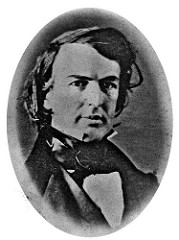
A likeness of Jones when he was editor and majority owner of the Daily Madisonian during President John Tyler’s administration.

AUGUST 23d.—Dispatches from Charleston, yesterday, brought the melancholy intelligence that Fort Sumter is but little more than a pile of rubbish. The fall of this fort caused my wife a hearty cry—and she cried when Beauregard reduced it in 1861; not because he did it, but because it was the initiation of a terrible war. She hoped that the separation would be permitted to pass without bloodshed.

To-day we have a dispatch from Beauregard, stating the extraordinary fact that the enemy’s batteries, since the demolition of Sumter, have thrown shell, from their Parrott guns, into the city—a distance of five and a half miles! This decides the fate of Charleston for they are making regular approaches to batteries Wagner and Gregg, which, of course, will fall. The other batteries Beauregard provided to render the upper end of the island untenable, cannot withstand, I fear, the enginery of the enemy.

If the government had sent the long-range guns of large caliber when so urgently called for by Beauregard, and if it had not sent away the best troops against the remonstrances of Beauregard, the people are saying, no lodgment could have been made on Norris Island by the enemy, and Sumter and Charleston would have been saved for at least another year.

At all events, it is quite probable, now, that all the forts and cities on the seaboard (Mobile, Savannah, Wilmington, Richmond) must succumb to the mighty engines of the enemy ; and our gunboats, built and in process of completion, will be lost. Richmond, it is apprehended, must fall when the enemy again approaches within four or five miles of it; and Wilmington can be taken from the rear, as well as by water, for no forts can withstand the Parrott guns.

Then there will be an end of blockade-running; and we must flee to the mountains, and such interior fastnesses as will be impracticable for the use of these long-range guns. Man must confront man in the deadly conflict, and the war can be protracted until the government of the North passes out of the hands of the Abolitionists. We shall suffer immensely; but in the end we shall be free.
0 comments

War Diary of Luman Harris Tenney.

War Diary of Luman Harris Tenney.

22nd. Reveille at daylight and orders to march at 6 A. M. Rear guard. Hastened breakfast and led out. Went down to the road to an orchard and dismounted. Remained there till noon, idling, joking and eating apples. Read Independent. How thankful I am that I can have something to read. Loitered along the road, getting to London at 9 P. M. 3 miles. Camped in a poor, nasty place. Slept well.

0 comments

Downing’s Civil War Diary.–Alexander G. Downing.

Diary of Alexander G. Downing; Company E, Eleventh Iowa Infantry

Saturday, 22d–After an all night run, we landed this morning at daylight at Goodrich’s Landing, on the Louisiana side, from which place we marched two miles up the river and went into bivouac, where we remained all day. There were four brigades in the expedition, comprising about five thousand men, and commanded by Brigadier General Stephenson. There is a camp of several thousand negro refugees here, old men, women and children, they having fled from the plantations. They are fed on Government rations doled out to them, which cannot take the place of their accustomed corn bread and pork. They are poorly cared for, the place being a miserable camp of filthy hovels, and are dying by the hundreds of disease and neglect.

0 comments

A Rebel War Clerk’s Diary

A Rebel War Clerk’s Diary at the Confederate States Capital, By John Beauchamp Jones
A likeness of Jones when he was editor and majority owner of the Daily Madisonian during President John Tyler’s administration.

AUGUST 22d.—All the guns of Fort Sumter on the south face have been silenced by the land batteries of the enemy on Morris Island; and this account is two days old. What has taken place since, none here but Gen. Cooper and the President know. But our battery, Wagner, dismounted one of the enemy’s Parrott guns and blew up two magazines. It is rumored to-day that Sumter has been abandoned and blown up; also that 20,000 of Grant’s men have been ordered to New York to quell a new émeute. Neither of these rumors are credited, however, by reflecting men. But they may be true, nevertheless.

Passengers from Bermuda say two monster guns were on the steamer, and were landed at Wilmington a few days ago, weighing each twenty-two tons; carriages, sixty tons; the balls, 15 inches in diameter, length not stated, weighing 700 pounds ; the shells, not filled, weigh 480 pounds ; and 40 pounds of powder are used at each discharge. They say these guns can be fired with accuracy and with immense effect seven miles. I wonder if the President will send them to Charleston? They might save the city.

The balls fired by the enemy are eight inches in diameter, and two feet in length; 2000 of these, solid and filled, have struck the southern face of Sumter.

It is now positively asserted that Morgan’s head was shaved, when they put him in the penitentiary.

Night before last all the clerks in the city post-office resigned, because the government did not give them salaries sufficient to subsist them. As yet their places have not been filled, and the government gets no letters—some of which lying in the office may be of such importance as to involve the safety or ruin of the government. To-morrow is Sunday, and of course the mails will not be attended to before Monday—the letters lying here four days unopened! This really looks as if we had no Postmaster-General.

0 comments

Downing’s Civil War Diary.–Alexander G. Downing.

Diary of Alexander G. Downing; Company E, Eleventh Iowa Infantry

Friday, 21st–We packed our knapsacks and started at 10 o’clock for the landing two miles above Vicksburg and a mile below our camp. Our regiment with the Thirteenth went on board the “Fanny Bell,” and at dark started up the river.

0 comments

A Rebel War Clerk’s Diary

A Rebel War Clerk’s Diary at the Confederate States Capital, By John Beauchamp Jones
A likeness of Jones when he was editor and majority owner of the Daily Madisonian during President John Tyler’s administration.

AUGUST 21st, FRIDAY.—This is a day appointed by the President for humiliation, fasting, and prayer. Yet the Marylanders in possession of the passport office report the following in the Dispatch of this date:

Passports.—The passport office was besieged yesterday and last night by large crowds of persons soliciting permission to leave the city, in order that some relaxation might be had from its busy scenes. Among those who obtained them were His Excellency Jefferson Davis and his Honor Joseph Mayo, both designing to pay a short visit to the neighboring County of Chesterfield.”

We fast, certainly—and feel greatly humiliated at the loss of New Orleans and Vicksburg—and we pray, daily.

Yesterday Fort Sumter suffered much from the enemy’s batteries, and much apprehension is felt for its fate.

Gen. Lee, it is said, is not permitted to follow Meade, who is retrograding, being weakened by detachments. A few weeks hence the fall campaign will open in Virginia, when the very earth may tremble again with the thunders of war, and the rivulets may again spout human blood.

There were no letters to-day, for the reason that last night the clerks in the post-office resigned, their salaries not being sufficient to support them. I hope a force will be detailed, to-morrow, to distribute the letters.

I met Prof. A. T. Bledsoe to-day as he was ambling toward the passport office. He said he was just about to start for London, where he intended publishing his book—on slavery, I believe. He has a free passage on one of the government steamers, to sail from Wilmington. He asked me if I fasted to-day; I answered yes, as usual! He then bid me good-by, and at parting I told him I hoped he would not find us all hanged when he returned. I think it probable he has a mission from the President, as well as his book to publish.

0 comments

War Diary of Luman Harris Tenney.

War Diary of Luman Harris Tenney.

Thursday, 20th. After breakfast, went out for forage with the company. Found some hay out three miles over a rough stony hill. Got some corn for roasting. During the day read some in “Barnaby Rudge.” Had a quiet visit with Henry Drake. In the evening went down to the brook and had a good bath. Hired a first rate boy last night–George. (Colored servant.)

0 comments

Downing’s Civil War Diary.–Alexander G. Downing.

Diary of Alexander G. Downing; Company E, Eleventh Iowa Infantry

Thursday, 20th–It has rained most of the day. On dress parade this evening orders were read for the brigade to prepare to march in the morning with ten days’ rations and one hundred rounds of ammunition. The sick are to be left in camp.

0 comments

A Rebel War Clerk’s Diary

A Rebel War Clerk’s Diary at the Confederate States Capital, By John Beauchamp Jones
A likeness of Jones when he was editor and majority owner of the Daily Madisonian during President John Tyler’s administration.

AUGUST 20th.—A few weeks ago Gen. Cooper wrote to Bragg, suggesting that he advance into Middle Tennessee, reinforced by Gen. Johnston, and attack Rosecrans; Gen. Bragg replied (8th inst.) that with all the reinforcements he could get from Johnston, he would not have more than 40,000 effective men, while Rosecrans has 60,000, and will be reinforced by Burnside with 30,000 more—making 90,000 against 40,000—and as a true patriot he was opposed to throwing away our armies in enterprises sure to terminate disastrously. He said, moreover, that the enemy could starve him out, if he were to advance to the place designated, and thus destroy his army without a battle. Gen. Cooper sent this response to the President, asking if Bragg should not be ordered to fight under such circumstances. But the President paused, in following the guidance of this Northern man at the head of all our Southern generals—and to-day sent back the paper indorsed that “only a suggestion could be given to a commanding general to fight a battle; but to order him to fight when he predicted a failure in advance, would be unwise.”

A paper from Beauregard intimates that even if batteries Wagner and Gregg should be taken by the enemy, he has constructed another which will render that part of Morris Island untenable. But he relied upon holding Sumter; and there is a vague rumor to-day that Sumter must surrender—if indeed it has not already been reduced.

Hon Wm. Porcher Miles writes another most urgent letter, demanding reinforcements of seasoned troops. He says Charleston was stripped of troops against the remonstrances of Beauregard to send to Mississippi—to no avail—which invited this attack; and now he asks that Jenkins’s brigade of South Carolinians be sent to the defense; that South Carolinians are fighting in Virginia, but are not permitted to defend their native soil in the hour of extremity; and that if the enemy, with overwhelming numbers, should take James’s Island, they would, from thence, be able to destroy the city. We are looking with anxiety for further news from Charleston.

Gen. Maury writes from Mobile that he has seized, in the hands of Steever (who is he?), receipts for 4000 bales of cotton—orders for 150 bonds, each £225 sterling, and two bags of coin, $10,000. The President indorses on the paper that the money had better be turned over to the Secretary of the Treasury. What is all this?

The Secretary sent a paper to the President relating to some novel action performed or proposed, asking his “instructions.” The President returned it to-day indorsed, “The Secretary’s advice invited.” How in the mischief can such non-committalists ever arrive at a conclusion?

Hon. E. S. Dargan writes that if Pemberton be restored to command (as he understands this to be the government’s purpose), our cause is ruined beyond redemption. I say so too. When he made up his mind to surrender, it is unpardonable that he did not destroy the 50,000 stand of arms before he made any overture. I shall never forgive him!

The signal officers report that three large ocean steamers passed down the Potomac day before yesterday, having on board 1000 men each and that many large steamers are constantly going up—perhaps for more.

Brig.-Gen. Roger A. Pryor, after dancing attendance in the ante-rooms for six months, waiting assignment to a command, has resigned, and his resignation has been accepted. He says he can at least serve in the ranks as a private. The government don’t like aspiring political generals. Yet Pryor was first a colonel, and member of Congress—resigned his seat—resigned his brigadier-generalship, and is now a private.

Our cause is dim in Europe, if it be true, as the Northern papers report, that the Confederate loan has sunken from par to 35 per cent. discount since the fall of Vicksburg.

0 comments

Through Some Eventful Years

Through Some Eventful Years by Susan Bradford Eppes
Susa Bradford Eppes

August 20th, 1863.—Captain Beall has improved amazingly, he can now speak in a natural voice and is allowed to converse when he feels like it. At first his voice was so weak and it hurt him to speak, so he made signs for his wants. He is very pleasant, the doctors, who come now and again to see him, say his lungs are still in bad shape and he requires just the care and good nursing he is getting here. Father has inserted silver tubes in his right side to draw off the pus, which has collected there. The right lung is not healing as the left one has done and they forbid him to think of going back for months to come. A winter in Florida may make him as sound as ever.

Today Father took him for a short ride in the buggy. He drove Dabney, who is old and steady, so he would not be jolted or jarred. I wish Sister Mart was at home, she could play for him and entertain him. I have taken up the book-keeping again but it is not quite as heavy as it was because the saw-mill is not running. The hands who formerly did the work at the mill are needed in the crops that more provisions may be made.

The people who live in town and have no plantations to draw upon, have a bad time indeed. Father often sends articles of food to his friends in Tallahassee. Judge Baltzell said he had not tasted meat for weeks, so Father promptly sent him a ham, smoked after the most approved North Carolina fashion and it was touching to see how pleased the judge was. He often sends things to Major Beard, too, and none of us ever forget Bishop Rutledge, when something good is on hand. The Bishop eats like a bird, he has so little appetite, and has to be tempted to eat.


Susan Bradford is 17 years old when this entry was made.

0 comments

This book is exhausted…

War Diary of a Union Woman in the South

Aug. 20.—Sitting in my easy chair to-day, looking out upon a grassy slope of the hill in the rear of this house, I have looked over this journal as if in a dream; for since the last date sickness and sorrow have been with me. I feel as if an angry wave had passed over me bearing away strength and treasure. For on one day there came to me from New Orleans the news of Mrs. B.’s death, a friend whom no tie of blood could have made nearer. The next day my beautiful boy ended his brief life of ten days and died in my arms. My own illness caused him to perish; the fatal cold in the cave was the last straw that broke down strength. The colonel’s sweet wife has come, and I do not lack now for womanly companionship. She says that with such a pre-natal experience perhaps death was the best for him. I try to think so, and to be glad that H. has not been ill, though I see the effects. This book is exhausted, and I wonder whether there will be more adventures by flood and field to cause me to begin another.

the end.


Note: To protect Mrs. Miller’s job as a teacher in post-civil war New Orleans, her diary was published anonymously, edited by G. W. Cable, names were changed and initials were generally used instead of full namesand even the initials differed from the real person’s initials. (Read Dora Richards Miller’s biographical sketch.)

0 comments

War Diary of Luman Harris Tenney.

War Diary of Luman Harris Tenney.

19th. Orders came to march at 8. Got my mare shod and prepared for the march, never moved more slowly, kept stopping to rest. Reached Mt. Vernon at 4 P. M. Have enjoyed the day first rate. Began to feel at home. Boys have treated me very respectfully and I like them. Hope to succeed well and through God’s grace do some good. Oh may I behave myself seemly every day.

0 comments

Downing’s Civil War Diary.–Alexander G. Downing.

Diary of Alexander G. Downing; Company E, Eleventh Iowa Infantry

Wednesday, 19th–A thunderstorm last night cooled the air some, though it is still extremely hot. There was a boat blown up this morning down at the wharf and thirty or forty lives were lost, mostly negroes. The boat was being loaded with ammunition and the explosion was caused by a negro’s dropping a box of loaded shells. A number of persons thrown into the water were rescued from drowning.

0 comments

A Rebel War Clerk’s Diary

A Rebel War Clerk’s Diary at the Confederate States Capital, By John Beauchamp Jones
A likeness of Jones when he was editor and majority owner of the Daily Madisonian during President John Tyler’s administration.

AUGUST 19th.—A scout, from Washington, has reported to Major Norris, signal corps, that 10,000 New York troops have recently left Meade’s army, their term of service having expired; and that 30,000 men have been sent from his army against Charleston. This accounts for the falling back of Meade—and the detachment never would have been made without.

This intelligence has been in the possession of the government four days; and if Charleston should fall now for want of men or material, there will be great culpability somewhere.

All the non-combatants have been requested to leave Charleston–and none are allowed to enter the city.

We have just got information from Charleston of a furious assault. So far the casualties are not very great, nor the Island batteries materially injured; but Sumter, it is feared, is badly shattered, yet is in no great danger. Much apprehension for the result is felt and manifested here. Six or eight large columbiads have been lying idle at the Petersburg depot for a month, although the prayers of the people of Charleston for heavy guns have been incessant

Col. Preston, Chief of the Bureau of Conscription, sent in a long communication to-day, asking for enlarged powers and exclusive jurisdiction in the conscription business, and then, he says, he will have all the conscripts (not exempted) in the army in six months. But more are exempted than conscribed!

Robert Tyler publishes a long and hopeful letter on our finances.

If Mr. Memminger read and approved the manuscript, it is well; but if not, good-by, my friend! It is well done, however, even though aspiring. But it is incredible there should be no more Treasury notes in circulation—and no more indebtedness.

0 comments

War Diary of Luman Harris Tenney.

War Diary of Luman Harris Tenney.

18th. Teams returned during night. Early in the morning, breakfasted and packed up the wagons. Off at 9. Went over to the 19th and saw Byerley and Ed. Cobb. Reached Crab Orchard at noon and got dinner at a private house. Ordered to report to Co. C for duty. Went over to roll call but stopped at the Commissary. Burnside and Shackleford, our Brigade Commander, came in. 2nd E. Tenn., 9th Mich., 2nd and 7th Ohio.

0 comments

Downing’s Civil War Diary.–Alexander G. Downing.

Diary of Alexander G. Downing; Company E, Eleventh Iowa Infantry

Tuesday, 18th–We were relieved from picket this morning. It looks pretty bad in walking the streets of Vicksburg to see the destruction caused by our shells. Many buildings are completely demolished, while others have great holes made in their walls—I counted as high as ten holes in a wall. I noticed a shell lying in the bottom of a cistern, whose fuse must have been put out when it struck the water and so it only knocked a hole in the wall, but it drained the water out of the cistern.

0 comments

Through Some Eventful Years

Through Some Eventful Years by Susan Bradford Eppes
Susa Bradford Eppes

August 18th, 1863.—Tonight we had with us at supper two of the heroes of Gettysburg; John Nash and Nicholas Eppes. They were recommended for promotion by their colonel, for gallantry on the battle field of Gettysburg. On that field, where deeds of daring, which will live forever, were done, what did these boys do that could be singled out? They must have distinguished themselves for the War Department to notice and promote. I wanted to ask about the great battle but they were leaving home as they had, only a short hour or two ago, said goodbye to those they loved. They were on their way to the army of the West, even now fighting Rosecrans army. They were going to face death, just as they had faced it at Gettysburg, and so, I could not ask questions which would call up scenes of blood and agony.

When they had said goodbye and were out of sight Aunt Robinson said, “Mrs. Bradford, isn’t it a pity for that pretty boy to be killed by the Yankees? He is enough like Sue to be her brother.” Mother shuddered. “I am glad he isn’t,” she said, “I am afraid it is not patriotic but I am glad I have no sons.”

It used to be a grievance to poor mother that, as Johnnie expressed it, “Aunt Patsey’s boys were all girls,” but she seems to be taking comfort in it now.


Susan Bradford is 17 years old when this entry was made.

0 comments

A Rebel War Clerk’s Diary

A Rebel War Clerk’s Diary at the Confederate States Capital, By John Beauchamp Jones
A likeness of Jones when he was editor and majority owner of the Daily Madisonian during President John Tyler’s administration.

AUGUST 18th,—There is heavy firing, day and night, on Wagner’s battery and FortSumter. The enemy use 15-inch guns; but Sumter is 4000 yards distant, and it may be hoped will not be reduced.

After all, the enemy did not, durst not, shave the head of Gen. Morgan, and otherwise maltreat him, as was reported.

The Secretary of War is, I believe, really in earnest in his determination to prevent future blockade-running on private account; and is resolved to send out cotton, tobacco, etc. by every steamer, so that funds and credit may be always available in Europe. The steamers go and come every week, in spite of the cruisers, and they bring munitions of war, equipments, provisions, iron, etc. etc. So long as this continues, the war can be maintained ; and of late very few captures have been made by the enemy.

There are rumors of some manœuvres of Gen. Lee, which may indicate an approaching battle.

0 comments

War Diary of Luman Harris Tenney.

War Diary of Luman Harris Tenney.

Monday, 17th. Reveille at daylight. Division moved to Crab Orchard at 8 A. M. I was left in charge of men behind with baggage. Stopped with A. B. Good time. R. M. Haskell’s Division of Infantry came in, also three Batteries of Artillery, 19th Shield’s, 2nd 1ll. and 1st R. I. Went over and saw Ed. Byerley. He came over. Saw Capt. Shields and Mark Crais. Wrote to Fannie and sent home letter.

0 comments

Downing’s Civil War Diary.–Alexander G. Downing.

Diary of Alexander G. Downing; Company E, Eleventh Iowa Infantry

Monday, 17th–Our company went out on picket this morning. There is always danger of cavalry raids, particularly evenings. Some more of the sick boys were examined this morning by the doctor. The boys were hoping to get a sick furlough. There is some homesickness in the regiment, but a number will be made well by a thirty-day furlough. I am in good health and it is more than a year since I have had to report to the doctor, and then he marked me “not fit for duty” for only three days.

0 comments

A Rebel War Clerk’s Diary

A Rebel War Clerk’s Diary at the Confederate States Capital, By John Beauchamp Jones
A likeness of Jones when he was editor and majority owner of the Daily Madisonian during President John Tyler’s administration.

AUGUST 17th.—No news, except that the bombardment at Charleston is getting hotter—but the casualties are few.

The chief ordnance officer of Gen. Lee’s army writes that the ammunition from Richmond has always to be tested before they can venture to use it. The shells for the Parrott guns are often too large—and of course would be useless in the hour of battle

The Examiner to-day has an attack on the President for removing A. C. Myers, the Quartermaster-General.

0 comments

A Confederate Girl’s Diary

A Confederate Girl’s Diary by Sarah Morgan Dawson

Sunday, 16th.

Coming out of church this morning with Miriam, a young lady ran up with an important air, as though about to create a sensation. “I have a message for you both,” she said, fixing her eyes on mine as though she sought something in them. “I visit the prisoners frequently, you know, and day before yesterday Captain Steadman requested me to beg you to call, that he will not take a refusal, but entreated you to come, if it were only once.” The fates must be against me; I had almost forgotten his existence, and having received the same message frequently from another, I thoughtlessly said, “You mean Colonel, do you not?” Fortunately Miriam asked the same question at the instant that I was beginning to believe I had done something very foolish. The lady looked at me with her calm, scrutinizing, disagreeable smile – a smile that had all the unpleasant insinuations eyes and lips can convey, a smile that looked like “I have your secret –you can’t deceive me” – and said with her piercing gaze, “ No, not the Colonel. He was very ill that day (did you know it?) and could not see us. This was really the Captain.” “He is very kind,” I stammered, and suggested to Miriam that we had better pass on. The lady was still eyeing me inquisitively. Decidedly, this is unpleasant to have the reputation of being engaged to a man that every girl is crazy to win! If one only cared for him, it would not be so unpleasant; but under the circumstances, – ah ça! why don’t they make him over to the young lady whose father openly avows he would be charmed to have him for a son-in-law? This report has cost me more than one impertinent stare. The young ladies think it a very enviable position. Let some of them usurp it, then!

So the young lady, not having finished her examination, proposed to accompany us part of the way. [continue reading…]

0 comments

War Diary of Luman Harris Tenney.

War Diary of Luman Harris Tenney.

16th. After a breakfast of boiled corn, bread and bacon, boys went after horses and I, in company with Eggleston, started for Stanford. Several thunder showers. Stopped at a farmer’s for dinner. Reached camp near 4 P. M. Stopped at my old stand, the Commissary. Saw Nettleton and other officers. Made application for discharge from the army.

0 comments

Downing’s Civil War Diary.–Alexander G. Downing.

Diary of Alexander G. Downing; Company E, Eleventh Iowa Infantry

Sunday, 16th–We had regimental inspection this morning at 8 o’clock. The regiment showed itself in splendid order. A man from the Fifteenth Iowa was buried this morning, having died of fever.[1] Some of the sick boys of our regiment started home today on their furloughs. Mark Titus was the only one from our company, though some of the boys still have the fever.


[1] John Chrismore, Knoxville, Iowa. He died August 15th and was buried In National Cemetery at Vicksburg, Section G, grave 172.—Roster Iowa Soldiers, Vol. II, p. 926.

0 comments

A Rebel War Clerk’s Diary

A Rebel War Clerk’s Diary at the Confederate States Capital, By John Beauchamp Jones
A likeness of Jones when he was editor and majority owner of the Daily Madisonian during President John Tyler’s administration.

AUGUST 16th.—The President rides out with some of the female members of his family every afternoon, his aids no longer accompanying him. In this he evinces but little prudence, for it is incredible that he should be ignorant of the fact that he has some few deadly enemies in the city.

Everywhere the ladies and children may be seen plaiting straw and making bonnets and hats. Mrs. Davis and the ladies of her household are frequently seen sitting on the front porch engaged in this employment. Ostentation cannot be attributed to them, for only a few years ago the Howells were in humble condition and accustomed to work.

My wife borrowed $200 of Mr. Waterhouse, depositing $20 in gold as security—worth $260—which, with the $300 from Evans on account of rent, have been carefully applied to the purchase of sundry housekeeping articles. After the 1st September we shall cease to pay $40 per month rent on furniture, but that amount for house-rent, so that in the item of rent my expenses will be less than they were the preceding year. So far, with the exception of crockery-ware and chairs, the purchases (at auction) have been at low prices, and we have been fortunate in the time selected to provide indispensable articles.

I often wonder if, in the first struggle for independence, there was as much suffering and despondency among certain classes of the people as we now behold. Our rich men are the first to grow weary of the contest. Yesterday a letter was received by the Secretary of War from a Mr. Reanes, Jackson, Mississippi, advising the government to lose no time in making the best terms possible with the United States authorities, else all would be lost. He says but a short time ago he was worth $1,250,000, and now nothing is left him but a shelter, and that would have been destroyed if he had not made a pledge to remain. He says he is an old man, and was a zealous secessionist, and even now would give his life for the independence of his country. But that is impracticable—numbers must prevail—and he would preserve his wife and children from the horrors threatened, and inevitable if the war be prolonged. He says the soldiers that were under Pemberton and Lovell will never serve under them again, for they denounce them as traitors and tyrants, while, as they allege, they were well treated by the enemy when they fell into their hands.

Yet it seems to me that, like the Israelites that passed through the Red Sea, and Shadrach and his brethren who escaped unscorched from the fiery furnance, my family have been miraculously sustained. We have purchased no clothing for nearly three years, and had no superabundance to begin with, but still we have decent clothes, as if time made no appreciable change in them. I wear a hat bought four years ago, and shoes that cost me (government price then) $7.50 more than a year ago, and I suppose they would sell now for $10; new ones are bringing $50.

My tomatoes are maturing slowly, but there will be abundance, saving me $10 per week for ten weeks. My lima beans are very full, and some of them will be fit to pull in a few days. My potatoes are as green as grass, and I fear will produce nothing but vines; but I shall have cabbages and parsnips, and red peppers. No doubt the little garden, 25 by 50, will be worth $150 to me. Thank Providence, we still have health!

But the scarcity—or rather high prices, for there is really no scarcity of anything but meat—is felt by the cats, rats, etc., as well as by the people. I have not seen a rat or mouse for months, and lean cats are wandering past every day in quest of new homes.

What shall we do for sugar, now selling at $2 per pound? When the little supply this side of the Mississippi is still more reduced it will probably be $5! It has been more than a year since we had coffee or tea. Was it not thus in the trying times of the Revolution? If so, why can we not bear privation as well as our forefathers did? We must!

0 comments