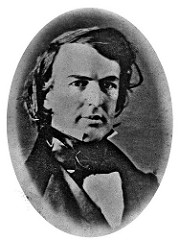
AUGUST 10th.—Mr. Benjamin is a frequent visitor at the department, and is very sociable: some intimations have been thrown out that he aspires to become, some day, Secretary of War. Mr. Benjamin, unquestionably, will have great influence with the President, for he has studied his character most carefully. He will be familiar not only with his “likes,” but especially with his “dislikes.” It is said the means used by Mr. Blair to hold Gen. Jackson, consisted not so much in a facility of attaching strong men to him as his friends, but in aiming fatal blows at the great leaders who had incurred the enmity of the President. Thus Calhoun was incessantly pursued.
American Civil War Chronicles
Extracts from the journal of Commander Semmes, C.S. Navy, commanding C.S.S. Sumter
August 10, 2026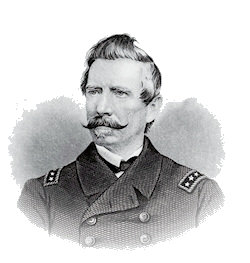
Saturday, August 10.—Clear, with a deep blue sea and a fresh S. E. trade wind in latitude 5° N., and what makes our position worse with reference to making our run, we have had the extraordinary current of 50 miles in twenty-four hours (!) setting nearly due north, a speed equal to that of the Gulf Stream in its narrowest part. But patience and resignation. These are two qualities which every seaman should cultivate, as he has so frequent opportunities for their exercise. We have now just three days of fuel onboard, and we require to make 550 miles, current included, to reach Maranham. Can not do it. Latitude, 4° 29′; longitude, 48° 25′.
Battle of Wilson’s Creek, Mo., August 10, 1861. Gen. Lyon leading into action the Iowa Regiment, whose colonel had been disabled.
August 10, 2026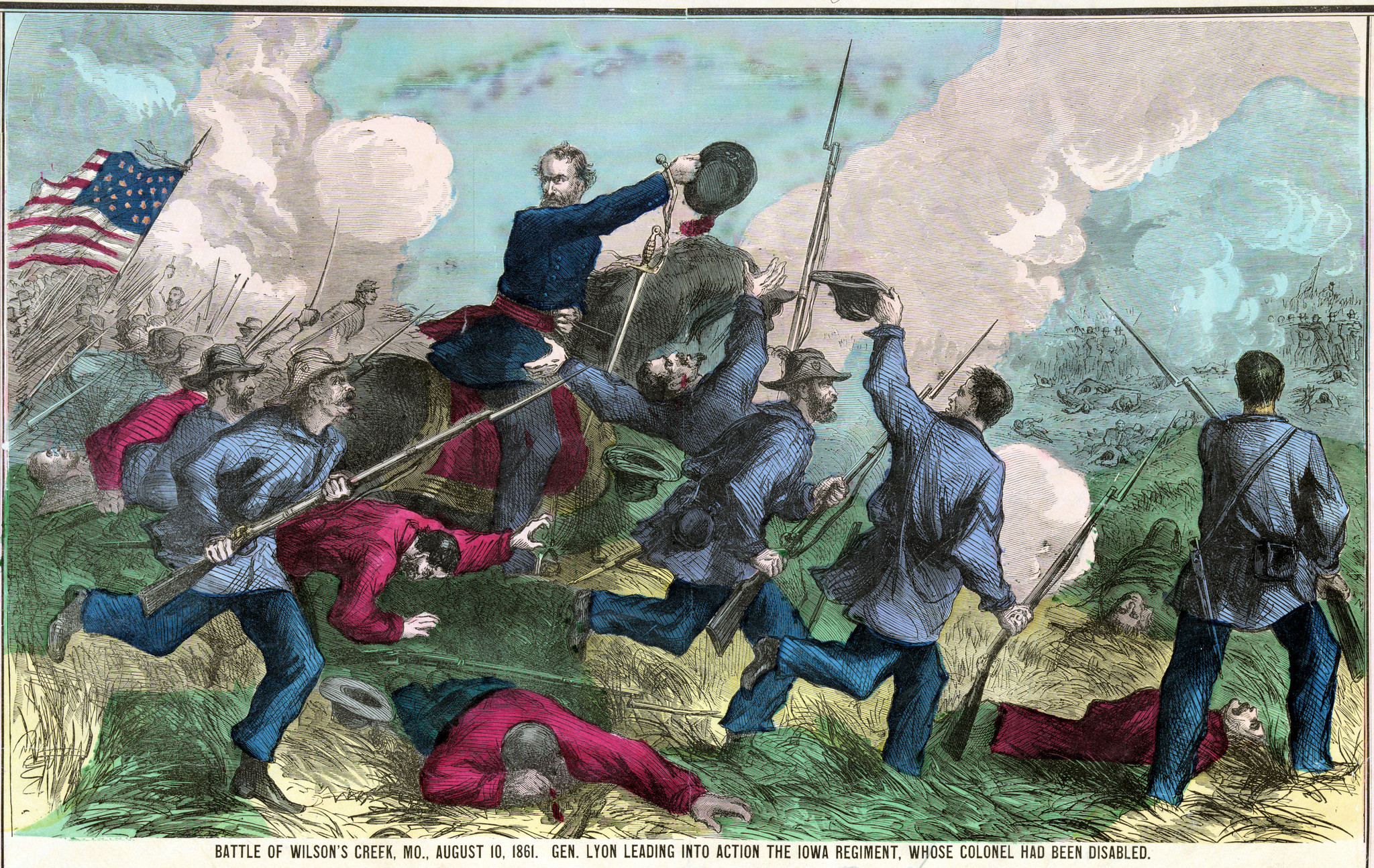 This battle, fought on the 10th of August, was, in some respects, the severest thus far in the present war, and one which, though resulting in the loss of one of our ablest generals, and the subsequent withdrawal of our troops to a position of greater safety, had yet the moral effect of a victory. The facts of the battle, as derived from official sources, were these: Gen. Lyon, finding the Confederate troops assembling in his vicinity in large force, under Gen’ls McCullough, Rains, and Price, and daily receiving re-inforcements, resolved to give them battle before they had time to make the attack they were contemplating. Accordingly, on the 10th of August, he marched out of Springfield with 5,200 men, (900 of whom subsequently re-treated in disorder, and took no part in the fight,) and, soon after sunrise, at a place called Wilson’s Creek, nine miles from Springfield, met and attacked the enemy, who were 23,000 strong. Gen. Sigel was detached to turn the enemy’s flank, while Gen. Lyon and Major Sturgis led up their columns in front. The fight raged from sunrise till one or two o’clock P. M. The Confederate troops charged Capt. Totten’s Battery three times, but each time were repulsed with terrible slaughter. Early in the day, General Lyon was twice wounded, once in the leg, and once in the scalp, but he maintained his position on horse-back, and the Colonel of one of the Iowa regiments having been disabled, and the men offering, he would give them a leader, to charge the enemy with the bayonet, he replied, “my brave boys, I will lead you,” and headed their charge, when he was struck by a bullet in the left breast, and fell from his horse; he was asked if he was much hurt, and replied no, not much,” but soon expired, without a struggle. The other leaders, Gen. Sigel and Major Sturgis, continued the fight until the enemy withdrew, after burning their baggage, to prevent its falling into the hands of our troops. Apprehending that they would endeavor to cut him off from Springfield, Major Sturgis then retreated, in good order, to Springfield, taking as many of his wounded as he could, with him, and the next day, marched with his little force to Rolla, where there were reinforcements. The loss of the Federal troops was 921 killed, wounded, and missing; that of the Confederates, according to their own statement, 517 killed, and 720 wounded, besides prisoners.
Battle Scenes, no. 1
published at H.H. Lloyd & Co., c1861
handcolored lithograph
Library of Congress image
Wilson’s Creek
August 10, 2026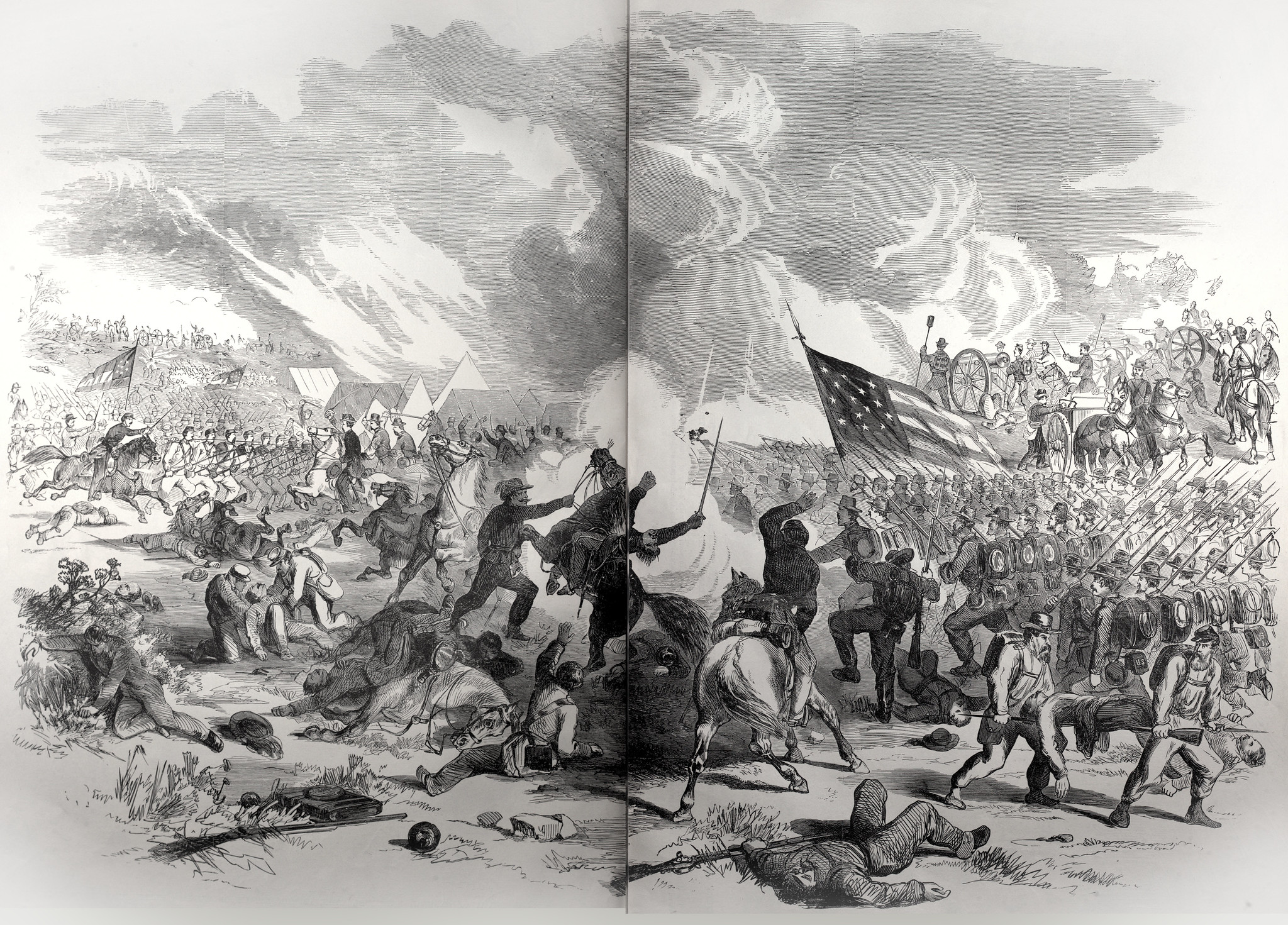
Battle at Wilson’s Creek, near Springfield, Mo., between 5,500 Union Troops under Generals Lyon and Sigel, and 23,000 Confederates under Generals McCulloch and Price, August 10th, 1861.
(from Frank Leslie’s Illustrated History of the Civil War…, edited by Louis Shepheard Moat, Published by Mrs. Frank Leslie, New York, 1895)
“The attack was made by General Lyon, in command of the centre, supported by General Sigel and Major Sturgis, U. S. A., and notwithstanding the great disparity of numbers, the Confederates were driven from their position and their camp burned, with great loss in killed, wounded and prisoners. The victory, however, was dearly purchased, General Lyon, the brave and able commander of the Union forces, was killed at the head of his troops, who suffered a loss of [illegible] killed and between 600 and 700 wounded. There is every reason to believe that the Confederate loss was more than double these numbers.”
Death of Lyon
August 10, 2026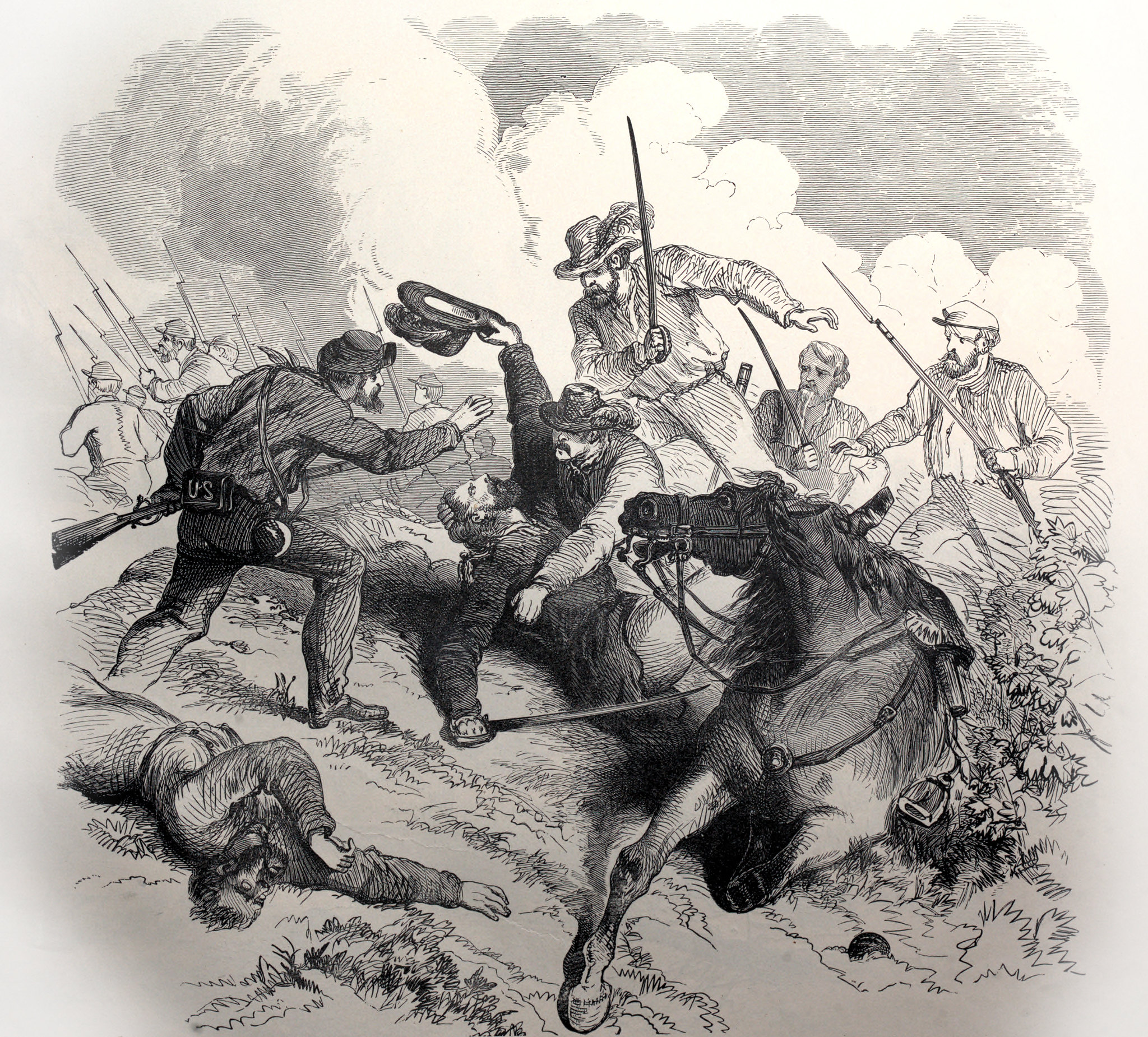
The Death of General Nathaniel Lyon, at the Battle of Wilson’s Creek, near Springfield, Mo.
(from Frank Leslie’s Illustrated History of the Civil War…, edited by Louis Shepheard Moat, Published by Mrs. Frank Leslie, New York, 1895)
“General Lyon fell at the head of his little army of 5,500 men, in a desperate fight at Wilson’s Creek, Mo., on the 10th of August, 1861, while leading a charge against the Confederate forces under Ben McCulloch, numbering 23,000 men. General Lyon was educated at the United States Military Academy at West Point, where he was graduated with distinction in 1841.”
German Refugees
August 10, 2026
Daily Times [Leavenworth, Ks], August 10, 1861
The German refugees who were driven from near Liberty, some time ago, and who have been stopping in this city, of late, have succeeded in bringing away their families and household goods. One of the wives, after having been driven from home, was compelled to take refuge in a barn three miles this side of Liberty, where she gave birth to a child. Her treatment, previous to, and during her confinement, by the chivalrous Missourians, was such as makes one blush for humanity.
The Native and Foreign Born Citizens
August 10, 2026
Standard [Clarksville], Tx, August 10, 1861
Our observation has taught us that, since hostilities began between the North and the South, the foreign population in our midst have done as much, in proportion to numbers and wealth, to sustain the cause of the South, as the native population have.
These people came from the land of oppression, tyranny, and wrong, and cast their fortunes among us. They are here from the sunny hills of France–from the “Green Isle of the Ocean”–from the land of Goethe and Schiller–from every country, race, and clime! They were invited here; our fathers told them that “here the tree of liberty shot its top to the sun–its boughs hung out over all the earth, and wearied nations might come and lay down beneath its shades, and rest!”–They have come; they have lived with us, and are of us. They have felt the heel of the oppressor, and they have tasted the sweets of liberty; and appreciating more keenly the blessings of the latter, because they have been galled by the yoke of the former, there are no sacrifices that may be demanded of them, that they are not ready to make in this great struggle for liberty and independence.
Wherever the flag of freedom has been unfurled upon this continent, there men, born on foreign soil, and reared to the admiration of institutions adverse to our own, have been found laying down their lives to sustain the cause it represented; — their bones now lay bleaching along side of the native-born citizens, on every battlefield from Bunker Hill to Manassas Junction. They have ever been true to us, in the darkest hour of our peril; and now, when adverse winds have driven us upon the rock of civil war–when the gates of the temple of Janus are thrown wide open, and events pregnant with meaning presage the coming of a most tearful future, they have made new earnest of their devotion, and have gone forward with a zeal and enthusiasm worthy to succeed those of their countrymen who fought for us in other days, upon other fields.
It is their duty of course, to do all and everything in their power to sustain the cause of their adopted country; because it has given them a home, free thought, free speech, and free action, which their native land denied them; and the alacrity with which they have responded to the call of the country, shows that they know their duty, and are willing to discharge it.
These people are exceedingly sensitive to imputations against their patriotism; and it is natural for them to be so; but they may rest assured that the great mass of the Southern people have the most implicit confidence in their loyalty to the South, and their attachment to her institutions. The exceptions to the rule are the radical men, who have more zeal than good sense, and who are doing the cause they advocate more harm than good.
Cherokee
August 10, 2026
Austin State Gazette, August 10, 1861
The ladies of Rusk have formed themselves into a “Female Army Aid Society,” for the purpose of making clothing and raising money for the support of the soldiers.
The Enquirer, speaking of the slow movements of some of the citizens of Cherokee, and the necessity for organization and drill, thus expresses himself:
“Every man old or young, capable of bearing arms, should now be preparing himself for the defense of his country; and those who think that the country does not need their services, had better put on the petticoat and hoop, and give place to their more chivalrous sisters and cousins; and to those who say “this war was not of our making and we will take no part in it,” we would urge the quicker they leave and join their Lincoln friends, the better it will be for themselves and the country.”
The Courier thinks enough salt can be gathered on the coast marshes of Texas to supply the whole Confederacy, and says the business will soon become very profitable. A small force at St. Joseph’s Island has been gathering at the rate of two hundred bushes per day.
Winter Clothes for Our Volunteers
August 10, 2026
Austin State Gazette, August 10, 1861
Before leaving our post for a short time, we must impress upon our people the necessity of providing clothing for our troops in the battle field. It is true that the Confederate Government has this duty to discharge to a portion of our sons. But we must not depend entirely upon this source. If good and warm clothing is needed this winter by any Texans, either in State or Confederate service, they must have it at any and all sacrifices.
As to the ways and means, we do not approve of the voluntary subscription. Many thus do not contribute who have the most means. We think it the duty of each county court to appropriate a liberal sum for this purpose, and let it be done at once. If this body will only buy the material, our noble women and daughters will make it up as a work of the highest devotion to their country, and it may be the beneficent means of saving many a gallant man from a premature grave. Our sons, whether in Missouri or Virginia, will have to pass severer winters than they have been accustomed to at home.
In this way, the money will be raised by a tax upon all, according to their wealth. It is the true policy, and we hope our contemporaries will aid us in making the appeal to every county in the State.
A Lady with the Right Spirit
August 10, 2026
Southern Confederacy [Atlanta, Ga], August 10, 1861
A lady friend in this city has favored us with the perusal of a letter written by her sister residing in Texas. We have read but few letters since this war commenced, from which we have derived such pleasure as this one, and we appreciate the privilege we have of making the following extract. Its pure and lofty patriotism, will find a hearty response in the breast of every lover of his country:
* * *
“Phil was in Richmond when he last wrote, but where he is this Holy Sabbath day, (14th July) who can tell? Perhaps upon some field of battle! I feel sometimes that he is lost to me forever. I try to be resigned to the will of Heaven in all things.–If my country had claimed the sacrifice of my own life it would have been willingly given; but my boys were more to me than all else on earth–dearer, far dearer, than my own life. But they are gone–two of them–for Creed left me two days ago, at the Governor’s orders to go into camp, preparatory to his departure for the seat of war. He tried to reach home in time to go with Philip, but was prevented by sickness. I could have borne it better if they had gone together, but they will probably not meet during the war, and I may not see Creed again before he leaves Texas.
“Swan and John belong to a company, but they will not leave the State, as they expect to be sent to the coast, which is threatened by the Lincolnites; so you see this war will fall heavily on me, as I have so many sons. Patriotism prompts me to give them up to my country, but there is no joy in it. I feel as if the light will have gone out of my house forever when they leave it.
“I love the South–my old State (Georgia) most of all–and if it is to be blotted out from the face of the earth, as our enemies boast, I hope to perish with it; and before the day comes when such a race as the Lincolnites shall overrun and subdue the South, I hope the last Southern man on earth–my sons among them–may fall on the field of battle in deadly fight for their own, and their country’s honor. I had rather, a thousand times, see their heads laid low in the grave, than live to see them submit to the infidel North. If the men were willing to accept of peace on such terms, Southern women would drive them from their presence with scorn and contempt. My sons would never return to me after such servile submission, nor would I have them do so.
“This may seem to you unnatural, and so it is; but the North has driven us to this unnatural war, robbed me of my sons and brothers, and made for me days of weariness and nights of sorrow. They have gone to fight for their country–their rights and honor, and all that we held dear, and I have no wish for them to survive these.”
Poisoned?–Journal of Surgeon Alfred L. Castleman.
August 10, 2026
10th.–The poisoned soldier is very sick to-day, but I have hopes of his recovery. In a city where we have received so much kindness and attention as in Baltimore, it is painful to have to suspect anyone of so devilish an act as that of poisoning a man.
A Diary of American Events.–August 10, 1861
August 10, 2026
Click map to
view full size
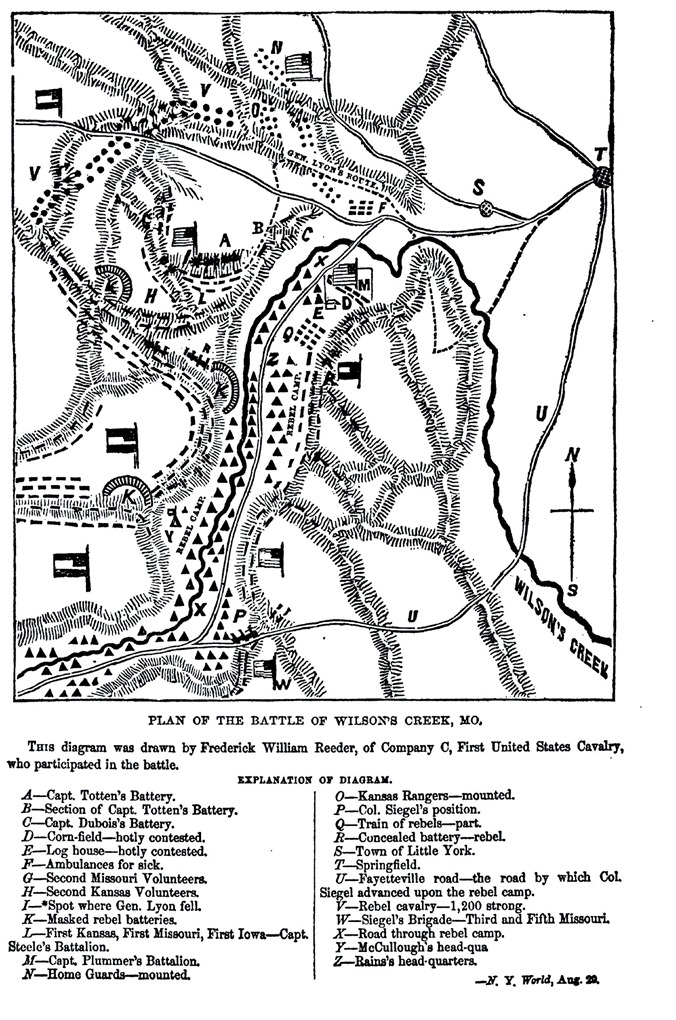
August 10.–Gen Lyon’s column marched until 2 A. M., when it was halted for two hours. Capt. Gilbert’s regulars were thrown out as skirmishers at 4 A. M., and the column moved forward. At 5 o’clock the enemy’s pickets were driven in, and soon after the army came in sight of the rebels’ position. McCulloch’s camp extended in a valley along Wilson’s Creek for three miles, and followed the bends of the streams to the north at its western extremity, and to the south at the eastern. Siegel’s attack was to be made at the latter point, and Lyon moved, therefore, upon the western and northern extremity, down the head of the valley. Blair’s First Missouri Regiment at about 6 o’clock drove a full regiment of infantry from a ridge at the end of the encampment, and at the same time Totten’s battery threw some shells among the enemy’s tents. Blair’s regiment moved forward up a second ridge, upon which they encountered a Louisiana regiment. Here they were reinforced, and finally gained the summit, driving the rebels before them. Two companies of regulars were at this time sent across the creek eastwardly to engage a rebel force in that direction, but were compelled to retire; when Lieut. Dubois opened his battery from the second ridge won, and threw a number of shells which exploded with great effect, and completely routed this body. Blair’s regiment was now withdrawn, and the Iowa First ordered to take its place, and the Kansas regiments to support the Iowa First. An attempt to charge with his cavalry was next made by McCulloch, but the charge was entirely broken by the fire of Totten’s battery. Both batteries were soon in position, and the battle resolved itself into the enemy’s attempt to dislodge them, and regain the ridges from which he had been driven. In this attempt he was repeatedly foiled. At about nine o’clock, as the enemy came on again, Gen. Lyon, who had received three wounds, put himself at the head of the Iowa First to lead a charge with the bayonet, when he received a rifle ball in though breast and fell dead. His fall, however, was not generally known. Major Sturgis assumed the command, and the battle went on.–Mean time, Gen. Siegel made his attack upon McCulloch’s right, drove the rebels for half a mile from their position and took possession of that extremity of their camp; but his advance was broken by the fire of a full regiment that he had permitted to approach in the belief that it was a reinforcement from Gen. Lyon. Unable to rally Salomon’s regiment, he was driven back with the loss of five guns. About noon, the enemy’s tents and his whole baggage train were destroyed by fire, supposed to have been his own act The fight still continued in front, and the last advance of the enemy, made at one P. M., was driven back by the whole national force in the field. Immediately after, Major Sturgis ordered a movement toward Springfield, and the whole force fell back in good order. McCulloch made no pursuit. The national loss was 800 in killed and wounded. Though the rebel loss is not known, it is thought to have been very large, as the national artillery fire was remarkably accurate.–(Doc. 175.)
–The Spanish Minister announced to the Secretary of State at Washington, that the seven American vessels captured by the pirate Sumter and carried into Cienfuegos, had been discharged by order of the Spanish Government.– Washington Republican, August 11.
–To-day Lieutenant Budd, commanding the Reamer Resolute, cleared out one of the rebel depots on the Potomac. It has been known for some time that the Herring Creek on the Maryland side, and Machodock Creek opposite on the Virginia side, were the dcpot for Maryland recruits to the rebel army in Virginia. The Resolute having approached within 300 yards of the shore of the creek, was fired on with musketry. A boat was immediately lowered, and Lieut. Budd with twelve men landed. The rebels fled at their approach and were pursued for a mile, but made their escape. Two muskets and a knapsack which they .threw away in flight were picked up. Upon returning to the house abundant evidence that it had been a rebel rendezvous, and papers containing important information, were found. The buildings were destroyed, and ten contrabands found on the premises were brought away.
After leaving the creek, Lieut. Budd learned from the negroes that there were 800 of the rebels concentrated at the Hague, about five miles back from the river, and that their ferryboat was about three-quarters of a mile up the creek. Meeting the schooner Dana, he took her gun and crew upon the Resolute, and placing the negroes in charge of two men of the Dana, he went up the creek and captured a large boat capable of carrying 25 or 80 men, but saw nothing of the rebels.
–The prize schooner Geo. V. Baker, of Galveston, and her confederate crew of four men in irons, were carried under the guns of Fortress Monroe. The schooner was captured by one of the United States blockading fleet off Galveston, Texas, and sent to New York with the United States crew on board. She was captured yesterday off Cape Hatteras by the rebel privateer York, who put four of her own men on board. Meanwhile the York was seen by the United States gunboat Union, who gave chase and burnt the privateer, but not until the crow had beached her and escaped. The Union then recaptured the Baker, and her crew.
–Isham G. Harris issued an order to the clerks of the county courts of Tennessee, requesting them to search the residences of the people for arms of every description, and to forward such arms to the military authorities at Nashville, Memphis, or Knoxville.–(Doc. 175 ½.)
–Between the hours of six and seven this evening eighty mounted men, led by Capt. White and a refugee named Talbot, attacked a smaller number of Home Guards at Potosi, Missouri, and were repulsed with a loss of two killed and three wounded. One man of the Home Guards was killed.–St. Louis Democrat, August 12.
–Prof. La Mountain made two successful balloon ascensions at Fortress Monroe, having attained an altitude of three thousand feet. He found the encampment of the Confederate forces to be about three miles beyond Newmarket Bridge, Va. There were no traces of the rebels near Hampton. A considerable force is also encamped on the east side of James River, some eight miles above Newport News. The two cannon mounted at Sewall’s Point toward Old Point, he thinks, are only large fieldpieces. There are, perhaps, one thousand Confederates at Sewall’s Point.–N. Y. Times, August 13.
–The Western Virginia State Convention, in a series of resolutions, declared itself “unalterably opposed to any compromise with the rebels.”–(Doc. 176.)
–The Helena (Arkansas) Shield, of this day, contains the following:–From the Hon. C. W. Adams of this county, who arrived at home a few days since from the northern part of this State, we learn that on last Monday week thirteen hundred Indian warriors–Southern allies –crossed the Arkansas River near Fort Smith, en route for McCulloch’s camp. These Indians are armed with rifle, butcher knife, and tomahawk, and had their faces painted, one half red, and the other black. We also learn that a regiment of mounted Texans likewise crossed the Arkansas at or near Fort Smith, for the same destination.
——-
Late addition to Volume 3:
August 10.–The narrative of Doctor Blaisdell, a physician lately resident in Macon, Ga., was published, in which he pronounced the whole story of Jeff. Davis having taken command in person at Manassas during the fight, a pure fiction.–Cincinnati Gazette.
Civil War Day-By-Day
August 10, 2026
August 10, 1861
- Battle of Wilson’s Creek [US], Battle of Springfield [CS]: A mixed force of Confederate, Missouri State Guard, and Arkansas State troops defeat outnumbered attacking Union forces in the southwestern part of the Missouri. Brigadier General Nathaniel Lyon [US] is killed in the Confederate victory
A Chronological History of the Civil War in America1
- Battle of Wilson’s Creek, about 12 miles from Spring?eld, Mo. (Lyon v. McCulloch and Price): Union force 5,200, and rebel 15,000—rebels, after six hours’ ?ghting, repulsed. Gen. Lyon killed. During the night the Union forces fell back to Spring?eld, and thence to Rolla. Rebels too much disabled to follow. Union loss, 263 killed and 721 wounded; rebel loss, 421 killed and 1,300 wounded.
- A Chronological History of the Civil War in America by Richard Swainson Fisher, New York, Johnson and Ward, 1863
Extracts from the journal of Commander Semmes, C.S. Navy, commanding C.S.S. Sumter
August 9, 2026
Friday, August 9.—Cloudy, with light breezes from the southeast. No meridian observation for latitude to-day, though a sight near noon shows us to have experienced the eastward current again. We have experienced a drift of about 20 miles to the N.N. W.½W. This is a serious drawback to our making our run to Maranham. The engineer has overestimated his supply of coal, and it now turns out that we had but eight days’ instead of nine days’ fuel when we left Trinidad. I very much fear we shall fall short, and be obliged to make some port under our lee under sail. Evening clear, with light breezes from about S. by W. Latitude observations near noon, 6 ° 01′; longitude, 50° 48′.
“The boys have been playing soldier in their tent opposite the House — keeping guard &c.”—Horatio Nelson Taft
August 9, 2026
FRIDAY 9
This day has not been so hot, rather cloudy and rain tonight. I was on the Ave and at the Pat office, got a Hack and brot home my Books and papers from the office. Nothing new stirring in the City. Do[c]t Vanslyck was here today and Capt Adams gave us a Call. I finished of[f] my model and did not do much else today about the House. The boys have been playing soldier in their tent opposite the House — keeping guard &c.
______
The three diary manuscript volumes, Washington during the Civil War: The Diary of Horatio Nelson Taft, 1861-1865, are available online at The Library of Congress.
Develpment of the Resources of Arkansas
August 9, 2026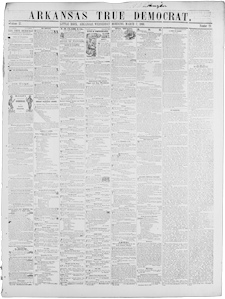
Arkansas True Democrat [Little Rock],
August 8, 1861
There are three or four cotton factories in this State, but we do not know of the number of spindles driven, or their capacity for turning out thread and cloth. If not now in operation, we hope to hear soon that they are under full headway. If they would be profitable at any time, it will be now and during the continuance of the war. We will be glad to receive information concerning this and other branches of industry in this State.
As a great deal of coal was floated down the Mississippi river, which is now closed above, and none can be brought up to New Orleans and other points, it appears to us that the coal beds of Arkansas can now be profitably worked. Those on the Ouachita river will, probably, be managed by a company from New Orleans. There is excellent coal up the Arkansas and plenty of it; that at Spadra being on the bank of the river and easily obtained.
Salt will become scarce and valuable unless we avail ourselves of the many salt springs in our State. Some of these salines are worked now. Others give a strong brine which would yield sufficient salt to pay for the erection of pumps, boilers, etc. And it should be remembered that the invariable rule is “the deeper the well, the stronger the brine.”
Every man who has a good tannery now, has a little fortune. We are afraid that there will be a great scarcity of leather and shoes next winter, unless more tanneries are established and better care taken by our farmers of the hides or skins of animals. We must economize in this respect, not only from patriotism, but from necessity. We have within ourselves a full supply for all our wants, and only need a development of our resources to make us independent. Let any man count up the amount paid by Arkansas to the North, in a year for the single articles of boots and shoes. At three dollars to each person, it would largely exceed a million of dollars.
Now is the time to set about these things, and by cold weather we can be prepared to supply those wants heretofore supplied by importations. We urge upon the farmers to be careful of the furs and skins of all wild and tame animals, and have them properly tanned. Let none be thrown away or nailed to barn doors and suffered to dry up and become worthless. A large tannery has been, or will be, established in the eastern part of the State. There is room for such a one in the west, as large numbers of hides can be procured from our Indian neighbors.
As regards salines and coal beds, those desiring information on that point will find it in the reports of the geological survey. The second report, though printed and delivered, has not been distributed, but, no doubt, any gentleman seeking information of that kind, can procure one by applying to the Governor, or Secretary of State.
An interesting description of the armaments of Fort McHenry at Baltimore.–Journal of Surgeon Alfred L. Castleman.
August 9, 2026
9th.–What a wonderful effect the hardships of camp life, with the troubles and cares which they entail on a surgeon, have had on my health. For many years I have been dyspeptic. Now I can eat what I please, and go without sleep almost entirely, and suffer no inconvenience. Last night, at 11 o’clock, after having ate a piece of hard salt beef for my supper, I “cared for” a pint of rich ice cream, and feel no inconvenience from it to-day. This would kill an ordinary civil man. I have to work very hard, but feel it a great comfort to work amongst the sick without suffering from fatigue, as I have been accustomed to.
Having received an order this morning from Gen. Dix to put all my sick into general hospital, and finding them bitterly opposed, I visited Fort McHenry, saw Gen. D., and prevailed on him to rescind the order.
I was highly gratified with what I saw at Fort McHenry. It, being the first equipped fort I ever saw, was an object of much interest; its numerous cannon, large enough for a small soldier to sleep in, pointing in all directions overlooking Baltimore and guarding all the approaches to it. No matter from what direction you come, you find these monster guns looking right in your face. Low down behind the walls lie almost innumerable ugly bull-dog-looking mortars, not over two and a half feet long, loaded with a 20 to 40-pound shells filling them to the very muzzle, and ready to be vomited forth at the first approach of trouble. There, too, is the great Dahlgren, stretching its long black neck away beyond the embrasures, as if looking for an object into which to pour its monster shot and shell, or its shower of grape and cannister. Its howitzers are there, and its great Columbiads, into some of which I was strongly tempted to crawl and take a nap, but a sudden recollection of the history of Jonah reminded me that its stomach, too, might sicken, and that I might awake in a trip across the mighty deep on the wings of the wind. I didn’t go in. The bright little brass 6, 8, and 10 pounders, on the greater number of which Napoleon said God always smiled in battles, were conspicuous amongst these great leviathans, and above all, the newly invented rifle cannon, ready to demolish ships or houses at two to five miles distance.
Have lost no man yet from sickness, but I have one who, I fear, will not recover. He is supposed to he poisoned by a glass of lemonade, bought of a man suspected of being a rebel.
I have succeeded, by selling a half barrel of flour, and by the approval of a small requisition made on the commissary, in getting provisions of all kinds to make my little detachment comfortable.
A Diary of American Events.–August 9, 1861
August 9, 2026
August 9.–President Lincoln to-day made the following appointments of brigadier-generals for the volunteer force: Colonels Blenker and Slocum, of the volunteers, and Major Wadsworth, aide to Gen. McDowell; Colonel John A. Peck, Ex-Major of the regular army, who distinguished himself in the Mexican war; John H. Martindalc, a graduate at West Point; Ormsby M. Mitchell, Professor of Astronomy, of Cincinnati, a graduate of West Point and an ex-army officer.
–Ormond F. Nims’ battery of light artillery left Boston for the seat of war. The company departed from their camp at Quincy at 7J o’clock last evening, and, marching through South Boston, reached the Providence depot at 11 ¼ o’clock. An hour and a half was occupied in getting their guns, horses, and carriages on the cars. The battery consists of Bix rifled 6 pounders, and besides the regular caissons it has baggage wagons, forges, magazines, etc. Six hundred Schenckl’s shell and James’s projectile were sent from the State Arsenal for the use of the battery.
–The United States Marshal, at Boston, Mass., arrested a person who registered himself at the Parker House as “C. Jordan, Pittsburg, Pa.,” but who subsequently has confessed himself as John Williams, of Norfolk, Va., and was supposed to hold a commission in the rebel army. He was arrested as a spy, and by orders received from the Secretary of War, was sent to Fort Lafayette, New York harbor. –N. Y. Tribune, August 11.
–The Third Regiment of Connecticut Volunteers, who were in the battle at Bull Run, returned to Hartford, and were received amid the firing of guns, the cheers of the firemen and military, and an immense throng of citizens, who had assembled to welcome thorn home.– N. Y. Tribune, August 11.
–Lieut.-Col. Robert Nugent, of the Sixty-ninth Regiment N. Y. S. M., was appointed to a captaincy in the regular army of the United States. Captain Nugent was born in the North of Ireland, his brother John M. being at present the Mayor of Dumdalk. He came to America immediately after the abortive insurrection of ’43; and having strong military tastes, soon enrolled his name in the Fourth Company of the N. Y. National Guards, and served two years under Captain Riblet. On the organization of the Sixty-ninth in ’52, Captain Nugent became one of its earliest officers, and has served faithfully in its ranks as Lieutenant, Captain, Major, and Lieutenant-Colonel down to the present day.–N. Y. Tribune, August 11.
–General Lyon learned that the rebels, 22,000 in number, under Ben. McCulloch, were on Wilson’s Creek, nine miles from Springfield, Mo., and moved against them with his whole force, only 5,200. The force was disposed in two columns. One under Col. Siegel with his own regiment, and that of Col. Salomon’s, and six guns, moved 15 miles in a southerly direction to turn the enemy’s right flank, and the other wider Gen. Lyon moved forward to attack in front. Lyon’s column consisted of the Missouri First, Iowa First, Kansas First and Second, part of the Missouri Second, a detachment from Col. Wyman’s Illinois Regiment, all volunteers; eight hundred regulars, and two batteries of 4 and 6 guns respectively. There were also four mounted companies of Home Guards. Both columns left Springfield at about 8 P. M.–St. Louis Democrat, August 12.
Civil War Day-By-Day
August 9, 2026
August 9, 1861
A Chronological History of the Civil War in America1
- Rebels attacked and routed at Potosi, Mo.
- A Chronological History of the Civil War in America by Richard Swainson Fisher, New York, Johnson and Ward, 1863
Extracts from the journal of Commander Semmes, C.S. Navy, commanding C.S.S. Sumter
August 8, 2026
Thursday, August 8.—Weather clear, with an occasional rain squall. Wind light and variable, but always from the eastward, following the sun as the chariot follows the steed. Making good speed through the water, but we have experienced in the last twenty-four hours an adverse current of about 1 mile per hour, setting W. N. W. Nothing had been seen to-day. Water green, indicating soundings. We are about 90 miles from the coast of Guiana. Pink and lilac clouds about sunset. Weare fast sinking the North Star, and this evening we had a view of the Southern Cross. Latitude, 7 °19′; longitude, 53°31′.
Mary Chesnut’s Diary: “We mean to stand by our President and to stop all fault-finding with the powers that be, if we can and where we can, be the fault-finders generals or Cabinet Ministers.”
August 8, 2026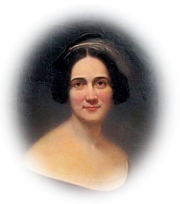
August 8th.–To-day I saw a sword captured at Manassas. The man who brought the sword, in the early part of the fray, was taken prisoner by the Yankees. They stripped him, possessed themselves of his sleeve-buttons, and were in the act of depriving him of his boots when the rout began and the play was reversed; proceedings then took the opposite tack.
From a small rill in the mountain has flowed the mighty stream which has made at last Louis Wigfall the worst enemy the President has in the Congress, a fact which complicates our affairs no little. Mr. Davis’s hands ought to be strengthened; he ought to be upheld. A divided house must fall, we all say.
Mrs. Sam Jones, who is called Becky by her friends and cronies, male and female, said that Mrs. Pickens had confided to the aforesaid Jones (nee Taylor, and so of the President Taylor family and cousin of Mr. Davis’s first wife), that Mrs. Wigfall “described Mrs. Davis to Mrs. Pickens as a coarse Western woman.” Now the fair Lucy Holcombe and Mrs. Wigfall had a quarrel of their own out in Texas, and, though reconciled, there was bitterness underneath. At first, Mrs. Joe Johnston called Mrs. Davis “a Western belle,” ¹ but when the quarrel between General Johnston and the President broke out, Mrs. Johnston took back the “belle” and substituted “woman” in the narrative derived from Mrs. Jones.
Commodore Barron ² came with glad tidings. We had taken three prizes at sea, and brought them in safely, one laden with molasses. General Toombs told us the President complimented Mr. Chesnut when he described the battle scene to his Cabinet, etc. General Toombs is certain Colonel Chesnut will be made one of the new batch of brigadiers. Next came Mr. Clayton, who calmly informed us Jeff Davis would not get the vote of this Congress for President, so we might count him out.
Mr. Meynardie first told us how pious a Christian soldier was Kershaw, how he prayed, got up, dusted his knees and led his men on to victory with a dash and courage equal to any Old Testament mighty man of war.
Governor Manning’s account of Prince Jerome Napoleon : “He is stout and he is not handsome. Neither is he young, and as he reviewed our troops he was terribly overheated.” He heard him say “en avant,” of that he could testify of his own knowledge, and he was told he had been heard to say with unction “Allons ” more than once. The sight of the battle-field had made the Prince seasick, and he received gratefully a draft of fiery whisky.
Arrago seemed deeply interested in Confederate statistics, and praised our doughty deeds to the skies. It was but soldier fare our guests received, though we did our best. It was hard sleeping and worse eating in camp. Beauregard is half Frenchman and speaks French like a native. So one awkward mess was done away with, and it was a comfort to see Beauregard speak without the agony of finding words in the foreign language and forming them, with damp brow, into sentences. A different fate befell others who spoke “a little French.”
General and Mrs. Cooper came to see us. She is Mrs. Smith Lee’s sister. They were talking of old George Mason–in Virginia a name to conjure with. George Mason violently opposed the extension of slavery. He was a thorough aristocrat, and gave as his reason for refusing the blessing of slaves to the new States, Southwest and Northwest, that vulgar new people were unworthy of so sacred a right as that of holding slaves. It was not an institution intended for such people as they were. Mrs. Lee said: “After all, what good does it do my sons that they are Light Horse Harry Lee’s grandsons and George Mason’s? I do not see that it helps them at all.”
A friend in Washington writes me that we might have walked into Washington any day for a week after Manassas, such were the consternation and confusion there. But the god Pan was still blowing his horn in the woods. Now she says Northern troops are literally pouring in from all quarters. The horses cover acres of ground. And she thinks we have lost our chance forever.
A man named Grey (the same gentleman whom Secretary of War Walker so astonished by greeting him with, “Well, sir, and what is your business?”) described the battle of the 21st as one succession of blunders, redeemed by the indomitable courage of the two-thirds who did not run away on our side. Doctor Mason said a fugitive on the other side informed him that “a million of men with the devil at their back could not have whipped the rebels at Bull Run.” That’s nice.
There must be opposition in a free country. But it is very uncomfortable. “United we stand, divided we fall.” Mrs. Davis showed us in The New York Tribune an extract from an Augusta (Georgia) paper saying, “Cobb is our man. Davis is at heart a reconstructionist.” We may be flies on the wheel, we know our insignificance; but Mrs. Preston and myself have entered into an agreement; our oath is recorded on high. We mean to stand by our President and to stop all fault-finding with the powers that be, if we can and where we can, be the fault-finders generals or Cabinet Ministers.

______
¹ Mrs. Davis was born in Natchez, Mississippi, and educated in Philadelphia. She was married to Mr. Davis in 1845. In recent years her home has been in New York City, where she still resides (Dec. 1904).
² Samuel Barron was a native of Virginia, who had risen to be a captain in the United States Navy. At the time of Secession he received a commission as Commodore in the Confederate Navy.
“What a blackness of darkness, of falsehood and misrepresentation lies behind all this.”—Woolsey family letter; Jane Stuart Woolsey to a friend in Paris.
August 8, 2026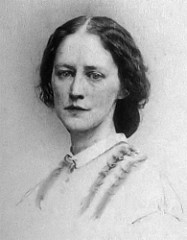
Brevoort Place, August 8th, 1861.
Your response to my patriotic fervors gave me a sort of chill. We did not seem en rapport. . . . We are heartily ready to record our faith that the war is worth what it may cost, although the end may be only–only! the preservation of the Government, and not, just now, the liberation of the slaves. Perhaps you hold, with Mr. Phillips and Abby (I believe they comprise the entire party) that the war is not justifiable if it “means only stars and stripes.” We think, or to resume the perpendicular pronoun, I think that is enough for it to mean or seem to mean at present. “The mills of the Gods grind slow,” you know, or, if you will let me requote to you your own quotation, “you cannot hurry God.” Don’t you and Mr. Phillips want to hurry Him a little? I would rather, for my part, think with Mrs. Stowe, that the question of the existence of free society covers that other question, and that this war is Eternally Righteous even if it “means only the stars and stripes.” .. . We are all getting bravely over the two or three dreadful days of a fortnight ago, and coming to think that our retreat under the circumstances was not such a bad thing after all. . . . Monday after Bull Run was a frightful day in Washington. Georgy says a thick gloom oppressed them which the knowledge of the safety of those nearest them could not lighten in the least, and that a sad procession of the wounded was passing through the streets all day under the heavy rain. . . . Many of the men are but slightly wounded, and all are perfectly patient, cheerful and only eager for “another chance.” “Tell her about the wound in my hand preventing me from writing,” one man said, for whom Georgy was writing home. “And the wound in your leg?” G. asked. “No, never mind about that.” “And I shall say you fought bravely?” “Oh, no matter about that; she’d be sure of that.” They have known two or three cases of Southern barbarity to our wounded. But the poor wretches expected the same thing at our hands. Dr. Bacon, an intimate friend who has just come home with his regiment, Connecticut 2nd, says in the battle on Sunday he came upon a piece of shade in which four or five wounded Georgians were lying, and what was very painful to him, every man believed that he had come to kill them, lying there disabled. One young fellow called out, “Don’t hurt me, I’m hurt enough already,” and the rest made a feeble show of defending themselves. Of course he dressed their wounds, and did what he could for them with more than usual care and gentleness, and I can bear witness how careful and gentle that must have been, but it was hard to tell which emotion was uppermost with them, gratitude or astonishment. Mr. Maclise, of the 71st, which has come home, says he found a wounded man under a tree, a Carolinian, he thinks, who begged for his life in the same way. “Bless your soul,” Maclise said, “I wouldn’t hurt you for the world; don’t you want some water?” The poor fellow eagerly took the water from his enemy’s canteen. “If I only had a cup I could give you some brandy,” Mr. M. added. “Oh, just look in my knapsack and you’ll find a cup.” So Maclise opened the knapsack, took out a beautiful silver cup, mixed the draught, and made his patient as comfortable as he knew how, bringing home the silver cup, at the Carolinian’s most urgent entreaty, as a souvenir of that sad day. He will try and return it one of these days. But what a blackness of darkness, of falsehood and misrepresentation lies behind all this. These perfectly intelligent men devoutly believed that we would kill them, unarmed, sick and helpless! . . . The “prevailing” Prince comes and goes, and nobody seems to care much about it. We have learned something, or it is that we have too many troubles of our own to care for the pleasures of princes. He overstayed his time at Mount Vernon the other day, and there was a splendid story that he had been captured, but he spoiled the bulletins and the joke by coming back to a soiree at two o’clock at night. . . . We are going, as much for duty as pleasure, to Lenox, to-morrow or Saturday, for a few weeks, to refresh ourselves for the winter. As long as McClellan keeps quiet we shall stay. He resigned one day last week. Col. Davies dined with us yesterday and told us so, from his uncle, General Mansfield, who had seen the letter. The administration attempted some interference in his reforms, and he sent in his resignation. It was immediately hushed up, refused, of course, and he was allowed to have his way.
I believe that with three thousand additional troops Pickens can be easily taken, certainly with five thousand.
August 8, 2026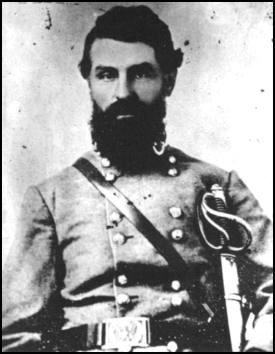
HEADQUARTERS SECOND BRIGADE, C. S. TROOPS,
Near Pensacola, Fla., August 8, 1861.
Hon. L. P. WALKER, Secretary of War:
DEAR SIR: Perhaps you would like to hear from this place, once of so much importance. The departure of General W. H. T. Walker and the sickness of Colonel Clayton have for a time placed me in command of the Second Brigade here. I have the First Alabama Regiment, the Seventh Alabama, and a Georgia battalion, with two independent companies, in all about two thousand three hundred men, with Fort Barrancas and three-fourths of all the batteries at this place. If there could be a fight I would have a fair chance for a place in it of some importance, but we look for nothing of the kind now. I believe that with three thousand additional troops Pickens can be easily taken, certainly with five thousand. We have much sickness. In my eight infantry companies there are two hundred on sick-list. In First Regiment three hundred and twenty-four out of nine hundred and seventeen are sick. Not so many in the Georgia battalion. Our troops are dispirited by inaction, desponding at the thought that they will never have a fight. I have had several conversations with the general, and find that he is regretting that no opportunity could be afforded him on the field of Manassas to show his ability to control and fight an army. From what I have seen of him I have no doubt that his selection for this command has been a most judicious one. The army has throughout great confidence in him.
I find myself a good deal abused. I have established and maintained so far order and discipline in my regiment. It is difficult to bring volunteers down to a soldier’s life, but we cannot succeed without it. If all the regiments at Manassas had been as well drilled as mine we would not have lost so many men. I refer to General W. H. T. Walker, who will be in Richmond, as to my regiment and how we are doing. [continue reading…]
“The enemy is said to be near Monterey,”—Rutherford B. Hayes
August 8, 2026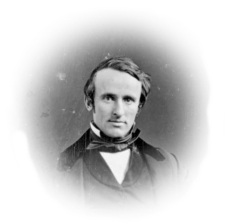
August 8. Thursday.–Rumors of the approach of a great army under Lee from eastern Virginia are still rife. The enemy is said to be near Monterey, the other side of the Alleghanies and aiming to come in this direction to reoccupy western Virginia, capture our stores, and to dash the war if possible into Ohio. The United States ought promptly to push into western Virginia an army of at least fifty thousand men to repel any such attack if made and to push on to the railroad leading from Richmond southwesterly through Lynchburg towards east Tennessee. This would cut off Richmond from the southwestern States and be otherwise useful. Horsemen and waggons are now passing towards Bulltown. This is the hottest day yet; it must rain before night.
_______
WESTON, VIRGINIA, August 8, 1861.
DEAR UNCLE:–I am glad to learn by a letter from Mother that you are getting well enough to ride about town. I hope you will continue to gain. If you should want to take a short trip this fall, I am not sure but a journey this way would be as enjoyable as any you could make. By getting a note from Governor Dennison, you could travel on railroad (now run by the Government) to Clarksburg, and thence, there are all sorts of conveyances, from a teetering ambulance to an old-fashioned Pennsylvania six-horse waggon.
Our regiment is divided for the present. One half under Colonel Matthews has gone forty-four miles south. We remain in charge of a great supply depot, and charged with keeping in order the turbulent of this region. The Union men are the most numerous, but the other side is the more wealthy and noisy. We are kept busy enough with them.
This town is about as large as Fremont was ten years ago, has a fine court-house and other county buildings. A lunatic asylum for the State of great size was building when the war broke out. It is a healthy hilly country, very picturesque, and hotter today than the Cincinnati landing. We are so busy that we do not complain much of the tediousness of camp life. We are now constantly hearing of the approach of General Lee from eastern Virginia with a force large enough to drive us out and capture all our stores, if one-fourth that is told is true. He is said to be about seventy-five miles southeast of us in the mountains. Whether there is truth in it or not, I have no doubt that troops will be urged into this region to hold the country. At any rate, as it is on the route to east Tennessee, and on a route to cut off the railroads from the southwest, I am sure there ought to be a splendid Union army assembled here. I suppose it will be done.
Lucy and the boys are in Pickaway County. Dr. Jim was taken prisoner at Manassas, but escaped; lost his carpet-sack, but captured a secession horse which he brought home. Dr. Joe enjoys it well. Colonel Scammon is an agreeable gentleman to associate with. We have a great deal of amusement. Dr. Joe visits the secession folks, and reports a great many good things. They say that in two weeks they will see us scattering like sheep before the great army of Lee and Wise.
When you write, direct to me, “Twenty-third Regiment, Ohio Volunteers, Clarksburg, Virginia,” and it will be sent wherever I may chance to be. We are now connected by telegraph with the whole country. A dispatch to or from Weston, is more certain of delivery than a letter. Love to all.
Sincerely,
R. B. HAYES.
S. BIRCHARD
Don’t write gloomy letters.
August 8, 2026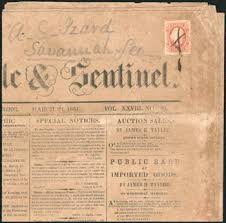
Daily Chronicle & Sentinel [Augusta, GA],
August 8, 1861
Those who have relatives or dear friends in the army ought not to write gloomy or discouraging letters to camp. The soldier has food for sad and gloomy fits, in his own quiet meditations, without being assisted by despondent missives from home. Write the soldiers cheerful and encouraging letters. A letter from home passes the rounds of the camp, and if its tones are bright and cheerful it puts a pleasant hue on all. If you feel sad, don’t write at all, rather than write in a sad strain.