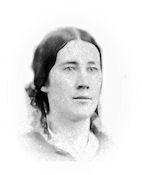
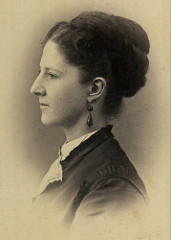
A Confederate Girl’s Diary

A Confederate Girl’s Diary by Sarah Morgan Dawson

Saturday, 22d April.

To see a whole city draped in mourning is certainly an imposing spectacle, and becomes almost grand when it is considered as an expression of universal affliction. So it is, in one sense. For the more violently “Secesh” the inmates, the more thankful they are for Lincoln’s death, the more profusely the houses are decked with the emblems of woe. They all look to me like “not sorry for him, but dreadfully grieved to be forced to this demonstration.” So all things have indeed assumed a funereal aspect. Men who have hated Lincoln with all their souls, under terror of confiscation and imprisonment which they understand is the alternative, tie black crape from every practicable knob and point to save their homes. Last evening the B––s were all in tears, preparing their mourning. What sensibility! What patriotism! a stranger would have exclaimed. But Bella’s first remark was: “Is it not horrible? This vile, vile old crape! Think of hanging it out when –” Tears of rage finished the sentence. One would have thought pity for the murdered man had very little to do with it.

Coming back in the cars, I had a rencontre that makes me gnash my teeth yet. It was after dark, and I was the only lady in a car crowded with gentlemen. I placed little Miriam on my lap to make room for some of them, when a great, dark man, all in black, entered, and took the seat and my left hand at the same instant, saying, “Good-evening, Miss Sarah.” Frightened beyond measure to recognize Captain Todd[1] of the Yankee army in my interlocutor, I, however, preserved a quiet exterior, and without the slightest demonstration answered, as though replying to an internal question. “Mr. Todd.” “It is a long while since we met,” he ventured. “Four years,” I returned mechanically. “You have been well?” “My health has been bad.” “I have been ill myself”; and determined to break the ice he diverged with “Baton Rouge has changed sadly.” “I hope I shall never see it again. We have suffered too much to recall home with any pleasure.” “I understand you have suffered severely,” he said, glancing at my black dress. “We have yet one left in the army, though,” I could not help saying. He, too, had a brother there, he said.

He pulled the check-string as we reached the house, adding, “This is it,” and absurdly correcting himself with “Where do you live?” – “211. I thank you. Good-evening”; the last with emphasis as he prepared to follow. He returned the salutation, and I hurriedly regained the house. Monsieur stood over the way. A look through the blinds showed him returning to his domicile, several doors below.

I returned to my own painful reflections. The Mr. Todd who was my “sweetheart” when I was twelve and he twenty-four, who was my brother’s friend, and daily at our home, was put away from among our acquaintance at the beginning of the war. This one, I should not know. Cords of candy and mountains of bouquets bestowed in childish days will not make my country’s enemy my friend now that I am a woman.


[1] A cousin of Mrs. Lincoln.

0 comments

Village Life in America

Village Life in America, 1852 – 1872, by Caroline Cowles Richards

April 26.–Now we have the news that J. Wilkes Booth, who shot the President and who has beenconcealing himself in Virginia, has been caught, and refusing to surrender was shot dead. It has taken just twelve days to bring him to retribution. I am glad that he is dead if he could not be taken alive, but it seems as though shooting was too good for him. However, we may as well take this as really God’s way, as the death of the President, for if he had been taken alive, the country would have been so furious to get at him and tear him to pieces the turmoil would have been great and desperate. It may be the best way to dispose of him. Of course, it is best, or it would not be so. Mr. Morse called this evening and he thinks Booth was shot by a lot of cowards. The flags have been flying all day, since the news came, but all, excepting Albert Granger, seem sorry that he was not disabled instead of being shot dead. Albert seems able to look into the “beyond ” and also to locate departed spirits. His “latest” is that he is so glad that Booth got to h–l before Abraham Lincoln got to Springfield.

Mr. Fred Thompson went down to New York last Saturday and while stopping a few minutes at St. Johnsville, he heard a man crowing over the death of the President. Mr. Thompson marched up to him, collared him and landed him nicely in the gutter. The bystanders were delighted and carried the champion to a platform and called for a speech, which was given. Quite a little episode. Every one who hears the story, says: “Three cheers for F. F. Thompson.”

The other afternoon at our society Kate Lapham wanted to divert our minds from gossip I think, and so started a discussion upon the respective characters of Washington and Napoleon. It was just after supper and Laura Chapin was about resuming her sewing and she exclaimed, “Speaking of Washington, makes me think that I ought to wash my hands,” so she left the room for that purpose.

0 comments

Through Some Eventful Years

Through Some Eventful Years by Susan Bradford Eppes
Susa Bradford Eppes

Warning

The following diary entry contains wording that is offensive to many in the world of today. However, the entry is provided unedited for its historical content and context.

April 22nd, 1865.—Aunt Margaret is going back to her home in Tennessee. She had letters today telling her General Fish had possession of her house as his headquarters. As soon as she can get the place she is going back. I will miss my jolly cousins dreadfully and Aunt Margaret too, but I know they will feel better to be at home once more. They have been refugees for four years and they must be tired of wandering.

Brother Junius looks more like himself. He has been to Neck-or-nothing Hall and found the plantation in good order and his servants were so glad to see him. His cook was loud in her denunciations of John, his man, who deserted to the enemy a year ago.

“Dat sure is a sorry nigger,” said she “ter up an’ leffen Marse Junius doubten nobody ter wait on him nur blacken his boots.”

His visit to his plantation did him good, we think. Father has conquered himself and you would never know how terribly he felt and must still feel, though, he is so cheerful and so helpful to others.


Susan Bradford is 19 years old when this entry was made.

0 comments

A Diary From Dixie.

A Diary From Dixie by Mary Boykin Miller Chesnut.

April 22d.–This yellow Confederate quire of paper, my journal, blotted by entries, has been buried three days with the silver sugar-dish, teapot, milk-jug, and a few spoons and forks that follow my fortunes as I wander. With these valuables was Hood’s silver cup, which was partly crushed when he was wounded at Chickamauga.

It has been a wild three days, with aides galloping around with messages, Yankees hanging over us like a sword of Damocles. We have been in queer straits. We sat up at Mrs. Bedon’s dressed, without once going to bed for forty-eight hours, and we were aweary.

Colonel Cadwallader Jones came with a despatch, a sealed secret despatch. It was for General Chesnut. I opened it. Lincoln, old Abe Lincoln, has been killed, murdered, and Seward wounded! Why? By whom? It is simply maddening, all this.

I sent off messenger after messenger for General Chesnut. I have not the faintest idea where he is, but I know this foul murder will bring upon us worse miseries. Mary Darby says, “But they murdered him themselves. No Confederates are in Washington.” “But if they see fit to accuse us of instigating it?” “Who murdered him? Who knows?” “See if they don’t take vengeance on us, now that we are ruined and can not repel them any longer.”

The death of Lincoln I call a warning to tyrants. He will not be the last President put to death in the capital, though he is the first.

Buck never submits to be bored. The bores came to tea at Mrs. Bedon’s, and then sat and talked, so prosy, so wearisome was the discourse, so endless it seemed, that we envied Buck, who was mooning on the piazza. She rarely speaks now.

image
0 comments

Downing’s Civil War Diary.—Alexander G. Downing.

Diary of Alexander G. Downing; Company E, Eleventh Iowa Infantry

Friday, 21st–Rain again today. All the men in the five different corps are at work fixing up their camp grounds. The army feels very sad and sorrowful over the death of the president.

0 comments

War Diary of Luman Harris Tenney.

War Diary of Luman Harris Tenney.

21st. Ate supper yesterday with Minnie. Spent the morning playing with Carrie and reading. Afternoon Minnie and John over to tea. Went up town with Melissa. Fannie in Bellevue teaching. Fortunate for me. Rode out with Charlie. Took Carrie along. Tea at Minnie’s. Music from Joe and John. Fisher and Allie Norton there.

0 comments

Downing’s Civil War Diary.—Alexander G. Downing.

Diary of Alexander G. Downing; Company E, Eleventh Iowa Infantry

Thursday, 20th–It rained some today. We spent the day in raising our tents. There is great rejoicing in camp. Many think that peace is made, and that in a few days we shall likely start for home.

0 comments

War Diary of Luman Harris Tenney.

War Diary of Luman Harris Tenney.

20th. Rainy. Reached home on the morning train. Met my good mother at the door. It seemed so good. She seemed perfectly resigned to the loss of Theodore. Never was more happy in my life. Ma and I went down to see Minnie and Melissa. Happy meeting. Beautiful little baby Bertie. Carrie a little angel, good and beautiful. Now could I only see Fannie and be reconciled as of old my happiness would be complete.

0 comments

0

Civil War Diary of Charles H. Lynch, 18th Conn. Vol’s.
Charles Lynch

April 20th. Weather fine. Real spring. All is quiet in camp. The body of the martyr President is being carried across the country to his home town, Springfield, Illinois. These are days of mourning. The sudden taking off of Mr. Lincoln is the topic of conversation in our camp. It is generally believed there was a conspiracy among the leaders of the rebellion to murder Mr. Lincoln, so the cry is that the leaders must be punished.

0 comments

Diary of a Southern Refugee, Judith White McGuire.

Diary of a Southern Refugee During the War by Judith White McGuire

20th.—The cars on the Central Railroad will run tomorrow, for the first time, under Federal rule, and the day after we will use our passports and free tickets to leave the city—dearer than ever, in its captivity and ruin. It is almost impossible to get current money. A whole-hearted friend from Alexandria met me the other day, and with the straightforward simplicity due to friendship in these trying times, asked me at once, “Has your husband any money?” I told him I thought not. He replied, “Tell him I have between twenty-five and thirty dollars–that’s all—and he shall have half of it; tell him I say so.” Ten dollars were accepted, for the circumstances of want which pressed so hard, and for the kindly spirit in which it was offered. Two other friends came forward to share with us their little all. God help the warm hearts of our conquered but precious country! I know they will be blessed, and that light will yet shine through the blackness of darkness which now surrounds them.

0 comments

Village Life in America

Village Life in America, 1852 – 1872, by Caroline Cowles Richards

Thursday, April 20.–The papers are full of the account of the funeral obsequies of President Lincoln. We take Harper’s Weekly and every event is pictured so vividly it seems as though we were eye witnesses of it all. The picture of “Lincoln at home” is beautiful. What a dear, kind man he was. It is a comfort to know that the assassination was not the outcome of an organized plot of Southern leaders, but rather a conspiracy of a few fanatics, who undertook in this way to avenge the defeat of their cause. It is rumored that one of the conspirators has been located.

0 comments

“Good bye, war.”–Army Life of an Illinois Soldier, Charles Wright Wills.

Army Life of an Illinois Soldier, Charles Wright Wills, (8th Illinois Infantry)

Raleigh, April 19, 1865.

Joe Johnston surrendered the whole thing yesterday to Sherman. Our 4th division and a division of the 17th Corps receive the arms, etc. We go into a regular camp tomorrow to await developments. If any more Confederacy crops out, we, I suppose, will go for it, otherwise in a couple of months we’ll muster out. That’s all. Good bye, war.

0 comments

Through Some Eventful Years

Through Some Eventful Years by Susan Bradford Eppes
Susa Bradford Eppes

April 19th, 1865.—It is bedtime and I am writing in my own room; usually I write in the library, where Father sits, but tonight I want to be alone. Oft I have repeated, perhaps repeated boastfully, those brave lines:

“I am the master of my fate;

The captain of my soul.”

And now, I find I am but a broken reed, shaken by the wind. Let me write the day’s happenings while I can.

This morning we sat on the front porch watching the road. Father sat in his big rocker and Mother sat close beside him; Brother Amos and Sister Mag were sitting back in the vines, playing with little Rebecca, who was in her mother’s lap. Mattie was stretched out, full length on one of the porch seats, her beautiful golden curls falling to the floor. I sat on the steps and Eddie was spinning acorns beside me. Sister Mart is at Goodwood. For several days now the front porch has been the favorite place for the family to sit.

Mattie is wild to see her father and she rehearses their meeting, making it different every day.

I was watching Eddie and did not know there was anything to see, when Father said, “There they come.” Entering the front gate, too far for my near-sighted eyes to distinguish one from another, were three Confederate soldiers. Poor fellows; they were pitiful. Thin and so browned by exposure, until they were hardly recognizable. Footsore and weary, on they came, Captain Bernard, stepping quicker than his companions.

We rushed to greet them but Brother Junius, who was next called out, “Do not come near me—send Bill to my room” and then he went rapidly away in the direction of the room which was always known as his. [continue reading…]

0 comments

A Rebel War Clerk’s Diary

A Rebel War Clerk’s Diary at the Confederate States Capital, By John Beauchamp Jones
A likeness of Jones when he was editor and majority owner of the Daily Madisonian during President John Tyler’s administration.


April 19th.–Yesterday windy, to-day bright and calm.

It appears that the day of the death of President Lincoln was appointed for illuminations and rejoicings on the surrender of Lee. There is no intelligence of the death of Mr. Seward or his son. It was a dastardly deed–surely the act of a madman.

.

THE END

0 comments

Downing’s Civil War Diary.—Alexander G. Downing.

Diary of Alexander G. Downing; Company E, Eleventh Iowa Infantry

Wednesday, 19th–We struck our tents about noon and marched back about five miles, toward Raleigh, going into camp within three miles of town. We laid out our camp in regular order for the purpose of building small houses and covering them with our shelter tents.

0 comments

War Diary of Luman Harris Tenney.

War Diary of Luman Harris Tenney.

19th. Reached Pittsburg at 2 P. M. Left on Cleveland train at 3. Pittsburg in mourning. Rode in company with a Cleveland man, Briggs, I believe. Pleasant visit. Gave me a detail of the working of the carrier P. O. system. Passed through Cleveland at 10 P. M. Stayed over at Grafton. The funeral of the President took place today. Ceremonies throughout the Union. Johnson bound to deal roughly with traitors.

0 comments

0

Civil War Diary of Charles H. Lynch, 18th Conn. Vol’s.
Charles Lynch

April 19th. All duty except guard and picket suspended since the assassination of Mr. Lincoln. These are days of mourning. Officers wear crape on the left arm and on the hilts of swords for thirty days. The funeral takes place today in Washington. The towns-people have arranged for a funeral parade and service to be held in the Court House. Our regimental band is engaged to furnish the music for the procession. On the march a coffin was carried, making a solemn appearance as the funeral procession marched to the cemetery where the coffin was buried. The whole thing was in charge of the towns-people. It was a very strange proceeding in the eyes of down-east Yankees. It was a very solemn occasion all through, to the burial of the coffin.

0 comments

Village Life in America

Village Life in America, 1852 – 1872, by Caroline Cowles Richards

Wednesday evening, April 19, 1865.–This being the day set for the funeral of Abraham Lincoln at Washington, it was decided to hold the service today, instead of Thursday, as previously announced in the Congregational church. All places of business were closed and the bells of the village churches tolled from half past ten till eleven o’clock. It is the fourth anniversary of the first bloodshed of the war at Baltimore. It was said to-day, that while the services were being held in the White House and Lincoln’s body lay in state under the dome of the capitol, that more than twenty-five millions of people all over the civilized world were gathered in their churches weeping over the death of the martyred President. We met at our church at half after ten o’clock this morning. The bells tolled until eleven o’clock, when the services commenced. The church was beautifully decorated with flags and black and white cloth, wreaths, mottoes and flowers, the galleries and all. The whole effect was fine. There was a shield beneath the arch of the pulpit with this text upon it: “The memory of the just is blessed.” It was beautiful. Under the choir-loft the picture of Abraham Lincoln hung amid the flags and drapery. The motto, beneath the gallery, was this text: “Know ye that the Lord He is God.” The four pastors of the place walked in together and took seats upon the platform, which was constructed for the occasion. The choir chanted “Lord, Thou hast been our dwelling-place in all generations,” and then the Episcopal rector, Rev. Mr. Leffingwell, read from the psalter, and Rev. Dr. Daggett followed with prayer. Judge Taylor was then called upon for a short address, and he spoke well, as he always does. The choir sang “God is our refuge and our strength.”

0 comments

A Confederate Girl’s Diary

A Confederate Girl’s Diary by Sarah Morgan Dawson

No. 211 Camp St.,
April 19th, 1865.

“All things are taken from us, and become portions and parcels of the dreadful pasts.” . . .

Thursday the 13th came the dreadful tidings of the surrender of Lee and his army on the 9th. Everybody cried, but I would not, satisfied that God will still save us, even though all should apparently be lost. Followed at intervals of two or three hours by the announcement of the capture of Richmond, Selma, Mobile, and Johnston’s army, even the stanchest Southerners were hopeless. Every one proclaimed Peace, and the only matter under consideration was whether Jeff Davis, all politicians, every man above the rank of Captain in the army and above that of Lieutenant in the navy, should be hanged immediately, or some graciously pardoned. Henry Ward Beecher humanely pleaded mercy for us, supported by a small minority. Davis and all leading men must be executed; the blood of the others would serve to irrigate the country. Under this lively prospect, Peace, blessed Peace! was the cry. I whispered, “Never! Let a great earthquake swallow us up first! Let us leave our land and emigrate to any desert spot of the earth, rather than return to the Union, even as it Was!”

Six days this has lasted. Blessed with the silently obstinate disposition, I would not dispute, but felt my heart swell, repeating, “God is our refuge and our strength, a very present help in time of trouble,” and could not for an instant believe this could end in an overthrow.

This morning, when I went down to breakfast at seven, Brother read the announcement of the assassination of Lincoln and Secretary Seward.

“Vengeance is mine; I will repay, saith the Lord.” This is murder! God have mercy on those who did it!

– – – – – – – – – – – – – – – –

Charlotte Corday killed Marat in his bath, and is held up in history as one of Liberty’s martyrs, and one of the heroines of her country. To me, it is all murder. Let historians extol blood-shedding; it is woman’s place to abhor it. And because I know that they would have apotheosized any man who had crucified Jeff Davis, I abhor this, and call it foul murder, unworthy of our cause – and God grant it was only the temporary insanity of a desperate man that committed this crime! Let not his blood be visited on our nation, Lord!

Across the way, a large building, undoubtedly inhabited by officers, is being draped in black. Immense streamers of black and white hang from the balcony. Downtown, I understand, all shops are closed, and all wrapped in mourning. And I hardly dare pray God to bless us, with the crape hanging over the way. It would have been banners, if our President had been killed, though!

0 comments

Through Some Eventful Years

Through Some Eventful Years by Susan Bradford Eppes
Susa Bradford Eppes

April 19th, 1865.—This morning at breakfast Father said, “Ten days since Lee’s surrender and none of our boys home yet.”

We look for them continually but they do not come. A miserable uncertainty hangs over us and we do not know what to expect. Ever since I can remember Father has been trying to teach me “self-control,” as he expresses it. He is teaching me to “fight my nerves.” Mother has no nerves—so everybody says, and in these trying days she is the mainstay of the household; we all look to her for help and Father says I must be just like Mother. I wish I was, she is such a comfort to us all and I will yet conquer nervousness, which Aunt Robinson says I inherit from the Bradford side of the house.


Susan Bradford is 19 years old when this entry was made.

0 comments

A Diary From Dixie.

A Diary From Dixie by Mary Boykin Miller Chesnut.

April 19th.–Just now, when Mr. Clay dashed up-stairs, pale as a sheet, saying, “General Lee has capitulated,” I saw it reflected in Mary Darby’s face before I heard him speak. She staggered to the table, sat down, and wept aloud. Mr. Clay’s eyes were not dry. Quite beside herself Mary shrieked, “Now we belong to negroes and Yankees!” Buck said, “I do not believe it.”

How different from ours of them is their estimate of us. How contradictory is their attitude toward us. To keep the despised and iniquitous South within their borders, as part of their country, they are willing to enlist millions of men at home and abroad, and to spend billions, and we know they do not love fighting per se, nor spending money. They are perfectly willing to have three killed for our one. We hear they have all grown rich, through “shoddy,” whatever that is. Genuine Yankees can make a fortune trading jackknives.

“Somehow it is borne in on me that we will have to pay the piper,” was remarked to-day. “No; blood can not be squeezed from a turnip. You can not pour anything out of an empty cup. We have no money even for taxes or to be confiscated.”

While the Preston girls are here, my dining-room is given up to them, and we camp on the landing, with our one table and six chairs. Beds are made on the dining-room floor. Otherwise there is no furniture, except buckets of water and bath-tubs in their improvised chamber. Night and day this landing and these steps are crowded with the elite of the Confederacy, going and coming, and when night comes, or rather, bedtime, more beds are made on the floor of the landing-place for the war-worn soldiers to rest upon. The whole house is a bivouac. As Pickens said of South Carolina in 1861, we are “an armed camp.”

My husband is rarely at home. I sleep with the girls, and my room is given up to soldiers. General Lee’s few, but undismayed, his remnant of an army, or the part from the South and West, sad and crestfallen, pass through Chester. Many discomfited heroes find their way up these stairs. They say Johnston will not be caught as Lee was. He can retreat; that is his trade. If he would not fight Sherman in the hill country of Georgia, what will he do but retreat in the plains of North Carolina with Grant, Sherman, and Thomas all to the fore?

We are to stay here. Running is useless now; so we mean to bide a Yankee raid, which they say is imminent. Why fly? They are everywhere, these Yankees, like red ants, like the locusts and frogs which were the plagues of Egypt.

The plucky way in which our men keep up is beyond praise. There is no howling, and our poverty is made a matter of laughing. We deride our own penury. Of the country we try not to speak at all.

0 comments

“The papers all talk about Grant, Sherman and Sheridan, nothing said about Thomas.”–Army Life of an Illinois Soldier, Charles Wright Wills.

Army Life of an Illinois Soldier, Charles Wright Wills, (8th Illinois Infantry)

Raleigh, April 18, 1865.

Sherman has gone out again to see Johnston. Johnston asked for another day in order to see Davis and get his permission to surrender the whole force in arms this side of the Mississippi. I was through the town to-day. Some very fine residences and asylums, but the town is no larger than Canton, and not as pretty except in shrubbery and shade trees.

I visited the Deaf and Dumb and Blind Asylums and the superintendent put a class in each through some exercises. It was very interesting. A Herald of the 10th gives us the particulars of Lee’s surrender. Grant is the hero of the war. The papers all talk about Grant, Sherman and Sheridan, nothing said about Thomas. This whole army thinks that Thomas is slighted by the North. We have as much confidence in him as in Grant or Sherman, and then he never writes any letters or accepts valuable presents, or figures in any way for citizen approbation, or that of his army. The only objection that I ever heard against him is the size of his headquarters or “Thomasville” as it is called by the army. That comes from his West-Pointism.

0 comments

Downing’s Civil War Diary.—Alexander G. Downing.

Diary of Alexander G. Downing; Company E, Eleventh Iowa Infantry

Tuesday, 18th–General Sherman went out to the front on the cars, and the two generals agreed upon the terms for the surrender of Johnston’s army. Both armies are to go into camp and remain until the terms of surrender have been approved by the War Department at Washington. The Union army is to go into camp in the vicinity of Raleigh, and the rebel army in the vicinity of Chapel Hill. I came in from picket this morning, having been out on the picket line for twenty-four hours.

0 comments

War Diary of Luman Harris Tenney.

War Diary of Luman Harris Tenney.

Tuesday, 18th. Had a very good night’s rest. Up early. Pleasant visit with an Indiana man. Several Southern ladies on board the boat. Great gloom in Washington. Excitement very high. Went to White House and viewed the President’s remains in state. Everybody on the alert to discover the conspirators. Drew pay for January and February. Took the evening train via Harrisburg. Read papers and slept. The whole nation in mourning. All business places draped.

0 comments

Diary of a Southern Refugee, Judith White McGuire.

Diary of a Southern Refugee During the War by Judith White McGuire

Tuesday Night.—I try to dwell as little as possible on public events. I only feel that we have no country, no government, no future. I cannot, like some others, look with hope on Johnston’s army. He will do what he can; but ah, what can he do? Our anxiety now is that our President and other public men may get off in safety. O God! have mercy upon them and help them! For ourselves, like the rest of the refugees, we are striving to get from the city. The stereotyped question when we meet is, “When and where are you going?” Our country relatives have been very kind. My brother offers us an asylum in his devastated home at W. While there we must look around for some other place, in which to build up a home for our declining years. Property we have none—all gone. Thank God, we have our faculties; the girls and myself, at least, have health. Mr. –– bears up under our difficulties with the same hopeful spirit which he has ever manifested. “The Lord will provide,” is still his answer to any doubt on our part. The Northern officials offer free tickets to persons returning to their homes—alas! to their homes! How few of us have homes! Some are confiscated; others destroyed. The families of the army and navy officers are here. The husbands and sons are absent, and they remain with nothing to anticipate and nothing to enjoy. To-day I met a friend, the wife of a high official, whose hospitality I have often enjoyed in one of the most elegant residences in Virginia, which has been confiscated and used as a hospital for “contrabands.” Our conversation naturally turned on our prospects. Hearing where we were going, she replied, “I have no brother, but when I hear from my husband and son, I shall accept the whole-souled invitation of a relative in the country, who has invited me to make his house my home; but,” she added, as her beautiful eyes filled with tears, “when are our visits to end? We can’t live with our ruined relatives, and when our visits are over, what then? And how long must our visits of charity last?” The question was too sad; neither of us could command our voices, and we parted in silence and tears.

0 comments