August, 8th.–”I am monarch of all I survey.” Last night, intelligence being received that an attack was expected on Washington ; we were ordered to move there instanter, and at once the regiment was in motion. It got off in the course of the night, leaving me here in charge of about forty men who were too sick to be moved. I am left without provisions or money, except a few pounds of flour with which to feed and care for the sick, and the ten well ones left with me, to aid me and to look up deserters who have been left here. How am I to do it? I find a strong secession element here, and at times it is very bold. The hurrahs for Jeff. Davis are frequent, and all day the children are flaunting secession flags in our faces, and flying secession kites in our camp ground
American Civil War Chronicles
The regiment “…got off in the course of the night, leaving me here in charge of about forty men who were too sick to be moved.”–Journal of Surgeon Alfred L. Castleman.
August 8, 2026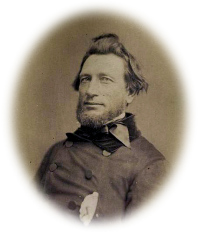
William Howard Russell’s Diary: Visit to occupied Alexandria
August 8, 2026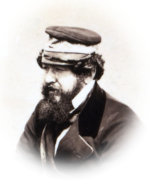
August 8th.–I had arranged to go with Mr. Olmsted and Mr. Ritchie to visit the hospitals, but the heat was so intolerable, we abandoned the idea till the afternoon, when we drove across the long bridge and proceeded to Alexandria. The town, which is now fully occupied by military, and is abandoned by the respectable inhabitants, has an air, owing to the absence of women and children, which tells the tale of a hostile occupation. In a large building, which had once been a school, the wounded of Bull Bun were lying, not uncomfortably packed, nor unskilfully cared for, and the arrangements were, taken altogether, creditable to the skill and humanity of the surgeons. Close at hand was the church in which George Washington was wont in latter days to pray, when he drove over from Mount Vernon–further on, Marshal House, where Ellsworth was shot by the Virginian landlord, and was so speedily avenged. A strange strain of thought was suggested, by the rapid grouping of incongruous ideas, arising out of the proximity of these scenes. As one of my friends said, “I wonder what Washington would do if he were here now–and how he would act if he were summoned from that church to Marshall House or to this hospital?” The man who uttered these words was not either of my companions, but wore the shoulder-straps of a Union officer. “Stranger still,” said I, “would it be to speculate on the thoughts and actions of Napoleon in this crisis, if he were to wake up and see a Prince of his blood escorted by Federal soldiers to the spot where the troops of the Southern States had inflicted on them a signal defeat, in a land where the nephew who now sits on the throne of France has been an exile.” It is not quite certain that many Americans understand who Prince Napoleon is, for one of the troopers belonging to the escort which took him out from Alexandria declared positively he had ridden with the Emperor. The excursion is swallowed, but not well-digested. In Washington the only news to-night is, that a small privateer from Charleston, mistaking the St. Lawrence for a merchant vessel, fired into her and was at once sent to Mr. Davy Jones by a rattling broadside. Congress having adjourned, there is but little to render Washington less uninteresting than it must be in its normal state.
The truculent and overbearing spirit which arises from the uncontroverted action of democratic majorities developes itself in the North, where they have taken to burning newspaper offices and destroying all the property belonging to the proprietors and editors. These actions are a strange commentary on Mr. Seward’s declaration “that no volunteers are to be refused because they do not speak English, inasmuch as the contest for the Union is a battle of the free men of the world for the institutions of self-government.”
“The flag was shot through three times, and the flag-staff was shot off whilst in his hands.”–Memorials of Elisha Franklin Paxton.
August 8, 2026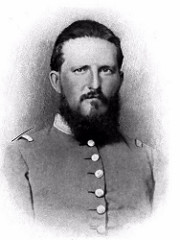
The following is taken from the Lexington “Gazette,” dated August 8,1861:
”It is due to our worthy fellow-citizen, Mr. E. F. Paxton, or rather it is due to the county of Rockbridge, to claim credit for Mr. Paxton’s conduct, which he has been too modest to claim for himself. A correspondent of one of the Richmond papers a short time since spoke of a Virginian who had been lost from his company during the fight, and fell in with the Georgia Regiment just as their standard-bearer fell. The lost Virginian asked leave to bear the colors. It was granted to him. He bore them bravely. The flag was shot through three times, and the flag-staff was shot off whilst in his hands. But he placed the flag on the Sherman Battery, and our brave men stood up to their colors and took the battery. That lost Virginian was E. F. Paxton, of Rockbridge.”
A Diary of American Events.–August 8, 1861
August 8, 2026
August 8.–This evening, at Baltimore, Md., Charles King, from North Carolina, was arrested by officer Stevens, of the Southern District, by order of Major-General Dix, on the charge of being concerned in the raising of a number of men, whoso purpose it was to organize themselves into a crew, and take passage on some boat, intending to capture it in the same manner as the St. Nicholas, and then turn her into a pirate.–Baltimore Patriot, August 9.
–The Nineteenth Regiment of Indiana Volunteers passed through Philadelphia for the seat of war.–N. Y. Herald, August 9.
–F. K. Zollicoffer was appointed a brigadier-general in the rebel army, and assigned to the command of the Department of East Tennessee. On assuming his command, he issued a proclamation assuring all who desire peace, that they can have it by quietly and harmlessly pursuing their lawful avocations.–(Doc. 171.)
–The Massachusetts Fifteenth Regiment, under the command of Colonel Charles Devens, left Camp Scott, Worcester, Mass., for the seat of war. This regiment is armed with the Springfield musket, and numbers 1,040 men. They are all tall, muscular men, possessing the lightness of limb and full development of natural powers which denote the true specimen of a soldier. Their dress consists of the regular army uniform–gray pantaloons, blue coats, and hat, which is as neat and useful a thing as our fighting men could have.–N. Y. Herald, August 10.
–One hundred men of the Nineteenth Regiment N. Y. V., commanded by Capt. Kennedy, crossed the Potomac at Rock Ferry, at 1 A. M., and marched to Lorrettsville, Loudon co., Va., where it was reported that a company of rebel cavalry were engaged in the impressment of citizens. “When they reached the town the rebels had left, and they retraced their steps; but late in the afternoon, while upon their return march, they were overtaken with word that another detachment of about 130 cavalry had entered the town. Tired and worn out, almost shoeless, and hungry, the brave follows with a shout at once voted unanimously to return and attack the rebels. Starting at a double-quick time they reached the town, and under the cover of a corn-field gained sight of the cavalry about thirty rods distant. Resting for a few minutes, they heard the rebel captain give orders to mount, and believing they had been discovered and were about to be charged upon, Captain Kennedy charged upon the town at a double-quick, firing two volleys as they ran. The enemy, after firing a few harmless shots, made their way, concealed by houses, out of the opposite side of the town, but not until they had one lieutenant killed and five men wounded.–N. Y. Times, August 18.
–The office of the Democratic Standard at Concord, N. H., was completely relieved of its contents this afternoon by a mob composed of the soldiers of the returned First Regiment and citizens. The Standard published an article reflecting on the soldiers. They demanded retraction, and the Palmers–the editors and proprietors–shook pistols and axes out of the windows and dared the mob, while the city authorities endeavored to quell the disturbance. The Palmers fired four shots, wounding two soldiers. The office was immediately stripped, and the materials burnt in the street. The Palmers took refuge in the attic, but were finally found and carried to the police station, protected by the police, though with great difficulty.–(Doc. 172.)
–Dissatisfaction at the supposed intention of the Government not to receive men in its army who could not speak the English language, and a misconception of a War Department order upon the subject, led to the withdrawal as thus stated:
Department Of State,
Washington, August 8,1861.
To F. A. Alberger, Esq., Mayor of the city of Buffalo, N. Y.:
Dear Sir : I have to acknowledge the receipt of your letter of 5th inst., and to state in reply, that the order to which it refers was officially explained a day or two since by the Secretary of War, but having still been a subject of great misapprehension it has now been entirely rescinded and vacated. Consequently there is no obstacle whatever to the acceptance of the services of volunteers, on the ground of their nationality or language. The contest for the Union is regarded, as it ought to be, a battle of the freemen of the world for the institutions of self-government.
I am very truly yours,
William H. Seward.
–In a communication of this date, in respect to the disposition to be made of contrabands, the Secretary of War informed General Butler that he was to be governed by the act of Congress, 1861, which “declares that if persons held to service shall be employed in hostility to the United States, the right to their services shall be forfeited.”–(Doc. 173.)
–The Massachusetts Fourteenth Regiment, under the command of Colonel Wm. R. Greene, left Fort Warren, Boston Harbor, for the seat of war. The regiment numbers 1,046 members. Their uniform is light brown pants, deep blue jacket, light blue overcoat, and regulation hat. They are armed with the Springfield musket of the pattern of 1842. They have with them twenty-four baggage wagons, four ambulances, two hospital wagons, and 220 horses.
All the field and staff officers of this regiment but two are natives of Massachusetts. Of the whole corps 350 are married men, and 5 widowers with families. It has one “gentleman,” a host of shoemakers and laborers, and samples of every kind of craftsmen and operatives known among us. There are several teachers on the roll, and one “missionary.” There are a great many blacksmiths–more than any other regiment probably will average. The Amesbury section (Co. E) has thirteen disciples of Vulcan on its roll. The farmers are about equal in number to the blacksmiths. There are three artists, one photographer, one physician, only one printer, two students, and a number of hatters and machinists. One-half of the whole regiment is composed of men connected with the boot and shoe business.–N. Y. World, August 9.
–The ” Confederate” Congress in session at Richmond, Va., adopted the following resolution this day:–
Whereas it has been found that the uncertainty of maritime law in time of war has given rise to differences of opinion between neutrals and belligerents, which may occasion serious misunderstandings, and even conflicts;
and whereas the Plenipotentiaries of Great Britain, France, Austria, Prussia, Sardinia, and Russia, at the Congress of Paris of 1856, established a uniform doctrine on this subject, to which they invited the adherence of the nations of the world, which is as follows:
1. That privateering is and remains abolished.
2. That the neutral flag covers the enemy’s goods, with the exception of contraband of war.
3. That neutral goods, with the exception of contraband of war, are not liable to capture under the enemy’s flag, and
4. That blockades, in order to be binding, must be effective; that is to say, maintained by a force sufficient really to prevent access to the coast of the enemy.
And whereas it is desirable that the Confederate States of America shall assume a definite position on so important a point; now, therefore, be it
Resolved, That the Congress of the Confederate States of America accept the second, third, and fourth clauses of the above-cited declaration, and decline to assent to the first clause thereof.
–There was published a letter dated April 15, from Gen. Frost, Missouri Militia, to Gov. Jackson of Missouri, apropos to the President’s proclamation calling out 75,000 volunteers. He advises the Governor to convene the Legislature, proclaim to the people of the Slate that the President’s proclamation is illegal, and especially to take St. Louis, held by United States troops.–(Doc. 174.)
Civil War Day-By-Day
August 8, 2026
August 8, 1861
A Chronological History of the Civil War in America1
- Rebels routed at Lovettsville, Va.
- Of?ce of the Democratic Standard, a secession paper, at Concord, N. H., cleaned out by a mob, and the materials burned in the street.
- A Chronological History of the Civil War in America by Richard Swainson Fisher, New York, Johnson and Ward, 1863
Seeking any little personal anecdote relative to wounded soldiers that might interest contributors …—Woolsey Family Letters; Miss I. L. Schuyler to Georgeanna Muirson Woolsey
August 7, 2026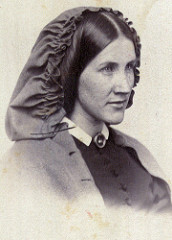
25 Cooper Union, N. Y., August 7th, 1861.
My dear Miss Woolsey: Dr. Blackwell, at our last board meeting, read a very interesting letter from you, giving details about the hospitals. We should be very much obliged if you would be willing to write us a few incidents in regard to hospital supplies. Any little personal anecdote relative to the pleasure caused by the receipt of these delicacies and stores, any message from a wounded soldier, would go farther to interest our country contributors, than any figure-statements of what has been, and is to be, done. . . .
The response made to our appeals is grand, and it is a privilege to know and feel the noble spirit that animates the women of the loyal states. We have contributions not only from our own states, but from Conn., New Jersey, Massachusetts and Michigan. Within the last fortnight our receipts have amounted to over 7000 different articles of clothing and 860 of edibles. . . .
Our letters from the Sanitary Commission say that the hospitals near Washington are now well supplied.
Extracts from the journal of Commander Semmes, C.S. Navy, commanding C.S.S. Sumter
August 7, 2026
Who is the traitor that supplied such details to the Northern newspaper?—John Beauchamp Jones diary
August 7, 2026
AUGUST 7th.—Saw Col. Pendleton to-day, but it was not the first time. I have seen him in the pulpit, and heard him preach good sermons. He is an Episcopal minister. He it was that plowed such destruction through the ranks of the invaders at Manassas. At first the battery did no execution; perceiving this, he sighted the guns himself and fixed the range. Then exclaiming, “Fire, boys! and may God have mercy on their guilty souls!” he beheld the lanes made through the regiments of the enemy. Since then be has been made a colonel, and will some day be a general; for he was a fellow-cadet at West Point with the President and Bishop Polk.
A tremendous excitement! The New York Herald has been received, containing a pretty accurate list of our military forces in the different camps of the Confederate States, with names and grades of the general officers. The Secretary told me that if he had required such a list, a more correct one could not have been furnished him. Who is the traitor? Is he in the Adjutant-General’s office? Many suppose so; and some accuse Gen. Cooper, simply because he is a Northern man by birth. But the same information might be supplied by the Quartermaster’s or Commissary-General’s office; and perhaps by the Ordnance Bureau; for all these must necessarily be in communication with the different organizations in the field. Congress was about to order an investigation; but it is understood the department suggested that the matter could be best searched into by the Executive. For my part, I have no doubt there are many Federal spies in the departments. Too many clerks were imported from Washington. And yet I doubt if any one in a subordinate position, without assistance from higher authority, could have prepared the list published in the Herald
Another shooting—Rutherford B. Hayes
August 7, 2026
August 7, Wednesday.–Another bright, warm day. With Adjutant Fisher pistol shooting this A. M. Tolerably good firing. Last night a picket shot through the hand; said he fired twice at his assailant; doubted. Supposed to be an accidental wounding. Letters from Ohio.
“The Lincoln boys were here again today. My three boys are now fited out in the Zuave uniform.”—Horatio Nelson Taft
August 7, 2026
WEDNESDAY 7
Heat still oppressive. M. 92, but a good air. Was on the Ave awhile this morning, soldiers not as plenty there as formerly. They are now kept in their quarters. The “Patrol” “nabs” them anywhere, officers and all, when found without a “pass.” Congress adjourned yesterday. I have spent most of the day at home doing some small jobs, looking over my drawings &c. The Lincoln boys were here again today. My three boys are now fited out in the Zuave uniform.
______
The three diary manuscript volumes, Washington during the Civil War: The Diary of Horatio Nelson Taft, 1861-1865, are available online at The Library of Congress.
The Burning of Hampton
August 7, 2026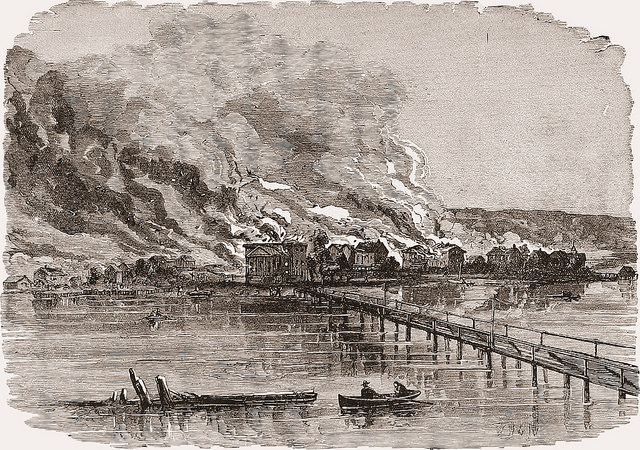
August 7, 1861 – Harper’s Weekly
WE illustrate on page 550 the BURNING OF HAMPTON by the rebels under General Magruder. The correspondent of the Associated Press thus describes the scene:
A few minutes past midnight General Magruder, with about five hundred rebels, some of them belonging in Hampton, entered the town and immediately fired the buildings with torches. The greater part of the five hundred houses were built of wood, and no rain having fallen lately, the strong south wind soon produced a terrible conflagration. There were perhaps twenty white people and double that number of negroes remaining in the town from inability to move, some of whose houses were fired without waking the inmates. They gave Wilson Jones and his wife, both of them aged and infirm, but fifteen minutes to remove a few articles of furniture to the garden. Several of the whites and also of the negroes were hurried away to be pressed into the rebel service. Mr. Scofield, a merchant, took refuge in a swamp above the town. Two negroes were drowned while attempting to cross the creek. A company of rebels attempted to force the passage of the bridge, but were repulsed with a loss of three killed and six wounded.
The fire raged all night. The greater part of the rebels withdrew toward morning, and at noon to-day, when I visited the place, but seven or eight buildings were left standing.
The glare of the conflagration was so brilliant that I was enabled to write by it. A more sublime and awful spectacle has never yet been witnessed. The high south wind prevailing at the time fanned the flames into a lurid blaze, and lighted up the country for miles and miles around. The fire broke out between eleven and twelve o’clock P.M. on the 7th inst. It appears that a short time previous our pickets from Colonel Max Weber’s Twentieth Regiment were fired upon by a company of rebels, but by dropping on their faces our troops did not sustain any loss. They, however, returned the fire with deadly aim from their trusty rifles, which must have made sad havoc among the enemy. We could see the rebels passing from one house to another, by the glare of the light, and use the incendiary’s torch with effect. Every building in this once beautiful village is destroyed, with the exception of the Military Academy, and that can not possibly be saved.
Our camp was alarmed instanter, and the troops got under arms. An attack from Fox Hill was momentarily expected, and Colonel Weber’s regiment were immediately supplied with extra ammunition, and sent out in all directions as pickets, patrols, and skirmishers. They have done their work bravely and efficiently. Two companies are now here watching for rebels and guarding the bridge from being fired. The bridge will be saved. It is dismantled about a rod from the farther shore, and terminates there in a barricade of boards, behind which a portion of our picket was stationed when fired on by the enemy. Captain Strouple, of the Twentieth Regiment, has just started across to the barricade with six men in the face of the flames and foe. He is anxiously watched from this side, as it is expected that he will be fired upon. The light is as bright as day, and the figures of men are seen reflected in the water. They have reached the barricade in safety.
The rebels have done their work effectually, nothing is now left to mark the once beautiful Hampton but the charred, towering chimneys, looming up in the distance, as monuments of the dastardly work of the rebels.
Stars and Bars
August 7, 2026
Bellville [Tx] Countryman, August 7, 1861
The Stars and Bars are now floating over our office. For this present we are indebted to Mrs. Jane Railey, of this place. The flag is a neat one, of medium size, and has a star for each Confederate State. We had thought of publishing a speech that might have been delivered by “our devil” on the occasion of raising the flag, but as flag presentations are becoming so common, we forego giving this choice production to the public, and just leave them to infer what our devil should, or ought to have said on the occasion.
A Female Spy
August 7, 2026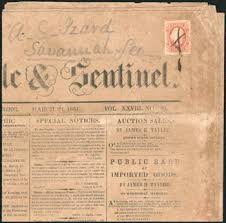
Daily Chronicle & Sentinel [Augusta, GA],
August 7, 1861
A correspondent of the Cincinnati Commercial, writing from Western Virginia, says: “A female spy has been discovered in the first Kentucky regiment. She is from Georgia, and enlisted at Cincinnati. She was detected by writing information in regard to the movements of our troops to the enemy. She is a member of the Knights of the Golden Circle, says she knows the punishment of a spy is death, and is ready for her fate. She is to be sent to Columbus.”
William Howard Russell’s Diary: Reception at Mr. Seward’s.—Prince Napoleon.
August 7, 2026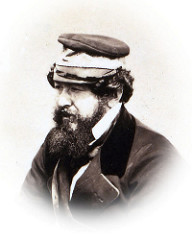
August 7th.–In the evening I went to Mr. Seward’s, who gave a reception in honour of Prince Napoleon. The Minister’s rooms were crowded and intensely hot. Lord Lyons and most of the diplomatic circle were present. The Prince wore his Order of the Bath, and bore the onslaughts of politicians, male and female, with much good humour. The contrast between the uniforms of the officers of the United States army and navy and those of the French in the Prince’s suit, by no means redounded to the credit of the military tailoring of the Americans. The Prince, to whom I was presented by Mr. Seward, asked me particularly about the roads from Alexandria to Fairfax Courthouse, and from there to Centreville and Manassas. I told him I had not got quite as far as the latter place, at which he laughed. He inquired with much interest about General Beauregard, whether he spoke good French, if he seemed a man of capacity, or was the creation of an accident and of circumstances. He has been to Mount Vernon, and is struck with the air of neglect around the place. Two of his horses dropped dead from the heat on the journey, and the Prince, who was perspiring profusely in the crowded room, asked me whether the climate was not as bad as midsummer in India. His manner was perfectly easy, but he gave no encouragement to bores, nor did he court popularity by unusual affability, and he moved off long before the guests were tired of looking at him. On returning to my rooms a German gentleman named Bing–who went out with the Federal army from Washington, was taken prisoner at Bull’s Run, and carried to Richmond–came to visit me, but his account of what he saw in the dark and mysterious South was not lucid or interesting.
Appointment as aide–Letters from Elisha Franklin Paxton.
August 7, 2026
Centreville, August 7, 1861.
I have received from Gen. Jackson the appointment to act as his aid, and wish you to send my uniform coat and pants by Rollin, Kahle or some one of our men, whichever comes first. Switzer is just leaving, and I have not time to write more.
A Diary of American Events.–August 7, 1861
August 7, 2026
August 7. – John C. Breckinridge was serenaded at a hotel in Baltimore, and in response essayed to address those assembled in the street, but was compelled to desist by the uproar of the crowd, who shouted for the “Union,” “Crittenden,” “Scott,” etc. – Baltimore American, August 9.
– Gen. Magruder, C. S. A., with a force of 7,000 men, including 200 cavalry and eight pieces of artillery, viz., three Parrott guns, four howitzers, and one rifled cannon, took up a position on Back River, three miles from Hampton, Virginia. The intention was to draw out the national forces, attack Camp Hamilton or Newport News if practicable, and at least to destroy Hampton, so as to prevent its use by the U. S. troops for winter-quarters. Gen. Butler at once repaired to Hampton Bridge, where he remained until 11 o’clock P. M. Col. Weber erected a barricade near the Hampton end of the bridge, and placed a strong guard at various points near.
A few minutes past midnight, Gen. Magruder, with about 500 Confederates–some of them belonging in Hampton–entered the town, and immediately fired the buildings with torches. A greater part of the five hundred houses were built of wood, and no rain having fallen lately, the strong south wind soon produced a terrible conflagration. There were perhaps twenty white people and double that number of negroes remaining in the town from inability to move, some of whose houses were fired without waking the inmates. They gave Gary Jones and his wife, both of them aged and infirm, but fifteen minutes to remove a few articles of furniture to the garden. Several of the whites and also of the negroes were hurried away to be pressed into the Confederate service. Mr. Scofleld, a merchant, took refuge in a swamp above the town. Two negroes were drowned while attempting to cross the creek. A company of rebels attempted to force the passage of the bridge, but were repulsed with a loss of three killed and six wounded. They then withdrew. The fire raged all night and entirely destroyed the town.–(Doc. 168.)
–The Ohio Democratic State Convention met at Columbus to-day and nominated H. J. Jewett for Governor and John Scott Harrison for Lieutenant-Governor. A series of resolutions were adopted. The third recommends the legislatures of the States to call a National Convention for settling the present difficulties and restoring and preserving the Union. The sixth resolution condemns the President’s late attempt to suspend the writ of habeas corpus. –National Intelligencer, August 10.
–The United States gun boat Flag arrived at Fort Mifflin, on the Delaware River, this morning with thirty-six rebel prisoners, taken from the rebel war vessel, Petrel, formerly the revenue cutter Aiken, seized at Charleston last winter. The Aiken fired at the St. Lawrence, off Charleston, mistaking her for a merchant vessel, when the St. Lawrence returned a broadside, sinking the rebel. Five of the crew were lost, and the rest rescued and placed on board the Flag.–Philadelphia Press, August 8.
–Isham G. Harris, Governor of Tennessee, appeals to the people of that State “to raise, organize, and thoroughly prepare a reserve force of thirty thousand volunteers.”–(Doc. 169.)
——-
Late addition to Volume 3:
August 7.–In the C. S. Congress, a bill was reported favorably from the Military Committee to increase the military force of the Confederacy to the extent of four hundred thousand men.–Richmond Enquirer, August 9.
Civil War Day-By-Day
August 7, 2026
August 7, 1861
- John Bankhead Magruder burns the village of Hampton, near Fort Monroe. General Benjamin Butler had been planning to use it to house “contraband.” (Butler’s word for slaves)
- The Maryland legislature adjourns without seceding, but votes to reconvene in September
A Chronological History of the Civil War in America1
- Hampton, Va., burned by the rebels.
- C. S. privateer “York” burned by the gun-boat “ Union.”
- A Chronological History of the Civil War in America by Richard Swainson Fisher, New York, Johnson and Ward, 1863
“…held a sort of police court.”—Rutherford B. Hayes
August 6, 2026
August 6.–Warm, beautiful weather. A busy day, settling disputes between citizens and their quarrels. I held a sort of police court. Dr. Joe also decided cases. The parties under arrest, we hear their stories and discharge or put on bread and water as the case seems to require. All local tribunals suppressed or discontinued. We also are full of courier and express duty. Colonel Withers, a Union citizen of the old-fashioned Intelligencer reading sort, called. He is a true patriot. We sent out a courier to meet Colonel Ammen with the Twenty-fourth, preparatory to greeting and escorting him. But he isn’t coming yet. Colonel Scammon is policing and disciplining in a good way. The colonel improves. As soon as taps sounds he has the lights put out and all talk suppressed.
When we came to Weston, Colonel Lytle was here with four companies. The Seventeenth returning home (three-months men) passed through here about the second or third. The Nineteenth about the first. Colonel E. B. Tyler with the Seventh is beyond Sutton. Colonel Bosley with the Sixth is at Beverly.
_______
WESTON, VIRGINIA, Tuesday P. M., August 6, 1861.
DEAR MOTHER:–I have just read your letter, with Brother William’s of the 2nd,–the first I have had from anybody since we came to Virginia. I am sitting in my tent looking out on the same beautiful scene I have so often referred to. It is a bright and very warm afternoon, but a clear, healthful mountain air which it is a happiness to breathe. . . .
My horse shows a little weakness in the fore shoulders, but as he can probably work well in an ambulance, I can exchange him for a good government horse, if he gets worse. We have plenty of business. A good deal of it is a sort of law business. As all civil authority is at an end, it is our duty to keep the peace and do justice between the citizens, who, in these irregular times, are perhaps a little more pugnacious than usual. Dr. Joe and I, under direction of the colonel, held courts on divers cases all the forenoon. It was rather amusing, and I think we dispensed very exact justice. As there is no appeal, a case decided is for good and all.
I am so glad you and Uncle are both getting well. If Uncle wishes to travel, and we remain here, he couldn’t please himself better than by a trip this way. He would enjoy a few days very much in our camp, or at the hotel in the village.
Young Jewett leaves with his father for Zanesville tonight. I hope he will stand the trip well. I will hand them this letter to mail when they get out of these woods. Send me sometime a neat little New Testament. I have nothing of the sort. I have clothes enough. I am cut short by business. Good-bye.
Affectionately,
R. B. HAYES.
MRS. SOPHIA HAYES.
Extracts from the journal of Commander Semmes, C.S. Navy, commanding C.S.S. Sumter
August 6, 2026
Mary Chesnut: 1,100 men sick in Charlottsville; many with typhoid; 8 dead in the hospital there.
August 6, 2026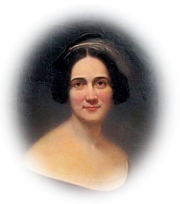
Tuesday.–The North requires 600,000 men to invade us. Truly we are a formidable power! The Herald says it is useless to move with a man less than that. England has made it all up with them, or rather, she will not break with them. Jerome Napoleon is in Washington and not our friend.
Doctor Gibbes is a bird of ill omen. To-day he tells me eight of our men have died at the Charlottesville Hospital. It seems sickness is more redoubtable in an army than the enemy’s guns. There are 1,100 there hors de combat, and typhoid fever is with them. They want money, clothes, and nurses. So, as I am writing, right and left the letters fly, calling for help from the sister societies at home. Good and patriotic women at home are easily stirred to their work.
Mary Hammy has many strings to her bow–a fiancé in the army, and Doctor Berrien in town. To-day she drove out with Major Smith and Colonel Hood. Yesterday, Custis Lee was here. She is a prudent little puss and needs no good advice, if I were one to give it.
Lawrence does all our shopping. All his master’s money has been in his hands until now. I thought it injudicious when gold is at such a premium to leave it lying loose in the tray of a trunk. So I have sewed it up in a belt, which I can wear upon an emergency. The cloth is wadded and my diamonds are there, too. It has strong strings, and can be tied under my hoops about my waist if the worst comes to the worst, as the saying is. Lawrence wears the same bronze mask. No sign of anything he may feel or think of my latest fancy. Only, I know he asks for twice as much money now when he goes to buy things.
Rebel War Clerk
August 6, 2026
AUGUST 6th.—Custis arrived and entered upon the discharge of his duties.
“The Lincoln boys were both up here after mine by 9 o’clock, they make themselves quite at home in the house.”—Horatio Nelson Taft
August 6, 2026
TUESDAY 6
M. at 92. at 10. this morning with but little air stirring. The Lincoln boys were both up here after mine by 9 o’clock, they make themselves quite at home in the house. Packed up my books at the Pat office today, shall try to get out some Patents on my own ac[coun]t. Saw the Comr again, cannot move him yet. He showed me the act current [?] for July, deficit $8000. Walked down to the Camp with Julia, saw the officers, returned about 9 o’clock.
______
The three diary manuscript volumes, Washington during the Civil War: The Diary of Horatio Nelson Taft, 1861-1865, are available online at The Library of Congress.
1000 Colored Men Wanted
August 6, 2026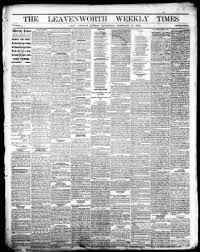
August 6, 1862, Daily Times (Leavenworth, Kansas)
War for the Union!
and for
Freedom for All.
1000 Colored Men Wanted
for the
1st K. R. of the Liberating Army.
All able bodied colored men, between the age of eighteen and forty-five, can now have an opportunity of voluntarily enrolling their names in this regiment.
Ten dollars per month will be paid, good quarters, rations and clothing provided. Apply at No. 17 ½ Shawnee street.
Leavenworth, August 5th, 1862.
Etham Earle,
1st K. R. C. M.
The Letters of Samuel Ryan Curtis
August 6, 2026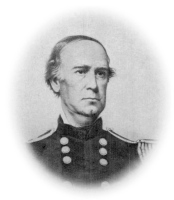
St Louis August 6. 1861
My dear wife & daughters
I have a little more leasure than I ought to have in these times of troubles; but not being here long enough to learn the ropes I can find a little more time to write you. I have been busy writing and telegraphing to get troops forward, as this seems to be the main business of Genl Fremont at present. I see however that both our Keokuk Regiments have gone out to Athens where a fight took place yesterday. I hope Green will now be Satisfied and I trust his army will go to their homes and behave themselves or go off to hunt Claib Jackson.1 We want all the Iowa troops down here and must get the Home guards so well armed and ready that they can take care of the rebels in North Missouri.
The success at Athens2 will help to strengthen the union men at the right time and place. I want to hear the particulars. Hope our men took the cannon from the rebils, but the Telegraph does not say any thing about the matter.
I feel great anxiety about Geni Lyons command. Pillow, Haris, Hardie and McCullough are all according to accounts, pressing the south part of this state and we have very little force to check them with. General Fremont is moving Heaven and Earth to get troops so as to repel them but we are evidently behind the times. A few days of doubt and danger evidently exists in Southern Missouri. Many think this city is to be taken, but I cannot bring myself to the belief that Pillow and Hardie will venture so far North.
There are evidently, however, great numbers of Secessionists in this city, and in the event of Pillows success there may be trouble here.
I shall evidently be here a few days. Have a nice room on 4th Street with little back room for William who busys himself taking care of my clothes &c &c If it were not so very hot I could wish indeed you were here with me, all of you. I see however none of our old friends that I cared most for. The Aristocracy here are very generally secessionists and keep very shy
General Fremont is so busy he can hardly find time to speak even to his Generals but seems very cordial when we do meet.
Keep me well informed of all of yourselves as that is what I most desire to know. The Athens matter will no doubt give occasion to much talk and the Tableau party too that will no doubt be subject of interest. Telegraphed Harry today about troops
Affectionately yours
S.R.Curtis
1. Claiborne Fox Jackson, Governor of Missouri, 1860-1861, was a compromise, pro-slavery, advocate. He was frustrated at the outbreak of war in the seizure of government posts in St. Louis by Lyons and F. P. Blair, Jr.
2. The battle of Athens, listed officially as a skirmish and of which no reports were filed, took place near that town Aug. 5, 1861. Less than 600 Union men were reportedly attacked by between 1400 and 1500 of the opposing forces.
William Howard Russell’s Diary: Prince Napoleon.—Mr. Brekinridge.
August 6, 2026
August 6th.–Prince Napoleon, anxious to visit the battle-field at Bull Run, has, to Mr. Seward’s discomfiture, applied for passes, and arrangements are being made to escort him as far as the Confederate lines. This is a recognition of the Confederates, as a belligerent power, which is by no means agreeable to the authorities. I drove down to the Senate, where the proceedings were very uninteresting, although Congress was on the eve of adjournment, and returning visited Mr. Seward, Mr. Bates, Mr. Cameron, Mr. Blair, and left cards for Mr. Brekinridge. The old woman who opened the door at the house where the latter lodged said, “Massa Brekinridge pack up all his boxes; I s’pose he not cum back here again.”