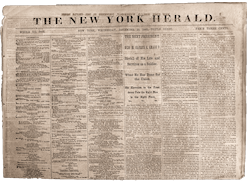
March 4, 1861; The New York Herald WASHINGTON, March 3, 1861. Mr. Buchanan will leave Washington on Tuesday afternoon, remaining one night in Baltimore, as the guest of Zenas Barnum. He will be conveyed by special train to Wheatland by the Northern Central Railroad Company. He will be escorted home from Baltimore by the Baltimore [...]
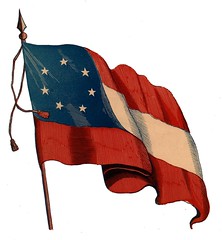
March 4, 1861 Abraham Lincoln is inaugurated as the president of the United States. He tells the crowd gathered around the Capitol that he has no intention of interfering with slavery, but that secession is illegal and the Union perpetual. The first national flag of the Confederate States of America (the “Stars and Bars”) is [...]
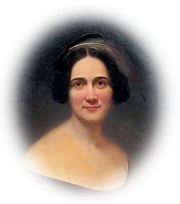
March 3d.–Everybody in fine spirits in my world. They have one and all spoken in the Congress¹ to their own perfect satisfaction. To my amazement the Judge took me aside, and, after delivering a panegyric upon himself (but here, later, comes in the amazement), he praised my husband to the skies, and said he was [...]
March 3, 1861; The New York Herald THE INAUGURATION OF ABRAHAM LINCOLN AS SIXTEENTH PRESIDENT OF THE UNITED STATES. Washington, Feb. 28, 1861. The following is the programme of proceedings on Monday, the 4th March next, for the inauguration of President Lincoln, as arranged under the supervision of the Chief Marshal, Colonel B. B. French: [...]
March 3, 1861; The New York Herald President Buchanan has signed the new tariff bill, and it is now the law of the land. The act complete has already been published in the columns of the HERALD. The last section of the new tariff provides that all goods, wares and merchandise actually on shipboard and [...]
March 3, 1861; The New York Herald Washington, March 2, 186l. The Cabinet vexation has at last come to an end, to the great relief of all concerned. This morning Mr. Cameron got over his squeamishness, and signified his readiness to serve, when it at once became settled that Seward, Bates, Smith, Chase, Cameron, Blair [...]
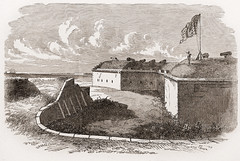
March 3, 1861 General P. G. T. Beauregard arrives at Charleston and assumes command of Confederate troops
March 2, 1861; The Charleston Mercury WASHINGTON, February 27, 1861. LINCOLN’s designs are still shrouded in thick darkness. The ass is between the bundle of hay – anxious to go to CHASE and afraid to leave SEWARD. It is some consolation to know that only five days remain ere the fountain of the great deep [...]
March 2, 1861; The New York Herald —The latest shuffle of the cards of Mr. Lincoln’s initiative Cabinet, it appears, has resulted in the following distribution of his Executive departments, to wit:- Secretary of State ……….. Wm. H. Seward, of N.Y. Secretary of Treasury……… Simon P. Chase, of Ohio. Secretary of War………….. Simon Cameron, of [...]
March 2, 1861; The New York Herald Our despatches from Washington state that the list of Cabinet officers of the incoming administration which was published in yesterday’s HERALD, and which is again published today, is the true one. The selection of Governor Chase to a place in the Cabinet is regarded as a triumph of [...]
March 2, 1861 The U. S. Congress passes a proposed 13th Amendment that would shield “domestic institutions” of the states from the federal constitutional amendment process and from abolition or interference by Congress. Although the Corwin Amendment does not explicitly mention slavery, it is designed specifically to protect slavery from federal power. The amendment is [...]
March 1st.–Dined to-day with Mr. Hill¹ from Georgia, and his wife. After he left us she told me he was the celebrated individual who, for Christian scruples, refused to fight a duel with Stephens.² She seemed very proud of him for his conduct in the affair. Ignoramus that I am, I had not heard of [...]
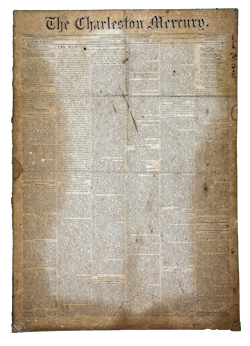
March 1, 1861; The Charleston Mercury In pursuance of regimental orders, the Seventeenth Regiment paraded yesterday afternoon for review. At three othe regiment formed in Broad street, the right resting upon Meeting street and the left upon Church street. We noticed the following mounted staff officers in command: Colonel JOHN CUNNINGHAM, Adjutant F. A. MITCHELL, [...]
March 1, 1861; The New York Herald In this transition interval between the outgoing and the incoming administrations, when old things are to be done away with, old parties, old principles, old platforms, old politicians, old office holders, old lobby and kitchen favorites, old tricksters and hucksters, old fashions and old clothes, old kettles, pots [...]
March 1, 1861; The Charleston Mercury The impotent spite and reasonless abuse now heaped upon Gen. TWIGGS by Abolition prints at the North, for his recent sensible and manly course as a Southern officer of the late United States Army, is so ludicrous in its desponding virulence, that we really cannot get up a feeling [...]
March 1, 1861 P. G. T. Beauregard appointed Brigadier General and is ordered to Charleston by Jefferson Davis. Congress organizes two new territories, Nevada and Dakota, and passes the Morrill Tariff Act, which raises taxes on imports. The U. S. Congress rejects the Washington Peace Conference proposals.
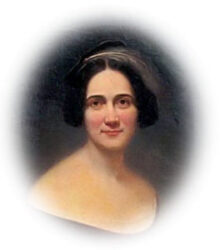
February 28th.–In the drawing-room a literary lady began a violent attack upon this mischief-making South Carolina. She told me she was a successful writer in the magazines of the day, but when I found she used ”incredible” for “incredulous,” I said not a word in defense of my native land. I left her “incredible.” Another [...]
February 28, 1861; The Charleston Mercury BALTIMORE, February 24, 1861. As if the cup of our country’s deep, and, I fear lasting degradation were not already filled to overflowing by the ill timed harangues of ABRAHAM LINCOLN, made during his recent trip from Springfield to Washington, his stealthy midnight transit through Maryland on Friday night [...]
February 28, 1861; The New York Herald We have at last got a clue to the way the terrible conspiracy to assassinate Mr. Lincoln was discovered, and it certainly reflects great credit upon our police system, which we shall not be slow to accord to it. It appears that there were two sets of most [...]
February 28, 1861; The Charleston Mercury For many days past rumors have been rife to the effect that JEFFERSON DAVIS, president of the Confederate States, was on his way to Charleston. Yesterday morning some color was given to these reports by the publication of a despatch, dated Montgomery, announcing the departure of the President for [...]
February 28, 1861 The House passes a measure supported by President-elect Lincoln which prohibits the federal government from interfering with slavery in states where it exists. North Carolina voters reject the call for a secessionist convention by 651 votes.
February 27, 1861 The Peace Convention proposes six constitutional amendments to Congress—most relate to the impasse over slavery. None passes. The House of Representatives rejects a call for a constitutional convention and the Crittenden Compromise.
February 27, 1861; The New York Herald The Conference Committee of the two houses of Congress on the Senate’s amendments to the Tariff bill, levying a duty on tea and coffee, have agreed to recommend that the Senate recede from their position. The committee will make their report today, and as the tea and coffee [...]
February 27, 1861; The Charleston Mercury We call attention to the movement now on foot here, to establish a line of steamships with Liverpool for purpose of direct trade. It is a step forward, and one that is needed. A Revenue Tariff and Free Trade will rid the Southern peoples of Northern monopolists in manufacture, [...]
February 27, 1861; The Charleston Mercury THE BANK OF THE STATE OF SOUTH CAROLINA is the Agent of the State to effect the Loan. The Bonds to be issued are for sums of $50, and $100, and $500 each – bearing an interest of SEVEN PER CENT, payable annually, at the State Treasury, and the [...]