0

News of the Day

Navarro Express [Corsicana, TX], February 18, 1860

On the 15th inst. eighty one free colored persons sailed from New Orleans for Hayti . They all came from the Opelousas parishes, and are farmers, mechanics and weavers of the stuff  called Attakapas cottonade. They take with them the necessary implements for the pursuit of their respective trades. One of the fourteen families included in this emigration is worth fifty thousand dollars, and they all intend investing what property they possess in Hayti .

0 comments

0

News of the Day
1860s newsprint

Semi-Weekly Mississippian [Jackson, MS], February 17, 1860

The Chattanooga Reflector says a  white woman by the name of Mary Wilson, of Adairsville, Ga., came up to that place on the  Georgia train on the 6th, with a big buck negro belonging to a gentleman of the former place,  who she had stolen with the intention, it is believed, of running him off to a free State. Mary was  dressed in men’s clothes. They were arrested and lodged in jail.

0 comments

0

News of the Day

New York Times, February 16, 2020

Mr. HICKMAN (John Hickman, see image) having practically “retired from business ” as a hero, some of the partisan Republican journals are desperately trying to set him up again as a martyr. We do not think the operation likely to prove successful. The facts in the case of Mr. EDMUNDSON’S recent assault upon the member from Pennsylvania, while they are sufficiently discreditable to the hot-headed Virginian offender, are very far from justifying the parallels which have been drawn between his conduct and that of Mr. BROOKS, of South Carolina, in the “SUMNER outrage.” Mr. Hickman, not at all in debate on the floor of the House, but simply on his private responsibility, made a speech from a hotel-window at Washington to a crowd rejoicing over the election of Mr. PENNINGTON to the Speakership. In this speech he took occasion to taunt the whole State of Virginia with cowardice, and to caricature the events of the raid at Harper’s Ferry in a way singularly offensive both to good taste and good feeling, and widely at variance with the truth. Mr. EDMUNDSON, one of the oldest members of the House from Virginia, it appears read this speech, as reported in the journals, with natural indignation, and suffered himself to be stung by it into a state of rather superfluous excitement. Meeting Mr. litmus in the Capitol grounds, he gave vent to his feelings after a very semi-civilized fashion, by slashing the offending Pennsylvanian across the face with a small twig, as little like the murderous bludgeon of gutta-percha with which the champion of South Carolina fell upon the unarmed Senator from Massachusetts, as Mr. Hickman’s reckless post-prandial provocations were like the solemn and measured denunciations of Mr. Sumner’s famous oration.

To see in such a proceeding as this a “blow aimed at representative government,” is to fall into that morbid habit of exaggeration which is the curse alike of our public and our private life. Mr. Edmunson undoubtedly merits a reprimand for violating the proprieties of the station which he holds, but as the whole matteer, from the original declamation of Mr. Hickman to his eventual chastisement in the Capitol grounds was begun, continued and ended outside of the halls of Congress, and as Mr. Edmunson’s darkest possible purpose seems to have been to punish an insult in words with insult in blows, we can really see no occasion for convulsing the nation on the subject. Let it be taken up moderately and discreetly, as the text for some rational and considerate action by Congress in condemnation of that easy resort to violence, whether on or off the floor of the House, which has grown so alarmingly upon our public men, and then dismissed for-ever, without extravagant howls or partisan misrepresentations of any kind whatever.

0 comments

0

Miscellaneous document sources
80.
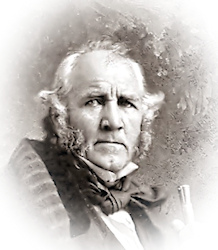
Governor Houston to
Mr. Floyd.

Austin, February 15, 1860.          
          Sir: I have the honor to forward by my friend Gen. Forbes Britton, assistant adjutant general of the State, and a prominent member of the State senate, despatches which I deem of importance, and desire that his excellency the President shall consider the contents thereof.
          I deplore the situation of Texas—an empty treasury, the Indian troubles unexampled for the last ten years, and the forays from Mexico on our southern borders are well calculated to impress the mind of the executive of the State of Texas with the intricacies of the attitude which he has, in justice to his fellow-citizens and humanity, to assume. Should not the federal arm be speedily raised and extended in behalf of our suffering frontier? The executive of Texas is greatly desirous to avoid any course which might raise even a question as to the propriety of his action. Notwithstanding all his moderation and desire to eschew an attitude unpleasant to him, he may, in a short time, be required to resort to the indefeasible right of self-defence to protect his fellow-citizens. He will, in addition to manifest forbearance, endeavor yet further to defer to the action of the federal government. But matters new and startling arise, and he may feel that his duty is to meet the emergency in carrying his action so far as to not only repel the aggressions from Mexico, but to adopt such measures as will prevent the recurrence of similar inroads upon our frontiers.
          Texas can and will, if appealed to in thirty days, be able to muster in the field ten thousand men, who are anxious, embarrassed as her finances are, to make reclamation upon Mexico for all her wrongs.
          Can we hope for aid from the federal government?
          I have the honor to be your most obedient servant,
Sam. Houston.          
          Hon. John B. Floyd,
Secretary of War.
__________
80 a.

Office of Commissioners of the State of Texas,          
Brownsville, January 12, 1860.
          Sir: You will proceed to this place with your command without delay, for the purpose of being mustered for discharge, before leaving your present camp. You will consult with Major Heintzelman, United States army, as to what risk the frontier will suffer by your leaving your present position.
Respectfully,
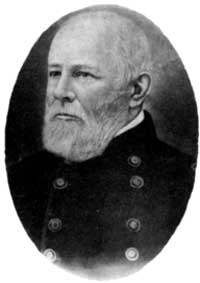
A. Navarro,                    
Robert H. Taylor,          
Commissioners of the State of Texas.
          Major William Tobin,
                    Commanding Texas Volunteers.
__________
80 b.

Office of Commissioners of the State of Texas,          
Brownsville, January 12, 1860.
          Dear Sir: The undersigned commissioners, appointed by the governor of the State of Texas, were required to consult with you as to the best mode of quieting the disturbances on this frontier. They beg leave, therefore, to request that you will advise Major Tobin, Texas volunteers, as to the risk the frontier will suffer by the order this day transmitted by us to him ordering him to this place for discharge.
          Respectfully,
A. Navarro,                    
Robert H. Taylor,          
Commissioners of the State of Texas.
          Major Heintzelman, United States Army.
__________
80 c.

Brownsville, January 31, 1860.
          Dear Sir: During my intercourse with the Mexican people on both sides of the Rio Grande, I have had many opportunities to sound the Mexican mind in reference to the future political condition of the country. Although many turbulent leaders exist among them, the Mexican people, as a mass, are hoping for a deliverance from anarchy, and would rejoice in the establishment of a stable form of government which would protect their lives and property and give them peace.
          The liberal party entire look to the United States with hope, and pray for its interposition in behalf of their unhappy country. The Miramon party, emboldened by late successes, are hostile to the measure, because its leaders hope, by the establishment of their power, to gain wealth and influence. Many of the most intelligent men of Tamaulipas regard a protectorate as the only means by which Mexico can be redeemed from the reign of outlaws and petty tyrants. There are many such men to be found even in the border district, and if a guarantee were offered for their lives by the appearance of a sufficient body of American troops to overcome the unruly portion of the population, they would speak out their sentiments and at once set themselves to work to better the condition of the country.
          This Cortinas’ trouble has aroused much bad feeling on the part of those who wish to sustain anarchy, to aid their schemes of robbery, and great effort is made to excite animosity against all Americans. The result has been that many of the lower order of rancheros have been drawn to his standard. The Miramon party being opposed to the Juarez treaty, are interested in encouraging this feeling, as anything which tends to excite prejudice against Americans militates against the treaty.
          The leading men of Matamoras knowing that the Miramon party will not hesitate to turn Cortinas and his followers upon their city, fear to excite his opposition and are forced to countenance his movements.
          That there is a deep seated hostility on the part of many to everything American, there can be no doubt; but with the great mass even this would yield before the same course of justice and humanity which characterized the United States in its annexation and acquisition policy.
          Mexico has been oppressed beyond degree; but there are yet in her midst men who hope for the redemption of their country, I honestly believe that such men lend their support and influence whenever a fair opportunity offers to extend and establish American influence in Mexico. An emergency like that presented to the United States, calls, in my opinion, for prompt action. How the character of the nation can be maintained, and these things continue, I am at a loss to determine, and if they continue, and the United States do not interfere to protect Texas, I cannot see how Texas can maintain the proud position she now occupies, unless she not only repels these invasions of her soil, but puts it beyond the power of the outlaws upon the Mexican border to aggress upon our people, by taking possession of a sufficient portion of the border sections of Mexico as will enable us to establish order and check these hostile incursions, if attempted thereafter.
                    I remain, very respectfully, your obedient servant,
Angel Navarro.          
          Governor Sam Houston.
__________
No. 80 d.


Office of Commissioners of the State of Texas,          
Brownsville, February 2, 1860.

          Sir: Will you please give us your opinion as to what force of Texas rangers will, for the present, be necessary to be kept in the service for the protection of the frontier?
          Yours respectfully,

Angel Navarro.          
          Major Heintzelman.
__________
No. 80 e.

Headquarters Brownsville Expedition,          
Fort Brown, Texas, February 2, 1860.
          Gentlemen: In reply to your note of this morning, asking my opinion as to what force of Texas rangers will, for the present, be necessary to be kept in the service for the protection of this frontier, I have the honor to state: In my opinion, the two companies of rangers now in the service of the State are sufficient. I have but one company of cavalry at my disposal, and this force I consider entirely inadequate for the security of the frontier, as I am not authorized to cross the river into Mexico, where the marauders recruit and organize, and to where they flee for safety when pursued.
          The ease with which incursions can be made from the other side will make it exceedingly difficult to give protection, unless the troops are authorized to occupy the opposite side of the river.
          I am, gentlemen, very respectfully, your obedient servant,

S P. Heintzelman,          
Major U. S. Infantry, Com’g Brownsville Expedition.
          Messrs. Angel Navarro and Robt. H. Taylor,
                              Commissioners, State of Texas.
__________
No. 80 f.
 
Special Order.

 
Office of State Commissioners,          
Brownsville, Texas, February 2, 1860.
          Sir: From and after this date your movements and the troops under your command will be directed by Major Heintzelman, or other commanding officer of the U. S. army on this frontier. You will, therefore, obey all orders emanating from such officer.
          Respectfully,
A. Navarro,                    
Robt. H. Taylor,          
State Commissioners.
          Captain J. S. Ford,
                    Com’dg Texan Rangers on Rio Grande frontier.
__________
80 g.
 
Brownsville, February 6, 1860.          
          Sir: I avail myself of a few moments time before the departure of the steamer to advise you of an engagement with the outlaw, Cortinas.
          On Friday, on my march from Rio Grande City to this place, at the same time guarding the steamer Ranchero, on her way also from Rio Grande City to this place, she was fired into from the Mexican bank of the river, at a rancho called the Balsa; the fire was promptly returned from the steamer, with a small piece of artillery which she had on board, after which she landed on this side of the river. Just at this time I met Captains Ford and Littleton with their companies on their march up the river, when a hasty consultation was had, and it was resolved that the troops should cross the river in pursuit of the enemy, which resolution was promptly, executed and about sixty men, consisting of detachments from Tomlinsons, Fords, and Littleton’s companies, crossed to the Mexican side and attacked the enemy in his position, which consisted of a barricade, and after a sharp conflict of about one hour and a half completely routed him. The enemy had about 200 men and I think lost about 25 or 30 men. No Americans were killed; one wounded mortally and two slightly.
          I had, on my way down, previous to the firing into the Ranchero, several skirmishes with the enemy on this side, and took from him some two hundred head of beeves.
          The time is so short that I cannot furnish details; by next steamer I will transmit you a detailed report. I am very respectfully, your obedient servant,
Wm. G. Tobin,          
Major, Commanding Rangers.
          His exc’y Gov. Sam. Houston, Austin Texas.
__________
80 h.
 
Brownsville, February 6, 1860.          
          Dear General: The Mexicans since yesterday’s fight, of which I have no report as yet, are arming everything that can carry a gun, and I anticipate much trouble here. I have therefore thought proper to keep Tomlinson’s company in service until I hear from you; I think it necessary; I believe a general war is inevitable, the authorities of Matamoras have armed the populace, some of whom were in the fight on Friday; new arms have been distributed to all the rancheros, so I apprehend trouble. I shall therefore take the responsibility to retain Tomlinson until further orders from you, which I can get, if you write by return mail, in twelve days.
                              Truly yours,
Robert H. Taylor.          
__________
80 i.
 
City of Austin, February 15, 1860.          
          The undersigned, one of the commissioners appointed to investigate the causes, origin, and progress of the disturbances on the Rio Grande river, begs leave to make the following condensed report of the facts substantially contained in our report submitted to your excellency, dated at Brownsville, Texas, February 4, 1860.
          We have come to the conclusion from our observation and from testimony of divers persons, that the difficulty was originally occasioned by a private feud between Juan Nepomucena Cortinas, and sundry individuals of the county of Cameron.
We find the testimony taken that this man Cortinas, is a thief and a murderer, as an indictment for murder has been standing against him since the year 1850, and he never has been arrested. In the month of July last, he had the audacity in open daylight, in the streets of Bownsville, to attack and shoot the city marshal, and rescue a person from the hands of said marshal.
          On the 28th of September last, we find this man Cortinas, at the head of a band of forty outlaws, at daybreak, attacking the county jail, killing the jailor, one Johnson, and a Mexican, in whose house Johnson sought refuge; killing a young man by the name of Neale, and a man in the garrison named Morris. He then deliberately paraded the streets of Brownsville, demanding that the citizens should give up to his vengence certain men named. Immediately afterwards he fortified his mother’s rancho, collecting around him all the ruffians he could from both sides of the river and bid defiance to the authorities. Sometime in October last he was attacked in his defences. A part of his forces met a party of Captain Tobin’s command, and defeated the latter at Palo Alto. On the 14th of December last, Major Heintzelman, United States army, joining the Texas troops with his command, completely routed Cortinas’s force. After that he recruited his band to four or five hundred men, and concentrated his force at Rio Grande City, and on the 27th of December last, that same gallant officer, Major Heintzelman, with Captains Ford and Tobins, of the Texas troops, completely routed him and dispersed his force, and it was supposed he was entirely broken up. Since then he has been encamped eight miles above Matamoras on the Mexican side of the river, recruiting and sending his parties into Texas stealing cattle and horses and replenishing his commissarat, ready to cross as he may think proper.
          All this, we believe, is known to the Mexican authorities. It is our opinion that the authorities on the Mexican side of the river are cognizant now, and have been all the while of his movements, and that his men have been armed by them, and he has been furnished ammunition, and received aid and comfort from the beginning. His parties cross the river daily in squads of two, three, or more, and at night have driven across the river stock, horses, and cattle, to the amount of more than a thousand dollars.
          We believe that Cortinas is sustained by Mexican money and arms. He is kept for the purpose of aiding the reactionists or priest party, in the event of the ratification of the McLean treaty. He has, we have no doubt, between Camargo and Matamoras, five hundred men subject to his order; they are stationed at the crossings between the two places. When our troops move up or down the river they can be seen at any time in armed parties of ten, fifteen, and as high as fifty, and they have appeared on the opposite bank and defied our troops. Such is the state of affairs on the Rio Grande. The ranchos or farms are destroyed or abandoned; the cattle and horses, as far out as the arroyo Colorado, have been driven off; and, in fact, the whole country from Brownsville to Rio Grande City, a distance of one hundred and thirty miles, is an utter desolation. The Mexican families have, with a few exceptions, crossed the river, and are encamped, many of them, without house or shelter. There is no security for life or property on the Rio Grande except at Brownsville or in the immediate presence of the military. Finding this state of things when we arrived at Brownsville, and Major Heintzelman being absent at the time at Ringgold barracks, we concluded that the United States force, joined with two companies of rangers, would afford protection to the frontier; and finding Captain Tobin’s command without organization, muster-rolls, or anything like discipline, we ordered Major Tobin to Brownsville for discharge. We concluded that these companies were not entitled to a major. We discharged Captain Walker’s company on the day _____ of January, and mustered a new company under the late law.
          On the 1st day of February, instant, we discharged Captain Littleton’s company, and after a reorganization, mustered it in again. Rolls are herewith transmitted. Captain John S. Ford is the senior officer, and will command under instructions from the United States officer commanding that frontier.—(See our order dated February 4, 1860, and also letter from Major Heintzelman, as to the necessity of keeping two companies in the field.)
          Attached we submit a copy of an order of the governor of Tamaulipas, Mexico, to General Guadalupe Garcia, military commandant of the line of the Bravo, directing the dispersion of Cortinas’s band. But the state of feeling toward Americans is so hostile that the Mexicans cannot check him. Nothing but anarchy and discord reigns in Mexico, and, in our opinion, the only way to stop these disturbances is to occupy the right bank of the Rio Bravo. In this we are sustained by the opinion of the military commandant. This boundary line is worse than an imaginary one, and to defend what we already possess, it is necessary for us to adopt a line of defences west of the Rio Bravo.
          The feeling against Americans on account of former fillibustering expeditions, together with the bad feeling engendered by the treaty of the Juarez government, is such that we can no longer live as neighbors in peace.
          It then becomes those in authority in our government to take steps, to the end that at least American life and property may for the future be secure. General Guadalupe Garcia, commandant of the line of the Bravo, called on us and assured us that he would use all means in his to break up the rendezvous of Cortinas in Mexico. We believe he is not able to do it, from the fact that a large majority of the Mexicans, and those in power, too, sympathize with the bandit, Cortinas.

A. Navarro.


          Gen. Sam Houston,
Governor of the State of Texas.
 
Statements of witnesses enclosed.
 
          1, William Nelson; 2, A: Werbiskie; 3, Adolphus Glaruke; 4, 0.H. Carolan; 5, Charles Stillman; 6, Robert Shears; 7, Thaddeus Rhodes; 8, J. Turner.
__________
80 i.
1.
State of Texas, County of Cameron:
          My name is William Nelson. I am the clerk of the district court of Cameron county. I have lived here since July, 1848. I am acquainted with Juan Nepomuceno Cortinas. I know of an indictment pending in the district court of this county against said Cortinas since 1850, for murder. During the time that I have acted as clerk I have issued capias for the arrest of Cortinas, and, in fact, I know that there has been a capias in the hands of the sheriff ever since the indictment was found. I believe that through the influence of politicians or political manœuvering the arrest of said Cortinas was heretofore prevented. There are _____ indictments pending against said Cortinas, of which there are three for cattle stealing, and others, copies of which are hereto attached. I am satisfied that the authorities of Matamoras are cognizant of the fact of Cortinas’s men being in that city, and that they sympathize with him, and even encourage him in his movements, at least privately, if not openly; and I am satisfied that in his band there are many Mexicans from the opposite side of the river, as well as from this side, and that all of them are Mexicans or of Mexican origin. I believe that a certain movement made here in 1848, commonly known as the territorial movement, at which time a great many speeches and addresses were made in the English and Spanish languages, tended to impress the Mexicans on this side of the river with the idea that Texas had no claims to the territory on this side of the Nueces river, or at least that her claim to said territory was doubtful; and I believe that up to this time, from the fact that the Mexicans are generally ignorant of our language and our laws, are impressed with the idea that the territory or lands west of Nueces river are held by Texas by a doubtful title, and that her claim is questionable. The honorable representative from Hidalgo and Cameron county, now in the legislature of the State of Texas, took an active part in the territorial movement and made speeches. I am satisfied that the reason why Cortinas was not arrested on the old indictment was because he was known to be an influential man in elections, and that some of our officers feared him on account of his political influence, and wishing to use him for political purposes, he was treated with a great deal of leniency, more so than any other criminal in this country.
W. W. Nelson.          
          Signed before us this 17th January, 1860.
Angel Navarro.          
__________
80 i.
2.
 
Statement of A. Werbiskie.
State of Texas, County of Cameron.
          My name is A. Werbiskie; I live in Brownsville; I have been living in this county since 1848; I am well acquainted with Juan Nepomuceno Cortinas. Five or six days after the first attack of Cortinas upon the town of Brownsville, I had an interview with him at his mother’s rancho, about seven or eight miles from here; Cortinas asked me whether I was authorized to guarantee to him that he would not be molested by the Americans if he attempted to cross his stock to the Mexican side of the river; I told him I was not, but that I thought he would not be molested; he stated to me at that time that he intended to cross his property to the other side of the river, and that as to his enemies, those persons that had wronged him, that he would take revenge from them whenever he would meet them; that world was large, and that he would probably meet them at some place.
          Cortinas’s stock was estimated at about three or four hundred head of cattle, and two manadas of horses, (about fifty head.) Before the difficulty of Cortinas with Bob Shears, which was in the month of August last, if I recollect right, which resulted in the shooting of Shears by Cortinas, I know of my own knowledge that Juan N. Cortinas used to come into the city of Brownsville three or four times a month, or in fact whenever he pleased, and walked publicly in the streets of Brownsville, for although I understand there was an indictment pending against him for some connexion in the killing of somebody, and another indictment for stealing, yet it seems that these things had been hushed or looked over, as he was friendly with the sheriff, Brown, and, I believe, that if that difficulty with Marshall Shears had not occurred, Cortinas would not have been troubled with the authorities of Brownsville, for it seems so from the fact that he had not been arrested before when he was often in the city, and could have been arrested.
          I think the first origin of the whole difficulty of Cortinas rising and taking arms, arose from some private quarrels which he had with Adolphe Glaruke and others, as Cortinas thought, or at least professed, that he had been treated wrong.
          After he took the first steps, considering that he had done something to put himself out of the pale of the law, I believe he has become desperate, and has endeavored to do wrong as much as possible. When he made the first attack upon Brownsville, if he had been willing to do it, he could have robbed and sacked the whole town. I know nothing of the depredations that he has committed, only from hearsay. The report is that he has destroyed a great deal of property in the way of cattle, &c. I do not know of any connexion of the Mexican officials with the movements of Cortinas, but I do know that some of Cortinas’s men, and particularly some of his head men, cross over to Matamoras, and that they are allowed to remain there without being molested by the Mexican authorities.
A. Werbiskie.          
          Sworn and subscribed before me this 10th of January, 1860.
S. Powers,          
Chief Justice Cameron County, Texas.
__________
80 i.
3.
 
          On the 16th of January, 1860, Adolphus Glaruke, a resident of Cameron county, appeared before me, the undersigned authority, and who, being duly sworn, made oath, and says:
          That I knew Juan Nepomuceno Cortinas since eighteen hundred and thirty-six. In 1847 he was employed by a gentleman, Mr. Somerville, to buy eighty mules for him, and, after buying those mules, he started with his employer into the interior, but only nine miles from the river he murdered Mr. Somerville, and drove his mules to Brazos St. Jago, and sold them there to our government, for which he was indicted, but never arrested. In 1849 he, in company with Juan Chapa, Juan Itrocha, and others, came over and attacked a train of carts, loaded with dry goods, belonging to Charles Stilman & Bro., and robbed it of a large amount of goods, which he carried with him over the river.
          In 1852 he again crossed with a band of robbers, and attacked and tied down a servant of A. T. Mason and a shepherd of T. B. Bigelow, within six miles of Brownsville, and drove off some forty head of horses and mares, and killed at the same time fourteen fat sheep belonging to T. B. Bigelow.
          Since that time he has avoided the law more than before, but he has regularly kept up making his sallies into our county, and principally in the moon nights, driving off large droves of cattle into Mexico, up to November, 1858, when I followed him over the river, and found and brought back some of my cattle, one of John T. Cross’s, and two of Mr. Mallet’s, which I found fifteen miles from the river, at a rancho called Mayelles. In the spring term of our court I had him indicted for his numerous robberies, and since then he has been seeking my life, and consequently watching his movements closely on both sides of the river. I knew that he had a captain’s commission to raise one hundred men to assist the Federals at Tampico, and I further know that he did pay his men regularly two dollars per week, and that he received this money from Matamoras. All this I learned from his own men, to wit: Minguil de los Santos and Guadalupe Baryenao, both very intimate with Cortinas.
          Of the shooting of our city marshal in July, 1859, I know nothing, being absent at the time.
          In the month of August, 1859, I wrote several letters to Miguil Tijerina, esq , in Matamoras, requesting him to let me know whether Cortinas was really going to start for Tampico, having then his men quartered in Matamoras, and he always assured me that he was on the eve of starting, Tijerina being the commander of the cavalry.
          On or about the 14th of September, 1859, I saw Tijerina in person, and he again assured me that he was going to start with Cortinas the day after the celebration of the 16th of September.
          On or about the 24th of September, I again spoke to Tijerina, and complained a great deal to him about the loss of so many beeves which Cortinas was robbing to kill for his men every day, and that I for one would not believe that Cortinas ever would leave the river, and he again assured me that he was going to start him off, although not to Tampico, but to Camargo. I further know that he had crossed the river with about thirty men, with the rumor that he was leaving for Camargo, and did receive twenty horses to mount his men, and not receiving any order to march, he recrossed the river and attacked our town on the 28th of the same month.
          On or about the 14th of October he crossed over into Mexico with his whole force, and encamped there at the Rancho Sabinito, only nine miles above Matamoras, and he and his men were greeted everywhere in and out of Matamoras, and never were prosecuted by the Mexican authority. I now know he has a camp within thirty miles above Matamoras, on that side of the river, and that a good many of his officers and men are daily seen in Matamoras, and that they are greeted instead of prosecuted. I further know that the authorities of Matamoras did arrest three men belonging to Cortinas, to wit: Justo M. Trevino, Maryelo J. Carra, and Encarnation Carrillo, but not on account of being implicated with Cortinas, but on account of thefts committed on that side of the river.
Adolphus Glaruke.          
          Sworn to and subscribed before me, the undersigned justice of the peace, this January 17, 1860.
William D. Thomas,          
Justice of the Peace, Cameron county, Teacas, Precinct No. 7.
__________
80 i.
4.
Statement of O. H. Carolan.
 
The State of Texas, County of Cameron.

          My name is O. H. Carolan; I reside in the city of Brownsville, Texas; I left Brownsville last Saturday with the intention of going to Rio Grande City to settle some business with the rangers; on the day I left this place, about 5 or 6 o’clock p. m., I reached a Mexican rancho on the Mexican side of the river, which is about thirty miles from Brownsvile; three men were in company with me; Justo Trevino and his brother, José Trevino, and an American; when I reached the rancho I ascertained from the Mexicans at the rancho that Cortinas was camped about a league from there, and they advised me not to go any further, as they thought we would run a risk of our lives; I stayed at this rancho all Saturday night and Sunday; on Sunday I sent José Trevino to get some information; he returned late in the afternoon, Sunday, and reported that Cortinas was up there with about one hundred and fifty men, and was receiving reinforcements; and I ascertained that it was not safe to travel on the other side of the river, as all the ranchos above that place up to Reynosa were in arms against the Americans; Cortinas was at the rancho called La Balsa; on Sunday night late I saw Cortinas’s camp; from common report I ascertained that he had then about one hundred and fifty men; I was told this by Cheno Cabazas, a man at whose rancho Cortinas had been the night previous; on Monday morning, I ascertained that he had crossed to this side of the river about forty men; and that on the night of that day he would cross over the balance of his force; I knew several persons on the Mexican side of the river, at the rancho, who were pointed out to me as Cortinas’s men; that Monday evening I returned to Brownsville; I am satisfied from what I saw, and from all the circumstances and information obtained, that in all those ranchos above where I stopped, up to Reynosa, on the Mexican side of the river, Cortinas’s men harbored with full knowledge of the owners of the ranchos, or those who stay there; I am satisfied that the authorities of Matamoras are cognizant of the fact of Cortinas being up there, and have full knowledge of his whereabouts; I am likewise satisfied that Cortinas’s men come and go out of Matmaoras whenever they please, and with full knowledge of the authorities of the town, and even at this time there are some of his men that walk the streets of Matamoras publicly; I know of my own knowledge that shortly after the first attack of Cortinas upon Brownsville, Cortinas was publicly serenaded in Matamoras, and, from all the circumstances, I am well satisfied that the Mexican authorities and generally all the Mexicans give aid and assistance, if not openly, privately, to Cortinas and sympathize with him; on the night previous to the first attack upon Brownsville there was a ball at Matamoras; on the night of the fight with Cortinas, when the Mexicans from Matamoras fought with him, it was notoriously known here that ammunition and provisions were sent to Cortinas from Matamoras; I believe this was somewhere about the 13th or 14th of October last, and the day after the fight I heard Mexicans in Matamoras conversing about the fight and telling how the Americans run; at that time I was clerking at the French consuls in Matamoras; I understand the Spanish language tolerably well; I know that Mexicans on the other side are authorised to constitute themselves into a police force to prevent Americans to cross after Cortinas.

O. H. Carolan.          
          Brownsville, January 13, 1860.
          

          Sworn to and subscribed before me, this January 13, 1860.

Wm. D. Thomas,          
Justice of the Peace, Cameron County, Texas.
__________
80 i.
5.
 
Brownsville, Texas, January 14, 1860.          

          Gentlemen: Agreeable to your verbal request, I have the honor to present to you the following brief statement of facts which led to the late disaster on this frontier.
          Sometime last spring a number of Mexicans, say from fifteen to twenty, of reputed bad character, were driven away from the section of country bordering on the Nueces river, by a vigilance committee formed in some of the counties thereabouts. These Mexicans, when ordered to leave that section, came hitherward and camped at a place or rancho called “San José,” occupied by one Cortinas, situate about half way between the Rio Grande and the arroyo Colorado; at which place or rancho, they recruited their numbers from the bad characters which have infested this valley since the Mexican war. Juan Nepomuceno Cortinas was at the same time at the rancho of Dona Etefina, (his mother,) about ten miles above this place, on the Rio Grande, where he also had a great many bad characters around him; for what purpose can only be accounted for by his subsequent course of conduct.
          As early as last spring many trains of ox carts came down from Roma, Rio Grande City, and Edinburg, laden with wool, hides, and other produce and merchandise. No steamboats were running up the river at that time on account of low water, and it is a notorious fact that most of these trains of carts were robbed of oxen and saddlehorses in that neighborhood, and in some instances the stolen property was trailed into the very rancho of Cortinas’s mother, where the parties were visited by armed Mexicans. Such was the state of affairs up to the time I left here for New York, in the latter part of June. When I returned home, about the first of December last, I found a letter purporting to be from J. N. Cortinas, addressed to me, in which he informs me he will batter down the city of Brownsville unless the citizens thereof deliver to him (Cortinas) two certain enemies of his who were then protected here. I also found this city in a state of seige, and the citizens forced to military service in protecting the city, to the injury of their usual avocations and business. Juan Nepomuceno Cortinas, the leader and principal actor in all these difficulties, has never owned any land in Texas, nor has any of his comrades or members of his band; nor is any citizen of Mexican origin, who is a land owner in Cameron county, an aider or abettor of Cortinas. He (Cortinas) has been, beyond dispute, supplied with arms, ammunition, and provisions, from the city of Matamoras in Mexico. They have always considered themselves belonging to Matamoras, and have always hailed from there when abroad. The records of Cameron county do not show that they or any of them have ever lost, or even had a law suit for land in Texas. They are men of reputed bad character and never have been identified with any lawful or respectable occupation or business. Cortinas himself, if he owned any stock, has kept it in Mexico, where he properly belongs. I have now in my possession receipts of men recognizing Cortinas as their leader for horses, beeves, arms, and corn, forcibly taken by orders of Juan Nepomuceno Cortinas, from my rancho called the Santa Rosa, where they made three visits. The last visit they took away two of my men with them, and drove off the balance. My loss is considerable, but I have not yet made up a statement of how much it amounts to. I know of many other stock ranchos in Cameron county upon which they have levied forced contributions or made forced loans, the particulars of which parties interested can give more fully than I can. I know the principal men who have been with Cortinas in these outrages, and none of them are tax-payers or land-owners in Cameron county, and many of them have long been outlaws of both sides of the Rio Grande.
          Respectfully, your obedient servant,

Charles Stillman.          
          Messrs. Taylor and Navarro,
                    Commissioners of the State of Texas, &c.
__________
80 i.
6.
 
State of Texas, County of Cameron:
          This is to certify that I, the undersigned, Robert Shears, a native of the United States, and city marshal for the city of Brownsville, State and county aforesaid, on the 13th day of July, A. D. 1859, was handed by Mr. Stephen Powers, mayor of said city, a warrant to arrest a disorderly Mexican; and as I was in the act of executing the same, I was shot at from the rear by one “Juan Nepomuceno Cortinas,” to me formerly unknown; and immediately again, as I proceeded to take my prisoner to the court-house, I was fired at by the said Cortinas with a six-shooter in his hand, which second shot took effect in my left shoulder, the ball coming out in the back, when Cortinas took my prisoner, set him up on behind his horse, and rode off unpursued.
          From the date of this catastrophe up to the 28th day of September, 1859, (the day of entrance of Cortinas and his party into this city,) he sent me from the city of Matamoras several messages, offering money to reconcile and compromise the shooting affair and the damages and pains I sustained; he informed me at the same time that he was in command of a company of soldiers in Matamoras, of which fact I am fully aware. Again, on the morning of the 28th day of September, when he entered the city, he came to my house, broke open my doors, and searched for me, but fortunately I had absented myself a few moments previous.
          I never knew him previous to the 13th day of July, nor had ever any animosity against the man.
          I was told by his messengers that he said that he held a commission from the government of Mexico to raise a company of soldiers.
          In testimony whereof, I here with annex my scrawl and signature on this 14th day of January, A. D 1860.
Robert Shears, [L. S.]          
City Marshal, City of Brownsville, by A. L.
          Brownsville, January 14, 1860.
          
State of Texas, County of Cameron:
          Before me, on this 14th day of January, A. D. 1860, personally came Robert Shears, and made oath to the above statement, and acknowledged the same to be just and true.
Joseph R. Palmer,          
Justice of the Peace for Cameron County, State of Texas.
__________
80 i.
7.
Statement of Thaddeus Rhodes.
   
State of Texas, County of Cameron:
          My name is Thaddeus Rhodes; I am deputy collector and inspector of customs for the port of Rancho of Rosario, in the county of Hidalgo, Texas. I know of my own knowledge that there has been a great amount of property destroyed by Cortinas and his men on this side of the river. I am well acquainted with the country up to Rio Grande City. I believe that the Mexican authorities in Matamoras, and all the Mexicans generally on the Mexican side of the river Rio Grande, countenance and encourage Cortinas in his movements. My house was robbed by a party of Cortinas’s men, in number about thirty-five, in the month of October last. When this happened myself and family had left the house, and none were there but my servants. Last month, on their way to Rio Grande City, Cortinas’s men burnt down my rancho and stole all my stock. I am now living in Brownsville with my family. My stock, stolen by Cortinas’s men, consisted of fourteen head of horses, seventeen head of cattle, and about ninety head of goats. I do not know what amount of stock I may have had stolen since.
Thaddeus Rhodes.          
Brownsville, January 13, 1860.
__________
80 i.
8.
Statement of J. Turner, Esq.
   
Stae of Texas, County of Cameron:
          I have been living on the Rio Grande since 1846; I know that Cortinas’s men have been stealing cattle and crossing them over to the Mexican side of the river at different points for the last month, and are doing it now. I know that Cortinas has organized his forces on the Mexican side of the river in the jurisdiction of Reynosa; and also that Cortinas and his men cross backwards and forwards to the Mexican side of the river whenever they please. I believe that the Mexican officials in Matamoras are cognizant of the facts that Cortinas and his men are often on the Mexican side of the river; and I believe that all the Mexicans, or the greater number of them, sympathize with Cortinas.
J. Turner.          
          Brownsville, January 24, 1860.


Dispatches in Difficulties on Southwestern Border, House Documents, Volume 126; Volume 128, United States House of Representatives, U.S. Government Printing Office, 1860

During the 12 years following the Mexican-American War there were present on the frontiers of Texas and Mexico many factors that tended to create disturbances. The topography of the country, the sparsity and general character of its population, the lack of an extradition treaty and of sufficient national authority, wild Indians of uncertain abode, the Mexican tariff system, all caused friction and gave encouragement to lawlessness which not only retarded the development of the region but often threatened to interrupt friendly relations between the two republics. [Border Troubles along the Rio Grande, 1848-1860, The Southwestern Historical Quarterly, Vol. 23, No. 2 (OCTOBER, 1919)]


A report in Difficulties on Southwestern Border, House Documents, Volume 126; Volume 128, United States House of Representatives, U.S. Government Printing Office, 1860

During the 12 years following the Mexican-American War there were present on the frontiers of Texas and Mexico many factors that tended to create disturbances. The topography of the country, the sparsity and general character of its population, the lack of an extradition treaty and of sufficient national authority, wild Indians of uncertain abode, the Mexican tariff system, all caused friction and gave encouragement to lawlessness which not only retarded the development of the region but often threatened to interrupt friendly relations between the two republics. [Border Troubles along the Rio Grande, 1848-1860, The Southwestern Historical Quarterly, Vol. 23, No. 2 (OCTOBER, 1919)]

0 comments

0

News of the Day

Natchez Daily Free Trader [MS], February 15, 1860

The Reinterments of the Dead of Tensas. Yesterday many of our citizens, who were not  apprised of the circumstance, were surprised at seeing the hearse proceeding so many times  through our streets to the “Natchez City of the Silent.” They were the remains of persons who  had died during the past summer and autumn in the Parish of Tensas, Louisiana, whose family  tombs were in Natchez. The reinterment very properly took place in a winter month; the friends  of the deceased having agreed on the same day. They now sleep beside the loved ones whose  loss they once mourned.

0 comments

0

News of the Day
1860s newsprint

Daily Gazette & Comet [Baton Rouge , LA], February 11, 1860

On Thursday night for the first time, there was a trial of the Gas works. Although the apparatus is entirely new, the pipes just laid, and still unsettled, it was a brilliant triumph. The street lights were in full color, and a number of houses illuminated. Thus quietly in a very brief period, a work has been accomplished by a few of our enterprising citizens, to confer general benefits. We venture to say that no equal amount of work to this, was ever undertaken in Louisiana and carried through to completion in a shorter space of time. Great credit is due one and all the employees of the company for their expedition.

0 comments

0

Miscellaneous document sources
Colonel Seawell to the Adjutant General.
Headquarters Department of Texas,          
San Antonio, February 10, 1860.
          SIR: Herewith I have the honor to enclose a communication from Major S. P. Heintzelman, embracing the latest official intelligence from the Rio Grande. It does not clearly appear from this letter why Major Heintzelman has not made use of the three companies of infantry at Laredo, which, in my special order No. 122, of 1859, were placed at his disposal. I have ordered one of these, Captain Jordan’s, company D, eighth infantry, to proceed to Ringgold barracks and report to Major Heintzelman, and I have also ordered Captain Bradfute’s, company G, second cavalry, to proceed from Fort Inge to old Fort Ewell, where it will meet Major McClure, of the pay department, and proceed thence with him as his escort to Brownsville, after which it will be at the disposal of Major Heintzelman. These dispositions, with the three companies of artillery, and one of cavalry already on the lower Rio Grande, will, I think, enable the major to preserve as great a degree of quiet on that frontier of Texas as can be maintained until the military occupation of the opposite bank of the Rio Grande is effected, or at least until our troops are permitted to follow into Mexico the robbers who cross over to our own side for the purposes of pillage and murder.
          I am, sir, very respectfully, your obedient servant,
W. Seawell,          
Lieutenant Colonel 8th Infantry, Com’g Department.
          Colonel S. Cooper,
                    Adjutant General United States army, Washington, D. C.
__________
78.a.
Headquarters Brownsville Expedition,          
Font Brown, Texas, February 5, 1860.
          Sir: I have the honor to inform you that last night an express reached me with the information that Cortinas had fired upon the steamboat Ranchero on her way down the river, with a valuable freight at the “Bartone,” a point thirty-five miles above here. At the same time a party of Captain Ford’s men escorting provisions were also fired upon and one man mortally wounded. The fire was immediately returned. The better to protect the boat, Captain Ford crossed with a portion of his men and drove the enemy into the chaparral. Captain Stoneman’s cavalry, fifteen miles above here, advanced last night to his support. We have now some two hundred men at this point.
          An express arrived in Matamoras last nght at 9 o’clock, and by 11, from eighty to one hundred men had left, it is supposed to join Cortinas. He has the active sympathy of the greater portion of the population.
          I this morning addressed a note to General Garcia, the Mexican commandant, informing him of these acts, and asking him to co-operate in putting down the marauders. I am now awaiting his answer.
          I have also sent an express to Captain Lee for two of the companies encamped near Loredo. They are very small and cannot join in less than fifteen days. There is some alarm of an attack from the other side, though I think there is no danger unless there is a pronunciamento against the liberal party.
          More troops are required on this frontier. I enclose copies of the two letters received.
          I am, sir, very respectfully, your obedient servant,
S. P. Heintzelman,          
Major 1st Infantry, Commanding.
Captain John Withers,
          Asst. Adj’t. Gen. U. S. A., San Antonio, Texas.

          P.S.—I this moment received an answer to my letter to General Garcia. He expresses a strong desire to do all in his power to arrest this bandit, and sent last night about forty men of the rural police, the only force he has. In the course of the afternoon and evening, so soon as they can be organized, more will be sent. At his request I have ordered our troops to return to this side of the river.

S. P. H.          
__________
78b.
Opposite La Balsa, Near Baston, Texas,          
February 4, 1860.
          Sir: Major Ford, commanding the rangers, (who just arrived here, 4 o’clock p. m.,) has requested me to state what occurred before he came, and also to tell you the reason for his crossing into Mexico; which he is now doing, his command being now nearly crossed over.
          Just before we arrived here to-day, while we were at dinner, a man came in and stated that the boat was fired into, (one ball passed through the flag.) On landing we found one ranger mortally wounded; we returned the fire with our gun from the boat, and with our rifles,
          When Major Ford arrived he thought it best, after taking counsel from all on board, to cross the river, the better to protect the freight and the money.
          While I am writing firing is going on.
          Very respectfully, your obedient servant,
Loomis L. Langdon,          
2d Lieutenant 1st Artillery, A. A. Q. M.
          Major Heintzelman, U. S. A., Fort Brown, Texas.
          A true copy.
C. W. Thomas,          
2d Lieutenant 1st Infantry.
__________
78c.
La Balsa, February 4, 1860.          
          Sir: At this point, to-day, on the Rio Grande the forces of Cortinas fired on us from the Mexican side, and mortally wounded one of my men. Almost at the same time the steamer Ranchero, then about half a mile above, was fired upon from the same side—one of the balls passing through the American flag at her masthead. Upon this fire i. returned, the enemy retired into the chaparral, on the Mexican side, to capture the boat, or at least attempt it. I do not think it is practicable to protect the steamer with forces upon our side of the river only. I shall pass over this evening afoot, and beat the brush in the neighborhood. To-morrow morning I will pass over my horses, and with the whole force under my command go down upon the Mexican side, keeping, as near as possible, even pace with the boat. I would suggest that you detach a force, to come up on the Texas side, to escort her down. I think that by this co-operation only can the life and property on her be secured.

John S. Ford,          
Captain, Commanding Squadron Texas Rangers.
          Major S. Heintzelman,
                              1st Infantry, Commanding Brownsville Expedition,
                                                  Brownsville, Texas.
          A true copy.
C. W. Thomas,          
2d Lieutenant 1st Infantry.

A report in Difficulties on Southwestern Border, House Documents, Volume 126; Volume 128, United States House of Representatives, U.S. Government Printing Office, 1860

During the 12 years following the Mexican-American War there were present on the frontiers of Texas and Mexico many factors that tended to create disturbances. The topography of the country, the sparsity and general character of its population, the lack of an extradition treaty and of sufficient national authority, wild Indians of uncertain abode, the Mexican tariff system, all caused friction and gave encouragement to lawlessness which not only retarded the development of the region but often threatened to interrupt friendly relations between the two republics. [Border Troubles along the Rio Grande, 1848-1860, The Southwestern Historical Quarterly, Vol. 23, No. 2 (OCTOBER, 1919)]

0 comments

0

News of the Day

[Fayetteville, Ark.] The Arkansian, February 10, 1860

The Cane Hill committee of vigilance met a few days ago, and gave peremptory notice to several suspicious characters to “vamoose the ranch,” promising in case of refusal, to hand one over to the Grand Jury, and to make a suspension of the other. We do not know all the particulars, but are satisfied that Cane Hill is determined to purge herself of the infamous characters that invest her borders.

0 comments

0

Miscellaneous document sources
Major Heintzelman to Colonel Jewell.
Headquarters Brownsville Expedition,          
Fort Brown, Texas, February 10, 1860.
          Sir: Since my letter of the 5th February, I have received Captain Ford’s report of what took place on the 4th, when he crossed the river into Mexico to protect the steamboat Ranchero on her way down, with a cargo valued at $200,000.
          On the 2d of February two companies of State troops, Captains Ford and Littleton, were placed under my orders by the commissioners of the State of Texas. I sent Captain Stoneman’s cavalry to occupy the country from this point to about thirty miles above, and the two companies of rangers to occupy from there up the river as far as Edinburg. On their way up, the morning of the 4th, they found some of Cortinas’s men depredating on stock, and killed seven of them. Corporal Duty, of Captain Ford’s company, with a guard, was sent in advance with the baggage wagons. At Zacetal rancho, opposite La Balsa, he encountercd 30 Mexicans, and drove them across the Rio Grande. His party, with some rangers under Major Tobin and Captain Tomlinson, from above, were fired upon from the Mexican side, and one man was mortally wounded.
          In the meantime, the steamboat, which was near by, was also fired upon. Captain Ford arriving, he crossed the river with 49 men. After a sharp skirmish, kept up for about an hour, the enemy was driven from his defences, and the jacals were fired. He had two rangers wounded. The Mexican loss, according to their own account, is 29 killed and 40 wounded ; their whole force, 150 infantry and 50 cavalry. Captain Ford reports that the officers and men behaved admirably.
          About midnight Captain Stoneman’s cavalry arrived. We had now about 200 men on the ground.
          The next morning, the better to protect the boat, 47 officers and men, under Captains Ford and Littleton, crossed the river with their horses and accompanied the boat.
          At La Palmas, two or three miles down, they encountered a body of armed men retreating before them. Some of them belonged to the “‘rural police;” part were rancheros, and the larger portion, no doubt, belonged to Cortinas. As the captain of the police would not vouch for them, the latter drew apart, and Captain Ford held a conference with the commander of the police. In compliance with my orders and the arrangement I made with General Garcia, the troops re-crossed to our side of the river the next day.
          Captain Ford conducted with much prudence, and none of the inhabitants were molested or their property disturbed.
          On the 8th I received a communication from Juaquin Arquilla, esq., temporarily in command at Matamoras. I enclose my reply, which explains itself.
          The dangerous excitement of the last few days has abated; the troops will remove their positions on the river.
          I have the honor to be, sir, very repectfully, your obedient servant,
S. P. Heintzelman,          
Major U. S. Infantry, Commanding.
          Captain Jno. Withers,
                    Assistant Adjutant General U. S. A., San Antonio, Texas.

A report in Difficulties on Southwestern Border, House Documents, Volume 126; Volume 128, United States House of Representatives, U.S. Government Printing Office, 1860

During the 12 years following the Mexican-American War there were present on the frontiers of Texas and Mexico many factors that tended to create disturbances. The topography of the country, the sparsity and general character of its population, the lack of an extradition treaty and of sufficient national authority, wild Indians of uncertain abode, the Mexican tariff system, all caused friction and gave encouragement to lawlessness which not only retarded the development of the region but often threatened to interrupt friendly relations between the two republics. [Border Troubles along the Rio Grande, 1848-1860, The Southwestern Historical Quarterly, Vol. 23, No. 2 (OCTOBER, 1919)]

0 comments

0

News of the Day

Natchez Daily Free Trader [MS], February 10, 1860

The San Antonio Herald says there is quite an emigration of Mexican families into that  place from Mexico, since the late defeats of the Liberal party there. One day lately a dozen  families arrived in one company. They say there is no peace for them in Mexico.

0 comments

0

Miscellaneous document sources
Earlville LaSale Co Ills
Jan. 9th 1859 [1860].

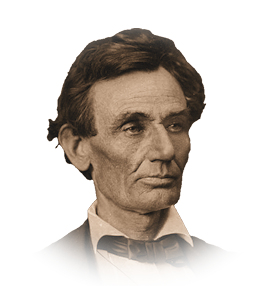
Hon Abram Lincoln
          Dr Sir – It has been publicly stated in this place that you endorse the Fugitive Slave Law of 1850, as constitutional in its object, & in its provisions in All Respects– You would would confer a favour upon the writer of this as well as upon many Republicans hereabouts by briefly giving your views upon the matter.
          Yours Very Truly

A. J. Grover
Mem. of Rep. County
Com. of La Salle Co.


  • This letter is probably misdated, for Lincoln responded to “Yours of the 9th” on January 15, 1860, in a letter to Grover.
  • Source: House Divided at Dickinson College
0 comments

0

News of the Day
1860s newsprint

Southern Broad-Axe [West Point, MS], February 8, 1860

A friend of ours writing from Nacogdoches, Texas, says: “Texas avails herself of every opportunity of showing her patriotism, her respect for the constitution, the South and the blood of her ancient heroes, by elevating the humanitarian emissaries of the Seward and Brown stripe, sent down here by these ‘grande gringoes’ (big Yankees) on a piece of timber about four inches in diameter and ten feet long, in common parlance called a rail—and marching them around for a ‘spell’ on the brawny shoulders of about four sable gents, while the general cry is, ‘hang him! hang him!’ he don’t care for that, he was raised on such gymnastics.’ Even the Mexicans seem to have caught the inspiration and cry out amid the excited crowd, “Carraho el grongoe, ferro del inferno, no bueno hombre, Viva la Texas! Of course Northern humanitarians will say this kind of patriotism bears the impress of savage, more than civilized people. But Texas says that she and her sister Slave States have made compromise after compromise, until nothing is left to be given up except their liberty—and these emissaries are sent to steal away that. It is for this that they are so roughly handled, and not through malice. So Mr. Emissary had better tread lightly on the soil of gallant Texas, for some of them have already learned the ‘failing’ of Texans, when their rights or liberties are invaded. If such cattle look to their future welfare, they will stay in their own congenial clime, nor again pollute our soil with their slimy tread.  Our merchants and planters have said that they will do all their shipping and trading at Southern cities in future.”

0 comments

0

Uncollected Letters of Abraham Lincoln—1917
February 8, 1860.
          Dear Mr. Dummer: I have examined and considered the general proposition in your letter accompanying copy of contract in relation to Lard tubs, apparatus &c., and in my opinion the Messrs H. C. Gadsen and Co. will, as a general proposition, have a right to continue to use the Tubs, apparatus &c which they have.
          The reason why I say “as a general proposition” is that I fear the phraseology of the contract deprives them of it.
          The language of the contract is so explicit and so often repeated that the right to use “shall be until the expiration of patent” that I fear it will be held that by the contract they cannot have the benefit of the enterprise.
          Much might be said on the other side and I only mean to say that in my mind the question on the phraseology of the contract is doubtful and perhaps is worth trying.

Yours as ever,           A. Lincoln.
0 comments

0

Miscellaneous document sources
Simeon Hart

Mr. Hart to Mr. Floyd.

EL Paso, Texas, February 7, 1859.

Governor; I have the honor to call your attention to occurring events on this frontier touching our relations with Mexico. The church party at last accounts, which I deem authentic, were organizing a column at Guadalajara to march on Chihuahua and Durango, to occupy these two States for their party. I believe no resistance will be made, as these two States are without resources, having exhausted themselves to hold out for the liberal party. Under these circumstances, American citizens like myself are exposed to serious loss by disorders which may occur on the Mexican side of the Rio Grande. In Chihuahua I have large interests in personal property, merchandise, and real estate there, and without special orders from your department I know that the present commanding officer at Fort Bliss will not interfere to save our property from damage and loss, although our troops be garrisoned within sight of such spoliations. This should not be so, and the officers in command of this part of the frontier should have orders to interfere, if necessary, to save our property from injury it not from destruction.

If the church party become uppermost, we have nothing else to expect, as they are inimical to us, while the liberal party now in power in Chihuahua are comparatively friendly; at least they are far from injuring our persons or property.

What our naval vessels in foreign ports do to protect American citizens and their property, the same is the duty of our troops stationed on this frontier, to interfere to the same end, and I have the honor to request that you will see that the commanding officer at Fort Bliss receive such orders as will direct his interposition, if necessary, to give safety to American citizens and their property in the towns on the other side of the river, almost within hail of Fort Bliss.

I remain, governor, very respectfully, your obedient servant,

S. Hart.

Governor John B. Floyd,
Secretary of War, Washington, D. C.

Since the date of the above Durango has succumbed to the church party, and Chihuahua I fear will have to do the same very soon.

S. H


A letter in Difficulties on Southwestern Border, House Documents, Volume 126; Volume 128, United States House of Representatives, U.S. Government Printing Office, 1860

During the 12 years following the Mexican-American War there were present on the frontiers of Texas and Mexico many factors that tended to create disturbances. The topography of the country, the sparsity and general character of its population, the lack of an extradition treaty and of sufficient national authority, wild Indians of uncertain abode, the Mexican tariff system, all caused friction and gave encouragement to lawlessness which not only retarded the development of the region but often threatened to interrupt friendly relations between the two republics. [Border Troubles along the Rio Grande, 1848-1860, The Southwestern Historical Quarterly, Vol. 23, No. 2 (OCTOBER, 1919)]

0 comments

0

Harper’s Weekly

The accompanying engraving of the well-known fish called by the Japanese the Noomo, is from a sketch obligingly furnished us by the writer of the following letter. It will be viewed with interest by all who remember the excitement produced some years since by the exhibition of a so-called mermaid at Barnum’s, in this city. The letter is as follows :

The Japanese Mermaid, Harper's Weekly, February 4, 1860

To the Editor of Harper’s Weekly:
                                                                     Randolph, Macon College, Virginia,
                                                                      December, 1859.
I am to-night in receipt of a letter from Dr. D. B. Phillips, surgeon in the United States Navy, steamer Mississippi, dated Hong Kong, Sept. 27, 1859, and containing the accompanying sketch from nature and description (with the request that I forward them in his same and with his compliments to you) for your Weekly, “of a very singular animal, found in Japan, and called the Noomo. The specimen from which this sketch was taken is dead and dried, and is eighteen inches in length. I have examined it [continues Dr. Phillips) with the utmost care, and am fully persuaded that it is genuine. It is universally and immediately recognized by the Japanese as a Noomo. The specimen is now in possession of Mr. T. King, master of the American schooner Wanderer, now at Shanghai, who purchased it at Kanagawa, Japan, for the sum of 130 ichiboos, equal to $40. Mr. King has since been offered $1500 for it by (as I understand) Mr. Bruce, the English Minister to China.” Vouching for the truth of all I assert, and leaving the question of classification to the naturalist, I remain,
                                                             Yours truly,       William B. Carr.


Published February 4, 1860, issue of Harper’s Weekly

0 comments

0

Miscellaneous document sources

Major Heintzelman to the Adjutant General.

Headquarters Brownsville Expedition,
Fort Brown, Texas, February 5, 1860.

Sir: I have the honor to report that the steamboat Ranchero, on her way down the Rio Grande with a valuable freight, was fired upon by Cortinas from the Mexican side of the river, at the Bartoni, a point thirty-five miles above this. At the same time a party of rangers, escorting provisions, were also fired upon from the same side, and one man mortally wounded. The fire was returned immediately. The fire was continued, when, the better to protect the boat, Captain Ford crossed a portion of his men, and drove the enemy into the chapparal. Captain Stoneman’s company of cavalry, fifteen miles above here, advanced last night to support him. We now have some 200 men at that point.

An express arrived at Matamoras last night at 9 o’clock and by 11 from 80 to 100 men had left, it is supposed, to join Cortinas. He has the active sympathy of the greater portion of the population.

I this morning addressed a note to General Garcia, the Mexican commandant, informing him of these occurrences, and asking him to co-operate in putting down the marauders. I am now awaiting his answer, but fear the steamer will leave before it comes.

There is some alarm of an attack from the other side, though I think there is no danger unless there is a pronunciamento against the liberal party.

More troops are required on this frontier.

Since writing the above I have received an answer to my note to General Garcia. He expresses the strongest desire to do all in his power to arrest Cortinas, and break up his forces. He last night sent 40 men of the rural police, the only force he has, and will, in the course of the afternoon and evening, send more so soon as they can be organized. At his request I have ordered our troops to recross the river.

I have the honor to be, sir, very respectfully, your obedient servant,

S. P. Heintzelman,
Major 1st Infantry, Commanding.

Colonel S. Cooper,
Adjutant General U. S. A., Washington.


A report in Difficulties on Southwestern Border, House Documents, Volume 126; Volume 128, United States House of Representatives, U.S. Government Printing Office, 1860

During the 12 years following the Mexican-American War there were present on the frontiers of Texas and Mexico many factors that tended to create disturbances. The topography of the country, the sparsity and general character of its population, the lack of an extradition treaty and of sufficient national authority, wild Indians of uncertain abode, the Mexican tariff system, all caused friction and gave encouragement to lawlessness which not only retarded the development of the region but often threatened to interrupt friendly relations between the two republics. [Border Troubles along the Rio Grande, 1848-1860, The Southwestern Historical Quarterly, Vol. 23, No. 2 (OCTOBER, 1919)]

0 comments

0

News of the Day
1860s newsprint

Standard [Clarksville, TX], February 4, 1860

An extraordinary case of a girl concealing her sex for many years has been brought to light at Pettiers, France. Augustine, alias Augustus Baudouin, young person of 17, was known in the town and neighborhood as an active lad, and had been in place in respectable houses as “odd boy.” This individual was lately tried for robbery, and while in prison the authorities conceived some suspicions, and ascertained her to be a female. On being asked what reason she had for wearing men’s clothes, she said she had observed that men got their living easier than women; but she refused to give any information as to her birth and parentage. She was removed to the female wards, but her repugnance to appear in woman’s attire among her fellow prisoners was so great, that she committed suicide by hanging herself to an iron bar with a pocket handkerchief.

0 comments

0

News of the Day
1860s newsprint

Standard [Clarksville, TX], February 4, 1860

It seems that Mr. Mills of Navarro, has found it necessary, in his place in the State Legislature, to define the position of the people of Northern Texas upon the Slavery question. We were not before this aware that the people of Northern Texas required any definement of their attitude in this respect, but suppose that of course Mr. Mills had heard something which called out his remarks. The debate arose upon a bill to grant 200 acres of land to actual settlers upon the frontier. We suppose that individuals could be found, here and there, having anti- slavery prejudices; but we have never met with one yet, in Northern Texas, who expressed them, in our hearing, and we imagine that the number is quite small. There is no danger of the growth of any such sentiment or prejudice in a slaveholding community; where persons can see the actualities of slavery; the sickly sentiment is grown upon fallacies, at a distance from the realities, the close observation of which, would obliterate all such poorly founded fancies. It does not matter what part of the Union a man comes from, or with what notions he was indoctrinated when he left home. Let him live in a slaveholding community for a few months, and he will be ready enough to acquire negro property whenever opportunity is favorable; and he will be oppressed with no qualms of conscience in so doing. There is no room in any sensible man’s mind for such romantic fancies, after he sees and knows what slavery really is, and what slaves are by the organization of the Supreme ruler, who suited their capacities and tastes to their position, and unfitted them for any other.

“I have heard some of my friends upon the floor, who are honest in their opinion, object to this measure, because the atmosphere of the State has been poisoned with the idea that the people who are settled in that upper country, are not sound in relation to the peculiar institution of the South. I apprehend that this is all a mistake. So far as my knowledge of that country extends, the people in the Northern part of the State are more sensitive upon the subject of slavery, than those in the vicinity of Austin, or any interior portion of the State. Abolitionists, and their incendiaries and emissaries, have taken advantage of these slanders that have been circulated generally over the State, to the injury of that section, and believing them to be true have attempted to go to that country and indoctrinate the people with their treasonable sentiments. Some of these individuals have lately shown themselves in that region, and on every occasion (and I defy contradiction) where their incendiary objects were made known to the people, they have been driven away and expelled from their midst. They were driven out of Dallas county, out of Cooke, out of Fannin and out of every other portion of that country where they have made themselves known. And I warn such gentlemen have been lecturing to respectable audiences and receiving applause in the city of Austin not to go to that country, for if they did they may receive an invitation from the people of that region to visit the nearest black jack in the vicinity. If the gentlemen who had [illegible] boldness to address a letter [illegible] city to the President of the United States, acknowledging that he had been principal secretary of an organization having for its object those which were developed in the late insurrection at Harper’s Ferry—I say if he had written that letter in the midst of that people, he would have paid for it by the forfeit of his life. I want gentlemen to reflect on fact—and the apportionment committee will bear me out in it—that the people of Northern Texas, have increased more rapidly in the last eight years, than those of any other portion of the State. And why is it Mr. Speaker, that their population augments so fast and has become so overwhelming? It is answered thus, sir: within the last eight or ten years the abolition spirit in the Northern portion of this Confederacy has been increasing; it has been resisted, however, until within the last six or eight years, by the conservative and patriotic citizens of that section. They have fought gallantly, but they have at last fallen before the foe. For a long number of years they stood in serried columns around the Constitution and the Union. Now they are crushed down and overwhelmed by an all powerful majority. Many of them have left the homes of their infancy and youth, as the Puritans left England, to escape persecution, on account of the faith that was in them. Many of them have come among us because they were patriots devoted to the Constitution of their country, and wished to live where the common sentiment around them was congenial with their own. They have settled in this Northern country because the soil and climate is adapted to the growth of such products as they have been accustomed to all their lives. And from the fact that these slanders have been circulated all over the State, and even found an echo in this hall, they have become more sensitive on the subject of Slavery than the citizens of any other portion of the country. And, hence, they have adopted every measure, and made use of all the means in their power, to prove that the settlers in their section of the State are not at enmity with that institution, which is the very life blood and existence of the whole South. I have felt it my duty, as it has been suggested by friends that these reports are having their influence on this very measure, to endeavor to disabuse the minds of the members in relation to this slanderous charge brought against the people of that portion of the country.

0 comments

0

Miscellaneous document sources

Lieutenant Fink to Colonel Seawell.

Headquarters, Fort Davis, Texas,
February 4, 1860.

Sir: I have the honor to report the arrival at this post to-day, from Chihuahua, of two American citizens, Messrs. McManus and Hickman. Those gentlemen have informed me that they, together with all other American citizens, as well as other foreigners, who were residents of Chihuahua, had been obliged to leave that city in consequence of a threatened attack upon it by a party of Miramon’s troops. These troops, not many in number, it is said, were assisted by a numerous band of robbers, who did respect neither life nor property of the inhabitants, especially of foreigners. As an example, they state that the town of Panal, a short time since, was taken by them after a gallant defence on the part of the inhabitants, a large number of whom having been taken prisoners were murdered in cold blood.

The governor at Chihuahua, I am informed, has solicited assistance from the military authorities of the United States at Fort Bliss.

Messrs. McManus and Hickman also called upon me to give, if possible, assistance to the inhabitants of Chihuahua in men and arms, which request, as a matter of course, I found myself forced to decline.

Very respectfully, your obedient servant,

Theodore Fink,
1st Lieutenant 8th Infantry, Commanding Post.

The Assistant Adjutant General,
Headquarters Department of Texas, San Antonio, Texas.


A report in Difficulties on Southwestern Border, House Documents, Volume 126; Volume 128, United States House of Representatives, U.S. Government Printing Office, 1860

During the 12 years following the Mexican-American War there were present on the frontiers of Texas and Mexico many factors that tended to create disturbances. The topography of the country, the sparsity and general character of its population, the lack of an extradition treaty and of sufficient national authority, wild Indians of uncertain abode, the Mexican tariff system, all caused friction and gave encouragement to lawlessness which not only retarded the development of the region but often threatened to interrupt friendly relations between the two republics. [Border Troubles along the Rio Grande, 1848-1860, The Southwestern Historical Quarterly, Vol. 23, No. 2 (OCTOBER, 1919)]

0 comments

0

Miscellaneous document sources

Crawfordville [Ga.], Feb. 4th, 1860.

Dear Smith, I have just got back from Augusta where I have been all the past week attending court, and now have your letter of the 30th ulto. before me. The news of the organization of the House reached Augusta while I was there and I saw no man there or anywhere else since that was not gratified at it. I think our friends made some good points by the course they have taken and ought to feel that the triumph was theirs. They broke the line of the Republicans. They rebuked the endorsers of Helper (I believe Pennington was not on the list of these). They broke the Seward line—he is I believe not the favorite of Pennington—though I have never looked upon Seward as formidable at all, but others have so considered him. I have never thought that he stood any chance for a nomination, and if he were nominated I think he is the weakest man they could run.

Still the moral effect of breaking the prestige of the ultra wing of the party is a great point gained. I look upon Pennington as a sort of moderate anti-slavery man with a good deal of national feeling, who is in his present position more by accident than by choice. This is the idea I have of him. What a mistake Sherman committed in giving or allowing the use of his name to the friends of Helper as he did, and what greater mistake he made in not coming out in a manly way and saying that he did not approve the sentiments of his book as he has since seen the work! This was just such weakness as a large class of men [have] who have not the nerve to meet questions at the right time in the right way. Such men can never be leaders. They are by nature only third or fourth rate, and can never rise except by accident to high position. I take it for granted that Sherman does not in fact approve Helper’s doctrines. I always regarded him as more decided in his anti-slavery opinions than Pennington, but as by no means amongst the rabid and ultra men on his side of the House. I think that so far as the duties of the chair are concerned he would have made a better speaker than Pennington. The latter I fear will make an inefficient officer. Sherman would not have come up to the grade of any of his late predecessors ; Pennington I apprehend will fall far below them. Banks made one of the ablest if not the ablest Speakers I ever saw in the chair. He was without doubt the most impartial Speaker I ever saw in the House of Representatives. In some things I think Cobb was his superior. It is a matter of vast importance to have an able, quick and prompt presiding officer over any deliberative body and especially in our Ho[use] of Representatives where there is so much excitement and animosity. Impartiality too is the crowning gem of a Speaker’s character. I fear this will be wanting in Pennington. Still I hope all will go along smoothly. I was much pleased with Mr. Toombs’s speech. It is exactly on the right line. It is in better tone, temper, and shows more real statemanship with less impulse of [bare?] passion than any speech I have ever seen from him. If the South would but see the deep truths it teaches, the profound philosophy it inculcates, the true national patriotism it breathes throughout, and would to a man stand unitedly upon the policy it marks out, we should not only carry the next elections, but the country would be [safe?] just so long as they would maintain sternly that line. Their destiny is truly in their own hands. But if they can not see these things, these truths, and can not be got to adopt so plain, so safe and so wise a policy, what can be expected of them in any other emergency or alternative that their folly may drive them into? That is a question that oppresses me in looking after a solution of it. How can I be sanguine in hope as to what a people will do on a new line when they make so fatal a blunder on one so plain and clear? But let the worst come that may, we must all meet, act according to the necessities of the occasion. It is immaterial by what blunder, foolishness or wickedness the necessity is brought about. We can only hope for the best, while we should at all times be prepared for the worst.

[P. S., written on a separate slip of paper].—You may show this to Mr. Toombs if you think proper.


Life of Alexander H. Stephens,Richard Malcolm Johnston, William Hand Browne
J.B. Lippincott, 1878

Alexander H. Stephens would later become Vice President of the Confederated States of America.

0 comments

0

Uncollected Letters of Abraham Lincoln—1917
Springfield Feb. 14, 1860.

Messrs. O. P. Hall &
                     I or J. H. Fullininder.
          Gentlemen: Your letter in which, among other things, you ask what I meant when I said this “Union could not stand half slave and half free”; and also what I meant when I said “a house divided against itself could not stand” is received and I very cheerfully answer it as plainly as I may be able. You misquote, to some material extent, what I did say, which induces me to think you have not very carefully read the speech in which the expressions occur which puzzle you to understand. For this reason and because the language I used is as plain as I can make it, I now quote at length the whole paragraph in which the expressions which puzzle you occur. It is as follows: “We are now far into the fifth year since a policy was initiated with the avowed object and confident promise of putting an end to slavery agitation. Under the operation of that policy that agitation has not only not ceased, but constantly augmented. I believe it will not cease until a crisis shall have been reached, and passed. A house divided against itself can not stand. I believe this government can not endure permanently, half slave, and half free. I do not expect the Union to be dissolved: I do not expect the house to fall; but I do expect it will cease to be divided. It will become all one thing, or all the other. Either the opponents of slavery will avert the further spread of it and place it where the public mind shall rest in the belief that it is in course of ultimate extinction; or its advocates will push it forward till it will become alike lawful in all the states, old as well as new, North as well as South.”
          That is the whole paragraph; and it puzzles me to make my meaning plainer. Look over it carefully, and conclude I meant all I said, and did not mean any thing I did not say, and you will have my meaning. Douglas attacked me upon this, saying it was a declaration of war between the slave and the free states. You will perceive, I said no such thing, and I assure you I thought of no such thing. If I had said I believe the Government cannot last always half slave and half free, would you understand it any better than you do? Endure permanently and last always have exactly the same meaning. If you, or if you will state to me some meaning which you suppose I had, I can and will instantly tell you whether that was my meaning.

Your very truly,                     
A. Lincoln.
0 comments

0

News of the Day

[Fayetteville, Ark.] The Arkansian, February 3, 1860

(1860 infomercial continued…)

“Now, friend, we are ready to hear you according to promise, finish your account of your country. We are much pleased so far with your answers to our queries, and think you endeavor to give us the truth concerning Arkansas.”

“I am much obliged to you for the interest you display in listening to my poor delineations of some of the characteristics of Arkansas, and the advantages which I consider my State is able to confer upon her settlers. Could you but hear some of her gifted sons portray the present and apparent future of Arkansas I know you would be charmed, and that many of you would seek homes in my beloved State.”

“How many towns are there in your vicinity? what is their population, facilities, privileges, and inducements to settlers of different avocations?”

“The chief towns in my region are Fort Smith, Van Buren and Fayetteville. There are besides pleasant little villages in the counties adjacent. Among these Bentonville, the county seat of Benton, is the more interesting. I will begin with Fayetteville, and though not able, in an ordinary conversation, to supply you with its complete statistics, yet I will essay to set before you some of its belongings. Fayetteville is the most beautifully situated town in our State, and, for that matter, can not be surpassed by any in the United States. Sun, shadow and the Ozark Hills have hung around the town the most enchanting and picturesque landscapes. No two of them are like; of the single town of Fayetteville one can get a thousand differing and equally charming views. Were the town and its surroundings to be carved out and placed on the Plains, midway to the Rocky Mountains, thousands would travel thither merely for the enjoyment of their beauties. The town is situate on a high hill, over-looked by others still higher; is not far from one branch of the “beautiful but neglected” White river; is healthy and salubrious as to climate; while from its hill sides gush living springs of the ‘first water.’ I rank the town as to population the third in the State; Fort Smith and Little Rock leading it. In point of education Fayetteville out ranks any other in the State, and it would be hard to find its superior in the West Mississippi Valley, outside St. Louis and the Great Towns. Should you desire to educate your children you may travel East and fare worse. The advantages with us are very great. We have a College of wide reputation, and one distant sixteen miles, also, which have already done much and bid fair to do very much more, to be first class schools. The College buildings are elegant and commodious, their professors able, library, apparata, &c., ample—especially for a new country and young institutions. Two female schools of the highest order are successfully established in our town, whose facilities for the education of girls, in all branches, are super-eminent. The buildings cannot be excelled by any like town in the United States, and hardly surpassed by the largest towns. Hundreds of youth have been educated in these schools and they are easily capable of educating 4 to 500 yearly. There are good primary schools, in our midst, also. Of course, with all these advantages of education, Religion is not neglected in Fayetteville. Four churches flourish there. In morals Fayetteville possesses the fame that always attends the means and advantages found in its midst. Handsome public, business and private buildings adorn the town. Business is great for a town of its inland character. There are eight stores, and some smaller establishments, where you may buy as good, cheap and elegant goods as fancy prompts. Our merchants are intelligent men. We enjoy the works of good lawyers, while doctors grow fat in keeping us healthy; they are weighed in the balances but not found wanting. We have finished mechanics of all kinds. A large Merchant Steam Mill puffs under the town hill, while water Mills, of the same class flutter in the vicinity. Lots, improved and unimproved may be bought at reasonable prices, and no better lot need a man desire than a home in Fayetteville. There are young ladies there, too, who can improve such lots. Good farms in the neighborhood may be purchased equitably. Some of the land is superb, and some not so good, and some yet again not worth much. Yet the greater portion is fit for cultivation of some sort, profitable cultivation, too. Our market is like unto that of all such towns. We are distant from the Arkansas river, at Van Buren, our port, fifty-four miles. Hereafter, we will possess larger facilities that way. For the South-west Branch of the Missouri Pacific Railroad cannot stop at the Missouri line. That would not pay; and as it will not reach California in a year or two, the only way to make it pay is ‘tap’ the Arkansas river at Van Buren. At that place they have already broken ground on the Fort Smith and Little Rock Railroad, which also will not pay unless it ‘taps’ the Missouri Road, and St. Louis leveys her portion of the Arkansas Valley commerce. The COTTON COUNTRY, too, begins at Van Buren and that must be ‘tapped.’ So you see our chances are tolerably bright for a railroad, and, consequently, a telegraph. We have now, however, running through our midst that triumph of Staging the ‘Overland Mail.’ If all the world’s a stage, surely the Overland Stages are the only ones that run across a world. This ‘institution’ is a blessing especially in these days of no mails [tear across corner] permanent privileges of Fayetteville. In politics, too, we are not behind our neighbors, and we possess a fair share of political influence. Our newspaper is equal to all occasions and would reflect credit upon a larger town than Fayetteville. Salt, pepper and spice are not stinted in its columns. If you subscribe for and read this paper, the ‘Arkansian,’ you may learn all about Fayetteville, much valuable information, besides many other things worth knowing.”

“Well, what of the other towns, Van Buren and Fort Smith? If they are as fine as your own we must acknowledge that you are indeed blessed; we will be compelled to admit that in the eager rush of emigration to Texas and California, Arkansas has been over looked and neglected.”

“It has been so indeed. ‘Silver and gold have we none,’ but we have that which brings them plenteously; our rich ores of zinc, lead, iron, manganese; our marbles, limestones, oilstones, coals; our vast forest of valuable woods and timber; our immense and inexhaustibly fertile cotton, grain and grazing lands, are riches whose wings are clipped. I have said so much of my own town that I shall not have time, now, to say what ought to be said of Van Buren and Fort Smith, which are strictly commercial towns. Fort Smith is the largest town in the State, has a population of say 2,500 inhabitants. A vast deal of business is done there. It is on the western confine of the State, borders on the Choctaw and Cherokee Ter. With its West it has a great trade. The inhabitants are very enterprising. There are many buildings within it, that would be noted in large cities, of stone and brick. You hear there the constant ring of the dollar, the clatter of the hammer and the roar of the bellows. The town is a miniature San Francisco. There unite the St. Louis and Memphis Overland Mail Routes. There they hope will be commenced the Grand Trunk Pacific Railroad, to run along the 35th parallel. This parallel is very popular there—coiled all around the place. One newspaper and a steamboat are christened after it. Three newspapers are published there. Fort Smith is destined to be a city of no mean size; the people thereof are sanguine it will be a Great Railway Depot. Some folk even go so far as to think it the central city of the Union. It is the Queen of the Arkansas Valley. Should the Grand Trunk begin there a prophet might tell the result. I wish I could map before you the regions that naturally pour commerce into the laps of Van Buren and Fort Smith. First, there is the Arkansas main; then the Illinois, Grand, Verdegris and Upper Arkansas rivers; then the Red Fork of Arkansas; then the long Canadian, with its co-equal branch the North Fork, whose waters leap out from the Spanish Peaks. All these vallies of the richest land in the world are tributary to Van Buren and Fort Smith commerce. Besides this, the commerce from New Mexico and Texas will pass into and through these towns. To them naturally belongs the commerce of New Mexico; and when railroads connect them with Texas and the far Rio Grande you will see all Texan and Mexican merchants congregating at, or journeying through these towns, and thro’ them, also, will vast quantities of Mexican and Arizonian silver be carried. From the character of the inhabitants of these towns it is reasonable to suppose that some of this last mentioned commodity will ‘stick.’ Van Buren is a town of solid merchants and capital. It is improving according to time, not hastily but substantially. One newspaper is published there. The second newspaper, long time the exponent of the Frontier, ever published in North-west Arkansas, was the ‘Intelligencer’ of Van Buren. Its citizens, like all Arkansians, are liberal and hospitable, and their town is one of the pleasantest places in the world in which to live. In Railroad enterprise, Van Buren is going ahead, and from the known character of its people they will ‘do or die;’ they will have a railroad if any Arkansas people can get one. Be sure of that. Van Buren is just on the Cotton Line; in its very streets you can raise the plant. Like picking up gold in the streets of Sacramento, you may ‘pick’ cotton in the yards of Van Buren if there you wish to raise it. This cotton fact will have a hearing on the future of Van Buren. Thousands of acres of the very best of cotton land lie contiguous to the town; which land is now in the culture of cotton, or inviting the planter to purchase and occupy. I do not know any finer cotton section now open. Those who wish to buy land to produce cotton will not do themselves justice without examining it. Van Buren will be a cotton city some day, and the now silent ‘Cotton Factory’ will be put to labor and bring forth many other factories. In the vicinity of Fort Smith in Sebastian county, near Van Buren, is abundance of coal. Van Buren is four and a half miles distant from Fort Smith. Both towns possess the advantages common to all like towns; superior to many. They offer great temptations to settlers—merchants, lawyers, doctors, mechanics, workmen—and capital. Little Rock is the capitol of the State. It is what a town situate in the heart of a cotton region should be. It is the seat of elegance, fashion, and wisdom. There our legislators make laws; there our belles and beauxs shine as they do in Broadway; there congregate all on distinguished men, statesmen, lawyers, editors, poets, painters; and there you may meet planters worth their hundreds of thousands. Little Rock is a chivalric city and will become a stately capitol; more so it is to be hoped, than the present State House. All three of these towns are beautifully situated upon the banks of the Arkansas river. Little Rock is distant from Van Buren about 150 miles.

“Friend, it has commenced raining and it will probably be stormy all day. You had better not attempt to travel, but give us to night something more of your State. Say, how will it suit you? Here you are comfortable; outdoors ’tis violently uncomfortable, and were you to start you could not go far. Let us hear more of Arkansas.”

“Well as it rains rather hard for good travelling, and, as here I am dry in body and talk

also, I conclude to tarry another night. I am happy my account is considered, by you, worth

listening to, and shall be glad to continue it.”

0 comments

0

News of the Day
1860s newsprint

[Little Rock] Old-Line Democrat, February 2, 1860

Lake Village, Jan. 9th, 1860.

Dear Old-Line.—Thinking that perhaps amid the din of political strife, a letter from the quiet and secluded little town of Lake Village, would operate as a balm to your weary soul, by again calling to remembrance those scenes of quietude remote from the bustle and confusion of this babbling world, and so seldom experienced in the life of an Editor. I take my pen to jot down a few items of news from this beautiful place to solace you. Know then that Lake Village is a pretty little town, situate on the banks of one of the most beautiful little lakes of the South. It is the county seat of Chicot county, and is seven miles from the Mississippi river. The surrounding country is one of the most fertile spots in the Mississippi valley, and rivals in richness the far famed Delta of the Nile. The shores of Old River Lake are covered with magnificent plantations which are cultivated with great care, and the yield of cotton is almost fabulous. The health of this country is reasonably good.

The town is small but improving very fast. This appears to be one of the places where Lawyers “most do congregate” as there are a great many of them here, but as for the other learned professions, they are thinly represented. The public buildings are all excellent, and especially the Jail, which is undoubtedly the best in the State—these public buildings are sure evidences of enterprise and public spirit. The towns and surrounding country are very much in need of mechanics, and a good saddler, shoemaker, or tailor, could do better here than almost any where else, provided however, that he be a sober and industrious man. Mechanics of other trades also can find plenty of work at high wages and ready pay. I know of no place where mechanics can do better than here. There will be a newspaper published here in a few weeks, which I take to be another proof of the prosperity and enterprise of the country.

Dr. Lyon has been here “feeling the public pulse,” for his prospects for Congress from this district. He made a speech at the Court House the other night and defined his position to his audience. He says that he is not an Old-Line Democrat—is in favor of re-opening the African slave trade, &c., &c.

The political atmosphere is quiescent at present, in fact the people are too busily engaged in their own private affairs to attend much to politics. Your valuable paper has various subscribers here, and is very well liked. Your moderate, yet firm course is entitled to the respect of all thinking men. A project is on foot here to establish a Female College at Lake Village, with an endowment of $50,000, a considerable of which is now subscribed, and the day is not far distant, I trust, when Lake Village will be the site of one of the most magnificent and interesting female colleges in the South. This place is one of the most beautiful and healthy in the world, and is of easy access, no school of like character is near, and it is due the enterprise of old Chicot that she should have one first class school within her limits. The Chicot levy board are pushing on their works with great rapidity, and seem determined that the Mississippi shall never again visit the plantations of Chicot county. The levys are built far back from the river, and are very large and substantial.

There has been some very cold weather for this country here this winter and no little know, but the weather is now warm and rainy. The Post Office at Luna will soon be changed back to Columbia again, from whence it was removed to Luna last fall.

The planters have got their cotton crop nearly gathered, and a fine one it was too. The planters of this county appear to have fine success in growing cotton, and their plantations are models of neatness and good farming.

Peregrine.

0 comments

0

Miscellaneous document sources

Major Heintzelman to the Adjutant General.

Headquarters Brownsville Expedition,
Fort Brown, Texas, February 2, 1860.

SIR: Having received instructions from the commander of the department to collect the names of the killed, and ascertain the damage done by Cortinas and his command, I left Roma on the 15th and arrived here on the 21st of January with Captain Stoneman’s cavalry.

On the march I found all the ranches but one on the road this side of Edinburg deserted, and many burned, until we came almost in sight of this town.

Some half dozen Mexicans were seen at a ranch called San Rosario, thirty-five or forty miles above this. They were pursued, but escaped into the chapparal. They undoubtedly belonged to Cortinas’s bands, as the mail-carrier was robbed at this place a few days before. This is the only sign of the enemy seen on the road. I have no information on which I can rely of any parties being on this side of the river. Small parties frequently cross, steal cattle, and return to the Mexican side. The river is very low and narrow, and easily crossed, so that it is impossible to prevent this entirely. It can only be done by crossing or occupying the Mexican side of the river. The whole frontier on our side is abandoned and waste.

I hear of small parties on the Mexican side of the river, and well equipped, with arms, ammunition, and supplies. These must have been obtained from the Mexicans, as few escaped from their defeat with arms. Cortinas has the sympathy and aid of the population, and the feeling against the Americans is very great.

With one of the Texas commissioners I called on General Guadaloupe Garcia, the Mexican commandant at Matamoras, and he showed us an order from the secretary of war of Mexico, through the governor of Tamaulipas, directing him to co-operate with our troops to break up these marauding parties. I have got to learn of his having taken any steps to do so, and doubt of his ability, under the present state of feeling, to accomplish anything should he attempt it.

With Captain Stoneman’s company and two companies of rangers in service of the United States, I am endeavoring to protect the country as far as Ringgold barracks, and induce the inhabitants to return to plant and collect their cattle.

I have the honor to be, sir, very respectfully, your obedient servant,

S. P. Heintzelman,
Major 1st Infantry, Commanding.

Col. S Cooper,
Adjt. Gen. U. S. A., Washington, D. C.


A letter in Difficulties on Southwestern Border, House Documents, Volume 126; Volume 128, United States House of Representatives, U.S. Government Printing Office, 1860

During the 12 years following the Mexican-American War there were present on the frontiers of Texas and Mexico many factors that tended to create disturbances. The topography of the country, the sparsity and general character of its population, the lack of an extradition treaty and of sufficient national authority, wild Indians of uncertain abode, the Mexican tariff system, all caused friction and gave encouragement to lawlessness which not only retarded the development of the region but often threatened to interrupt friendly relations between the two republics. [Border Troubles along the Rio Grande, 1848-1860, The Southwestern Historical Quarterly, Vol. 23, No. 2 (OCTOBER, 1919)]

0 comments

0

News of the Day
1860s newsprint

Texas Baptist [Anderson, TX], February 2, 1860

Knowing the interest felt by the brethren throughout the State in establishing a Mission in San Antonio, we have visited the city to examine the prospects.—Doubtless the brethren would be glad to learn all the facts which have any bearing upon the building up of our Redeemer’s Kingdom, in the largest city in Texas.—The facts are laid before the reader to enable him to reflect and conclude for himself.

The population of San Antonio is estimated to be eight or ten thousand.—One third of these are Mexicans, one third Foreigners, and the other third Americans. If there is any error in this calculation it is in not giving a larger population to the Mexicans. The foreigners are Germans, Irish, French, Poles, &c. We had an Arabian to hear us preach.

El Paso, Chihuahua, and the Southern part of New Mexico obtain merchandise and other supplies from San Antonio.—One of the merchants has a contract for furnishing twelve hundred bales of cotton to a factory in Saltillo. The cotton factories in Monterey also purchase cotton in San Antonio. Many of the towns in Texas, north and west of the city, go there for their goods. Here, too, is the head-quarters of the United States troops for Texas. The general government is erecting large buildings for army purposes. The stock trade with Mexico mostly passes through San Antonio, and much of it is transacted in the city. A large number of new buildings are going up, built of stone, and many of them three stories and of splendid architecture. A company has been formed, with a capital stock of one hundred and twenty thousand dollars, to light up the city with gas.—The factory is built, machinery obtained, pipes being laid down, and the enterprise to be completed by next April. The road has been graded from Lavacca to Victoria, and the iron purchased, and this thirty miles of the Railroad is soon to be finished. It is supposed that the road will be completed to San Antonio in two or three years. The San Antonio river runs through one side of the city and the San Pedro creek through the other. Both these streams come from springs just above. Channels are dug carrying water through various other parts of the city. The gardens are irrigated, yielding vegitables  most of the year. In former times the Mexicans irrigated vast fields below town; these have been abandoned for years. Recently the old channels are being opened, and some eight hundred acres irrigated last summer. Until the last four years corn and cotton grew abundantly in the West, since then the droughts have caused serious failures in the crops. The country about San Antonio is prairie, only populated on the water courses. The population is very sparse, and will not increase unless the seasons become more favorable.

The Catholics have two cathedrals.—They have a male college with students varying from one hundred and fifty to two hundred; the institution is prepared to take in boarders. The Catholics have a convent with three hundred and seventy-five girls, taught by twenty or thirty nuns. Every half hour the scholars are required to make the “sign of the cross,” and to repeat this prayer: “Holy Mary! Mother of God! pray for us now and till the hour of death.” They have to attend chappel  once a day, and cross themselves with “holy water” as they pass in and out. We were told by one of the young ladies that Protestant children observe all these forms. As the monks and nuns have given themselves to the Papacy they need no salaries, and hence tuition is very cheap. Below the city are three ancient buildings, used formerly as Mission stations, to each of which belongs a tract of land; these stations are two and five and eight miles below. The Catholics own the Alamo, which they rent to the Government as a military storehouse. The Mexican population is Catholic. There has never been a convert from Catholicism to Protestantism, except a few cases owing to intermarrying.—The foreigners are nearly all Catholics. Those who are not are Lutherans. Probably half the population are Catholics.

The Lutheran preacher speaks the German, English, Mexican and Polish languages. He preaches in a public school room, and is much esteemed.

The Methodists have about seventy members. Dr. Boring is their stationed preacher. We believe he is M. D. and D. D., and is regarded by the Methodists as one of their ablest preachers. Joseph Cross, D. D., teaches a female school in the basement of the meeting house.—This house is about fifty by thirty feet.—The Rio Grande Conference resolved to raise sixty thousand dollars for a male and female school, and the citizens of San Antonio are to raise the additional sixty thousand. The one hundred and sixty thousand is to be expended in buildings and college grounds. The friends of the enterprise are purchasing the lots and obtaining the charter and carrying up the subscription. These schools are to be finished in five years or less, and to be controlled by the Conference.

The Presbyterians number about one hundred. They are erecting a house of worship one hundred feet by fifty. The walls are up as high as the second story, and the edifice will be of a beautiful style of architecture. For thirteen thousand dollars the house is to be suitable for worship, and to be completed for eighteen thousand. The minister, Mr. Bunting, has collected five thousand dollars in the North, and expects to raise another thousand before returning.

The Episcopalians are putting up a house of worship to cost about the same as the Presbyterians. The officers of the army give their influence to the Episcopalians. Mr. Jones is their minister.

The Cumberland Presbyterian Mission Board has just appointed a Missionary, from Tennessee, who is expected in the city soon. We heard of only one member.

We found thirteen Baptists—five males and eight females. It is somewhat doubtful whether all these will remain permanently. There are a number of families and persons who are Baptist in sentiment. And some who were inclined to the Baptists have joined other denominations; and our members have been persuaded to join other denominations till there might be a Baptist church organized. Several years ago the Baptists could have commenced with advantages like those of others, but we have postponed till the ground is pre-occupied to a great extent; and the longer we neglect our duty the greater will be the difficulties. Others are establishing preemption claims, and possessing the strongholds, and will soon have all the vacant lands. Our prospects might almost be expressed by the declaration: “Now or never.” Let us beware of that fearful lementation , “Too late!” Shall all other denominations excel us in zeal?—Shall not our gospel principles be preached in the largest city of our State?

The first step will be to secure a minister. From the foregoing facts our readers are prepared to judge what kind of a minister will be needed. He must be a preacher capable of building up a church in other cities. Indeed the difficulties to be overcome are greater than in other cities. It requires a strong team to break up new ground, and hard licks to get wild lands into a plantation. In other cities where the church is already established, a young minister might be upheld by the membership. It is doubtful wherether  an experienced minister could overcome the many disadvantages that would oppose him at San Antonio.—He ought to be a preacher who would attract a congregation by his preaching.—Above all he must “walk by faith—be instant in season and out of season”—constrained by the love of Christ, glorying alone in the cross; and whose labors the Lord will bless. A few Texans, under Burleson and Milam, took the city when its strong fortress were garrisoned by hosts of Mexicans. Paul rejoiced in his trials for when weak in himself he was strong in the Lord. “If God be for us who can be against us?” “And Asa cried unto the Lord his God and said, Lord is it nothing with thee to help whether with many or with them that have no power. Help us, oh Lord our God, for we rest on thee and in thy name we go against this multitude. Oh Lord, thou art our God, let not man prevail against thee. So the Lord smote the Ethiopians before Asa.”—II Chron. 14:11-2.

If we send a missionary we must expect to aid him by our prayers and contributions. A man and wife could get boarding and room rent, exclusive of washing, for five hundred dollars a year. He could commence preaching in the court house, or some school room. A good stone wall could be put up for three dollars a perch. The walls of a meeting house sixty by forty would cost twelve or thirteen hundred dollars. The lumber would cost high. A plain building of this size would be sufficient. A portion of the money would be raised in the city.

 T.

0 comments