0

Miscellaneous document sources

Washington, D. C, Mar. 16th, 1860.

Dear Stephens, . . . We are getting on badly. The Black Reps, are now strong enough to do mischief in the Senate and are using their power. The Nicaragua Treaty was beaten yesterday and injunction of secrecy taken off by us to expose them. It is nothing to us and I don’t care a fig for it, but they are such fools as not to understand their own interest. They will also defeat the Mexican treaty when action is had on it. You will see Ohio refuse to give up old Brown’s son and another of the refugees from Harper’s Ferry. So we go. New Hampshire has increased her Republican majority and we shall lose every Northern State in the Union except California and perhaps Oregon. The strife here runs “fast and furious ” between the friends of the different candidates. It looks to me very much like the officers of ships being engaged in cheating one another at “three up” in the forecastle while the vessel is labouring among the breakers. Douglas I think cannot weather the storm. Penn. and N. York are against him and he is weak in New England, but the great element of his weakness in the North is the hostility of the South to him. I fear he is not patriot enough [to] struggle for the country with the banner in any other hand than his own. Hunter’s prospects have greatly improved within the last week but he by no means shows strength to command the nomination. Penn. wants a tariff man and of course expects the Dem. party now to swallow its past history to secure her support, doubtful at least. Seward has the ascendant with the Blacks and I think will be nominated but it is not certain. Neither New England nor Penn. politicians want him but I think their people do, and that may finally settle it in his favour. The Democratic wing of the Blacks are rampant for the candidate but as they are a majority I suppose they will be whipped in. Buchanan is at his old game of breaking down in succession all democratic aspirants in order to get it himself, and is laughed at by his own menials and dependants.

I went to see Holt about N. I did not find him in and wrote him a note. I have not yet heard from him. We hear there was trouble in the Geo. convention.[i] Our accounts tho’ are only up to 12 o’clock the first day of the session. It will be bad to have a split in Geo. and worse still to send two delegations. God knows one is as much as any people ought to stand in such a crowd. Crawford is well, and the House is getting on badly. Julia has thrown away her stick and improves slowly.


[i] A second Georgia Democratic convention met at Milledgeville, Mar. 14, 1860. After much wrangling between the Cobb and anti-Cobb factions the latter withdrew temporarily and nominated a ticket of delegates to the Charleston convention. The convention then reassembled and elected a delegation to Charleston of twice the usual size comprising an equal number of Cobb and anti-Cobb men, but instructed the whole delegation to vote as a unit. This convention rejected the resolutions which the December convention had adopted.


From Annual Report of the American Historical Association for the Year 1911.

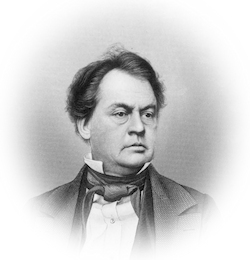
Robert Augustus Toombs was an American lawyer, planter, and politician from Georgia who became one of the organizers of the Confederacy and served as its first Secretary of State. He served in the Georgia House of Representatives, the US House of Representatives, and the US Senate. In the Confederacy, he served in Jefferson Davis’ cabinet as well as in the Confederate States Army, but later became one of Davis’ critics.

0 comments

0

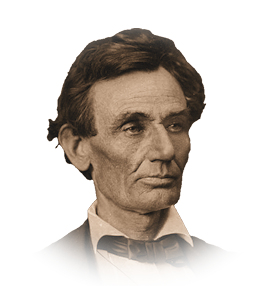
Uncollected Letters of Abraham Lincoln—1917
Springfield, Ills.,
March 16, 1860
          Dear Delahay: I have just returned from the East. Before leaving I received your letter of Feb. 6; and on my return I find those of the 17th and 19th with Gen’l Lane’s note inclosed in one of them. I sincerely wish you could be elected one of the first Senators from Kansas; but how to help you I do not know. If it were permissible for me to interfere, I am not personally acquainted with a single member of your Legislature. If my known friendship for you could be of any advantage, that friendship was abundantly manifested by me last December while in Kansas. If any member had written me, as you say some have Trumbull, I would very readily answer him. I shall write Trumbull at this sitting.
          I understood, while in Kansas, that the State Legislature will not meet until the State is admitted. Was that the right understanding?
          As to your kind wishes for myself, allow me to say I can not enter the ring on the money basis—first, because, in the main, it is wrong; and secondly, I have not, and can not get, the money. I say, in the main, the use of money is wrong; but for certain objects, in a political contest, the use of some, is both right and indispensable. With me as with yourself, this long struggle has been one of great pecuniary loss. I now distinctly say this: If you shall be appointed a delegate to Chicago, I will furnish one hundred dollars to bear the expenses of the trip.
          Present my respects to Gen’l Lane; and say to him, I shall be pleased to hear from him at any time
                              Your friend, as ever,
A. Lincoln
          P.S. I have not yet taken the newspaper slip to the Journal. I shall do that tomorrow, and then send you the paper as requested.
A. L.
0 comments

0

Miscellaneous document sources
2. Colonel Lee to the Adjutant General.

Headquarters Department of Texas,          
San Antonio, March 15, 1860.
          Colonel: I have had the honor to receive your letters of the 2d and 3d instant, containing the further instructions of the Secretary of War in relation to the outlaw Cortinas.
          I take my departure this morning for the Rio Grande.
          For the reasons stated in my letter of March 12, the bold and constant depredations on the northern frontier, I have been unwilling to diminish the small force on that line, and consequently the moral effect of the troops on the Rio Grande upon the banditti in Mexico, to oblige them to disperse, will not be as great as I could wish. I enclose an extract from a letter from Major Van Dorn, received yesterday, in further corroboration of the disabled condition of the horses of the second cavalry.
          I have given orders that they be spared and nourished as much as possible; and with a view, if possible, of withdrawing the small bands of Indians from the settlements, have directed Major Thomas to organize all the available cavalry force for a general scout, and break up any camps they may have at the head of the Brazos or elsewhere.
          For this purpose I have directed him to draw detachments of the first cavalry from the posts of Washita and Arbuckle.
          I am, very respectfully, your obedient servant,
R. E. Lee,          
Brevet Colonel, Commanding Department of Texas.
          Colonel S. Cooper,
                    Adjutant General U. S. A., Washington City, D. C.
          
          P. S.—The speediest way of rendering the second cavalry more effective would be to increase the number of horses to each company, which, by paragraph 4 of General Orders No. 13, Adjutant General’s office, October, 8, 1856, were reduced to sixty. In view of the very hard service they are called upon to make, this would be very desirable, as some of the horses would be recuperating while the others would be in the field. Nor would this add much to the expense of the present arrangement, as it would diminish the number of deaths of horses in the field, their being entirely disabled, and consequent sale.
          In this event I would recommend that the requisite number of horses be purchased in this department if practicable, as they would be acclimated, accustomed to grass, &c., and I believe could be procured cheaper than if brought from the Mississippi valley.
R. E. L.          
 
2 a.
 
Fort Mason, Texas, March 8, 1860.          
          Captain : So many reports come to me of Indian depredations committed in this vicinity, with the fact that the trails all tend towards one point, that I am induced to believe that there is a large camp somewhere to the northward, and at no very great distance, probably on the headwaters of the Brazos. All the depredations have been committed by very small parties, and they seem to be coming in and going out constantly, as scarcely a day passes that I do not hear of them.
          On the 8th instant I ordered out two scouting parties, one under Lieutenant Shaaff, and the other, a small one, under a sergeant. On the 4th I ordered out Lieutenant Cosby, with twenty-five men, to examine the country as far as the Concho in the direction the trails seem to take. Yesterday I ordered out a sergeant and ten men to follow a trail of Indians who had stolen some horses from the Dorse settlement. I hear indirectly of depredations having been committed in the settlements on the Llano and San Saba, below here, and also on the Colorado.
          I regret that under these circumstances I have to report that the horses of my command are reduced to almost total inefficiency for service. They are poor and weak, and many of them may be called “broken down.”
* * * * * * * * * * *
          I desire particularly to call the attention of the department commander to the condition of my horses, taken in connexion with these numerous calls upon me for their services, and to ask that the deficiency as to numbers may be, if possible, supplied at once by purchases in Texas, (by cavalry officers) otherwise I shall very soon, if this state of things continues, be reduced to immobility, and, of course, to inefficiency. I have sent out all the horses that had any promise in them of going to the Concho, having mounted some of the men of F company on A company horses. It is to be hoped that with this expenditure of strength two or three Indians at least may be killed.
          Very respectfully, captain, I am your obedient servant,
Earl Van Dorn,          
Brevet Major, Captain 2a Cavalry, Commanding.
          Captain John Withers,
                    Assistant Adjutant General, San Antonio, Texas.


Troubles on Texas Frontier, Letter from The Secretary of War (John B. Floyd), Communicating, In compliance with a resolution of the House, information in relation to the troubles on the Texas frontier, May 5, 1860; House Documents, Otherwise Publ. as Executive Documents: 13th Congress, 2d Session-49th Congress, 1st Session, Volume 12
 
“During the 12 years following the Mexican-American War, there were present on the frontiers of Texas and Mexico many factors that tended to create disturbances. The topography of the country, the sparsity and general character of its population, the lack of an extradition treaty and of sufficient national authority, wild Indians of uncertain abode, the Mexican tariff system, all caused friction and gave encouragement to lawlessness which not only retarded the development of the region but often threatened to interrupt friendly relations between the two republics.” [Border Troubles along the Rio Grande, 1848-1860, The Southwestern Historical Quarterly, Vol. 23, No. 2 (OCTOBER, 1919)]
0 comments

0

News of the Day
1860s newsprint

Texas Baptist [Anderson, TX], March 15, 1860

For the Texas Baptist.

Brother Baines: Sometime since I wrote you a brief article on the use of tobacco, in which I endeavored to expose the filthy and degrading custom so prevalent among men. I said nothing then of the unwholesome compound usually termed “snuff,” or if its abhorred use by many ladies of apparent sensibility and refinement. I regarded this as wholly unnecessary, unless the soi disant lords of creation could first be induced to abandon their own file customs, and submit, in a spirit which they alone are accustomed to observe, to the correction of all their vile and unnatural propensities for tobacco.

Now to correct any evil, Brother Baines, it is my humble opinion that our efforts will always be more successful when aimed directly at its strongholds; in other words, if its Gibralters can be induced to surrender, soon all parts of minor importance will be compelled to follow. While the “lords of creation” exhibit such a universal and voracious appetite for tobacco, what can it avail for me, or any one else, to lecture my own sex on its use, since it is well known that as the “weaker vessels,” we too often follow in the wake of influence created by our lords? It has been said that men are the oaks that constitute the human forest, while we are but vines that lean upon them for support. If it be true that there really exists such a relation between the sexes as that presented in this figure, can it be thought at all strange that a few ladies should fall into some of the errors of the sterner sex? Then if you wish to stay the progress of this filthy vice, let all gentlemen of refinement and good sense first abandon it themselves; let them view it in others with abhorrence; let physicians denounce it as unwholesome; let ministers and all expose it as sinful, and I do assure you that my own sex can soon be induced to throw their pipes and snuff- bottles into the confused mass of rejected rubbish, that lies entirely without the bounds of Christianity.

So much, Brother Editor, I have written by way of excuse for not having said anything in my previous article about snuff-dipping. I trust Brother J. P. T. will appreciate the apology. And now I beg leave to thank him for his article on Tobacco and Snuff; and I can assure him that all who look with disgust upon the odious stuff, will thank him too. May his resolution to abandon the filthy practice of smoking, never fail, and in that case I feel certain that the priviledges of Leap Year, if there be any in it, will prove a great blessing to him. I can vouch for the fact that all worthy ladies will have more regard for him now that he has become “a decent man.”

Brother J. P. T. views with abhorrence the odious practice of dipping snug , and in this I think he is perfectly right; but when he seems to conclude that my article would have been equally as applicable to this custom as to smoking and chewing tobacco, I am inclined to think that he errs a little. Dipping snuff is certainly not so common as chewing and smoking tobacco; and if it be as filthy in some respects, still I am sure that no lady can be so perfectly indifferent to all appearance of decency as to suffer it to drop unwiped from her chin. I would that I could say as much for all persons who use tobacco in any form.

I do not, however, attempt by any means to justify the use of snuff at all,–and far be it from me  try to screen, for one moment, those females who foolishly expose themselves to the just censures of all decent persons by using it. I now distinctly and deliberately denounce the use of tobacco in ALL customary forms, as degrading beyond all measure, and altogether filthy in those that use it. I will go further than this, Brother Baines, and affirm that the use of tobacco as it now prevails in Texas, is most palpably a heinous sin, for which a fearful reckoning will have to be rendered before God’s judgment bar. For proof that it is filthy and degrading, I merely point you to its votaries; and to show that it is shockingly sinful, I will simply appeal to the following statement of facts:

There are in Texas, I am told, probably about 20,000 Baptists. Of these some suppose it would be a reasonable calculation to say one-half use tobacco in one form or other; but to be certain to keep within the bounds of reasonable calculation, I will say that one-fourth, i. e., 5,000 of that number use tobacco. Now in answer to my inquiries I have been informed by different gentlemen that consumers of tobacco expend upon an average each year about $10 apiece.

Now, Baptists of Texas, look at these figures; count the sum annually expended by you for this useless and filthy “weed,” and tell me does the sum given to the cause of missions equal it? See, here is $50,000 annually consumed, not in luxury but in degrading filthiness! The sum is sufficient, according to the pittance usually doled out to missionaries, to sustain one hundred active ministers of the gospel through all the year. And can we imagine that God will hold guiltless those who thus give their money for the indulgence of mere sinful propensities, while in thousands of destitute neighborhoods sinners are perishing for the Bread of Life?

But let it be allowed that my figures above are too large, that there are only about 15,000 Baptists in Texas, and then without changing my other figures, (which I am sure are reasonable,) you will still perceive that the enormous sum of $37,000 is expended annually by Baptists in Texas for Tobacco alone. O “tell it not in Gath, publish it not in the streets of Askelon!” Fain would I hide my face in shame at the bare thought of this, our degradation; and here I would [illegible] that this “vice is a monster of such freightful  mien, that to be hated needs but to be seen.”

And now, Brother Baines, with your kind permission I will bring this matter nearer home, and apply the above calculation to the Association which includes Bonham in its bounds. There are 1260 Baptists in Sister Grove Association, one-fourth of whom probably use tobacco.—Now allowing that these spend $10 apiece for the luxury of spitting upon their chins, church floors, &c., and we have the sum of $3,150 spent annually in our bounds in the indulgence of this sin alone, while, alas! our missionary fund never exceeds the grudged pittance of $500 a year. “O, shame, where is thy blush?”

Brethren, is it not apparent that you will have to render a fearful account to Almighty God for this reckless expenditure of the money he has committed to your hands? Are you not ‘bought with a price?” Are you not stewards of the living God? Are you not under obligation to give a fair proportion of your means, and labor constantly for the advancement of his precious cause? Oh, then, let me entreat you, for the sake of Him that bled upon the cross, for the sake of sinners perishing in your bounds, for the sake of the prosperity of the church everywhere, renounce this filthy, this degrading, this exceedingly sinful practice, and let the money thus expended be given to advance the cause of Christ on earth.

It maybe, indeed, Brother Editor, that the figures in the above calculations are, after all, too large; the statement is, however, based on information received from Mr. ______, and several other brethren whose opportunities for observation are nearly as good as though they had been “itinerating.” Yet I am confident that were the tobacco fund far less than I have represented it, still the fact would by no means diminish the guilt of those who, in any degree, appropriate their money to gratify a sinful and health-destroying indulgence.

Still entertaining some slight hope of reform among Christians, I again subscribe myself,

Your sister,

 Caroline.
Bonham,
March, 1860.

0 comments

0

Miscellaneous document sources
95. Mr. Drinkard to Governor Houston.
[Telegram.]
  
War Department, March 14, 1860.
          Sir: Your despatch of the 8th instant has been received and submitted to the President.
          He directs me to say that he declines your tender of volunteers, inasmuch as a despatch has this day been received by the Adjutant General of the army from Brevet Colonel Harvey Brown, 2d artillery, dated New Orleans, March 13, 1860, in which he says:
          “I left Brownsville on the 8th instant. All was quiet on the frontier. The disturbances were believed to be over, and Cortinas to have given up the contest and retired into the interior of Mexico. Major Heintzelman has officially reported the war to be ended.”
          This information being so much later and more direct from the scene of the late difficulties than you could have received at Austin at the date of your despatch, leads the President to believe that you are mistaken or have been misinformed.
          Besides, there are now in Texas, ready for active service, two thousand six hundred and fifty-one troops, which force will soon be increased by the addition of ten companies, comprising eight hundred and forty-two men, now under orders to proceed there from New Mexico. Of these last, five companies are to be stationed at Ringgold barracks and five at Fort Clark.
          The quota of arms now due to the State of Texas under the law amounts to one hundred and sixty-nine muskets, which, in an emergency, may be doubled by anticipating the quota for the next year, and which will be promptly delivered upon your requisition. As the money value of the arms for the two quotas does not amount to five thousand dollars, you will readily perceive that it is entirely impracticable to meet the requisition for arms, appendages, and accoutrements made in your despa’ch, the cost of which, at the lowest estimate, is within a fraction of one hundred thousand dollars.
          The President further directs me to say that, with a sincere desire in every practicable way to meet the wishes of the governor and people of Texas, he conceives he has already performed his whole duty in the premises, under the circumstances.
          Very respectfully,
W. R. Drinkard,          
Acting Secretary of War.
          His excellency Sam Houston,
                    Governor of Texas, Austin, Texas.

Difficulties on Southwestern Border, House Documents, Volume 126; Volume 128, United States House of Representatives, U.S. Government Printing Office, 1860

During the 12 years following the Mexican-American War, there were present on the frontiers of Texas and Mexico many factors that tended to create disturbances. The topography of the country, the sparsity and general character of its population, the lack of an extradition treaty and of sufficient national authority, wild Indians of uncertain abode, the Mexican tariff system, all caused friction and gave encouragement to lawlessness which not only retarded the development of the region but often threatened to interrupt friendly relations between the two republics. [Border Troubles along the Rio Grande, 1848-1860, The Southwestern Historical Quarterly, Vol. 23, No. 2 (OCTOBER, 1919)]

0 comments

0

News of the Day
1860s newsprint

Herald of the South [Brandon, MS], March 14, 1860

The scamp who rode by our house on last Sunday evening just at dark, and when opposite stopped his horse, drew a pistol and shot at our dog in our yard, immediately before and in direct range with the door of our house, at the great peril of the life of some of our family, is hereby notified that if he ever does the same thing again when we are at home he will have to ride much faster than he did on that occasion to get out of the reach of a load of buck shot which we will send after him as surely as our gun will fire. This is the second offence of the same kind that either him or some one else has been guilty, and as there is nothing in law or morals to compel us to stand tamely by and suffer ourself or any one of our family shot down with impunity, we intend to do precisely as we have said above.

0 comments

0

Uncollected Letters of Abraham Lincoln—1917
Springfield, Ills.,
March 14, 1860
Mess. Beers and Mansfield.
          Gentlemen: Your request to take a photographic likeness of me, while in your city, was duly received; but at a time when my arrangements were so made that I could not call upon you before leaving. I would have written sooner, but the matter passed out of my mind; and is now recalled by the sight of your note. I beg you will believe me guilty of no intentional disrespect.
                              Very Respectfully,
A. Lincoln
0 comments

0

News of the Day
92. Colonel Brown to the Adjutant General.

[By telegraph.]

New Orleans, March 13, 1860.          
          Sir: I left Brownsville on the eighth instant. All was quiet on the frontier. The disturbances were believed to be over, and Cortinas to have given up the contest, and to have retired into the interior of Mexico. Major Heintzelman has officially reported the war to be ended.
Harvey Brown.          
          Colonel S. Cooper.

Difficulties on Southwestern Border, House Documents, Volume 126; Volume 128, United States House of Representatives, U.S. Government Printing Office, 1860

During the 12 years following the Mexican-American War there were present on the frontiers of Texas and Mexico many factors that tended to create disturbances. The topography of the country, the sparsity and general character of its population, the lack of an extradition treaty and of sufficient national authority, wild Indians of uncertain abode, the Mexican tariff system, all caused friction and gave encouragement to lawlessness which not only retarded the development of the region but often threatened to interrupt friendly relations between the two republics. [Border Troubles along the Rio Grande, 1848-1860, The Southwestern Historical Quarterly, Vol. 23, No. 2 (OCTOBER, 1919)]
0 comments

0

Miscellaneous document sources
93. Governor Houston to Mr. Floyd.

Executive Department,          
Austin, March 12, 1860.
          Sir: Realizing that it is my duty to address your department, that it may be laid before his excellency the President, I thus devote myself to action for two purposes: First to vindicate myself from misapprehension, and next to obtain if possible protection for our frontier inhabitants, whose suffering and losses I feel assured are not felt or known by the government.
          In a New Orleans paper my eye met a telegraphic despatch of the 3d instant, from Washington, stating that the “President disapproves of the action taken by Governor Houston in calling out volunteers in Texas to defend the frontier.” I can but feel assured that this remark, in view of the facts that have transpired since my induction into office, cannot be justified and calls for refutation, for the reason that I have ordered no troops on the Rio Grande, or destined for that frontier. So far from that being the case, four companies which were in service, on the Rio Grande when I came into office were mustered out of service and two companies were formed under the advice of the commissioners conferring with Major Heintzelman of the United States army. They are subject to his orders.
          I was very reluctant to trouble the department, and resolved that I would not do so upon any frivolous pretext. Hence it was that I sent commissioners, that I might possess myself of the origin of the difficulties, and if I should find them of such grave character as to require my action, I would lay them before the government, that the President might direct corresponding action to be taken in relation thereto.
          You will thus perceive the becoming caution and, at the same time, the scrupulous deference to the federal head of the government. Had I consulted the wishes of and impulses of our citizens, I would have called into the field the whole available force of Texas, and crossed the Rio Grande, and never recrossed it until we would have had “security in the future.”
          The troops sent to the Rio Grande did not, so far as I am apprised, contemplate crossing to Mexican soil, until the Ranchero was fired into from the Mexican side of the river and a man wounded, and certainly there was no authority given them so to do ; though it does seem to me that I would have been justifiable in pursuing an outlaw and rebel wherever he might be found, or wherever he received aid, succor, and protection. Under the circumstances of the attack upon a vessel of the United States in the waters of Texas, I can but discover more in the conduct to commend than to censure. It may be that the Executive of the United States, regarding the rumors and paragraphs in the newspapers, may suppose that I entertain some covert design of invading Mexico, and for that reason a call for volunteers to protect Texas against Indian depredations has caused misapprehension of my actions.
          ‘Tis true that since 1857 I have been written to from various parts of the United States, urging me to invade Mexico, with a view to the establishment of a protectorate, and assuring me that men, money, and arms would be placed at my command if I would engage in the enterprise. To these overtures I made no favorable response, though, as an individual, I might have co-operated with them, by placing myself beyond the jurisdiction of the United States. Nor was I without the assurance that a large portion of the Mexican population would receive me, and co-operate with me in the restoration of order in that country. Thus I have remained tranquil and silent, in the hope that the government of the United States would consummate a policy which must and will be achieved by some one; or the miserable inhabitants of that lovely region are to be destroyed by a conflict of robbers.
          I trust I am one of the last men on earth that would avail myself of an official situation to accomplish any achievement of personal or political aggrandizement.
          You, sir, may assure the President that I will continue or countenance no action with a view to complicate or embarrass the affairs of his administration; nor will I intentionally plant thorns in his pathway of life. I never have, nor will I ever perform an official act that is not intended for my country’s advancement and prosperity, aside from all selfishness.
          Now, as to my calling out volunteers, you will be able to judge of the propriety of my calls when you have the facts which I present to the department before you. For the information of the department I have to state that within the last few months our Indian frontier, as well as some counties considered in the interior, have been exposed to ruthless depredations from the Indians, some of them within forty-four miles of our State capital. Accompanying this letter, I send the department a list of persons killed, as well as the localities in which the murders were perpetrated. In the last four months fifty-one persons were killed and many wounded in escaping from the savages. Horses to the number of eighteen hundred have been stolen, and within the last few days seventy horses were stolen from the dragoons at Camp Cooper.
          When the orders which have been issued by the executive of Texas reach the department, they will at once show the necessity of his course as well as the propriety of “calling out volunteers in Texas to defend the frontier.”
          I cannot but urge most earnestly the calling out of a regiment of rangers by the federal government to protect the lives and property of our citizens.
          The fact that regulars cannot protect their cavalry against Indian thefts and depredations is evidence that they are not the description of force that can give protection to our frontiers.
          Moreover, I have not, until urged by an imperative sense of duty, as well as the destruction of human life, sought to induce the calling out of troops from the State as the only force that can protect our settlements against our Indian foe. They understand Indian habits and warfare, and can trail and reclaim the booty, and at the same time take vengeance on the enemy.
          A treaty of peace with the wild Indians who depredate would, with a comparatively small sum, save millions to the government of the United States; for until they are exterminated, or peace made with them, guards must be constantly kept at an immense expense to the government, and even then our settlements will be subject to surprise and massacre.
          Were the Indians to enter our territory in large bodies we could meet and destroy them; but they attack in small parties of from six to fifteen simultaneously for hundreds of miles along our frontiers. I do most earnestly hope that the guarantees which we have a right to look to may be extended and “the State protected against invasion.’’
          Since I commenced this communication intelligence has reached me of other murders and thefts in Erath county, a mail rider killed and scalped within six miles of the county seat. Likewise a woman murdered and a woman and child carried into captivity.
          I hope for a speedy reply, as our situation calls for prompt action. We need arms as well as rangers.
          I have the honor to be your most obedient servant,
Sam Houston.          
          Hon. John B. Floyd,
                    Secretary of War, Washington, D. C.
__________
 
93 a.
 
List of persons killed and wounded by the Indians in the last four months

 
          In Erath county.—Two women killed; two taken prisoners and violated ; both escaped naked; one since dead; five persons killed.
          In Bosque county.—Two ministers shot with arrows; one since dead.
          In Comanche county.—Five persons killed; men, women, and children; two persons, (father and daughter,) not found ; supposed to be dead.
          In Burnet county.—Three persons killed; two men severely wounded.
          In San Saba county.—One man killed. –
          In Jack county.—Nine persons killed; houses robbed and plundered.
          In Bosque county.—Three men killed.
          In Brown caunty.—Five persons killed; two taken prisoners.
          In Coryell county.—One man killed.
          In Bell county.—Three persons killed ; two taken prisoners.
          On Clear Fork —Two persons killed.
          In Cook county.—One woman killed.
          In Gillespie county.—Four persons killed.
          In Young county.—One person killed.
          On overland routes.—Two persons killed.
          In Webb county.—Two persons killed ; 51 persons killed, and probably as many more wounded and taken prisoners; 1,800 horses stolen, including seventy-four of the United States troops, at Camp Cooper.
          †. above is compiled from reliable documents on file in the department.
Sam Houston.


__________
93 b.
Orders—Minute detachments.

 
Executive Department,          
Austin, March 9, 1860.
           The chief justice of each county in danger from the Indians will organize a minute detachment in his county, composed of one lieutenant, two sergeants, two corporals, and ten privates, holding an election for the officers, and mustering them into the service of the State. The muster-rolls will be filled up in duplicate and sent forward to the executive department.
           He will cause the lieutenant to give bond with two approved securities in the sum of $500 for the safe delivery of the arms which shall come into his hands; he shall also require the lieutenant to make oath that he will faithfully perform the duties of quartermaster, and account for all supplies which shall come into his hands, either by purchase or otherwise, which, with the bond, shall be filed in the office of the clerk of the county court. The chief justice will also forward to the executive a certificate to the effect that the lieutenant has given bond and made oath as provided.
           Upon a detachment of minute men being mustered into service by the chief justice of any county in danger, the lieutenant will receive of the chief justice blank provision accounts and monthly returns.
          The lieutenant will act as quartermaster, and purchase such supplies as are absolutely necessary, and at market prices. He will make out duplicate accounts, and have the chief justice to certify on the same that the articles are necessary to sustain the men while on duty, and that the prices are just. This is necessary in order to have ample testimony to support the same when an appropriation is made.
          The lieutenant, acting as quartermaster, will furnish the men with rations, and use strict economy in relation to the supplies.
          The lieutenant will detail two men immediately for arms and ammunition to Austin, providing them with sacks to carry the same; but he is in no case authorized to employ other means of transportation.
          The detachments will immediately take the field, and enter upon active scouts, affording protection to the inhabitants of their respective counties. When an Indian trail is found it must be diligently followed, and if the sign indicates a larger party of Indians than he is able to cope with, he will call not exceeding ten men to his aid. He will keep a true account of the day’s service performed by these men, and on a return from the scout, dismiss them. Great care is to be taken that the settlements shall not be left exposed, while on scouts, without due notice to the citizens.
          The lieutenant will maintain discipline among the men. He will establish a camp at some central point in the county, not nearer than five miles of any town, and will not permit more than two men to be absent at any time, except on a scout or detailed duty. His supplies will be kept stored at the county site, in the care of the chief justice, and not more than two weeks’ supply for the men taken to camp at any one time.
           Immediately upon taking the field the lieutenant will notify the executive of the same, stating the names of the officers of the detachment and their post offices. He will make monthly returns to the executive, and in the same will be particular to furnish correct information as to the operations of the detachment.
          Horses and other property taken from the Indians are to be returned to their owners without charge. Any member of a detachment charging or receiving anything in lieu of property so returned will be dismissed from service without an honorable discharge. The lieutenant will be well satisfied that the person claiming the horses is the real owner; and if not, may require testimony. He will report the disposition made of them in his monthly return.
           The lieutenant will charge upon his first monthly return, to the men receiving the same, the arms delivered; and the same must be accounted for at the close of service, or they will be deducted from the pay when appropriation is made.
          The following general orders have been issued. Particular attention is called to them. The spirit of them is to be carried out by all rangers in the field.
Sam Houston,          
Commander-in-chief.


General orders to all Texians commanding in the service:
Executive Department, February 8, 1860.
          Commanding officers of all Texians in the military service will see that daily patrols pass and repass from post to post when any command is divided into detachments and stationed at different points along the line of operations. Horses lost, unless in action and killed by the enemy, are not to be paid for, nor will the loss of arms be paid for.
          In the police and arrangements of encampments or stations the health and comfort of the troops will be secured, if possible. Guards will be regularly detailed and mounted; and besides constant vigilance and care, the moral tone of companies will be a subject particularly confided to the authority of commanding officers.
           No horse-racing or gambling is to be permitted or practiced, nor are any intoxicating spirits or liquors of any kind to be brought within camp or camps, or used; nor will any person or persons be permitted to bring nearer than five miles any spirits of any kind, or to sell the same to any command or to a member or members composing it.
          More than four men will not be permitted to be absent from any command at any one time except upon special detailed duty.
          Monthly reports and returns of the state and condition of different commands will be made to the executive department at this place.
          Any member guilty of intoxication or insubordination will be immediately dismissed, without honorable discharge.
          These orders are required to be read to all commands upon parade within twenty-four hours after reception.
Sam Houston,          
Commander-in-chief of Texas.

Difficulties on Southwestern Border, House Documents, Volume 126; Volume 128, United States House of Representatives, U.S. Government Printing Office, 1860

During the 12 years following the Mexican-American War there were present on the frontiers of Texas and Mexico many factors that tended to create disturbances. The topography of the country, the sparsity and general character of its population, the lack of an extradition treaty and of sufficient national authority, wild Indians of uncertain abode, the Mexican tariff system, all caused friction and gave encouragement to lawlessness which not only retarded the development of the region but often threatened to interrupt friendly relations between the two republics. [Border Troubles along the Rio Grande, 1848-1860, The Southwestern Historical Quarterly, Vol. 23, No. 2 (OCTOBER, 1919)]

0 comments

0

News of the Day
[Extract.)

91. General Orders No. 6.

Headquarters Of The Army,          
New York, March 12, 1860.
          I. The following instructions have been received from the War Department:
          1. The following dispositions of the troops will be carried into effect as soon as the season will permit.
**********
          9 The 3d infantry will proceed to Texas; five companies to be stationed at Ringgold barracks, and five at Fort Clark.
**********
          13. Fort Brown will be garrisoned by one company of artillery, to be relieved every year by a company from the Field Artillery Station, at which the other artillery companies will habitually be concentrated.
**********
          By command of Brevet Lieutenant General Scott.
H. L. Scott,          
Lieutenant Colonel and A. D. C., Acting Assist. Adj. Gen.

Difficulties on Southwestern Border, House Documents, Volume 126; Volume 128, United States House of Representatives, U.S. Government Printing Office, 1860

During the 12 years following the Mexican-American War there were present on the frontiers of Texas and Mexico many factors that tended to create disturbances. The topography of the country, the sparsity and general character of its population, the lack of an extradition treaty and of sufficient national authority, wild Indians of uncertain abode, the Mexican tariff system, all caused friction and gave encouragement to lawlessness which not only retarded the development of the region but often threatened to interrupt friendly relations between the two republics. [Border Troubles along the Rio Grande, 1848-1860, The Southwestern Historical Quarterly, Vol. 23, No. 2 (OCTOBER, 1919)]
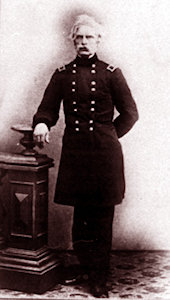
0 comments

0

News of the Day
94. Colonel Lee to the Adjutant General.
Headquarters Department of Texas,          
San Antonio, March 12, 1860.
          Colonel: I have received your letters of the 24th and 27th ultimo, relative to the depredations of Cortinas and the instructions thereupon of the Secretary of War.
          I shall proceed at once to the Rio Grande and use every exertion to put an end to these incursions, if they still continue.
          You will perceive by the report of Major Heintzelman, of the 29th ultimo, which has been forwarded to your office, that he considers the force of Cortinas to have dispersed, and that he will not make another effort to collect one.
          I shall therefore take with me but one company of cavalry, as frequent reports of Indian incursions have recently been made on the northern frontier, and there are not a sufficient number of troops on that line, in my opinion, to prevent them.
          I have drawn the cavalry company from Camp Verdé, (where there is a company of infantry stationed,) the nearest point, and directed its march towards Fort McIntosh, and will join it on its route.
          I regret to state that the horses of the cavalry regiment are so worn down by constant service, exposure, the scarcity of grass, &c., that they fail, sometimes perish, on every expedition. Some of the commanders of companies report that their horses are reduced to almost “total insufficiency.”
          I am, very respectfully, your obedient servant,
R. E. Lee,          
Brevet Colonel, Commanding Department.
          Colonel S. Cooper,
                    Adjutant General United States Army,
                              Washington city, D. C.

Difficulties on Southwestern Border, House Documents, Volume 126; Volume 128, United States House of Representatives, U.S. Government Printing Office, 1860

During the 12 years following the Mexican-American War, there were present on the frontiers of Texas and Mexico many factors that tended to create disturbances. The topography of the country, the sparsity and general character of its population, the lack of an extradition treaty and of sufficient national authority, wild Indians of uncertain abode, the Mexican tariff system, all caused friction and gave encouragement to lawlessness which not only retarded the development of the region but often threatened to interrupt friendly relations between the two republics. [Border Troubles along the Rio Grande, 1848-1860, The Southwestern Historical Quarterly, Vol. 23, No. 2 (OCTOBER, 1919)]
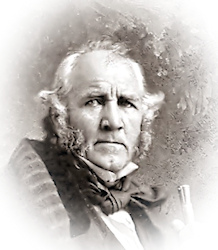
0 comments

0

News of the Day
1860s newsprint

Standard [Clarksville, TX], March 10, 1860

A young woman, named Mary Graham, shot George Fitzhugh, the overseer of a plantation in Hinds county, Miss., on the 24th ult. Fitzhugh had seduced the girl under promise of marriage, and when asked by his victim to redeem his promise, he scoffed at her position, whereupon she drew a revolver and shot him three times. He is not expected to recover. So states the Sea Coast Democrat.

0 comments

0

News of the Day
1860s newsprint

Standard [Clarksville, TX], March 10, 1860

The news of Indian slaughter is sickening. How it is possible for the National Congress to hesitate in the performance of a sworn duty, under the Constitution, “to provide for the common defence” is something that we cannot understand. Here, in Texas, where a line of frontier hundreds of miles in length is constantly outraged, the State is continually compelled to strain her inadequate resources to do the duty for which a General Government was especially provided. In Oregon or Washington territories, millions can be spent to defend the inhabitants, as they should be if necessary; but Texas, which is worth a half dozen Oregon and Washington territories, must submit to having the property of her frontiersmen stolen—the very work animals needed to provide subsistence for their families—must have those families, whenever their natural protectors are absent, fiendishly outraged—ending with death, and all this—all THIS, scarcely seems to excite an emotion at Washington, where dainty gentlemen, well fed, are intent upon the election of a subordinate officer of Congress, or preparing for the next Presidential election. Small matters of murder, and dastardly outrage upon helpless women, scarcely commands a moment’s attention.

How much longer has Texas unavailingly to call upon the General Government for its rights! How much longer has human nature to be shocked with atrocities which cause sympathetic human beings to shudder with horror?

0 comments

0

Miscellaneous document sources

Crawfordville [Ga.], March 9th, 1860.

Dear Sir[i]: You will, I suppose, be in the convention at Milledgeville on the 14th inst, and I therefore address these lines to you there. The subject relates particularly to myself, but I trust you will under the circumstances excuse the obtrusion.

From the allusions to my name in the newspapers in connection with the probable action of that body I feel warranted and justified in authorising you as a friend to make known generally to your fellow members what you and all others who have conferred with me either directly or indirectly about the matter already know, that so far from wishing to be the cause of any embarrassment in their deliberations, I do not wish my name connected with the Presidency in any way. This is certainly no time for the people of the South to be weakening their strength by divisions and struggles to promote or advance the aspirations of particular favorites to the office of Chief Magistrate of the Union. It is eminently a time for harmony among the friends of the Constitution every where, South as well as North. So far as I am individually concerned, I wish it distinctly known that I have no aspirations for that high office—none whatever and whatever comment it may subject me to by those who do not know me, I assure you I would not of my own free choice assume its great trusts, if nothing were necessary to enable me to do so but my bare volition. Its duties, cares, anxieties and heavy responsibilities would, with me, far outweight all fancied honors that may be supposed to attend it.

It is well perhaps for the country that we have quite a number of able and true men who look upon it differently and who have a taste and inclination for the position. By all means let some such one, who can unite the greatest strength in the coming contest be selected as the standard bearer of our cause. Let there be no useless and mischievous wranglings for individual favorites, either at Milledgeville or at Charleston, and all may be well. The only interest I feel in the question is that which all good citizens should feel who desire from the Government nothing but a wise, safe, sound and vigorous administration upon such principles as will secure the rights of all, and the peace, quiet, happiness and prosperity of our common country. In no event do I desire my name connected with it in any way.

You can do with this letter as you think best to accomplish my wishes. If need be, you may read it to the convention.


[i] From the Constitutionalist, Augusta, Ga., Apr. 10, 1860. Dr. Casey was a delegate from Columbia County to the Georgia Democratic Convention then about to assemble at Milledgeville.


From Annual Report of the American Historical Association for the Year 1911.

Alexander H. Stephens would later become Vice President of the Confederated States of America.

0 comments

0

News of the Day
The Massachusetts Shoemakers' Strike of 1860

The Shoemaker’s Strike in Lynn, Mass. — Procession, in the midst of a snow-storm, of eight hundred women operatives joining in with banners, inscriptions, and working tools, preceded by the Lynn City Guards with music, and followed by four thousand workmen, firemen, &c., March 8, 1860.

Frank Leslie Illustrated Newspaper, March 17, 1860


0 comments

0

Miscellaneous document sources
Governor Houston to Mr. Floyd.

[By telegraph.]

Austin, March 8, 1860.          
          Sir: Judging from the tenor of despatches from your department to me, of the 28th ultimo, that the government has not at its command sufficient troops to afford the immediate protection to Texas desired, I herewith tender the services of five thousand (5,000) Texas volunteers. Texas is ready for the emergency and will act at a moment’s warning. Texas needs, to repel invasions both from the Indians and Mexico, an immediate supply of arms.
          In view of the atrocities committed on our people, I hope the department will send, without delay, by steam or railroad conveyance, to care of Messrs. Perkins & Co., New Orleans, Forbs & McKee, Port Lavacca, and S. M. Sweenson, Austin, Texas, two thousand (2,000) percussion rifles and appendages, one thousand (1,000) Sharp’s breech-loading rifles and appendages, three thousand Colt’s revolvers, with appendages, one thousand (1,000) cavalry accoutrements.
          Texas has always been deficient in arms and has drawn but few. Danger is upon her now and she needs them at once.
          Be pleased to reply by telegraph without delay.
Samuel Houston.          
          Hon. John B. Floyd.

A telegram in Difficulties on Southwestern Border, House Documents, Volume 126; Volume 128, United States House of Representatives, U.S. Government Printing Office, 1860

During the 12 years following the Mexican-American War there were present on the frontiers of Texas and Mexico many factors that tended to create disturbances. The topography of the country, the sparsity and general character of its population, the lack of an extradition treaty and of sufficient national authority, wild Indians of uncertain abode, the Mexican tariff system, all caused friction and gave encouragement to lawlessness which not only retarded the development of the region but often threatened to interrupt friendly relations between the two republics. [Border Troubles along the Rio Grande, 1848-1860, The Southwestern Historical Quarterly, Vol. 23, No. 2 (OCTOBER, 1919)]

0 comments

0

News of the Day
1860s newsprint

Daily Gazette & Comet [Baton Rouge , LA], March 7, 1860

Vicksburg, March 4th, 1860.

Dear Comet:–I have been in this place forty-seven hours and a half, and during all this time have not heard the crack of a pistol. This is a very bad sign, and I am afraid, points to the time, when Vicksburg will no longer be referred to for its high military and chivalrous spirit. Think of it! Forty eight hours in Vicksburg, and no duel, not even a street fight. The place is going down, even as fast as the eternal hills are washing away. Look at the newspapers, which are the abstract chronicles of the time, and you will perceive that Mr. Louis Hoffman, and others on Washington street, are compelled to resort to the expedient of very large pictures, in order to call attention to their pop-guns, pistols, and popping crackers. Well, we must submit to changes—and I may say, Vicksburg, is not what it was many years ago. The prospect of the railroad on the other side of the river, is an offset for the ill effect of the road, on this side— connecting Vicksburg with New Orleans. As soon as I can get shaved, I shall leave. The shops are crowded, under the impression that the fashion has shifted in reference to hairy faces.

 As before, yours,
Poins.

0 comments

0

News of the Day

New York Times, March 7, 1860

Boston, Tuesday, March 6.

The shoemakers’ strike is rapidly extending to all the principal manufacturing towns in the State. The latest demonstrations are at Newburyport, North Bridgewater, Salem and Sutton. The strikers are orderly and peaceful.


0 comments

0

News of the Day

New York Times, March 7, 1860

A shocking but painfully common casualty was repeated yesterday on the Delaware River. A new steamboat, named the Alfred Thomas, which had been built at Easton, to ply between Belvidere, New Jersey, and Port Jervis, set out from Easton in the morning, to ascend the stream. There appears to have been a large number of passengers on board. Hardly had the boat passed from the sight of the starting place when the boiler exploded, tearing the hull to pieces, and violently scattering the passengers in all directions. The exact number of killed and wounded is still unascertained. Ten names of the dead have been given, and eleven of those seriously injured. It is feared the loss is much greater.

0 comments

0

News of the Day

[Little Rock]  Arkansas True Democrat, March 7, 1860

The northern papers have been busily assailing the inhumanity of the act which exiled this unfortunate class from our State.

We have now tested practically the law which relieved us from their presence, and the free negroes have tested the life of freedom among the freedom shriekers at the North.

Our experience is of the most agreeable character, and the law has proven itself to be one of the very best on our statute book. Since Arkansas has been made by that act strictly a slave State, since all hope is cut off by statutory enactment of slaves here being liberated by will, or deed, unless the slave is carried beyond our limits in the lifetime of his owner and set free, there has been a marked change for the better in the character of the slave population. There is no discontent and no disposition to shirk service due even to indulgent masters. We can safely recommend to our sister States the law as salutary and wise under existing circumstances. The conduct of the northern abolitionists brought about the necessity of this law, forced us in self-defence to pass it, and the result is they have forced into voluntary slavery a large number of free negroes.

Several of “the exiles” have returned and selected masters in this city. Others have returned to other counties to our certain knowledge, and those here report a state of facts which any one could have foreseen.

All left here with plenty of money. A few month’s residence reduced them to penury and want. They say the abolitionists swindled them out of all their money and gave them in exchange only lip professions, that the free negro of the North has poorer fare and a harder time than the slave of the South.

0 comments

0

Miscellaneous document sources
89. Major Heintzelman to the Adjutant General.

Headquarters Brownsville Expedition,          
Fort Brown, Texas, March 7, 1860.
          Sir: I have the honor to enclose herewith a copy of my letter to the department headquarters, dated 29th February.
          Since then I have heard of but one small party on this side of the river. They were engaged in removing the body of a man shot by the rangers the evening before, and were under the protection of an armed party “on the south bank of the river.”
          I have to-day heard that Cortinas is at the rancho of “Reystano,” a few leagues above, collecting men to cross over; also that he slept last night in Matamoras. It is now said that the report of his going to Monterey was only circulated to throw us off our guard. I have not had time to verify these reports
          The telegraphic reports in the newspapers, of orders to cross after Cortinas, and the arrival to-day of company “G,” 2d cavalry, one officer and sixty-three men, have created much alarm in Matamoras, and may induce the authorities to act more efficiently. They know that we can starve them out in a fortnight. There is not a grain of corn in this part of the country. All the corn and flour they use goes from this side.
          I have the honor to be, sir, very respectfully, your obedient servant,
S. P. Heintzelman,          
Major 1st Infantry, commanding Brownsville Expedition.
          Colonel S. Cooper,
                    Adjutant General U. S. A., Washington, D. C.
__________

Headquarters Brownsville Expedition,          
Fort Brown, Texas, February 29, 1860.
          Sir: I have the honor to report that Cortinas and his followers have dispersed, and I do not believe that another effort will be made by him to collect a force.
          After the affair of the 4th of February, at the Bolsa, he retired to La Mesa, six miles back from the river, and there remained with a small force until within a few days, when he left with five men and is reported to be at Comargo or further back in the interior. Immediately after he left, a body of troops from Matamoras were seen in the vicinity of his abandoned camp. As his mother and brother are desirous to return to this side of the river and reoccupy their ranches, I am strengthened in the belief that Cortinas has left permanently.
          The cavalry and rangers are actively employed in guarding the river, but it will be impossible to entirely prevent the incursions of robbers so long as they have the protection of the Mexican side of the river. By occupying this post with two companies and one each at Ringgold barracks and Fort McIntosh, and with two companies of cavalry in the field, I think quiet can be maintained on the lower Rio Grande.
          I am, sir, very respectfully, your obedient servant,
S. P. Heintzelman,          
Major 1st Infantry, com’g Brownsville expedition.
          Captain John Withers,
Assistant Adjutant General U. S. Army, San Antonio, Texas.

          P.S.–Captains Lee’s and Jordan’s companies, eighth infantry, arrived here on the 27th. The latter will return to Ringgold barracks in a few days, and the former await here further instructions. Their march and arrival here have had a salutary effect.

S. P. H.          

Difficulties on Southwestern Border, House Documents, Volume 126; Volume 128, United States House of Representatives, U.S. Government Printing Office, 1860

During the 12 years following the Mexican-American War, there were present on the frontiers of Texas and Mexico many factors that tended to create disturbances. The topography of the country, the sparsity and general character of its population, the lack of an extradition treaty and of sufficient national authority, wild Indians of uncertain abode, the Mexican tariff system, all caused friction and gave encouragement to lawlessness which not only retarded the development of the region but often threatened to interrupt friendly relations between the two republics. [Border Troubles along the Rio Grande, 1848-1860, The Southwestern Historical Quarterly, Vol. 23, No. 2 (OCTOBER, 1919)]
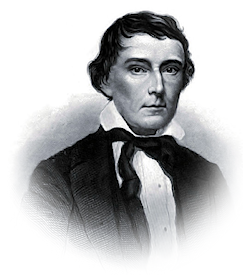
0 comments

0

News of the Day

The New York Times, March 6, 1860

While editors and letter-writers are informing the people which of the Republican candidates can, and which cannot be elected, if placed in nomination, I desire to express my opinion also.

Since the 10th of November I have traveled in eleven States. “The Old Guard,” the men who have given form and vitality to the Republican Party, felt perfectly free to converse with me where I have been and appeared anxious to express their views in regard to the Presidential election. Among that class of men there exists no doubt that the Republicans will elect their candidate, provided he stands out boldly upon the Republican doctrines avowed at Philadelphia in 1776, and repeated in 1856. Nor have they any less doubt that the Republicans will refuse to go outside their own organization to select a candidate, or, if a candidate outside the party be selected, they hold his defeat inevitable. They say there are half a million of voters among the most ardent and active Republicans, who will, under no circumstances, cast their votes for any who, by his past life or present avowals does not stand pledged to relieve the Federal Government and the people of the Free States from the crime of sustaining the Slave trade, both foreign and domestic, upon the high seas, in our Territories and in the District of Columbia—who will not, in the words of our platform, carry out “the primary object and ulterior design of our Federal Government, by sustaining, to the extent of its constitutional powers, the rights of all men to life, liberty and happiness;” leaving the institution of Slavery entirely with the States in which it exists. No man who denies to the people of the Free States the same right to be entirely purified from the guilt of Slavery, that the Slave States have to sustain that institution, can receive the votes of any true Republican.

That class of Republicans say that our doctrines have been clearly expressed; that the party was founded upon “self-evident truths,” to the support of which all true Republicans stand pledged; that no man can be called a Republican who hesitates to avow his adherence to them; that any change or modification of those doctrines will be to the same extent a change or modification of the party; that the abandoment of these principles will be a disbandment of the party.

This class of men speak from experience when they say it is a thousand times better to fail while supporting great principles, than to elect a candidate without principles, who, when he comes into power, will place in office more of his own character, without maintaining Republican doctrines, and leave the party to disband and reorganize. They say they will not be “Tylerized.” They are honest, they seek no office, and declare they will not be made the dupes of wire workers or office seekers.

They feel indignant at hearing any man who stands upon the Republican doctrines stigmatized as a “radical.” They say all Republicans hold the same political faith—if one be radical, all are radical; if one be conservative, all are conservative.

They express equal indignation when it is said that a certain man has emancipated his slaves, and is therefore a suitable candidate. They ask, at once, is he a Republican? Will he endeavor to emancipate the people of the Free States from the despotism of Slavery?

They regard the proposition to take a candidate whose doctrines are not fully known, or known to be in favor of extending Slavery by admitting more Slave States—giving the slaveholders of such State, for every hundred slaves they profess to own, the same influence over our national and commercial interests which sixty of our educated and liberty-loving freemen possess, as nothing more nor less than an insult to the intelligence and self-respect of the Republican Party. For men they care but little, for principle they would sacrifice life itself. Among the Seceders, the Free Presbyterians, the Wesleyan Methodists, the Quakers, the New School Presbyterians, and the religious denominations of Ohio, there are Republican electors who will not attend an election if a doubtful man be nominated—more than sufficient to render our State doubtful. These men are actuated by religious principle, and will not by their vote aid in the election of any man who will to any extent prostitute the powers of Government to the support of Slavery. Such is also the case in Indiana and Illinois. By that policy we should drive from as nearly the whole of the German vote. They are as reliable Republicans as we have; but they are governed solely by a deep and ardent love of liberty, and will not even go to the polls if they cannot thereby promote the great doctrine of human rights.

I cannot but think those men mistaken who think the people are to be led by the cry of turning out the party in power, while they seek no change of doctrine in the administration of Government.

Nor will they patiently listen to the argument that Pennsylvania will not support the doctrines of the Republican Party unless a candidate be nominated whose position is conservative, rather than Republican. They say if the people of that State would rather remain subject to the party now in power than support the Republican faith, they should be permitted to suffer until they can be instructed in the doctrines set forth in their State at the baptismal font of our Government; until they shall understand the principles avowed by their own Franklin and his associates.

It is my opinion that the people will take the subject into their own hands—will nominate a representative man, and when nominated, will elect him; while editors, politicians and other patriots will do more for our cause by upholding and promulgating our doctrines than by selecting candidates and informing the people whom they must and whom they must not elect. Very respectfully,——————————————____________.

0 comments

0

Miscellaneous document sources
Colonel Lee to General Scott.

Headquarters Department of Texas,          
San Antonio, March 6, 1860.
          Colonel: Reports from the posts in the northern part of Texas give frequent information of depredations upon the settlements. These have become more numerous and daring since the necessity has arisen for withdrawing a portion of the force on that line to place it on the Rio Grande.
          During the last months outrages have occurred in the immediate neighborhood of many of the posts, several of which are occupied by cavalry. In some instances Indians have been overtaken and punished, in others they have escaped, from the nature of the ground, the obliteration of the trail, or other causes beyond the control of the pursuing party.
          The horses of the 2d cavalry have become so reduced by constant service, exposure, and scarcity of food and grass, that they fail in the pursuit and sometimes perish. The marauders are generally in small partles, and sometimes on foot.
          On the night of the 3d of February the animals of residents in the immediate vicinity of Camp Colorado were driven off
          On the night of the 17th of February the mule-yard at Camp Cooper, over which a sentinel was posted, was broken in and the whole herd driven off. Twenty-three of the animals were recovered by a party sent at daylight in pursuit, but the remainder, forty mules and three horses, were not overtaken. The force at the post was so much reduced by scouts then out that the detachment sent under Lieutenant Lowe, adjutant of the regiment, was principally composed of the band.
          The following night all the animals from the Indian agency, two or three miles distant from Camp Cooper, were stolen ; and Major Thomas, as you will perceive in his report, which is herewith forwarded, is under the impression that the thieves were not Comanches. Bent’s Fort, where it is conjectured the stolen animals have been sold, is above Fort Atkinson, on the Arkansas.
          On the same evening on which the animals from the Indian agency were stolen, 18th of February, a citizen residing within two miles of Fort Mason was shot, within one hundred yards of his house, by three Indians on foot. The commanding officer did not hear of the attack till next morning, when he endeavored, for three days, to discover the trail of the assassins, but without effect.
          I have noticed these cases as the most recent, and to show the audacity of the marauders.
          There is but one company at Camp Cooper, which is too small a force, in my opinion, for the position. But, until some of the companies can be withdrawn from the Rio Grande, I see not prospect of reinforcing it, unless the commanding general of the army should think that the two companies of the 1st cavalry at Fort Washita could be used for that purpose.
          There are two companies of the 1st cavalry and one of infantry at Fort Arbuckle, and I have no means of judging of the importance of the troops at Fort Washita, and am therefore unwilling to remove them. On the Rio Grande there are three companies 2d cavalry, three companies 8th infantry, and three companies 1st artillery; should the quiet of that region be again disturbed, it will be necessary, in my opinion, to send there another company of cavalry.
          The troops in the department are posted over a long line of frontier, and yet, from the paucity of their numbers, are unable to protect the settlements.
          The best method of preventing the inroads of the Indians is to send a strong body of troops into their country, which would have the effect of recalling them to their women and children; but there is not at this time within the department a force available for the purpose.
                    I am, very respectfully, your obedient servant,
R. E. Lee,          
Brevet Colonel, Commanding Department.
          Colonel L. Thomas,
                    Adjutant General, Headquarters of the Army,
                              City of New York, N. Y.

A dispatch in Difficulties on Southwestern Border, House Documents, Volume 126; Volume 128, United States House of Representatives, U.S. Government Printing Office, 1860

During the 12 years following the Mexican-American War there were present on the frontiers of Texas and Mexico many factors that tended to create disturbances. The topography of the country, the sparsity and general character of its population, the lack of an extradition treaty and of sufficient national authority, wild Indians of uncertain abode, the Mexican tariff system, all caused friction and gave encouragement to lawlessness which not only retarded the development of the region but often threatened to interrupt friendly relations between the two republics. [Border Troubles along the Rio Grande, 1848-1860, The Southwestern Historical Quarterly, Vol. 23, No. 2 (OCTOBER, 1919)]

0 comments

0

News of the Day
1860s newsprint

Semi-Weekly Mississippian [Jackson, MS], March 6, 1860

The “Houston Telegraph” of the 27th ultimo says the influx of settlers into Texas is still very large. Every boat from New Orleans is crowded, and it is estimated that not less than twelve to eighteen hundred persons arrive in the State every week by way of the Gulf. Within the week previous, fully five hundred slaves were brought in.

0 comments

0

News of the Day

The New York Times, March 6, 1860

Our modest neighbor, the Tribune, has been for a long time in the habit of giving variety and interest to its columns by paragraphs and clippings from our Paris, London and Washington correspondence—duly displayed as original. This is all quite endurable, as the value it gives the Tribune far outweighs any injury it may do us. On Friday morning, however, we published a two-column letter from one of our correspondents on the coast of Africa, full of important revelations concerning the slave trade. On Saturday morning the Tribune publishes precisely the same letter, verbatim, following all our italic marks, &c., and coolly heads it “From our our Correspondent” This seems to us a little strong—but as it is mainly a matter of taste, we have nothing to say against it. We only hope our neighbor will do it as rarely as convenient.

0 comments