0

New York Times

The New York Times, May 10, 1860

From the Richmond Enquirer.

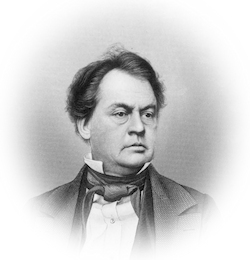
As to the ultimate action to be adopted at Baltimore we see but two alternatives presented to the Democratic Party. The doctrine of protection in the Territories must be finally rejected or accepted. If it is rejected, as we have already indicated, its rejection will involve the dismemberment of the Democratic Party, and a separate nomination of a Democatic candidate on the Platform of Constitutional protection will inevitably ensue. If it is rejected then the rejection must be unequivocal. If the delegates who now compose the Convention are willing to yield the point — if they are willing to tolerate the doctrine of Territorial Sovereignty, then, by all means, let the issue be presented in the most tangible form — by the nomination of STEPHEN A. DOUGLAS. Mr. DOUGLAS has taken his position in a fair and open manner. It is unjust to him, and unfair to the host of friends who sustain him and his doctrine, that any compromise candidate shall be allowed to steal his thunder. Much as we oppose his doctrine of territorial government, we would infinitely prefer to see him elected on the honestly avowed platform of Territorial Sovereignty, rather than witness the election of a man who shall consent to go before the people on a platform speaking one sentiment at the North and another at the South.

We are convinced that the large majority of the Southern Democracy will be satisfied with no candidate who does not openly avow the doctrine of Constitutional protection in the Territories. The Southern Democracy are naturally averse to any precipitate action. They will calmly await the action of the Baltimore Convention. Let that Convention adopt, to the full extent, in their platform, the great doctrine of the equal rights of the sovereign States; and they will support any candidate who can stand on that platform. And if the Baltimore Convention shall proceed to name a candidate without asserting the doctrine of equal protection, then the candidate himself, whoever he may be, will be required to inscribe, with his own hand, on the banner of the party, the doctrine which the Democracy of seventeen States have already pronounced to be essential. On no other terms can he unite the support of the Democratic Party.

With these views we respectfully, but earnestly, appeal to the Convention that will assemble in Richmond on the 11th June next, to take no decided action until they shall be informed of the measures adopted by the Baltimore Convention on the 18th June. As matters now stand, the question of a platform is still open, and we yet trust that the Democratic Baltimore Convention will see the vital importance of adopting a platform that will meet the views of the Richmond Convention, and thus secure the harmonious and united action of the Democracy of every section of the Confederacy.

0 comments

0

New York Times

The New York Times, May 10, 1860

The Late Convention at Charleston.;

NEW-ORLEANS FOR THE UNION.

NEW-ORLEANS, Tuesday, May 8.

The mass meeting held here to-day, to denounce the secession movement at the Charleston Convention, resolved to regard as enemies all who attempt to produce a separation of the States.

0 comments

0

New York Times

New York Times, May 10, 1860

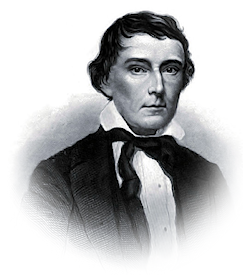
Mr. YANCEY, of Alabama, was one of the most conspicuous of the actors in the Charleston Convention. He represented the extreme Southern wing of the Democratic Party, and made a very long and elaborate speech in support of the Southern Platform. He burst into tears at the very thought of a disruption, and completely overcame those sentimental gentlemen, Capt. RYNDERS and JOHN COCHRANE, by the fervor of his eloquence and the depth of his emotions. He was very desirous of harmony in the ranks of the Democratic Party. Nothing but that could save the country from convulsion and ruin. Out of regard for the Union, therefore, he besought the Convention to accept the Southern Platform, and carry on the Government upon the principles of the Southern States.

We published a letter from Mr. YANCEY yesterday which shows what all this means. For two years past he has been plotting a revolution. In June, 1858, he wrote to an accomplice thus:

“The remedy of the South is a diligent organization of her true men for prompt resistance to the next aggression. It must come in the nature of things. No national party can save us; no sectional party can ever do it. But if we could do as our fathers did — organize “Committees of Safety ” all over the cotton States (and it is only in them that we can hope for any effective movement) — we shall fire the Southern heart, instruct the Southern mind, give courage to each other, and at the proper moment, by one organized concerted action, we can PRECIPITATE THE COTTON STATES INTO REVOLUTION.”

Mr. YANCEY has no faith in a “national party,” — no confidence that such a party can save “Us.” Naturally, therefore, he cares very little for the triumph of such a party. What he seeks is a revolution in the Cotton States; — and this he hopes to accomplish, after due preparation, after the train is laid, agents of the movement duly stationed, Committees organized, and the popular mind prepared, — by some sudden, concerted action, which shall “precipitate” the South into the rebellion he aims at.

In the letter referred to, he says that others who are leagued together for the same result, will “keep their old party relations on all other questions, but will hold the Southern issue paramount, and influence parties, legislatures and statesmen.” The only motive which Mr. YANCEY and his friends have for remaining in the Democratic ranks is thus seen to be the hope of influencing the party, and State Legislatures, in favor of his revolutionary scheme.

There can be no doubt that there is a very active organization of determined disunionists in the Southern States. They have been at work for years in devising plans for plunging the country into the horrors of a civil war. They profess to act with the Democratic Party, and are quite willing to keep up their connection with it so long as they can make it serve their purposes, or until the moment arrives for “precipitating” the crisis at which they aim. Their only hope of success rests upon sudden action. They dare not give the people of the Southern States time and opportunity to canvass the merit of their plans — to discuss the pros and cons of dissolution, and act deliberately upon the subject. They have made several attempts to unite the South in favor of such a project, but have never yet succeeded. Even after the John Brown invasion, when the public mind was more thoroughly aroused than it had ever been before, they found it impossible to induce the State of Virginia to take any part in movements which might commit her with other States to a dissolution of the Union.

Their only chance of success lies in sudden hasty action. They will aim to carry their point by a coup d’etat. They hope to make their organization so perfect, and to have their agents and accomplices so well trained, that they can upon some sudden emergency override the sound judgment and settled sentiment of the Southern people, and precipitate them into a revolution.

Fortunately, in such a matter as this, to be forewarned is to be forearmed. It is not easy to lay plots and hatch conspiracies for a long time in a country where the Press is free. It may be well, however, for the Democratic Party to understand the real aim of their Southern allies, who feel so much aggrieved by the action of the Charleston Convention, as it may throw some light upon the path they ought to pursue at Baltimore.

0 comments

0

Miscellaneous document sources

Washington, D. G, May 10, 1860.[i]

Gentlemen: Your letter of the 5th instant was duly received, and would have been before replied to but for the fact that I have signed an address containing my opinions somewhat at large upon the questions which you have submitted to me, and which address I expected would have been published before this time; that having been delayed, in the meantime I thought it best to give you a brief reply.

I have looked with interest, but without apprehension, upon the proceedings of the late convention at Charleston. I see in those proceedings unmistakable evidence of the steady advance of sound Constitutional principals. Perhaps the time may not have come for the attainment of the full measure of our Constitutional rights; it may not have been prudent on the part of the representatives of the seventeen States to have sanctioned and presented as much truth on the slavery issue as is contained in what is commonly called the majority platform, but when it was thus sanctioned, approved and presented to the convention, it was well to stand by and defend it, especially against the platform of the minority. Seceding delegates did this with manly firmness, and I approve their action. From the best information I have been able to obtain, I believe the majority platform was not only acceptable to a majority of the States, but also to a majority of the delegates, if their votes could have been taken per capita. If this be so, it ought not to have been defeated either by accident, want of foresight or contrivance.

It is asserted that the Democratic party hitherto have affirmed the principle of non-intervention by Congress with slavery, both in the States and Territories; but none pretend that it has ever asserted the right of intervention against slavery by the settlers upon a public domain either before or after a Territorial Government has been granted to them by Congress. But this is in truth the real doctrine held by the minority. They desire to interpolate the party creed with it—to make it its rule of action. We cannot hide this great fact by simply shutting our own eyes. The friends of this political opinion have defended it with ability and zeal, have tendered us the issue and demanded its acceptance; it can no longer be avoided either with safety or honor. I accept it, and will give it the same determined opposition with which I have ever met it, whenever and wherever presented.

After the seceding delegates left the convention, it is understood [continue reading…]

0 comments

0

New York Times

The New York Times, May 10, 1860

The Indians on the Texas Frontier Still Troublesome;
A Blacksmith and Three Men Murdered.

SPRINGFIELD, MO., Wednesday, May 9.

The Overland Mail-coach, with Lieut. COGSWELL, U.S.A., Dr. J.P. BECK, H.B. PALMER and Mr. and Mrs. ARNOLD as passengers, and San Francisco dates to the 20th of April, arrived here at 4 P.M.

The California news was anticipated by the Pony Express.

By this arrival, we have news from the frontiers of Texas, obtained from Lieut. COGSWELL and Dr. BECK. They report the Indians very troublesome in the vicinity of Mustang Pond and between Mountain Pass Station and Phantom Hill. A blacksmith in the employ of ice[1] Overland Mail Company, and three men living at Mountain Pass, were murdered by the Commanches.

The day before the stage passed there 13 Indians stopped at Mustang Pond and committed sundry depredations upon the whites. The scout for this stage saw some bands of Indians at the latter place looking with eager eyes towards the coach, and the passengers prepared themselves for a fight, but the red skins were too wary, and it did not become necessary to fire upon them.

Col. SAINT LEROY had started on a tour to select a site for Fort Butler.

Major RUFF had been ordered, with fire companies of rifles, to take the field immediately against the Kiowas and Camanches. His depot was at For Butler.

Several ranging companies were out in the vicinity of Jackborough.


[1] Possibly Camp Rice Station on the Overland Mail Company route.  I couldn’t find any reference for an “ice Overland Mail Company.” This is probably an artifact of The New York Times OCR process.  MpG 5/8/20

0 comments

0

Miscellaneous document sources

Washington City, May 9, 1860.[i]

Gentlemen: Your letter of the 5th inst. has just reached me. The limited time allowed for action induces me to comply with your request for a “prompt” answer, and I shall endeavor to make it equally ” candid.”

I sympathise fully in your apprehensions for the future of our country. It cannot be disguised that both the safety of the South and the integrity of the Union are seriously threatened. It is my honest conviction that the issue depends upon the action of the southern people at this important juncture. A firm, wise and unfaltering policy on the part of the South will give security to her own rights and peace and quiet to the Union. Any other course will be equally fatal to the preservation of the one and the maintenance of the other. Like yourselves I have looked to the National Democratic party as the only political organization in which the sound Constitutional elements of the whole country could be brought into united and cordial co-operation. With this conviction I witnessed the proceedings of the late Charleston convention with intense anxiety and deeply regretted the causes which led to its disruption.

In considering the proper course now to be pursued, we should understand distinctly the reason of the failure of that convention to agree upon a platform and candidates for the support of the Democratic party. If the differences which led to the result at Charleston are immaterial and unimportant, then there is no cause for trouble or apprehension. The public mind should promptly pronounce them to be so, and they should be dismissed from our thoughts as unworthy of further consideration. Are the people of Georgia prepared to pronounce this judgment? The answer to this inquiry involves in my opinion the future destiny of the South. There were two points of difference at Charleston which produced the disruption of the convention. 1st. The platform of the party on the subject of slavery. 2d. The nomination of a proper candidate for the Presidency.

The fifteen Southern States in common with the two Democratic States of the Pacific agreed upon a platform which recognized the equality of the Southern States—and the right of their citizens to go with their property into the common territories of the Union claiming for them and their property the same protection which the Constitution and laws of the land extend to their bretheren of the non-slaveholding States and their property—nothing more—nothing less. The seventeen States which with perfect unanimity agreed upon this platform are all of them certain Democratic States. The candidates to be nominated by the Democratic party for President and Vice-President must receive their votes to give them the slightest prospect of success. The remaining sixteen States by virtue of their superior numbers in the convention refused to recognize these principles. They did not assert by the platform they adopted antagonistic principles to those agreed upon by the southern and Democratic States. Their policy was to leave the question an open issue so far as any declaration of principles was concerned, but to give a practical construction to their platform by the nomination of a candidate whose chief claim to the nomination grew out of his known hostility to the doctrine for which the southern and Democratic States contended. [continue reading…]

0 comments

0

New York Times

New York Times, May 9, 1860

The Republican National Convention.;

TIME FIFTEEN AND A HALF HOURS FROM BUFFALO TO CHICAGO.

BUFFALO, Tuesday, May 8.

A special train from Buffalo to Chicago, via Lake-shore and Michigan Southern Railroad, will start from the Lake-shore Depot, Buffalo, at 6 A.M. May 14, and arrive at Chicago in fifteen and a half hours, stopping at Toledo forty-five minutes for dinner. Excursion tickets, for half-fare to Chicago and return, can be obtained from JOHN T. POTTER, No. 193 Broadway, H.A. KEYES, old State-house, State-street, Boston, and at all the principal railroad ticket offices. Return excursion tickets will be good till the 1st of June.

R.N. BROWN, Superintendent Buffalo and Erie Railroad.
H. NOLLINGHAM, Superintendent Cleveland and Erie Railroad.
L.D. RUCKER, Superintendent Cleveland and Toledo Railroad.
JOHN D. CAMPBELL, Superintendent Michigan Southern Railroad.
W.R. BARR, General Agent, Buffalo.

0 comments

0

Miscellaneous document sources

Crawfordville [Ga.], May 8th, 1860.

Dear Smith, I got the book I requested you to buy for me, but no letter came with it. I am obliged to you for your attention to this matter. The book is different from what I expected to find it. I did not get back from Polk Court until last Friday. On the way down the road I met the news of the “blow up” or “break down” of the Charleston convention. At this I was not much surprised, but for it I was truly sorry. I deeply regretted the withdrawal of the Southern delegations, especially that of Georgia, and particularly for the reason assigned—that is, the unsoundness of the platform adopted. It is the same as the campaign was waged on in 1856 with the addition, I understand, of what the Georgia state convention requested. But as for myself I was satisfied with the Cincinnati enumeration of principles and I think it was all [that] ought to be asked. Since 1850 I have stood upon non-intervention by Congress on the subject of slavery in the territories. I and all parties at the South at least have been pledged as far as honor can pledge any man to abide by the territorial policy established in 1850 “in principle and in substance.” These words were put in the Whig Baltimore platform in 1852 by Mr. Webster at my own instance, and I drew up the Southern manifesto against General Scott because he would not endorse it. That paper is now in my possession; and I shall never change my views or position then taken, so long as ink will not blush at human inconsistency. What is to become of parties in the country I do not know but of my own honor I know what shall come. That is in my own keeping, and if I and the country go down together that shall remain untarnished to the last. Parties may rise or fall, but principles with me are the pole star of my existence. What is the matter now with the country is that a class of men are in power who have no loyalty to principle, no attachment to truth for truth’s sake. They are governed by a desire for office, for place and spoils, and change principles with any change of popular [breeze?] in their eagerness to get it. They [are] out for nothing but to undermine the most glorious structure of human Gov[ernme]nt ever devised by man. It may be that the people too are degenerate. If so we are in a bad fix indeed. But I do not believe they are half so far gone as their leaders. I believe they have virtue enough yet left to see truth when it is presented and act upon it. I cannot believe that this country is so near the brink of ruin and destruction as the times to a casual observer indicate— a greater, a higher and a nobler destiny awaits. Bad men have got control of the country. The temple must and will be ridden of the money changers who have defiled the most sacred places. This at least is my hope. If in it I shall be disappointed then all hope will go out together—all hope with me, for I have none beyond. If we are to go into a Revolution with men and under the lead of men who have changed their whole line of public policy in ten years, who could trust them for three under a new regime? What trust could be put in their counsels? What reliance in their judgments? What confidence in their professed principles? None by me—and Heaven protect those who may be simple minded enough and weak enough to try them!


From Annual Report of the American Historical Association for the Year 1911.

Alexander Hamilton Stephens was an American politician who served as the vice president of the Confederate States from 1861 to 1865. After serving in both houses of the Georgia General Assembly, he won election to Congress, taking his seat in 1843. After the Civil War, he returned to Congress in 1873, serving to 1882 when he was elected as the 50th Governor of Georgia, serving there from late 1882 until his death in 1883.

J. Henley Smith was a Georgia journalist.

0 comments

0

New York Times

New York Times, May 7, 1860

A telegraghic dispatch announces that delegates are to be chosen in Georgia to represent the Democrats of that State in the Baltimore Convention. This indicates the course that will probably be pursued in all the Southern States whose representatives seceded from the Convention at Charleston. New men will be chosen in their places, so that while the seceding delegates will hold a Convention of their own at Richmond, the “national” Democrats will be represented in the National Convention at Baltimore. This will transfer to the Southern States the intestine strife which led to the explosion at Charleston. The Democratic Party in each of these States will be divided, — the nationals on one side and the secessionists on the other. At Baltimore it is quite likely that DOUGLAS may secure the nomination. His friends announce their purpose to insist upon it: — the new delegates from the South will probably be in his favor, — and he bids fair to reap the advantage of the continued and relentless hostility of the Administration. With all these odds in his favor, his chances must be considered good.

Mr. FORNEY announces, in the Press, that the resolutions adopted at Charleston simply reaffirmed the Cincinnati Platform — that those pledging the party to abide by the decision of the Supreme Court were not passed. This simplifies the matter still further, though it is by no means impossible that, when the Convention reassembles, some further concession may be made to the South upon this point.

There is one most excellent result likely to follow the Charleston disruption: the question of secession bids fair to be fought out in the Southern States themselves, where it belongs. The issue has been made there, and it should be decided there also. In the Northern States no such question has ever been mooted. Nobody in any Northern State is in favor of disunion, — and any party which might even be suspected of favoring it would be annihilated at the polls. Certain prominent politicians, in Congress and out, have assumed to speak for the slaveholding States, and to threaten secession unless their demands concerning Slavery should be conceded. Their withdrawal from the Convention at Charleston put the issue in a practical shape; — and if they venture to nominate a Presidential candidate of their own, he will run mainly upon that basis. And in every Southern State he will be obliged to contest the field with a National Democrat who is opposed to disunion. The people of the South will then be able to express their real sentiments upon this point, and the result will probably put an end to the clamor of the disunionists, and purify the political atmosphere.

The Conservatives, old Whigs and Unionists, hold their convention at Baltimore this week. In the main their views upon the Slavery question are in harmony with those cherished by the great body of the Republicans. But they deprecate what they consider the sectional character of that organization, and are very anxious to adopt some measures which will bring the border Slave States back to an active political alliance with the North. A very large and influential section of them, moreover, are animated by an intense personal hatred of Mr. SEWARD, and will be mainly guided by that sentiment in the course they may adopt. This is especially the case with the party in this State; and at their State Convention at Troy, Ex-Gov. HUNT and others declined to bind themselves to abide by the decision of the Baltimore Convention, and caused it to be very distinctly understood that they should take whatever course might seem necessary to defeat the Republican Party. It is probable that the Convention will make a nomination, — but it is not easy to guess at its character. They would probably be glad to nominate HOUSTON, but for the fear that he would damage the Democratic vote more than the Republican. They will probably take ground against all agitation of the Slavery question, and in favor substantially of leaving the matter wholly to the action of the people of the Territories.

The Republican Convention meets at Chicago next week. The Philadelphia Platform, we presume, will be in substance reaffirmed, though there will be some opposition to a renewed declaration, under existing circumstances, in favor of Congressional prohibition of Slavery from the Territories. Five of the Slave States will be represented, and the whole number of members will be 230, or thereabouts. Mr. SEWARD will have much the largest vote at the outset, as the opposition will be divided. Gov. CHASE, Mr. LINCOLN, Judge BATES, and Gov. BANKS will be voted for, but without any expectation, we presume, of success. BEN WADE begins to be talked about, not only as an available candidate, but as possessing, in a high degree, the special qualities likely to be required for the performance of the duties of the office for the next four years.

It is by no means unusual to hear prominent and influential Democrats express a quasi hope that the Republicans may elect their candidate. They regard their own party as hopelessly demoralized, and believe that nothing will promote its union more than a defeat, which shall convince all its sections of the necessity of mutual concession. They believe, too, that the Republicans would, of necessity, become conservative in their public action, as soon as they should find themselves responsible for the condition of the country, — that internal dissensions would spring up in their ranks, and that they could not retain power beyond a single term. There are very many of the leading Democrats of this State who would not for these reasons deeply regret the election of Mr. SEWARD; and there are quite as many who, for different but equally cogent reasons, would decidedly prefer it to that of Judge DOUGLAS.

0 comments

0

Miscellaneous document sources

Washington, D. C, May 7th, 1860.

Dear Stephens, The late events in Charleston have created a great sensation here. The result of general consultation among the Southern Senators seems to be this—that admitting the propriety of the secession when it was done, that Virginia, Kentucky and Tennessee having preferred an ultimatum which was sustained by N. York and can be carried by those votes in connection with those of the seceding states, that the seceders shall return to Balto., unite with Virginia and Tenneessee and Kentucky in the ultimatum, upon the agreement beforehand that all will secede together if the ultimatum be rejected. I think this programme will be adopted this morning at a meeting of the Senators and Reps, of the seceding states, and will be offered by the Tennessee platform states, upon which a joint address will be made to the South.

I am sorry to see an effort making in Georgia to call a new convention, doubtless simply to send delegates for Douglas. The present [del]egation would be sustained unless condemned by the convention which sent them to Charleston, which it would be much better to recall than to get up a new one under the notice I see given in Augusta. A bogus delegation would only complete the demoralization and ruin of the party in Georgia, and would certainly be fatal to Douglas even if he should carry the nomination at Charleston. I see but little hope for a favourable issue of the business. The rancor existing between the Douglas and anti-Douglas factions has swallowed all sense of public danger or public principle. For myself I shall approve the above described programme and let it go. I do not think any considerable portion of those who professed to be for Hunter were really for him but were all the time looking to other results. Douglas has pressed his name upon us until I shall accept it and resist him to the bitter end, tho’ I see nothing but disaster and defeat in the future. The true policy would be for him to withdraw. [continue reading…]

0 comments

0

News of the Day

Leavenworth, Kansas, May 6, 1860

Dear Sir.

You will probably have observed that the Kansas delegation to Chicago were instructed by the Convention by which they were selected to cast their votes (if they should have any) for Mr. Seward — and that Mr. Wilder, who is for Mr. Seward from choice, was chosen as the delegate from Leavenworth, over Col Delahay who was understood to be strongly in favor of your nomination. I have desired that you should know how both those things happened — and as I can not be at Chicago, where I had expected to talk the matters over with you or with some of your personal friends, I shall take the liberty explaining them to you directly by letter.

Here as nearly every where in the North Mr. Seward has more ardent, zealous & earnest admirers than any other candidate — and they are in the radical wing of the party which has possession of nearly all the presses, and controls all the minor conventions and less important movements of the party. As it was by no means certain that the Kansas delegates would be accorded seats in the National Convention, or the right to vote, the great majority of the party took no interest in the movement — and the meetings called to appoint delegates to the Territorial Convention were scarcely attended at all except by the managers. In that convention no interest was taken in any subject except in selecting the delegates — three of whom are first for Mr. Seward from choice but all of whom regard you as a highly acceptable and available candidate. The Convention selected men who had done good service for the party and received no honor or reward — and who well merited the compliment of an appointment — none of whom were selected with reference to their preferences among the gentlemen named for the Chicago nomination —

In the apportionment Leavenworth was accorded but one delegate — Wilder, who has done a great deal of hard work for the party here, had announced himself as a candidate for the place more than a year ago — and the place had been accorded to him without dissent, until the time for selecting delegates to the Territorial Convention was near at hand. Col Delahay then, feeling assured that the great majority of the Republicans of Leavenworth favored your nomination, became a candidate in opposition to Wilder — The Colonel was on all hands regarded as one of our best men and as representing truly the preferences of the majority of our republicans — but he had just had one of the best offices of our poor Territory — Wilder had worked as hard, had held no office, and had all along been accorded this place — and as he had a big start, and the most money, the Colonel could not make the race against him.

Our delegation at Chicago will, in perseverance of instructions, if given a vote, cast it for Mr. Seward. Three of them will adhere to him pretty tenaciously. Mr. Seward & Chase dropped, I think you would be the next choice of every man in the delegation —

Yours very truly
Thomas Ewing Jr

Hon Abraham Lincoln
Springfield Ills.


Thomas Ewing Jr. (August 7, 1829 – January 21, 1896) was an attorney, the first chief justice of Kansas and leading free state advocate, Union Army general during the American Civil War, and two-term United States Congressman from Ohio, 1877–1881. He narrowly lost the 1880 campaign for Ohio Governor. Ewing was a foster brother of William Tecumseh Sherman and became his brother-in-law when Sherman married Ewing’s sister, Eleanor “Ellen” Ewing Sherman. Two other brothers were also Civil War generals—Charles Ewing and Hugh Boyle Ewing. Thomas Ewing Jr.’s relationship with Sherman was close throughout their lives. Although a staunch friend and ally of Abraham Lincoln, when Edwin Stanton engaged in a post-assassination flap with Ewing’s brother-in-law William T. Sherman over final surrender terms to the Southern armies, Ewing agreed to represent two of John Ford’s (of Ford’s theater) employees in the Lincoln conspiracy trials. (Wikipedia)


Source: Territorial Kansas Online, Location of Original: KSHS Call Number: Thomas Ewing, Jr. Collection, #341, Letter Press Book #3

0 comments

0

News of the Day
1860s newsprint

Standard [Clarksville, TX], May 5, 1860

 We have before us the Prospectus of a new paper to be published in Tyler, Smith county, which reads as follows:

The States-Rights Sentinel.

The publication of a Weekly Paper with the above title, devoted to News, Politics, Literature and the Domestic Interests of our Section, will be commenced by the subscribers, in the town of Tyler, Smith County, Texas, about the first of June next. It is the design of the Publishers to combine every requisite necessary to constitute this an interesting and readable Family Newspaper.

Democratic in sentiment, the “Sentinel” will advocate a strict construction of the “Constitution,” accepting as a basis for the final adjustment of the Slavery Question, the principles embodied in the “Dred Scott” decision. And while it will take a firm stand in defence of the reserved rights of the States, no ultra views will find a place in its columns.

It will contain a weekly summary of the most important items of Foreign and Domestic Intelligence, but will be more especially devoted to the interests of our own county and section of the State.

“The States-Rights Sentinel” will be printed on clear, white paper, and will equal in size and appearance the best papers in the State.

Terms.

$2.50 per annum, if paid in advance; $3.00 at the expiration of six months; $3.50 at the end of the year.

Ten copies sent to the same office, if paid for in advance, for twenty dollars; or five for eleven dollars and twenty-five cents.

H. Smith,
Miller Johnson.
Tyler, April 5th, 1860.

0 comments

0

News of the Day

Navarro Express [Corsicana, TX], May 5, 1860

A negro woman and her two children voluntarily went into slavery, by choosing, in the District Court of this county, J. M. Scales as their master.

0 comments

0

Miscellaneous document sources

Washington, D. C, May 5th, 1860.

Dear Stephens, Your letter from Lexington was duly recd, and I had intended an earlier answer but could not lay my hands upon my scattered fragments of briefs in the Persons and Oliver cases until yesterday. We have been all excitement here until yesterday when we heard of the final break up at Charleston, and things are now so complicated that it is difficult to tell what is best to be done. Douglas’s men made a great mistake in voting to go to the platform before nominating a Prest. A rupture then became inevitable; but he and his friends expected to profit by the secession of two or three states and therefore urged it in common with the various elements of combustion in the So. West. When they resolved to go to platform making I telegraphed Irwin to get a good one and a Southern man on it or bolt. Subsequently when we heard here that the convention had adopted the Tennessee platform I advised Nelms to go back and stand on it; but it appears now that the convention never did adopt except to the extent of the 2/3 of the whole number of delegates from all the states. The nomination of Douglas is now impossible under this rule, and if it were possible to nominate him, he cannot be elected. The amount of discontent with him in the free states would beat him there even if the South would vote for him as a unit, which I do not think possible under existing circumstances. The truth is the rivalry and rancor between the friends of Douglas and all the rest was so great and is now so great that I do not see how it can possibly be reconciled without the withdrawal of the combatants on both sides, which I think none of them have patriotism enough to do. But everything here is at sea. The only chance I see is to get all of them back upon some arrangement made outside and before the Balto. meeting. [continue reading…]

0 comments

0

News of the Day
1860s newsprint

Semi-Weekly Mississippian [Jackson, MS], May 4, 1860

A man by the name of Slaton, sentenced to be hung for murder in Cass county, Texas, made his escape on Monday evening, 16th, by the following means viz: His wife and his brother visited him, and were admitted to audience with him, where they remained till the dusk of the evening, when the jailor informed the visitors that it was time to depart; it so happened that he locked up the wrong man, who has since been admitted to bail in the sum of $3,000.

0 comments

Through Some Eventful Years

Through Some Eventful Years by Susan Bradford Eppes
Susa Bradford Eppes

May 3rd, 1860.—The May Party was a complete success; everyone who came said it was. Our Queen was beautiful and the flower girls were, too. All the party looked their best and there was a large crowd from Tallahassee and from Thomasville. Grandpa was pleased and said so many pretty things about the whole affair.

On the morning of the 2nd Grandpa and Grandma set out for North Carolina, taking the boys with them. I had hoped we could go to visit them this coming summer but Father says planters in the South will have to stay at home for awhile. The sky is clear now but the storm may come at any time.


Susan Bradford is 14 years old when this entry was made.

0 comments

0

News of the Day
1860s newsprint

Daily Gazette & Comet [Baton Rouge, LA], May 3, 1860

Address of Miss Junia Burk.

Gentlemen:–It is with much pleasure I avail myself of the privilege which I enjoy of addressing you a few words on the present occasion, which we celebrate in your honor as a military corps. “The Creole Guards!” Your designation is well chosen. It is particularly the province of the creole youth of Louisiana to raise the national standard upon their native soil, and to see that it remains there firmly rooted in defence  of the institutions of their country. We sincerely hope that these institutions will never be disputed, but if they are ever made the subject of a conflict we are persuaded, that this standard will be the first in front of the battle, waving proudly to the sound of hymns of freedom and glory. We look not upon this banner as the mere ornament of a pageant. It is the same that waved o’er our forefathers of the Revolution, and remains to us, with its additional trophies a glorious page which we learn lessons of patriotism and valor. With the thought that it was once our passport to freedom, what may it not attain for us now when strengthened in that good cause? It is yours, free-born men of Louisiana to plant it upon an eminence that the true and brave hearted whose voices stifled by party clamor may see at least that Liberty is true to her post, and the Eagle yet looks upon the sun.—You will conquer wherever this banner may lead, and your’s  will be the meed  ever awarded to valor— “the smiles of the fair.” If, on the contrary, the destiny of war decide against your corps, it will remain to tell where the brave have fallen, and songs of freedom will be sung in your praise! the loudest reverberation of your fame will be in the hearts of these for whom you fall and the monument erected to the memory of your deeds will be inscribed Excelsior!

Now while the gentle May-breeze comes sighing through these silken folds, arranged by the delicate hands of so many fair maidens, it seems that the spirit of chivalry decends  to encourage the task you are prepared to undertake. Can aught but freedom be inhaled from the rose-scented air of our Sunny South? Does not the very ground which we tread, send forth the odor of Liberty rising in a burning column of incense far up through the blue ether of our glorious sky, “till we almost fancy that it ascends in sight of the celestial gates.” Let the goal of your ambition be set as high, and in serried ranks, march on to its attainment—march on! with this applause of your fellow countrymen, the smiles of your countrywomen and the benediction of Heaven, march on—to Victory!

I now present you this banner, in the name of my companions, your welfare in the voluntary profession which you have assumed, and also the good will of all who boast themselves natives of the glorious State which I have the honor to represent.

Reply of Captain H. M. Pierce.

In the name of the Creole Guards, I thank the fair donors, whose representative you are, for this graceful and acceptable compliment. Ever, from the earliest dawn of civilization to our own times, one of the most potent incentives to man, to acts of goodness and greatness, has been the hope of deserving and obtaining the praise and love of woman. And she has ever been ready to bid him God speed on his errand, of charity, mercy, religion, patriotism and glory, her prayers attend him in the conflict, and her smiles of approbation are no mean element in the plaudits ever paid to triumphant worth.

The Creole Guards will always march with pride beneath the folds of this beautiful flag, the gift of the creole sisters.—Should our marches all be merry meetings in the times of peace, it will be a continual reminiscence to us of this bright day; of this delightful occasion; of these fair forms and radiant faces, and of these warm and true hearts, now throbbing in perfect harmony with love and devotion for our whole country, every part of which is so charmingly represented by yourselves.

Should we be called on to serve our country in the field, I know that among the inducements we will have to do our whole duty, and do it well, will be the recollections of this happy day and brilliant assemblage, and the hope of seeing you proud of the soldiers who fought under your flag.

0 comments

0

News of the Day
1860s newsprint

Albany [GA] Patriot , May 3, 1860

The editress of the Weekly Herald, (Thomson, Georgia,) indulges herself in the  following provoking and tantalizing strain:

“Well, we reckon some folks would really like to know what we thought of. Let’s see. In  the first place, we thought what an absurd idea it is in a man to ask a lady to kiss him, just as if  he, the senseless being, thought the poor trembling little creature was going to do it. The idea of    a man asking for a thing so easily obtained! Why, it is ridiculous! and a man with the least  particle of brains would hoot at the idea. She’d say not, till doomsday. And you, poor believer,  would forego the happiness of drawing nectar from that rose-bud mouth, simply because you  were ignorant enough to ask for what you might have taken. There are ten thousand ways to kiss  a girl without asking the pleasure. Direct her attention to something on the table; ask for a book  you know to be there, and while she is there, go with the affected purpose of helping her to look  for it; be particular to get at the left side; do you need any more telling? If you do, you do not  deserve the kiss that might be so gracefully taken. A man who would ask a kiss of a fair maiden  ought to be tarred and feathered as a craven hearted monster. Don’t do it, don’t for goodness  sake, ask the girls to kiss you. Kiss them if you want to, but do it like gentlemen. Kiss them if  you can.”

0 comments

0

News of the Day
1860s newsprint

 Albany [GA] Patriot , May 3, 1860

On Tuesday evening last, our citizens assembled at the depot to greet and welcome the “Sumter  Light Guards,” who arrived by train to join the “Albany Guards” in their military encampment  during the present week. . . . The Sumter Light Guards have a white Brass Band numbering  about fifteen members. The Brass Band of the Albany Guards number about twelve members.  The latter is composed of colored performers, who show to a highly creditable advantage, while  the former, for the length of time they have been organized, cannot be excelled. From this city  the two companies took up their line of march for “Camp Barksdale” at 6 o’clock, P.M., and are  now in comfortable quarters, where they receive the smiles and hospitable greetings of the  ladies. This alone should make them pass the time in joy and pleasure. . . . [gives membership of  the Americus Brass Band, but not instrumentation]

0 comments

0

Miscellaneous document sources

To Richard M. Corwine[1]

PRIVATE
Hon: R. M. Corwine           Springfield, Ills. May 2. 1860.
Dear Sir: Yours of the 30th. ult. is just received. After what you have said, it is perhaps proper I should post you, so far as I am able, as to the “lay of the land.” First then, I think the Illinois delegation will be unanamous for me at the start; and no other delegation will. A few individuals in other delegations would like to go for me at the start, but may be restrained by their colleagues. It is represented to me, by men who ought to know, that the whole of Indiana might not be difficult to get. You know how it is in Ohio. I am certainly not the first choice there; and yet I have not heard that any one makes any positive objection to me. It is just so everywhere so far as I can perceive. Everywhere, except in Illinois, and possibly Indiana, one or another is prefered to me, but there is no positive objection. This is the ground as it now appears. I believe you personally know C. M. Allen, of Vincennes, Ia.[2] He is a delegate, and has notified me that the entire Ia. delegation will be in Chicago the same day you name—Saturday the 12th. My friends Jesse K. Dubois, our Auditor, & Judge David Davis, will probably be there ready to confer with friends from other States. Let me hear from you again when anything occurs.
Yours very truly                                                   A. LINCOLN


[1] ALS, owned by Mrs. Lewis S. Thompson, Red Bank, New Jersey. A copy of Corwine’s letter of April 30 in Lincoln’s handwriting is preserved in the Lincoln Papers, perhaps because Lincoln turned the original over to his campaign managers. Corwine states his positive preference for Lincoln and his belief that “ . . . we can not elect extreme men. Moderation in their past life & their present views, must mark them, or we can not elect. …” (DLC-RTL)
[2] Abbreviation for Indiana.

Abbreviations:

  • ALS: Autograph Letter Signed; A letter entirely handwritten by the individual noted
  • DLC-RTL: The Robert Todd Lincoln Collection of the Papers of Abraham Lincoln, Library of Congress

The Collected Works of Abraham Lincoln, Volume 4 By Abraham Lincoln; page 47; Rutgers University Press, New Brunswick, New Jersey, 1953

0 comments

0

News of the Day
1860s newsprint

Semi-Weekly Mississippian [Jackson, MS], April 27, 1860

The African Baptist Church in Augusta, Ga., owns its minister, the congregation having bought him from his former master. The members of the Church, who are mostly, if not all slaves themselves, contribute $1,000 a year for the support of their “chattel” pastor and family.

0 comments

Surrender of New Orleans

Cruise of the U.S. Flag-Ship Hartford -Wm. C. Holton, News of the Day

Cruise of the U.S. Flag-Ship Hartford — From the Personal Journal of Wm. C. Holton

April 26th. The Mayor of the city has surrendered it to Flag-officer Farragut, and a battalion of marines, under Capt. J. L. Broome, went ashore to raise the Stars and Stripes, but were opposed by the citizens and returned to the ship. In the afternoon we went up to Carrollton and captured sixty or eighty guns without firing a shot, they having been deserted and the gun carriages destroyed.

0 comments

0

News of the Day
1860s newsprint

[Little Rock] Old-Line Democrat, April 26, 1860

The Lynching Case in Crittenden County.

About the first of March, two men by the name of William and Phillip Cheek, were hung in Crittenden county, for one of the most atrocious crimes that were ever committed. The circumstances of the case are briefly these, as brought out by the evidence elicited on their preliminary trial before a justice of the peace.  The wife of a respectable old citizen named Robertson, prevailed on a man by the name of Phillip Cheek, with the offer of a sum of money to kill her husband. He shot him with a rifle gun, and on being arrested and brought to trial made the following confession: I am guilty of the murder of Robertson, and will show you why, (pulling out and exhibiting $185½ in gold and silver), this money was given to me by Mrs. Mary Robertson, as a reward to hire me to kill her husband; and I did kill him, about the 21st of Feb’y last. I killed him with a rifle gun, discharged through the window of his house.

Wm. Cheek was also implicated in the murder of Robertson; and by his confessions, as well as the testimony of Mary Robertson it was clearly proven that he was a guilty accomplice in the foul deed.

During the examination of these men much excitement prevailed; and when in answer to a question put to Phillip by the prosecuting attorney, asking him where he expected to meet the people then present in another world, replied, “I expect to meet you, sir, in the lowest pits of Hell, if there be such a place!” The indignant feelings of the crowd broke through all the restraints of law, and they seized the prisoners, took them from the officers and hung them both immediately.

Many of the best citizens of the county we are informed, participated in executing this [illegible] upon the wretched victims, and while under no circumstances can such proceedings be justified, still there may be as in the present case, there doubtless were sufficient aggravating circumstances to excuse the deed.

Robertson, the murdered man, was a respectable citizen, had lived in the county for nearly twenty years, and had always been reputed a quiet and honest man. His wife, after the murder, fled. She is about twenty-eight years of age, middle size, light hair, blue eyes, and has lost some of her front teeth.

0 comments

0

Miscellaneous document sources
10. Mr. Hemphill to Mr. Floyd.
          
Washington, April 26, 1860.
          Sir: I have the honor to transmit you an official letter from the Hon, E. W. Cave, secretary of state of Texas, showing that the frontier is now suffering the most deplorable evils from Indian hostilities, and that speedy relief should be extended by the government of the United States.
          I am, very respectfully, your obedient servant,
John Hemphill.          
          Hon. John B. Floyd, Secretary of War.
          
____________________
          
State Department, Austin, April 13, 1860.          
          Sir: Notwithstanding the fact that we have now in the field a minute detachment in almost every frontier county, the depredations continue. The utmost vigilance is kept up ; active scouts are continually out in about twenty counties, besides the force which has been sent from the interior, but Indians still are seen, and losses are daily reported.
          General Houston has called into the field four companies, in addition to those already out. They will be under command of Colonel M. T. Johnson, and will make an expedition against the Indians, starting from Fort Belknap on the 1st of May. The expedition will number about five hundred men.
          We had accounts yesterday of Indians in Burnet county, about 40 miles from here. They are also ravaging the settlements west of this, and especially the German settlements on the Medina, within thirty miles of San Antonio. Three men have been murdered in that vicinity in the last few weeks, and a number of horses stolen. The Indians are, doubtless, Mescabaros and Lepans from Mexico.
          An express has just arrived with news of the killing of Mr. Cross, in Eastland county.
          Texas has now over 1,000 men in the field. The treasury will not hold out long if this drain upon it continues. Our citizens, hoping that the United States will soon authorize an efficient ranging force, have thus far responded to the call of the governor with cheerfulness.
          Unless the frontier settlers are soon relieved by forces from the interior, starvation will be upon them and their families, as no crops can be made.
          The people look to Congress for aid. I hope humanity will rise above all other considerations, and that the cries of a suffering people will be heeded, whether it comes to the ears of their southern or northern brethren.
                              Very respectfully,
E. W. Cave,                    
Secretary of State.
          Hon. John Hemphill.
0 comments

0

News of the Day
1860s newsprint

Daily Gazette & Comet [Baton Rouge, LA], April 25, 1860

Several of our fellow citizens were considerably incensed last week, because of punishment inflicted upon their servants without their permission. It appears, that the negroes obtained permission from the proper source, to have a party in the woods outside the limits of the corporation—that whilst on the ground a dispute arose between two of the men, and they commenced fighting; others interfered to part them and just here, some of the police of the town appeared and arrested two or three, whilst the others immediately fled from the scene. That was on Sunday. On Monday morning several of them were taken before the Mayor and condemned to punishment at the jail. So far as the fight extended, it was right to punish them; but beyond that, there was no authority for the action.

We commend the vigilence of the police when they keep within the sphere of their jurisdiction—when they act under their authority, discreetly, for the preservation of the peace. On occasions of the kind here referred to, or when the colored society get permission to have a ball, we notice that there are a number of fellows very ambitious to serve the public, who volunteer their unasked services to go and aid in keeping the peace. The result is, that in mere wantonness they themselves bring about the row in order to have what is called by them “fun.” This we contend is not right; and not being right is wrong. We hope yet, before the glorious reign of Democracy is over, to find a police force independent, just and courageous enough, to arrest these intermeddlers and take them up to judgment. If it is not right to allow the colored society to have dances, then forbid it altogether. If they get permission, then let them be protected from the interference which results in their punishment.

0 comments