0

News of the Day

[Little Rock] Arkansas True Democrat, May 26, 1860

Memphis—We neither know nor care who were the aggressors in the late firemen riots in this city, but pronounce them disgraceful to the city, and disgraceful to the department. What the police were about, and why no arrests have been made, we are at a loss to know, but it is high time that a decided stand was taken, and a stop put to such outrageous proceedings. Whatever action is necessary to stop this lawlessness, this reckless disregard of law and order, and of human life, should be determined on and resolutely pursued. The honor of the city demands it, and the safety of our peaceable citizens demands it.

The city has been of late rife with bloody affrays, and the parties to most of them are yet unwhipt of justice. Is it on account of the small number of inefficiency of the police? It is evident there is something wrong, and we trust a determined effort will be made to discover what it is, and an equal determination manifested to remedy the evil. If it is necessary, let us have a whole army of policemen, that order may be maintained, and the law vindicated.—Our citizens have been quiescent long enough, and it is time some movement for reform be instituted.— Avalanche, 21st.

0 comments

0

News of the Day

[Little Rock] Arkansas True Democrat, May 26, 1860

Serious Collision Between Fire Companies Nos. Three and Six.—One of the most disgraceful and unheard of riots that ever took place in this city occurred on Main street, between Adams and Washington streets, Sunday afternoon, about three o’clock. The difficulty originated between the members of fire companies No. 3 and 6, from a misunderstanding, which has existed between them for some time past, and which on several occasions has culminated in hostile collisions among them, though until Sabbath last they were generally smothered up without serious results. At the fire on Sunday morning last in the locality of the M. & O. depot, a number of the members of the two companies, named (No. 3 and 6) became involved in a difficulty, resulting in the overpowering of the 3’s by the 6’s, who bore the former’s engine off, it being afterwards found in a bayou, but before midday was replaced in the 3’s engine-house.

Sunday afternoon the members of No. 3, who had been absent at Nashville, returned to the city and at once repaired to their engine-house. What deliberation on the affair of the morning ensued we are not able to state; but a little after two o’clock, No. 4’s bell sounded a fire alarm, and the 3’s, 1’s and 6’s started from their respective houses, down Main street, the former ahead, and the latter some distance in the rear.

The 3’s, upon arriving at the corner of Madison, discovered that the alarm was false, and turning their engine, started towards Adams street. The 6’s, who had by this time arrived at Union block, below Court street, also started for home, in a lively run. The 3’s then increased their speed, and by the time the 6’s reached Adams street, were nearly alongside, and not turning down Adams, both companies stopped a short distance above it.

At this point a tragic scene, which beggars all description, took place. Hardly a moment elapsed ere the two companies, numbering in all perhaps fifty or sixty individuals, took opposite positions—the 6’s north, and the 3’s south—on Main street, when a rowdy shout was raised, followed by a rain of brickbats, clubs and all available missiles, which hither and thither went whizzing through the air, maiming those immediately engaged in the mob, and placing the lives of bystanders and the outside crowd, which had grown into immense proportions, in jeopardy. Excitement soon became rife; the street was alive with men almost dead with their wounds, and by others who apparently were paving their way to almost certain death, when in not less than three minutes, loud reports of pistols were heard in rapid succession, a number of shots taking effect in the crowd, seriously wounding several persons, who were speedily taken away by their friends. Of those injured, the wounds of one have already resulted fatally, he having died at the hospital yesterday.

The wounds of the others, though painful, it is thought will not prove fatal. After the contents of all the firearms had been discharged, the mob dispersed, the members of company No. 6, as before, carrying off the engine of No. 3, toward their, the six’s engine house, a running fight being kept up between the lagging members of both companies. At, or on the way to the six’s engine house; the three’s engine was despoiled by some mean parties with an axe, the spokes of the wheels being cut, and the body of the machine badly disfigured. After the dispersion of the crowd, both companies repaired to their respective houses, where meetings were held characterized by great excitement. The companies have resolved to suspend until the difficulty shall have been authoritatively adjusted, until which time we defer expressing any opinion as to who were the aggressors.—But a grievous wrong and a barbarous outrage has been committed, which will forever be a stain and a stigma on the fair fame of the Memphis fire department, none will deny.

We trust, however, that a repetition of the disgraceful scene enacted on Sunday, will not again occur, and that we may see restored the wonted harmony, peace, and good will which has heretofore reigned among our firemen, who, governed by no hope of remuneration, have been working for a common good, and battling against a common enemy.—Memphis Enquirer.

0 comments

0

News of the Day

[Little Rock] Arkansas True Democrat, May 26, 1860

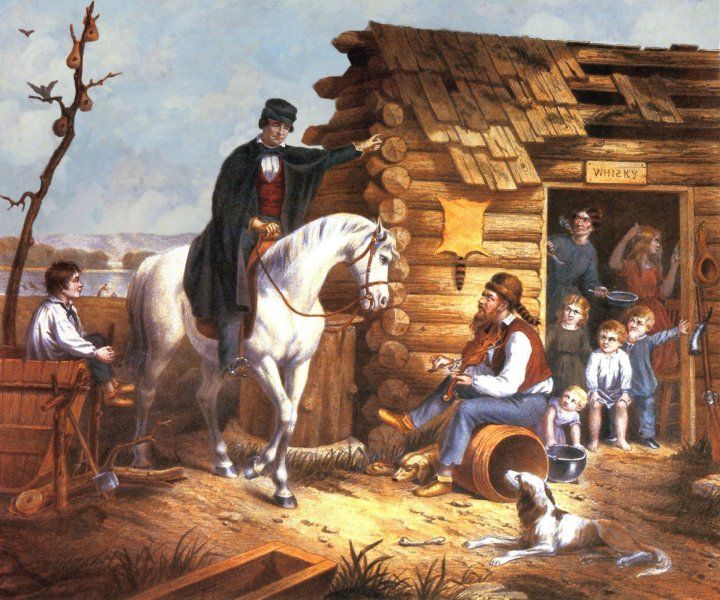
The receipt, says the Memphis Enquirer, by Messrs. Cleaves and Vaden, of a new supply of this famous picture of a phase of life in Arkansas, some forty years ago, reminds us of a promise we had made to our readers, upon first noticing it, to publish the story of which this picture is the faithful and spirited illustration. To appreciate the whole thing, and enjoy it to the full, it must be seen and heard (the story, together with “the balance of that chune on the fiddle”) as rendered by Col. Sandy Faulkner, to whom the picture is dedicated, and whose life-like portrait adorns it,–and as no one but himself can render it. A sad interest has been added to this picture, of late, by the death of young Washborne, the talented, self-taught artist, a native of Arkansas, whose pencil produced it.
The picture, with the music, is to be had of Cleaves & Vaden, Main street. The following is the story.

The Arkansaw Traveler.
A lost and bewildered Arkansas traveler approaching the cabin of a squatter, about forty years ago, discovered the proprietor seated on an old whisky barrel near the door, partly sheltered by the eaves, playing a fiddle, when the following dialogue ensued—the squatter still continuing to play the same part over and over:
Traveler.—Halloo, stranger?
Squatter—Hello yourself.
T.—Can I get to stay all night with you?
S.—You kin get to go to h_ll.
T.—Have you any spirits here?
S.—Lots of ’em. Sal saw one last night by that thar old holler gum and it nearly skeered her to death.
T.—You mistake my meaning—have you any liquor?
S.—Had some yesterday, but Ole Bose he got in and lapped all uv it out’n the pot.
T.—You don’t understand, I don’t mean pot liquor. I’m wet and cold, and want some whisky. Have you got any?
S.—Oh, yes,–I drank the last this morning.
T.—I’m hungry, havn’t had a thing this morning, can’t you give me something to eat?
S.—Han’t a d____d thing in the house. Not a mouthful of meat, or a dust of meal here.
T.—Well, can’t you give my horse something?
S.—Got nothin’ to feed him on.
T.—How far is it to the next house?
S.—Stranger, I don’t know. I’ve never been thar.
T.—Well, do you know who lives here?
S.—I do.
T.—As I’m so bold then, what might your name be?
S.—It might be Dick, and it might be Tom; but it lacks a d____d sight of it.
T.—Sir! will you tell me where this road goes to?
S.—It’s never been anywhar since I’ve lived here; its always thar when I git up in the mornin.
T.—Well, how far is it to where it forks?
S.—It don’t fork at all, but it splits up like the d___l.
T.—As I’m not likely to get to any other house to-night, can’t you let me sleep in yours, and I’ll tie my horse to a tree, and do without anything to eat or drink?
S.—My house leaks; thar’s only one dry spot in it, and Sall sleeps on it. And that thar tree is the ole woman’s persimmon; you can’t tie to it, ‘cose she don’t want um shuk off. She ‘lows to make beer out’n um.
T.—Why don’t you finish covering your house and stop the leaks?
S.—It’s been raining all day.
T.—Well, why don’t you do it in dry weather?
S.—It don’t leak then.
T.—As there seems to be nothing alive about your place but children, how do you do here any how?
S.—Putty well, I thank you, how do you do yourself?
T.—I mean what do you do for a living here.
S.—Keep tavern and sell whisky.
T.—Well, I told you I wanted some whisky.
S.—Stranger, I bought a bar’l mor’n a week ago. You see me and Sall went shars. Arter we got it here we only had a drink betweenst us, and Sall, she did’nt want to use hern fust, nor me mine. You see, I had a spiggin in one eend, and she in tother. So she takes a drink out’n my eend, and pays me the bit for it; and then I’d take un out’n hern, and give her the bit. Well, we’s gitting along fust-rate, till Dick, d____d skulking skunk, he bourn a hole on the bottom to suck at, and the next time I went to buy a drink, they wurnt none thar.
T.—I’m sorry your whisky’s all gone; but, my friend, why don’t you play the balance of that tune?
S.—It’s got no balance to it.
T.—I mean you don’t play the whole of it.
S.—Stranger, can you play the fidul?
T.—Yes, a little sometimes.
S.—You don’t look like a fiddlur, but ef you think you can play any more onto that thar chune, you kin just git down and try.
(The traveler gits down and plays the whole of it.)
S.—Stranger, take a half dozen cheers and sot down. Sall, stir yourself round like a six- horse team in a mud hole. Go round in the holler, where I killed that buck this mornin’, cut off some of the best pieces, and fotch it and cook it for me and this gentleman, directly. Raise up the board under the head of the bed, and git the ole black jug I hid from Dick, and give us some whisky; I know thar’s sum left yit. Til, drive old Bose out’n the bread-tray, then clime up in the loft, and git the rag that’s got the sugar tied in it. Dick, carry the gentleman’s hoss round under the shed, give him some fodder and corn, much as he kin eat.
Til.—Dad, they ain’t knives enouff to sot the table.
S.—Whar’s big butch, little butch, ole case, cob-handle, granny’s knife and the one I handled yesterday? That’s enuff to set any gentleman’s table, without you’ve lost um. D__n me, stranger, ef you can’t stay as long as you please, and I’ll give you plenty to eat and drink. Will you have coffee for supper?
T.—Yes, sir.
S.—I’ll be hanged ef you do tho’, we don’t have nothin’ that way here, but Grub Hyson, and I reckon its mighty good with sweetnin’. Play away, stranger, you can sleep on the dry spot to-night.
T.—(After about two hour’s fiddling.) My friend, can’t you tell me about the road I’m to travel to morrow?
S.—To morrow! Stranger, you won’t git ou’n these diggins for six weeks. But when it gits so you kin start, you see that big sloo over thar? Well, you have to git crost of that, then you take the road up the bank, and in about a mile you’ll come to a two acre and a half cornpatch, the corn’s mitely in the weeds, but you needn’t mind that, jist ride on. About a mile and a half, or two miles, from thar you’ll come to the d___dest swamp you ever struck in all your travels, its boggy enuff to mire a saddle blanket. Thar’s a first rate road about six feet under thar.
T.—How am I to get at it?
S.—You can’t git at it nary time, till the wether stiffens down sum. Well, about a mile beyant, you come to a place whar thur’s two roads. You kin take the right hand ef you want to, you’ll foller it a mile or so, and you’ll run out; you’ll then have to come back and try the left, when you git about two miles on that, you may know you are wrong, fur they ain’t any road thar. You’ll then think you are mighty lucky ef you kin find the way back to my house, whar you kin come and play on that chune as long as you please.
Mr. John E. Reardon, of this city, has this superb picture for sale.

0 comments

Mrs. Stephen A. Douglas

Frank Leslie’s Illustrated Newspaper

Frank Leslie’s Illustrated Newspaper, May 26, 1860

Mrs. Stephen A. Douglas, "From a photograph by Whitehurst," Leslie's Illustrated Newspaper, May 26, 1860From a photograph by Whitehurst

OUR GALLERY OF DISTINGUISHED AMERICAN LADIES.

MRS. STEPHEN A. DOUGLAS.

WE present this day the second portrait in Our Gallery of Distinguished American ladies. Mrs. Stephen A Douglas, ne Cutts, by her beauty, talents and social position, has been for several years one of those whose movements have been noted in the higher political circles, in view of the possibility of her one day presiding over the social and political hospitalities of the White House. In Washington her home has been the centre of attraction for all the beauty, wit, fashion and talent of this and other countries. Her influence is felt far and near, and all who have been admitted to her charmed circle freely acknowledge the fascinations of her graceful, dignified and kindly courtesies. She was married to Judge Douglas in 1857, and sympathizing cordially with the noble ambition of her husband, has entered, heart and soul—so far as a refined and sensitive woman may—into that interest which may result in elevating him to the highest position in the gift of her country.


On November 20, 1856, Douglas married a second time, to 20-year-old Adele Cutts, a southern woman from Washington, D.C, She was the daughter of James Madison Cutts, a nephew of former President James Madison, and Ellen O’Neal, a niece of Rose O’Neal Greenhow. Her mother was from a Maryland Catholic family and raised Adele as a Catholic. With Stephen’s approval, she had his two sons baptized as Catholic and reared in that faith. She had a miscarriage in 1858 and became ill. The following year, Adele gave birth to a daughter, Ellen, who lived only a few weeks. (Wikipedia)

0 comments

0

New York Times

Frank Leslie’s Illustrated Newspaper, May 26, 1860.

The Hon. John Bell and the Hon. Edward Everett, nominated for President and Vice-President, by the Union Convention at Baltimore, on May 9th, 1860

The Hon. John Bell and the Hon. Edward Everett, nominated for President and Vice-President, by the Union Convention at Baltimore, on May 9th, 1860.

0 comments

0

News of the Day

The Ranchero [Corpus Christi, TX], May 26, 1860

The bleached remains of the emigrant party massacred at the Mountain Meadow, in Utah, have been collected into a single grave, and a stone monument, conical in form, fifty feet in height, now marks the spot where they rest. This is surmounted by a cross of red cedar, twelve feet in height, on which is carved the following inscription: “Vengeance is mine, I will repay, saith the Lord.” On the base of the monument stands a granite slab, into which are cut the words, “Here 120 men, women and children were massacred in cold blood, early in September, 1857. They were from Arkansas.”

0 comments

0

Miscellaneous document sources

Washington, D. C, 26th May, 1860.

Dear Stephens, … I will probably meet you in Milledgeville if I can with any convenience get off from here. You will see from my speech fully where we differ, tho’ I am perfectly prepared to accommodate the party difficulty when you [think] proper; tho’ I would never, never did and never will, surrender the constitutional right of protection. Indeed the 5th resolution[i] of Davis passed the Senate by a vote of 42 to 2 (Hamlin and Trumbull) after all of Mr. Douglas’s clamour against it, Mr. Crittenden and Mr. Kennedy voting with us and the Black Republicans refusing to vote against it except the two mentioned. Under this state of facts I think we are called on to surrender to Mr. Douglas to great disadvantage. All well.

[i] The fifth of the Davis resolutions was: “Resolved, that if experience should at any  time prove that the judicial and executive authority do not possess means to insure adequate protection to constitutional rights in a Territory, and if the territorial government should fail or refuse to provide the necessary remedies for that purpose, it will be the duty of Congress to supply that deficiency.”


From Annual Report of the American Historical Association for the Year 1911.

Robert Augustus Toombs was an American lawyer, planter, and politician from Georgia who became one of the organizers of the Confederacy and served as its first Secretary of State. He served in the Georgia House of Representatives, the US house of Representatives, and the US Senate.  In the Confederacy, he served in Jefferson Davis’ cabinet as well as in the Confederate States Army, but later became one of Davis’ critics.

Alexander Hamilton Stephens was an American politician who served as the vice president of the Confederate States from 1861 to 1865. After serving in both houses of the Georgia General Assembly, he won election to Congress, taking his seat in 1843. After the Civil War, he returned to Congress in 1873, serving to 1882 when he was elected as the 50th Governor of Georgia, serving there from late 1882 until his death in 1883.


0 comments

0

Harper’s Weekly

Harper’s Weekly, May 26, 1860

Hon. Abram Lincoln, of Illinois, Republican Candidate for President [Photographed by Brady.]Click on the image below for pdf of page 1 and 2 of May 26, 1860, Harper’s Weekly with a biographical sketch of Lincoln.

Harper's Weekly, May 26, 1860, page 1 and 2, with Abraham Lincoln biographical sketch.
0 comments

0

News of the Day

[Fayetteville, Ark.] The Arkansian, May 25, 1860

The Salt Lake Valley Tan, of February 29th, contains a statement in regard to the massacre at Mountain meadows, in September, 1857; when 120 men, women, and children, emigrants from Arkansas, were murdered by Mormons. When Judge Cradlebaugh commenced the session of his court in Utah, supported by the military, among other witnesses who privately, under fear of assassination, informed him of outrages in the territory was one who participated in the Mountain Meadow massacre. He gave the following account of the murder.

Previous to the massacre there was a council held at Cedar City, which president Haight and Bishop Higby and Leed attended. At this council they designated or appointed a large number of men residing in Cedar City, and in other settlements around, to perform the work of dispatching these emigrants. The men appointed for this purpose were instructed to resort, well armed, at a given time, to a spring or small stream, lying a short distance to the left of the road leading into the meadows, and not far from Hamblin’s ranche, but concealed from it by intervening hills. This was the place of rendezvous, and here the men when they arrived, painted and otherwise disguised themselves, so as to resemble Indians. From thence they proceeded, early on Monday morning, by a path or trail which leads from this spring directly into the Meadows, and enters the road some distance beyond Hamblin’s ranche. By taking this route they could not be seen by any one at the ranche.

On arriving at the corral of the emigrants a number of the men were standing on the outside by the camp fires, which from appearances, they had just been building.—These were fired upon, and at the first discharge several of them fell dead or wounded. The remainder immediately ran to the inside of the corral, and began fortifying themselves, and preparing for defence as well as they could, by shoving their wagons closer together, and digging holes into which to lower them, so as to keep the shots from getting under and string them. The attack continued, in a desultory and irregular manner, for four or five days. The corral was closely watched, and if any of the immigrants showed themselves they were instantly fired on from without. If they attempted to go to the spring, which was only a few yards distant, they were sure to fall by the rifles of their assailants. In consequence of the almost certain death that resulted from any attempt to procure water, the emigrants before the siege discontinued, suffered intensely from thirst. The assailants, at length, believing that the emigrants could not be subdued by the means adopted, resorted to treachery and stratagem to accomplish what they had been unable to do by force. They returned to the spring, where they had painted and disguised themselves previous to commencing the attack, and there removed their disguises, and again assumed their ordinary dress.

After this Bishop, with a party of men, returned to the camp of the emigrants, bearing a white flag as a signal of truce. From the position of the corral, the emigrants were able to see them some time before they reached it. As soon as they discerned it, they dressed a little girl in white, and placed her at the entrance of the corral, to indicate their friendly feelings to the persons bearing the flag. Lee and his party, on arriving, were invited into the corral, where they stayed about an hour, talking with them about the attack that had been made upon them. Lee told the emigrants that the Indians had gone off over the hills, and that if they would lay down their arms and give up their property, he and his party would conduct them back to Cedar City; but if they went out with their arms, the Indians would look upon it as an unfriendly act, and would again attack them. The emigrants, trusting to Lee’s honor and sincerity of his statement, consented to the terms; which he proposed, and left their property and all their arms at the corral, and, under the escort of Lee and his party, started towards the North in the direction of Cedar City. After they had proceeded about a mile on their way, on a signal given by Bishop Higby, who was one of the party who went to the corral with Lee, the slaughter began. The men were mostly killed or shot down at the first fire, and the women and children, who immediately fled in different directions were quickly pursued and dispatched.

Such was the substance, if not the exact words of a statement made by a man to Judge Cradlebaugh, in my presence, who at the same time, confessed that he participated in the horrible events which he related. He also gave Judge C. the names of 24 or 30 other men living in the region, who assisted in the massacre. He offered also to make the same statement in court and under oath, if protection was guaranteed to him. He gave as a reason for divulging these facts, that they had tormented his mind and conscience since they occurred, and he expressed a willingness to stand a trial for his crime.

0 comments

0

New York Times

The New York Times, May 24, 1860

Correspondence of the New-York Times:

PROVIDENCE, R.I., Wednesday, May 23, 1860.

I remember three months ago I was awaiting the arrival of one of the trains at the depot of the Boston and Providence Railroad, when the Shoreline train from New-York came rushing in, and a small group of people, among them several prominent politicians and two or three Policemen seemed to be anxiously looking for the arrival of some individual. They watched every face eagerly as they made egress them the car doors, and when every passenger was out, they turned back disappointed in not finding the object of their search. They were discussing the probability of his coming in the next train, or perhaps they had lost sight of him in the hurrying crowd. I imagined, from the intermixture of the Police among the group, that a rogue was to be caught, or that they anticipated some event in which the fingers of the Police might be serviceable. Just at this juncture, however, a tall, lean, gaunt, wiry, sleepy-looking individual, very commonly attired, standing at their elbow, attracted their attention, and very soon there was a cordial shaking of hands, a wonderful look of astonishment, and many a hearty laugh took place at the expense of “Honest Old Abe.” The mystery was solved It was Hon. ABRAM LINCOLN of Illinois, for whom they were seeking, who had come to speak on behalf of the Republican cause in Rhode Island. They, doubtless, anticipated a large, portly, neatly shaven, politician, of the Hale sort of man, but they found in the great antagonist of Mr. DOUGLAS, “one of the common people” to all appearances, whose features were bronzed by honest labor, plainly dressed, with no assumptions of dignity or ability. Those who saw this incident, and the mass of people who heard him earnestly and eloquently defend the principles of the Republican Party, at the opening rally of the State campaign, probably never dreamed of the announcement which, three months later, was to electrify the nation and to rouse the enthusiasm of the people.

The nomination of LINCOLN was received here with great surprise, mingled with a touch of disappointment. Those whose sagacity predicted the success of Gov. SEWARD, were more sadly disappointed than the rest, while the supporters of MCLEAN, rather those whose personal preference would have favored him over others, were aggrieved because they saw it was a severe stroke to the union of the Opposition, an event so desirable, and, in fact, imperatively necessary in the coming contest. This disappointment was but temporary. There is hardly a man in the State professing Republican principles that does not now heartily welcome the nomination. And whatever their individual preferences might have been, they appear willing to be satisfied with the choice of the Convention. A large portion of the Sprague Conservatives have rejoiced over the selection of “Honest Abe” as the standard-bearer of the Republican Party, while they repudiate SEWARD as too radical to lead the masses. Mr. LINCOLN evidently gains favor here daily, as his personal career and the principles he declares become better known.

The Democrats, who are all devoted to DOUGLAS, view the nomination as a strong one, “the strongest that could made in the Northwest.” Their principal organ, edited by a very capable and intelligent politician, thinks that the only man who can be pitted against LINCOLN, with any confidence for success, is Mr. DOUGLAS. They are true in this statement. As for Rhode Island, if Mr. DOUGLAS should be nominated, and these two heroes of the Illinois field be brought into combat there will be a tough campaign, with the odds in favor of LINCOLN. This is an honest and unprejudiced view of the field in this region. The Bell ticket receives but few supporters. There was a time when the names of JOHN BELL and EDWARD EVERETT would have been hailed with enthusiasm. But their glory has departed. The glory I mean of their political character and success. The times have advanced far ahead of their ideas. They belong to the political times of 1850, and to the anterior period, when the patriotic old Whig Party was in the height of its renown and prosperity. No two men are more respected for their eminent abilities, their worth and integrity, and the valuable services which they have tendered to the country. They are both patriots and will ever be regarded with warm admiration by the people of North and South. But at this day it requires something more than these qualities to ensure political success and to be popular with the masses.

The new State Government will be inaugurated on Tuesday next. At Newport ‘Lection Day is famous in local history, and a full programme will be carried out on this occasion. Gov. TURNER retires from the position which he has so acceptably filled during the past year with the glory of an honest and impartial administration of public affairs, which is a sufficient eulogium on his public career.

HIPPARCHUS.

0 comments

0

New York Times

The New York Times, May 25, 1860

Death of the Steward, and Inquest Upon the Body

The Crew Charged of Mutiny and Murder

The Case before the U.S. Commissioner Hon. K.G. White

The steward of the ship Wm. F. Storer, who was mortally wounded with a hand-spike during the progress of the mutiny which occurred on board that vessel while she was proceeding down the Bay on Wednesday afternoon, died at the New-York Hospital yesterday morning. The name of the deceased is ascertained to have been ANDREW MITCHELL, and the circumstances under which he received his death-wounds are narrated in the following testimony, which was taken at the inquest by Coroner SCHIEMER:

A slungshot

                A slungshot

Capt. Benj. J.H. Trask deposed: I reside in Brooklyn and am Captain of the ship Wm.F. Storer; on Wednesday we left the dock at 11 o’clock A.M., on our way to Liverpool, but were forced to anchor in the North River on account of the insufficiency of water on the bar; we got under weigh in the course of a couple of hours, and were going down the Bay in tow when some one came to me in the cabin and stated that there was a disturbance with the crew; I went into the after cabin and armed myself with a pair of pistols and a life preserver slung shot,  when going forward I asked what was the matter; the men replied that the forecastle was closed and they wanted it opened; I replied that they did not want is open while weighing anchor, and one of them, Alfred Ryder, said “we do want it open; will you open it” I said “No; go to your work;” he answered “I’ll see you d — d first, you old gray-headed son of a b — b;” I told the mates to take him aft and place him in irons, at the same time taking hold of him myself; he then seized a belaying pin and attempted to strike me with it, but I felled him with a slung shot; another man then approached me with a belaying-pin, but I [continue reading…]

0 comments

0

New York Times

The New York Times, May 24, 1860

One Man Fatally Injured and Several Badly Wounded

A fearful conflict occurred yesterday afternoon on board the packet-ship Wm. F. Storer, Capt. TRASK, between the officers and the seamen. Early in the morning the vessel’s crew were shipped and she was hauled into the stream near Bedloe’s Island, preparatory to her departure for Liverpool. The seamen, as is invariably the case, were partially intoxicated at the time they embarked and their frequent potations in the interval before the vessel was ready to go, rendered them very disorderly. In order to secure their services, the officers nailed up the forecastle where the sailors had secreted their liquor, and at 3 o’clock the anchor having been raised, a steam-tug started down the Bay with the ship in tow. Soon afterwards some of the crew came aft and demanded of Capt. TRASK that the forecastle should be opened, but on his refusal to comply with the request, the men declared that they would not work, and immediately inaugurated a disturbance. Marlin-spikes, belaying-pins, and other missiles, were thrown at the officers upon the poop deck, until finally the captain had to fire several times upon the mutineers, who returned the shots without doing any damage. Meantime, the captain gave orders to have the vessel towed back again, and anchored. This was done, and a signal of distress was displayed, but the battle was kept up without intermission, and the steward of the ship, who had been assisting the officers to keep the rebels from the poop, received a shot in the head which laid him insensible on the deck, and which is believed will speedily result in his death. B.W. CARE, the second-mate, was also felled with a handspike, and received a terrible scalp-wound.

The mutineers, some 12 in number, themselves had not escaped unscathed, a ball from the Captain’s revolver having penetrated the arm of one of them, an American, named ROBT. CRAIG; and several of the rest were cut and bruised in a shocking manner. By this time boat’s crew No. 2, of the Harbor Police, Coxswain NESBITS, had discovered the signal of distress, and at once started for the vessel. It was a difficult matter for the Police to get on board, as they found no ropes hanging over the side, and no assistance could be rendered by the officers of the ship. Having finally succeeded, the crew were driven back to the forward part of the vessel, and by dint of great exertion they ware secured. A miscellaneous collection of deadly weapons, consisting of pistols, sheath-knives and slung-shots, were taken from them, and JAS. DILLON; WM. SMITH and ROBERT CRAIG, the ringleaders, with the wounded men, were taken on shore, while Coxswain HOLLAND and crew No. 1, which subsequently came up, was placed in charge of the vessel and the remaining mutineers. At the Station-house the wounded were attended by Dr. ANDREWS, and the steward, whose name could not be ascertained, was afterwards removed thence to the City Hospital. The vessel bears evidences of a hard conflict, all the cabin windows having been broken by the missiles projected by the crew. Much praise is due to Officers NESBITT, HARVEY, GARLAND, CONNERY and COULD, of the Harbor Police, for the promptness which they showed in overpowering the mutineers.

0 comments

0

Diary and Letters of Rutherford Birchard Hayes
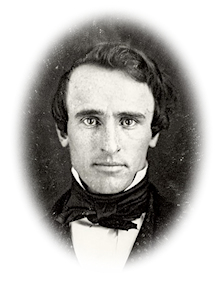
Rutherford B. Hayes (young)

CINCINNATI, May 23, 1860.

DEAR UNCLE: — We are all very well; have escaped the hurricane and floods without injury. Mother Webb was on a railroad train going to Lexington the afternoon of the great blow — the train ran over a tree causing alarm, but no injury to passengers.

—                   —                     —

Lincoln you are, of course, pleased with. He takes well here. All well at Columbus.

Sincerely,

R. B. HAYES.

S. BIRCHARD.

0 comments

0

New York Times

To George Ashmun[1]

Hon: George Ashmun:           Springfield, Ills. May 23. 1860
President of the Republican National Convention.
          Sir: I accept the nomination tendered me by the Convention over which you presided, and of which I am formally apprized in the letter of yourself and others, acting as a committee of the convention, for the purpose.
          The declaration of principles and sentiments, which accompanies your letter, meets my approval; and it shall be my care not to violate, or disregard it, in any part.
          Imploring the assistance of Divine Providence, and with due regard to the views and feelings of all who were represented in the convention; to the rights of all the states, and territories, and people of the nation; to the inviolability of the constitution, and the perpetual union, harmony, and prosperity of all, I am most happy to co-operate for the practical success of the principles declared by the convention. Your obliged friend, and fellow citizen
LINCOLN          


[1] ALS-P, ISLA; ADfS, DLC-RTL. The letter is accompanied by a copy in Lincoln’s handwriting of the letter of Ashmun and others to Lincoln, May 18, 1860, which copy Ashmun requested in a letter dated May 21, for purposes of publication (DLC-RTL). Apparently Ashmun had not preserved a complete copy of his letter written as chairman and bearing the signature of the other members of the convention committee, and therefore asked Lincoln to furnish a copy along with his answer. Lincoln to Ashmun, May 26, infra, indicates that both Lincoln’s answering letter dated May 23 and his copy of Ashmun’s letter dated May 18 were sent on May 26. Whether Lincoln had mailed an earlier copy of his letter of acceptance on May 23, the day it was written, is not certain, since no other original ALS is known. One infers, however, that Lincoln had composed the draft preserved in the Lincoln Papers on May 23, that in reply to Ashmun’s request of May 21, he copied it, together with a copy of Ashmun’s letter of notification, and mailed them on May 26. If so, the additional letter of May 23, infra, presents a further puzzle. The original has not been located, and there is some question of its authenticity, unless the original is forthcoming. It appears, however, to have a place and function only if Lincoln did not compose his final reply until May 26, and then dated it back to May 23 both in the draft and the letter sent. The brevity and haste apparent in the contents of the short letter (infra) may indicate this conclusion.


From The Collected Works of Abraham Lincoln, Volume 4

Sources and Location Symbols used in the Collected Works: Abbreviations

0 comments

0

Miscellaneous document sources

Washington City, 22 May, 1860.

Dear Col., … I was extremely gratified at the result of your meeting in Macon and was happy to find your name among the delegates. It is the most important party convention that ever assembled in Ga. I intend if possible to be there myself. I shall be appointed a delegate from Clarke county and unless detained here by some insuperable cause I shall be in Milledgeville on the 3d. June. It is extremely inconvenient for me to leave my office whilst Congress is in session but I shall not allow any ordinary consideration to detain me. From all I can learn the Douglas faction will be whipt badly in the state. We shall have some trouble with our own friends to get them to consent to be represented at Baltimore. But when they see that unless we send true men, there will be a bogus delegation, I think they should give in to our policy. My programme is to send the old delegates, and by endorsing their past action we give the best instructions for their future conduct, as I said in my letter.

My opinion now is that our friends at Baltimore will be able to defeat Douglas and get both a good man and a sound platform. Whilst my individual choice is still for Hunter yet I believe that old Joe Lane is the best man to make the fight on, both in the convention and before the people. He is as true as steel and then he has “fought, bled and died for his country.” I believe that the best chance now is to take a northern man—any of them will be acceptable after we get clear of Douglas.

I am glad you are going to have another paper in Macon. It will at least be a check upon the Telegraph. If it is Ben Martin (Benning’s brother-in-law), he is a good and true friend of mine and was in 1850, though Benning was against me. . . .

I will have sent to you speeches of Toombs, Benjamin and others, which will give you all the points on Douglas. In this morning’s Constitution you will find an article which fills up the asterisks in Stephens’s letter where he quotes from his Augusta speech. Douglas endorsed the letter. He is now asked if he will endorse it with the asterisks filled up.

I sent an editorial to the Federal Union, headed “The true issue” in which I have discussed the Dred Scott decision and non-intervention. If they publish it as I sent it, it will put the gentlemen who have been writing letters against our line in a tight place, though I don’t name any of them. It ought to be in next Tuesday’s paper.

Do write me how matters are progressing in the different counties around you. All send love to John A. and yourself.

[P. S.] —I call your attention particularly to Benjamin’s speech. The [trooper?] articles are admirable and will make a capital document for circulation. Send them all over the State.


From Annual Report of the American Historical Association for the Year 1911.

Howell Cobb was an American political figure. A southern Democrat, Cobb was a five-term member of the United States House of Representatives and Speaker of the House from 1849 to 1851. He also served as the 40th Governor of Georgia and as a Secretary of the Treasury under President James Buchanan. Cobb is, however, probably best known as one of the founders of the Confederacy, having served as the President of the Provisional Congress of the Confederate States.

0 comments

0

New York Times

The New York Times, May 22, 1860

To the Senate and House of Representatives:

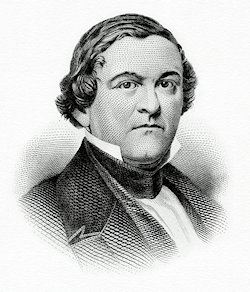
On the 26th day of April last, Lieut. CRAVEN, of the United States steamer Mohawk, captured the slaver Wildfire, on the coast of Cuba, with five hundrend and seven African negroes on board. The prize was brought into Key West on the 30th April, and the negroes were delivered into the custody of FERNANDO J. MORENO, Marshal of the Southern District of Florida.

The question which now demands immediate decision is, what disposition shall be made of these Africans? In the annual message to Congress of December 6, 1858, I expressed my opinion in regard to the construction of the act of the 3d March, 1819, “In addition to the acts prohibiting the slave trade,” so far as the same is applicable to the present case. From this I make the following extract:

“Under the 2d section of this act the President is authorized to make such regulations and arrangements as he may deem expedient for the safe-keeping, support and removal beyond the limits of the United States of all such negroes, mulattoes, or persons of color captured by vessels of the United States, as may be delivered to the marshal of the district into which they are brought, and to appoint a person or persons residing upon the coast of Africa as agent or agents for receiving the negroes, mulattoes, or persons of color delivered from on board vessels seized in the prosecution of the slave trade by commanders of the United States armed vessels.’

Mr. MONROE, in his special message of 17th December, 1819, at the first session after the act was passed, announced to Congress what, in his opinion, was its true construction. He believed it to be his duty under it to follow these unfortunates into Africa, and make provision for them there until they should be able to provide for themselves.

Adopting this construction of President MONROE, I entered into an agreement with the Colonization Society, dated 7th September, 1858, to receive the Africans which had been captured on the slaver Echo from the agent of the United States in Liberia; to furnish them during the period of one year thereafter with comfortable shelter, clothing and provisions; and to cause them to be instructed in the arts of civilized life suitable to their condition, at the rate of $150 for each individual. It was believed that within that period they would be prepared to become citizens of Liberia, and to take care of themselves. As Congress was not then in session, and as there was no outstanding appropriation applicable to this purpose, the Society were obliged to depend for payment on the future action of that body. I recommended this appropriation, and seventy-five thousand dollars were granted by the act of 3d March, 1859, (the Consular and Diplomatic bill) “to enable the President of the United States to carry into effect the act of Congress of 3d March, 1819, and any subsequent acts now in force for the suppression of the Slave-trade.”

Of this appropriation there remains unexpended the sum of twenty-four thousand three hundred and fifty dollars and ninety cents, ($24,350 99,) after deducting from it an advance made by the Secretary of the interior out of the judiciary fund of eleven thousand three hundred and forty-eight dollars and ten cents, ($11,348 10.)

I regret to say that, under the mode adopted in regard to the Africans captured on board the Echo, the expense will be large; but this seems to a great extent to be inevitable, without a violation of the laws of humanity. The expenditure upon this scale for those captured on board the Wildfire will not be less than $100,000, and may considerably exceed that sum. Still it ought to be observed that, during the period when the Government itself, through its own agents, undertook the task of providing for captured negroes in Africa, the cost per head was much greater than that which I agreed to pay the Colonization Society.

But it will not be sufficient for Congress to limit the amount appropriated to the case of the Wildfire. It is probable, judging from the increased activity of the slave-trade and the vigilance of our cruisers, that several similar captures may be made before the end of the year. An appropriation ought, therefore, to be granted, large enough to cover such contingencies.

The period has arrived when it is indispensable to provide some specific legislation for the guidance of the Executive on this subject. With this view, I would suggest that Congress might authorize the President to enter into a general agreement with the Colonization Society, binding them to receive on the coast of Africa from our agent there all the captured Africans which may be delivered to him, and to maintain them for a limited period, upon such terms and conditions as may combine humanity towards these unfortunates with a just economy. This would obviate the necessity of making a new bargain with every new capture, and would prevent delay and avoid expense in the disposition of the captured. The law might then provide that, in all cases where this may be practicable, the captor should carry the negroes directly to Africa, and deliver them to the American agent there, afterwards bringing the captured vessel to the United States for adjudication.

The capturing officer, in case he should bring his prize directly to the United States, ought to be required to land the negroes in some one or more parts to be designated by Congress, where the prevailing health throughout the year is good. At those ports cheap, but permanent accommodations might be provided for the negroes, until they could be sent away, without incurring the expense of erecting such accommodations at every port where the capturing officer may think proper to enter. On the present occasion these negroes have been brought to Key West; and, according to the estimate presented by the Marshal of the Southern District of Florida to the Secretary of the Interior, the cost of providing temporary quarters for them will be $2,500, and the aggregates expenses for the single month of May will amount to $12,000. But this is far from being the worst evil. Within a few weeks the yellow fever will most probably prevail at Key West; and hence the Marshal press their removal from their present quarters at an early day, which must be done, in any event, as soon as practicable. For these reasons I earnestly commend this subject to the immediate attention of Congress.

It is truly lamentable that Great Britain and the United States should be obliged to expend such a vast amount of blood and treasure for the suppression of the African Slave-trade; and this when the only portions of the civilized world where it is tolerated and encouraged are the Spanish islands of Cuba and Porto Rico.

JAMES BUCHANAN.

WASHINGTON, May 19, 1860.
0 comments

0

New York Times

The New York Times, May 22, 1860

Detective Slowey and King yesterday arrested Capt. D.S. Williams, owner of a schooner of the same name, and David F. Williams, his brother and mate of the vessel, on charges of having been engaged in extensive larcenies of merchandise committed to their care. The accused have for some years been engaged in carrying assorted cargoes from this port to Mobile, Ala; but for months past the New-York shippers have received complaints from their Southern customers that the consignments invariably fell short of the quantity named in the invoice. It was at first suspected that Patrick Mockler, the steward of the vessel, was the thief, and he was arrested, but an investigation resulted in causing suspicion to rest upon the accused, who arrived from Mobile last Saturday. In searching the Captain’s premises at Forked River, Monmouth County N.J., the officers discovered a large trunk, filled with various packages of merchandise, buried in the garden, and yesterday afternoon another trunk, containing dry goods, was dug out of a sand-bank at Staten Island. In each instance, the trade-marks had been left upon the property, so that little difficulty will be experienced in identifying it. The detectives have also traced a portion of the stolen goods to Providence, R.I., and the supposition is that the cases were broken and the contents abstracted before the vessel left port. The prisoners will be examined to-day by a United States Commissioner.

0 comments

0

New York Times

The New York Times, May 21, 1860

From the Associated Press.

WASHINGTON, Saturday, May 19.

FRIENDS AND FELLOW CITIZENS: Concurring with you fully in the great principles which have united us in political association, I am pleased to meet you on this occasion; and I unite my voice with yours most cordially in a tribute to a common cause. You have assembled to congratulate each other upon the doings of our recent Convention at Chicago, the result of which has come to us over the telegraphic wires. Of that position which has been assigned to me, you will allow me to say, that while I feel profoundly grateful for the honor it confers, and am duly sensible of the obligations it imposes, it was neither sought, expected, nor even desired. But as it has come unsolicited, it leaves me no alternative but to accept the responsibilities which attach to it, with an earnest hope and endeavor, that a cause more important than any man, will receive no detriment at my hands. But you have come to pay a tribute to our standard bearer, who has been taken from the Great West, where the star of empire is culminating, if it has not already culminated; a man of comprehensive and vigorous intellect, and fully equal to the position designated. The architect of his own fortune, he comes to us most emphatically a representative man; not only a representative man as an able and earnest exponent of Republican principles, but as identified with the laboring and industrial classes. Having from early life, to the maturity of manhood, devoted himself to physical labor, he can, as he does, but feel a keener sense of the rights of labor. He stands before the country, too, with a high moral character, upon which even a suspicion was never breathed, and with a political integrity above reproach. The objects desired by the Republicans in the pending election, and the obligations imposed upon our candidate, are, to bring back the Government to the principles and practices of its fathers and founders, and to administer it in the light of their wisdom and example; to aid our commerce, to send it out upon distant seas, and to prepare for it havens in its distress and on its return; to infuse new life and energy into all the productive and industrial pursuits of the whole country — for we must not forget that the prosperity of every country must repose upon productive industry. Labor it is, and labor alone, that builds and navigates our ships, delves in our mines, makes music in the workshops, clears away the forest, and makes the hillside blossom as the rose. It maintains our Government and upholds the world in its prosperity and advancement. Surely then, it should challenge and demand its rights of the Government it thus sustains. To preserve the integrity of the Union, with the full and just rights of all the States, the States themselves not interfering with the principles of Liberty and Humanity in the territories of the United States, outside their own jurisdiction, and to preserve our original territorial domain for the homesteads of the free: — these are the great principles which we have united to sustain and advance. That done, our Government will remain a blessing to all, and our country a refuge in which the man of every creed and every clime may enjoy the securities and privileges of institutions of Freedom, regulated only by law.

0 comments

0

New York Times

The New York Times, May 21, 1860

From Our Own Correspondent.

CHICAGO, Friday, May 18, 1860.

Time flies quickly, and wise men work with the motto before them that “Time is money.” This has been preeminently the case with the Convention which met on Wednesday in the Republican Wigwam of this city, to nominate candidates for President and Vice-President of the United States.

Long ere this reaches you, the telegraphic communication of your special correspondent has informed you that the deed is done;—that on the third ballot the Convention determined to place the standard of the party in the hands of ABRAM LINCOLN.

The developments of last night showed that the friends of SEWARD were devoted to him and his interests, and that they would stick to him so long as there was the faintest hope of success. The leaders were very sanguine of victory. THURLOW WEED said he “was sure of success.” Mr. EVARTS said their “victory was certain, and would be rapid.” A meeting of the opponents of SEWARD was held, at which efforts were made to harmonize the conflicting elements. The friends of LINCOLN, CAMERON and BATES were there, but after a protracted session, nothing being accomplished, they adjourned. This morning the Wigwam was as full as ever. Every one knew by intuition that the hour was approaching which would settle forever the fate of Mr. SEWARD, and would be pregnant with good or evil for the party, whose representatives had thus solemnly met. After some unimportant business, on motion, the Chair decided that it was in order to proceed to ballot, and [continue reading…]

0 comments

0

Miscellaneous document sources
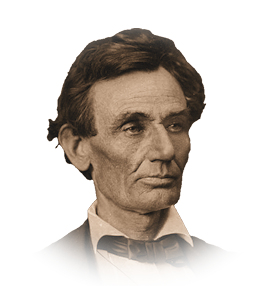
William Marsh May 20, 1860 of Presidential Candidate Abraham Lincoln.

Display information from The Met:

This photograph, made in Springfield, Illinois, on May 20, 1860, was the first portrait taken of Abraham Lincoln after he had received the nomination for president at the Republican National Convention in Chicago. It is one of five photographs taken by William Marsh for Marcus L. Ward, a delegate from Newark, New Jersey. Although many in the East had read Lincoln’s impassioned speeches, few had actually seen the senator from Illinois.

At fifty-one years old, Lincoln appears much younger in this photograph, innocent as yet of the great toll the presidency would take on him. His face is an odd contradiction of parts: his right eye typically wanders, his large right ear flaps behind a high cheekbone and sunken cheek, and his hair, described by Sir William Howard Russell as a “thatch of wild Republican hair,” is loosely combed. He did not grow his characteristic beard until October 1860. The first president of the United States to wear a beard, Lincoln appears cleanshaven in only one-third of the more than one hundred known photographs.

Yet Lincoln is ruggedly handsome. Marsh presents the face of the prairie lawyer from the backwoods of Kentucky, the man who would declare, in support of the Union, “A house divided against itself cannot stand”; the man who only two years after this photograph was made would deliver the Emancipation Proclamation, and who, in his second inaugural address in 1865, spoke of reconstructing a vital, new country from the ashes of the South, “With malice toward none; with charity for all.”

0 comments

0

News of the Day

The Ranchero [Corpus Christi, TX], May 19, 1860

The Rangers under the command of Captains Ford and Littleton, were disbanded at Goliad the present week. Those of our citizens who have been serving on the Rio Grande, have returned home, and express much dissatisfaction at being disbanded without even a dollar or document to show for it.

0 comments

0

New York Times

The New York Times, May 19, 1860

Special Dispatch to the New-York Times.

WASHINGTON, Friday, May 18.

The reception of the news of LINCOLN’S nomination, at Chicago, threw the House of Representatives into such excitement as to suspend business for some minutes. Everybody was delighted. Even Mr. SEWARD’S warmest admirers pronounced the nomination most able and judicious. Judge DOUGLAS and his friends think it the heaviest blow the Democracy has yet received, and say that by to-morrow night there will not be a tar barrel or a pound of powder in Illinois.

0 comments

0

News of the Day

[Little Rock] Arkansas True Democrat, May 19, 1860

The emigration to the interior of the State, keeps up daily. Many passing here are bound for Texas, it being the best route to take for the western portion of that State and New Mexico. We notice many passing with from ten slaves and upwards. Experience has thribly proved by the new settlers that the poor and worn out lands of the older slave States, are not worth occupying compared with the virgin soil of Arkansas. We may look for thousands this fall. The Virginians, Georgians, Carolinians and Tennesseans are making our State their new homes. Many of the younger branches of families are among our visitors and examining locations. Welcome to them.

0 comments

0

News of the Day

[Little Rock] Arkansas True Democrat, May 19, 1860

Within the past week, we have taken an half day’s stroll about the city, and are pleased to acknowledge the increasing prosperity of every section. Many new streets are being opened and the timber and underbrush being cleared. Lots are being fenced— shade trees setting out facing the streets—old buildings going through the progress of repairs— additions made—new paint supplied, and within the last three months, not less than fifty buildings have been erected and in course of construction. More building going on than during the past three years.—Every house, office or store in the city is under tenants, and the cry is loud for a vast many more. A year or two past tenants were advertised for, and “to let” placarded many buildings. Not so now, strangers advertise for houses, and lucky if they find an application to let.

The erection of many new buildings contemplated this season, is deferred for want of materials. The saw mills of our city are doing all they can for the supply, with many orders ahead. The mills of the surrounding country are all engaged with the demand from their locations. The new mill recently erected and put into operation last week, some thirty miles up the river, by John Wassell, esq., of this city, has commenced doing all it can for the pressing wants, sawing some 7 to 8,000 feet per day. We learn that he has contracts already for near 300,000 feet.

The high price of brick—ten dollars per thousand—precludes very many from using that material, who otherwise would do so. If brick work could be done here at a less price, scarcely any wooden houses would be built.

In 1858, it is estimated the city increased 500. Last year, good judges place the additional number at 1,000 or 20 per cent. This year, it will depend entirely whether new comers can find places to shelter them. Many of them are living in tents on the outskirts of the city, waiting the erection of buildings. There is much complaint, that lot owners wont sell, lease or improve. If we calculate on the growth of the city, this thing should be remedied, at once. A large number have visited us, and finding no places to domicil their families, have passed us.

0 comments

0

News of the Day

[Little Rock] Arkansas True Democrat, May 19, 1860

We are indebted to a friend for the following particulars of a terrible catastrophe, which occurred near Camden on Saturday. A pic nic party had gone down to Boykin’s pond, when a large number got in a flatboat on the pond for the purpose of fishing. By some accident the boat was upset, and twenty-seven persons were drowned.

Latest by Telegraph.

The following dispatch was received last night, from the Intendant of Camden, giving more full particulars of the sad catastrophe:

Camden, S. C., May 6

An excursion train went from this place yesterday to Boykin’s Mill, on a fishing excursion. About fifty were out on the pond in a boat, when the boat hit a snag and sunk. The following persons were drowned:

Miss A. A. Alexander, Miss Mary Halson, Miss Lizzie McKagen, Miss Alice Robinson, Miss Saline Crosby, Miss Lou Nettles, Miss Sarah Howell, two Misses McCowns, Mr. L. R. LeGrand, Mr. Wm. LeGrand, Master Willie McKagen, Master B. F. Hocott, Master John Oakes.—All of the above were from Camden.

Two daughters and one son of Mr. Samuel H. Young, and Misses Kelly and Jenkins, and F. A. Richbourg, R. J. Huggins, and Jerry R. McLeod, from the country, besides two negroes. Twelve of the bodies have been buried here to day.

0 comments