0

News of the Day

Daily Journal, Wilmington, NC, June 7, 1860

$15 REWARD

WILL BE PAID for the apprehension of boy SOLOMON, hired by us from Miss M. H. Lillington.
Solomon left on the 30th ult. He is about 22 years old, black, slim; about 5 feet 7 inches high, thin countenance, has lost his middle upper front tooth, speaks quick; he is also badly ruptured.
Fifty dollars will be paid for evidence sufficient to convict any free person of harboring him.

KIDDER & MARTIN.

June 6th, 1860-233-4t.
0 comments

0

News of the Day

Jackson Mississippian, June 6, 1860

That Hon. John Bell, the Opposition candidate for President, voted in Congress to receive abolition petitions, no one denies. The record shows it, and the vote will ever remain against him. No matter how humiliating the fact, there cannot be any doubt of its truthfulness. The Opposition press are endeavoring to excuse this vote by hiding Mr. Bell under the skirts of other men. This will not do.—Mr. Bell is on trial and we have nothing to do with others. It was either right or it was wrong to vote for the reception of abolition petitions. In the register of the debates in Congress in 1835, we see that the petition to abolish slavery in the District of Columbia, for the reception of which Mr. Bell voted, was characterized by Southern members as “disrespectful,” “insulting in language, incendiary in its character”—that it called members of the South “LAND PIRATES.” Nevertheless Mr. Bell was willing to consider the petition.—He would not vote against its reception.—This is enough. This will suffice. It is all we have ever charged against Mr. Bell, and the record bears us out. Let the supporters of Mr. Bell make the most of it?

0 comments

To Lyman Trumball

Uncollected Letters of Abraham Lincoln—1917

Springfield, Ills. June 5, 1860

Hon. L. Trumbull

My dear Sir: Yours of May 31, inclosing Judge Read’s letter, is received.

I see by the papers this morning, that Mr. Fillmore refuses to go with us. What do the New-Yorkers at Washington think of this? Gov. Reeder was here last evening direct from Pennsylvania. He is entirely confident of that state, and of the general result. I do not remember to have heard Gen. Cameron’s opinion of Penn. Weed was here, and saw me; but he showed no signs whatever of the intriguer. He asked for nothing; and said N.Y. is safe, without condition.

Remembering that Peter denied his Lord with an oath, after most solemnly protesting that he never would, I will not swear I will make no committals; but I do think I will not.

Write me often. I look with great interest for your letters now.

Yours as ever,

A. Lincoln

0 comments

0

Memoir of Charles Sumner

(Italicized text is from “Memoir of Charles Sumner”)

Speaking in the U. S. Senate four years after being severely beaten in the Senate Chamber by Preston Bookes — a congressman from South Carolina —, Charles Sumner delivered a speech titled The Barbarism of Slavery during the debate of the bill to admit Kansas as a free state.

Except for a couple of campaign style speeches in the House, it was the last speech on American slavery made in Congress until discussions on emancipation. The speech drew public attention more than any made in Congress or elsewhere during the year.   It was printed entire in the leading newspapers of the great cities East and West, and was issued in several pamphlet editions, one of which had the sanction of the National Republican Committee.   Whether regarded as timely or not, it was accepted as an exhaustive exposition of American slavery altogether unmatched in our history.

Southern members of Congress — such as Hammond of South Carolina, Hunter and Mason of Virginia, Brown and Davis of Mississippi — recently had not hesitated to defend slavery as a normal condition of society, beneficial to both races, even ennobling to the white race, and the just basis of republican justice.

Sumner thought the time had come to meet in the Senate these — and other — audacious assumptions once and for all, and to treat with absolute plainness and directness of language the principle, motive, and character of slavery, and its baleful effects as seen in the practices of slaveholders and the habits of slave society, — each statement to be supported by facts, the whole to be an argument which would defy answer at the time, or in any future discussion in Congress or elsewhere. It was in his mind to show to the country and mankind that what the pro-slavery party vaunted as the finest product of civilization was none other than essential barbarism. No such speech had as yet been made by any statesman; no one in Congress, not even Sumner himself, had hitherto attempted more than to treat the institution as related to a pending measure, or incidentally to emphasize one or more of its features. An assault on American slavery all along the lines in the Senate, where it was most strongly intrenched, required courage and rare equipment at all points in moral and political philosophy, in history and law. Such a treatment of the subject was, however, not at the time agreeable to Republican politicians; they feared, sincerely enough, that [continue reading…]

0 comments

Another Slaver Ship Captured

New York Times

Seventeen Hundred African Slaves at Key West.

The New York Times, June 4, 1860

The United States steamer Crusader, Lieut. Commandant John N. Maffit, came into Havana on the 29th from Key West. The Crusader, on the afternoon of the 23d ult., off Cay Verde, in the mouth of the old Bahama channel, captured a bark having on board over five hundred negroes from the coast of Africa. The prize was placed in charge of Lieut. J.M. Duncan, (First Lieutenant of the C.,) and under convoy of the steamer proceeded to Key West, where the slaves were landed, to join those previously captured by the Wyandotte and Mohawk. There are now over seventeen hundred Africans at that place in charge of the United States Marshal, awaiting the action of our Government in the matter.

The captain and crew of the slaver bark were prisoners on board the Crusader. Although the name of the vessel was obliterated, it was stated in Havana that she was the Bogota, belonging to New York.

The courtesy and commisseration manifested by Capt. Maffit and the officers of the Crusader towards the captured Africans were the theme of particular commendation at Key West and Havana.

Capt. M. forwarded his dispatches and mail by the Cahawba, and proceeded the same day to his cruising ground. The machinery of the Crusader is in bad order.

The local news at Havana was unimportant.


0 comments

Violence in the US Capitol

Miscellaneous document sources

The Caning of Charles Sumner—May 1856

On June 4, 1860, Senator Charles Sumner of Massachusetts, after a long absence and silence, gave a long speech on the floor of the Senate during the debate a bill for the admission of Kansas as a free state, titled “The Barbarism of Slavery.”

Four years earlier, on May 22, 1856, Sumner was badly injured in a premeditated beating at his desk in the Senate chamber by South Carolina’s Representative Preston Brooks.  Sumner was seated at his desk, signing his postal frank to envelopes containing 112-page-long copies of a fiery speech titled “The Crime Against Kansas” when Brooks confronted him, saying “Mr. Sumner, I have read your speech twice over carefully. It is a libel on South Carolina, and Mr. Butler, who is a relative of mine.” As Sumner started to rise from his seat, Brooks began beating him with a cane made of thick gutta-percha with a gold head. Nearly beaten to death, Sumner was seriously injured and unable to resume his seat in the Senate for three years.

The Beating of Sumner; Southern chivalry - argument versus club's Selected news articles related to the attack:

Indianapolis, Indiana, Locomotive (Democratic), 23 May 1856

Mr. Sumner, Senator from Massachusetts, was attacked in the Senate Chamber by Mr. Brooks, Representative from South Carolina, and so beaten with a cane, that at last accounts he was in dangerous and critical condition. The assault was made while Mr. Sumner was sitting at his desk, writing, entirely unprepared, and is alleged, for an insult on the State, and on a relative, in the speech of Mr. Sumner. Committees were appointed in both houses to investigate the matter, and pass on the conduct of Brooks. Freedom of speech should be guarantied to all public men in debate on public questions, and the spirit of ruffianism exhibited by Brooks cannot be too highly censured. This is another result of the bitter personal partisan spirit, that characterizes the press and public speakers of the day, and while it continues, will excite men to acts of lawless outrages that they would not think of in calmer moments.

Boston, Massachusetts, Atlas [Republican], 23 May 1856

Hon. Charles Sumner, one of the Senators of Massachusetts, was yesterday brutally assaulted by a ruffian named Brooks, who represents South Carolina in the lower House. Those who know Mr. Sumner will readily believe that nothing in his conduct or conversation could have provoked the outrage, and that it must be attributed to the bold and vigorous demonstration of the Kansas inequity, which he has just uttered in the Senate. The reign of terror, then, is to be transferred to Washington, and the mouths of the representatives of the North are to be closed by the use of bowie-knives, bludgeons, and revolvers. Very well; the sooner we understand this the better. If violence must come, we shall know how to defend ourselves. We hope, for the credit of the State, that every man in it will feel this outrage upon Mr. Sumner as a personal indignity, no less than an insult to the Commonwealth of Massachusetts, and that there will be such a general and spontaneous expression of opinion, as willfully manifest our deep disinclination to submit to any repetition of the contumely.

Charleston, South Carolina, Mercury [Democratic], 29 May 1856

The South Carolinian, in alluding to the public demonstrations in approval of Mr. BROOKS, uses the following language:

“And, to add the crowning glory to the good work, the slaves of Columbia have already a handsome subscription, and will present an appropriate token of their regard to him who has make the first practical issue for their preservation and protection in their rights and enjoyments as the happiest laborers on the face of the globe.”

Was the like of this ever before published in a newspaper in South Carolina? The negroes of Columbia have actually participated in the congratulations of Mr. BROOKS, and the South Carolinian lauds it as “the crowning glory to the good work.” Now, these meetings in South Carolina to sustain Mr. BROOKS, as counter to those at the North, are proper enough. But when, in the Capital of the State, slaves are permitted, nay, applauded, and urged to take part in our political movements—to unite in popular demonstrations—to raise subscriptions, and present their tokens of approval to our public men—it is, indeed, a spectacle as digusting as it is novel. We blush for the State when such things are permitted. If our slaves can pubicly congratulate, may they not publicly condemn? And if one portion are permitted to laud Mr. BROOKS, why may not another, if disposed, sympathise with Mr. SUMNER?

According to the Carolinian, the approval of Mr. BROOKS’S fellow citizens, their congratulations and testimonials, are completely obscured by “the crowning glory” of this negro demonstration! And, in the same view, we suppose that the negro deputation—and why should there not be one?—when it arrives in Washington, will take precedence over their matters, while they present to Mr. BROOKS their “appropriate token.”

Such a proceeding, while it offends every sentiment of Carolina society, is calculated to bring ridicule and disgrace upon the whole movement.

Greenville, South Carolina, Patriot and Mountaineer [Democratic], 29 May 1856

The telegraphic despatches inform us that Col. BROOKS, of South Carolina, gave Senator SUMNER, of Massachusetts, a genteel caning, the other day, in Washington. We have no doubt that the Colonel did it handsomely, and we hope it will be of service to the Honorable Senator, in his future abolition frenzies. We suppose the provocation was the speech which SUMNER made, in which he was abusive of Judge BUTLER and Judge DOUGLAS, and denounced all slaveholders as criminals! Well done for Col. BROOKS.

Spartanburg, South Carolina, Spartan [Democratic], 29 May 1856

On Tuesday of last week Mr. Sumner, of Massachusetts, delivered a speech in the Senate on Kansas matters, characterized by the correspondent of the Charleston News as presenting a scene of debate which for sarcasm, invective, vulgarity, ridicule and abuse exceeded every thing that has ever been acted before in that way in that body.

It also embraced libels upon Judge Butler, who was absent, and South Carolina of the most mendacious character, calling forth rebukes from Senators Evans, Cass, Douglas, and Mason—Gen. Cass pronouncing it the most un-American and unpatriotic speech he had ever heard on the floor of the Senate, and the latter charitably concluding that its author was non compos mentis.

As Senator Butler was absent from Washington when thus wantonly assailed in twofold degree, Hon. P. S. Brooks, from the Edgefield District, took redress into his hands. On Thursday, therefore, he sought an interview with the infamous libeller and scoundrel, and what took place may be learned by the following from the Washington Star of Friday:

“Yesterday, after he had sought Mr. Sumner elsewhere without finding him, Mr. Brooks went to the Senate Chamber—the Senate having adjourned; and Mr. S. being there, Mr. Brooks sat near Mr. Sumner until a few ladies, who were on the floor, had retired. He then went up to Mr. S., who was at his desk writing, and said:

I have read your speech carefully, and with as much disposition to do you justice as I could command; and I have deliberately come to the conclusion that you were guilty of a gross libel upon my State, and of a wanton insult to my absent and grey-haired relation, Judge Butler; and I feel myself under obligations to inflict on you a punishment for this libel and insult.

“Mr. Sumner hereupon essayed to rise from his seat, as though to resist what Mr. Brooks had said, when he (Mr. Brooks) struck Mr. S. with rapid and repeated blows about the head with a gutta percha cane, and continued his blows, in spite of Mr. Sumner’s efforts to ward them off and seize the cane, until Mr. S. fell. As Mr. Brooks was suspending his blows—which he did the instant Mr. Sumner fell—Mr. Crittenden came up and interposed, saying, “Don’t kill,” &c.. Mr. Brooks thereupon left the spot and remained with his friends in the Senate Chamber until Mr. Sumner’s friends, several of whom were present—Mr. Morgan, of New York, and Mr. Foster, of Connecticut, among them—lifting him up, bore him into one of the ante-rooms of the Senate.”

The same account substantially is repeated in the Baltimore Sun; but with the charge that Col. Brooks continued the blows while Sumner was down, and that the latter called for help without attracting assistance until his assailant had desisted from flagellation.

A second despatch from the Sun says:

“Some eye-witnesses say Mr. Brooks struck Senator Sumner as many as twenty times over his head. Senator Sumner was sitting in an arm chair when the assault was made upon him. He had no opportunity to defend himself. There are various opinions on the subject, and quite contradictory. Many were applauding the act, whilst others were denouncing it as a cowardly attempt to beat down freedom of speech. The affair will, undoubtedly, cause great debate in the Senate to morrow.

“Mr. Brooks was arrested shortly after the affair, a complaint having been made against him on the oath of William Y. Leader, and was brought before Justice Hollingshead, and held to bail in $500 to answer.

“Mr. Sumner has two severe but not dangerous wounds on the head. Brook’s cane was shattered in many pieces, demonstrating the violence of the assault.

When the attack was made there were probably fifteen or twenty persons present, including: Messrs. Crittenden, Foster, Toombs, Fitzpatrick, Murray, Morgan and other members of Congress, Governor Gorman, together with several officers of the Senate and strangers. The attack was so sudden and unexpected that Mr. Sumner had no opportunity to place himself in a defensive attitude.”

“The first blow stunned him, and the stick, which was of gutta percha, was broken into many pieces by the time the assault was terminated. Messrs. Crittenden, Toombs, Murray and others, interfered as soon as they could, and probably prevented further damage. Great excitement exists here to-night in consequence of the affair.”

“Sumner sank unconscious to the floor, where he lay till raised by his friends. His head was bathed in blood, and his physicians say he has the severest flesh wounds they ever saw on a man’s head, and deny his friends admission to him to-night.”

Subsequent dates bring the improbable statement that Col. Brooks had been committed to jail. This must be a mistake. Sumner is improving, and was expected to take his seat in the Senate in a few days. As the offence (none in our quarter) is bailable, we are sure the above account cannot be true. Committees in the Senate and House have been appointed to investigate the question of privilege involved, while indignation meetings have been held in New York and Boston by the friends of Sumner and abolitionism, with a view to making party capital.

We are opposed to bullyism, in or out of Congress—we are peaceable men; but Congress may thank itself for scenes of violence and bloodshed. Repeal the duelling law that disgraces the Statute Book of the land, and make members of Congress aware that personal accountability will follow ribald license of the tongue, and scenes of brawl will cease. We are no advocate of the duello, and condemn the bloody exactions of the code of honor in ordinary intercourse, where law can right, if not satisfy, private wrongs. But in the Congress of the Union, where, under the shield of the Constitution and laws, the foul tongue of the slanderer and braggart is unhinged to vituperate and defame, we would erect personal accountability into a higher law. Few in South Carolina will withhold applause from Col. Brooks for his castigation of a man who to a foul tongue adds the crime of perjury. He has our sympathy and approval, humble as it is. And of this incident in the politics of the day shall hasten the solution of the great question of Southern rights, we hail it with joyful exultation and welcome the issue it brings.


0 comments

0

News of the Day
1860s newsprint

Semi-Weekly Mississippian [Jackson, MS], June 4, 1860

There are fifteen hundred negroes on the Island of Key West, recently captured from slavers by the vigilant officers of the Government.

0 comments

At the Court of St. James

Diary of George Mifflin Dallas, United States Minister to England 1856 to 1861

1860. June 2.–Dined at Miss Gamble’s, Chevalier Wykoff’s grossly calumniated friend. She has fortune, is living nearly opposite to us in an exceedingly well-arranged and handsome house, and her dinner was irreproachable. Over the mantel-piece of the dining-room she had an interesting cast, given to her by the poet Rogers, of Mercury bearing Pandora in his arms to the earth.

An armistice between Garibaldi and the Neapolitans: the latter to quit Sicily with their twenty-five thousand men in a week.

Definite and full accounts to-day from the Republican Convention at Chicago. They have nominated Abraham Lincoln, of Illinois, for President, and Hannibal Hamlin, of Maine, for Vice-President: both of one geographical section, the free North. Lincoln is as absolutely self-made as our democracy could desire. He began life as a day-labourer, and took to making fence-rails.

0 comments

0

Miscellaneous document sources
1860s newsprint

From the N. O. Delta.

Dixie’s Land.

In the popular mythology of New York city, Dixie’s was the negro’s paradise on earth in times when slavery and the slave trade were both flourishing institutions in that quarter. Dixie (or Dixy, as the name was spelt in those unsophisticated days when fashionable novels had not turned Sally into Sallie, Jenny into Jennie, Molly into Mollie, etc.,) owned a tract of land on Manhattan Island, and also a large number of slaves; and his slaves increasing faster than his land, an emigration of darkies ensued, such as we see going on to-day in Virginia. Naturally the negroes who left for distant parts looked to it as a place of unalloyed happiness, and hog and hominy. In fact, it was the “Old Virginny” to the negroes of that day. Hence Dixie became synonymous with an ideal locality combining every imaginable requisite of earthly beautitude; and hence the song which is not the popular musical furore in this city—one version of which we present below, composed for the occasion:

Wish I was in Dixie.

Come along boys, come out in the fields,
The moon is high and shines right cheerily,
………………..Ho, boys, for the days of yore;
Bring along the girls and we’ll have a merry time,
Never mind the dew, but come along merrily,
……………….Ho, boys, for the days of yore.
I wish I was in Dixie, yo ho, yo ho,
There is no land like Dixie all the wide world over,
The land, the land, the happy land of Dixie!
The land, the land, where all the airs were clover.

………………………………..Chorus.
…………For I was born in Dixie, yo ho, yo ho,
…………The happy land of Dixie, there I lived in clover,
…………The land, the land, the sunny land of Dixie!
…………The land, the land that beats the wide world over.

Nature, boys, kind goddess that she is,
Cares for us all, boys, tenderly, motherly,
……………….Ho, boys, for the days of yore;
Our youth flies fast, but memories last,
Then let us meet to-night right brotherly,
……………….Ho, boys, as in days of yore.
I wish I was in Dixie, yo ho, yo ho,
There is no land like Dixie all the wide world over,
The land, the land, the happy land of Dixie!
The land, the land, where all the airs were clover.

………………………………..Chorus.
…………For I was born, etc.

The locks grow white, but the heart keeps green,
And blooms like a flower, boys, type of serenity,
……………….Ho, boys, for the days of yore.
Then hand in hand, as in Dixie’s land,
Dance again to-night, boys, meet with amenity,
……………….Ho, boys, for the days of yore.
I wish I was in Dixie, yo ho, yo ho,
There is no land like Dixie all the wide world over,
The land, the land, the happy land of Dixie!
The land, the land where every air was clover.

0 comments

0

News of the Day

[Marshall] Texas Republican, June 2, 1860

The whole town and a goodly portion of the country turned out on Saturday evening to witness the balloon ascension of Prof. Wilson. One of our citizens, Mr. E. L. Trickey, the proprietor of the elegant jewelry establishment on the west side of the public square, gave ten dollars towards raising the sum required by Prof. Wilson, upon the condition of being allowed the privilege of making the ascension. The balloon was cut loose after sun down, and ascended very prettily, Mr. Trickey alone occupying the car, and waving a couple of flags as he went up. The balloon ascended about four hundred yards, and was carried rapidly toward the North. In less than five minutes it descended and landed safely about a half mile from town, directly beyond the Marshall Cemetery. The trip was a novel one, but one which we should regard as hazardous.

0 comments

0

News of the Day

The Ranchero [Corpus Christi, TX], June 2, 1860

The San Antonio Herald publishes the following as the disposition made of the U. S. troops on the Rio Grande frontier:

Light battery M, 2d Artillery, with companies M and L, 1st Artillery, will garrison Fort Brown until further orders; companies C and D, 8th Infantry, will occupy Ringgold Barracks, until the arrival of the three companies of the 3d Infantry ordered to that post; company F, 8th Infantry will continue at Camp McIntosh, near Laredo; company F, 1st Artillery, will remain for the present at or near Eagle Pass; companies F, G, I and H, 2d Cavalry, will occupy the country on the Rio Grande between Brownsville and Ringgold Barracks.

The cavalry companies will select camps where they can best guard the country and procure grass for their horses, and will change them as often as may be required. The senior officer, Captain George Stoneman, will regulate their movements, and give such other directions as the nature and good of the service may demand.

0 comments

0

New York Times
Note: In this letter to The New York Times by Robert Barnwell Rhett, he never mentions slavery.  However, when he writes about “the rights of the South in a Territory,”  he is talking about the “right” to extend slavery into the territories. (MpG 6/1/2020)
.

The New York Times, June 2, 1860

Charleston, May 10, 1860.

My Dear Sir: You ask me, in the first place whether I “will support the policy of the State Rights Party going into the Columbia and Richmond Conventions;” and, in the second place, “upon what grounds I think such a policy may be supported.”

I think that the whole State ought to go into these Conventions; and I will assign very briefly the reasons which it appears to me support such a policy.

We stand now very much in the same position we stood in 1850. The contest then was concerning the rights of the South in one Territory—California. The contest now is concerning the rights of the South in all our Territories, owned or to be owned in all time to come. A Convention—the Nashville Convention—was recommended by the Democratic Party of one Southern State—Mississippi—for the vindication of the rights of the South in a Territory. The Richmond Convention is recommended by the Democratic Party of eight Southern States for the vindication of our rights in all our Territories. If we went into the former, why not go into the latter? As I did all in my power to bring the Southern States together at Nashville, and to induce them to act together for the vindication of their rights, consistency requires of me the same course now. I waive—I abandon no right of the State, by this policy. The extreme remedy of State interposition is not consistent with efforts to obtain the co-action of the Southern States to maintain their rights. I am in the old path, it seems to me, and I mean to continue to tread it.

But you say, “Have we not heretofore opposed National Party Conventions, and is not the Richmond Convention a National Party Convention?” I answer. No! A National Party Convention is the Convention of a party which is based on national principles; that is, principles common to all portions of the United States. The Richmond Convention is not such a Convention. Its declared principles are not national, for not a single Northern State has dared to avow them. It is a sectional Convention, called by one section of the Union, to support rights and interests belonging to one section of Union, and acknowledged but by one section of the Union. It arises out of the debris of the one great National Party in the Union—the Democratic Party—and is intended to counteract its policy. It is true, that all those of the Democratic Party in the United States, who agree with the Platform the eight Southern States lay down, as their criterion of party affiliation, are invited to attend the Richmond Convention. This is certainly an objectionable feature in the Convention; but it does not alter its character as a Southern Convention, to support Southern rights and interests. The Black Republicans invite all in the United States who agree with them in their abolition designs, to join with them in their Convention at Chicago. Suppose delegates should go into that Convention (as they will) from Southern States, would that disrobe it of its sectional character? Certainly not. Nor will the fact that from a few (illegible) many States in the North delegates may attend the Richmond Convention, change its character as a sectional Convention. Nor does that other fact, that we claim that our rights are supported by the Constitution alter the matter, for this is denied by a sectionalized North.

But again you say, that “We of the South might be overwhelmed by our Northern associates in the Richmond Convention, who may paralyze our action, or dictate a course injurious to our rights and principles. “This may be done; but it will be fraudulently cone. Northern delegates will come into the Richmond Convention to support the rights of the South, previously laid down. If,  instead of doing this, they use their power to thrust them aside, or to nominate candidates for the Presidency and Vice-Presidency who do not represent them, they act a part of dishonesty—they perpetrate a fraud. Such apprehensions might be a good cause, for caution in selecting proper men to represent us at Richmond, but they afford no good cause for not going into the Convention. The fear of being cheated does not deter men from endeavoring to enforce their rights. Because there is a never-ending proneness to evil, that is no reason we should not strive to promote good.

Again, you say. that “it will be useless—it will come to nothing.” Here again you may be right. The Nashville Convention failed in the object it contemplated; but were we not right in going into it? I think we were. I would have gone into it, if 1 had foreseen the whole sequel of its termination. And so now, I support the Richmond Convention, having no spirit of prophesy to foretell its issues, but being prepared to meet them, whatever they may be. You should remember, that out of failures arise that final success which crowns nations with deliverance and liberty.

Whether you will agree with me in the conclusions to which I have arrived, I do not know, but I trust you will do me the justice to acknowledge that, wise or unwise, I am not wandering from the path of consistency, and

Remain, my dear Sir, yours most truly,

R.B. RHETT.


0 comments

0

New York Times

On receiving the news of the attack by Indians on the Pony Express riders, a large number of Senators and Representatives addressed a note to the Secretary of War, asking the intervention of the army. Mr. FLOYD immediately dispatched by telegraph the following message to Col. SMITH, Commanding Camp Floyd, to send immediately a sufficient force to protect and keep open the route for mail immigrants between Camp Floyd and Carson Valley. This dispatch will leave St. Joseph on Saturday evening, and in eight days the troops will be on their route. Mr. RUSSELL, President of the Express Company, has no fear that the express mail-bag is lost. Two trips ago a rider was killed, and yet the mail was saved. Mr. R. has required the official report of the local agent whether the murdered rider left any family,  as the Company have determined to provide for the families of those lost in their service.

0 comments

0

News of the Day

[Fayetteville, Ark.] The Arkansian, June 1, 1860

The country is full of runaway negroes. Every mail brings more or less hand bills with the usual heading, “Runaway.”

Quite a number have recently escaped from the vicinity of Little Rock, among the number we notice that negro Frank formerly owned by Pettigrew of this place by him sold to William Wilson of this county and by Mr. Wilson sold to Mr. Padgett of Pulaski county.

Look out for him, a reward is offered. He will doubtless give his cullerd friends in this community a call as he passes through for Kansas. Every citizen should interest himself in arresting runaway negroes as a means of self defence to prevent their inducing other slaves to follow them.

0 comments

0

News of the Day

Runaway Slave, Wilmington Journal, Wilmington, NC, May 31, 1860Wilmington Journal, Wilmington, NC, May 31, 1860

$25 REWARD
WILL BE PAID for the apprehension and delivery of my boy SOLOMON, or his confinement in any jail so that I can get him. He left my premises near White Hall on Tuesday morning last. Solomon is about 27 years old, dark complexion, has thick lips, looks grum when not talking; has a scar on the left hand, between the thumb and fore finger, has a full head of hair, is about five feet, 10 or 11 inches high. It is possible that the said boy will endeavor to make his way to a fee State.

J. J. D. LUCAS.
May 29th, 1860

0 comments

0

New York Times

The New York Times, May 31, 1860

ST. JOSEPH, Mo., Wednesday, May 30.

The Pony Express, due on Monday, the 28th, arrived last night at 9 P.M., but brought no California mail, which is supposed to have been intercepted by Indians. The only matter brought by this Express is from Salt Lake, at which place it arrived and left on the 24th inst. All the information we can learn in regard to this failure is the following note on the Salt lake way bill, made by the Agent: “The rider came just in; the Indians have chased all the men from the stations between Diamond Spring and Carson Valley. The pouch in which the Express matter is carried is lost.”

The Indians are reported to have killed two riders on the last trip, and it is supposed that they carried off or destroyed the mail matter belonging to this express.

The news from Salt Lake is very meagre.

On the 17th inst. two men named MYRON BREWER and R. KIET JOHNSON were shot at once by some unknown person.

The distance from Salt Lake to St. Joseph’s, 1,200 miles, was made by this express in five days and seven hours.

0 comments

0

New York Times

The New York Times, May 31, 1860

AUGUSTA, Wednesday, May 30.

A special dispatch to the Savannah Republican dated Cedar Keys, 29th, states that advices were received there that Lieut. MAFFIT had captured a French bark, with a cargo of 500 Africans, and that the vessel and negroes were carried to Key West on the 25th.

0 comments

0

News of the Day

Weekly Raleigh Register, Raleigh, NC, 05/30/1860

TAKEN UP and COMMITTED TO JAIL As a Runaway Slave, in Cabarrus County, N. C., a Negro Boy; said boy is about 5 feet 10 inches high, and weighs about 115 lbs., had on when taken up a Black Jeans Coat, also Dark colored Vest and Pants. He speaks quick and is quite intelligent; says he is free, and was raised in Middlesex county, Virginia, and has resided for several years in Greenville, S. C., but has been in North Carolina for the last 8 or 9 months. Said boy is about 40 or 45 years of age. The owner is hereby notified to come forward, prove property, pay charges and take him away This the 17th of May, 1860.

J. L. BUNDY, SHERIFF.

0 comments

0

New York Times

The New York Times, May 30, 1860

Senator HAMMOND, of South Carolina, in a letter which was published in the TIMES a few days since, insists upon the necessity of a compact union among the Slave States, and advises the sending of delegates to Richmond clothed with absolute power to take such action as the emergency may require. He represents the people of the North as bent on the destruction of the slaveholding States—ignorant of the fact that it involves their own. He adds:

“They are told and believe that we are weak, and in the face of the fact that we have been strong enough to control this Government ever since it was established, and to make the country all that it is, they have been made to believe that the South dare not face the North on any decisive field—in short, on the issue of disunion. And that issue is what, it seems to me, they are now pressing keenly on us, in Congress and everywhere. We must meet it, and meet it now.”

Mr. HAMMOND here incidentally states the precise issue of the pending contest. He admits that the slaveholding States have “controlled this Government ever since it was established; and he seems to understand perfectly—though he does not confess openly—that the real point to be decided next November is, whether they shall be permitted thus absolutely to control it longer. The question of Slavery is merely an incident of the real controversy. It is prominent and important because Slavery is the weapon which the South has used to compel that union of action which has enabled it to control the Government hitherto. The Southern States cling to Slavery because it affords the only basis upon which they can unite. The North denounces it partly on moral grounds, and partly because it has been so long made the instrument of their subjugation.

But the real contest is for political power. The great body of the people of the North and West have come to feel that the South has usurped control of the Government long enough—that the real power of the country rests no longer with that section, and that every consideration of justice and expediency demands that the actual control of the Government should go with the population and the natural elements of authority. For a long time after the organization of the Government, the slaveholding States were in the ascendant. They continued to hold the majority of population—they had the greater wealth, and were thus fairly entitled to the substantial control of the Government. But that period has passed away forever. They are now in a constitutional minority, and in 1864 the Free States will have 196 representative votes, and the Slave States but 104.

Upon what grounds of justice or of right can the South still claim, in the face of this steady relative decline, the prolonged and perpetual ascendancy in the councils of the Federal Government? Why should the other States of the Union be expected to concede to them, in perpetuity, this complete control over interests which they all share in common? It was understood, when this Government was established, that it was to be a government of the people, acting under prescribed constitutional forms. In such a government power must go with the people;—and the balance of power must shift as the changes of population may require. These changes are by no means confined to the Slave States:— they embrace all sections of the country. In 1790, Massachusetts was the second State in the Union in point of population and relative political weight:—now she has fallen to be the sixth. Ohio, which had no existence then, and which, in 1800, ranked as the seventeenth of the States, has now risen to be the third. The Northwest has grown twice as fast as the Southwest:—the old North has increased but slowly, while the Mississippi valley has rushed forward, with gigantic strides, towards that supreme dominion which she is soon to wield over all the States of the common Union. The sceptre of power is rapidly passing away from the Atlantic seaboard;—the great West already snatches the Presidential nomination from the Eastern States;—Western influences, interests, habits and modes of thought already begin to control the public action of the whole country, and in twenty-five years from this time we must all, North as well as South, look to the West for the laws and the policy which are to control our interests and decide our destiny. These are among the unavoidable incidents of national growth. They spring necessarily from the fact that in so large a country—one having such wide diversities of climate and of soil, and opened in successive sections to immigration and settlement, as our own has been—the centre of power must follow the course of population, and must change as that changes from one section to another. The South can have no exemption from this universal law. It cannot hope to prolong its control over the Confederacy beyond the term which this law assigns to it.

Mr. HAMMOND is quite right in saying that hitherto the supremacy of the South over the Federal Government has been complete. It is the fact of this control,—prolonged already beyond the just limits which its relative rank would prescribe, and not always exercised with a very scrupulous regard to the rights and interests of other sections,—which has roused the people of the Northern States to an effort for its overthrow. They are naturally unwilling longer to be overborne by an aggressive and arrogant minority. They cannot consent to see their interests made permanently subordinate to the interests of a section which has become inferior to them in population, in wealth, and in all the elements of political control. They assert their right, by every legitimate title, to the control of the Government; — and it is this for which they are now contending. The South is determined to resist. It holds the attitude of a resolute usurper — resolved on perpetuating his power, and menacing with violent resistance every attempt to dispossess him. The resistance will be futile, because the war is with the laws of nature — the inevitable and irresistible influences of national growth.

The South alleges that its institutions are in danger from this menaced change. It regards this endeavor of the North to seize upon the power to which it is entitled, as a crusade against Slavery, and upon this apprehension bases its stubborn resistance. The South is undoubtedly entitled to protection against any such interference with its social security. But the time for resistance will only arrive when the attempt at interference is made. Nothing increases the danger of it half so much as the means taken to ward it off. The South has no reason to fear any unconstitutional interference with Slavery on the part of the Northern States, or of the Federal Government in the hands of the majority of the people of the Union. When any such attempt is made the South will have a right to resist;—but until that time, they have no right to offer any other resistance than that which any citizen may properly make at the ballot box. A league of the Cotton States,—such an “organization of a new Republic, under our present Federal Constitution,” as Mr. HAMMOND recommends,—would be in violation of the plainest provisions of the Constitution, and could only be regarded as an initial step to revolution.

Mr. HAMMOND says that the North is pressing upon the South the issue of disunion. In what sense this language is used we do not quite understand. The North has no purpose of doing anything which shall compel the South, either from self-respect or in self-defence, to secede from the Union;—but it is resolved, and it is nearly unanimous in the purpose, to assert its rightful share of authority in the affairs of the Federal Government. If the South regards this as pressing the issue of disunion upon them, we can only regret their mistake, and leave the people of the Southern States to decide for themselves what course they will pursue. According to present appearances there will be two Democratic candidates in the field,—one a National Democrat and the other a Secessionist. This will enable the people of the South to vote directly on the issue of disunion,—leaving the North entirely undistubed by the contest. But whatever else may happen, it is quite safe to predict that the control which the South has exercised over the Government ever since it was established, must now come to an end. Senator HAMMOND is statesman enough to afford to look this fact in the face and to make the best of it,—instead of wasting his strength in contending against what is inevitable.

0 comments

0

Uncollected Letters of Abraham Lincoln—1917
To Leonard Swett
Springfield, Ills. May 30, 1860.

Hon. L. Swett.

My dear Sir: Your letter written to go to New York is long, but substantially right I believe.   You heard Weed conversed with me, and you now have Putnam’s letters.   It can not have failed to strike you that these men ask for just the same thing—fairness and fairness only.   This so far as in my power, they and all others shall have.   If this suggests any modification of or addition to your letter make it accordingly.   Burn this; not that there is anything wrong in it, but because it is best not to be known that I wrote at all.

Yours as ever

A. Lincoln

0 comments

0

Miscellaneous document sources

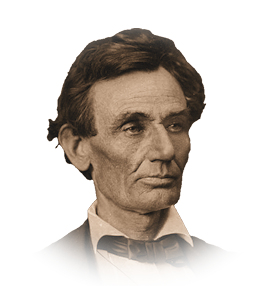
Abraham Lincoln at 1860 Decatur Illinois Republican State ConventionIn early May 1860, when Abraham Lincoln was in Decatur to attend the Illinois State Republican Convention a local photographer, Edward A. Barnwell, wanted to take a picture of “the biggest man” at the convention. After spotting Lincoln, Barnwell him to his People’s Ambrotype Gallery at 24 North Water Street to pose for this portrait. The next day, after Richard Oglesby introduced the “Rail Splitter,” convention delegates unanimously endorsed Lincoln for President.

0 comments

0

News of the Day

Chicago (IL) Press and Tribune, May 28, 1860

MR. LINCOLN’S COMMITTALS.

To represent that Mr. Lincoln is covered up with pledges to men, factions, cliques, &c., within the Republican party, and that his election will be the triumph of Weed, of Greeley, or of some squad of insiders or outsiders, to the exclusion of all the rest of mankind, will be one of the tricks of the Democracy during the campaign. We have a story to tell on that point:

On Monday preceding the nomination, one of Mr. Lincoln’s trusted friends addressed him a note, telling him that his prospects were improving; but that, at the last moment, it might be necessary to say a word here and a word there for securing the support of certain interests; and the writer of the note asked that he with two friends whom he named might be empowered to “negotiate,” if negotiations should become necessary. We saw Mr. Lincoln’s reply. It was worthy of Washington. He said, “No, gentlemen; I have not asked the nomination, and I will not now buy it with pledges. If I am nominated and elected, I shall not go into the Presidency as the tool of this man or that, or as the property of any faction of clique!” We quote from memory, but his language was substantially as we give it; and nothing but an injunction of secrecy prevents us from printing the name of the gentleman to whom the letter was addressed.

It is quite immaterial what Mr. Lincoln’s pro-slavery opponents may say; but it is proper that our Republican friends East and West, should understand that he has not made and will not make any pledges of any kind by which his action in the distribution of public patronage, will be clogged or embarrassed, if he is elected. We mean that he has made no promises of any sort for any purpose whatever; and if we know the man, he will go through the canvass as he has begun it — free. We make this statement for the benefit of the wise acres who have already organized his Cabinet, appointed his Foreign Ministers and generally distributed the patronage which will fall into his hands; and for the benefit, further, of the patriotic gentleman who will be impelled to make a journey to Springfield for the purpose of magnifying their services, past and prospective, and securing at the same time, a promise of reward for what they have done or expect to do. Mr. Lincoln’s nomination was a generous and touching tribute to his honesty as well as his ability. We are sure that he will not sacrifice the one and be false to the other by cheating half the friends from whom he expects support, before the canvass has fairly begun!

0 comments

0

Miscellaneous document sources
Leonard Swett

Addressed to Hon. Josiah H. Drummond, of Portland, Maine, shortly after the nomination of Mr. Lincoln at Chicago, this letter by Leonard Swett “describes the whole historical scene in graphic expressions worthy of perusal and preservation:” – (Lincoln’s campaign: or, the political revolution of 1860 By Osborn Hamiline Oldroyd, c 1896)

Bloomington, Illinois, May 27, 1860

“I made the acquaintance of Mr. Lincoln early in the year 1849. Since then we have twice a year traveled over five counties, spending together most of the time from September until January, and from March until June, inclusive. Originally most of the lawyers did this, but lately one by one they have abandoned the circuit; and for perhaps five years Lincoln and myself have been the only ones who have habitually passed over the whole circuit. It seems to me I have tried 10,000 lawsuits with or against him. I know him as intimately as I have ever known any man in my life, perhaps more intimately, if possible, than I knew you when I left Waterville.

“I was with him the week before the Convention. In speaking of the propriety of his going to it, he said he was most too much of a candidate to go, and not quite enough to stay at home.

“Our delegation was instructed for him, but of the twenty-two votes in it, by incautiously selecting the men, there were eight who would gladly have gone for Seward. * * * The first thing after getting our headquarters was to have the delegation proper invite the co-operation of outsiders as though they were delegates. Thus we began. The first State approached was Indiana. She was about equally divided between Bates and McLean. Saturday, Sunday and Monday were spent upon her, when finally she came to us unitedly with twenty-six votes, and from that time acted efficiently with us.

[continue reading…]

0 comments

0

News of the Day

New York Herald, May 27, 1860

The Union ticket appears to be making great headway in the South, and the opposition papers are all warmly taking it up—a course to which they are encouraged by the unfortunate events at Charleston. If the split should not be healed in the democratic party, and if an extreme fire-eater should be nominated on an extreme platform at Richmond, and Douglas should be nominated at Baltimore, the Bell and Everett ticket will poll a heavy vote in the South, probably carrying several States. At the same time it will take away largely from the republican strength in the conservative and Middle States, defeating Lincoln in some of them, and thus, perhaps, throwing the election into the House of Representatives. The republican journals are greatly alarmed at the prospect. As for the democrats, it is impossible their candidate can be elected by the people, unless they unite and present a single ticket, with good men and true, who will run well not only at the South, but in Pennsylvania, New Jersey and New York.

0 comments

0

News of the Day

The New York Times, May 26, 1860

Chicago Press and Tribune, May 23.

Ten thousand inquiries will be made as to the looks, the habits, tastes, and other characteristics of Honest Old ABE. We anticipate a few of them.

Mr. LINCOLN stands six feet and four inches high in his stockings. His frame is not muscular, but gaunt and wiry; his arms are long, but not unreasonably so for a person of his height; his lower limbs are not disproportioned to his body. In walking, his gait, though firm, is never brisk. He steps slowly and deliberately, almost always with his head inclined forward and his hands clasped behind his back. In matters of dress he is by no means precise. Always clean, he is never fashionable; he is careless, but not slovenly. In manner he is remarkably cordial, and, at the same time, simple. His politeness is always sincere, but never elaborate and oppressive. A warm shake of the hand and a warmer smile of recognition are his methods of greeting his friends. At rest, his features, though those of a man of mark, are not such as belong to a handsome man; but when his fine dark-gray eyes are lighted up by any emotion, and his features begin their play, he would be chosen from among a crowd as one who had in him not only the kind sentiments which women love, but the heavier metal of which full grown men and Presidents are made. His hair is black, and though thin, is wiry. His head sets well on his shoulders, but beyond that it defies description. It nearer resembles that of CLAY than that of WEBSTER; but it is unlike either. It is very large, and, phrenologically, well proportioned, betokening power in all its developments. A slightly Roman nose, a wide-cut mouth, and a dark complexion, with the appearance of having been weather-beaten, completes the description. [continue reading…]

0 comments