Gov Denison of Ohio Refuses to Surrender Persons Charged With Stealing a Negro in Tennessee

New York Times

The New York Times, June 30, 1860

EXECUTIVE DEPARTMENT,
NASHVILLE, TENNESSEE, May 26, 1860.

His Excellency, W. DENISON, Governor of the State of Ohio:

SIR: There was issued from this Department on the 17th inst., a requisition demanding of your Excellency, as fugitives from justice from this State, STEPHEN G. KENNEDY and MARY ANN C. HATCH, alias MARY ANN C. CALHOUN, charged with the crime of nogro stealing, which is a felony under the statute laws of Tennessee.

I am informed by JAMES H. SWAN, the agent appointed by me to receive the fugitives, that your Excellency refused to cause said fugitives to be arrested and delivered to him.

Upon examination of the record in this Department, I am unable to discover any defect in the requisition, and deem it due to the aggrieved party, who is a citizen of this State, to ask your Excellency to point out such defect as, in your opinion, vitiates the requisisition, so that in future I may understand the practice of the State of Ohio under the Act of Congress of Feb. 12, 1793, respecting the surrender of fugitives from justice. Very respectfully,

ISHAM G. HARRIS.

________________

STATE OF OHIO, EXECUTIVE DEPARTMENT,
COLUMBUS, June 2, 1860.

His Excellency, Isham G. Harris,
Governor of the State of Tennessee.

SIR: I have the honor to acknowledge the receipt of your letter of the 26th ultimo.

In reply, I beg to say that the crime of negro stealing, not being known to either the Common Law or the Criminal Code of this State, it is not of that class of crimes contemplated by the Federal Constitution, for the commission of which I am authorized, as the Executive of this State, to surrender a fugitive from the justice of a sister State; and hence I declined to issue a warrant upon the requisition of your Excellency for the extradition of STEPHEN G. KENNEDY and MARY ANN HATCH, alias Mary Ann C. Calhoun, charged with that offence, which you advise is a felony under the statute laws of Tennessee.

Upon the second requisition for the same parties, charged with the crime of grand larceny, in having stolen certain jewelry, I had the pleasure of issuing a warrant on Thursday last.

Very respectfully yours, &c.,

W. DENISON.

________________

EXECUTIVE DEPARTMENT,
NASHVILLE, Tenn., June 12, 1860.

His Excellency, W. Denison, Governor of the State of Ohio:

SIR: I have the honor to acknowledge the receipt of your Excellency’s [continue reading…]

0 comments

From Mark W Delahay to Abraham Lincoln

Civil War Day-by-Day
Leavenworth June 30th 1860
Hon A Lincoln
My Dear Sir,
The Editorial slip1 herewith transmitted is one of a series of Bleeding Editorials which I propose to write for the Times by way of furnishing food for the campaign in the States; I am satisfied they should be copied by all the Republican papers in the free states, and commented upon, not that I think them well or ably written, but not to give them General circulation must be a political omission by such papers as wish at heart to make this Campaign as near as certain victory as possible, it may be in bad taste for your home organ to republish thesel Bleeding articles But there ought to be some understanding by the Press, and there is a way to have it done — You must pardon now as in the past if my Judgment should differ from your own as to a line of policy — our Lot is a hard one, our Political grevience is great, and while we suffer for the Crimes of a corrupt and unscrupulous party (now I trust in rapid decay) you should be benefited by our wrongs and our suffering, the cause and the country should reap the gain to which fair comments upon our Loss and criminal neglect will Justify — “I expect no reply”
Truly Your friend
M W Delahay

  1. A clip from the Leavenworth Daily Times that Delahay enclosed with his letter.
0 comments

Nothing but Camels

News of the Day

The Ranchero [Corpus Christi, TX], June 30, 1860

The Matagorda Gazette says “the report that a cargo of Africans had been landed near Aransas Pass, turns out to be an egregious hoax. No Africans have been landed on this coast for many years.” No, nothing but camels!

0 comments

The American Insurrections

News of the Day

(Announcement of the (John) Brown commemoration in North Elba, New York)

Liberator, Boston, Massachusetts, June 29, 1860
      The believers in the doctrines of the Declaration of Independence, and of that Method of proclaiming them inaugurated by Gen. Warren at Bunker Hill, and continued by Capt. Brown at Harper’s Ferry, are requested to meet at NORTH ELBA, Essex Co., N.Y., on the FOURTH OF JULY next, to re-affirm, over the grave of THE MARTYR OF VIRGINIA, their unabated faith in the truth of those principles, and the wisdom of that time-honored policy.
The survivors of the family of Capt. John Brown will attend the celebration.
John Brown, Jr., the eldest son of Capt. John Brown, will read the Declaration of Independence; and Solomon, his youngest son, will read the Sermon on the Mount.
The following persons have been invited to be present and speak:
Rev. Highland Garnett, of New York;
Thos. W. Higginson, of Worcester, Mass.;
Miss Ellen Frances Watkins, of Philadelphia;
Thaddeus Hyatt, late of Washington Jail, D.C.;
Richard J. Hinton, of Kansas;
Frederick Douglass, of Rochester, N.Y.;
Rev. George B. Cheever, of Rochester, N.Y.;
Henry D. Thoreau, of Concord, Mass.;
Judge W.M.F. Arny, of Kansas;
And many others.
It is confidently expected that the majority of these speakers will attend.
By request,
JAMES REDPATH.
      Boston, June 26, 1860.
0 comments

Southern Democrats Choose a Candidate.

Library of Congress
Hon. John C. Breckinridge: Democratic candidate for sixteenth president of the United States ; Lithograph by Currier and Ives, 1860

Hon. John C. Breckinridge: Democratic candidate for sixteenth president of the United States ; Lithograph by Currier and Ives, 1860

0 comments

The Crime Against Kansas

News of the Day

Leavenworth Daily Times, June 28th, 18601

Congress has adjourned.  The deed is done—the crime completed. Our land grants are withheld. The Homestead Bill has been chopped down by the Executive axe. The Pacific Railroad fails under the harsh hand of faithless Democracy—while the languishing manufacturing interest, that half feeds the innumerable legions of poor operatives, has been neglected and passed with contempt. But as charity begins at home, it is our own wrongs that we propose to review. Kansas, as a people, endureth hard fare with unexampled fortitude. For six years have we been the foot ball for political ambition—a fate that was never shared with us by any of the most depraved minions of the ruling political power of the government. Kansas has made, under an unseen delusion, four constitutions, three of which would have made her shackles fall from the grasp of the Oligarchy, and clothed her with a sovereignty in all essentials, upon a footing of equality with the other States of the Union. But the toadyism and fawning of northern doughfaces has multiplied our sufferings and extended the base rule of federal oppression over our people and commerce.

Prostrate and poverty stricken, Kansas still remains helpless at the feet of political despots, suffering for crimes she never knew, unable to vindicate her people from the calumny of a Texas ruffian, or to speak words of consolation to the drooping spirits of her suffering inhabitants.

Thus, insulted with Wigfall’s brutality, our petition has been refused, and our hopes blasted for the present. With the usual land grants, Kansas, in a few years, would have, by the development of her resources, been able to count her surplus products at every depot, and to send them upon every river, sea and railroad, upon which the fruits of Western enterprise now are to be found. Thus is not only Kansas to suffer, but also those channels of transportation, over which our commerce would otherwise soon (like so many toll gates) pay duties upon her tonnage, thereby swelling the aggregate revenue to the rail roads over which it would pass, and giving to the boatmen on our rivers new encouragement.

But this is not all. Our people would soon have forgotten the past wrongs inflicted upon them, and would have become frugal and happy in their new homes. hitherto we have shared largely of the sympathy of the good citizens of the States. This being our darkest hour, under all our long train of insult and political suffering, because of our devotion to  Republican principles and the best interests of men, we ask, shall we not again excite public indignation for the cruelty and harshness of our fate.

The debasement of a party now in twain, and without a prestige either for evil or good, is but the sequel of its own vile corruption; and crime. “Whom the gods would destroy, they first make mad.” Ye tried to enslave a free people; but failed, and a just God, it would seem, has willed, providentially, that your mad career should be brought to a close, not at Charleston, but in a city with monuments ready built to designate the unhallowed spot where a once proud party breathed its last.


  1. This clipping was sent by Mark W. Delahay in a letter to Abraham Lincoln on June 30, regarding campaign efforts in Kansas.
0 comments

The Presidential Election

New York Times

The New York Times, June 26, 1860

The Presidential canvass has at last fairly opened. The several political parties have taken their ground, all the candidates are in the field, and it is not difficult to foresee the result. The Republican ticket is morally certain to be elected. Strong in the public sentiment of the Free States, the Republican Party derives an immense advantage from the disruption and utter demoralization of its opponents.

The heat of the battle, it is easy to see, is to be in the Southern States. The question of protecting Slavery by act of Congress—of using the power of the Federal Government for its extension—is to be contested and decided on Southern ground. For the first time in our political history, the slaveholding States will be divided. Hitherto the contest has been mainly sectional: the North has taken one side and the South the other. Now, the South finds the “irrepressible conflict” in the bosom of its own society. DOUGLAS will actually represent in the South that hostility to Slavery extension which is already the unanimous sentiment of the North. He will contest upon slave soil the power of the Federal Government to extend Slavery: and while his position on this question is, in our judgment, unsound and untenable, it is probably the only ground upon which any contest whatever could be maintained in the Southern States. He concedes that slaves are property, recognized as such by the Federal Constitution:—but claims that in the Territories it must be dependent entirely, for protection and existence, upon the local law. Few, if any, of the Southern States will endorse his views;—but if he were more nearly right, they would not tolerate him an hour.

In the Northern States Mr. DOUGLAS is strong partly on account of his political position and partly from his personal qualities. He represents more thoroughly than any other public man that quickness of intellect, vigor of will and pushing restlessness of temper which characterize American life. Without any large, general culture, he has the useful faculty of studying a particular subject rapidly, and of mastering its leading facts and principles. Whatever he knows is always at his command. He has indomitable industry, an insolent courage, and a tenacity of purpose, born partly of conviction and partly of self-will, which nothing can defeat. These are qualities which in our society, or indeed in any other, give a politician a strong hold upon the popular admiration; and Mr. DOUGLAS adds to them just enough of that irresponsible, good-natured recklessness which characterizes the indigenous American rowdy, to make him the decided idol of a very large and influential class of our political society. [continue reading…]

0 comments

How the Democratic nominations are received

New York Times

The New York Times, June 26, 1860

ST. LOUIS, Monday, June 25.

The Seceders are holding a grand mass meeting here to-night, to ratify the nomination at Baltimore of BRECKINRIDE and LANE. THe Bulletin office is brilliantly lighted up, and covered with flags, banners and transparencies. A salute of one hundred and five guns is being fired in Lucas-park; and Col. PRESTON, United States Minister to Spain, will be serenaded at the Planters’ House this evening, and called out to make a speech in favor of the nominees. The enthusiasm is fully up to that of the Douglasites

ALBANY, Monday, June 25.

The friends of BRECKINRIDGE and LANE in this City are having a great jubilee to-night. One hundred and one guns have been fired, one for every vote that BRECKINRIDGE and LANE received in the Convention.

The Standard newspaper office is brilliantly illuminated, and State-street and Broadway are in a perfect blaze with bonfires of tar.

A procession headed by a band of music, is parading the streets, and the streets themselves are filled with people, all cheering lustily for BRECKENRIDGE and LANE.

The demonstration is equal in every respect to the Douglas celebration on Saturday night.

KINGSTON, N.Y, Saturday, June 23.

The nomination of DOUGLAS for President was hailed with enthusiasm here. The village is flaming with rockets and fireworks, and one hundred guns were fired.

OSWEGO, N.Y., Monday, June 25.

The Democracy are firing 200 guns over the nomination of DOUGLAS, which fully meets their approval.

TRENTON, N. J.. Monday, June 25.

The Democracy of this city this evening fired one hundred guns for the nomination of DOUGLAS.

A meeting will be held to-morrow evening to form a club, preparatory to arranging for a grand ratification meeting.

The True American, it is announced, will raise the name of DOUGLAS to-morrow morning. Two reasons are urged in favor of DOUGLAS—one that his platform is all that is asked for by the Democratic Party, and the other that his nomination has been made by the regular Democratic Convention.

HARTFORD, Conn., Monday, June 25.

A vast crowd gathered around the Daily Post newspaper office this evening to testify their approval of the nominations of DOUGLAS and FITZPATRICK by the Democratic National Convention.

One hundred guns are now being fired in the park, and as their sound comes booming over the city, it gives unmistakable evidence that “popular sovereignty” and ” non-intervention” will be earnestly sustained by the Democracy of Hartford.

BRIDGEPORT, Conn., Monday, June 25.

A national salute was fired here, this evening, in honor of the nomination of STEPHEN A.DOUGLAS.

BANGOR, Me., Monday, June 25.

CHARLES HOWARD had his arm blown off to-day while helping to fire a salute in honor of the nomination of DOUGLAS and FITZPATRICK.

BELFAST, Me., Monday, June 25.

One hundred guns were fired, and all the bells of the city ring to-day in honor of the nomination of DOUGLAS and FITZPATRICK.

CONCORD, N.H., Monday, June 25.

Ex-President PIERCE pronounces the nomination of DOUGLAS a sectional one.

The secession of the Boston Post creates quite a stir among the old political stagers here.

Some Democrats are in a quandary about the Baltimore nominations, but the rank and file are enthusiastic for DOUGLAS.

The Patriot and all the party papers in the State will support DOUGLAS, except Burke’s Democrat,

DOVER, N. H Monday, June 25.

The National Democrats of this city received the nomination of BRECKINRIDGE and LANE with the greatest enthusiasm, and a salute was fired in honor of the event.

PITTSBURGH, Monday, June 25.

A salute of 200 guns was fired, to-day, amidst great enthusiasm, over the nomination of DOUGLAS, SAMUEL HARPER and others made patriotic speeches.

RICHMOND. Va., Monday, June 25.

Mr. YANCEY addresses the citizens and Seceders here to-morrow, and an immense mass-meeting will be held in the Capitol Square to-morrow night, to ratify the nominations of BRECKENRIDGE and LANE.

0 comments

Slavery in Northern Georgia

Robert M. Magill – Personal Reminiscences of a Confederate Soldier Boy, 39th Georgia Regiment of Infantry

Writing in the early 1900s, Robert M. McGill, a former “Confederate Soldier Boy” recalls slavery in North Georgia.

Note: Robert M. McGill’s diary begins in April 1862.  The 463 entries in it will be published here day-by-day with each entry posted 160 years after the original entry.

Slavery in this North Georgia was a very different thing from what it was lower down in the cotton belt, Being raised all our lives among slaves, we boys never thought much about what real slavery meant. I often heard my father say he would never own a slave, because it was not right; and he never did, nor any of his brothers in Georgia, although they were as well able to own them as many who did; but to have talked out against slavery one would have been counted as an enemy to his country, and would hardly have been tolerated.

Men were required to act as patroles, just as they were required to work the public roads. Being divided into squads, we had to go on patrol over a certain territory about every two weeks. If a slave was caught out from home without a pass, the patrols were given authority by law to whip him, give him a pass and send or require him to go home at once, his master being notified afterwards. I never had to patrol but a very few times, and we usually made a kind of frolic out of it, by slipping up to their cabin doors, where we heard many a funny talk. An apple or a potatoe thrown over the door brought the expression, “What dat,” but, taking the hint, they always opened the door good-naturedly and bade us enter. After a laugh and chat with them, and asking if they were all at home, we left them in peace and wended our way, to repeat the same thing at the next cabin door. I am glad to say we never found a single slave away from home without a pass in all the patroling I had to do.

Owners of slaves in that country fed them on good, substantial food, and clothed them with coarse but comfortable clothing. It paid them to do so, just as it pays any man to take good care of such property as horses or cattle. A good, strong, healthy man or woman was worth from $1,000 to $1,500, and a man did not care to run the risk of loosing such a valuable piece of property by negligence, to say nothing of the humane side of the question.

The marriage relationship was not a very binding one, and did not require any license from the courts; yet they usually lived in families, but very often the husband belonged to one man and the wife to another, the husband being permitted to go to the home of his wife once, some times twice a week. We had a neighbor that owned a girl who married a man that lived several miles away. Ten or twelve children were born to this couple, so you see from the prices given above, that this negro girl was quite a little fortune to her owner. One of the very saddest features of slavery was the breaking up of homes without the consent of any of the inmates. Not much slave trading was done in our neighborhood. When there was a marriage in a slave owner’s home, the son or daughter going out from the home, was often given a slave, usually a girl, and so she was separated from her parents, but that was a very different thing from being sold to a slave trader. A slave trader and slave driver was considered a heartless man, and well he deserved the name, for he was heartless; and being heartless, he was usually brutal.

In later years we came to understand more of the awful nature of human slavery, how an aristocracy, not to say an oligarchy, was built up which ruled with an iron hand, caring no more for the poor white man, probably not as much, as for the negro, because the negro was his property; no wonder they sung during the war, “Dixie’s land is a land of cotton; when a poor man dies he’s soon forgotten! Look away, look away,” etc.

Human beings were bought and sold like cattle; often family ties were broken without any regard whatever of the feelings of the persons sold. Don’t misunderstand me; this was the general rule; especially farther South; but, as in all other things, there were noble exceptions; not by any means do I place all slave owners in the heartless class. The exceptions to the general rule in North Georgia were very much in the majority. Very few, if any, were sold to the slave trader.

We realized the awful hideousness of human slavery when it brought on the terrible Civil War, wherein the lives of over a million of men were sacrificed, and the whole land brought to unspeakable suffering and sorrow. And yet, after all this, my mind runs back to the days of my boyhood, after these many years, and I wonder, and again I wonder, if, after all, these colored people did not really live happier lives, these neighbors of ours, than they are living in that same country to-day. I am not, by any means, justifying slavery; I am only musing. These people were kept in ignorance, it being against the law for any one to teach them to read. It is said that “ignorance is bliss.” In their cases it might, to a limited extent, be so. Fairly comfortably clothed, fed with substantial food, living in comfortable homes, and knowing nothing of the turmoils of the outside world; not a care for the future as to this life, their masters looking after that. After the day’s work was done, they usually had the evenings until bedtime to work for themselves, making shuck collars, foot mats, bottom chairs, and do many other things, to make spending money. Again I say, I often wonder if they were really not more happy then than they are to-day, with all the cares and responsibilities which freedom brought ; and yet I know there is no joy that out-weighs the joys of freedom, if rightly appreciated and used.

There were many strong attachments between master and slave. The negro race certainly deserves great credit for many things; how they worked on peaceably and without murmuring, thus supplying food and raiment for the many during the war; the docility manifested; the care they took of the master’s family while the white men were away in the army. I do not believe there is another race under the shining sun that would have acted as they did under like circumstances; and yet there is more prejudice against these people than against any other people on the face of the earth. Why is this so? Above all things, let us be just.


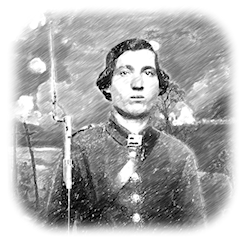
Image is of an unidentified Confederate soldier.
 

0 comments

The Proceedings of the Disunited Democracy

New York Times

Two Tickets Nominated.

Nomination of Douglas and Fitzpatrick by the Regulars.

Breckinridge and Lane the Candidates of the Seceders.

What is Thought of the Nominations.

The New York Times, June 25, 1860

Special Dispatch to the New-York Times.

Baltimore, Sunday, June, 24.

We have assurances from persons who ought to know that both BRECKINRIDGE and LANE will accept their nominations by the Convention of seceders.

It is the game of the Southern wing to defeat an election by the people and carry it into Congress, where they think they are reasonably certain of electing BRECKINRIDGE. The Douglas men here speak openly of preferring LINCOLN’s election to such a result.

YANCEY and other extremists are delighted at the prospect. They say that they can either elect BRECKINRIDGE in the House and thus perpetuate their control over the Government, or else elect LINCOLN, which will give them an opportunity to rally the South in favor of dissolution.

The city is entirely deserted.

H.

Dispatch to the Associated Press.

Baltimore, Sunday, June 24.

The nominations of both the Democratic and the Seceders Conventions, were received well here by their respective friends, but all the outside enthusiasm is for DOUGLAS. There was much excitement last night about the ballots. The nomination of the Seceding Convention was tendered to Mr. GUTHRIE’s friends, as well as to Mr. HUNTER’s, but both candidates declined. It is understood that Mr. BRECKINRIDGE will accept.

A challenge has been sent by A. SMITH, of California, to Mr. NESBITT, of Illinois, who was the Delegate who declared in the Convention, during Mr. SMITH’s offensive remarks, that if Mr. CUSHING, the President, would not protect the members, they would protect themselves.

A large number of persons went to Washington to-day, both the friends of BRECKINRIDGE and DOUGLAS. Most of the New-York delegation return to-night.

0 comments

The Baltimore Convention

New York Times

The Democratic Candidates.

The New York Times, June 25, 1860

The Baltimore Convention has closed its labors. It met to nominate a Presidential candidate, and to adopt a platform; it has ended by giving the party two of each. Its ostensible object was to harmonize the party, to compromise points of difference, to reconcile sectional jealousies and distrusts, and to nominate a candidate who should unite the sentiment and support of the party, and thus secure a victory in the coming canvass. It has accomplished exactly the opposite of all these things. It has divided and demoralized the party,—sharpened and made more prominent its differences of principle,—aggravated its sectional and personal hatreds, and nominated two candidates, each of whom will aim, specially and primarily, to defeat the other. The Convention was not in fact a deliberative assembly at all. It was not a conference of delegates having common interests, common hopes and common aims. It was, from the outset, a duel of hostile sections. The South came into the Convention hoping to rule it, and determined, failing in that, to break it up. The Administration shared alike its ambition and its hatred, and lent it what little aid its enfeebled condition would permit. The North came, goaded by long years of suffering servitude, superior in force and resolute in its purpose to use it. There were some among them who hoped a chance would arise for compromise,—but the great body of the Northern delegates were determined upon the nomination of DOUGLAS at every hazard and at whatever cost. Finding that this could not be prevented, the South and the Administration resolved as the next step to defeat him at the polls; and it is for this specific object that their ticket has been put in nomination.

Their belief is that BRECKINRIDGE will carry most of the Southern States, and that he will draw off enough votes in doubtful Northern States to prevent their voting for DOUGLAS. They hope in this way to carry the election into Congress, and failing in that, to secure the success of LINCOLN—for unquestionably they would prefer that result to the election of DOUGLAS. Many of them are open Disunionists, and look to the success of the Republicans as the opportunity which will enable them, in Mr. YANCEY’s phrase, “to plunge the cotton States into revolution.” Others, who are not prepared for such an issue, deem a temporary defeat and exclusion from office the best medicine for the Democratic party, and will look to 1864 as certain to bring them united councils and renewed success. They will spare no effort, therefore, to defeat DOUGLAS, and whatever of influence may remain to the Administration will be remorselessly and unscrupulously used in aid of the same object. Mr. BUCHANAN is not a man of strong passions, but all the hatred of which his cold and clammy nature is susceptible is concentrated upon Mr. DOUGLAS. His ambition when he came into office was to annex Cuba. Time and grief have modified his aspirations—and he will leave his post contented, if he can secure the defeat of his hated rival.

The fact is Mr. BUCHANAN and Mr. DOUGLAS are the joint authors of the disruption of the Democratic Party, and it is doubtful whether either, could have accomplished that result alone. Mr. BUCHANAN’S endorsement [continue reading…]

0 comments

Diary and Letters

Diary and Letters of Rutherford Birchard Hayes
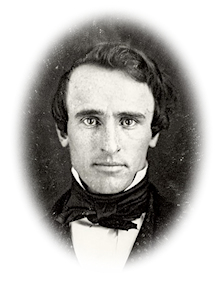
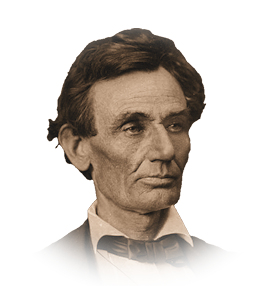
Rutherford B. Hayes (young)

June 24, 1860.— Yesterday the Democrats put in nomination two tickets at Baltimore. Douglas and Fitzpatrick were nominated by the Northern wing and Breckinridge and Lane by the Southern. Lincoln and Hamlin, nominated by the Republican party, and Bell and Everett, candidates of the “Union” party, have been in the field several weeks. Four tickets for national offices. This is new in my day. My Republican friends are confident that Lincoln and Hamlin will be elected by the people. I have a good deal of apprehension on the subject. I fear the election will go to the House. Let me cipher. There are three hundred and three electoral votes; one hundred and fifty-two are required for a choice. We may count for Lincoln the States carried by Fremont in 1856—eleven States, one hundred and fourteen electoral votes. Add Minnesota four, one hundred and eighteen certain. Pennsylvania, probably, twenty-seven, Oregon, probably, three—one hundred and forty-eight. Four more votes are necessary to elect him. If California, New Jersey, Illinois, or Indiana should go for Lincoln, the vote of either State added to one hundred and forty-eight would elect. But all the following States should, perhaps, be counted doubtful. I will append my view of the chances.

New Jersey (7), Pennsylvania (27), Oregon (4?), Illinois (11), doubtful, but probably for Lincoln. Their vote added to that of the Fremont States would give Lincoln a total of 167 votes.

Indiana (13), California (4), Missouri (9), Delaware (3), doubtful, but probably for Douglas—29 votes.

Certain for Bell, Kentucky (12), Tennessee (13), Louisiana (6), Maryland (8). Doubtful, but probably for Bell, Virginia (15), North Carolina ( 10). A total of 64 votes.

Certain for Breckinridge, Alabama (9), Arkansas (4), Florida (3), Georgia (10), Mississippi (7), South Carolina (8), Texas (4). A total of 45 votes.

Lincoln’s chance in New Jersey depends on having a small defection in favor of Bell, and an equal or larger defection from Douglas. The same in other States. That is, Douglas will carry almost the whole Democratic vote in all the Northwestern States I think certain. I estimate the defection from him to Breckinridge as follows: In Ohio, Illinois, New Jersey, and Connecticut, three to five thousand each; in Indiana, five to eight thousand; in Pennsylvania, twenty to thirty thousand; in New York, thirty to forty thousand.

On the whole I think Lincoln’s chance the best, but not a moral certainty; that Bell or Breckinridge will be next. All this is on the supposition that Breckinridge will remain a candidate. His withdrawal would change the programme toto cælo.

0 comments

Lincoln Hamlin Ad

New York Times

Ad from June 23, 1860, Harper’s Weekly

0 comments

…and whip somebody.

News of the Day
1860s newsprint

Standard [Clarksville, TX], June 23, 1860

Belknap, Tex., June 9th, 1860.

Major DeMorse, Clarksville Standard:

Dear Sir:—Being on the eve of marching, I drop you a few lines although there is nothing of interest to chronicle. Yesterday we received orders from Lieut. Col. Smith; (Col. Johnson being absent,) to march to old Fort Shadminski, which I think is situated on Otter creek, in or near the Witchita mountains. Our orders are to start on the 10th inst. The Reserve Indians are getting scared at finding so many volunteers on the Frontiers, and they have sent a request to the Governor of Texas, to send Commissioners to the Reserve and they will open their houses, and wigwams, and show said commissioners through their caballados, to shew that they have none of the Texas stolen horses, or other plunder. Of course they will be able to establish their honesty. At least, if they have not time to hide any and all plunder and destroy all traces of guilt, (if they are guilty,) they are not as shrewd as I give them credit for being. From Shadminski, the Commissioners will start for the reserve accompanied by an escort of soldiers (volunteers.)

After the investigation of the Reserves, establishes their honesty, (which it will,) Col. Smith’s opinion is that we will move further out into the wild Comanche county, and whip somebody. The reserve Indians have offered to furnish 100 warriors as guides, for the command, and show them Texas’ enemies, and the stolen property, and all they ask is protection from their enemies, the wild Comanches. Prodigiously good and disinterested ain’t they? Our election resulted in electing M. T. Johnson, Col; Capt. Smith; Lieut. Col; Capt. Fitzhugh, Major. The staff is generally courteous and kind. They are well thought of by the companies.

Court week, here, there were several men killed in the county. Some in private squabbles; some in resisting the civil laws. Some of our commissioned officers have resigned their commissions, and we have been compelled to discharge some—cause drunkenness; and our law says dishonorably discharged for the first offence of intoxication. Gambling, horse racing, or anything of the kind not allowed in or near camp.

The command will have to do what it does do, very soon, for there has been only 90 days rations for 400 men, furnished, dating from 15th May. Powder, lead and caps have been issued to the amount, for each man, powder 4 52-87 ozs., lead 7 31-87 ozs., caps 34. You will instantly perceive from the heavy issue, that something terrible is in contemplation; when I inform you that we have nearly lead enough to lead our shot guns and six shooters once. None need be surprised if the startling news suddenly bursts upon them that the whole Indian world is completely annihilated, by the invincible well armed and prodigally furnished Texas Rangers. Taking everything into consideration I would respectfully suggest to his Excellency the propriety of sending out commissioners to the wild Commanches and investigate and inspect their camps, caballados, weapons and munitions of war; and if they have plenty to eat, and no defensive arms, that we the Invincibles be sent out against them immediately after the first rain that may fall, and cause our arms to be in excellent working condition. “Humbug.”

More anon. For the present adieu!
Respectfully yours &c.,
A. M. Gass.

0 comments

The 4th of July.

News of the Day
1860s newsprint

Standard [Clarksville, TX], June 23, 1860

As this great national day once more approaches, preparations should be made throughout the whole Union for public celebration, to rejoice once more over the return of the birth-day of American independence. Eighty-four years ago the independence of these United States was declared, and afterwards recognized by Great Britain. On that day a Nation was born, destined to outvie any of antiquity, in the form of government, the dispensation of its laws, and the fruits of its resources. Everywhere is felt the power of these United States, the strength of its institutions, and the stability of its government. Over every quarter of the globe floats the star spangled banner waves, and the American citizen walks upon foreign lands beneath its folds, conscious of its protection. Throughout the Union, in every little village and hamlet in each State, the influence of the day will be felt. For one day, at least, internal dissentions and political wranglings, should be forgotten, and all unite in celebrating our National birth-day.

And whilst upon the subject, we would suggest to the citizens of this place the propriety of preparing some proper mode of public festivity.

Whether this be done or not, we will say, that all who will assemble at the Presbyterian Church upon that day, can have the pleasure of listening to the reading of the Declaration of Independence, and an address by a selected orator for the occasion.

0 comments

Fine

News of the Day

Sugar Planter [West Baton Rouge, LA], June 23, 1860

The census act imposes a fine of thirty dollars for the refusal by any persons, over twenty years of age, member of a family, or agent for an absent family, to give full answers when required by the Marshal and his assistants to the questions which they are authorized by law to put.

0 comments

Return of the Jews to Palestine

News of the Day
1860s newsprint

Semi-Weekly Mississippian [Jackson, MS], June 22, 1860

To the student of the Bible and church history there are few current subjects of more absorbing interest or of deeper significance than the events, now almost daily transpiring, which point to the repossession by the Jews of their own land. The tide of progress, after a lapse of centuries may be said to have fairly turned in that direction, and the prayer long offered by that chosen but now scattered people, that Judah may be saved, and Israel dwell securely, and that the Redeemer may come to Zion.” the Philadelphia Press thinks is undoubtedly hastening to its fulfillment.

The Sultan of Turkey is encouraging Jewish emigration to Palestine, and is offering to sell them as much land as they choose to buy, and, it is said, has even expressed his willingness to dispose of the Mosque of Omar to them, which, it will be recollected, stands on the very site of the Jewish Temple of Mount Moriah. This mosque is one of the Mohammedan’s most celebrated shrines, being scarcely inferior in national importance to those of Mecca and Medina. Politicians and statesmen look upon these indications as a legitimate consequence of the liberalizing influence of Mohammedan in intercourse with Christians, and so they may be; but, to the reader of the yet unfulfilled pages of Revelation, they also point to what, as it respects the Jewish nation, “Prophets and kings” have long waited for, “but died without the sight.”—That the Mosque of Omar should be in a fair way of passing into the hands of the people to whose fathers the site on which it stands was once given as an everlasting covenant, is what no reader of secular history fifty years ago could even have dreamed would ever come to pass. Some of the hills around Jerusalem have already become Jewish property, and is by no means improbable that some of the present generation will see the entire city of Jerusalem again in the hands of its ancient owners. That might revolutions will follow in the wake of such an event is probably as certain as that the Jews will return at all; at all events, affairs in that immediate region of the East must ere long become an engrossing theme among the nations of the earth.

0 comments

The Town of Russellville.

News of the Day
1860s newsprint

[Little Rock] Old-Line Democrat, June 21, 1860

Mr. Editor: In this enlightened age, when it is the fashion to build castles in the air, invent beautiful and finely drawn theories; to explain facts beyond our comprehension, and give to all things of insignificances an undue importance, it seems to me, that I will not be thought egotistical, nor bombastic, if I call attention to the modest merits of the above place. Persons ignorant of its unparalleled advantages, in a commercial point of view, have passed by it without deigning to bestow upon it even a passing notice, till lately; and now, that they witness the prosperity of those now engaged here in business, are fain to leave their former localities and settle among us—we say come on.

No less important are its agricultural resources, (the basis of the former), being surrounded by fine lands, occupied by a thrifty and industrious set of farmers; who teem with abundance, and enough to spare, and still there is room for more.

Its locality is such, that it is bound to be the leading town in our county, (Pope), being situated on the route of the Little Rock and Fort Smith Railroad, and three miles from the Arkansas river.

Town property has increased in value, at least one hundred per cent in the last two years, and our citizens are improving their property rapidly. A beautiful undulating prairie, interspersed here and there with timber in which the feathered tribes hold melodious comports, forms its cite, over which, the “bland breezes” blow in gentle zephyrs, bringing in contact with one’s olfactories the delicious odor of the beautiful flowers in spring.

We have two large dry goods houses doing more business, probably than any four similar houses in the neighboring towns; one lawyer living about half mile off, who could not make a living here, the people are so peaceable, and had to go to farming; four doctors, but poor devils, the people won’t get sick, and they don’t get to give but few pills; it is truly pitiable to see the poor fellows sitting all day long in their offices, waiting for a call till night, then get up, with a sleep looking expression, stretch themselves, yawn, go home and go to bed at night and dream of fat cases they never get; two insignificant groceries, but it is rare you ever see a man drunk at either of them, so we have none of that brawling, quarreling and fighting, so characteristic of small towns.

We also have two blacksmiths, and one wagon shop, and several carpenters, and if one may judge, from the sound of the “roaring bellows and sparkling anvil” they have plenty to do. There is also a good school going on where the “young idea is taught to shoot,” and we have in contemplation the erection of a large building, for a male and female academy. We have no old bachelors, those ‘poor old stags,” and “drones of society,” so we don’t have to bestow any sympathy upon such useless and worthless objects; but if any should have the hardihood to come among us, he would not boast of his single blessedness long, unless he had no heart at all, for the beauty and intelligence of our young ladies are so irresistible that no old bach, nor young one either, has ever been known to live here long without committing matrimony or taking his leave instanter to avoid it.  I fear I am occupying too much of your space, and shall save the rest for some future occasion; but before closing I would remark, that we are mostly dead out Hindman men here, and will give him a tremendous vote next August.

Arkansas.

0 comments

John A Cobb to John B. Lamar

Miscellaneous document sources

Gilmer House, Baltimore [Md.],
June 20th, 1860.

Dear Uncle, I would have written to you before, but I could have given you no more information than what was contained in the Sun which I have been sending.

The convention met at 5 o’clock this afternoon but as the committee on credentials were not ready to report it adjourned to 10 o’clock tomorrow morning.

I have heard this evening what the committee will report. There will be a minority and majority report. I have not heard what the minority report is, but it amounts to nothing as it will not be adopted. The majority report is to admit Texas, Miss, and Delaware, reject Louisiana, admit half of our delegation and half of the bogus from Georgia, and admit the bogus or anti-Yancey delegates from Alabama. If that report is adopted and the Douglas men feel confident that they can do it, the delegates from the South will never take their seats.

If the majority report is adopted, whoever goes into the convention goes in with the distinct understanding that they will support the nominee, no matter who he is and what is the platform.

Our delegates are united in their opinion upon that subject, and I don’t think there is a man among us who will go into the convention if that report is adopted.

I think that we will be in Richmond before three days pass. Mr. Cushing sent tickets to our delegates to-day to admit them to the dress circle in the theatre where the convention meets. I have not been in yet, I expect to go in the morning. The Southern delegates here are perfectly indifferent in regard to the action of the convention in regard to their seats—most of them are anxious to return to Richmond.

We have speaking here every night. Our speakers speak from the balcony of the Gilmer House, the Douglasites from Reverdy Johnson’s house which is just above, where George Saunders is keeping open house and Douglas men can stay gratis; the stands are not more than forty (40) ft. apart and speakers are going it from both stands from 8 o’clock at night until 1 and 2 in the morning. . . .

I will write to you in the morning and let you know what action is taken and will send you the papers every day—will enclose the last Sun in this letter. I hope that we will be able to leave here tomorrow for Richmond. You must excuse the writing, as I have a bad pen and mean light and am writing on the top of the bureau as a substitute for a table.

Every place here is crowded. I was lucky and have a room to myself.


From Annual Report of the American Historical Association for the Year 1911.

John Addison Cobb was the son of Howell Cobb, Secretary of the Treasury under James Buchanan, resigning December 8, 1860.

0 comments

Editorial Fights in Texas

News of the Day
1860s newsprint

Daily Gazette & Comet [Baton Rouge, LA], June 19, 1860

An affray took place, a few days since, between Dalton, the wit of the Texas press, and Hepperla, both editors of the town of Crocket, Texas. Dalton received a bullet in his throat, making a wound probably mortal, and Hepperla was hit in the head, but not seriously injured.

Dalton is a native of this place. He left here about fifteen years ago and has been in the newspaper line, at Crocket, ever since.

0 comments

End of the Harper’s Ferry Affair.

New York Times

The New York Times, June 19, 1860

Senator MASON has just wound up the Harper’s Ferry affair by presenting a majority report which reveals nothing, and by getting himself discharged from the manufacture of a bill to protect States from invasion. THADDEUS HYATT has also, at last, been released from his dungeon, and the country has thus been delivered from the horrors of civil war, with which Dr. CHEEVER threatened it. No complicity with JOHN BROWN has been brought home to anybody in the Republican Party. No organization for the invasion of Slave States has been discovered in the North, except the contemptible one which the unfortunate BROWN headed. Nothing has been fastened even upon GERRIT SMITH, WENDELL PHILLIPS or DR. HOWE. In so far, in short, as the inquiry was intended to damage the Republican Party, or even the Abolitionists, in the eyes of timid people, it has proved a miserable failure.

We were, of course, always satisfied that such would prove to be the case; but there is a lesson taught by the whole affair which cannot be too strongly impressed upon the public mind. The conduct of the Democratic party ever since the John Brown affair, has been painfully indicative of the rapidity with which positive ferocity is permeating our political controversies. There could not be a better proof of the wisdom of the founders of our Government, in striking acts of attainder from the list of punishments for political offences, than the events of the last eight months, though we feel satisfied that none of them ever imagined that any such proof would be furnished within the first century of our national existence. To judge from the language and conduct of Pro-Slavery politicians at the North, as well as the South, ever since the John Brown raid, one might fairly conclude that they were no longer content with merely political victories, but sought the notion that NAPOLEON III has ever seriously cherished an intention of securing that crown for any member of his own family, is just as gratuitous, [continue reading…]

0 comments

Ex-Senator Clemens on Senator Sumner

New York Times

The New York Times, June 19, 1860

HUNTSVILLE, June 13, 1860.

MY DEAR SIR: I see that Mr. SUMNER, in his late speech, thought proper to pay his respects to me. He calls me a slave owner, and quotes a part of my speech in reply to Mr. RHETT, to prove that violent and bloody instincts are engendered by the relation of master and slave. It may surprise Mr. SUMNER to learn that I have never been the owner of a slave. I have never been engaged in any pursuit or avocation in which slave labor would have been the slightest benefit to me, and I have never been able to buy slaves for the mere purpose of waiting upon me. There is a negro man here with whom I was raised—who has lived with me a great deal, and who was with me throughout the Mexican war, but the title to him was not in me—it was in my father; and if Mr. SUMNER will ask any of the surviving officers or soldiers of the 9th Infantry, (all of whom were from New-England,) I think they will tell him that it was a matter of some doubt whether I belonged to the negro, or he belonged to me.

At all events, if Mr. SUMNER will send here in one month double the sum that negro would bring if offered for sale, he could not induce him to touch it, with a condition annexed, that he should live in Massachusetts as a freeman. Mr. SUMNER may find some apology for the bitterness of his late speech, in the chastisement inflicted upon him by the lamented BROOKS, but the ignorance he displays of Southern manners and Southern society, can hardly be accounted for on the same ground. If he had passed half the time among us, years ago, which he spent among the English Abolitionists, he would have escaped the caning, as well as the more disgraceful exhibition he has now made of himself.

JERE CLEMENS.


Jeremiah Clemens—Though a Democrat Clemens was a staunch Unionist in his political views who argued that talk of secession should be postponed until such time as Abraham Lincoln mentioned emancipating the slaves (a position whose practitioners were known as “wait and seers” in the pre-war South). Clemens served as the representative from Madison County, Alabama to the Alabama Secession Convention where he and his like minded “wait and seers” were outvoted in a landslide by advocates of secession. Because of his military experience and rank he was commissioned Major General of the Army of Alabama soon after the inauguration of Jefferson Davis, a position replaced by a generalship in the Confederate Army upon its creation, but in 1862 he resigned his commission altogether due to his political opposition to the war for secession. He did not serve in the Union Army against Alabama, but he made no secret of his pro-Union views and wrote to various members of the Lincoln administration and the United States War Department advising them on how best to mollify the South peaceably and how to deal with Reconstruction upon the Confederacy’s inevitable defeat. (Wikipedia accessed 6-10-2020)

0 comments

Rain in Kansas—Statehood Politics

New York Times

Rain Again—Prospects of the Crop Improved—Political Affairs.

The New York Times, June 19, 1860

Lawrence, Sunday, June 10, 1860.

Yesterday morning, to the great joy of Kansas, we awoke to find the earth refreshed by a warm and gentle rain, that continued an hour or two, until about an inch in depth had fallen. It then remained cloudy through the day, with every indication of more rain. A more busy day was never seen in this part of Kansas. Fields that had been plowed and furrowed since the first of March were planted to corn as rapidly as swift hands could do it. From that hour everybody seemed to have confidence that abundant rain was at hand, and that there was still time this year for a corn crop. To-day, at my time of writing, it is raining for the third time since morning. The heavens are opened. Nature smiles anew. Man rejoices. Kansas is saved.

Seed of all kinds will be planted as soon as possible, and we shall try the new experiment of a Summer after mid-June. But whatever the weather now, the fate of wheat is sealed,—it will be a total failure.

The papers tell us that our State bill is hopelessly lost for this session. So they are willing to let Kansas “bleed” during another campaign. Democracy had nothing to hope for with Kansas in the Union. What has she, with Kansas out? The 6th of November next will answer. We are not so blind as to think the failure of the bill for admission—the postponement of the Kansas claims, and the rejection of the bill for land grants at this session, are all purely accidental, when several other Territories are getting all the favors they ask. O, no! This troublesome child they expect to teach the lesson of love, by kicking it down stairs. We long ago ceased hoping to gather figs off thistles.

0 comments

Unauthorized Biography of Candidate Lincoln

Civil War Day-by-Day

I authorize nothing—will be responsible for nothing.

(Especially confidential.)

Hon: Saml. Galloway

SPRINGFIELD, ILLINOIS, June 19, 1860.

My dear Sir: Your very kind letter of the 15th is received. Messrs. Follet, Foster & Co.’s Life of me is not by my authority; and I have scarcely been so much astounded by anything, as their public announcement that it is authorized by me. They have fallen into some strange misunderstanding. I certainly knew they contemplated publishing a biography, and I certainly did not object to their doing so, upon their own responsibility. I even took pains to facilitate them. But, at the same time, I made myself tiresome, if not hoarse, with repeating to Mr. Howard, their only agent seen by me, my protest that I authorized nothing—would be responsible for nothing. How they could so misunderstand me, passes comprehension. As a matter, wholly my own, I would authorize no biography, without time and opportunity to carefully examine and consider every word of it; and, in this case, in the nature of things, I can have no such time and opportunity. But, in my present position, when, by the lessons of the past, and the united voice of all discreet friends, I can neither write nor speak a word for the public, how dare I to send forth, by my authority, a volume of hundreds of pages, for adversaries to make points upon without end? Were I to do so, the Convention would have a right to re-assemble, and substitute another name for mine.

For these reasons, I would not look at the proof sheets. I am determined to maintain the position of truly saying I never saw the proof sheets, or any part of their work, before its publication.

Now, do not mistake me. I feel great kindness for Messrs. F., F. & Co.—do not think they have intentionally done wrong. There may be nothing wrong in their proposed book. I sincerely hope there will not. I barely suggest that you, or any of the friends there, on the party account, look it over, and exclude what you may think would embarrass the party, bearing in mind, at all times, that I authorize nothing—will be responsible for nothing.

Your friend as ever,                                                                             A. LINCOLN.

0 comments

The Baltimore Convention

New York Times

We presume the Democrats will enter the canvass with two candidates.

The New York Times, June 18, 1860.

The Democrats renew their attempt to nominate a Presidential candidate to-day, at Baltimore. Everything at present indicates a stormy session. The Douglas men are apparently desperate, and inclined to resort to desperate measures for the accomplishment of their object. They proclaim their determination to nominate Mr. DOUGLAS by a two-thirds vote, if the new delegates from the South are admitted, and by a majority resolution, if not. But it is by no means certain that they will command even a majority of the Convention. The most of them are so thoroughly committed that they cannot, with any regard for their personal position, assent to the nomination of any other candidate; but this is not true of all. The delegation from this State, we are inclined to think, will be much less obstinate in their adhesion to the fortunes of Mr. DOUGLAS. They would unquestionably prefer him as the candidate, but for the conviction, which is general, that he could not command the support of the Southern States. But they will not sacrifice the chances of success to their preference.

We still believe that an attempt will be made by a portion of the New-York delegation to induce the South to present Judge NELSON,—and that if this succeeds he will be accepted by the Northern wing of the party. The North will probably not bring him forward, from a conviction that the selection of the candidate must be left substantially to the South. Unless the temper of the Southern delegates has changed materially since the Charleston Convention, this project does not seem very likely to succeed. They will demand a candidate whose position on the Slavery question is more conspicuously defined than Judge NELSON’s, or else they will insist upon the adoption of a platform, which would prove a serious obstacle to his success before the people. With a united party and a rational platform, Judge NELSON would certainly be a formidable candidate. Unless this project should succeed, we see no chance of union at Baltimore, and presume the Democrats will enter the canvass with two candidates.

0 comments